Retro Replay Retro Gaming History, Reviews & Emulation
The world is turning beneath you, the sun is coming up over its edge, and a choir is singing before you have founded a single city. You could click through to the game. For a little while, though, Civilization IV makes waiting at the menu feel like a perfectly good use of your evening.
The song is Christopher Tin’s Baba Yetu. Its words are a Swahili setting of the Lord’s Prayer, the prayer Jesus teaches his disciples in the Gospel of Matthew. One of the most beloved pieces of music in mainstream gaming begins by addressing our Father in heaven.
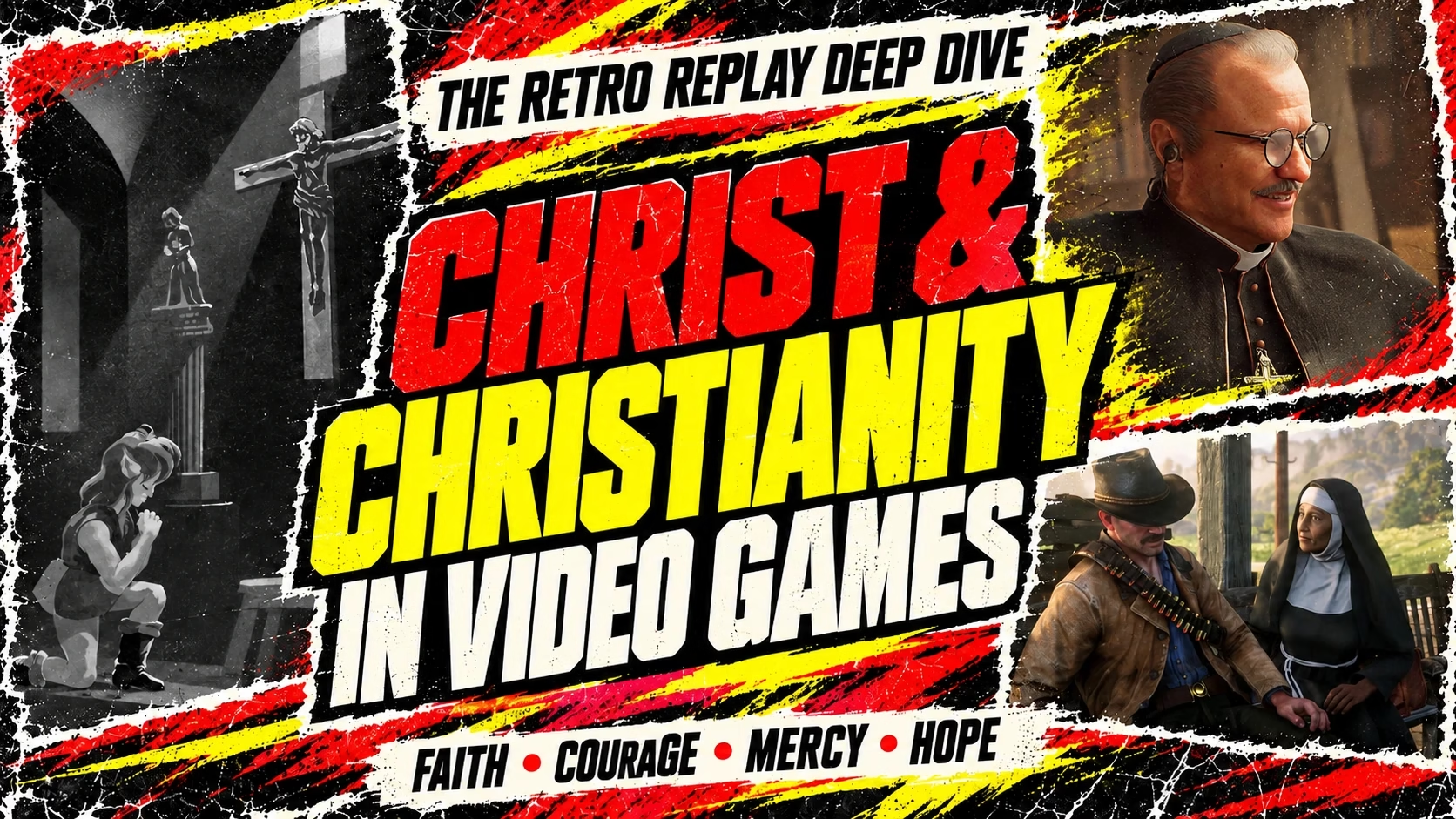
There are other encounters just as concrete. Link carries a cross and, in the Japanese original, a Bible. Indiana Jones searches for the cup associated with Christ. Sister Calderón brings Christian charity into Arthur Morgan’s troubled life. In medieval Bohemia, a player can stop at a roadside crucifix and join Henry in prayer.
Some of these games make room for a few sacred objects; others let you spend hours among Christian believers, churches and scripture. Their most welcoming moments can be very small: a priest opening his door to a friend, a nun refusing to give up on someone, or an old hymn lifting a game’s opening screen. The journey begins with a boy in green and the cross on his shield.
Story details follow for the games discussed, including The Last Crusade, Honest Hearts and Red Dead Redemption 2.
Explore Christ and Christianity in video games
- The Legend of Zelda (1986): the cross on the shield
- Zelda II (1987) and A Link to the Past (1991): help along the road
- Castlevania (1986) and Rondo of Blood (1993): good things to pack for Dracula’s castle
- Indiana Jones and the Last Crusade (1989): Christ’s cup and a father’s life
- Age of Empires II (1999) and IV (2021): following Joan of Arc
- Civilization IV (2005): the prayer before the first city
- Fallout: New Vegas, Honest Hearts (2011): scripture in Zion
- Red Dead Redemption 2 (2018): someone sits beside Arthur
- Indiana Jones and the Great Circle (2024): Father Antonio opens the door
- Kingdom Come: Deliverance II (2025): Henry stops to pray
- A prayer, a welcome, a chance to help
The Legend of Zelda (1986): the cross on the shield
Before Link had a sprawling inventory of gadgets, he had a sword, a shield and an alarming amount of countryside to search. The original The Legend of Zelda let you wander into trouble with very little ceremony. A cave offered a weapon. A lake suggested a secret. A dungeon door promised that you would probably wish you had bought another potion.
The shield was easy to take for granted. You watched the enemies, lined up the sword and tried to remember which suspicious wall you had already bombed. Yet that familiar piece of equipment carried a cross. Christian imagery was part of the little adventurer’s visual identity from the beginning, visible in the equipment he used to survive his journey.
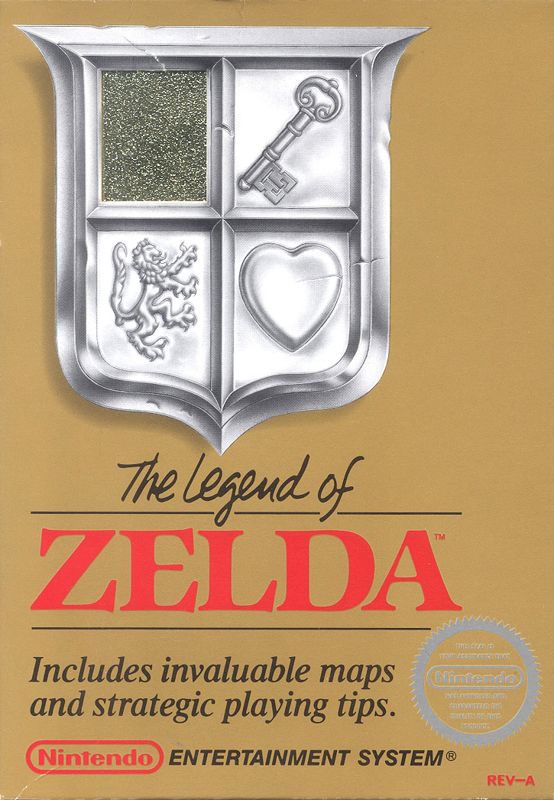
There was a book, too. In the Japanese version, it was called the Bible. English-speaking players encountered it as the Book of Magic, a name that fitted neatly beside the magical rod and the rest of the dungeon equipment. The object did the same practical work, adding fire to the rod’s attacks, while its name told a different story depending on the version you played. Clyde Mandelin’s comparison of the original item text puts the two versions beside one another.

For many players, that is a delightful discovery. The first Zelda is so familiar now that its early religious vocabulary can hide in plain sight. People who know every dungeon tune may never have seen the Japanese item list. A few pixels and a translated label can open a whole conversation about the world Nintendo was building.
Our detailed feature on Link’s Christian imagery and the early history of Zelda’s faith follows those clues much further. The cross and Bible are especially useful starting points because they are visible features of the early games, rather than a connection that depends entirely on interpreting a later story.
Link’s adventure also gives that imagery a generous setting. He is rescuing someone, helping a damaged kingdom and taking on dangers that its ordinary inhabitants cannot manage. The player’s afternoon may involve a great deal of getting lost, but the destination is an act of service. For a Christian player, a young defender carrying a cross into danger is an appealing picture of courage put to work for others.
The religious details sit inside a busy adventure. You can appreciate the cross as something Link carries in a good cause, then get back to the urgent business of finding the next dungeon. Early Hyrule lets a familiar Christian symbol travel with its hero from one dangerous room to the next.
Zelda II (1987) and A Link to the Past (1991): help along the road
Zelda II: The Adventure of Link gives its Cross a particularly satisfying purpose. Hidden enemies become visible once Link has it. In a game quite capable of making an ordinary walk feel hazardous, being able to see what is attacking you is a welcome improvement.
Players reach that late part of the adventure after a long education in patience. Zelda II changes the first game’s overhead dungeons into side-view battles, asks you to judge the height of a shield and introduces enemies whose swordplay can make Link look very junior indeed. Its towns provide the relief: people to speak with, help to find and somewhere to breathe before the next palace.
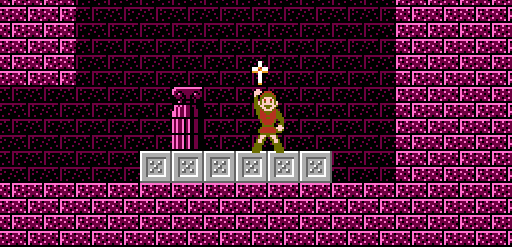
The Cross belongs to that practical rhythm of the adventure. You find it, carry it and gain help against a danger that was previously hidden. A Christian reader can appreciate the association with light, guidance and discernment while still describing exactly what the item does. Its religious identity has not been supplied by a theory about the ending. Nintendo named the thing.
By A Link to the Past, the Super NES could give refuge a fuller sense of place. The opening sends Link out into the rain, down beneath the castle and through dark passages with Zelda. Reaching the Sanctuary after that escape feels like finally shutting a door against the weather.
The room is quiet. Someone is there to shelter Zelda. Its church-like space brings the rescue down to a human scale after the castle’s danger. You have not saved the kingdom yet, but you have brought one person somewhere safer, and that is a good night’s work.
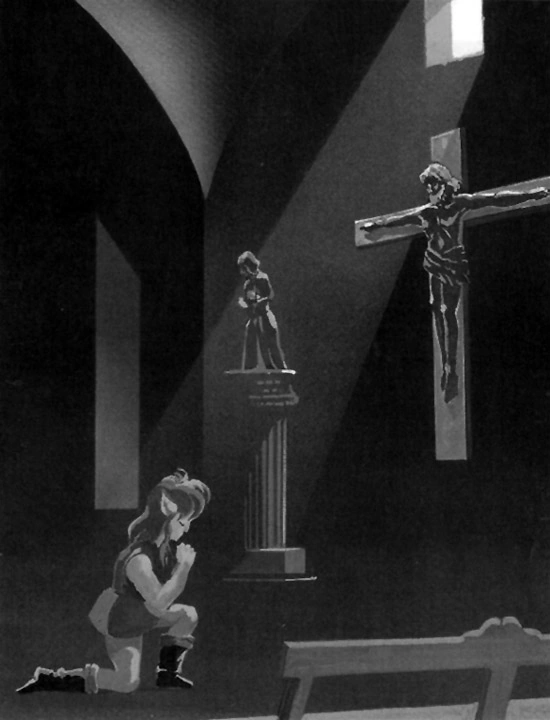
Artwork associated with the Japanese A Link to the Past guide tradition goes further, showing Link kneeling before a crucifix. It is a striking image because the subject is so recognisable. The boy who usually has a sword raised is still, with his hands together. Our longer Zelda feature collects that artwork and the surrounding religious references, including the way early Hyrule used church imagery.
Over the series’ lifetime, Hyrule would acquire its own goddesses, sacred histories and elaborate cosmology. The early cross-bearing Link remains an important part of that history. It captures a period when a Christian symbol could sit directly on the equipment of Nintendo’s great fantasy hero, and when a place of shelter could feel reassuring long before the player had stopped to analyse its architecture.
Castlevania (1986) and Rondo of Blood (1993): good things to pack for Dracula’s castle
A skeleton has thrown a bone into your jumping space. Something is coming down the stairs. The platform ahead is narrow, and a flying enemy has apparently arranged its entire evening around knocking you off it. Castlevania has a remarkable gift for making a hallway feel personal.
Under those conditions, holy water is a very welcome discovery.
Konami’s vampire hunters drew on a horror tradition in which Christian sacred objects protect people against evil. Crucifixes and holy water were already familiar from vampire stories. In a game, they became things a player could choose, aim and rely upon. A cross was more than part of the scenery surrounding Dracula. It could travel straight across the room toward one of his servants.

The series gave those objects wonderfully distinctive behaviour. A returning cross covered a different space from an arcing axe. Holy water could burn where it landed and hold an enemy in a patch of flame. Choosing a tool became part of reading a room: where the danger was standing, how long it would take to reach you and how much time you needed to get past.
The names changed across releases and localisations, so it is worth checking the particular game before quoting an item list. In Castlevania: Rondo of Blood and its later Dracula X Chronicles presentation, Richter can use the Cross and Holy Water. Konami’s PSP instruction manual also explicitly names a Bible for Alucard in the included Symphony of the Night, describing scripture as a weapon against his foes.
Richter also has people to rescue. That gives the castle’s religious imagery a warm purpose beneath all the bats and stonework. You are going in because people have been taken, and you want them back. Sacred objects belong on the side of the person willing to make that journey.
There is some glorious arcade excess in the presentation, of course. A Bible revolving around a vampire hunter is an extravagant way to keep a monster at a respectful distance. Yet the association is easy to recognise and enjoy: holy things offer protection, darkness can be resisted and the frightened people beyond the next door are worth reaching.
For a player coming to these games from Christian faith, the appeal can be wonderfully straightforward. There are evenings for careful literary interpretation, and evenings when Dracula has returned and you would quite like to have a cross.
Indiana Jones and the Last Crusade (1989): Christ’s cup and a father’s life
There is a very good reason to keep Henry Jones’s diary nearby. You are going to reach a room full of cups, and choosing one at random is an extremely poor way to finish an archaeological expedition.
Lucasfilm Games’ Indiana Jones and the Last Crusade: The Graphic Adventure follows the search for the Holy Grail, the cup associated in Christian tradition with Jesus at the Last Supper. The adventure draws on medieval Grail legend, adding its miraculous guardian and trials to the story of Christ’s cup. The healing relic belongs to that legend; the Gospels do not describe this adventure’s enchanted cup.
That distinction leaves plenty to enjoy. Christianity is part of the actual mystery Indy investigates. He is looking through Christian imagery, following religious history and trying to reach an object whose significance comes from Christ. The player has a diary of Grail research to consult, with clues that make the journey feel like something more involved than following a glowing marker.
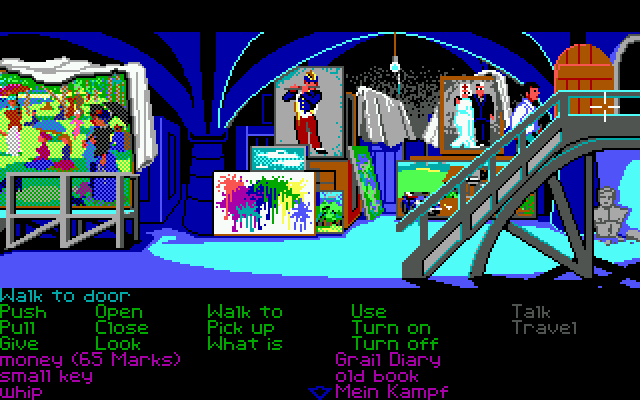
The game lets you make choices that the film did not. You can talk your way past an obstacle, investigate a room or discover that your plan for getting through a conversation was rather optimistic. Its verbs give even a small space possibilities. Look at something, open it, try using an object, then reconsider what that scrap of information was trying to tell you.
By the end, the research has acquired an urgent purpose. Henry is wounded, and recovering the Grail gives Indy a chance to save his father. The original Lucasfilm manual explains both the rescue and the importance of the diary. The sacred object offers healing, while the son has to put what he has learned into practice to reach it.
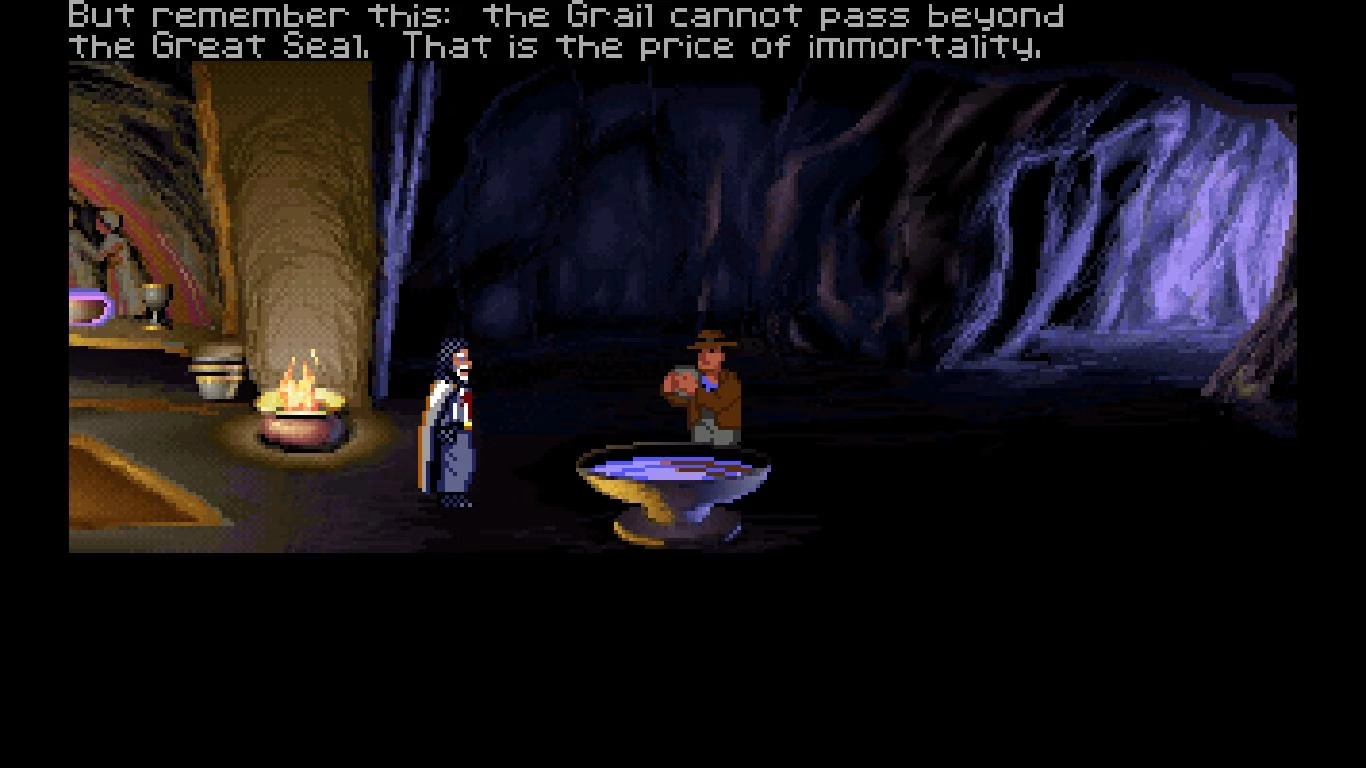
It is an appealing Christian association inside a very mainstream adventure: the cup connected to Jesus brings life to someone who needs help. The good outcome is a reunion. After all the travel, deciphering and danger, Indy can use what he has found for his father.
Players who know the film should still read the game’s clues. The adventure’s Grail puzzle uses its own evidence, including different possible descriptions in the diary. Remembering a particular movie prop is no substitute for doing the archaeological homework. Henry has spent a lifetime on this subject; the least his son can do is bring the notes.
The scene also gives the relic a more intimate scale than the treasure hunters’ grand ambitions. For Indy, at that moment, the question is whether his father will live. Finding the Grail is satisfying because somebody can be brought back to safety, and the player has helped make it happen.
Age of Empires II (1999) and IV (2021): following Joan of Arc
Joan starts her Age of Empires II campaign as someone you must get safely down the road. There are armed men to escort her, hostile forces to avoid and a destination that is much easier to reach if you resist the temptation to investigate every enemy position on the way.
The campaign gives this young woman a conviction that the surrounding armies cannot supply for her. Joan believes she has been called by God. Her Christian faith is part of the story the game tells about her, and the campaign treats her courage and ability to inspire others with admiration.

Her missions belong to a strategy game, so the player has plenty of practical work. You gather resources, organise troops and try to keep the advance from dissolving into a collection of expensive mistakes. Joan is the person holding the campaign together, a recognisable believer at the centre of a series that can otherwise make history look like a contest between coloured settlements.
The later Age of Empires IV returns to her in its Hundred Years War campaign. World’s Edge’s official account of making Joan discusses her prayer, devotion to God, churchgoing and belief in a divine calling. The developers introduce her as a person whose faith helped form her resolve, then invite players to follow her part in the campaign.
That is a much firmer Christian connection than treating every helpful religious unit as a Christian. Joan is a specific historical believer, and her faith is identified. The series also depicts many other cultures and religions, whose units and buildings should be understood in their own settings.
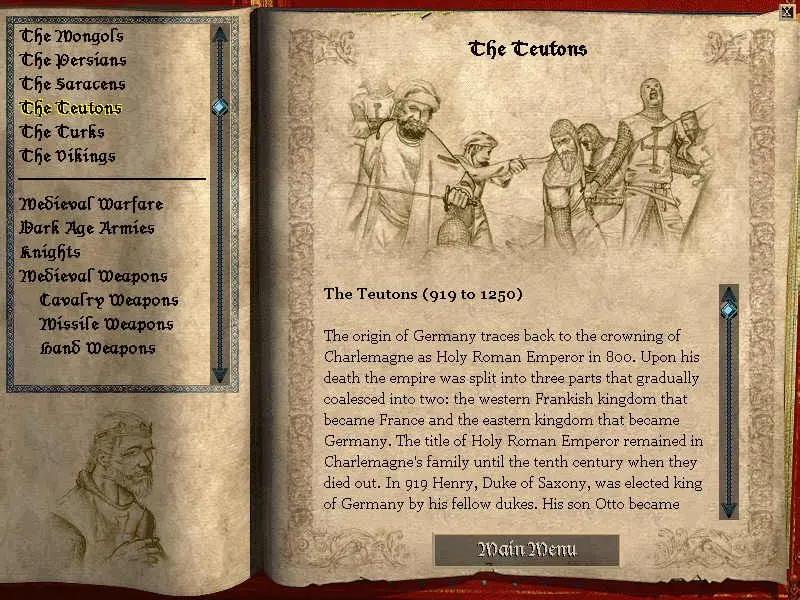
Within the Christian medieval societies represented by the games, monasteries and relics add familiar religious places to the map. A monk’s healing can be useful after a difficult battle, and a monastery becomes a destination worth protecting. The official Age of Empires guide explains those relationships between the unit, the building and the relic.
Joan supplies the human presence those systems cannot provide on their own. The campaign’s girl on the road has somewhere she believes she must go. Getting her there gives the opening mission a purpose you can grasp immediately, long before the map is crowded with castles.
Civilization IV (2005): the prayer before the first city
Before Baba Yetu had a Grammy, it had a very promising job offer from an old roommate.
Civilization IV lead designer Soren Johnson knew Christopher Tin from Stanford. As Tin explained in a 2009 interview, Johnson wanted a title theme with African choral voices and percussion. Music associated with Stanford’s Talisman ensemble helped establish the direction. Tin composed the piece, and Talisman performed on the original game recording.
The choice of words made it an unusually direct meeting of Christian prayer and a mainstream PC game. Baba Yetu sets a Swahili adaptation of the Lord’s Prayer, credited to Chris Kiagiri. Tin’s own notes and published lyrics identify the text. The prayer asks for daily bread, forgiveness and deliverance from evil, carrying Jesus’s teaching into a piece with the lift of a great communal celebration.
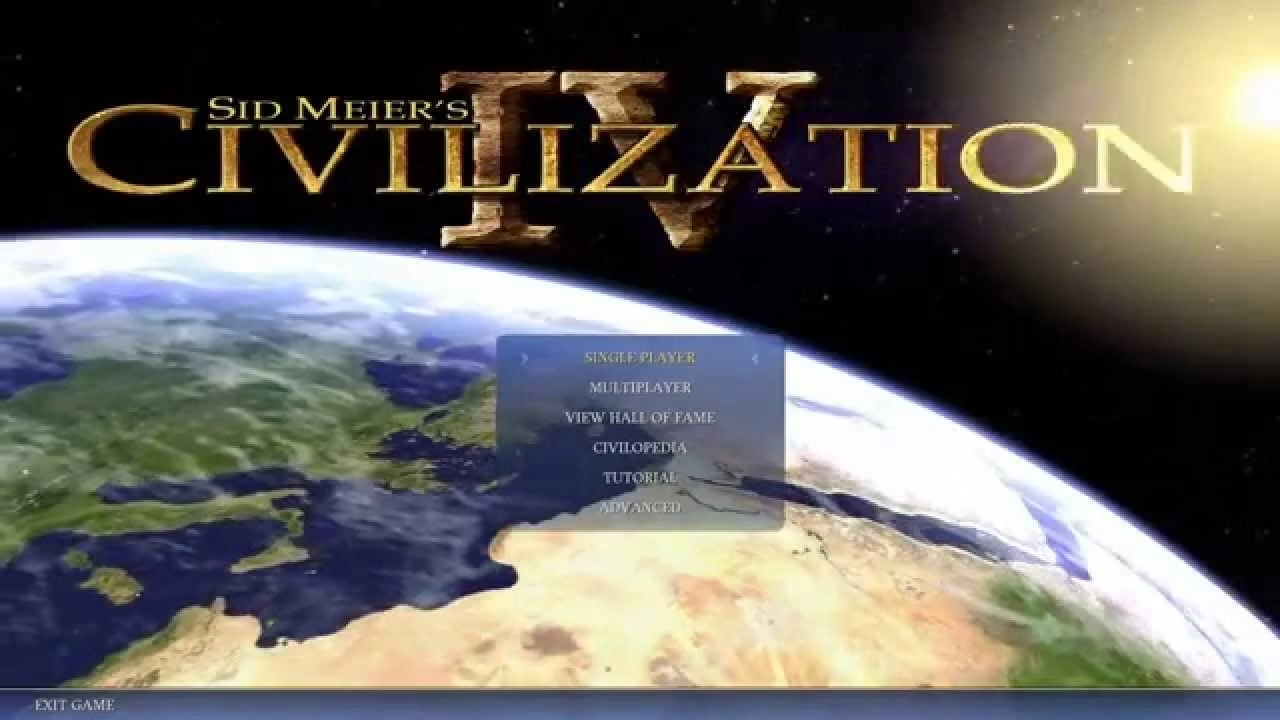
The screen helps. The Earth turns slowly in space, broad enough to hold all the cities you have not built yet. There is no urgent mouse click to make, no neighbour complaining about a border and no exhausted worker waiting for instructions. The voices have a moment to fill the room before the business of running a civilisation begins.
A player who does not understand Swahili can still hear the welcome in it. Once you know the words, the sense of human scale becomes even warmer. The game will shortly put you in charge of enormous historical ambitions; its opening music asks for bread and forgiveness. Those are concerns a person can carry into any century.
The setting also gives Christian prayer room to sound joyful. It is energetic, generous music, with voices answering and gathering strength. For many listeners, the first response was simply to stay at the menu a little longer. Learning that the words come from Christ’s teaching adds another reason to listen.

Christianity is present by name in the game as well as in its music. Researching Theology can found the religion, and its Civilopedia entry identifies Jesus Christ and the New Testament. Christian missionaries can spread the faith, and Christian temples, monasteries and cathedrals become part of the cities you build. The Church of the Nativity is its named shrine. These are simplified systems in a history game, but the Christian identity of the people and places represented is explicit.
Tin later recorded a new version for his album Calling All Dawns, with the Soweto Gospel Choir among the performers. That later recording should be distinguished from the original Talisman game performance. The song went on to win the 2011 Grammy for Best Instrumental Arrangement Accompanying Vocalist(s), becoming the first music written for a video game to win a Grammy. A later interview with Tin for YourClassical follows its journey from the game into his concert work.
That journey has a lovely beginning: someone making a strategy game asked a composer he knew to write something stirring, and players around the world ended up listening to the prayer Jesus taught. If you want one clear example of Christian inspiration reaching far beyond an explicitly religious game, Civilization IV supplies it before you have taken your first turn.
Fallout: New Vegas, Honest Hearts (2011): scripture in Zion
Daniel has people to look after. In the middle of Fallout: New Vegas’s journey into Zion, that gives the missionary a different set of priorities from the visitor who has arrived with a backpack full of ammunition.
Honest Hearts puts Daniel and Joshua Graham, two New Canaanite missionaries, into the centre of its story. They belong to a surviving Mormon Christian tradition. Their faith is named, they refer to scripture and the player can talk with them about belief. These are Christians living in Fallout’s damaged world, with the Bible still part of their lives.
Josh Sawyer, the expansion’s lead designer, was explicit about that intention. In his interview with Catholic Game Reviews, he described wanting to show Christian faith in a post-apocalyptic environment
. The choice grew out of the group he wanted to depict and the region in which the story takes place.
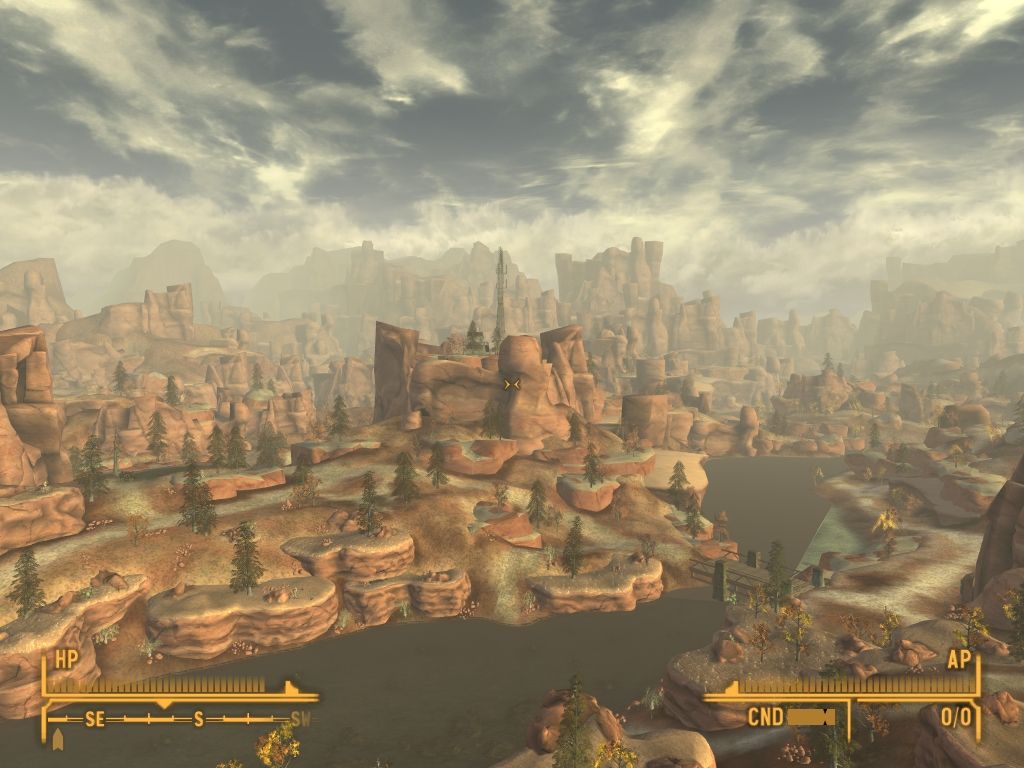
The setting gives those conversations room. Zion is one of Fallout’s most beautiful departures from the familiar wasteland: great red cliffs, water and open sky. The human questions are still difficult, but you can walk somewhere that feels worth caring for. Daniel’s concern for the people around him fits that feeling. He wants to preserve lives and is prepared to help the player seek a way out of danger.
Joshua Graham brings a harder personal struggle to the same faith. His past has left him with much to repent of, and the player can encourage him toward mercy at the expansion’s climax. The hopeful path lets him spare a defeated enemy. Christian forgiveness becomes a decision the story can actually take, rather than a religious word dropped into an otherwise unrelated quest.
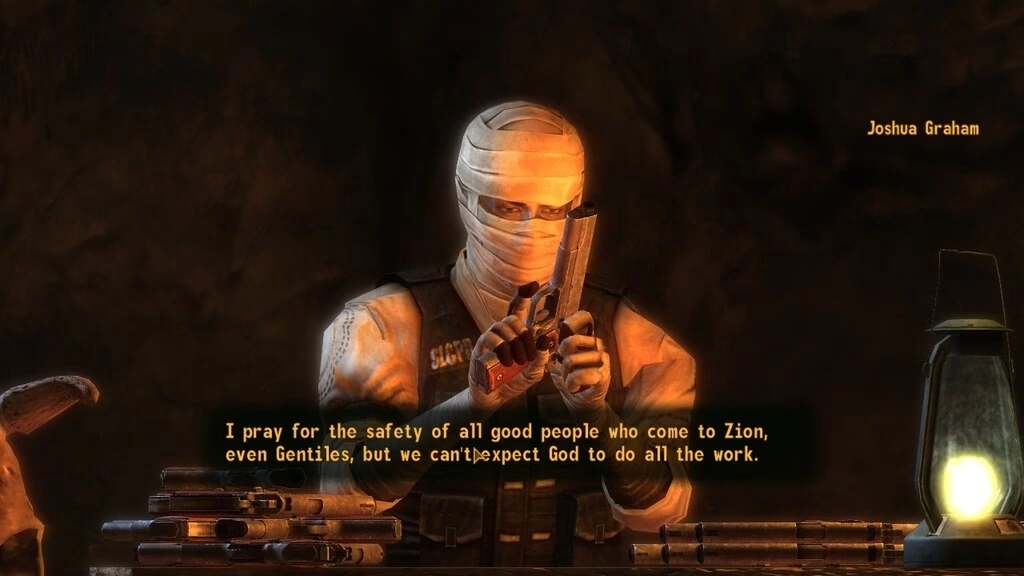
It would be misleading to present Graham as a flawless model of Christian conduct. The moving part of that path is his need to accept mercy as something he must practise, too. His faith gives the story a language of repentance and the possibility of a different future. Choosing that resolution lets the player help him take a step toward it.
The expansion also includes a Scripture item, a physical reminder that religious life has survived along with the people who practise it. In a series where an inventory can become a record of everywhere you have been, a small book can be a meaningful thing to carry away from Zion.
Honest Hearts is at its most hopeful when the discussion of faith leads to care for a living person. Daniel’s wish to protect others and Graham’s possible choice of mercy are distinct parts of that story. Both give Christianity something to do in the world beyond supplying an impressive speech.
Red Dead Redemption 2 (2018): someone sits beside Arthur
Arthur Morgan can spend an astonishing amount of time avoiding a conversation with himself. There is always a horse to saddle, a debt to collect, somebody else’s trouble to handle. Rockstar gives him an entire landscape in which to keep moving.
Late in Red Dead Redemption 2, a conversation with Sister Calderón makes him sit down.
He is ill, frightened and running short of the comfortable stories he has used to explain his life. The nun does not need him to perform the usual version of Arthur Morgan. She has seen him help people. Sitting beside him on the station bench, she listens to the man underneath the reputation.
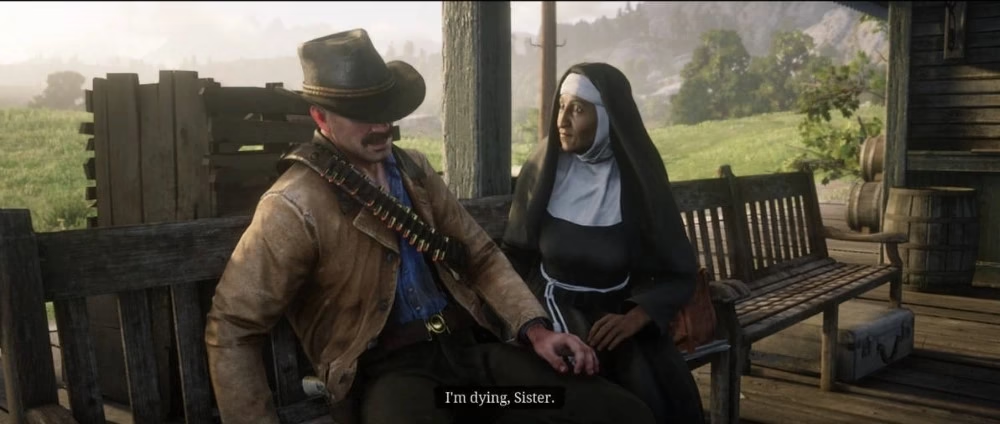
The encounter comes at the end of The Fine Art of Conversation on a path that depends on the player’s honour and earlier optional meetings. Other players may meet Reverend Swanson in that place. Sister Calderón’s appearance therefore carries a little history of its own: the kindness Arthur encountered earlier has someone there to speak with him now.
Her Christianity has already been shown through practical care. Alongside Brother Dorkins, she belongs to the part of Saint Denis where the player is asked to notice people who need help. Food, money and attention can do useful work there. Arthur may arrive prepared to be cynical, but it is difficult to keep that pose fully intact around someone who persists in seeing his capacity for goodness.
The station scene gives that persistence its deepest purpose. Sister Calderón hears his fear without treating him as a hopeless case. His past is real, and so is the possibility that he can still choose to love someone. Her response does not depend on Arthur suddenly knowing how to say everything correctly.
“Take a gamble that love exists… and do a loving act.”
Sister Calderón, Red Dead Redemption 2
The line belongs to the game’s dialogue, and it is one of its gentlest invitations. Arthur has spent years hearing grand promises from people who want something from him. This woman asks him to do good for somebody else while he still has the chance.
There is a recognisably Christian generosity in the way she treats him. Christ repeatedly meets people whom others have reduced to a reputation, a failure or a social category. Sister Calderón gives Arthur the dignity of being more than the worst things he has done. She can acknowledge sin and still speak to the person capable of turning toward love.
For the player, the invitation reaches back into the open world. There are people Arthur can assist, choices he can make differently and moments when his considerable ability to get things done can be placed in someone else’s service. His time is limited. It still belongs to him to use.
Rockstar does not turn the exchange into a theological lecture. The characters are close enough to hear each other without raising their voices. The place is ordinary, the train is coming and a woman whose faith has shaped her life offers a frightened man a reason to try. The size of the game makes that quietness more affecting. After all the journeys and commotion, someone takes the trouble to sit beside him.
Christian compassion is allowed to be intelligent here. Sister Calderón notices the evasions in Arthur’s self-description, understands that he is afraid and answers him with warmth rather than easy flattery. She is hopeful because she takes the good he has done seriously. Her faith gives her a language for encouraging more of it.
It is a powerful modern companion to the older images of the cross and the church. Arthur receives no enchanted weapon on the platform. He receives a conversation that helps him decide what to do with the strength he has left.
Indiana Jones and the Great Circle (2024): Father Antonio opens the door
Father Antonio likes his jazz. That is one of the nicest early discoveries in Indiana Jones and the Great Circle: the priest helping Indy through the Vatican has a personality that extends well beyond the information the next quest requires.
MachineGames gives the old friends room to enjoy one another’s company. Antonio’s library is a place of books, conversation and welcome. Indy has arrived with a mystery, and the priest has both local knowledge and a willingness to help. A friendly reception goes a long way when the alternative involves trying to explain yourself to the men occupying the streets outside.
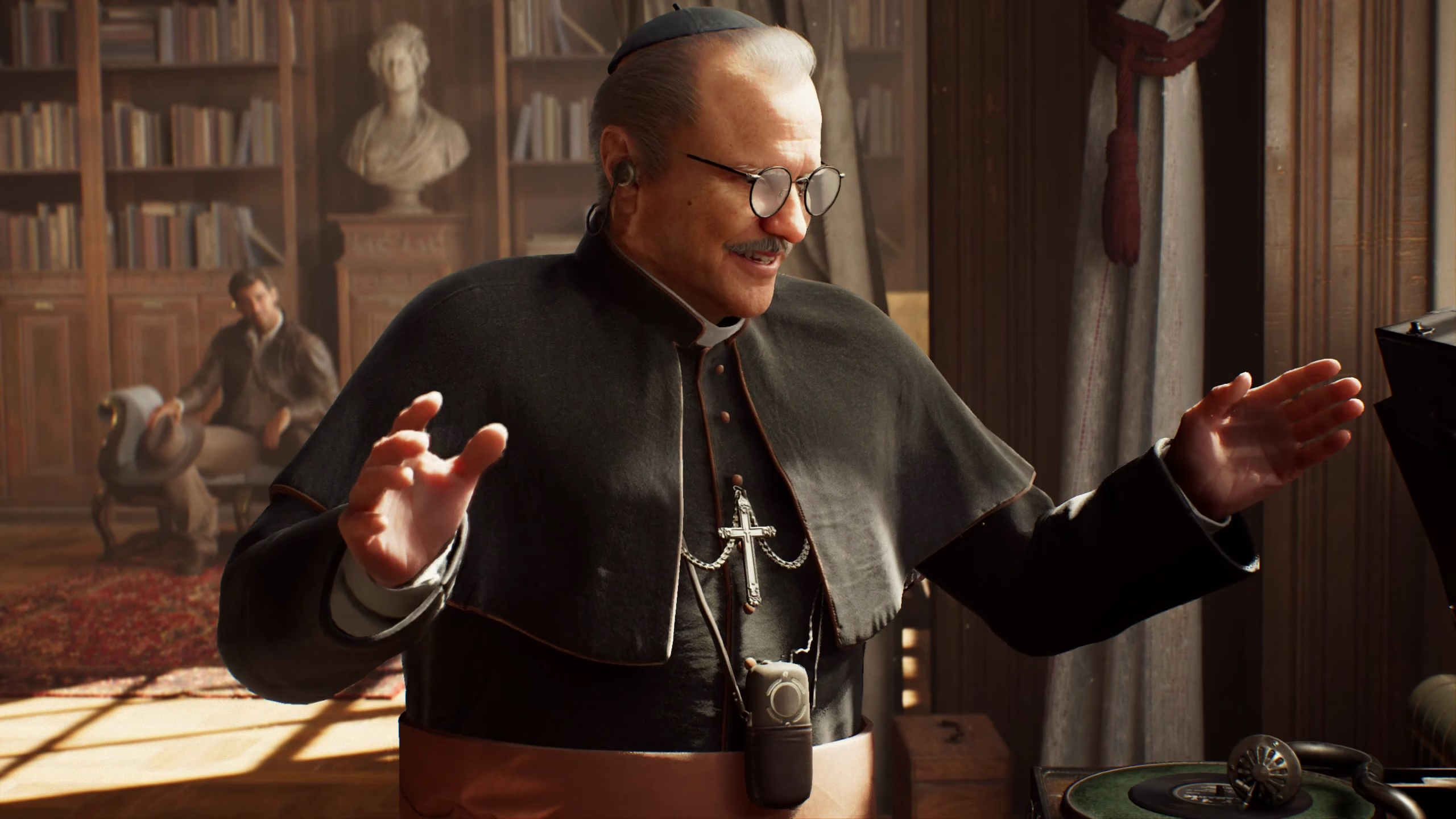
Christianity is present here in its own names and places. This is Vatican City, and Antonio is a Catholic priest wearing a crucifix. Bethesda’s official character biography says he found God during the Great War and studied for the priesthood afterward. His vocation belongs to the life the game has given him.
He also has a history with Indy. Lucasfilm’s account of the game’s connections to the films draws attention to Antonio’s use of the name Henri and their wartime acquaintance. Their warmth has a foundation. You are watching someone open his door to a man he already knows, rather than a stranger who exists only to hand over equipment.
The help is practical. Antonio assists Indy’s attempt to move through the Vatican, while the player explores its courtyards and corridors, looks for clues and returns with discoveries. The adventure makes room for the pleasure of having a knowledgeable friend nearby. You can be capable with a whip and still benefit enormously from someone knowing where everything is.
There is affection in the presentation of the priest. His curiosity, humour and learning make him enjoyable company, while the visible crucifix and his vocation stay part of the character. He can be a believer, a scholar and someone who enjoys a tune in the same room.
The series had already sent players after Christ’s Grail decades earlier. Here, some of its most welcoming Christian material is a living person. The sacred setting has someone inside it who treats Indy as a friend and helps him get on with the job.
Kingdom Come: Deliverance II (2025): Henry stops to pray
There is a crucifix beside the road, and for once Henry does not need to hurry past it. He can kneel, pray and let the journey wait.
Kingdom Come: Deliverance II places the player in medieval Bohemia, where Christianity belongs to the buildings, greetings, art and everyday practices of the people Henry meets. Christ and the saints are named. The crosses are Christian crosses, and the prayers are recognisable Christian prayers.
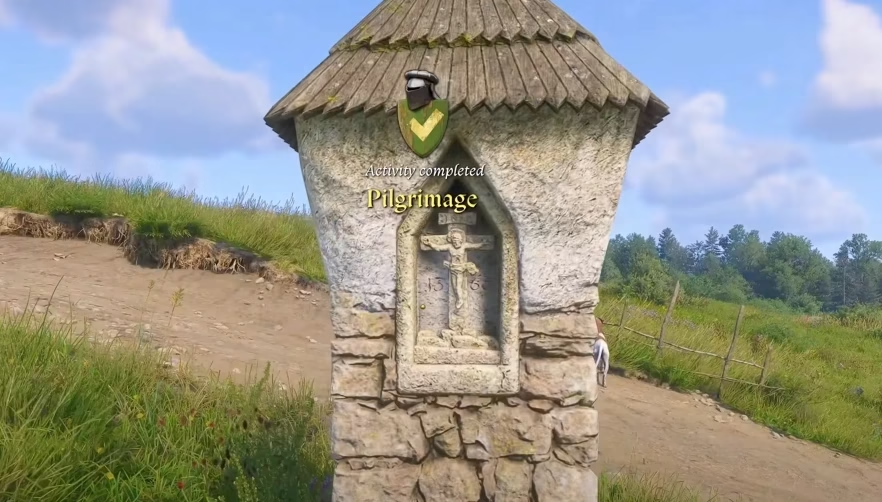
The game’s Faith and Devotion codex entry describes Christianity in the Czech lands, the veneration of the Virgin Mary and the place of the saints. That religious world is close enough to touch during an ordinary walk. A wayside shrine gives a little patch of countryside a purpose beyond being the space between two destinations.
With the Fundamentals of Theology perk, Henry can pray at shrines and crosses and receive a protective benefit. The spoken prayer matters to the presentation. The game gives him time to say the words, rather than treating the shrine as a container to open on the run.
A Christian player may recognise the Lord’s Prayer and the Hail Mary among those devotions. Hearing Henry speak them gives the roadside stop a familiar rhythm. There is the request for daily bread, the appeal for forgiveness and the ending you wait to hear before standing up again.
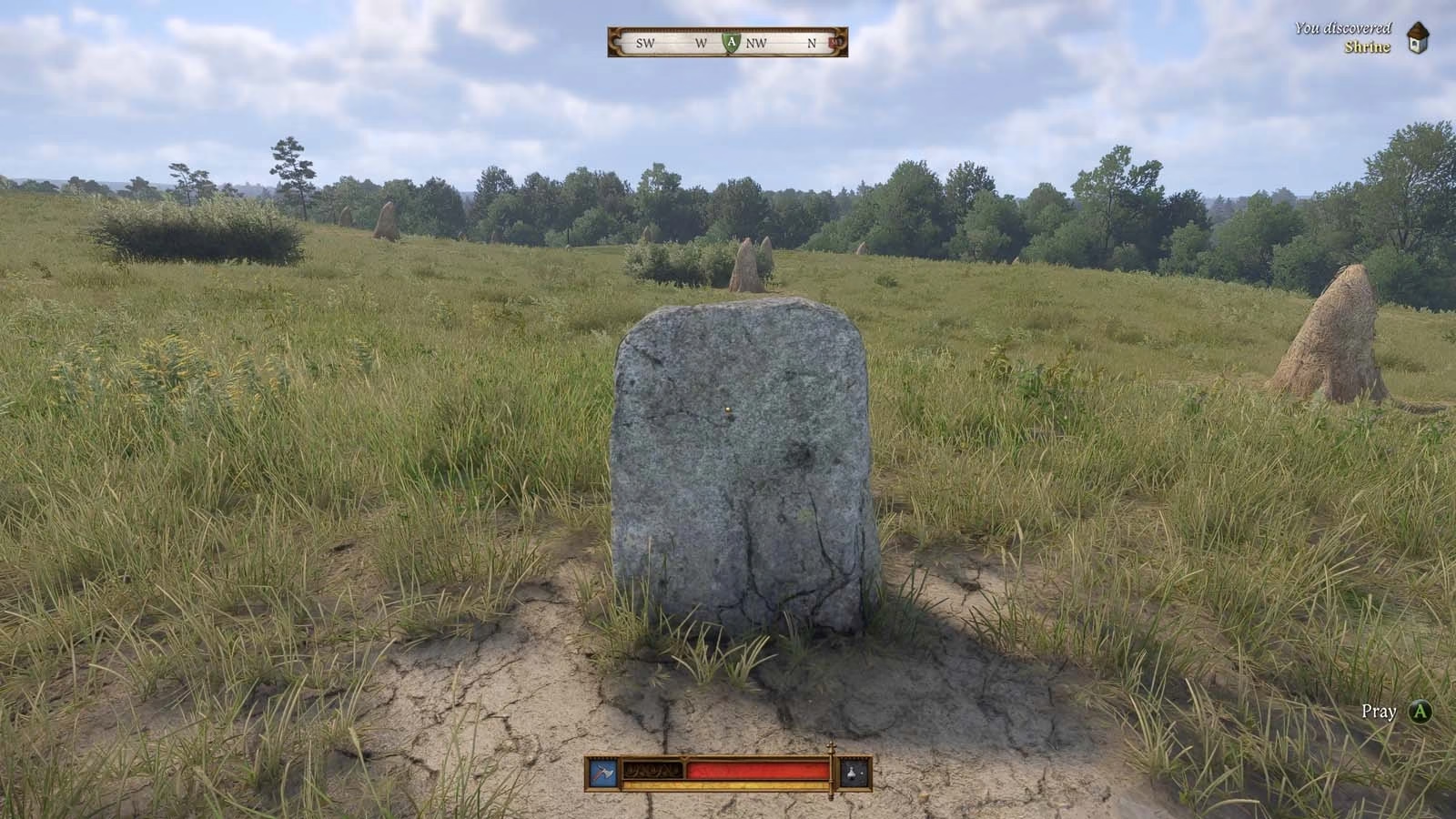
There is also a repeatable pilgrimage task. A priest sends Henry to a shrine, and the objective is to pray there. The documented task gives the player a route through the countryside for a religious purpose. You are travelling to perform an act of devotion.
The quiet is welcome in a game that can demand so much attention from a simple journey. You have equipment to maintain, people to find and enough opportunities to be delayed that a short errand can acquire its own history. A prayer offers a different reason to stop. For a moment, Henry has somewhere to be that does not require him to win an argument or reach for a weapon.
The protective game effect is a piece of RPG design, while the words and objects belong to real Christian practice. Their combination gives faith a supportive place in the player’s routine. Henry can prepare for the road by turning toward Christ, with a crucifix in front of him and a prayer to finish before he moves on.
A prayer, a welcome, a chance to help
The cross Link carries, Christ’s cup in Indy’s quest and the prayer sung over Civilization’s Earth are easy to recognise once you know where to look. They sit alongside Christians with names and personalities: Joan, Daniel, Joshua, Sister Calderón and Father Antonio. Their games give them very different jobs, from guiding an army to welcoming an old friend.
Some of the warmest encounters happen when the adventure slows down enough for somebody to be kind. Antonio has a door to open. Sister Calderón has time to listen. Henry has a prayer he can say beside the road. The player can stop rushing for long enough to take part.
For more on the Nintendo side of that history, our full feature on Link and Christianity follows the early crosses, Bible item and devotional artwork in detail. Those little objects have been travelling with familiar heroes for a long time.
And when the journey brings you back to Civilization IV, let the world turn for a moment. The choir has a prayer to finish.
Sources and further reading
- Retro Replay: Link’s faith and Christian imagery in Zelda. The companion feature on early Zelda’s cross, Bible and devotional artwork.
- Legends of Localization: original Zelda items. Japanese and English item graphics and names.
- Konami: The Dracula X Chronicles instruction manual. Original manual, hosted by Inverted Dungeon. Richter’s Cross and Holy Water, and Alucard’s Bible in the included Symphony of the Night.
- Age of Empires: military and economy guide. Official explanation of monks, monasteries and relics.
- Christopher Tin interview, Game Developer (2009). Tin describes Johnson’s commission, Talisman and the later album recording.
- Christopher Tin: Baba Yetu notes and lyrics. Composer’s official page identifies the Lord’s Prayer in Swahili and gives lyrics and translations.
- Recording Academy: Christopher Tin in the winner’s circle. Tin’s account of the 2011 Grammy win for Baba Yetu.
- YourClassical: Christopher Tin on Top Score (2012). Interview following the music from Civilization IV into Calling All Dawns.
- Red Dead Redemption 2 dialogue transcript. Transcription of the game’s dialogue, including The Fine Art of Conversation.
- Rockstar Games: Red Dead Redemption 2. Official game page.
- Josh Humphriss: Faith in Red Dead Redemption 2. Additional reading and source of the station-scene capture.
- Lucasfilm Games: The Last Crusade instruction manual. Original manual, hosted by the Museum of Computer Adventure Game History. Grail legend, diary puzzle and Henry’s rescue.
- Age of Empires: Making Joan. Official Age IV feature discusses Joan’s prayer, churchgoing and Christian vocation.
- Age of Empires II: Joan of Arc campaign. Campaign description and original game material.
- Civilization IV: Christianity Civilopedia entry. Transcribed game entry identifying Jesus Christ, with religion and building mechanics.
- Josh Sawyer interview: Catholic Game Reviews (2024). Sawyer explicitly discusses portraying Christian faith through the New Canaanites in Honest Hearts.
- Honest Hearts: Scripture item. Documentation of the expansion’s religious book item.
- Bethesda: The Faces & Places of The Great Circle. Official Father Antonio biography identifies his priesthood and experience of finding God.
- Lucasfilm: The Great Circle and the films. Official account of Antonio’s wartime connection to Indy.
- Kingdom Come II: Faith and Devotion codex. Transcribed in-game account of Christianity and devotion in Bohemia.
- Kingdom Come II: Fundamentals of Theology. Transcribed game perk text on prayer at shrines and crosses.
- Kingdom Come II: Pilgrimage task. Player documentation of the priest’s task and shrine prayer objective.