Retro Replay Retro Gaming History, Reviews & Emulation
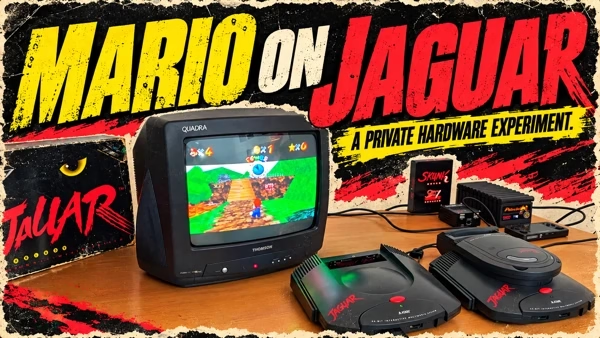
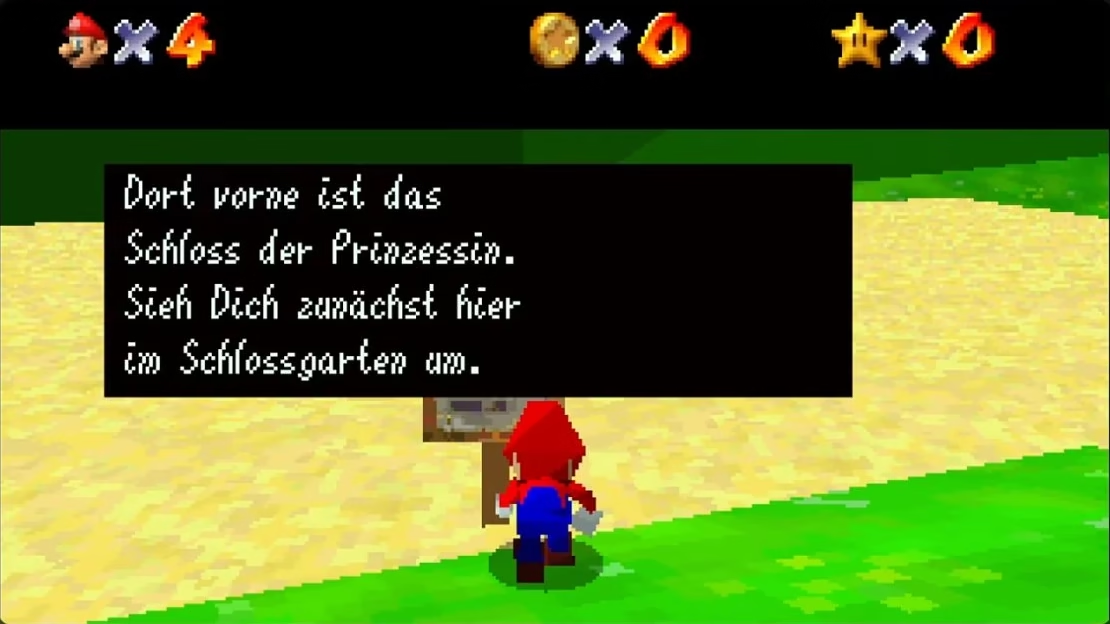
Mario walks across Peach’s checkerboard floor, heads outside and wanders into Bob-omb Battlefield. Familiar enough, until you remember this is supposed to be an Atari Jaguar. Developer Budfolk has rebuilt parts of Super Mario 64 for Atari’s console, using what he describes as a new engine written from scratch in assembly. It looks rough in places, but seeing that castle on a Jaguar is a fine reason to stop scrolling.
Four areas are up and running: the castle grounds, the castle’s ground floor, Bob-omb Battlefield and Tiny-Huge Island. The whole game isn’t there. Budfolk has concentrated on getting these places running natively, sharing the 3D work between the Jaguar’s two RISC processors while its Motorola 68000 handles game logic. Mario has brought quite a workload with him.
The compromises Budfolk chose not to make
According to Budfolk, the build manages around 12 to 20 frames per second on real hardware, depending on the scene. That is with a 320-pixel-wide image and the original game’s full view distance. He compares it with roughly 20 to 30fps in the N64 version, citing optimizer Kaze Emanuar. We haven’t benchmarked it ourselves, but his figures put it somewhere more interesting than a flat 12fps: slower than the original, with the gap changing as Mario moves around.
Budfolk could make it faster by asking the Jaguar to draw less. Rendering every other horizontal line and repeating it reportedly gained about 32 percent in testing. Cutting the view distance to around a third gained 55 percent during a flight over the castle grounds, at the cost of hills and buildings popping into view. He has kept the full distance as his preferred setting, with the shorter one available in a menu. Apparently, even a Jaguar deserves a decent view of the castle.
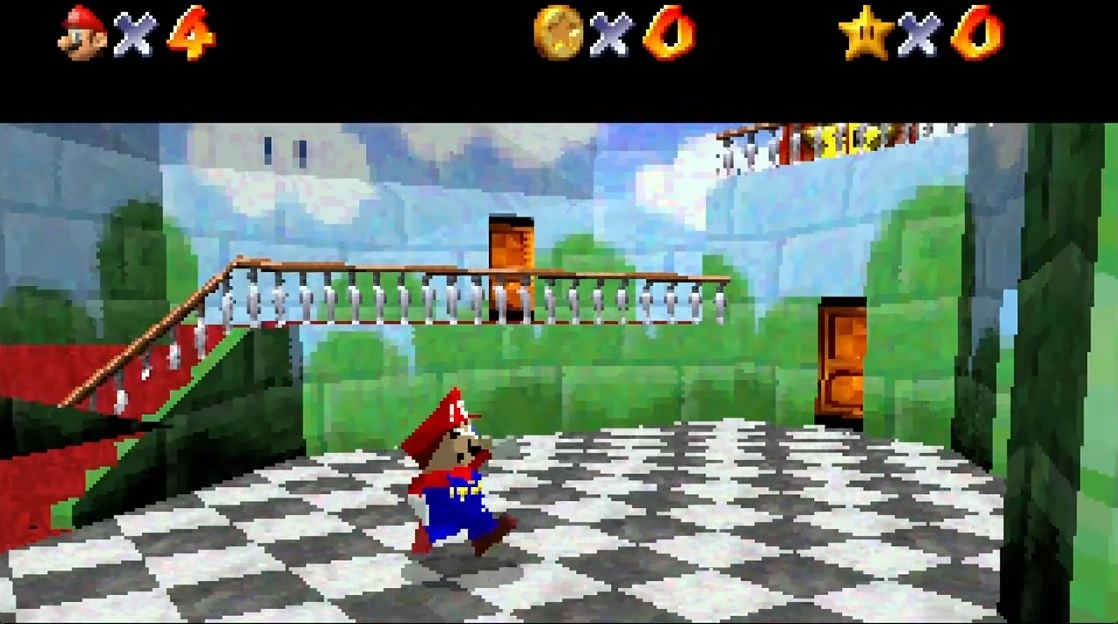
Meanwhile, the sound processor has picked up a second job. Budfolk says the DSP helps check which parts of the scenery are visible and transforms some of the geometry, alongside answering collision requests and mixing 12 music voices at 10.9kHz. The GPU handles the rest of the transformation work, clipping, sorting and drawing. There isn’t much opportunity for either chip to put its feet up.
Keeping the scenery from poking through Mario takes another workaround. Without a Z-buffer to check depth at each pixel, Budfolk’s renderer sorts triangles into 256 buckets and draws them in order. Mario gets his own range to help stop large pieces of terrain cutting through him. Some troublesome overlapping details are built into the geometry beforehand, while the blitter reads textures from cartridge memory. Perspective correction survives, too, so the conversion hasn’t simply abandoned every expensive feature to get moving.
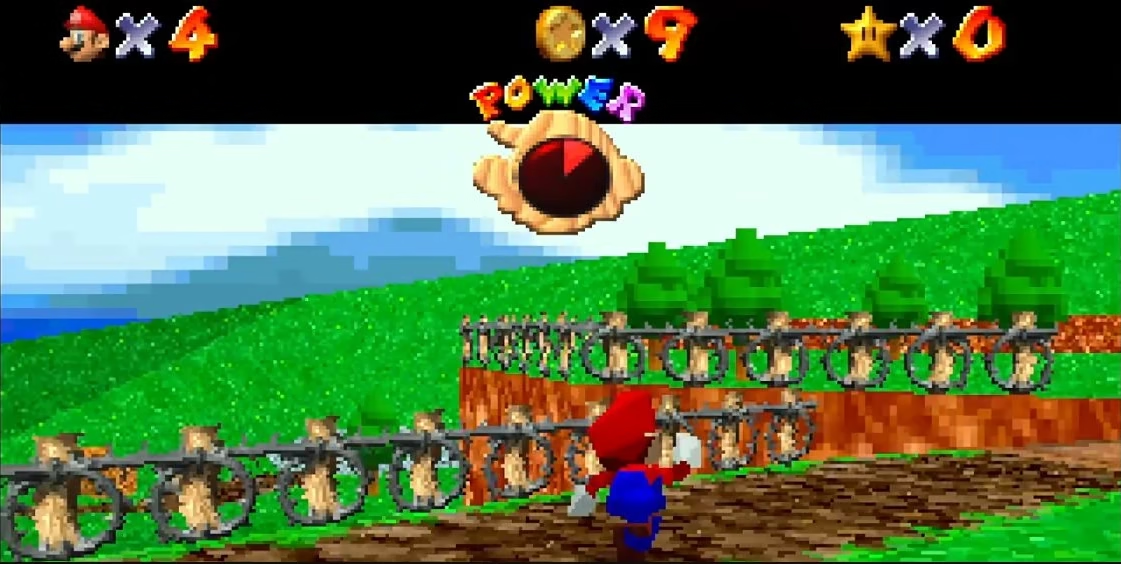
Emulator footage and the real machine
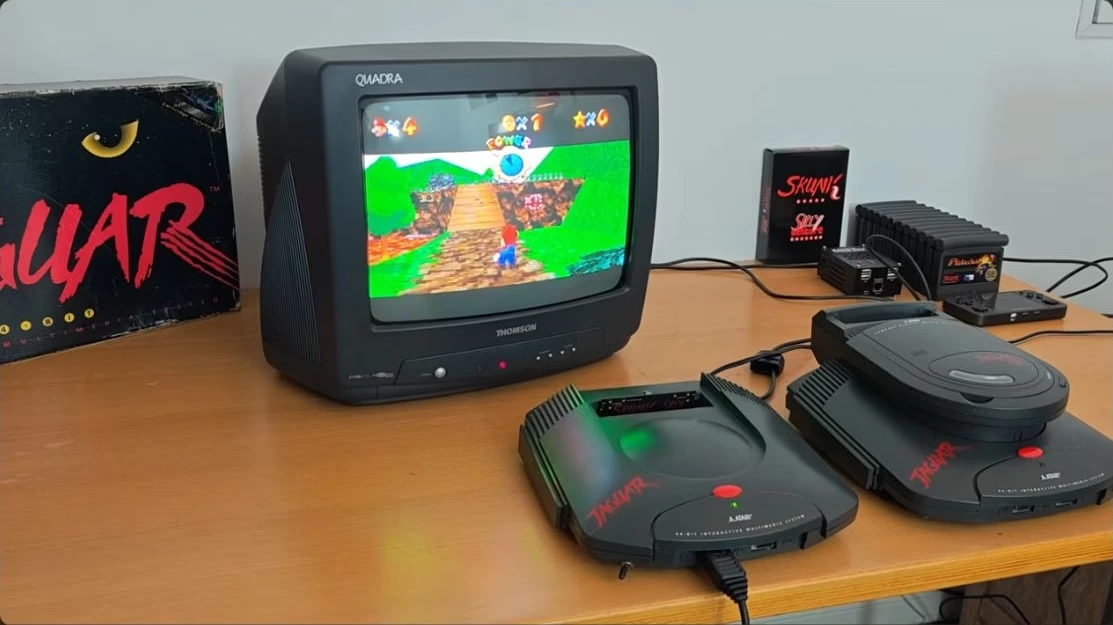
The longer video was recorded in BigPEmu. For a look at the actual console, Budfolk has also filmed the game running on a CRT beside his Jaguar hardware. He says the phone camera makes that recording look choppier because it doesn’t synchronize cleanly with the television. You can watch both below, though timing frames from a phone pointed at a CRT would be a shaky way to settle a performance argument.
His testing has produced a few dead ends as well. Removing submerged geometry saved nothing, and halving the physics update rate would reportedly gain no more than half a percent. Both ideas were dropped. Budfolk says the blitter’s memory bandwidth is holding things up; a precomputed table that helps skip unseen scenery proved more useful, improving the castle grounds by around 12 to 16 percent in his tests.
A clever experiment with a frustrating catch
Now for the catch: you won’t be downloading it. Budfolk calls this a non-commercial, unaffiliated hardware experiment and says no ROM, game data or builds will be released. His description says the conversion tools use a legally owned original and stay on his own machines. There is no mention of a Nintendo takedown or a demand to keep it private.
That is frustrating if you own a Jaguar and would love to try it. Could the original engine code or conversion tools be shared without Nintendo’s assets? Budfolk hasn’t explained whether those parts can be separated, whether that would take substantial extra work, or whether he simply wants to keep the project to himself. It is fair to ask. For now, though, he has said he won’t release it, not that somebody has told him he can’t.
So leave the spare cartridge on the shelf for now. We spotted the project through Time Extension’s report, and Budfolk’s videos and accompanying write-up offer plenty to pore over. The private-only policy is a disappointment, but watching Mario wander through these familiar places on Atari’s hardware still has its charm. Hopefully Budfolk will say a little more about what, if anything, other Jaguar developers might eventually get to learn from it.