 Retro Replay Retro Gaming History, Reviews & Emulation
Retro Replay Review
Gameplay
The first hour of Antares puts you in the right frame of mind quickly: you are not conquering Kyrion so much as trying to survive long enough to understand it. Choosing six party members from twelve predefined characters matters because the group is built around different strengths, from fighting and PSI to cooking and translation. That early selection gives the game some welcome personality; a combat-heavy team may look reassuring, but leaving behind a useful specialist can become an uncomfortable decision once the expedition is underway.
Exploration uses the first-person, grid-crawling approach familiar from Bard’s Tale-era RPGs, while encounters switch to turn-based commands and text results. The pace is methodical rather than flashy. You issue orders, see what happened, and live with the consequences. That makes every encounter part of the wider resource puzzle: enemies bring experience and gold, but spending health, food, and medicine to win is not automatically a bargain.
Antares earns its tension through needs that are easy to dismiss until they become a crisis. Every character must eat and sleep. Hunger is fatal, while a sleeping party member stays with the group but cannot act or fight, a nasty complication if trouble finds you at the wrong moment. Six item slots per character also force you to think about what comes along. The radar’s area-danger warning is useful precisely because it cannot make the decision for you: do you press into a risky place, or turn back before the group is worn down?
There is a pleasingly harsh expedition rhythm here. Gold from defeated enemies can buy equipment and medicine in hidden shops, dead companions can be resurrected at the landing module, and experience steadily improves abilities. None of that makes carelessness painless. Antares rewards note-taking, conservative travel, and treating recovery as part of the adventure rather than downtime. If you want frictionless character progression, its demands will grate; if you like an RPG that makes logistics feel consequential, they are the point.
Graphics
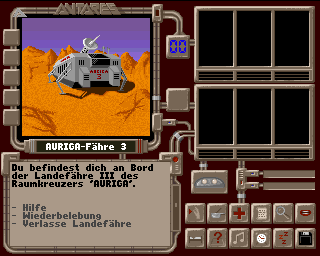
Antares shows Kyrion through a first-person exploration view, then handles combat through turn-based commands and text reports rather than elaborate battle scenes. The strongest visual contribution is functional: you remain oriented around the party’s forward movement, while the radar gives a direct warning about how dangerous the current area is.
Story
The sci-fi setup has more urgency than a routine dungeon crawl. Radio contact with space explorers has gone silent, a second troop heads out to investigate, and that rescue effort is itself shot down after responding to an emergency call. You begin stranded on Kyrion with two connected questions hanging over the trip: what happened to the first explorers, and what put your own group on the ground?
That premise works because it gives exploration a purpose beyond collecting experience. Kyrion is not just a place to clear; it is a place to investigate while your party is vulnerable. The presence of non-hostile species adds another useful wrinkle, since translation is needed to communicate with them. Picking a translator is therefore not merely a stat choice but a decision about how prepared your team is to learn from the planet rather than only fight through it.
Antares keeps its narrative pressure tied to the expedition itself. Every detour, supply run, and retreat sits beneath the larger mystery of the lost contact and the distress call. It is a lean framework, but it fits the game well: you are a stranded search party trying to turn scraps of safety and information into an answer.
Overall Experience
Antares is a stern, thoughtful slice of early sci-fi role-playing. Its best moments come when the systems overlap: a dangerous area is ahead, someone needs sleep, supplies are limited, and the party composition you chose before setting foot on Kyrion suddenly feels very real. The result is less about power fantasy than fieldcraft.
That same commitment makes it unforgiving. The game expects you to respect food, rest, carrying capacity, and the cost of battle, and it can punish a poorly planned push. Yet the punishment is connected to understandable decisions, not empty busywork. When a battered group returns to the landing module alive, recovers, and ventures back with a better plan, the progress feels earned.
Give Antares a chance if you enjoy first-person party RPGs where mapping and preparation matter as much as leveling. Its Bard’s Tale roots are clear, but the stranded-space-expedition premise, PSI abilities, translators, and survival pressures give it its own flavor. It will not charm you by being easy; it wins you over by making a six-person mission feel precarious from beginning to end.


Reviews
There are no reviews yet.