Retro Replay Retro Gaming History, Reviews & Emulation
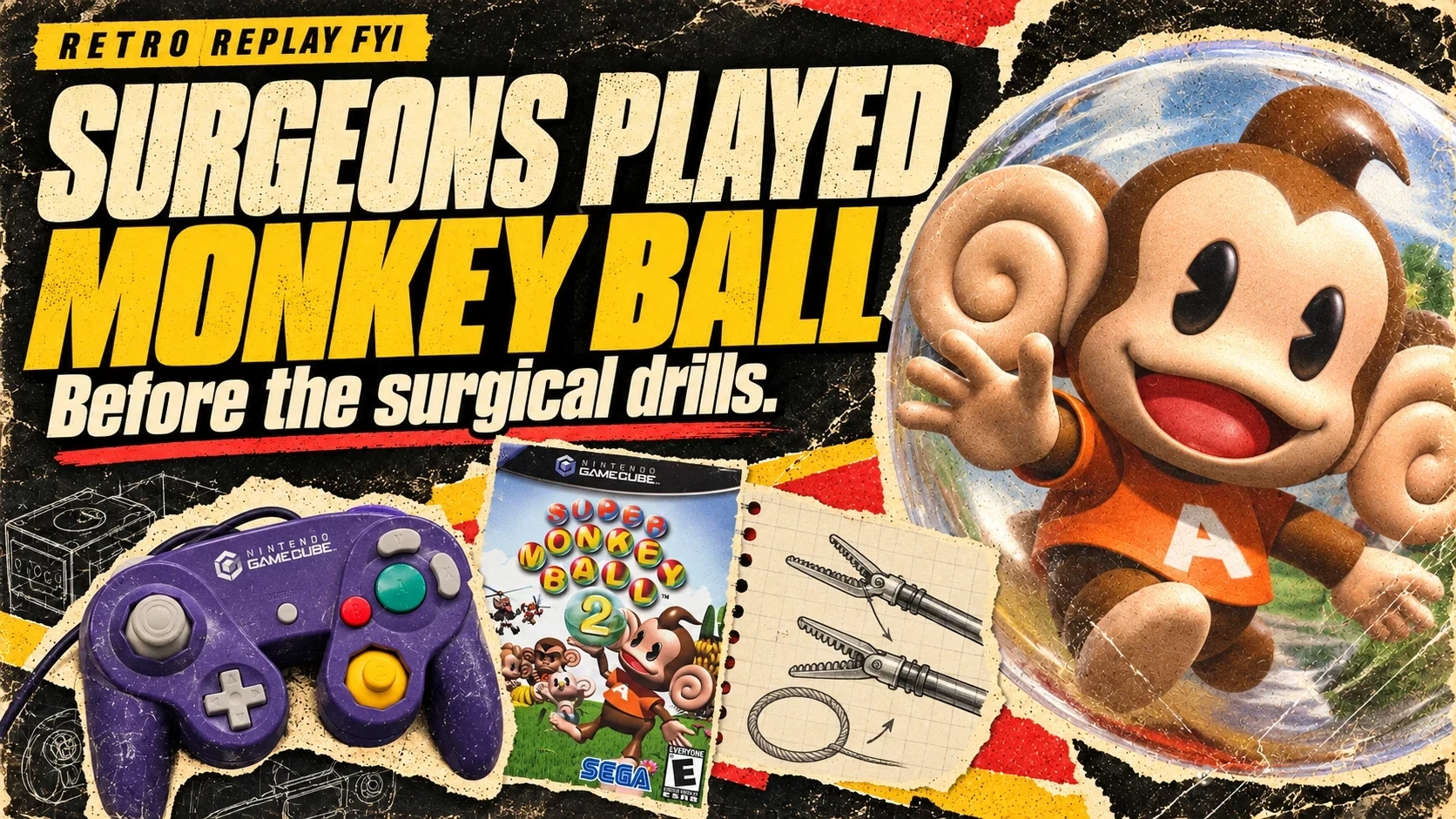
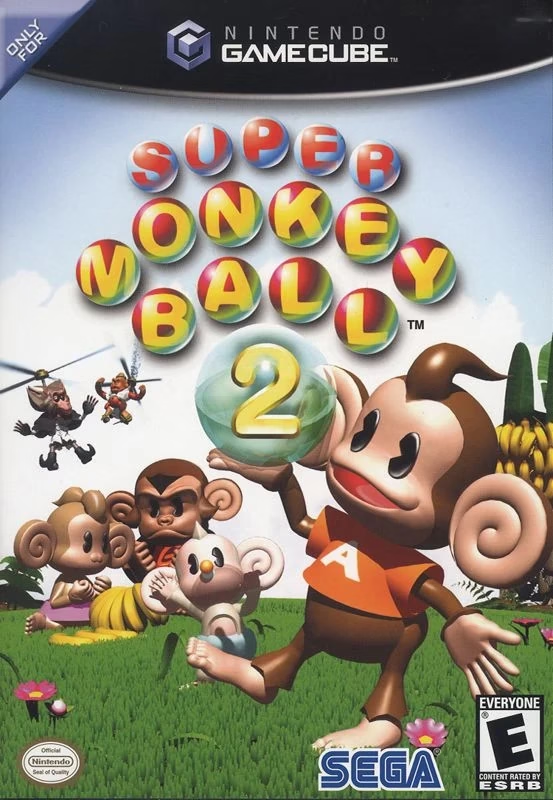
Surgeons used Super Monkey Ball 2 as a warm-up before practicing laparoscopic surgery. Yes, the one with the bananas, the transparent balls and the alarming number of places to fall off. Dr. James “Butch” Rosser helped investigate whether playing selected games could get surgeons ready for delicate training tasks.
The story reached gaming news in 2013 through reports about Rosser at Florida Hospital Celebration Health. Health News Florida covered it that October, naming Super Monkey Ball 2 as part of his work. A surgeon with a GameCube controller makes a terrific headline. The experiment behind it is worth a closer look.
Steady hands, one very impatient monkey
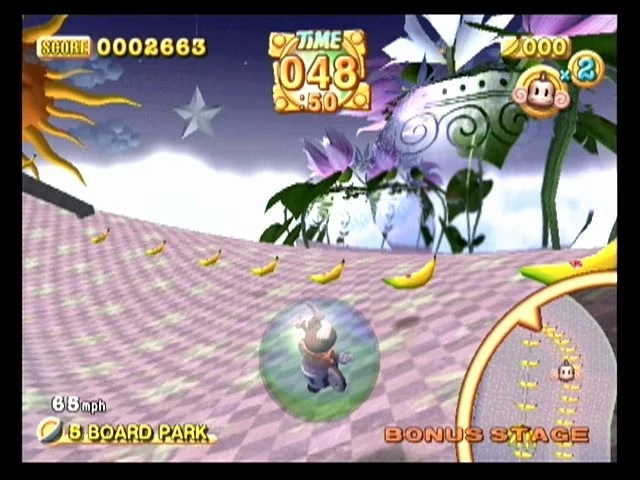
Super Monkey Ball has a knack for making a tiny thumb movement feel enormously important. Get the tilt right and AiAi rolls neatly toward the goal. Push a little too hard and you’re watching a perfectly recoverable run disappear over the edge. The challenge is reading what the ball is doing and correcting it without making the next problem worse.
Laparoscopic work also asks people to guide tools while watching a screen. The researchers’ earlier 2007 paper examined the relationship between gaming and performance in a surgical-skills program. Better game performance was associated with better training scores. That was a correlation. The later warm-up study asked a different question: could playing just before the drills help?
What the surgeons actually played
The 2012 paper followed 303 trainees in Rosser’s Top Gun program: 123 gaming participants from later courses and 180 earlier controls. Assignment wasn’t random.
Its methods specify six minutes each of three games, totaling 18 minutes: Super Monkey Ball 2, Silent Scope on PlayStation 2 and Star Wars: Racer Revenge. That’s quite a warm-up playlist: careful rolling, target shooting and trying to keep a podracer on course.
The warm-up group averaged 649 seconds for ten rope-handling trials; controls took 712. Suturing errors were also lower, but stitching speed wasn’t significantly better. Later drills and the combined overall score didn’t reach statistical significance.
AiAi earned a place in the experiment
These were training exercises, not patient operations. The study couldn’t establish improved patient outcomes or isolate Monkey Ball’s contribution from the other games. Its authors called for clinical research.
Even with those limits, it’s a wonderfully unexpected use for Sega’s little obstacle courses. The original Super Monkey Ball had already made balancing a monkey into a serious test of patience. The sequel found itself on a surgeon’s warm-up list. Somewhere between the operating-room training kit and the PlayStation 2, somebody still had to explain the bananas.
Sources
- Rosser, Gentile, Hanigan and Danner: The Effect of Video Game “Warm-up” on Performance of Laparoscopic Surgery Tasks (JSLS, 2012), the original study, including methods, results and limitations.
- The Impact of Video Games on Training Surgeons in the 21st Century (2007), the earlier study of gaming experience and surgical-training performance.
- Health News Florida: Surgeons Prep With Video Games (October 11, 2013), for the contemporary Florida Hospital Celebration Health report.
More #RetroReplayFYI
For another game turning up somewhere unexpected, read how a Nintendo DS went gaming on Mt. Everest.