Retro Replay Retro Gaming History, Reviews & Emulation
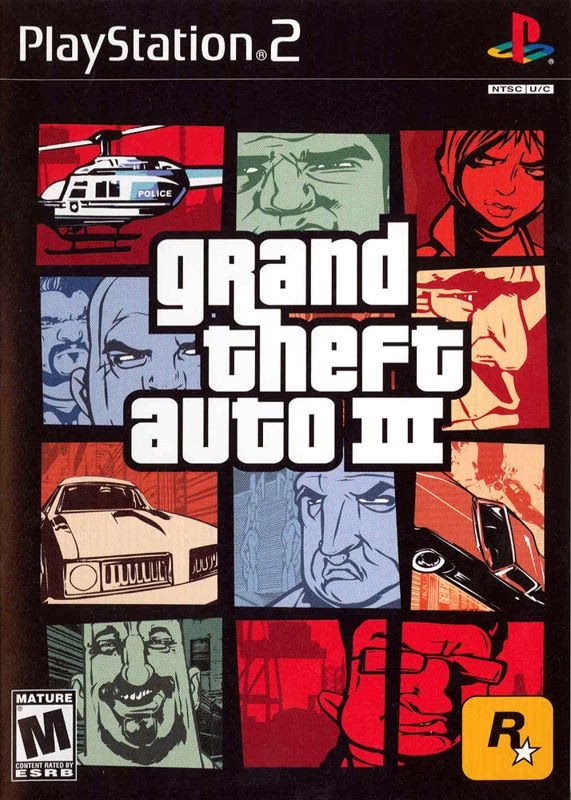
Twenty-five years ago, Rockstar gave us an entire city to explore, a criminal empire to build, and more ways to get into trouble than we knew what to do with.
And video games would never be quite the same again.
On 22 October 2001, Grand Theft Auto III arrived on the PlayStation 2, taking the franchise out of its familiar top-down perspective and dropping players into a fully realized, three-dimensional Liberty City.
And what a game this was!
I’ll admit it. I’d played the original top-down Grand Theft Auto games, and they were fun for a while. Running around causing trouble, stealing cars, and generally being a menace to society had its appeal. But by the time GTA III arrived, those earlier games had largely faded from my mind.
Then Rockstar unleashed Liberty City.
My roommate at the time bought the game on release day, and the two of us practically lived in front of the television for the next several months.
Me and my friends were parked side by side, exploring everything Liberty City had to offer. The story, the characters, the missions, the cars, the weapons, the hidden secrets. There was just so much to discover.
And it wasn’t simply a matter of playing through another video game.
It felt like discovering an entirely new kind of gaming experience.
Welcome to Liberty City
Developed by DMA Design, the studio that would eventually become Rockstar North, Grand Theft Auto III didn’t merely change the camera angle. It transformed the entire experience.
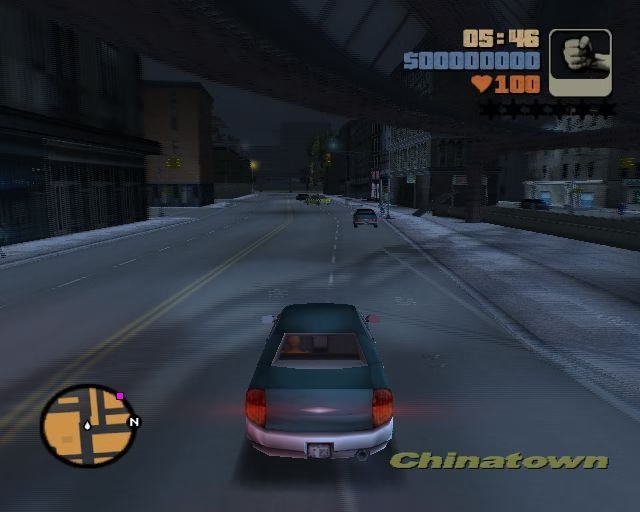
 Instead of looking down on a relatively flat city, you were suddenly standing in the middle of one.
Cars filled the streets. Pedestrians wandered the sidewalks. Police responded to crimes. Traffic lights changed, weather rolled through, and the city continued going about its business whether you participated or not.
And you could go just about anywhere.
Well, eventually. Rockstar still made you earn access to the rest of Liberty City, opening its three main islands as the story progressed.
But the sense of freedom was remarkable.
You could follow the story, take on jobs for various criminal organizations, steal vehicles, explore the city, or simply create your own entertainment.
Sometimes that meant discovering hidden packages or completing vehicle missions.
Other times, it meant stealing the wrong car, getting the attention of the police, and turning a simple trip across town into a spectacularly unsuccessful getaway.
And sometimes those failures were just as entertaining as the victories. There was something satisfying about watching a ridiculous chain of events spiral completely out of control, usually ending with that enormous WASTED message across the screen.
Well, maybe not satisfying when you’d just failed a particularly difficult mission for the sixth time.
But you get the idea.
For the record: GTA III wasn’t the first open-world game, nor was it the first game to experiment with three-dimensional cities. But it combined exploration, driving, combat, storytelling, and player freedom in a way that helped establish the template for an entire generation of games.
A Criminally Good Story
One of the biggest improvements over the earlier games was the storytelling.
 The original titles had given players enormous freedom to cause trouble, but their narratives weren’t exactly the main attraction.
GTA III changed that.
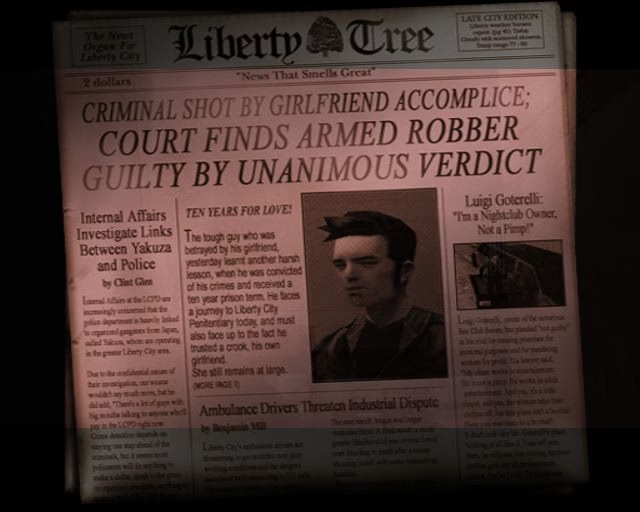
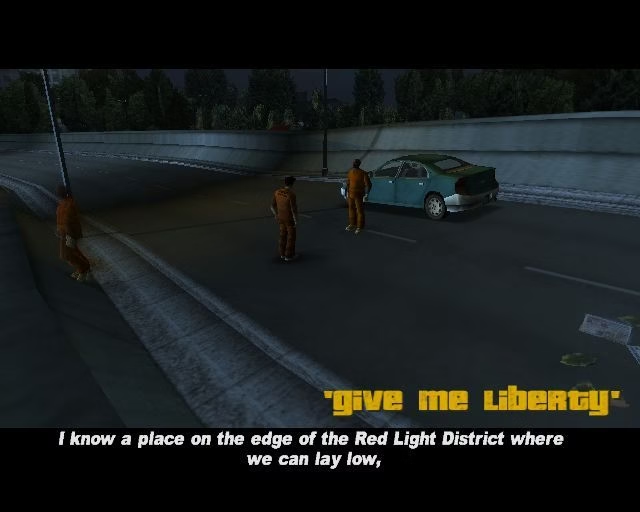
The game opens with a bank robbery gone wrong. Your character is betrayed, shot, and left for dead by his girlfriend, Catalina. Following a fortunate prison transport escape, he finds himself working his way through Liberty City’s criminal underworld.
Our protagonist, later identified as Claude, doesn’t say a word throughout the adventure.
But just about everyone around him has plenty to say.
The game featured an eccentric collection of mobsters, crooked cops, gang leaders, shady businessmen, and assorted criminals, each with their own schemes and agendas.
Characters like 8-Ball, Salvatore Leone, and Donald Love helped populate a world where loyalty was temporary, betrayal was practically a business strategy, and everyone seemed to have another job they needed you to do.
The voice acting was impressive, too, featuring performers such as Michael Madsen, Joe Pantoliano, and Robert Loggia.
And the missions!
There was so much variety, whether you were delivering vehicles, eliminating rival gang members, protecting associates, or getting caught up in somebody else’s increasingly ridiculous criminal enterprise.
Some missions were exciting. Others were frustrating. And a few were downright tedious.
I particularly remember how much of a chore tracking down all those collectibles could become.
But somehow, even the aggravating parts never managed to drag down the overall experience.
There was always another mission, another character, or another corner of Liberty City waiting to be explored.
Cars, Guns, and the Joy of Getting into Trouble
One of the things I particularly appreciated was how different everything felt.
The cars weren’t simply interchangeable boxes with different appearances. They handled differently, accelerated differently, and had their own strengths and weaknesses. Some were fast, some were durable, and some seemed determined to wrap themselves around the nearest telephone pole.
The same was true of the weapons. Each had its own personality and purpose, whether you were using a baseball bat, pistol, shotgun, or something considerably more destructive.
Part of the fun was experimenting with everything.
And I think that’s one of the reasons my roommate and I spent so many months exploring Liberty City. It wasn’t just about following the story from one mission to the next. There was an entire playground waiting for us.
What happens if we take this car over there? Can we make that jump? What’s hiding down that alley? How long can we survive with a five-star wanted level?
Sometimes the answer was spectacular success.
More often, it was another trip to the hospital.
The game gave you the tools, turned you loose, and let you discover what happened.
And that was half the fun.
The City Was a Character of Its Own
 One thing Rockstar understood remarkably well was that the world itself needed to be entertaining.
Liberty City wasn’t simply a backdrop for the missions. It was part of the attraction.
Each area had its own atmosphere, from the industrial streets of Portland to the commercial districts of Staunton Island and the suburban neighborhoods of Shoreside Vale.
Then there were the radio stations.
Music, commercials, ridiculous advertisements, and talk radio helped bring the city to life. Chatterbox FM, in particular, demonstrated just how much personality Rockstar could squeeze into something as simple as listening to the radio while driving.
The satire, the exaggerated characters, and the wonderfully twisted sense of humor would become trademarks of the series.
And while later installments would take all these ideas much further, there was something about experiencing them together in GTA III that made the whole thing feel special.
Something the Sequels Never Quite Captured
Here’s where things get a little difficult to explain.
I’ve enjoyed every major Grand Theft Auto game that followed. The series has consistently evolved, introducing bigger worlds, more sophisticated gameplay, better stories, improved graphics, and increasingly elaborate things to do.
But to this day, I think there’s something about GTA III that none of the subsequent games has quite managed to capture.
And I’ve struggled to explain exactly what that something is.
But thinking back on those months spent in front of the television with my roommate, I think I finally understand.
It was the magic of discovering something completely new.
It wasn’t necessarily that Liberty City was a better setting than Vice City or San Andreas. It wasn’t that Claude was a better protagonist than Tommy Vercetti, Carl Johnson, or Niko Bellic. And it certainly wasn’t that GTA III had more sophisticated gameplay than its successors.
It was that first experience of stepping into a fully three-dimensional, immersive city and realizing just how much freedom you suddenly had.
We’d never experienced Grand Theft Auto like that before.
We weren’t simply playing through a story. We were exploring a world, discovering its secrets, experimenting with its systems, and sometimes finding ways to entertain ourselves that probably hadn’t even occurred to the developers.
Every new discovery felt significant because the entire experience was new.
The later games improved on the formula in almost every conceivable way. Better graphics, bigger maps, more elaborate missions, deeper characters, and more things to do.
But they were building on something we’d already experienced.
You can improve the formula, but you can’t recreate that first moment of discovery.
And I think that’s what made GTA III so special to me.
Twenty-Five Years of Trouble
It’s difficult to overstate how influential Grand Theft Auto III became.
Its critical and commercial success helped establish the modern open-world action game, and countless developers would spend the following years trying to reproduce some version of Rockstar’s formula.
Some succeeded. Plenty didn’t.
Rockstar itself followed with Vice City in 2002 and San Andreas in 2004, each expanding on what GTA III had established.
And with each new installment, the series continued to evolve.
But Liberty City was where this particular revolution began.
I haven’t actually played GTA III in years, so maybe some of my fondness for it is nostalgia. I’m sure if I fired up the original PS2 version today, I’d find plenty of things that haven’t aged particularly well.
The controls could be frustrating, the missions could be unforgiving, and collecting everything was sometimes more work than fun.
But none of that changes what the game accomplished.
Grand Theft Auto III is a true classic, in every sense of the word.
Not because it was flawless, or because everything that followed somehow failed to measure up, but because it changed what we expected from video games.
And for me, it also represents months of great memories, sitting playing with friends, exploring a virtual city that seemed to offer endless possibilities.
Twenty-five years later, I can still remember that excitement.
The sequels may have given us bigger and better worlds, but GTA III was the game that first showed me just how much fun getting lost in one could be.
And you only get to discover something for the first time once.
What about you? Did you experience GTA III when it first launched? And do you think any of the later games managed to recapture that original magic?