Retro Replay Retro Gaming History, Reviews & Emulation
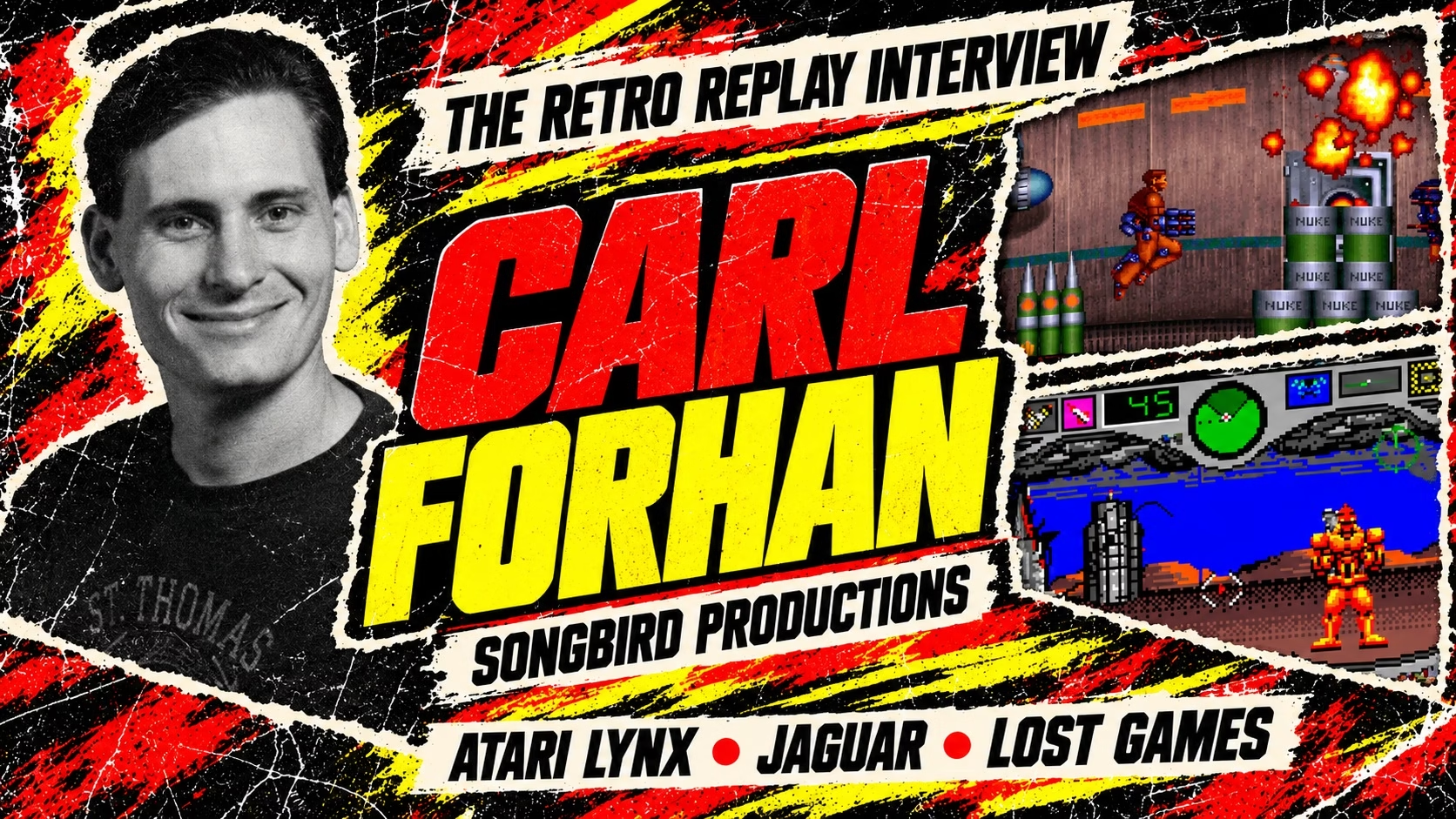
In 1994, Carl Forhan found out on Usenet that Atari had made a color handheld and a new console. He had grown up playing his dad’s 2600, but the Lynx and Jaguar had arrived without him noticing. A cheap Lynx bundle and a used Jaguar gave him a way back in. Then another Usenet post mentioned a cartridge that could load programs into Lynx RAM. Soon he had a cartridge from Germany, a C compiler, and a cable connecting his PC to the handheld.
Forhan founded Songbird Productions in 1999 to release games for Atari systems whose retail years had already passed. His work has ranged from writing Lynx software to tracking down rights holders, testing surviving ROMs, and getting cartridges, manuals, and boxes manufactured. Sometimes the source code survived. Often it did not, and a change meant working backward through the game itself.
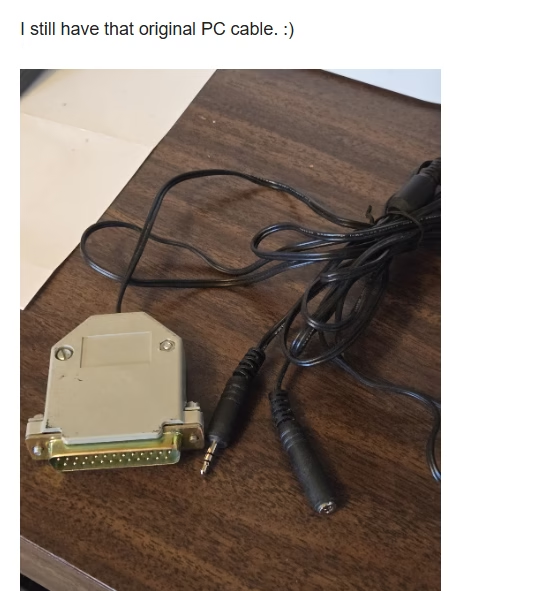
Skyhammer, Hyper Force, Protector, and CyberVirus are among the games woven into that story. Forhan ran Songbird alongside his engineering career for decades, then retired from his day job in December 2025 to give it more time. He still has the original PC cable, and he sent us a photograph of it along with his answers.
Read the history: Our complete history of the Atari Lynx follows the handheld from Epyx’s Handy project to Atari’s games and the developers who kept new cartridges coming after its retail years.
Interview by David of Retro Replay. Answers by Carl Forhan, founder of Songbird Productions.
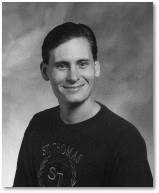
A Usenet post, a Lynx cartridge, and a cable
Retro Replay: Let’s start with the traditional one. What originally attracted you to the Atari Lynx and Jaguar strongly enough that they went from consoles you enjoyed to machines you actually wanted to develop software for?
Carl Forhan: Believe it or not, I didn’t even know about the Lynx or the Jaguar when they launched (although the Jag I only missed the launch date by a few months). In fact, I didn’t own any game systems, unless you count my IBM 486 PC where I had bought maybe 3 or 4 games for it, including Speedball 2 Brutal Deluxe and Mike Dikta Ultimate Football. I barely played video games at the time, but still had a strong connection with Atari due to my dad buying a 2600 when I was about 10. We’d play it for hours whenever my brothers and I would visit him. Then, in 1994, I learned on Usenet newsgroups that Atari was still in business and had made both a color handheld and a modern console too. I knew I would have to check out what these new Atari systems were all about! So I found a cheap Lynx bundle at EB (I think $79.99 with four games) and bought a used Jag with games off of Usenet.
It wasn’t too many months later that I found a post from someone saying he had a cartridge that allowed him to download games to Lynx RAM. I found out where to buy the cartridge from a guy in Germany, then I got some simple tools such a 6502 C compiler and PC parallel to Lynx serial cable to allow me to do the same. Then I knew I would need to figure out how to make my own games for at least the Lynx, and later the Jag too.
I still have that original PC cable. 🙂
Retro Replay: Before Songbird existed, you were already an embedded software engineer and had experimented with game programming going back to the TI-99/4A. Did professional programming make getting into Atari hardware easier, or did game development still feel like an entirely different world?
Carl Forhan: Being an embedded firmware engineer definitely jump-started my game dev hobby. I was already writing C code in my day job, so it was no big deal to write C code for a different CPU. All I had to learn was the Lynx hardware, which wasn’t easy at first! I had never thought about things like sprite engines or audio generation. There was a lot of trial and error in those early days.
Retro Replay: SFX was one of your earliest Lynx projects and was really a development tool rather than a conventional game. When people actually started signing up to buy it, was that the first indication that there might be a real market for new Lynx software?
Carl Forhan: I took my inspiration from SoundX, which was one of the first Atari 2600 aftermarket cartridges. Plus, I knew I needed a way to experiment with Lynx audio in real time, so I could better understand how the waveform and feedback registers worked. It was pretty neat when I got at least 50 pre-orders probably a year in advance of actually producing SFX carts for the Lynx. Fans were very patient with me, considering I was a complete unknown quantity!
Starting Songbird after the retail years
Retro Replay: Songbird officially began in 1999, after both the Lynx and Jaguar had effectively disappeared from mainstream retail. What made you look at two commercially finished systems and think there was still enough of an audience to build a company around them?
Carl Forhan: It had less to do with thinking there was a big enough audience, and more to do with, as a fan myself, I wanted to see some of those “lost” games finally published for the diehard supporters.
Retro Replay: Did you imagine Songbird lasting more than 25 years when you started it, or was the original goal simply to get a handful of projects out into the world?
Carl Forhan: I could have never dreamed Songbird would still be going over 25 years later. My original intent was just to rescue a few lost games, and publish a couple of original games on the Lynx. It grew into much more over time.
Retro Replay: There is something fascinating about publishing games after a console manufacturer has already walked away. In those early years, did it feel more like running a game company or like preserving an abandoned ecosystem yourselves?
Carl Forhan: More the latter. Keep in mind, Songbird was always a hobby for me and never a full time job. I had many years of zero profit, and even a loss at least once or twice. It was only in December 2025 that I retired from my day job and made Songbird my full-time job, but not because it could match my day job salary (spoiler alert: it doesn’t). But it’s fun to finally spend more time on Songbird.
Of course, as Songbird has grown, it feels more and more like running a company compared to those first years. I carry more products than ever, and deal with customer requests, order cancellations, website maintenance, email newsletters, securing licenses, filing taxes, and so much more. Even now I don’t get as much time to code as I’d like!
Finding the games and the people who owned them
Retro Replay: A major part of the early Songbird story involved tracking down games that had been completed or partially completed during the Jaguar’s commercial life but never released. How did you even begin finding those projects and determining who still owned the rights?
Carl Forhan: Usenet was helpful, and some of the companies were still in business such as Telegames and Rebellion. It started with obtaining unreleased game ROMs. Then, I would contact companies and ask what it would take to make these games available for a small diehard fanbase, knowing they would never be commercially viable on those platforms. I don’t know what made me think I could even ask, but I did. And most companies were very gracious and supportive with their responses and eventual agreements.
Retro Replay: Was there ever a game where simply figuring out who legally controlled it was harder than actually getting the game ready for release?
Carl Forhan: Absolutely. It gets especially hard when a game is ported to multiple platforms, sometimes by entirely different companies, then published by yet other companies. Ishido is one that comes to mind, where I had to work my way through a network of folks before finally locating the IP holder and buying the full rights to the game.
There have been other game companies I’ve checked into — particularly from the 2600 era — where the company folded decades ago, or got absorbed by a company which later dissolved or got absorbed. I’ve had very little success there, where even if you can find someone who owned the company back then, he doesn’t know what happened after bankruptcy or acquisition.
Retro Replay: Hyper Force is a particularly interesting example because you obtained the rights but apparently did not receive the source code. How limiting was it to publish a game essentially from the surviving build rather than being able to go back into the original source and change things?
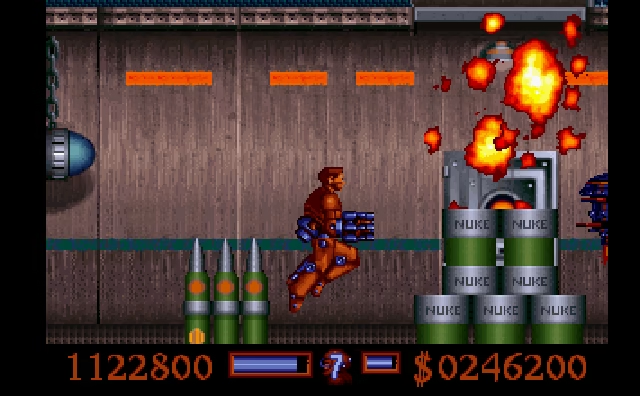
Carl Forhan: I almost never received source code to any lost game I published. The exceptions would be Protector, CyberVirus, Ultravore, and Mechtiles.
In some cases (such as Hyper Force), I did not make any updates to the ROM. So once I secured the rights, getting it published really boiled down to testing the game and generating the instruction manual and other print files. In other cases, I did reverse engineer portions of the ROM to fix bugs or improve the game. I did this on Total Carnage, Centipede, and a few others I’m forgetting.
Retro Replay: Has there been a game where you knew something really should be fixed or improved but simply could not touch it because the original source material no longer existed?
Carl Forhan: Yes, some games could have random crashes which might only happen once every few hours or be missing game save support or other features. In theory, anything could be fixed given enough time and resources. In practice, I was a team of one, and wanted to get decent quality games out there for fellow fans to enjoy. I’m extremely grateful for the support of the community, both in the early days and now.
Skyhammer, Protector, and the builds that survived
Retro Replay: Skyhammer came from Rebellion and was technologically ambitious for the Jaguar, with large texture-mapped cities and free 3D movement. When you first saw a project like that sitting unreleased, was there a sense of “people need to see what this machine was actually capable of”?
Carl Forhan: Most definitely. It’s such a deep, impressive game, it really deserved to come out during the Jag’s retail life. It could easy stand toe-to-toe with 3D games on other platforms. And it’s a lot of fun to play. 😉
Retro Replay: Protector seems almost like a microcosm of Songbird itself. It went from an abandoned Bethesda-era project to a Songbird release, then Protector SE, and eventually additional content. What made that particular game worth continuing to develop rather than simply preserving the original version and moving on?
Carl Forhan: The source code and the IP rights. Getting the source code meant I could more easily study how the game works and find ways to add new content. Having the rights meant I could keep making new releases over the years. Plus I love shooters, and in my opinion, Protector is one of the best on the system. But I am biased, of course.
Retro Replay: Have you ever turned down an unreleased prototype because it simply was not complete enough to responsibly sell as a finished game?
Carl Forhan: Not really turned down but there are some early alpha games I own which I have never bothered to publish. If I do sell an incomplete game, I always identify it as “prototype” or “demo” so customers understand this is a preview of what could have been, not a finished product.
Retro Replay: What is the strangest form in which source code or an unreleased build has ever reached you? Old hard drives, backup discs, mystery archives, source trees nobody had opened in decades?
Carl Forhan: Back in the day, I received some unreleased game ROMs in the mail on 3.5″ floppy disks. That’s where I first discovered a two-player version of Total Carnage for the Jaguar, because the leaked ROM on the internet only had one-player support.
Retro Replay: Is there still an unreleased Lynx or Jaguar game that you consider your personal “holy grail” and would love to find or legally publish someday?
Carl Forhan: Phear for the Jaguar. I’ve even spoken with former employees from the dev team, but no one kept a demo cartridge or any source.
From a hobby project to a boxed cartridge
Retro Replay: Songbird also worked directly with homebrew developers instead of only resurrecting old commercial projects. Was helping a hobby programmer cross that final gap from “I made a game” to an actual boxed cartridge always part of what you wanted the company to do?
Carl Forhan: In the early years, no. But in the past ten years, I’ve spent a large portion of my time in a project manager role with other devs to help them prioritize features and improve the user experience for their games. It scratches a different itch than coding my own game, but I enjoy the process and believe I can help other devs hone their games.
Retro Replay: What did you learn about publishing physical cartridges that you never expected to need to know when you started? Manufacturing, plastics, labels, manuals, packaging, ROM chips, logistics, all of the unglamorous things people never see?
Carl Forhan: All of the above. 😉 How do you program chips? How do you design a circuit board? What will I have to do myself versus hiring it out to a third party? What are the actual dimensions of a Jaguar box? Where do you get cartridge shells? Those are all obstacles I had to figure out.
Retro Replay: In an era when most software distribution is digital, why is producing a real cartridge, box, and manual still important to you and to the Atari community?
Carl Forhan: I love physical games, even though like most gamers, I have a collection of digital games too. It’s refreshingly simple to pop in a cartridge and immediately start playing within a few seconds.
The quiet years and another JagFest
Retro Replay: Has there ever been a point when you genuinely thought interest in either system was finally fading away, only to see another generation of developers or collectors suddenly appear?
Carl Forhan: Yes, maybe 2005 to 2015 or so. It was quite a dry era for the Lynx and Jaguar, with few games being released and not many publicly active hobby devs.
Retro Replay: JagFest is another part of the Songbird story that goes all the way back to 1999, and you brought it back again decades later. What was it like looking around a modern JagFest and realizing people were still gathering around these machines more than 30 years after their release?
Carl Forhan: I hosted a 25th anniversary JagFest in 2024, and about 40 people turned up for it. Not that different in size from 1999! Then I hosted another one this past summer. It’s both crazy and humbling that fans could be passionate enough to travel across the country (or come from Canada!) to attend such a tiny event. But they are exactly what makes that kind of event great.
One Jaguar game, one Lynx game, and a difficult choice
Retro Replay: Fun one: ignoring anything you published yourself, if you could keep only one Jaguar game and one Lynx game for the rest of your life, what two survive?
Carl Forhan: Probably Jaguar Raiden and Lynx California Games. I’m a sucker for shoot-em-ups, and also the simplicity of short arcade games. The surfing mini-game is my favorite on CG, and maybe I’d finally learn how to score points on the halfpipe! 😉
Retro Replay: Another cruel one: which system do you personally love more, the Lynx or the Jaguar? You are allowed to refuse to choose if answering would cause a civil war among your customers. 🙂
Carl Forhan: That is a really good question. Tough call, but it would be the Lynx. It’s so much more constrained than the Jaguar, and yet it has extremely powerful hardware. And I’ve done a lot more Lynx coding than Jag coding in the past decade. But I do want to get back to Jag coding again, so I’ll give it some love in the near future. 😀
Retro Replay: Looking back at all the unreleased projects, prototypes, source code, developer contacts, and games Songbird has helped bring back, is there one release that made you think, “This alone made all of this worth doing”?
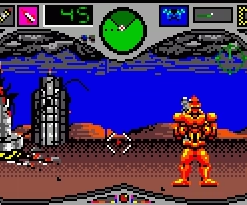
Carl Forhan: Probably Skyhammer. It’s such a great game and deserves to be out there for the community to enjoy. And I’m equally proud to have brought CyberVirus to Lynx fans, since that was another lost game which shows the Lynx can do so much more than arcade ports.
The archives and what comes next
Retro Replay: Songbird has now been around long enough that the company itself has become part of Atari history. Have you thought about preserving your own emails, development files, contracts, prototypes, photographs, source archives, and correspondence so future historians can understand how the post-commercial Lynx and Jaguar era actually happened?
Carl Forhan: You mean someone besides me might care someday? 😉 I have lost emails over time, because internet providers came and went frequently in the 1990s. But I still have ROMs, source code, etc. that I received along the way.
Retro Replay: Finally, when this interview is published, are there any current Songbird releases, upcoming games, JagFest material, preservation efforts, websites, social media pages, developers, or other projects you would especially like me to direct readers toward?
Carl Forhan: https://songbird-productions.com
Shape Shooter 2000 was just released in October 2026 for the Jaguar. It’s a polygon-based shoooter, so I’m pretty excited to see a new 3D game on the Jag. And Ultravore for the Lynx should finally be released by end of 2026 after a 25+ year wait!
Thank you, Carl
Our thanks to Carl for taking the time to talk with Retro Replay and for sharing the cable photograph. The floppy disk containing a two-player build of Total Carnage, the search for Phear, and the practical business of finding cartridge shells all deserve a place alongside the games on the shelf. We’re glad to have his account of the work that went into getting them there.
Visit Songbird Productions for its catalog and latest announcements, including the product pages for Shape Shooter 2000, Skyhammer, and CyberVirus. Carl’s JagFest at CGE 2003 report is also worth a look, with photographs and his account of running the show.
For more conversations with the people behind the games, read our interviews with Scott Adams and Chris Beatrice, or browse the Retro Replay interview collection.
Take a look at Shape Shooter 2000 for the Jaguar, and follow Songbird Productions on X (@SongbirdPro) and YouTube for game videos and updates.