 Retro Replay Retro Gaming History, Reviews & Emulation
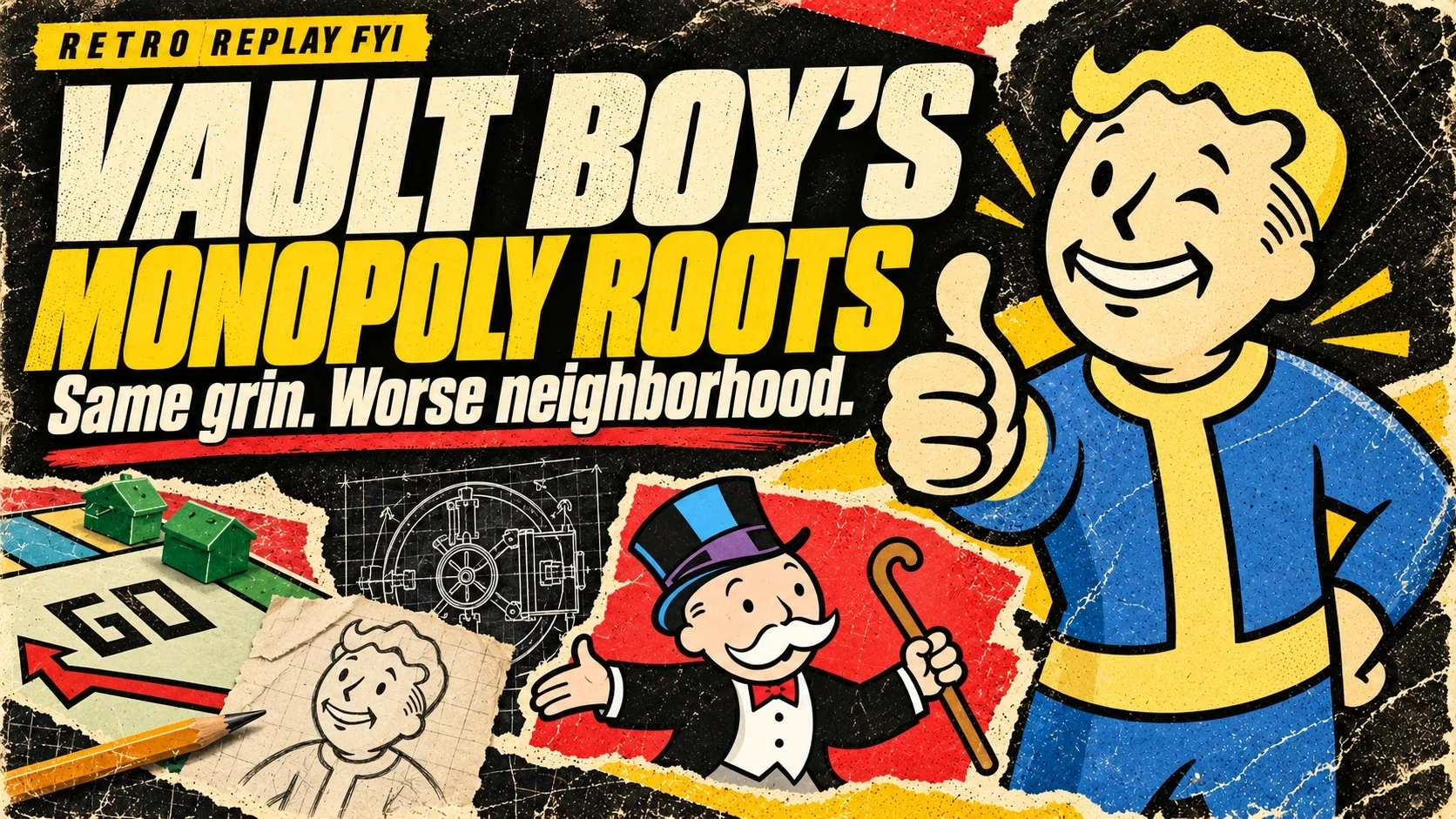
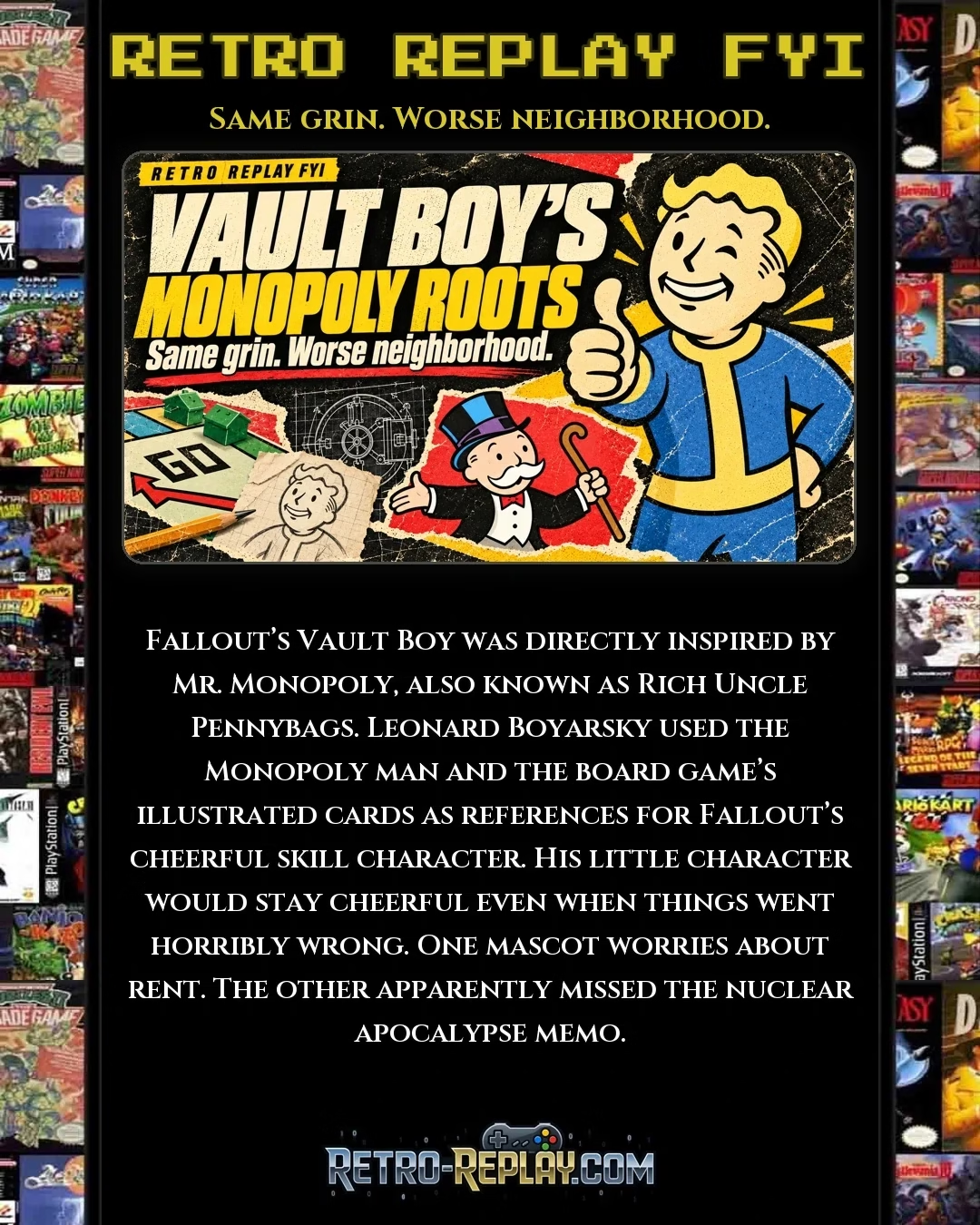
Fallout’s Vault Boy was directly inspired by Mr. Monopoly, the smiling board-game mascot also known as Rich Uncle Pennybags. Once you put Mr. Monopoly beside Vault Boy, the family resemblance is hard to miss. One wants you buying property. The other seems perfectly relaxed about what happened to the property after the bombs fell.
But Leonard Boyarsky wasn’t simply looking for a mascot. He was trying to make Fallout’s skills easier to recognize.
A familiar face for a confusing screen
In Game Informer’s Fallout oral history, Boyarsky recalled directing a collection of icons that even he struggled to tell apart. His answer came during a drive home: cards like Monopoly’s, with a little character acting out the subject.
The character had to stay happy, including when something had gone horribly wrong. In Fallout’s menus, that gives you a little scene to look at while weighing up your next choice, with the same face returning in another predicament.
Boyarsky sketched the idea and took it back to the team. The early version was taller and thinner, but the cheerful fellow in the drawing was already recognizable.
Same grin, different problems
The older Duck and Cover chat supplied for this story preserves Tim Cain’s recollection of the Monopoly connection, too. Cain remembered Boyarsky asking artist Tramell Ray Isaac for something like Monopoly’s Mr. Moneybags.
Monopoly’s little man can look delighted about a windfall or thoroughly fed up behind bars. In Fallout, the character keeps smiling through the sort of trouble that would end a board-game night rather abruptly.
Vault Boy doesn’t need a top hat or a white mustache. The blue jumpsuit, wavy hair and relentless good mood are enough. He’s the face you meet while considering a perk or checking a skill, carrying on as though the world outside isn’t full of excellent reasons to stop smiling.
Then you close the menu and head back into the wasteland. The cartoon can afford to look pleased with himself. You’re the one who has to walk into the next room.
Sources
- Game Informer: An Oral History of Fallout, Part I: The Creation, for Boyarsky’s account of the icon problem, Monopoly-style cards and his early drawing.
- Duck and Cover: Tim Cain chat, March 9, 2002, the supplied source for Cain’s recollection of the Monopoly reference.
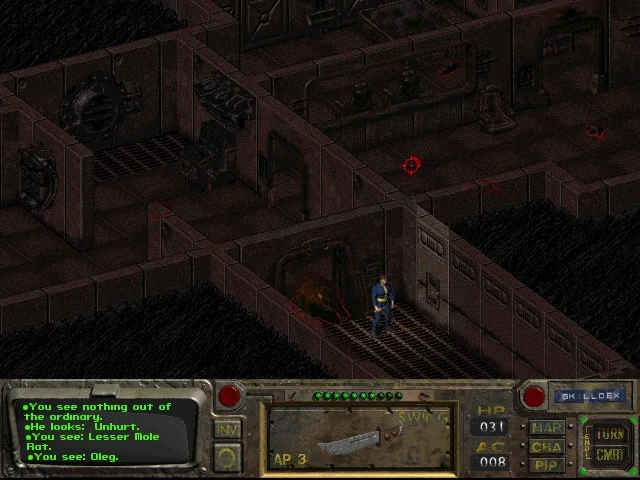
- Retro Replay: Fallout, for the original game’s screenshot.
More #RetroReplayFYI
Another familiar character took an unlikely trip into the real world: Crash Bandicoot has a fossil named after him. Or follow a movie influence into a game with Indiana Jones and the beginnings of Zelda.