 Retro Replay Retro Gaming History, Reviews & Emulation

Retro Replay Review
Gameplay
The first hour has the pleasure of stepping onto a crowded liner with no obvious path through the case. You choose a section of the Bourgogne from menus, examine its rooms, and work through suspect statements one at a time. There is no conversational sparring or direct interrogation to lean on; you are reading testimony and doing the important mental work yourself. That is a bold choice for a detective game, and it immediately tells you whether this is your sort of mystery.
What starts to click is the game’s insistence that information is the puzzle. Forty suspects is a lot of names and claims to track, so casual guessing is unlikely to carry you far. The decoder gives the investigation another useful strand, letting you decrypt messages, while the code-word puzzles ask you to connect details rather than simply hunt for an item or exhaust a dialogue tree.
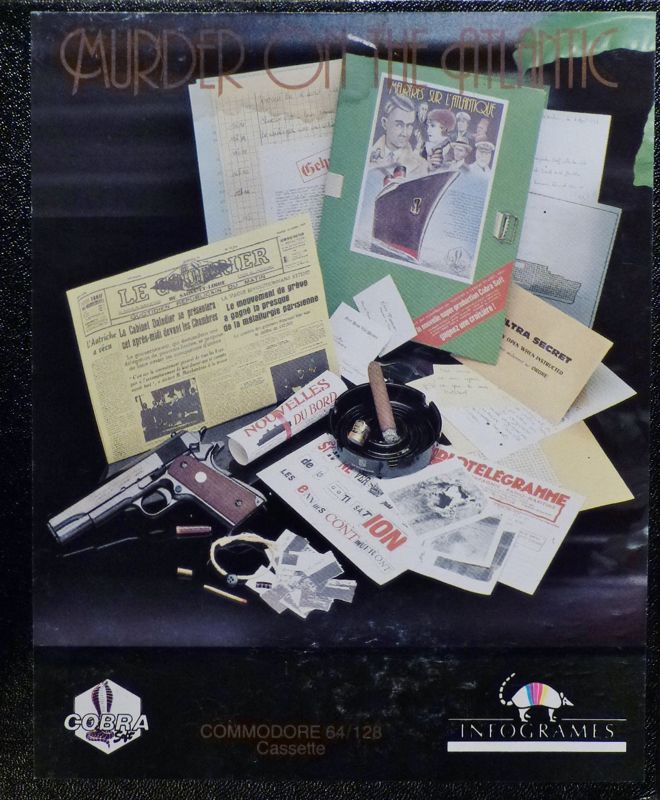
The catch is that this structure can turn stubborn quickly. The code-word portion has no defined ending, so you do not get much help in knowing whether you are pursuing a promising line or merely stuck. You also need to consult the physical documents that came with the game. For a player who enjoys notes, close reading, and the satisfaction of breaking a case by deduction, that is the point. If you want clear progress markers or a brisk adventure-game rhythm, it can become draining.
Once you believe you have the solution, the game shifts into a final series of questions. That is a strong fit for the detective fantasy: you are not rewarded merely for visiting every location, but for understanding the evidence well enough to state the case. It also makes mistakes sting, because the victory condition rests on your conclusions.
Graphics
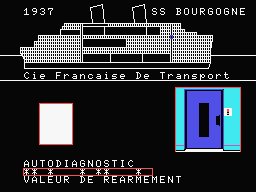
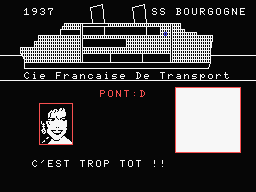
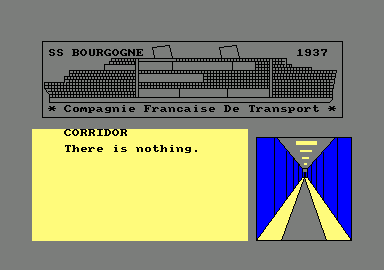
Murder on the Atlantic is viewed through menus as you move between parts of the ship and select rooms or suspects to investigate. The emphasis is on navigating the liner and reading the case material, not on animated detective scenes or detailed face-to-face encounters.

Story
A big French ocean liner in 1938 is a naturally inviting place for a closed-circle murder mystery. The Bourgogne holds wealthy passengers, spies, and two mysterious murders, giving the investigation a broader thread than a simple whodunit. The struggle over new computer technology adds intrigue without pulling attention away from the central task: work out who did what aboard the ship.
The story is delivered largely through statements and documents, which makes you an active reader rather than a spectator. Because suspects do not respond directly to your questions, every statement has to be weighed for what it says and what it avoids saying. That can make a small detail feel valuable in a way more guided mysteries rarely manage.
This is a story built to be solved, not merely watched unfold. Its strongest moments will come when separate testimonies, encrypted messages, and the supplied paperwork begin to point in the same direction. If you want a mystery with constant dramatic scenes, it is reserved. If you enjoy constructing the narrative from evidence, it has real bite. Fans looking for another period murder investigation can also look at Murder on the Zinderneuf.
Overall Experience
Murder on the Atlantic is a demanding old-school detective game that trusts you to take responsibility for the case. Its menu-driven design sounds dry on paper, yet it suits the material: you move around the ship, gather accounts, decode messages, and turn a pile of information into an accusation. When the pieces fit, the payoff should feel earned because the game has not done the thinking for you.
That same commitment makes it uneven. The open-ended code-word puzzles and dependence on physical documents create a high barrier, and the absence of direct suspect interaction may leave some investigations feeling static. This is not the kind of mystery to dip into when you want immediate momentum; it asks for concentration and a willingness to keep track of details.
Give it a chance if you like treating a game as a case file, especially if taking notes and cross-referencing evidence sounds appealing rather than tedious. The 6.1 score feels fair: Murder on the Atlantic has a memorable setting and a properly investigative core, but its rigid, labor-intensive format limits how often its cleverness turns into smooth enjoyment.



Reviews
There are no reviews yet.