Retro Replay Retro Gaming History, Reviews & Emulation
The wave curls over your surfer, and for a moment the little screen seems much too small for what is happening on it. There is blue water, a moving board and just enough time to make a spectacularly bad landing. The television is somewhere else. You are holding California Games in your hands.
In 1989, that was a persuasive reason to stop and look at an Atari Lynx. Its screen lit up in color. Objects rushed toward you, aircraft banked and arcade games traveled surprisingly well. It was also enormous by the standards of a pocket, hungry for batteries and attached to a company that had a very difficult fight ahead.
The familiar version of the story ends with Nintendo winning and Atari moving on. A Lynx owner could have been forgiven for expecting the same ending. Yet new cartridges kept appearing, sometimes from people who had discovered the machine only after its best chance in the shops had passed.
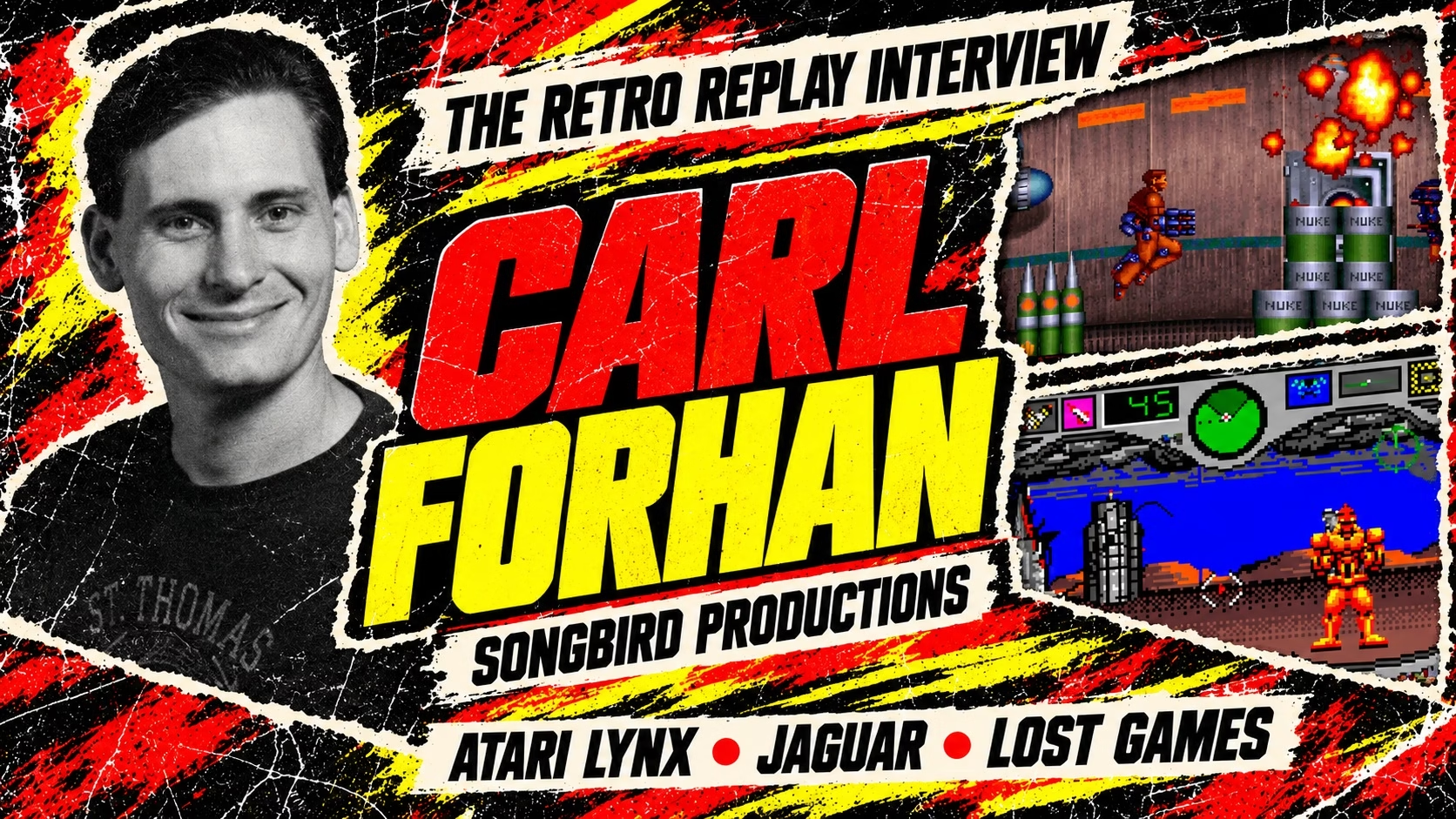
Carl Forhan was one of them. His Songbird Productions would help carry unfinished games into a second life and new games into a much older handheld. Before the discounted bundles, development cables and small printing runs, though, the Lynx belonged to a team at Epyx trying to put something extraordinary in a player’s hands.
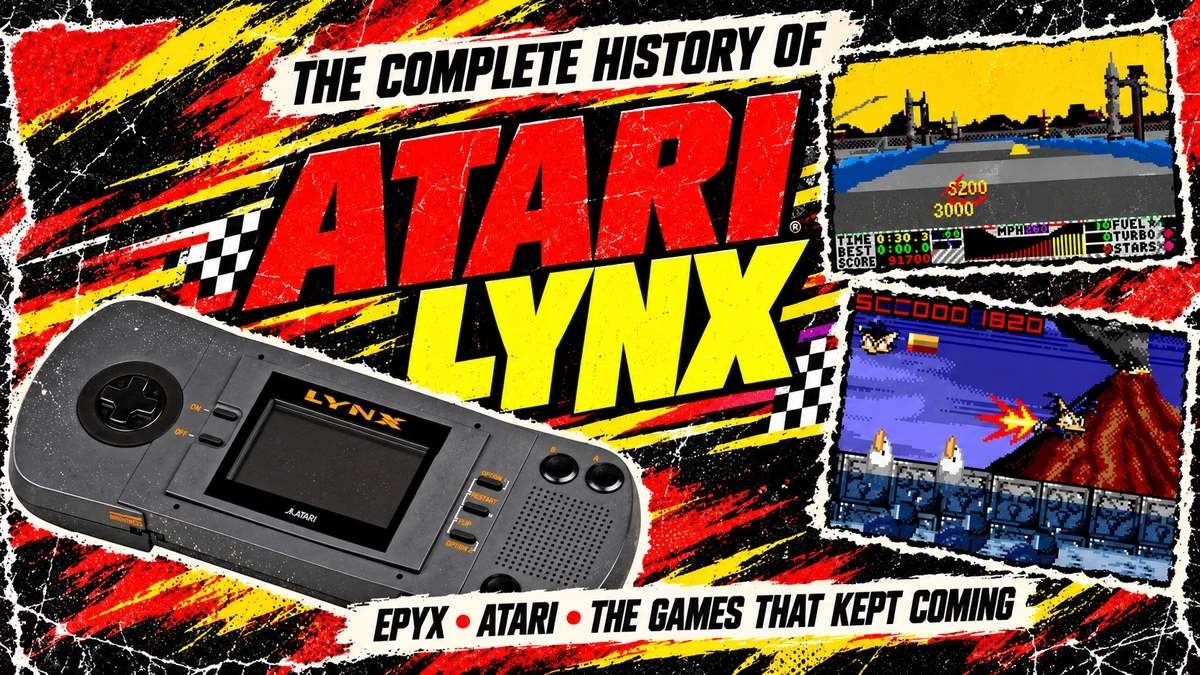
Explore the complete history of the Atari Lynx
- Part I: Epyx builds something Handy (1986 to 1989)
- Part II: The little screen makes its entrance (1989 to 1990)
- Part III: Bring a friend, and six more batteries (1990 to 1992)
- Part IV: Good games in a shrinking shop window (1992 to 1996)
- Part V: A discounted Lynx and a cable from Germany (1994 to 1999)
- Part VI: The cartridges Atari never shipped (1999 to 2004)
- Part VII: Other hands on the development kit (2004 to 2019)
- Part VIII: The screen stays on (2020 to 2026)
Part I: Epyx builds something Handy (1986 to 1989)
The people before the Atari badge
Epyx already knew how to make a computer owner lean toward the screen. Summer Games, Winter Games and California Games had turned sporting events into evenings of competition, often with somebody waiting beside the keyboard for another turn. Building the machine on which people played was a much more expensive proposition.
The people brought together for that job had already helped build an unusual computer. Dave Morse, formerly a leading figure at Amiga, was now at Epyx. He recruited two former Amiga colleagues, hardware engineer Dave Needle and software designer RJ Mical, for a portable game system. Work began in the mid-1980s under the name Handy.
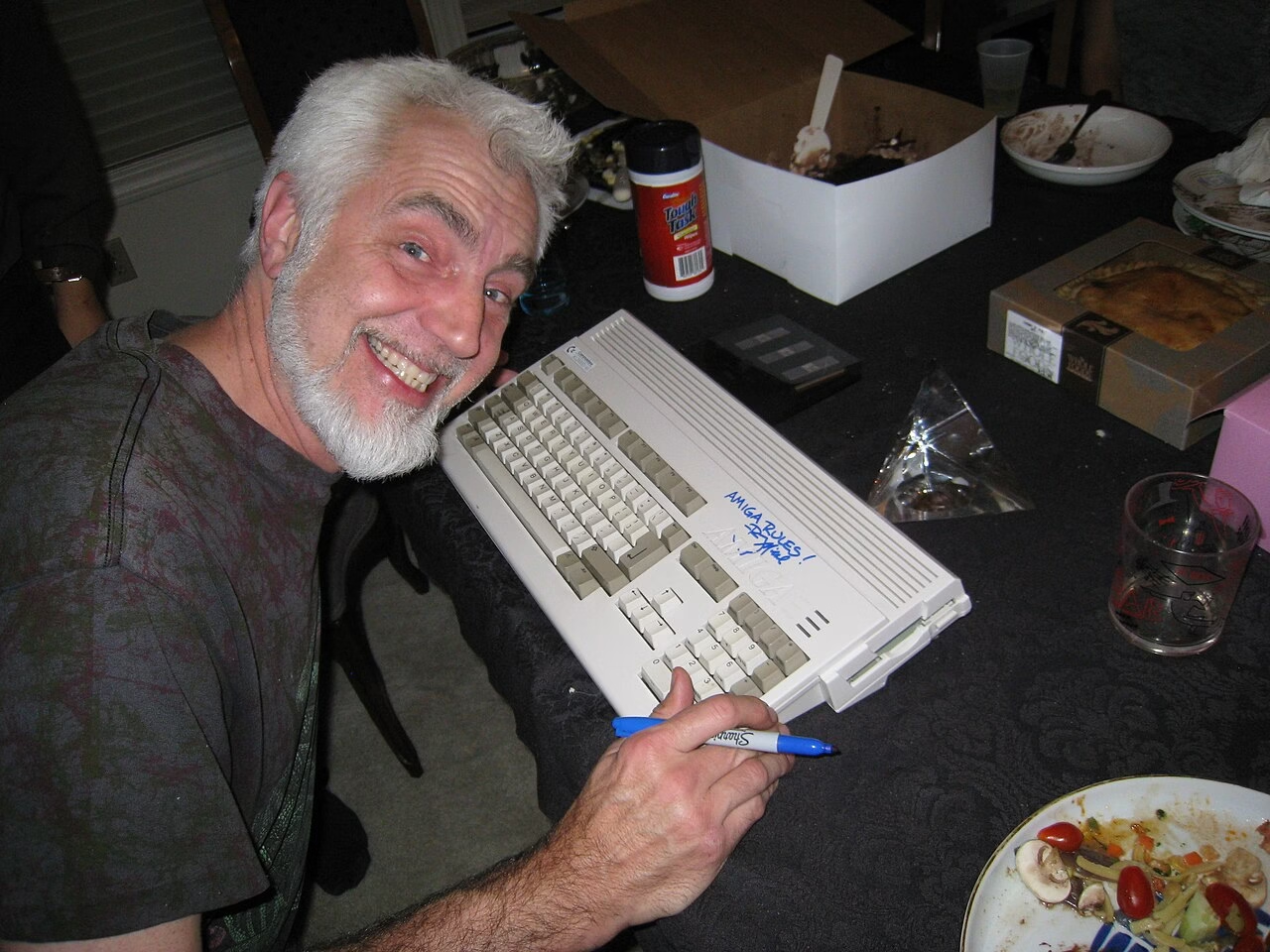
Mical had worked at Williams on arcade games before joining the Amiga project. His own account of his career takes in games, hardware and the software that makes a new machine approachable. On Handy, writing a game meant needing tools as well as a console. A programmer had to get pictures, sound and instructions into a piece of hardware that was still being made.
Needle was the other half of that close partnership. In a later interview, Mical resisted a tidy division in which one man did hardware and the other did software. Needle worked with him on the libraries and tools; Mical helped shape the hardware and industrial design. Both were involved with the games.
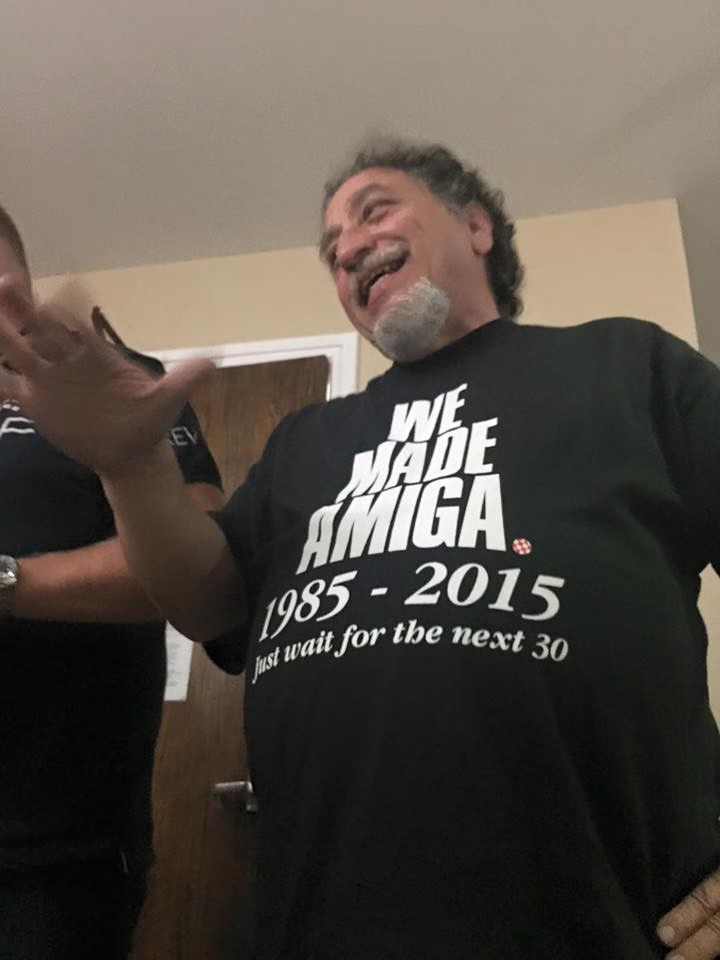
They were designing for a different sort of player from the person settling down at an Amiga. A handheld needed its own screen, controls, sound and power supply. Nobody could assume a television was available. Color and a backlight were exciting features, but every feature had to be paid for and carried around.
Handy acquired a wide body with a screen in the middle, a directional control on one side and action buttons on the other. It could also turn its picture upside down. A left-handed player could rotate the whole machine and have the controls the other way around, a thoughtful trick on a device with very little room for rearrangement.
Mikey, Suzy and a very small horizon
Inside were two custom chips, Mikey and Suzy. Mikey handled the processor and several of the machine’s other jobs. Suzy gave the graphics work substantial help, including drawing and scaling sprites. The CPU itself was an 8-bit 65C02-family processor, even though Atari would sell the machine with the much more impressive sound of “16-bit.” The custom graphics hardware was doing a great deal of the showing off.
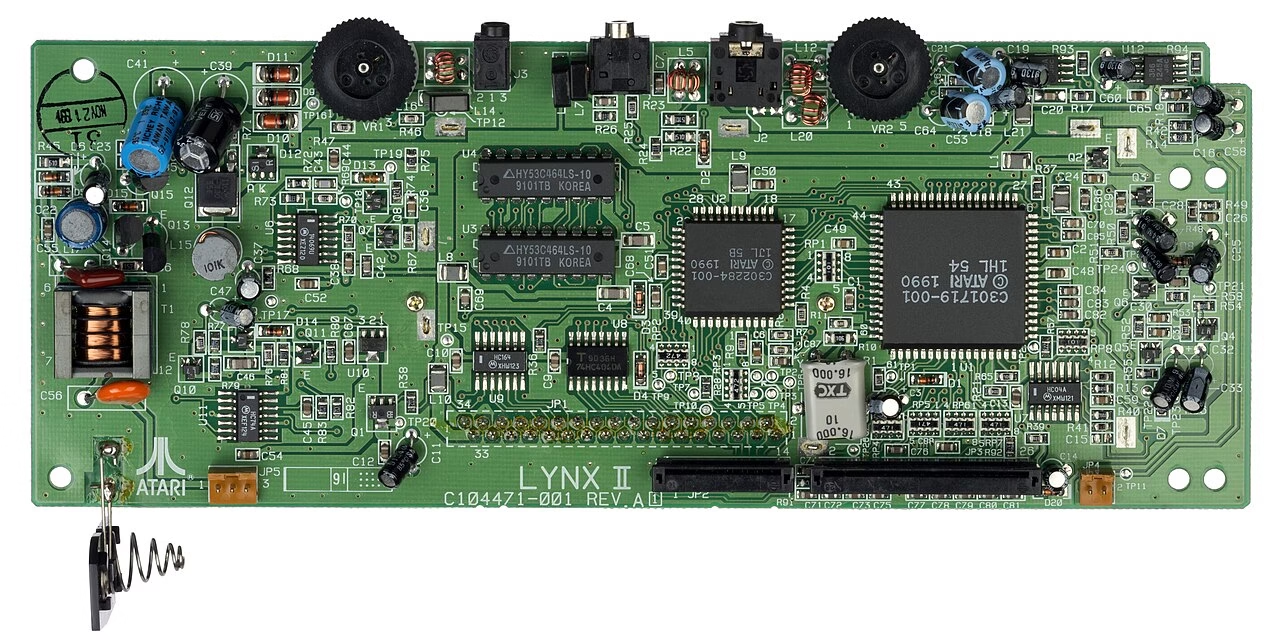
The normal picture was only 160 by 102 pixels. A game could choose 16 colors from a palette of 4,096, with programmers finding further tricks when they needed them. These were small numbers beside an arcade monitor, but a road could still narrow toward a horizon and an enemy could grow rapidly as it approached. Giving the hardware a job it could do well made the screen look much larger than its measurements.
The long-maintained Lynx FAQ collects the specifications and the practical details. There were 64KB of RAM, four sound channels and a connection for linking machines. This was a peculiar little computer, not a shrunken version of an existing home console.
Needle’s personality even survived in its documentation. His June 1987 Handy specification mixed register descriptions with warnings and jokes about the people expected to program the thing. The excerpts preserved by Jim Leonard make an unusually entertaining technical read. Someone had to understand the hardware well enough to avoid its traps. Needle evidently saw no reason that someone should also be bored.
A console in search of a company
Finishing Handy did not give Epyx the money to manufacture it in large numbers. The company was under financial pressure and had invested in ventures beyond the computer games that had made its name. A handheld needed production, distribution, advertising and enough software to convince a customer to buy it. Epyx needed a partner.
Atari Corporation became that partner, taking responsibility for manufacturing and marketing while Epyx supplied development work. It was the Atari of the ST computer and the Tramiel family, the company formed from the home-computer and console side of the earlier Atari business. The arcade operation, Atari Games, had become a separate company. The distinction would matter when arcade names began turning up on Lynx boxes.
The handover was unhappy. In Retro Gamer’s interview with the designers, Needle recalled disputes over contractual deadlines and withheld payments. That is his account of a bitter relationship, rather than a reason to pretend Epyx had been financially healthy before the agreement. By the end of 1989, Epyx was in bankruptcy proceedings.
The machine survived. Atari renamed it Lynx and showed it publicly in 1989. The question was no longer whether the team could make a color handheld work. Nintendo had also brought a handheld to market, and customers were about to decide what they wanted to carry.
Part II: The little screen makes its entrance (1989 to 1990)
A bright display and a large request
The Lynx reached American buyers in late 1989, with a limited rollout before wider availability. Put beside Nintendo’s Game Boy, it looked like a different answer to the same question. Nintendo offered a smaller, cheaper machine with a monochrome display. Atari offered a large backlit color screen and a handheld that seemed eager to demonstrate it.
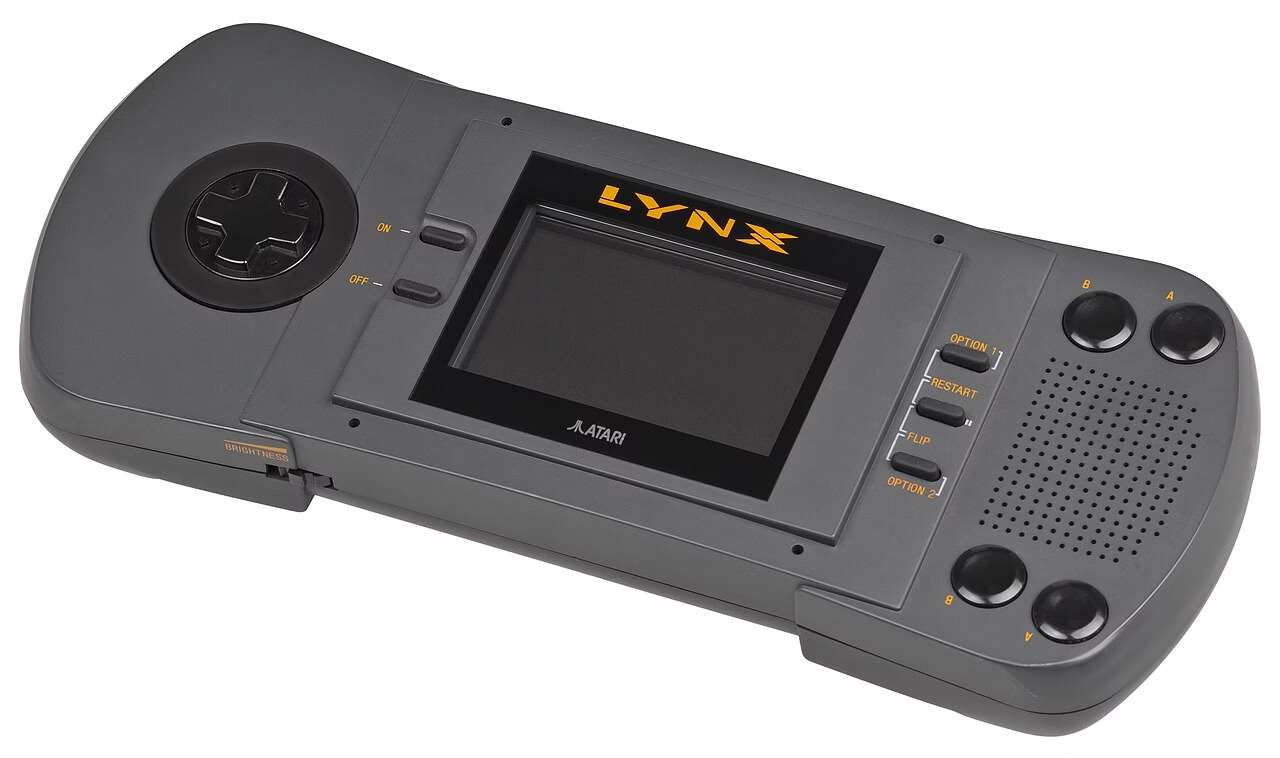
The difference was obvious before either machine needed a detailed explanation. A Lynx could be played without finding a bright lamp or tilting its screen toward a window. It also required six AA batteries, and the backlight made its demands on them quickly apparent. An AC adapter was an extremely sensible companion for something sold on the pleasure of getting away from the television.
Early American packages cost roughly twice the Game Boy’s $90. Prices and contents changed, but the first purchase required enthusiasm and a generous budget. Showing a friend the screen was easy. Persuading the person paying for it could be harder.
There was something to show. Epyx’s first games approached the new hardware from several directions: a sports collection, a jet fighter, a robot moving through a futuristic building and a young puzzle enthusiast about to have a very bad day with some floor tiles.
California Games: Epyx packs a holiday
California Games had begun as an Epyx computer hit in 1987. Its Lynx version made an unusually friendly introduction to a new machine, collecting four events: surfing, BMX, half-pipe skateboarding and footbag. You could understand the appeal without learning a complicated fictional world. Here was a wave. Staying on the board seemed a reasonable first objective.
The original instructions turn those simple premises into a succession of timing problems. The half-pipe wants rhythm. BMX wants control, and preferably a rider who reaches the finish without meeting the course face first. Footbag rewards keeping a small object in motion through an increasingly implausible routine.
Surfing was the great display-window event. The wave, the movement and the color made the hardware’s sales pitch while you were still working out how to land. It was short enough to invite another go and demanding enough that the next go might not improve matters at all.
The collection also traveled well between players. You could take a turn, hand the machine over and compare results. Its appeal did not depend entirely on finding another Lynx owner, which would become an important practical distinction.
Blue Lightning (1989): a jet fighter for the journey
For Blue Lightning, Epyx took the machine in the direction of an arcade flight game. Stephen Landrum, an experienced programmer whose earlier work included Starpath’s Atari 2600 games, was among the principal developers. His 1993 interview places him back at Epyx on Handy development from late 1988.
The game puts you in a jet and sends you through missions in which surviving the flight is considerably more important than mastering a realistic cockpit. The ground stretches away, targets grow as they approach and incoming danger leaves little time to admire the scenery. It is the kind of game a person could watch over your shoulder and immediately want to try.
Scaling helped sell the rush toward the screen. The terrain did not need to be an elaborate polygon world to make low flight feel exciting. On a machine held a short distance from your face, a large object arriving quickly was quite sufficient.
Blue Lightning also set a difficult expectation. An owner who had seen a handheld do this was entitled to wonder why the rest of the software shelf did not look equally remarkable. Epyx had given Atari a persuasive demonstration. Atari still needed a steady supply of reasons to keep buying games.
Electrocop (1989): Greg Omi looks inside the building
Greg Omi, another Epyx programmer, explored the opposite sort of space in Electrocop. His action adventure sends a robotic officer through the Megacorp building on a rescue mission, with a timer making the trip increasingly urgent.

The corridors have depth. You move along a floor, find another route and watch the building shift around the character. Computers offer access to security systems and other functions, so progress takes more thought than simply shooting everything at the far end of a hallway.
It can be awkward to find your bearings. There are enemies, terminals and routes to remember, with the clock quietly making every wrong turn more expensive. The attraction lies in having a building to investigate on a handheld whose screen might have seemed better suited to one straightforward playfield. Electrocop expects you to learn the place.
Chip’s Challenge (1989): Chuck Sommerville finds another use for the machine
Chuck Sommerville had been working on a tank game that was canceled. He remained at Epyx, helping with other Lynx projects, and proposed a map-based puzzle game when the launch needed more software. That became Chip’s Challenge.

In his account of its creation, Sommerville recalls building the engine quickly, bringing in puzzle designer Bill Darrah and drawing levels from colleagues whose other games were approaching completion. The little game received a surprising amount of collective ingenuity.
Chip wants to join a computer club. Getting there involves collecting chips, opening doors, pushing blocks and surviving hazards arranged by people who have clearly spent time thinking about how to inconvenience him. A key can be easy to collect and difficult to use at the right moment. A convenient block can turn into a permanent mistake.
There is little of Blue Lightning’s immediate spectacle. Instead, you stare at a small arrangement of tiles until a route becomes obvious, then discover the moving creature you had neglected to account for. The clock is often involved. It is a remarkably good way to become personally offended by a square.
The later computer versions would introduce Chip to many players who had never touched a Lynx. On Atari’s machine, it was already an argument for buying something quieter than the jet fighter. The launch library had room for both.
Part III: Bring a friend, and six more batteries (1990 to 1992)
Slime World (1990): Peter Engelbrite makes a very messy expedition
The next Epyx games gave owners more reasons to keep the machine nearby. Peter Engelbrite, who had worked on the Lynx’s software and communication system, created Todd’s Adventures in Slime World. Released in 1990, it sent an explorer into a planet whose name was doing a great deal of honest advertising.

Todd carries a water pistol, explores the caves and gradually acquires more slime than seems advisable. There are routes to discover and creatures to avoid, with enough space that a map becomes welcome. A quiet-looking passage can lead to another stretch of the planet you were not expecting to need.
Engelbrite’s career portfolio describes the game among his projects. Its exploration already makes a good solitary adventure. Linking machines adds the possibility that somebody else can be getting into trouble in the same world.
Slime World supports up to eight players through ComLynx. That is an astonishing proposition when you remember what assembling the equipment involved. Eight people, eight handhelds, copies of the game and a chain of cables were required before the expedition could begin. Finding the other seven owners might be the first adventure.
Once everyone was connected, though, the little screens had a reason to remain separate. You could explore without everybody staring at one television. A friend could occupy another part of the same unpleasant planet. The handheld was suddenly useful for something a single console in the living room could not reproduce in quite the same way.
Warbirds (1991): Robert Zdybel takes the fight overhead
At Atari, programmer and designer Robert Zdybel approached multiplayer from the cockpit. His 1991 game Warbirds puts the player in a World War I biplane, looking for opponents through a convincingly small and vulnerable cockpit.

You bank and search the sky, trying to bring another aircraft into view without offering it an easy shot. Clouds can conceal a target. Turning too eagerly can leave you with a wonderful view of exactly where the enemy used to be. It is slower and more searching than Blue Lightning’s rush along a mission route.
Zdybel’s work could be enjoyed against the computer, but ComLynx made the pursuit personal. Up to four players could fly against one another, each with their own view. Someone nearby knew where you were. You still had to find them.
The game’s design and programming credits belong to Zdybel. It is one of the clearest examples of the Lynx feeling like a machine with its own games, rather than a place to wait for a smaller version of something better known.
Atari tries a smaller Lynx
Atari also had to make the hardware easier to sell. During 1991, it advertised a stripped-down package around the $99 mark, putting the machine closer to a family purchase rather than an expensive curiosity. The March and April Atari Explorer coverage records that price push early in the year.
A redesigned model, usually called Lynx II, followed in 1991. It was smaller, reshaped and more comfortable to accommodate in a bag. The original still had its admirers, but the new body made the word “portable” require a little less generosity.
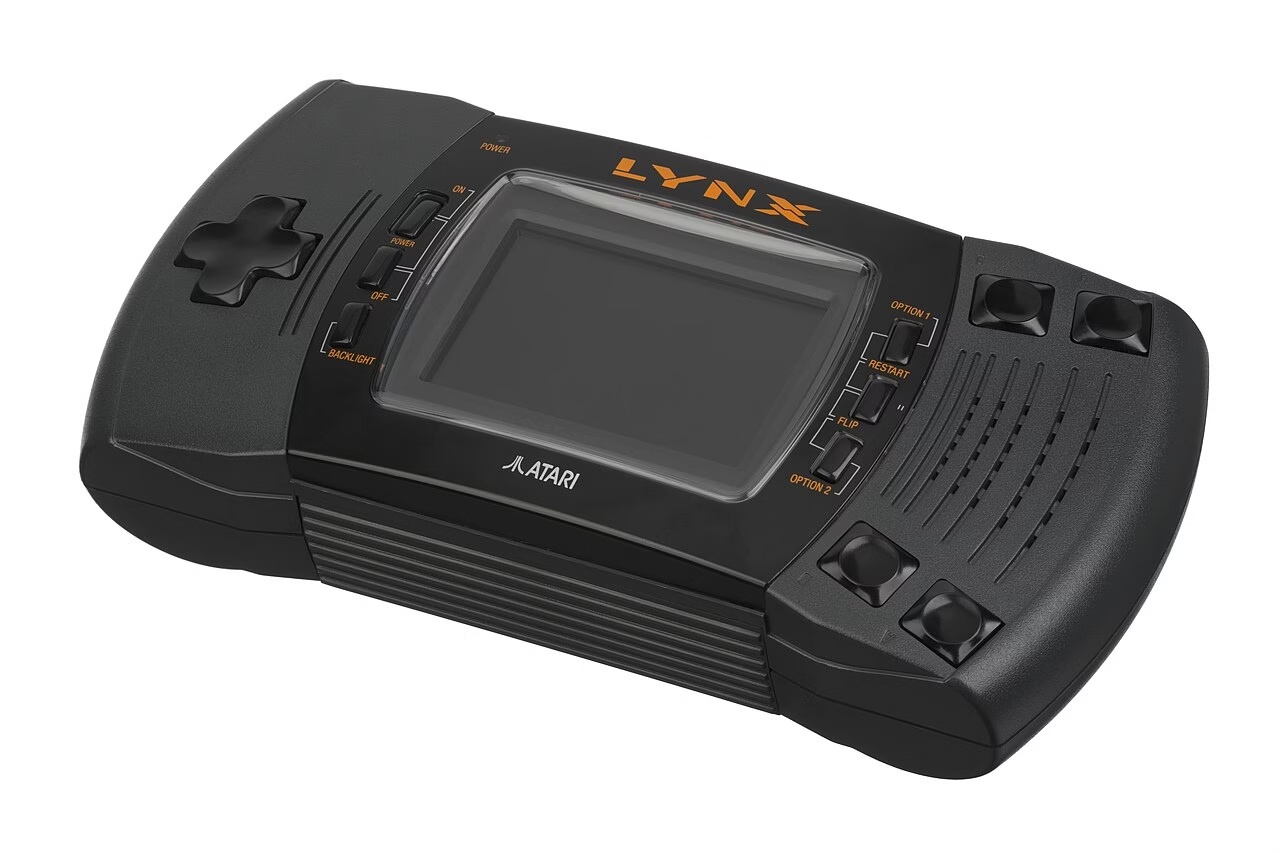
The revision included stereo output through headphones and a way to switch off the backlight while pausing, helping preserve the batteries when the game was not actually being played. It still wanted six AAs. Atari had improved the traveling companion without making its appetite disappear.
The old games remained the games. Buying the revised machine did not mean starting a new library, and the case redesign did not magically produce more software. A more appealing handheld still needed the next good cartridge.
The arcade arrives, with some important distinctions
Several of those cartridges came from Atari’s arcade connections. The names on the machines and the boxes could make this look like one uncomplicated family business. Since the 1984 split, however, Atari Games and Atari Corporation were separate operations. Bringing an arcade game home involved licensing and development work, not simply moving a file down the corridor.
Klax was a particularly natural visitor. The Atari Games tile puzzler sends colored pieces down a ramp, asking you to catch them and arrange lines without letting the whole business collapse into a heap. The Lynx adaptation kept the unmistakable shape of the game and the rising panic of a ramp you have allowed to become too busy.

Here was a useful alternative to the large scrolling adventure. The rules were easy to demonstrate, and an ambitious attempt at a diagonal could ruin what had been a perfectly manageable board. The screen did not need to fill with a landscape to make you lean forward.
S.T.U.N. Runner, adapted from Atari Games’ arcade racer, showed the hardware in a much louder mood. You race a futuristic craft through tunnels and across open stretches, chasing the clock while the track rushes toward you. The Lynx version delivers a remarkable sense of speed for such a small display.
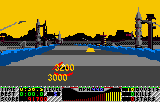
It is the kind of conversion that makes a new owner summon somebody else to look. The arcade machine had been an imposing piece of equipment. This version was happening between your hands. The performance was not identical, but the attraction survived the journey.
That mattered as Sega’s Game Gear joined the international handheld market. Atari’s color screen was no longer an unusual feature without a close rival. Sega could offer its own bright display, recognizable games and a well-supported name. Nintendo, meanwhile, had little reason to abandon the cheaper monochrome machine that so many people were already buying.
Part IV: Good games in a shrinking shop window (1992 to 1996)
Batman Returns (1992): a famous name, a hard landing
Atari did secure recognizable licenses. Its 1992 Lynx game Batman Returns tied the machine to the Tim Burton film, putting a large, handsomely drawn Batman into Gotham’s streets. There were enemies to strike and scenery worth pausing to inspect, if the enemies allowed it.
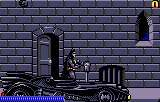
It makes a strong first impression and a less forgiving second one. Batman has to handle repeated attacks with limited room for carelessness. The character looks substantial, but that also leaves less screen around him in which to see trouble developing. It is an attractive cartridge to demonstrate and a stern one to learn.
A famous license could get somebody’s attention without becoming the game they wanted to carry everywhere. The Lynx had a growing collection of good reasons to buy it, but not a steady procession of the games dominating schoolyard conversations.
Nintendo had Mario, Tetris and an enormous audience already swapping recommendations. Sega had its own console business feeding the Game Gear’s identity. Atari needed each new Lynx release to do a disproportionate amount of work.
BattleWheels (1993): Beyond Games builds a demolition party
One small team gave the Lynx a particularly memorable new attraction. Beyond Games, led by programmer Kris Johnson, created BattleWheels, released in 1993. It is a vehicular combat game, with armed cars fighting in an arena viewed from the driver’s seat.

Cars come into view, weapons make their point and the dashboard keeps track of a situation that rarely becomes more peaceful. Leaving a wreck does not necessarily end the fight. The player can continue on foot, which is a courageous response to an arena full of people who still have automobiles.
Up to six connected players could join the battle. Like Slime World and Warbirds, it gave the cable a purpose beyond a feature list. Each driver had a private view of the same fight, and the noise from nearby players could become a useful report of something happening off your screen.
Beyond Games’ work would reappear later in this history. The technology behind BattleWheels became a foundation for further Lynx projects, some of which never reached Atari-era customers. Their unfinished journeys would eventually lead to Carl Forhan.
The catalog keeps filling in
There were quieter attractions too. Lemmings brought DMA Design’s little walkers and their carefully arranged disasters to the handheld. The puzzle was still to assign jobs at the right moment, preserving enough of the procession while the rest of it displayed its extraordinary lack of self-preservation.
Desert Strike brought Electronic Arts’ helicopter rescue and combat format, asking players to manage missions and limited resources while moving across an isometric battlefield. These were substantial games for an owner who already had the machine. They were also arriving in a market where choosing the Lynx meant accepting a smaller software selection from the beginning.
Telegames and other outside developers contributed important releases, and the library cannot be reduced to the games Atari’s own staff wrote. The familiar names shared space with oddities, experiments and conversions whose quality varied considerably. There was enough to become attached to, but finding that attachment often required getting past a less inviting store display.

Even the late catalog could contain a surprise. Battlezone 2000 revisited Atari’s tank-combat name and concealed a much larger alternate game behind a code. A person who thought the cartridge had already shown everything could discover there was a good deal more fighting to do. The Lynx was still capable of rewarding curiosity when its commercial position had become much less encouraging.
Atari’s attention moves to the television
In 1993, Atari launched the Jaguar home console. It demanded development work, advertising and the support of a company already competing against much larger businesses. Lynx owners could see where the excitement was being directed.
The handheld’s retreat was gradual rather than one clean moment in which every shop removed every cartridge. Advertising dwindled, new releases became less dependable and stock could remain available after the main commercial push had ended. By the middle of the decade, Atari’s Lynx business was winding down.
The broader company’s difficulties became impossible to separate from the machines. Atari merged with disk-drive company JTS in 1996, a retreat recorded in the contemporary Analytical Engine journal. The Lynx had not become the handheld success its designers and publisher wanted. The Jaguar would not provide a comfortable replacement.
There is no need to attach a suspiciously precise lifetime sales total to understand the outcome. Game Boy had become the everyday handheld for a much larger audience. The Lynx was becoming the one a shop might have left, sometimes in a bundle that looked very different from the expensive introduction of 1989.
For a customer discovering it at that price, though, the screen still worked its old trick. It did not know it had lost a market. In 1994, one of those customers bought a bundle and went looking for somebody else who knew what to do with the machine.
Part V: A discounted Lynx and a cable from Germany (1994 to 1999)
Carl Forhan discovers what Atari has been making
Carl Forhan had a connection to Atari that began well before the Lynx. His father bought a 2600 when Carl was about ten, and visits meant hours of playing with his brothers. By the early 1990s, though, he barely played video games. His IBM 486 had a few purchases on it, and Atari’s newer machines had passed him by.
Then, in 1994, Usenet provided a surprising piece of news: Atari was still around, with both a color handheld and a new home console. Forhan bought a discounted Lynx bundle from Electronics Boutique and a used Jaguar through the newsgroups. In our Carl Forhan interview, he remembers the Lynx offer as perhaps $79.99 with four games. It is a memory of his own purchase, rather than a claim about every shop’s price.

He had found the machine at a curious moment. To Atari, it was an aging product in a difficult business. To a new owner, it was a pile of games and an impressive piece of hardware bought cheaply enough to explore. The machine that had asked so much of an early buyer was now reaching somebody who would eventually publish for it.
Forhan was an embedded firmware engineer. Writing C was already part of his working day, so the idea of writing it for another processor did not intimidate him. Making a game introduced different problems. He had to learn what the Lynx’s sprite hardware and audio could do, then find out why his own attempts did not always do it.
The message that turns a player into a programmer
A post about a cartridge that could download software into Lynx RAM caught his attention. He tracked down a seller in Germany and gathered the tools to try it himself: a 6502 C compiler and a cable connecting a PC’s parallel port to the Lynx’s serial connection.
The attraction was immediate. Instead of waiting for somebody else to finish a game, he could send a program to the handheld and see what happened. It might not be the result he wanted, but it was his result to change.
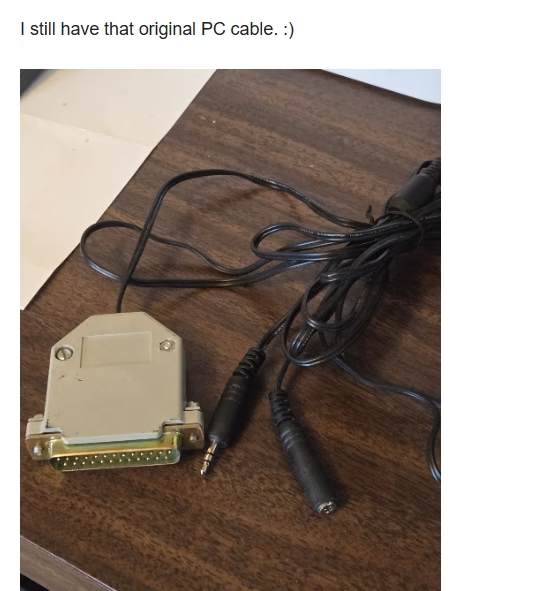
I still have that original PC cable. 🙂
Forhan’s photograph makes a particularly good companion to the recollection. The connectors are less glamorous than a finished cartridge, but they belonged to the route by which an owner could begin making one.
That route depended on other people having worked out pieces of the problem first. Hobbyists shared code, development information and ways to get programs onto real hardware. An interested programmer did not have to reconstruct the whole system alone. The community could supply enough of a starting point for the next person to try.
Forhan still had plenty to learn. He sums up the early hardware work: There was a lot of trial and error in those early days.
A professional programming background helped him get started. It did not arrive with a ready-made understanding of how to make a Lynx sound right.
SFX: the first customers buy an experiment
One of his earliest projects was SFX, a cartridge for experimenting with the machine’s audio in real time. It was a development tool before it was the sort of game someone might show to a friend. Forhan needed to hear what happened when he changed the waveform and feedback registers. Putting the controls on the Lynx gave him a way to investigate.
The project drew inspiration from SoundX, an early aftermarket Atari 2600 cartridge. Forhan began taking preorders for his own tool and found at least fifty people willing to commit, perhaps a year before the cartridges were actually produced. He remembers the buyers’ patience with someone they did not yet know.
Fifty orders did not resemble the market Atari had once hoped to reach. For a person making something alongside a day job, they were fifty real reasons to finish it. They also came from people who were willing to wait for a new item for a machine the main industry had moved past.
The form of the work was changing. A company announcing a major handheld needed a retail launch and a schedule full of software. A hobby developer needed to make the board, finish the program and find the people still interested. The distance between those two operations was enormous, but both ended with someone putting a cartridge into a Lynx.
Songbird announces itself
On March 19, 1999, Forhan announced Songbird Productions on Usenet. The original post promised support for Atari consoles into the new millennium and listed SFX, Ponx and the Jaguar project Protector among the work underway. The new company would publish his own projects and provide a resource for other hobby developers.
The responses preserved beneath it are modest, encouraging messages from people waiting to see what he would do. There is no corporate stage or elaborate launch video. A programmer has made an announcement, and a small audience is paying attention.
Forhan describes his original ambition this way: My original intent was just to rescue a few lost games, and publish a couple of original games on the Lynx.
He was not predicting a quarter century of business. He wanted a few cartridges to exist.
He also hosted JagFest in 1999, giving the Atari audience a place to gather around its machines. A convention named for the Jaguar could still provide company for Lynx owners. By then, the people keeping the two systems active often knew one another across both.
The Lynx would enter the new century without Atari directing its release schedule. Songbird had a very different schedule to offer, and the first steps were small enough to fit on a bare circuit board.
Part VI: The cartridges Atari never shipped (1999 to 2004)
Ponx (1999): start with something you can finish
Forhan’s Ponx brought a familiar ball-and-paddle contest to the Lynx in 1999. It did not require anyone to understand a new fictional universe or admire an elaborate graphics engine. Keep the ball in play, watch its direction and try not to give the opponent an easy point.
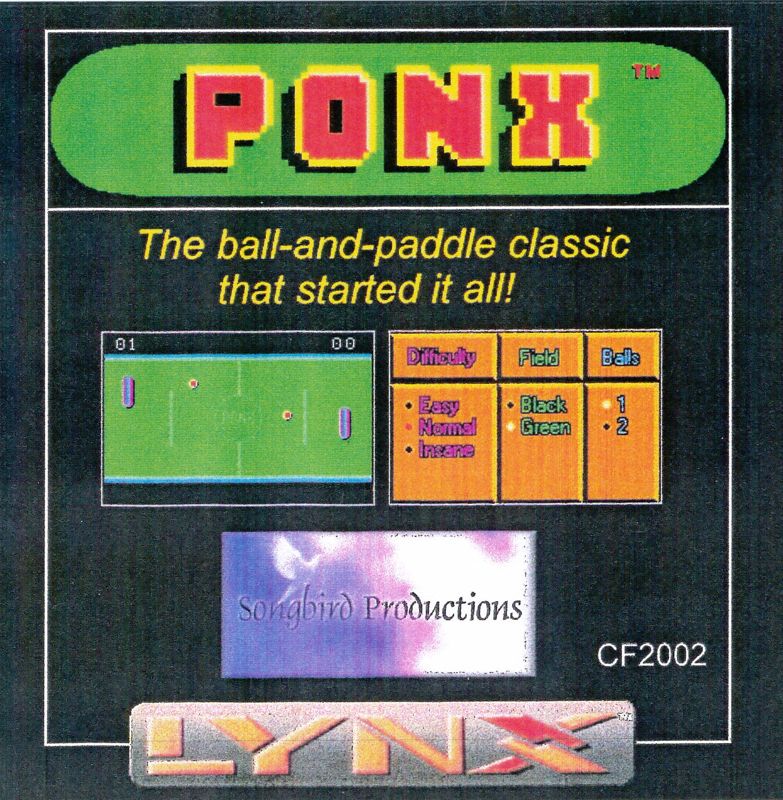
For a new publisher, such a game could be a sensible thing to get into customers’ hands. There was software to test, a cartridge to manufacture and an order to fulfill. The finished object demonstrated that a new Lynx release could make it all the way from a hobby programmer’s work to somebody else’s machine.
The lack of a huge audience made every stage more personal. A problem with a board or a batch did not disappear into a large production department. Forhan was learning where chips, circuit boards, shells and printed material came from, and which jobs he could reasonably do himself.
Championship Rally (2000): another reason to find a ComLynx cable
The following year, Songbird published Championship Rally, an overhead racer programmed by Lucien Kleijkers, with Forhan contributing to the production and sound. Small cars race around tracks with shortcuts, hazards and power-ups. Four-player ComLynx support gives owners a reason to start assembling the equipment again.

The publisher’s description lays out the tracks and configurable options. The view is a good fit for a handheld: the car is small, the corner is approaching and steering accurately matters more than counting polygons. Watching a rival take a shortcut is an effective reason to learn the next lap better.
Forhan discussed the collaboration in his March 2001 MyAtari interview, when Songbird was still young. The period account catches a publisher doing several jobs at once, supporting development tools while trying to turn more substantial games into finished releases.
It was now possible to buy a new game that used the feature Atari had put into the hardware a decade earlier. That did not make finding three other Lynxes effortless. It did give the people who still owned them something new to arrange an evening around.
Beyond Games leaves some work unfinished
Beyond Games’ BattleWheels had shown what its team could do with the machine. Other projects had remained unreleased. In January 2000, Songbird announced that it had acquired rights and source code to three of them: CyberVirus, Ultra Vortex and Mechtiles.
The announcement preserved in Jaguar Explorer Online links the games to the earlier BattleWheels technology. CyberVirus was a mission-based first-person action game. Mechtiles involved giant robots. Ultra Vortex was the Lynx fighting project that would continue under the name Ultravore.
Forhan had something more useful than a rumor and a screenshot. He had agreements and, unusually, the source code. He could study how the programs worked and make changes. Finding a game and having a practical way to finish it were not always the same thing.
CyberVirus (2002): the player leaves the dashboard
CyberVirus finally reached Lynx owners through Songbird in 2002. Beyond Games had supplied the original work; Forhan brought it through completion and publication. The player becomes the last surviving member of a combat unit fighting biomechanical enemies in a future where humanity’s prospects are not especially cheerful.
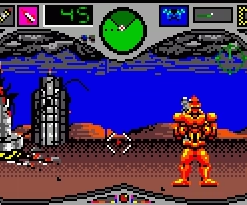
The finished game offers sixteen missions, multiple weapons and terrain that ranges from jungle to desert. Instead of watching the world through BattleWheels’ car dashboard, you move through it on foot, looking for enemies and attending to objectives.
The first-person view gives the Lynx a different sort of space to explore. A target is something to find in the landscape, rather than an enemy arriving neatly from the right side of a platform game. Turning, judging distance and keeping track of the immediate threat give the small screen plenty to do.
Forhan singles it out in our interview about Songbird’s work: And I’m equally proud to have brought CyberVirus to Lynx fans, since that was another lost game which shows the Lynx can do so much more than arcade ports.
His pride concerns a particular finished game. It is not necessary to imagine that CyberVirus would have reversed the handheld market in 1993 to enjoy the fact that it eventually arrived. An owner could put the cartridge in and play the missions. For a game that had spent years unreleased, that was a substantial improvement.
A release takes more than the ROM
The work on lost games could be much less accommodating. Forhan says that source code was the exception among the projects he published. CyberVirus, Ultravore and Mechtiles were among those exceptions; many other releases, especially across his Jaguar work, had to rely on surviving builds.
Rights could be harder to follow than code. In our interview, he uses Ishido as an example of finding a path through the people and companies involved before locating the owner and purchasing the rights. A game’s appearance on several computers and consoles could leave a very untidy trail.
Then came the physical object. A program needed testing. Customers needed instructions. Artwork had to fit a box that somebody could actually produce. The publisher had to decide which work to commission and which could be handled at home after the day job.
These were new releases sold for an old machine, with all the ordinary obligations of getting a game to a buyer. Songbird’s early years could make the word “publisher” sound grander than the available staff. The parcels still had to go out.
Part VII: Other hands on the development kit (2004 to 2019)
Alpine Games (2004): a winter sports trip
Songbird was an important part of the new Lynx audience, but it was never the only place making games for it. In 2004, Duranik released Alpine Games, a winter sports collection with nine events. The machine that had once introduced itself with a Californian holiday was heading for the snow.
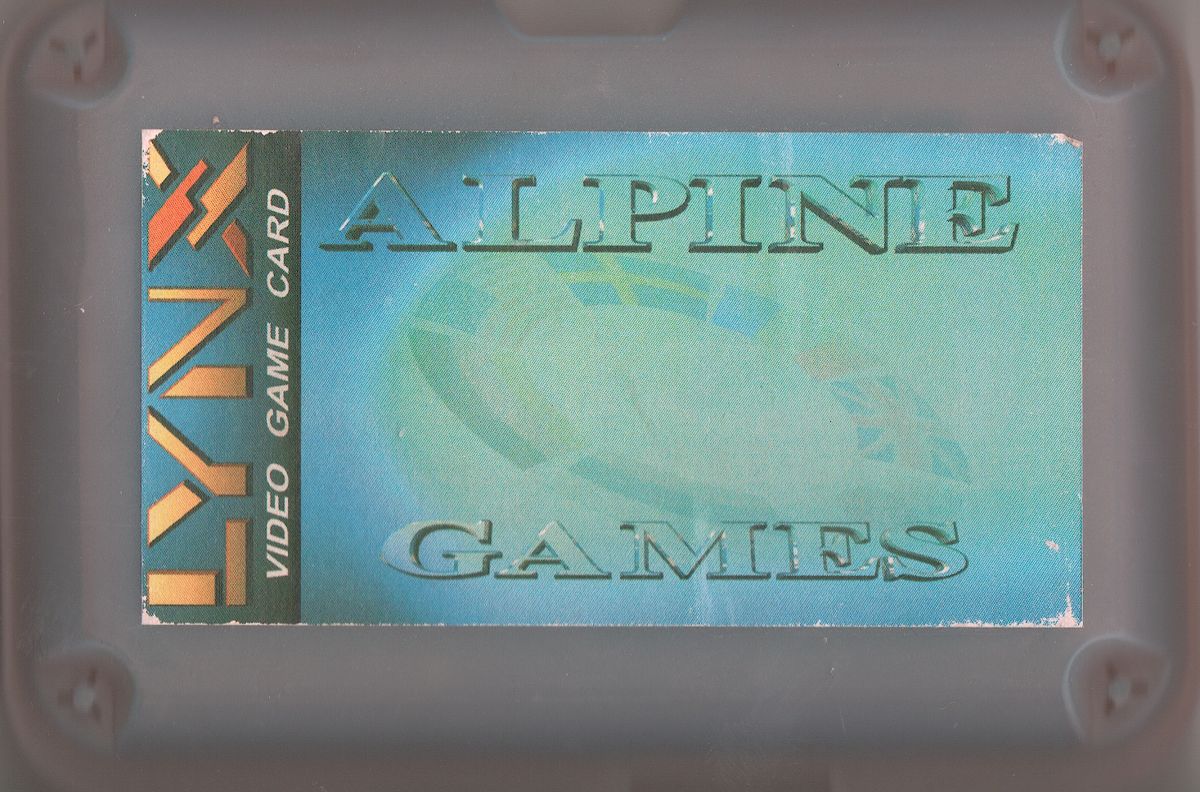
The events give the player different sorts of timing to learn, from the concentration of a race to the short commitment of a jump. A collection like this offers the old pleasure of choosing a favorite discipline, improving one result and then being reminded how bad you are at another.
Its release record belongs to the later history of the console, not a forgotten Atari launch schedule. Duranik was making something new for the people who still wanted to use the machine. The date on the calendar did not reduce what its hardware could do.
The quiet years were not empty
Forhan remembers roughly 2005 to 2015 as a comparatively dry period for both the Lynx and Jaguar. In his account, there were fewer releases and fewer publicly active hobby developers. Keeping the machines going did not mean every year supplied another burst of enthusiasm.
Songbird continued alongside his engineering career. He describes the earlier business plainly: Songbird was always a hobby for me and never a full time job.
Some years brought no profit; at least once or twice it lost money. The willingness to do the work outlasted the expectation that it would replace his salary.
Orders, messages and stock still needed attention. A programmer might have time to answer a customer but not an uninterrupted evening in which to solve a difficult game bug. New releases came through the spare hours available to the people making them.
One remarkable game arrived in the middle of that quieter stretch. Its creator had not grown up waiting for a new Lynx release. He had discovered the machine through a game he knew from a PC.
Zaku (2009): Osman Celimli finishes the game he started at fourteen
Osman Celimli had wanted to make something for the Game Boy. Discovering that Chip’s Challenge had originally been a Lynx game led him toward Atari’s handheld instead. With help from other programmers, he began learning the hardware. He was fourteen when he started the project that became Zaku.
PenguiNet developed the game, and Brandon Cobb’s Super Fighter Team published it in 2009. By then, Celimli was twenty. Their joint interview describes six years of work, using a mixture of original Epyx development tools, community libraries and their own software.
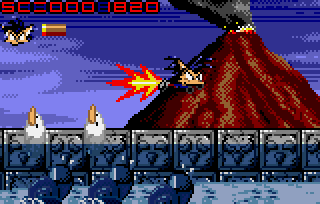
Zaku is a colorful horizontally scrolling shooter, with an airborne hero, large enemies and a considerable appetite for filling the screen. It began with an interest in reproducing the energy of Air Zonk, then developed its own characters and identity. Celimli had to keep finishing that game even as he thought of other projects he wanted to make.
The finished cartridge looks entirely comfortable on the Lynx. The scenery scrolls, the enemies have personality and the action asks for attention without first demanding that the player admire the age of the hardware. It is easy to forget that the machine underneath it was already twenty years old.
Cobb also put work into the physical presentation, including a newly manufactured molded game card. That effort is visible before the game starts. Place it beside an original Atari cartridge and it belongs to the same kind of object, rather than looking like an experiment reluctantly allowed into the slot.
The game and its packaging made a strong invitation to players who were interested in the Lynx now. Nobody needed to have missed the original release in order to enjoy a new shooter. Celimli himself had come to the hardware by a different route.
Thirty years old, with a deadline
In 2019, AtariGamer marked the Lynx’s thirtieth anniversary with a programming competition. Developers had a machine to aim for, a date to finish by and an audience waiting to try the results. The winners were announced at the Portland Retro Gaming Expo.
PriorArt’s account of entering Assembloids records its second-place finish and the variety of games around it. The competition gave projects from different developers a shared occasion, rather than leaving each author to find attention alone.
It also gave the next wave of work a place to begin. Some entries would be expanded, refined or followed by more ambitious releases. A small anniversary game could become an introduction between a programmer, a publisher and the people who wanted another cartridge.
By the time the Lynx moved into its fourth decade, its calendar no longer resembled the one Atari had abandoned. A contest, a convention or one developer’s spare month could provide the next occasion to see something new on the screen.
Part VIII: The screen stays on (2020 to 2026)
New routes into the games
For somebody curious about the Lynx, finding and powering an original machine was no longer the only beginning. The Evercade’s Atari Lynx collections brought games to another cartridge-based handheld in 2020. Songbird’s own catalog records those releases alongside its other work, connecting part of the old library and the aftermarket years with another audience.
Atari’s history also returned in a more elaborate form through Digital Eclipse’s Atari 50: The Anniversary Celebration. Its official description includes playable Lynx titles among the machines explored. A player could encounter the handheld’s games while following the wider story of Atari, rather than knowing in advance which old console to search for.
Neither route replaces every game or every aspect of the original experience. They do let somebody discover why people liked the machine without first arranging a repair or filling a battery compartment. There are worse ways to meet an obscure handheld than being allowed to play something from it immediately.
Fadest and a different kind of journey
New developers also kept giving the original machine work to do. Fadest, the developer behind the French publisher Yastuna Games, made Ynxa: Leaf and the Secret of the Pyramid, an exploration and puzzle adventure in which different elemental forms grant different abilities.
The developer’s release page offers both Lynx and Game Boy versions and credits the Lynx community’s BLL library among its tools. The adventure’s heroine can use air, fire and water to find routes through the world. Working out which form belongs at an obstacle becomes part of learning the place.
It is an appealing fit for a system whose early library already had room for Chip’s Challenge and Slime World. A new game did not have to outdo the latest arcade conversion. It could give the player a connected place to explore and a reason to return after learning something useful.
There were more people involved than a glance at the cartridge might reveal: tool authors, musicians, artists and the publisher turning a finished program into a release. Forhan’s own role had changed in a similar direction. He says much of his recent work involves helping other developers choose priorities, refine features and improve the player’s experience.
The machine gets some help too
Original hardware had acquired problems that were not on Atari’s launch checklist. Aging screens, power circuitry and other components could keep a good game from reaching the player at all. Repairers and hardware developers became another part of the active Lynx world.
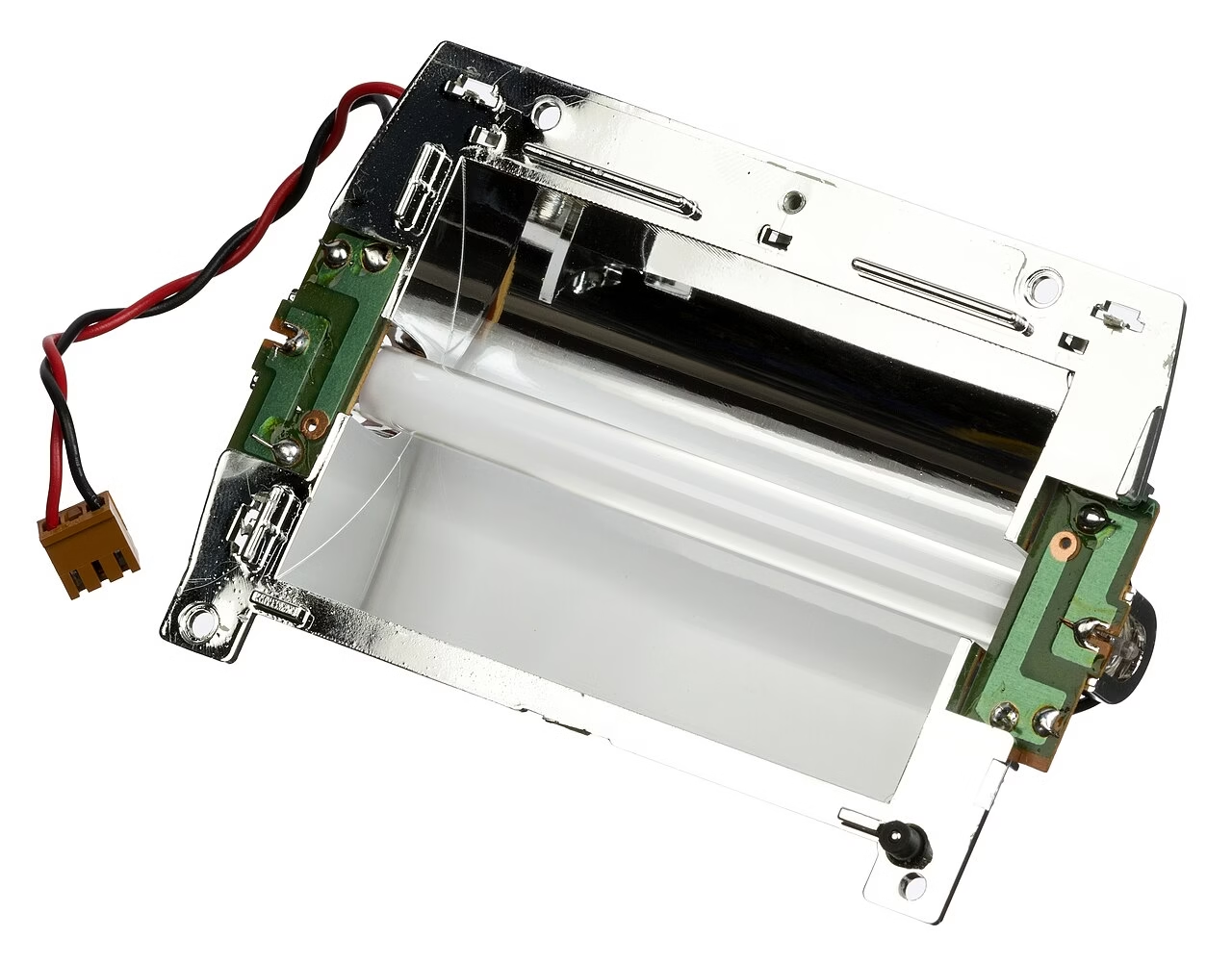
Replacement displays from developers including McWill and BennVenn changed how the old games could look on a real handheld. BennVenn’s IPS kit documentation describes a modern screen intended for the Lynx. The result is still the original machine running the cartridge, with a much clearer way of seeing what it draws.
Flash cartridges and development hardware made it easier to move newly written software onto a handheld. That shortened the distance between changing a program and testing it where it would actually be played. Forhan’s old parallel-port cable belongs to an earlier stage of the same recurring job.
For readers starting on a computer, our Mednafen entry is a useful route into a multi-system emulator with Lynx support. Its official Lynx documentation explains the required boot ROM and the controls. Felix offers another Lynx-focused option, with its project repository providing the current releases and development information.
Songbird reaches 2026 with more to do
The work still includes new games. In April 2026, Songbird announced its Lynx version of Wee Ninja, a platformer arriving with new graphics, animation and music, and Microvaders Caravan Edition, built around a three-minute high-score challenge. The announcement offered the latter in both digital and physical forms.
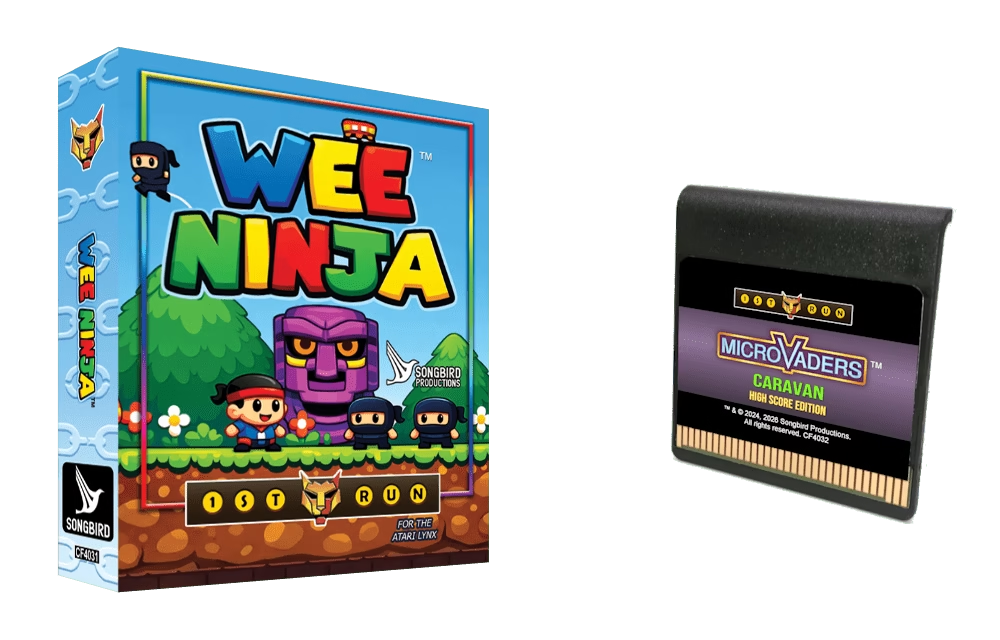
Three minutes is a wonderfully dangerous amount of time to offer someone chasing a score. It sounds like a small commitment, right up to the point at which another attempt seems certain to go better. The short arcade session that suited a handheld in 1989 still has a willing audience.
Forhan had also changed his working day. He tells us that he retired from his engineering job in December 2025 and made Songbird his full-time work. It did not replace his former salary. It did give him more time for a company whose work had already filled evenings for decades.
More time did not remove the ordinary tasks. There were orders, licenses, website maintenance, cancellations, newsletters and taxes. He still wanted more hours to code. Anyone expecting retirement to mean an uninterrupted seat at the development kit might recognize the problem.
JagFest provided a more sociable interruption. Forhan’s 2024 gathering drew about forty people, some traveling considerable distances. He held another in 2026. The scale was still small enough that a visitor could spend time with the people bringing their machines, rather than only joining a queue to look at them.
Ultravore is still on the bench
One of Songbird’s oldest unfinished journeys remains especially appropriate to a Lynx history. Ultravore, the fighting game descended from Beyond Games’ Ultra Vortex, had been among the properties acquired around the turn of the century. In our conversation with Forhan, he hoped to publish it by the end of 2026. As of October 2026, that is a plan, rather than a release this article can declare completed.
His continuing work also appears in a Retro Gamer interview shared by Andrew Fisher. The surviving assembly code has sparse comments, some of them wrong. Forhan is using the old Epyx toolchain on the Amiga while adding his own work and testing it on emulators and hardware. An archive has become an active project again, with all the slow investigation that entails.
The Lynx still gives him a reason to do it. Asked to choose between Atari’s handheld and the Jaguar, he favors the smaller machine: It’s so much more constrained than the Jaguar, and yet it has extremely powerful hardware.
After all those years, his choice of a Lynx game to keep is California Games. The surfing remains his favorite event. He also admits that perhaps he would finally learn how to score properly on the half-pipe.
The wave is coming around again. There is time for one more attempt.
Sources and further reading
- Carl Forhan interview, Retro Replay. Firsthand account of the 1994 purchase, early development, Songbird, rights, publishing and work through 2026.
- RJ Mical, official website. Mical’s career and the Amiga, Lynx and 3DO projects.
- RJ Mical interview, Retro Gamesmaster. His partnership with Needle, Epyx and development tools.
- Retroinspection: Atari Lynx, Retro Gamer, preserved by Retro Isle. Interviews with the designers about the Epyx project and Atari handover.
- Atari Explorer, January and February 1991. Period hardware reporting, staff credits and game coverage.
- Atari Explorer, March and April 1991. The early-1991 pricing campaign and contemporary software announcements.
- Atari Lynx FAQ, Robert Jung and contributors. Hardware specifications, revisions, games and communication features.
- Dave Needle’s Handy specification excerpts, preserved by Jim Leonard. Identified excerpts from the June 1987 engineering document.
- California Games, original Lynx instructions. The handheld edition’s events and multiplayer requirements.
- Chip’s Challenge, original Lynx instructions. The original puzzle game’s rules.
- Chuck Sommerville interview, The Midnight Post. The canceled tank game, launch development and contributions of level designers.
- Stephen Landrum interview by James Hague, 1993. Landrum’s development career and work on Handy.
- Peter Engelbrite, career portfolio. Lynx development and Slime World.
- Warbirds, Game Developer. Robert Zdybel’s game and credits.
- Battlezone 2000 hidden-game instructions. The cartridge’s alternate game.
- The Analytical Engine, fall 1996. Contemporary computer-history reporting on Atari and JTS.
- Songbird formation announcement, March 19, 1999. Forhan’s original announcement and responses from the contemporary community.
- Carl Forhan interview, MyAtari, March 2001. Early development tools and publishing projects.
- Jaguar Explorer Online, volume four, issue one. Preserved 2000 press releases about the Beyond Games properties and Songbird projects.
- SFX, Songbird Productions. The Lynx sound-development cartridge.
- Championship Rally, Songbird Productions. Tracks, modes and multiplayer features.
- CyberVirus, Songbird Productions. The finished release, mission count and game features.
- Alpine Games, AtariAge release record. Duranik’s 2004 Lynx release.
- Brandon Cobb and Osman Celimli interview, Obsolete Gamer. Zaku’s origins, development process and physical production.
- Assembloids competition entry, PriorArt. The 2019 anniversary programming competition and second-place entry.
- Ynxa, Fadest and Yastuna Games. The Lynx and Game Boy adventure, development credits and elemental abilities.
- Yastuna Games developer page. The independent publisher’s projects and location.
- Atari 50, official product page. The modern collection’s inclusion of Lynx games.
- Evercade releases, Songbird Productions. The publisher’s catalog of Lynx collections for another handheld.
- Lynx IPS display kit, BennVenn. Current replacement-screen hardware from its developer.
- Mednafen Lynx documentation. Emulator requirements and controls.
- Felix project repository. The Lynx emulator’s releases and development.
- New Lynx games coming in 2026, Songbird Productions. Wee Ninja and Microvaders Caravan Edition announcement.
- Carl Forhan on Ultravore, Retro Gamer material shared by Andrew Fisher. The surviving source, original toolchain and planned late-2026 release.