Retro Replay Retro Gaming History, Reviews & Emulation
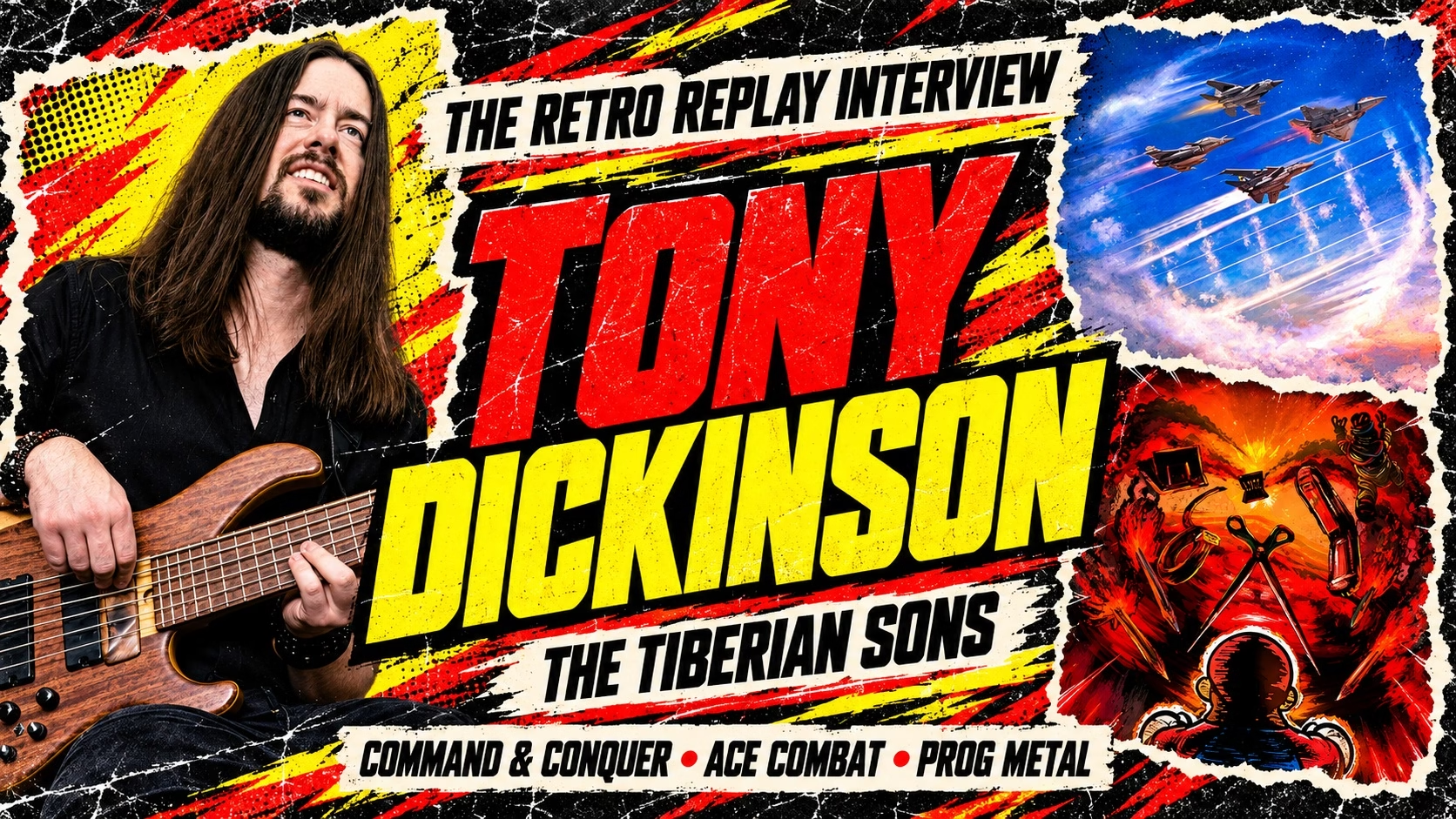
Tony Dickinson remembers leaving Sonic standing at the end of a boss fight so he could keep listening. The animal capsule could wait. Later, he recorded Sonic Adventure’s “Open Your Heart” onto a cassette and carried it around on a Walkman. Command & Conquer soundtracks went onto burned CDs for middle school listening. Eventually, he sent Frank Klepacki an arrangement of “Hell March.”
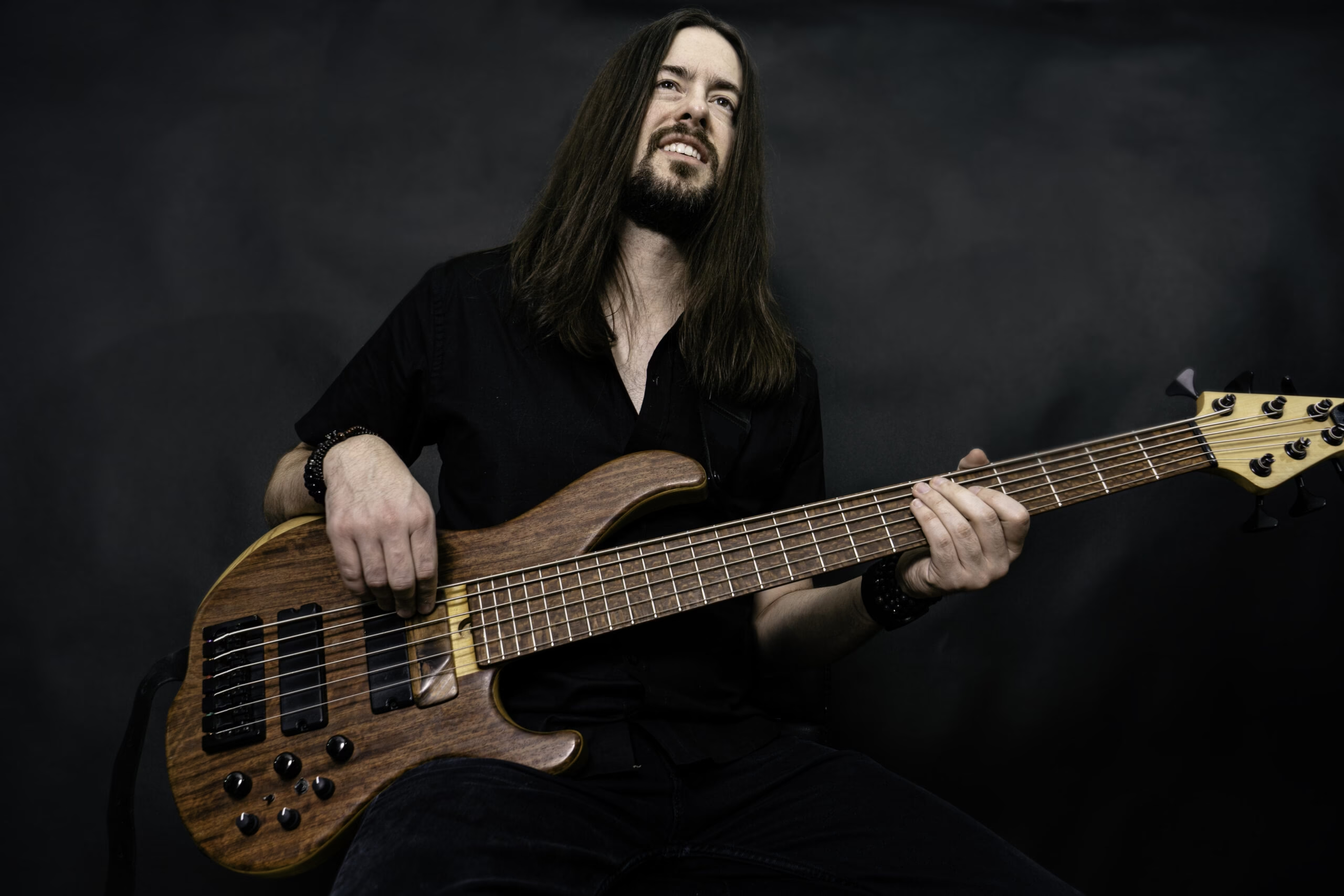
That arrangement grew into something considerably bigger than a fan tribute. Dickinson founded The Tiberian Sons in 2014 to play his orchestral metal arrangements at MAGFest. Guitarist Connor Engstrom, bassist Max Noel, and drummer Travis Moberg joined him in a band that would go on to collaborate with Klepacki and record music for Command & Conquer Remastered Collection. Dickinson handles arrangements, production, mixing, and mastering alongside his instrumental work.
Their records have room for Ace Combat’s soaring melodies, brass arrangements, and the deeply unreasonable proposition of giving Paper Mario’s evil office supplies a full metal workout. On Aces Without Borders, the band returns to Ace Combat with The Game Brass, Videri String Quartet, and a roster of guests. Dickinson is just as interested in letting a brass part breathe as he is in finding the next excuse for an enormous guitar arrangement.
Interview by David of Retro Replay. Answers by Tony Dickinson, founder and music director of The Tiberian Sons.
Sonic on a Walkman, C&C on a burned CD
Retro Replay: Before we get into The Tiberian Sons, what are you personally most excited about musically right now? Is there a project, soundtrack, arrangement, or completely unrelated piece of music currently taking up most of your brain?
Tony Dickinson: I just got through AC8 and there are honestly several songs that blew me away upon hearing them. Everflow and Hortus Regis Alti are pretty unreal in terms of delivering pure drama and emotion.
Besides the obvious, Devin Townsends “The Moth” dropped back in May and it’s been an incredible work to listen to. Fans of ours certainly would enjoy that album.
As far as my own music is concerned, I’ve got some cool ideas for original music for Tiberian Sons and personal projects that I am excited to work on. If only I can find the time to put them down!
Retro Replay: What are your earliest memories of video game music actually grabbing your attention as music rather than simply something playing behind a game?
Tony Dickinson: Honestly, Sonic 3 & Knuckles takes the cake for my personal favorite game, mostly for sake of nostalgia, but also for the fact that it’s the first game I remember obsessing on a boss theme. After you beat Lava Reef Act 2s boss, you can just stand there waiting to press the final animal capsule. I remember leaving it there and jamming to it when I was probably 9 years old.
Similarly, Sonic Adventure’s “Open Your Heart” was something I immediately recorded onto a cassette tape and rocked on a Walkman after I heard it. It’s still a seriously ripping track and I loved being able to play part of it with Johnny Gioeli at MAGFest and MAGWest.
Of course, can’t omit Frank’s C&C soundtracks. I’m pretty positive Red Alert was my first experience with “real” music in a game as opposed to something sequenced on a Sega Genesis or certain PlayStation games. I burned entire CDs of C&C soundtracks to rock in middle school haha.
An excuse to play the loud arrangements
Retro Replay: How did The Tiberian Sons originally come together, and at what point did it become clear that this could be something more serious than a group of friends playing game music?
Tony Dickinson: I put it together in the summer of 2014 with the intention of playing some of my crazier orchestral metal arrangements at MAGFest. It was put together mostly for fun and an excuse to get together. After we worked with Frank, which then led producing the remastered soundtrack, I think that’s what started our thoughts about how we probably have some potential with this project.
Retro Replay: The name obviously points straight toward Command & Conquer. Was C&C always central to the identity of the band, or did the name simply happen to fit what you were doing?
Tony Dickinson: “Hell March to the Apocalypse” was the first orchestral metal arrangement I tried to produce, besides cloning the Advent Children version of One Winged Angel in high school, so C&C holds the candle for beginning this strange journey. Also, C&C bombs and warfare aesthetic kind of matches what we’re doing musically. A bit insane, a bit destructive, a bit cheesy, and entirely self aware. It felt appropriate to pay tribute to that series as a core component of our identity.
What stays, what changes, and what fights back
Retro Replay: When you arrange a game track for The Tiberian Sons, where do you normally begin? Do you start by identifying the melody that absolutely cannot be touched, or by asking how far you can push the original before it becomes something new?
Tony Dickinson: I don’t like straying too far away from the original pieces of music. Main melodies are often untouched. Many of the Tiberian Sons arrangements are fairly conservative in that regard, besides adding the metal elements. Arrangements have also allowed me to peek inside the brain of my favorite composers which serves as an educational benefit. And some source materials, especially the Ace Combat material, almost feels blasphemous to change too much. If it ain’t broke don’t fix it.
That being said, there are arrangements that I would like to do in the future where I’ll probably end up being a bit more adventurous. Our new Ace Combat album “Aces Without Borders” took a lot more liberty than the first album, but also because all of the really popular AC songs were part of that first album.
Retro Replay: How do you decide which pieces of the source music need to remain recognizable and which parts are fair game for complete reinvention?
Tony Dickinson: Great question! It’s honestly more of a feeling than anything. Main melodies are very important but any instrument can feel “canon” to an original song. A lot of bass lines in classic VGM songs feel as important to me as the melody does.
Retro Replay: Is there a game track you initially thought would be easy to arrange that turned into an absolute nightmare once you started pulling it apart?
Tony Dickinson: We did an arrangement of “God Shattering Star” from Fire Emblem Three Houses in the early days of Covid. The original is an incredible song but was torture to transcribe because it’s so dense, but is an amazing piece of music. We will be revisiting that soon.
Retro Replay: On the other hand, has there been a soundtrack you didn’t expect to work as metal at all that practically rearranged itself once you started playing with it?
Tony Dickinson: We generally choose sources that lend themselves to our aesthetic. That being said, every now and then I like doing metal & big band arrangements of jazzier soundtracks and they turn out very fun. I’ve done Sonic 2s “Mystic Cave” and Kirby 64’s “Ripple Star” this way.
Retro Replay: Does your experience as a composer and producer change the way you hear old game music? Are you automatically dissecting harmony, orchestration, production, and arrangement choices while everyone else is just enjoying the track?
Tony Dickinson: I think that comes with any piece of music I listen to. I’ve always been heavily analytical with any song I listen to, but that doesn’t stop my enjoyment of the piece. Some of the older VGM soundtracks are a completely different experience than a modern soundtrack because of the limitations of the hardware. Tim Follin, for example, is a genius at what he does and what he could make the hardware do.
Working with the man who wrote Hell March
Retro Replay: Command & Conquer eventually brought you into direct collaboration with Frank Klepacki. What was it like going from being a fan arranging his music to actually working alongside him?
Tony Dickinson: A dream come true. He was one of my earliest heroes especially because he’s able to play multiple instruments on top of his producing abilities. Now that I can call him a colleague and a good friend is incredibly rewarding.
Retro Replay: “Hell March to the Apocalypse” predates that collaboration. Did you ever imagine while making that arrangement that it could eventually help lead to you working with Frank himself?
Tony Dickinson: I never thought he’d ask me to collaborate, but I did send that arrangement to him after my first iteration. Franks a super cool dude and gave valuable feedback.
Retro Replay: Once Frank became part of the process, was there ever a moment where you thought, “Okay, I probably shouldn’t completely destroy this section because the guy who wrote it is sitting right there”?
Tony Dickinson: When we were working on the C&C Remastered collection, not only did I want to preserve what he had done, but I actually opted for us to do full length versions of most of the songs besides the medley’d versions that he had arranged. I took a bit of liberty with Dusk Hour, though.
Retro Replay: What did Frank bring to those arrangements that nobody else could have brought simply because he knew the original music from the inside?
Tony Dickinson: Intention. I think what separates bad arrangers from good arrangers is understanding the intention of the original composer. Bad arrangements feel like they lose the point completely. Good arrangements still maintain the feel of the original even if they’re transformative. But what better way to maintain intention than having the original composer fix it up?
Retro Replay: Was there a Command & Conquer track that changed much more dramatically than you originally expected once you started rebuilding it for the band?
Tony Dickinson: Dusk Hour (covered above)
Retro Replay: C&C music already contained rock, industrial, electronic, and metal elements. Did that make adapting it easier, or did it actually make things harder because Frank’s original tracks already had such a strong identity?
Tony Dickinson: Franks music has a lot more restraint than ours does, so it can be a challenge to stop myself sometimes, haha. But “Frank Klepacki & The Tiberian Sons” original tunes free us to use our maximalist tendencies on his riffs, haha.
Retro Replay: Of all the Command & Conquer music you’ve performed or rearranged, which track is simply the most fun to play live?
Tony Dickinson: Hell March or No Mercy because the audience freaks out. Funkier songs like Workmen or Just Do It Up are also a blast since they’re a nice change of pace. And any time we can get Frank on the drums to do a solo is fun for everyone!
Ace Combat, brass, and a second trip into the sky
Retro Replay: The band has also gone well beyond C&C into things like Ace Combat, Hollow Knight, Ys, Mario, Final Fantasy, and others. What makes a soundtrack scream “Tiberian Sons” to you even when the original music has little or nothing to do with metal?
Tony Dickinson: Again, it’s kind of a feeling. If I immediately get some sort of idea on how the song would translate, I’ll consider it. If I’m not feeling it I won’t bother, because I don’t like “forcing” a song down a path that might not feel natural.
But generally, we’ve also chosen material that lends itself to this sort of thing. Final Boss themes generally, ‘epic’ songs of any variety, anything and everything with an orchestra gets some sort of consideration.
Retro Replay: Your Ace Combat work is particularly interesting because those soundtracks already jump between orchestral, rock, electronic, choral, and cinematic styles. What attracted you strongly enough to that music to build something as substantial as Anthems of Liberation around it?
Tony Dickinson: I genuinely have a hard time thinking of a video game composer that delivers on emotion and drama across multiple soundtracks than Keiki Kobayashi. Nobuo Uematsu is probably the best example. What Keiki Kobayashi writes is so integral to the gameplay experience that I can’t imagine the games working without him.
Listening to “Daredevil” brought me back to the series in early Covid days, and I was obsessed with that song. You can see countless YouTubers having emotional reactions just listening to the song without having played the game. Daredevil was a bright light when things were pretty rough, and it led me to rediscovering the series and his soundtracks in following years.
Our arrangement of “Magic Spear” and “Daredevil” unexpectedly became a hit online, so it made a lot of logical sense that we do an entire AC album. Another great excuse to dive deep into a composer that really inspires me.
Retro Replay: How difficult was narrowing Ace Combat down when the series has such an enormous amount of music worth arranging?
Tony Dickinson: The first album was pretty obvious. We included all of the “hits,” like Unsung War, Zero, Liberation of Gracemeria and Megalith. Then selected a few others that we enjoyed. First Flight was also an obvious one.
Retro Replay: Aces Without Borders expanded that material even further. Was that mainly a case of realizing you had far too many arrangements and ideas to simply leave them sitting around after the live project?
Tony Dickinson: Most of the new songs on Aces Without Borders were arranged because we needed more music for our “Three Aces” concert. In fact, they were arranged to their full studio lengths FIRST, and then trimmed down to fit the concert.
444 and Ten Million Relief Plan were not part of the concert, though. 444 was a track I actually wanted to do for the first album, but Travis didn’t have the time to record drums for it, and Ten Million Relief Plan came about because in the earlier stages of arranging the second album, I didn’t feel like the album had as many peaks as the first one did. I kept hearing a particularly intense and brutal arrangement went I listened to Hero of Comberth Harbor so I went for it. And now it’s one of the favorite arrangements I’ve done for the band.

Retro Replay: Is there one Ace Combat arrangement where you think the finished Tiberian Sons version went somewhere particularly unexpected compared with the original?
Tony Dickinson: The Round Table is a very different listen because it’s more of a jazz fusion arrangement. Credit to JohnStacy who was in charge of brass for the album and the concert. I work with John a lot and gave him the room to do his thing on that song.
Evil stationery and very serious nonsense
Retro Replay: Satan’s Office Supplies may still be one of my favorite album titles for a VGM project. What possessed you to hear the Paper Mario: The Origami King soundtrack and decide that menacing office supplies needed a full prog-metal treatment?
Tony Dickinson: Haha, well the bosses in the game are exactly that: evil staplers, scissors, tape dispensers… actually what would be more frightening than a pair of scissors if you’re a little paper person?
That soundtrack felt written specifically for our sensibilities so it was another case of me not being able to resist myself.
Retro Replay: How much room is there for humor in what you do? The music can be technically ambitious and genuinely epic, but the band also clearly doesn’t take itself completely seriously.
Tony Dickinson: Oh we’re fully self aware at how ridiculous the band is. But I also kind of like the irony of very intense music being accompanied and occasionally undercut by memes and jokes. I have massively high standards for the music I try to make, but ultimately you should be having fun making it.

Writing for people, then getting it onto a stage
Retro Replay: When you’re working with guest musicians, strings, brass, singers, violinists, cellists, and so on, how much are you writing specifically around what those musicians can bring versus handing them an already finished arrangement?
Tony Dickinson: I definitely write with the band and frequent collaborators in mind, and I do my best to write for their strengths. That being said I have a limited knowledge on what’s idiomatic or acceptable for orchestral instruments, but being able to consult John Stacy for those issues has taught me a lot. Ideally you want the thing to be playable and readable if you’re getting someone to read and record the part. You can’t go super insane, and yet I still write things that musicians complain about, haha.
Retro Replay: Has a guest musician ever added something so good that you substantially rebuilt the arrangement around what they played?
Tony Dickinson: “The Valley of Kings” on our latest Ace Combat album has all this really cool brass stuff that John wrote, and originally guitars were supposed to solo on top of that. It ended up being too busy and cluttered that I opted for simple guitar melodies instead so I could let the brass shine.
Retro Replay: What changes when you take one of these extremely layered studio arrangements onto a live stage? Do you have to completely rethink certain sections simply because four people cannot physically reproduce everything happening on the record?
Tony Dickinson: Oh yep. Our earlier Tiberian Sons arrangements definitely needed some simplification to execute, but a lot of that is also up to each band member whether they think they can do the written thing or not.
When we play with orchestra members, John will reduce the parts down to however many people we have, and that will almost always be smaller than an actual orchestra.
Retro Replay: Is there an arrangement that is significantly harder to perform live than listeners would ever guess?
Tony Dickinson: Megalith was a hard song to play live because it’s got a lot of chord changes and I trimmed it down a little bit that made it harder to follow.
The Paper Mario Origami King songs are insane in the best way, and the most challenging. But they do sound as insane as they are to play.
The audience gets bigger
Retro Replay: The VGM scene has grown enormously since bands first started treating game music seriously outside the games themselves. What has changed the most about the audience during the years you’ve been part of it?
Tony Dickinson: The audience has definitely broadened and diversified significantly. When I joined it was mostly male millennials give or take 10 years in age, but I’m really happy to see every sort of nerd coming around to this art medium.
Retro Replay: Do you think there is still a tendency outside gaming circles to treat video game music as somehow lesser than film music or other forms of composition, or has that argument finally started dying?
Tony Dickinson: It’s still a problem, but I think it will get better over time especially as more and more people grow up with it.
Retro Replay: There is also now an entire generation of musicians who grew up treating Nobuo Uematsu, Frank Klepacki, Koji Kondo, Yoko Shimomura, Keiki Kobayashi and other game composers as major musical influences. Do you think we’re reaching the point where game music is simply part of the broader musical vocabulary rather than its own niche?
Tony Dickinson: I’m seeing that already in generations around my age. Lots of jazz musicians that I know are already aware of the greatness of these soundtracks. Adam Neely has a great video on VGM Jazz and how it’s become its own vocabulary akin to the Real Books of Jazz culture.
Final Fantasy VII dreams and a giant orchestra
Retro Replay: Fun one: if you were given unlimited budget, unlimited musicians, and no licensing problems, what single video game soundtrack would you love to turn into an absolutely ridiculous full-scale Tiberian Sons production?
Tony Dickinson: One Winged Angel was where it kind of all began for me, and I know that everyone in the band would die happy if they could do a whole FF7 concert. It would be a nice full circle moment for me.
Retro Replay: Another unfair one: if you could sit in with the original composer during the creation of any classic game soundtrack, just to watch how it was made, which soundtrack would you choose?
Tony Dickinson: Does Mick Gordon on Doom 2016 count? Haha. Not a classic game but so many fascinating and outside-the-box decisions were made for that soundtrack. Not to mention another game where the music is an inseparable part of the game experience.
As classic soundtracks are concerned, Super Metroid is pretty wild because it is so different than the other games in that era. Trying to make cinematic ambient music on the SNES led to some really wild and unique songs.
Retro Replay: After all the recording, arranging, producing, mixing, live performances, and collaborations, is there something The Tiberian Sons still haven’t done that you really want to accomplish?
Tony Dickinson: Well we’ve played with a mini orchestra. Next we want to play with a GIANT ORCHESTRA!
Retro Replay: Finally, when the interview is published, are there any current releases, websites, Bandcamp pages, personal projects, upcoming performances, social media accounts, or anything else you would like me to direct readers toward?
Tony Dickinson: Bandcamp page mostly. Aces Without Borders was just released, and we have some cool merch on that page as well! We have upcoming performances but can’t speak about them yet.
Thank you, Tony
Our thanks to Tony for spending part of his flight with these questions, and to Travis Moberg for putting us in touch. The detail about pulling back a guitar solo so JohnStacy’s brass could shine is a particularly good reason to revisit “The Valley of Kings.” There is a lot happening on a Tiberian Sons record, and Tony has given us plenty to listen for on the next pass.
Find the band’s recordings and merchandise on The Tiberian Sons’ Bandcamp page, including Aces Without Borders, Anthems of Liberation, and Satan’s Office Supplies. You can also visit Tony Dickinson’s official website and his personal Bandcamp page.
For more conversations about game music and the people performing it, read our interviews with Mustin of The OneUps, Console: The VGM Band, and Barry Leitch, or explore the Game Music & Performance interview collection.