Retro Replay Retro Gaming History, Reviews & Emulation
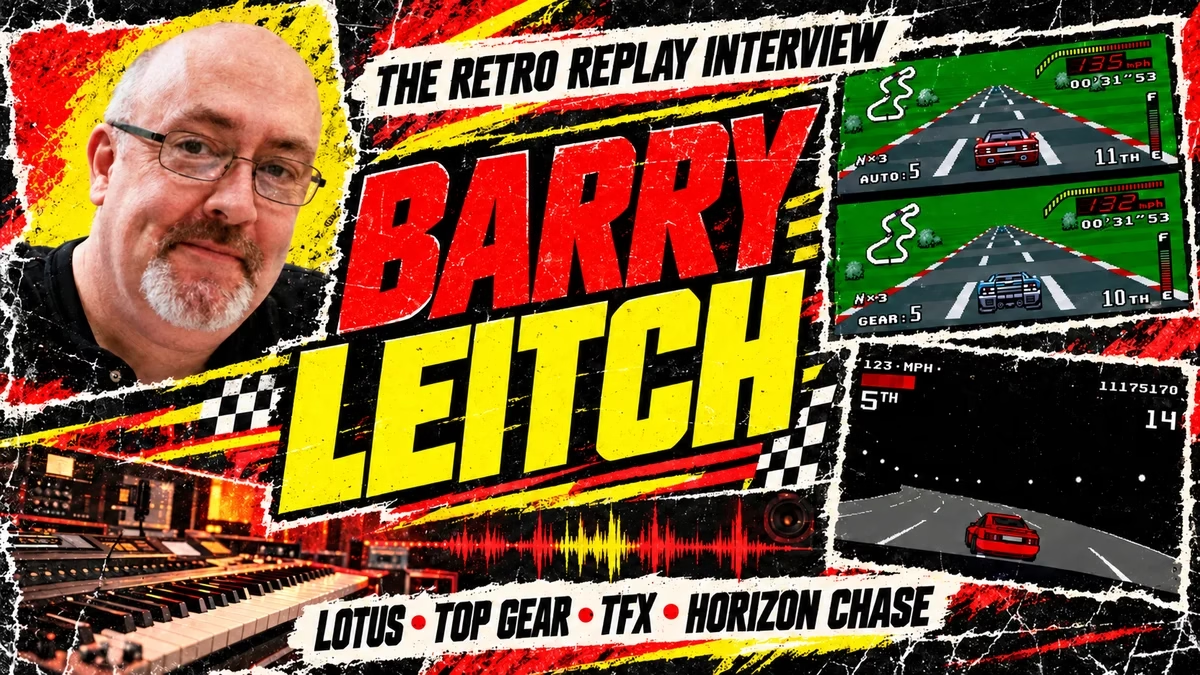
Barry Leitch was sitting at the edge of a stage in Brazil, waiting for an orchestra to play his music, when someone in the audience shouted for Top Gear. Other people were calling for Super Mario and “One Winged Angel.” His racing-game tunes belonged in that company to the people in the room. He had written them decades earlier while getting to grips with a SNES sound driver.
Leitch got started by listening to Rob Hubbard and deciding that he wanted to make a Commodore 64 do something like that. He called composers, asked questions, transcribed sheet music, and learned on the job. The work took him through home computers, Ocean, racing games, flight simulators, and the Nintendo 64, with very different amounts of memory available from one project to the next.
Lotus Turbo Challenge 2 and Top Gear are part of that story, but so are four Amigas wired to one mouse, unused TFX transitions, and the job of fitting John Paul’s Gauntlet Legends arcade music onto an N64 cartridge. Barry also talks about Drakan: Order of the Flame, the demands of a canceled Wayne Gretzky project, and meeting the players who carried his music with them.
For the racing series around that music, read our complete history of Top Gear, from its Lotus roots through Horizon Chase and Top Racer.
Interview by David of Retro Replay. Answers by Barry Leitch. Profanity has been partially masked with asterisks.
Rob Hubbard, a five-pound bet, and getting started
Retro Replay: How did you first get involved in composing music for video games, and when did you realize it could become a career?
Barry Leitch: I was there when Rob Hubbard was just getting started. I was blown away by what he was doing with the sid chip, and decided that was what I wanted to do! I had no idea how to write a piece of music, I had no programming skills, but I knew what I wanted to do, and I wanted to learn. I knew just about enough to be “mostly harmless”.
I wasn’t really thinking of it as a long term thing. At that age (14 or 15) it seems like you’ve got aaaages to go. There was literally 2.5 people working as full time game composers in the UK at the time, maybe 10 in the whole world! Trying to convince your parents that it was a viable thing was futile.
I called up all the UK ones, asked lots of stupid questions, and carried on with nothing but zero skill, and just pure determination to get me thru the first few years. After some false starts, and blind luck, I ended up working full time, and luckily that gave me the time to learn as I worked.
I was doing what I wanted to do, and that was all that mattered at the time. As you get older you start to question the longevity of where you’re at, and you start to be able to make career choices that enabled me to survive the inevitable boom and bust cycle developers go thru.
I think when I got to Ocean, was when it felt like I had properly chosen a career. There was nowhere bigger in the UK at the time.
Retro Replay: What were some of the first computers or sound chips you composed for?
Barry Leitch: Spectrum, making it beep.. BBC model B I spent 5 days transcribing Bach’s toccata in D minor into the music system, then onto the C64. A friend bet me 5 quid that I couldn’t write an original tune as I’d been simply transcribing from sheet music at the time to try and learn as much as I could.
Retro Replay: You mentioned that a friend bet you £5 that you couldn’t write an original tune after you had been transcribing music to learn. Do you remember what that first original composition was, and did you collect the £5?
Barry Leitch: Yeah it was called Fridge or something stupid.. and it was a terrible piece 😊
Four Amigas, three channels, and a hunt for samples
Retro Replay: In those early years, how much of your composing process was dictated by the technical limitations of the hardware?
Barry Leitch: It was always dictated by the destination hardware.. No point or way in writing a 4th channel part if the computer only has 3 channels is there?
One of the fun things we did though was that Xenophobe cassette tape. We wired up a mouse to 4 amiga’s together and with a single mouse click to start them at the same time. I wrote 4 separate mods for it, One for bass and drums, one for chords, one for lead, and one for all the extra stuff.
When the Amiga became the dominant platform, I started writing on the amiga first, and would arrange the music so it could be transcribed easily to other computers by either compressing some of the channels together like interspersing the bass and snare drums together, or a backing arpeggio and drums etc. or have a “throwaway” backing channel that I knew wasn’t gonna be used on the conversions or just replaced with “trills” or the like.
Retro Replay: The Xenophobe cassette setup with four Amigas synchronized from one mouse sounds completely insane in the best possible way. How did that setup actually come together, and does a recording of that version still survive anywhere?
Barry Leitch: Yeah they shipped it on cassette with the game, there’s videos of it on youtube. I think it was most frustrating that 4 amiga’s couldn’t stay perfectly in time together, I was quite surprised with that.
Retro Replay: Did those limitations ever actually help creatively by forcing you to write music in a different way?
Barry Leitch: Yeah, it forces you to rely solely on structure and melody. As that’s all you really have. You can get away with so much more on modern hardware.
Retro Replay: You worked across systems such as the Amiga, Atari ST, Commodore 64, SNES, and others. Which hardware did you most enjoy composing for?
Barry Leitch: Roland MT32 in 1991, was A M A Z I N G! it was a full synth pc sound card! It sounded almost like real music.. or as close to it as you could get at the time without oodles of synth gear. Other than that, the Amiga was awesome.. Love writing mod files.
Retro Replay: Was there a particular sound chip or piece of hardware that you found especially frustrating?
Barry Leitch: Genesis.. I f****** hated it.. same as the adlib pc soundcard. I never got my head around FM synthesis, and my music driver for it was terrible, it did the very basics. Other people like Yuzo Kushiro had amazing drivers that supported sampled sounds etc.. I was working with one arm tied behind my back trying to bang my head on the keyboard and make ANYTHING coherent.
Retro Replay: If you could go back to the Genesis today with a much better driver and everything you know now, is there a Genesis soundtrack of yours that you would want another shot at?
Barry Leitch: Hmmm.. I think I only did a couple. Gemini wing, which I wasn’t very keen on musically, maybe American gladiators ? was that on genesis ?
Retro Replay: How different was the process of composing for the Amiga compared with earlier systems such as the Commodore 64?
Barry Leitch: The Amiga was completely groundbreaking in that it levelled the playing field for composers.. On the C64 you were only as good as your music driver. Rob, Ben, and Martin all had their own proprietary drivers. I had one by 1988, but it was pretty limited in comparison.
The Amiga used samples and it became a game of “get all the samples”, I’d rip them from games, demos, cd’s, anyplace I could get them in order to try and create something new each time.
Retro Replay: When it became a game of “get all the samples,” were there any particular samples that ended up becoming almost like signature instruments for you and appearing repeatedly in your work?
Barry Leitch: Yeah there was a bass sound I used in TFX that I really liked, it was just so fat. Most people had little desktop speakers and it just hit the frequencies perfectly on those to sound uber fat 😊 There were some dance drum samples, kick – hat hat hat, snare – hat – hat -hat that were also probably over used.
The Lotus melody that arrived in a dream
Retro Replay: Lotus Esprit Turbo Challenge became famous not only for its racing but also its music. What do you remember most about composing for the Lotus games?
Barry Leitch: I remember being asked to do lotus 2, and trying to think w** I was gonna write for it.. I had been ripping samples from all the cd’s the artists in the office had, and when I went home and slept, I dreamt of the melody and the chord progression. Probably just my brain resolving all the sounds I’d sampled and worked out a way to utilize them in a coherent manner.
Retro Replay: The story about dreaming the Lotus 2 melody and chord progression is fascinating. When you woke up, did you immediately remember enough of it to start working, or did you have to reconstruct what you had heard in the dream?
Barry Leitch: Oh I had the melody in my head, that was all it took.

Retro Replay: Is there one piece from the Lotus series that you are particularly proud of?
Barry Leitch: The Completion music from Lotus 2, and title for Top Gear, started off as me trying to find a way to make it extremely difficult to work out how many actual channels were playing.. (there were only 4), so I’d started off by playing the music extremely quickly, and overlaying 2 arpeggios on the first channel, one playing on the beat, and one higher pitched playing off beat. The staccato bass and alternate chord trills, long chord pads / full drums, and a lead..
People were just starting to squeeze more channels out of the amiga at the time, and I didn’t want to be left behind.
Top Gear, Brazil, and the Vegas piece
Retro Replay: Your work on Top Gear introduced your music to a huge console audience. How did you become involved with that project?
Barry Leitch: “Hey Barry, Gremlin need some tunes for their snes version of lotus”
Retro Replay: The Top Gear soundtrack is still remembered very fondly by SNES players. Why do you think that music has lasted so well?
Barry Leitch: It was really strange and humbling to hear it was so popular in south America of all places. At the time I had no idea they even played games there!
The reasons are several fold I think.. 1:- Ayrton Senna, he was massive at the time and every kid wanted to drive like him. 2:- The social aspect, 2 player games. Games were ridiculously expensive for kids in Brazil, so like we had arcades, they had “Locadoras” full of consoles and tv’s. 3:- Import taxes on new consoles made the ps1 etc, prohibitively expensive, so the snes and genesis had a much expanded lifespan there.
Even when I was down there doing the big orchestral concert that I’d written a full arrangement and medley of TG & Horizon Chase, it still wasn’t really hitting me until I was sat at the edge of the stage, waiting for them to play my piece, and people were shouting out the names of the games they wanted to hear in between each song… “Super Mario!”.. “One winged angel”…… “f***** TOP GEAR !!!”
That’s when it really kinda hit me.
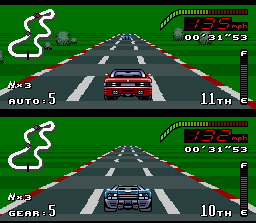
Retro Replay: What was going through your head at that exact moment, sitting beside the stage and hearing somebody shout for Top Gear alongside games like Super Mario and Final Fantasy?
Barry Leitch: “holy f***, they do ALL know that piece!”
Retro Replay: Have you had many chances since then to meet Brazilian Top Gear fans and hear firsthand what that game and soundtrack meant to them growing up?
Barry Leitch: Oh yeah, they all have stories to share about it. There’s so many beautifully touching stories! Last year I was in Sao Paulo and I was on stage with Megadriver performing Top Gear. Now it’s hard to put into words the feeling of being on stage performing a piece that the audience wants to hear, it’s an epic high.. After the show I stepped down into the audience to sign cd’s and cartridges etc, and this guy came up to me.. He starts sharing his story about how him and his dad had used to play the game a lot while he was growing up, but now his dad was older and having some health issues, and he was really bummed out that he couldn’t be there that day. It’s that realization that you’ve made something that’s become part of peoples lives, they have a real emotional connection to something you created, and in that moment you’ve got this beautiful connection with someone who you’ve never met, who lives 6000 miles away from where you “just knocked some quick tunes”. Sometimes I’ve been moved to tears hearing tales from people who have all these wonderful memories of playing the game with a brother, cousin, or father who has sinced passed on. It can also be pretty terrifying when a huge 6’8 guy covered in tattoos with tears in his eyes wants to give you a hug ! 😊
It’s a very surreal thing to experience, and its not just the fans. When I was at that event in SP they had one of Senna’s racing cars. One that he’d actually raced in. I’d seen the movies about his life etc, and I’d written the music for the Senna DLC for Horizon Chase turbo which was actually quite emotional for me to write tribute pieces for this nations hero. I was wandering around on my own for a few minutes and I came across his car just tucked away in the corner, and I just stood there staring at it, and for a moment, felt that connection. Something that was part of Senna’s life, now had a guy from 6000 miles away was standing there with tears in his eyes because of that same emotional connection.
Retro Replay: Is there a piece of music from Top Gear that you think best represents your style from that period?
Barry Leitch: Definitely the Vegas piece. The driver we had for the SNES was just the bog standard one that came with the dev kit, and had an instruction manual written in Kanji.. so it was a day of trying stuff out and seeing what it could actually do..
When I realized it had an echo dsp effect, I went straight for the low hanging fruit, and threw the biggest arpeggio I could at it, and just went from there. That one tune, easily the most popular thing I’ve ever written was all just me trying to make it sound as good as I could while using my favorite chord progression and making a wee pop song.
Retro Replay: Is it strange that something created so quickly and experimentally, while you were basically figuring out an unfamiliar SNES driver as you went, became arguably the piece of music that most defines your career?
Barry Leitch: Yep… but then how many times have you heard stories of your favorite pop stars who when asked about your favorite song they made replied “I wrote all the lyrics on the back of a bus and we just threw the song together the next day”. There’s definitely a purity to that method of creation, things aren’t over thought or over analyzed, something is just created and you move on.
Retro Replay: You mentioned using your favorite chord progression. Is that progression something listeners could find appearing elsewhere in your music if they knew what to listen for?
Barry Leitch: John Carpenters Assault on Precinct 13 ? Probably, Cmin, D#, Bb 😊
A mix held together with chewing gum
Retro Replay: Racing games often need music that can loop repeatedly without becoming irritating. Was that something you consciously thought about while composing?
Barry Leitch: Yep, it should have had a LOT more music, but there simply wasn’t time to do more. It wasn’t like I was sat around for days surfing the internet as that was still 15 years away.. You sat down, you did your work, and you got onto the next project.
For Horizon Chase I was very careful to try and be super careful about the repetition factor creeping in.. If anything I think I over did those tunes, there’s places where there’s 2 or 3 arpeggios playing, melodies, counter melodies etc, just a massive wall of sound, so that when you hear it for the 27th time, your ear might just find and follow some new part that you hadn’t really focused on before.
I’ve been contemplating remixing and remastering that recently, but its such a daunting massive task because I know I’m gonna have to deal with all that stuff I did. The Brazilian street race mix was an absolute nightmare the first time. Took us several days to get the percussion just perfect in the mix and in the end it felt like it was all held together with chewing gum and stick back plastic.. You change one sound 1.5db (almost incomprehensible) and the whole mix would just fall apart.
Retro Replay: You mentioned that you have been contemplating remixing and remastering Horizon Chase. Is that something you seriously might pursue, and would the goal be to clean up the existing mixes or actually rethink some of the arrangements?
Barry Leitch: I think its more likely that I’d go thru them with a hatchet and cut stuff that isn’t necessary, but then I’d feel bad for cutting them, and I’d probably just extend the pieces and give those parts their own places to be heard clearly.
Retro Replay: With something as fragile as the Brazilian street race mix, would you be afraid that “fixing” it could accidentally remove some of what made the original work?
Barry Leitch: Yeah, the percussion on that was uber fragile, but its not like I would ship it without it being perfect.
TFX and the score that was supposed to connect
Retro Replay: TFX was a very different kind of game from the racing titles people often associate with you. How did composing for a military flight simulator change your approach?
Barry Leitch: TFX was my “coming of age” project. I wanted to make a full score like Strike Commander (Nenaud Vugrinec), I was now working at Ocean, literally the king of the hill of UK games development. I felt for the first time in my career like a serious game composer. I swanned in like a f****** rock star, and just went for it..
I knew I wanted to write an extended score that all tied together musically thru using leitmotif, chord progressions, hooks etc. It wasn’t as interactive as Strike Commander, (strike had a music driver that could bridge from any beat in a bar to any other piece in the game thru writing of loads of little bridge pieces).
I did write bridge pieces that were supposed to play in between the themed pieces – ie, flying to a mission, engaging in combat, flying home successfully / unsuccessfully etc.. but I had left Ocean and whoever got the job of implementing it simply didn’t know they existed.
Retro Replay: Do any of those unused TFX bridge pieces still exist, and would you ever like to see the soundtrack restored closer to the interactive version you originally envisioned?
Barry Leitch: I think the bridges were fairly short 4 bar pieces IIRC, they’ll probably be in the medit files which I released a few years back.
Retro Replay: Did you ever find out what happened to those pieces after you left Ocean, or were they essentially forgotten until you looked back on the project later?
Barry Leitch: No idea.
Retro Replay: TFX was extremely ambitious technically for its time. Did the scale or presentation of the game influence how cinematic you tried to make the soundtrack?
Barry Leitch: Yeah it was groundbreaking ! The UK Air Force were blown away by it! They wanted to train pilots on it ! We looked at the graphics and thought “WOW ! Those are SOOO realistic! It’s like being in the cockpit!”…. you look at it now and you wouldn’t say those things 😊
Retro Replay: How serious did the interest from the UK Air Force become? Did you ever hear discussions about actually adapting TFX or its technology into some sort of training tool?
Barry Leitch: The UK air force isn’t exactly known for not being serious, so I imagine their interest was very serious.That’s a question for Martin Kenwright or Colin Bell..
Retro Replay: Are there any pieces from TFX that you are particularly proud of or that you think deserve more attention today?
Barry Leitch: Yes.. The title piece.. Anarchy… I wrote it originally for the Anarchy demo group party in Sheffield that I went to.. It was for a music competition. It was to be my magnum opus at the time.. Moody introduction, and just big bombastic catchy dance groove towards the end.
Turns out… totally worked for TFX 😊
Retro Replay: Do you remember how Anarchy actually did in that original music competition, and was it changed much when you later repurposed it for TFX?
Barry Leitch: The competition felt like it was rigged, as it seemed only Anarchy members won any of the music pieces.. I could also just be a sore looser 😉

Taking a hatchet to Gauntlet Legends
Retro Replay: You later worked on Gauntlet Legends. How did you approach composing for a series that already had such a long arcade history behind it?
Barry Leitch: By completely ignoring it all, and solely focusing on the task at hand, which was convert John Pauls arcade pieces to the N64..
JP had spent the better part of a year of his life and written this massive score, which he’d done a LOT of things that you could get away with with CD audio, that were not exactly do-able on the N64… Well… you could do them, but they’d sound s***..
What I mean by that, is things like massive reverb’s, or loose timing.. or huge sample dependant sounds that I’d never ever have the room to store on a cartridge. See… with CD audio you can have a big boom say.. that reverbs out over several seconds, then introduce a distorted guitar playing an arpeggio.. well that big boom sound, is gonna take the better part of 100kb of cart space, and that distorted guitar, you cant sample a single distorted guitar note and then pitch it around cos it sounds a bit like an amiga game, so you end up having to sample several guitar notes to just even get close to that and not sound pants..
So I kinda went in with a hatchet and just cut out a lot of stuff that I knew wouldn’t work well on the N64, and rewrote it. There is an absolute INSANE amount of music in that cartridge. I still can’t believe they fit the game on there after all the audio stuff was on.
Retro Replay: When you had to take the “hatchet” to John Paul’s original arcade score for the N64, did you have direct conversations with him about what could survive and what had to be rewritten, or were you largely left to make those decisions yourself?
Barry Leitch: No, I think I was pretty disgusted with JP and how “loose” all his timings were and so much big sample dependency there was. I may have questioned his reasoning given we work in a very precise medium. Given the space I had for the sampled instruments, there was no way to really replicate precisely what he had created. The arcade division and consumer divisions were 2 separate units at that point, so I was away on the other side of the building where he couldn’t hear what I was doing to his tunes.
Retro Replay: Do you remember approximately how much cartridge space you were ultimately given for all of the Gauntlet Legends music and samples?
Barry Leitch: I think everything fits in 1.5megabytes… its got about 90 minutes of music and ALL the sfx.

Drakan, late nights, and the producer’s brief
Retro Replay: Gauntlet Legends had a very different atmosphere from your earlier racing work. Was it enjoyable getting to write darker fantasy music and explore a completely different style?
Barry Leitch: Oh yeah, and you’ve probably missed out on Drakan: Order of the flame ! I wrote the music for that on my evenings / weekends. It was really satisfying to write different styles of music.
I think actually Drakan was written while I was doing Rush 2 / 2049 or California speed, or that wayne gretzy 99 that got canned., and then I got into doing GL. So I was just constantly writing, and bouncing between styles. I think I also did that Dark Planet battle for natropolis too.. I dunno.. I’m starting to forget some stuff 😊 I keep a big spreadsheet to try and remember what I’ve worked on, but I forget to keep updating it.
Retro Replay: I definitely want to correct my oversight on Drakan. What do you remember about composing that soundtrack in your evenings and weekends, and did working outside your normal day-job schedule give you more creative freedom with it?
Barry Leitch: Yeah it was a nice break.. I had finished gauntlet N64, and was doing Rush 2049 at the time or cal speed, so it was nice to be able to bounce back and forwards between techno and orchestral styles

Retro Replay: You mentioned a canceled Wayne Gretzky project. How much music had you completed for it, and does any of that unreleased material still survive?
Barry Leitch: All of it, a couple of tunes, several “arena” style pop jingles. The producer on it wanted SUPER aggressive guitar metal which is incredibly difficult to do with wavetable instruments to start with. You cant fit that much guitar solo samples on the cartridge and still sound like a distorted guitar. I’d recorded Joe Lyford playing some bleeding fingers stuff. It’s not music I’m particularly proud of, but it was what the producer wanted. It sounds like music you’d beat someone in the head with a hockey stick to. People don’t always know that about game music. What you hear in the game might not be 100% what the composer wanted to write for it, it’s often a producers vision or marketing choice. The composer has to write what that person wants, not what they wanted to create for it. You can look at my 2 twisted edge snowboarding soundtrack for an example of what I wanted to write vs me writing what the producers wanted, but yet the producers wanted something more than what I’d delivered, like the soundtrack that ended up in the game.
Dark Legacy and the pirate ships that did not make it
Retro Replay: You returned for Gauntlet Dark Legacy. How did your approach change between the two games, and were you able to expand on ideas you had started in Gauntlet Legends?
Barry Leitch: Kind of, I mean there were 5 of us writing music for it, so we all referenced some themes from the first one, and just go to town a bit. The Forsaken province world was pretty much all mine, the fields of fire, mausoleum, ghost town, and was it sky dominon ? a big epic 7 minute piece.
Retro Replay: The Gauntlet games were built around constant action and repeated multiplayer sessions. Did that affect how you structured the music so it could support long periods of gameplay without becoming repetitive?
Barry Leitch: There’s so much going on noise wise in the arcade, it kinda drowns out the music a bit, so I was trying to just establish themes and try and cut thru the cacophony a bit.
Retro Replay: Do you have a favorite track, level, or musical moment from Gauntlet Legends or Gauntlet Dark Legacy?
Barry Leitch: Fields of fire I think it was called, the first level.. I always liked how that sounded. It was supposed to be for pirate ships battling in the sky, but I think they canned that level or compressed it into sky dominion.
Retro Replay: Do you remember more about that pirate-ship level, and whether any concept art, footage, or early music for it survives?
Barry Leitch: I’m guessing the sky dominion level has a pirate ship in the sky, so that’ll be what it became, and so I’d written another piece, a big long epic thing.
Rush, Twisted Edge, and California Speed
Retro Replay: You also worked on the Rush series. How did composing for Rush differ from Lotus and Top Gear, especially as racing games became much more technically sophisticated?
Barry Leitch: Looking back I’ve found it interesting to listen to the soundtracks one after another. It’s like one big long soundtrack that progresses thru different styles. If you listen to the 2 unused soundtracks I wrote for Twisted edge snowboarding (on my bandcamp page), one of them is stylistically EXACTLY half way between Top Gear Rally, and Rush 2. Top Gear Rally was trying to sound more “American”, and by the end of Twisted Edge, it was sounding more Underworld electronica. When I started with Atari, Rush 1 had these hardcore rave style music that wasn’t very melodic, and had gotten harsh reviews. The arcade was also pretty heavy electronic, so I decided to focus on drums and bass, maybe lay off the melody a bit, or at least go easy on it.. Hardware wise, we were still on the N64, although for the dreamcast version it got the arcade ost along with a few extra tracks from the N64 that I’d “synthed up a bit”
Retro Replay: Were the two unused Twisted Edge scores rejected at different stages, and how close did either come to being the soundtrack players would have heard?
Barry Leitch: You can listen to them all at
I think initially I started with something a bit more electronic (I mean listen to track 9, it could have been in rush 2 and nobody would have noticed!) but they wanted something more metal, which is incredibly difficult to do on an n64 with not much memory. I still think the metal soundtrack isn’t completely terrible. Especially metal race 6 which I ended up making into a full song with vocals.
In the end they asked someone else to do a Primus style soundtrack, f****** Primus !
Retro Replay: By the time you were working on Rush, racing games had moved into 3D environments and were becoming much faster and more visually intense. Did that change what you felt racing-game music needed to accomplish?
Barry Leitch: Also did California speed in the middle of Rush2 / 2049 but that was just an arcade conversion. I had a fair bit of room on the cart for the audio so I was able to do a really authentic conversion of the tunes.. I sent the original composer a recording of them and he said he couldn’t tell them from the originals.. So I took that as a win! His style was very different, and an interesting mix between electronic and rock.
Retro Replay: Between Lotus, Top Gear, Rush, and later Horizon Chase, you have composed racing music across several generations of gaming. What do you think makes a piece of music work particularly well in a racing game?
Barry Leitch: Good melody.. lots going on.. that feeling of “you could crash at any moment”. Feeling like you’re on the edge the whole way. I dunno man.. I just make tunes I wanna hear while I drive fast 😊
Retro Replay: When you look across TFX, Gauntlet, Rush, Lotus, and Top Gear, which project pushed you furthest outside your musical comfort zone?
Barry Leitch: If I’m allowed to expand past just those few, I think Horizon Chase 2 was the most outside my comfort zone because for the most part I was forced into writing stuff that matched a VERY narrow criteria of what they wanted.. There were several theme pieces which I think are arguably WAY better than the “generic racing” themes they wanted. The Wild Wild West, Poiera etc. If they were tied to a geographical area they were far stronger pieces IMHO.. I had a real hard time writing about 18 tunes that were all supposed to sound very very similar.
Friday afternoons and a twenty-minute soundtrack
Retro Replay: You worked on an enormous number of games during the 1980s and 1990s. Were there times when the production schedule forced you to compose extremely quickly?
Barry Leitch: Yeah there were several games that were literally written between 4 and 5 pm on a Friday afternoon when we’d get a call asking for some music and I’d bang something out.. Silkworm I think was a quicky, same with Xiphos. Even Top Gear! I had 5 days!
Retro Replay: What is the fastest you ever had to complete an entire game soundtrack?
Barry Leitch: I think Wheel Of Fortune on the gamegear ? (the wee sega handheld thing) – I timed myself.. 20 mins.. but that was cos the music data was the same as the spectrum / Amstrad, and it just needed a tweak to the instruments.
Retro Replay: Were there games where you finished the music and later wished you had been given more time to work on it?
Barry Leitch: F*** yeah.. so many of those early games. People don’t realize how little time we had to do these things in. “Get ‘er done and onto the next one” was the mantra. I’d love to go back and redo half of them.
Retro Replay: Is there a soundtrack from your earlier career that you think deserves more recognition?
Barry Leitch: Probably TFX.. Or Zone Warrior.. Zone warrior was a 2 year labor of love that became a technical nightmare. Trying to get as many varied sounds and instruments into the game and give each level its own feel, but musically I think I could have written better stuff for it.. I didn’t have 2 years to work on it, it was just the default game I had to keep working on in between every other project that was pumped out..
Retro Replay: Were there any games where the final hardware implementation sounded very different from what you originally composed?
Barry Leitch: Yeah several games shipped with buggy music drivers so a sample would be very slightly out of tune, or have a bad loop point in it. S*** I was watching a video of utopia on the SNES, and the bass line is like 5 semitones off.. You wanna know why that happened ? Cos we had one SNES devkit, and I wasn’t allowed anywhere near it.. it was a USA system, so it required an American power supply and American TV to work in the UK.. so it was a tiny little 12”color tv, with a s**** speaker where you simply couldn’t hear the bass.. It was in a room with a dozen programmers and artists who sit and listen to music while they work all day, getting them to turn off their speakers was met with sighs, moans and refusals and a programmer who wanted to get the game finished not to have to screw around letting the audio guy hear the music in the game. So I’m trying to approve that the music is playing correctly on a s*** tv with no bass capabilities.. It was an easy yet very frustrating to miss and only find out about 30 years later.
Retro Replay: Would you be interested in revisiting the SNES version of Utopia to show how that bass line was meant to sound?
Barry Leitch: On the actual snes ? No.. but you can probably have ai rip the music out and fix the tuning. I did revisit one of the tunes a few years ago and did a proper mix of one of the tunes
https://soundcloud.com/barryleitch/utopia-tgh-big-mix-mix
Old files, new discoveries, and the people playing the music
Retro Replay: Do you still have any of your original source files, trackers, instruments, or development materials from that era?
Barry Leitch: I had about 100 disks of amiga samples, all gone, but I still have source code for like Top Gear, we actually found an unused C64 version of Kick off 2 or 3 music last year. Thanks to Waz we got it compiled and playing on c64 after 30 years. I’d done the NES version and completely forgotten we ever did a c64 one! Also I have the full OST for Epic CD rom (Ocean).. it was our very first cd rom project with full cd soundtrack, Me, Dean Evans and Keith Tinman all wrote that one.. Maybe one of these days it’ll get released.. I think Dean shared his on youtube.. His stuff is awesome!
Retro Replay: Do you remember how you, Dean Evans, and Keith Tinman divided up the Epic CD soundtrack, and what would it take to release the complete recordings?
Barry Leitch: Dean did like 6 tracks, I did 3, Keith did 1. I dunno.. fanfare ? dean already stuck his on youtube which kinda makes it a bit piecemeal to go releasing the rest of it now.
Retro Replay: Retro game music has developed an audience far beyond the original games. Did you ever imagine people would still be listening to these tracks more than 30 years later?
Barry Leitch: Absolutely not.. We had no idea. Hell I had no idea people in South America even played games, yet they’ve flown me down there several times for these massive retro events. It’s been totally amazing to experience.
Retro Replay: What is it like seeing younger players discover your music through YouTube, remixes, emulation, rereleases, and modern games inspired by that era?
Barry Leitch: That’s been very cool too. Although when people turn around and remake an old game without even contacting the original composer it’s annoying. Allistair Brimble had one where they just did it and didn’t even ask him if he’d like to work on it.. I find that very disrespectful.. Of course us old guys would LOVE to work on remakes!
The remixes are very cool too. Top Gear Vegas has become a bit of a guitar standard that Brazilians learn to play because it’s a b***** difficult piece to play! It was never written for someone to play live! There are so many talented performers out there that I’ve seen play that track. The keyboardist in Peru’s Pegasus could play it facing away from the keyboard reaching over his shoulders to play the arpeggio! – hell I cant even play it in time facing the d*** keyboard! That’s a level of skill most people can only dream about.
Returning to the road with Horizon Chase
Retro Replay: Horizon Chase brought your racing-game sound back to a modern audience. How did you become involved with that project?
Barry Leitch: They hit me up on facebook, asked if I wanted to be involved. I said hell yeah !
Retro Replay: When the developers approached you for Horizon Chase, did they specifically want something that recalled Lotus and Top Gear?
Barry Leitch: Yep “Just like the old games, only more modern and better”.. Do you think I managed that ?
Retro Replay: What was it like returning to that style of racing music decades later with dramatically fewer technical limitations?
Barry Leitch: I spent more time looking for just the right sounds to use in HCT than I spent doing the whole TG soundtrack! For TG I had a floppy disk or two of s*** instrument samples kemco had sent over to use.. it was that or nothing.. For HCT, I could have ANYTHING, so I tried to choose wisely, making sure sounds either felt retro or modern, and tried to avoid everything in between,
Retro Replay: Did you intentionally reference the musical DNA of your older racing soundtracks, or did that happen naturally because of your composing style?
Barry Leitch: No it was completely intentional.. I went back to where I’d started on TG and wrote as if I was writing TG now with all the capabilities, synths and sounds and most importantly polyphony.
Retro Replay: Was there anything you could finally do in Horizon Chase that you had wanted to do during the Lotus or Top Gear era but could not because of the hardware?
Barry Leitch: Play all the notes all the time ? 😊 I think I said previously, I think I put a little too much into those tunes that most people probably wouldn’t pick up on.. I could hear them cos I wrote the b***** things on really expensive speakers, but your average listener on a c*** set might not. So I ended up releasing that “arpmixes” cd with a bunch of the noise turned off so you could hear all the wee elements that were actually playing thru all the tracks.
Retro Replay: Was there a particular Horizon Chase track where making the arpmix revealed a part you were especially sorry listeners had been missing?
Barry Leitch: Probably
https://barryleitch.bandcamp.com/track/last-hurrah-of-a-video-game-composer-arpmix
although having a quick listen to
https://barryleitch.bandcamp.com/track/way-of-the-exploding-back-left-tire-arpmix
and there’s just SOOO many notes…
and its exploding fist ❤ who doesn’t love a good exploding fist..
Retro Replay: Did revisiting that style make you nostalgic for the earlier days of game development?
Barry Leitch: Very much so. Although to their credit Aquiris were amazing on HCT, they just let me write whatever I wanted.. For HC2, I had to write within a very narrowly defined style, and have approval from the art director.
More instruments, more choices, and knowing when to stop
Retro Replay: How has your approach to composing changed now that musicians have access to virtually unlimited tracks, memory, instruments, and processing power?
Barry Leitch: I think after HCT I learned to maybe not go so heavy.. You don’t need all the things all the time.. Maybe focus on the different elements, the melody, counter melody etc, quite often you can mute a whole backing track and the piece feels just as good, so it’s ok to leave that out.. I think doing the orchestral arrangement of TG / HCT was a good lesson too, There’s a LOT of players in a live orchestra. Sure it’s nice for them if they all have something to do, but do you really need to wear out the timpani players arms ?
Retro Replay: Do you think modern game composers can learn anything from the extreme restrictions composers worked under during the 8-bit and 16-bit eras?
Barry Leitch: Yep, focus on the piece, the melody.. Sure you can fire up some vst’s and have amazing sounds, but quite often I’ll hear a game and the music sounds brilliant, but you’d never in a million years ever listen to it outside of the game. I always wanted people to want to take the music and listen to it away from the game as well. I think that’s the highest compliment.
Retro Replay: Are there aspects of modern game-music production that you think have actually become more difficult despite the better technology?
Barry Leitch: You never used to have to deal with mixing stuff properly.. You were just happy it played at all ! These days you have to mix for all the different possibilities of speakers people have etc. Then you have mastering on top of that. Probably instrument selection is the most difficult. You used to just want it to sound LIKE an electric guitar, now you’ve either gotta get a b***** guitarist in and wait 3 hours while he f**** around with his amp and fx until he gets the exact tone and tuning he wants, OR you spend twice as long trying to sequence it out with VST’s trying to recreate that feel of a live guitarist.
Favorite pieces and games still on the wish list
Retro Replay: Of everything you have composed, is there one soundtrack you consider your personal favorite?
Barry Leitch: In all honesty, Dark Quest 2. It’s not the most glorious of soundtracks, about half of it is just ambient noise tracks that were for repetitive gameplay, but the melody pieces I wrote for it. I still like them.. Oh and a piece called “Jennifers Dance” from Bonnies bookstore. When my daughter was younger she would have these dance recitals, and that piece was written to sound like something they would dance to.
Retro Replay: Did your daughter know that her dance recitals inspired “Jennifer’s Dance,” and what did she think when she heard the piece?
Barry Leitch: She loved it 😊 she’s grown up now, but it still instantly transports me back to her being 7 and on stage.
Retro Replay: Is there one game you worked on that you wish more people would go back and play today?
Barry Leitch: I don’t think Americans embraced Top Gear as much as Europeans embraced the lotus series, or south America with TG / HCT.
Retro Replay: Is there another composer's retro game soundtrack that ever made you think, “I wish I had written that”?
Barry Leitch: Oh there’s a few games I wanted to work on but never got the opportunity.. I’d still love to do a nice big FPS or RTS. I’m very fond of the Stronghold series music, all these beautiful period pieces. It’s just a unique style that not many people get to write.
Current projects, live shows, and possible remakes
Retro Replay: What are you working on these days?
Barry Leitch: Just finished Dominus Gladiatus, been trying to work on Nitrania but only have a few pieces written for it, I’ve just been insanely busy this year. Perfect Speed is coming back from the dead after 5 years too, so there’ll be more for that in the future too. There’s another sequel to a vector shooter I worked on, and a zombie game that’s scheduled for mid 27. That’s on top of the toys that I work on mostly, oh there’s a puzzle game as well… almost forgot about that one..
Retro Replay: Are there any recent or upcoming games, albums, performances, remasters, or other projects you would particularly like people to know about?
Barry Leitch: I’m hoping there might be another Back in Time live in Bergen that I get to attend, although these kinds of events tend to just stress me out a lot.. I’m not a performer by any stretch of the imagination. When Fastloaders asked me to attend on the condition I perform on stage with them I was filled with dread for months, but it was an AMAZING experience to be on stage live with them. Sadly that gave me enough confidence to continue the trend and perform on stage with Megadriver at Retrocon in Brazil last year. Which may happen again in the future. I even got peer pressured into singing on stage with a mate in Brazil who had co-written a song with me (Love Long Lost) – nobody needs to hear me sing! All were incredible experiences
Retro Replay: Do you still actively compose new game music, and are there certain kinds of projects that particularly interest you now?
Barry Leitch: Yeah I’m only 56 so I’ve got about another 9 years of writing to go I think. These days it seems horribly complicated to get involved in some indie projects, You have to interrogate people as to their business plans, what are the chances of the game actually making it to market, and even if it does, is it likely to make any money. There’s been several that simply never made it.. I think I counted over 50 titles on my big spreadsheet of stuff I’ve worked on.
Retro Replay: With so many classic games being remastered and rereleased, would you be interested in returning to any of your older soundtracks for new arrangements or remakes?
Barry Leitch: Definitely.. gimme a shout, but be prepared to be asked important questions. Someone contacted me last week about getting me to redo a track for a very specific target platform that I simply knew nothing about, nor did they in regards to the possible financial returns from working on a niche platform. We decided to hold off until they got some better ideas and see if it was even worth their time to do.
Retro Replay: Finally, are there any websites, Bandcamp pages, social media accounts, current projects, or anything else you would like me to link to when I publish the interview?
Barry Leitch: https://barryleitch.bandcamp.com/ has most of it
https://music.youtube.com/channel/UC6z2fGQbHlZFa5aXxvk20aw
Enjoy the tunes !
Thanks for listening!
Cheers
Thank you, Barry
Our thanks to Barry for the original answers and the follow-up conversation, from the synchronized Amigas to the fans sharing family memories after a show in São Paulo. Put the Lotus 2 completion music beside the Top Gear title theme, or return to “Anarchy” after reading about TFX. There are plenty of small details here to listen for.
Visit Barry Leitch Audio Studios and Barry’s official Bandcamp page to explore his work. His catalog includes Top Gear / Horizon Chase, TFX: Tactical Fighter eXperiment, and Horizon Chase 2.
Continue with the complete history of Top Gear, or find more conversations in our Game Music & Performance interview collection.