Retro Replay Retro Gaming History, Reviews & Emulation
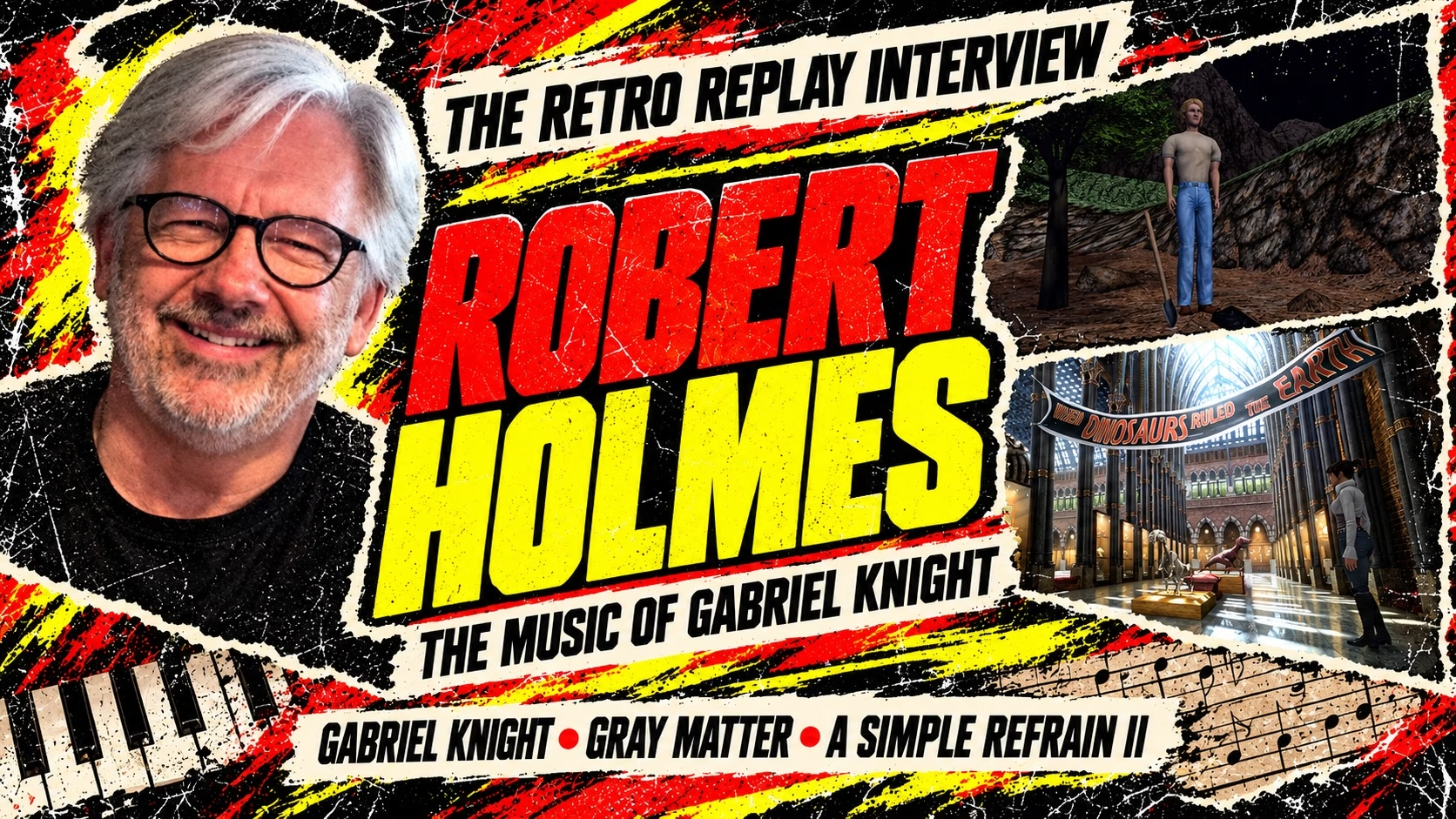
Robert Holmes was in line for the Monorail at Disneyland with his daughter when he heard the Gabriel Knight theme as someone’s ringtone. Music written for a Sierra adventure had turned up in somebody else’s day, well outside the game. He still sounds a little surprised that people remember it at all.
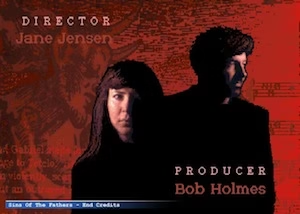
Before Sierra, Holmes had worked in studios, live music, and postproduction in Los Angeles. A lunch with Mark Seibert brought him into game composition. For Gabriel Knight: Sins of the Fathers, he also served as producer, spending the first half of his day on the production before turning to the keyboard behind his desk. Long walks around Bass Lake with Jane Jensen gave him an early part in the game’s research and planning.
The work changed considerably across the three Gabriel Knight games, from writing against early artwork to scoring filmed scenes during a two-week vacation. Now Holmes is revisiting those themes with pianist Roger Hooper on A Simple Refrain II. He supplied recordings for this interview, which you can hear in the players below.
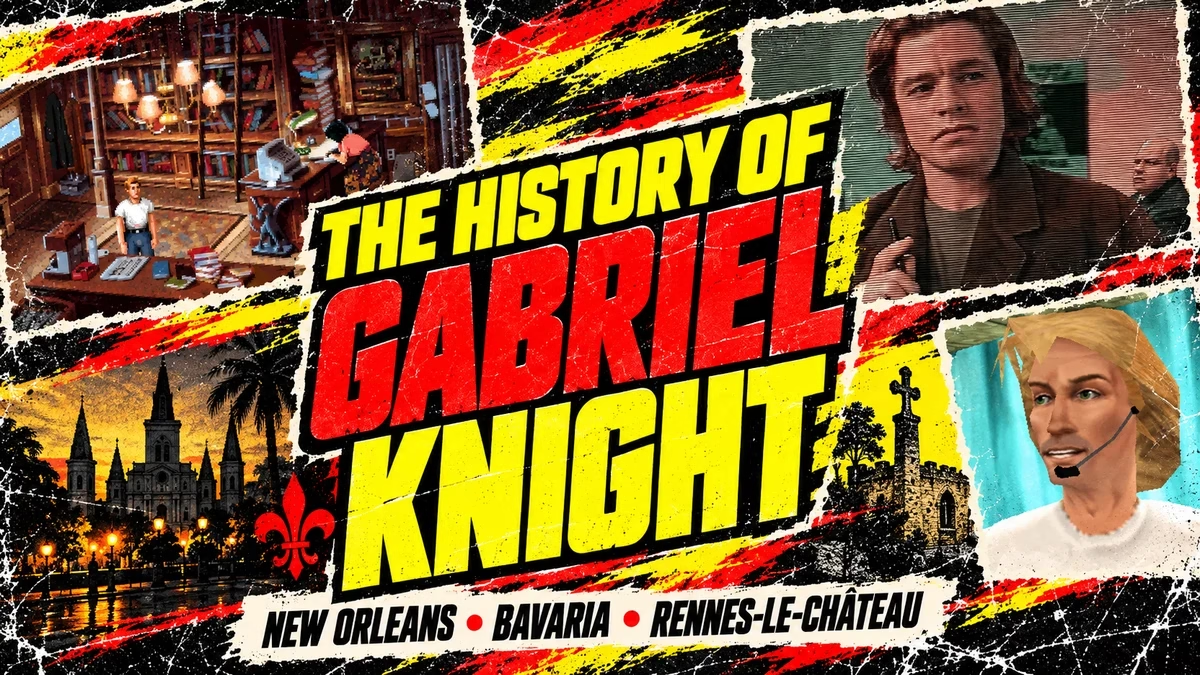
Read the history: Our history of Gabriel Knight follows Jane Jensen’s trilogy from New Orleans to Bavaria and France, then returns to the remake, the music, and the stories that followed.
Interview by David of Retro Replay. Answers by Robert Holmes.
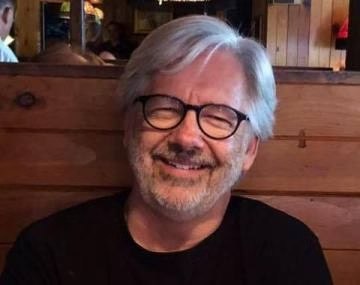
A lunch at Sierra and walks around Bass Lake
Retro Replay: Before Gabriel Knight, how did you first become involved in composing music for games?
Robert Holmes: I had done lots of studio, live, and post production work in Los Angeles back in the 70’s and 80’s. My wife was hired by Sierra as a Creative Director, so we moved to Oakhurst. It soon became clear there wasn’t much else to do in terms of work there, so I contacted Mark Seibert and sent him some samples and info on my background. We had lunch and he graciously offered me a slot in the department as a Composer. I had never seen a game before that, so it was a real eye opener when I joined the company!
Retro Replay: When Jane Jensen first described Gabriel Knight: Sins of the Fathers to you, what did you immediately understand about the kind of musical identity the game needed?
Robert Holmes: Jane and I used to take long walks around Bass Lake as we were starting the early pre=production process for GK1. Being the Producer for the game gave me an even earlier insight into it’s foundations as Jane allowed me to partner with her on her research and foal definition for the project. We happened to also be becoming very close friends at that time, so our time together was very focused on manifesting a vision for GK. As I had a very commercial and rock/pop background from my days in Hollywood, I felt that games to that point had not really gotten music to a level of accessibility and “pop” emotional impact yet, so a big goal was to have the music connect on its own level and be highly memorable and emotional, something players would walk away humming and remember just like a good album or song on the radio.
Gabriel, Grace, and a different sound for New Orleans
Retro Replay: The Gabriel Knight theme has become one of the most recognizable pieces associated with the series. How did that theme come together?
Robert Holmes: I swear that will be playing on a little chip like from a greeting card, on my grave:) It seems to follow me around. It was actually the first thing I wrote for the game, mainly to try and set a dramatic tone and texture. I had always lved the way bands like YES, Genesis, and others used different sections with odd time signatures to create drama and emotion. So that was a goal for the piece. As I was also the Producer, the early days of the games development were very busy for the team and that role. I would be the Producer for the first half of my day, then turn around to the keyboard behind my desk in the afternoons, and try to write music.
Listen: Gabriel Knight Main Theme (2026)
Retro Replay: Did you approach Gabriel and Grace as characters who needed their own distinct musical identities?
Robert Holmes: My college work was centered on traditional film scoring history, where many of the old masters who created all the wonderful scores for films in Hollywood’s history used traditional motifs for dramatic themes, and for character recognition. I felt both Gabe and Grace were rich in subtext, beneath what they appeared to be on the surface. Jane’s characters are always multi dimensional that way. So my goal was to try and have the music express those other parts of them, for them.
Retro Replay: New Orleans is such an important part of Sins of the Fathers. How much did the city’s history, culture, religion, and atmosphere influence the score?
Robert Holmes: I was very aware of that texture both from sharing research with Jane, such as films, but also- my Father was often in New Orleans for his work, and would spend entire nights at the Preservation Hall listening to the bands. He loved that kind of music. But even though I had a lot of admiration for that style and it’s role in New Orleans, I thought it was too expected and not an unusual enough juxtaposition for our goals. So I tried to hint at it occasionally, but more often I chose to write what hopefully was a more unique kind of instrumental dark pop with emotional and melodic hooks that would make for a more interesting flank to the universe of the game.
Retro Replay: The game moves between mystery, horror, romance, and historical material. How difficult was it to create music that could move naturally between all of those tones?
Robert Holmes: Well, for better or for worse I’ve always been more likely to write what I want to hear, rather than perhaps true historically correct or traditional musical solutions. There were guys in the Sierra Composers stable who were super gifted, classically trained musical chameleons, who could cover any realm. I was not that type. I think my solutions were more similar to if you took a very stylized musical Artist like Philip Glass, or Wakeman (and I am not comparing myself to their amazing talents) and had them do a score for a film or game. It becomes more about the relationship between their style and the story. I think I have a specific melodic and textural style that I then kind of wedge into projects with a big musical shoehorn:)
Sound cards, repeating themes, and the Sierra audio team
Retro Replay: What were the biggest technical limitations you were dealing with when composing for Sierra’s hardware and audio technology at the time?
Robert Holmes: The biggest things were that we knew the music had to have enough melody to be meaningful even as blips on a Soundblaster, and that it would likely loop and repeat often, so it had to be something players could tolerate hearing over and over and over:) I think most of my stuff did ok on these fronts, though you could successfully argue the whistle in the GK1 Police Station gets old really fast!
Retro Replay: Were there pieces or musical ideas you originally imagined differently but had to change because of those limitations?
Robert Holmes: No, thankfully
Retro Replay: Sierra had an extraordinary collection of composers and musicians during that era. What was the creative environment like inside the company?
Robert Holmes: It was very collaborative and supportive. We all tried to help each other do our best because there was pretty mutual admiration and appreciation for the varied talents in the group. This was so rare for a creative environment (later on I worked in some of the most competitive and political realms in Ad agencies and Tech firms, and it was awful in terms oof competitive backstabbing). I think this internal spirit within all of the Oakhurst version of Sierra was a real reason those games were so great!
Retro Replay: How closely did you work with Jane Jensen while developing the score? Did she give you detailed musical direction, or did you have considerable freedom?
Robert Holmes: Its a funny thing about Jane and I: She’s not really that musical in terms of being impacted by it much, and I don’t really read much fiction. But I think we both respect and admire what we each do. She really gave me free reign, just asking that it be somewhat dark and complex like the story. So I was pretty much on my own beyond that.
The Beast Within and a two-week vacation
Retro Replay: Gabriel Knight 2: The Beast Within was a very different production because of its full-motion-video format. How did that change the way you approached the music?
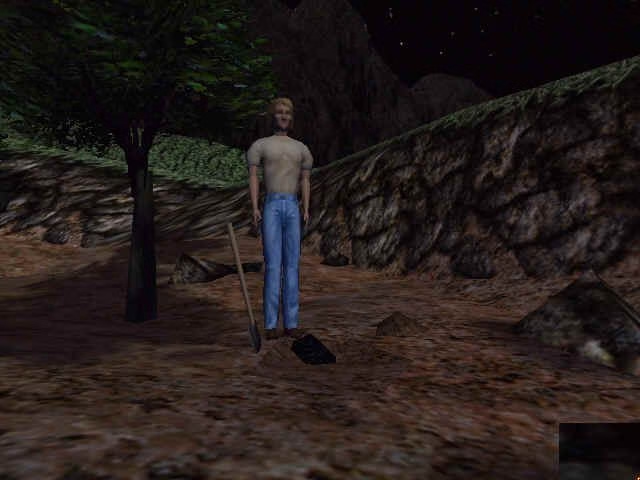
Robert Holmes: Well, the whole scenario was different. I had been Producer again and worked with Jane on the pre-production and research including traveling to Bavaria and Germany and Vienna to check locations and see Opera’s and the music of the reqion. But then our scenario changed. I was given a chance to work for a couple of years for Paul Allen on a project with Sting. Working very closely with Sting, making new content as we followed him around the world. This meant I had to leave my roles at Sierra and move to Seattle. So although I would still hear about everything from Jane as it progressed, I was not really involved until I got a 2 week vacation in which I had to write and create all the music and the Opera. So bt that time most of the scenes already existed. Whereas back on GK1 I was writing music very early before the game was created. Usually to a sketch or painting of a room or character.
Retro Replay: Did composing for live-action scenes make the process feel closer to scoring film or television than a traditional computer game?
Robert Holmes: It did. It was more limiting in some ways as the action was defined already, but that was helpful since I only had two weeks to do the music.
Retro Replay: The Beast Within has become particularly beloved by adventure-game fans. Did you have any sense while making it that the game would still have such a passionate following decades later?
Robert Holmes: Not a clue:) We thought it was a great story and a fun try at being a “computer film”, but we truly had no idea if it would work for the fans. I think the story is so well done, and the production was a great stylized effort for the time and budget. We just happened to be in that early phase of FMV games, so it was very “Wild West” in terms of opportunity. But it did play more to my film background, and I have always loved the emotional power of Wagner’s music, so that was a fun challenge!
Gabriel Knight 3 and the themes that stayed
Retro Replay: Blood of the Sacred, Blood of the Damned again changed the visual and technical style of the series. How did your musical approach evolve for the third game?
Robert Holmes: By that point my Producing career had taken off, so I was no longer at Sierra or a part of the internal team. But we felt it was important to have my particular kind of emotional themes still a part of the game. So it was decided I would write several (I think I did 16) themes and then had them of a musical building blocks to the internal team who could use them as needed and recreate them as desired. I asked that I be able to do the productions of some key ones, like the main theme-so I produced those versions as audio in my home studio. The internal team did a great job extending my musical style and spirit in the game. The GK3 Main Theme is still one of my favorites in terms of scope and emotion, and seems to be popular with the fans.
Retro Replay: Was there a conscious effort to preserve musical connections between all three Gabriel Knight games even as the technology changed?
Robert Holmes: Absolutely. Jane and I both saw the music as one of the legs on the table of the series, and a character in the mix. Our goal was to have it remain melodically and emotionally powerful regardless of style if possible.
Retro Replay: Is there one piece from the Gabriel Knight series that you personally feel closest to?
Robert Holmes: It’s been cool to hear Roger Hooper interpret them in The Simple Refrain albums, as well as the many fans worldwide who post versions. We included nearly 20 I think of fan submitted covers on my Sequel album, which was fun to hear. All that is to say, it has allowed me to step back and hear many of the pieces in a new context. Some have surprised me, that I had totally forgotten them or found I liked them more than I expected. Doing the GK1 remake provided that opportunity as well. I think the Main themes from all the games a favs, and beyond that, things like Ludwigs theme from GK2 or Grace’s Theme and the Epilogue from GK1 still sound good to me.
Retro Replay: Is there a track from the series that you think is underrated or that you wish more people remembered?
Robert Holmes: I would probably point to Grace’s Theme or Lost In The Bayou as a couple. But truthfully, I’m usually shocked people still recall the music from the games at all:)
Retro Replay: When you hear those original compositions today, do you hear things you would change, or are you able to appreciate them as products of their time?
Robert Holmes: Most of them I feel good about as is. They usually come and go fully formed, so like kids, you kind of love them for who they are. If I have regrets it’s usually about having done them in one platform or another, like midi versus audio, or that I wish my technical engineering or piano playing skills at the time had been better.
A ringtone in the Disneyland line
Retro Replay: Retro game music now has a large audience completely separate from the games themselves. Did you ever expect people would still be listening to these themes more than 30 years later?
Robert Holmes: It never seemed realistic to me back then. It’s so gratifying to know someone appreciated something and it added so value for them, and perhaps still does. I’ve often told the story of being in line for The Monorail at Disneyland years ago with my daughter, and someone in line had the GK1 Theme as the ringtone on their phone. That was fun!
Retro Replay: What do you think older game music accomplished particularly well despite the much more limited technology?
Robert Holmes: I think it’s really great that the games in general, and hopefully the music as a part of them, are providing nostalgic connections to certain times in people’s lives. I know for me, old TV shows and films and albums from the 60’s and 70’s plug me right back into my life experience in those times. I feel great if my music can help do that for others because of the time it represents.
A Simple Refrain II with Roger Hooper
Retro Replay: You mentioned that you are completing A Simple Refrain II with pianist Roger Hooper. How did that project come together?
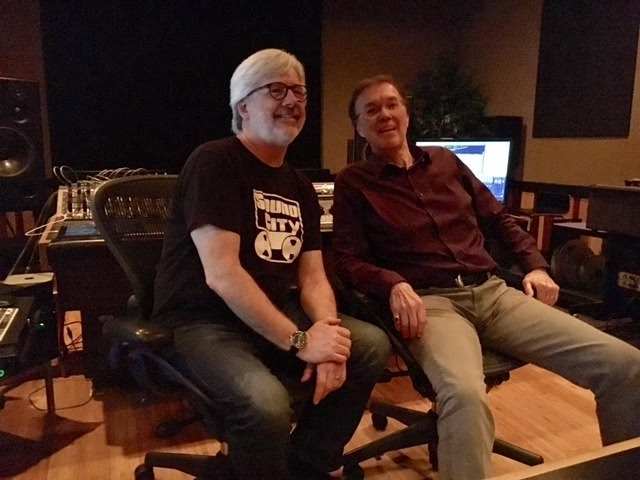
Robert Holmes: Roger and I have worked on many projects in the past. We were introduced by a great mutual pal Composer George Napier. Roger and George both contributed to both my Sequel and Son of Sequel albums. We got great feedback (and still do) about A Simple Refrain 1, so we thought why not do some more!
Retro Replay: What made you want to revisit your classic game themes in this particular style?
Robert Holmes: I’ve always believed a good song is bullet proof and can be conveyed in even the simplest forms because the musical horsepower lay in its melody and harmonic structure. Take any classic tune from any era that survives in many forms, like a “Moon River” or “And I Love Her”. They retain their emotional power even done in simple one instrument versions. This kind of simple foundation was what I have always reached for as a part of making my stuff memorable. Like anyone, I don’t always reach that goal, but I do think much of the music from the GK and Gray Matter games does get there. I wanted to try and capture them in that simplest form, and with access to a true gifted pianist like Roger, I think these albums are giving these tunes an extended and more timeless life.
Retro Replay: How do you approach rearranging something that people may have known for decades without losing what made the original memorable?
Robert Holmes: It’s all down to honoring the basic harmonic building blocks and melody, while adding enough performance “secret sauce” to make them interesting to listen to and emotionally vibrant, I think. My themes were always on the simple side because of the tech limits, my basic piano skills (I’m a guitar player who self-taught myself on piano), and the desire to highlight melody. So, it makes it not very hard to do these more basic textures I think.
Retro Replay: Did Roger Hooper bring interpretations to any of the pieces that surprised you or caused you to hear your own music differently?
Robert Holmes: He did! It’s interesting the parts of a tune that he may feel are the prominent aspects versus how I heard them or did them originally. There have also been times where his playing was very deliberate or less fluid than his usual approach, because he thught that was intended in the original. I have had to call those out noting in the original that was just me struggling to play piano!:)
Retro Replay: How does A Simple Refrain II differ from the first album?
Robert Holmes: Obviously it includes a whole new set of tunes: Lost in the Bayou, Credits Theme from GK1, Aria To The Moon from GK2 Opera, GK3 Trailer Theme, The Gedde Estate from GK1, Emilios Theme from GK3, St. Georges Bookstore Theme from GK1, Lake Pontchartrain from GK1, Listening to the Radio from GK1, Never Going Back There from Gray Matter, The Moebius Empire Rising Main Theme, and The Smiths from GK2. We’re also including as bonus tracks The GK1 Main Theme, and The GK3 Main Theme from the first album, as they are such fan favorites.
Retro Replay: Are there particular tracks on the new album that you are especially excited for people to hear?
Robert Holmes: I love what Roger has done with Lost In The Bayou and Never Going Back There. Just truly beautiful performances.
Listen: Lost in the Bayou
Listen: Never Going Back There
Retro Replay: You mentioned this is your eighth album. Looking across those releases, how has your approach to revisiting and reinterpreting your earlier work changed?
Robert Holmes: Mainly, I’m always trying to improve my tech skills in the studio. There’s always new gear to be learning about, and ways to get better sounds. That’s an ongoing challenge.
Retro Replay: Do you have plans to continue releasing new arrangements of your classic game music after this album?
Robert Holmes: I think Roger and I would like to if we are able. It seems the fans enjoy them, and at my age it’s nice to think we’re capturing some of this stuff for the future. Maybe we can do an all ukelele album of GK tunes!:) I also enjoy Producing albums for other Artists as I have done for The Scarlet Furies and folk legends The Brothers Four. That’s a whole other kind of fun!
Retro Replay: Are you currently composing anything completely new, whether for games, albums, film, or another project?
Robert Holmes: See #34
Gray Matter, Moebius, and what comes next
Retro Replay: Is there any project from your career outside Gabriel Knight that you wish fans asked you about more often?
Robert Holmes: I think both Gray Matter and Moebius could get more love. I’m proud of both of them. I think Gray Matter broke some great ground in the way it used the music of The Scarlet Furies as a key element, and Moebius had some good RH style emotional themes..
Retro Replay: Are there any composers or game soundtracks from the 1990s that particularly impressed or influenced you?
Robert Holmes: There were so many really talented guys at Sierra and elsewhere (such as George Sanger The Fat Man) who did amazing stuff. Sierra had a wealth of talented guys: Aubrey Hodges, Neal Grandstaff, Mark Seibert, Chris Brayman, Ken Allen, Jay Usher, Dan Kehler, and more all doing killer stuff in their own styles. We also had an amazing audio team in Rick, Kelli, and Orpheus, who added great sound effects and editing. I think it’s a crime we were working on such a relatively small budget and technical scenario, compared to the guys today with million-dollar budgets going into Abbey Road to record!
Retro Replay: Looking at modern game music today, what changes in technology or composition have impressed you the most?
Robert Holmes: I think the ambient, evolving, generative ability to react to gameplay is very cool, but truth be told-for me I’d rather just write nice tunes and have them delivered as intended.
Retro Replay: If you could return to one game from your past and rescore it today with no technical restrictions, which one would you choose?
Robert Holmes: I feel I had that chance with the GK1 remake, so for me-doing a new version of GK2 with a real orchestra would be great!
Retro Replay: What are you most excited about creatively right now?
Robert Holmes: After this album is out, I’ll be providing some themes for the great project “Fogtown” and working on some other pals projects. Jane and I are very excited about the fan tour trip to France in March, with over 75 fans to visit GK3 sites, and we’re having some new movement finally in the path toward a possible GK4 and Gray Matter 2, so that’s exciting!
Retro Replay: Finally, where would you like readers to find A Simple Refrain II when it releases, and are there any websites, social media accounts, streaming pages, or other projects you would like me to link to in the finished interview?
Robert Holmes: It will be available on all the digital music services, and they can always follow or purchase here:
Robert Holmes Music – The Collected Works of Robert Holmes ,
Thank you, Robert
Our thanks to Robert for the conversation, the photographs, and the recordings. His story about Roger carefully reproducing a hesitant piano passage, only to learn that Robert had simply been struggling to play it, is a lovely detail to carry into the listening. These are familiar melodies with another musician finding his way through them.
Visit Robert Holmes Music, explore his Bandcamp catalog, and follow his official Facebook page for album news and other projects. The photographs used here come from Robert’s gallery, which he shared for this interview.
For more conversations about game music, read our interviews with George Sanger and Barry Leitch, or browse the Game Music & Performance interview collection.