Retro Replay Retro Gaming History, Reviews & Emulation
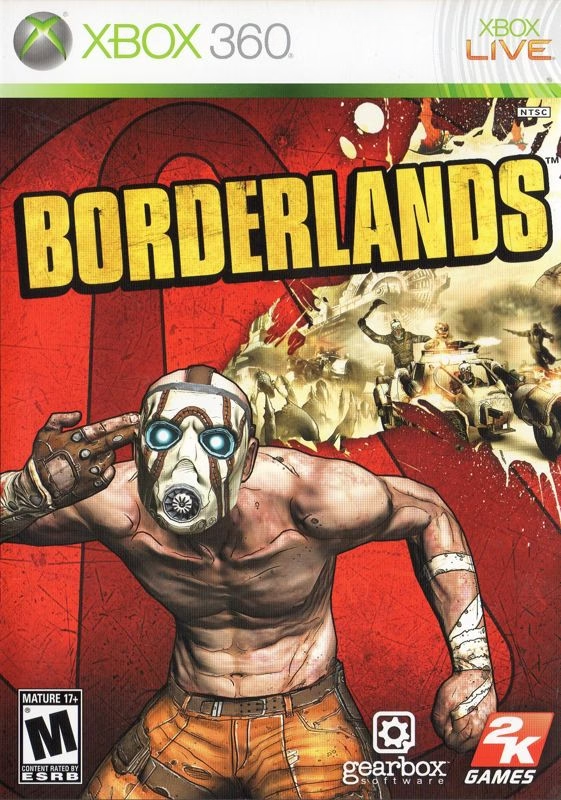
Seventeen years ago, Gearbox introduced us to a planet full of murderous psychopaths, terrifying monsters, more guns than anyone could possibly need, and one of the most annoying robots in video game history.
And I couldn’t wait to get there.
On 20 October 2009, Borderlands arrived in North America for Xbox 360 and PlayStation 3, with the PC version following on 26 October. Developed by Gearbox Software and published by 2K Games, it combined first-person shooting, RPG character progression, cooperative multiplayer, and an almost ridiculous amount of loot.
I remember following the game before its release. The graphics looked smooth as hell, with that wonderful comic-book, almost cel-shaded aesthetic that made it stand out from practically everything else on the market.
The encounters looked intense, the characters seemed larger than life, and the planet Pandora appeared to be overflowing with personality.
I was sold.
My roommate and I both pre-ordered the Xbox 360 version.
When release day arrived, I took the day off work, locked myself in my room, and started playing.
And I didn’t stop until it was time for bed.
Welcome to Pandora. Try Not to Die.
Borderlands takes place on Pandora, a hostile frontier world that attracted corporations, fortune seekers, and assorted other individuals hoping to strike it rich.
Unfortunately, the planet turned out to be considerably less welcoming than the brochures probably suggested.
Dangerous wildlife roamed the wastelands. Bandits and heavily armed psychopaths controlled large portions of the territory. The settlements were ramshackle, the landscape was unforgiving, and just about everything seemed interested in killing you.
But there was one particularly compelling reason to visit.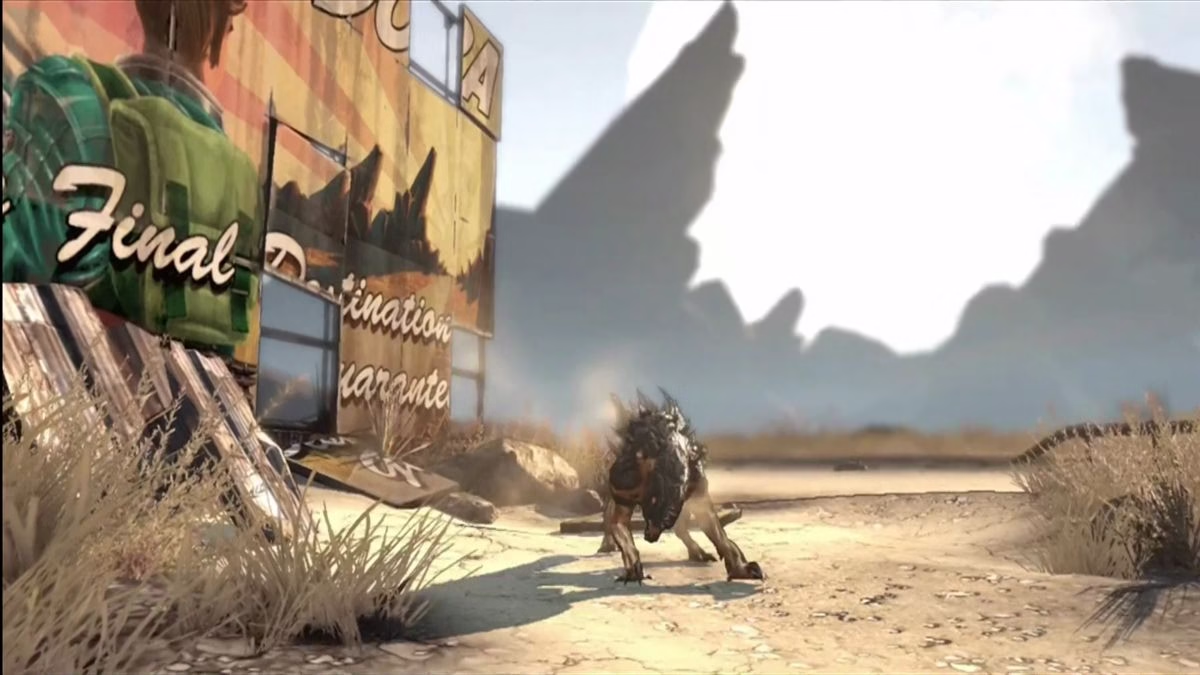
The Vault.
Rumored to contain ancient alien technology and unimaginable riches, the mysterious Vault attracted adventurers willing to risk everything for the chance to discover its secrets.
And naturally, our heroes decided that sounded like an excellent way to spend their time.
The story was interesting enough, but what immediately grabbed me was the gameplay.
There were enemies everywhere, guns everywhere, and the constant promise that the next encounter might reward you with something even more entertaining.
It was a wonderfully addictive formula.
And I was hooked.
Four Vault Hunters, Four Reasons to Replay
One of the things I particularly appreciated about Borderlands was how different the four playable characters felt.
They weren’t simply the same character with a different appearance. Each had a distinctive action move, skill trees, and a preferred approach to combat.
Roland (The Soldier)
Roland was the dependable military specialist, focusing on firearms, support abilities, and tactical combat. His signature Scorpio Turret provided additional firepower and could be upgraded to support and heal teammates.
A good choice for anyone who preferred a more traditional first-person shooter experience.
Lilith (The Siren)
Lilith brought something considerably more supernatural to the battlefield.
Her Phasewalk ability allowed her to temporarily disappear from sight, move quickly, and reposition herself. With skills emphasizing elemental damage, survivability, and mobility, she offered an entertaining alternative to simply standing around exchanging gunfire.
Mordecai (The Hunter)
Mordecai specialized in precision shooting, particularly sniper rifles and pistols.
But his greatest attraction, at least for me, was Bloodwing.
His birdlike companion could swoop down on enemies, dealing damage and providing another useful tool during combat.
Brick (The Berserker)
And then there was Brick.
Why spend time carefully aiming at an enemy when you could simply run over and punch him in the face?
Brick emphasized toughness, close-quarters combat, and overwhelming aggression. His Berserk ability turned him into a melee wrecking machine.
Subtlety was not his specialty.
And that’s what made the character selection so entertaining.
I actually played through the original Borderlands with all four Vault Hunters.
I started my first game alone, but when my friends eventually signed on, I created another character and started a cooperative game with them.
That gave me two different adventures to follow, and before long I was experimenting with the other classes as well.
My favorites ended up being Mordecai and Lilith.
Mordecai’s precision shooting and Bloodwing companion were particularly entertaining, while Lilith’s supernatural abilities offered a completely different way to approach combat.
But I appreciated what all four characters brought to the experience.
And with friends along for the ride, Pandora became an entirely different kind of playground.
A Million Guns. Give or Take a Few.
Of course, the real attraction was the loot.
Guns. Guns everywhere.
Pistols, revolvers, shotguns, assault rifles, sniper rifles, rocket launchers, and all sorts of other wonderfully destructive toys.
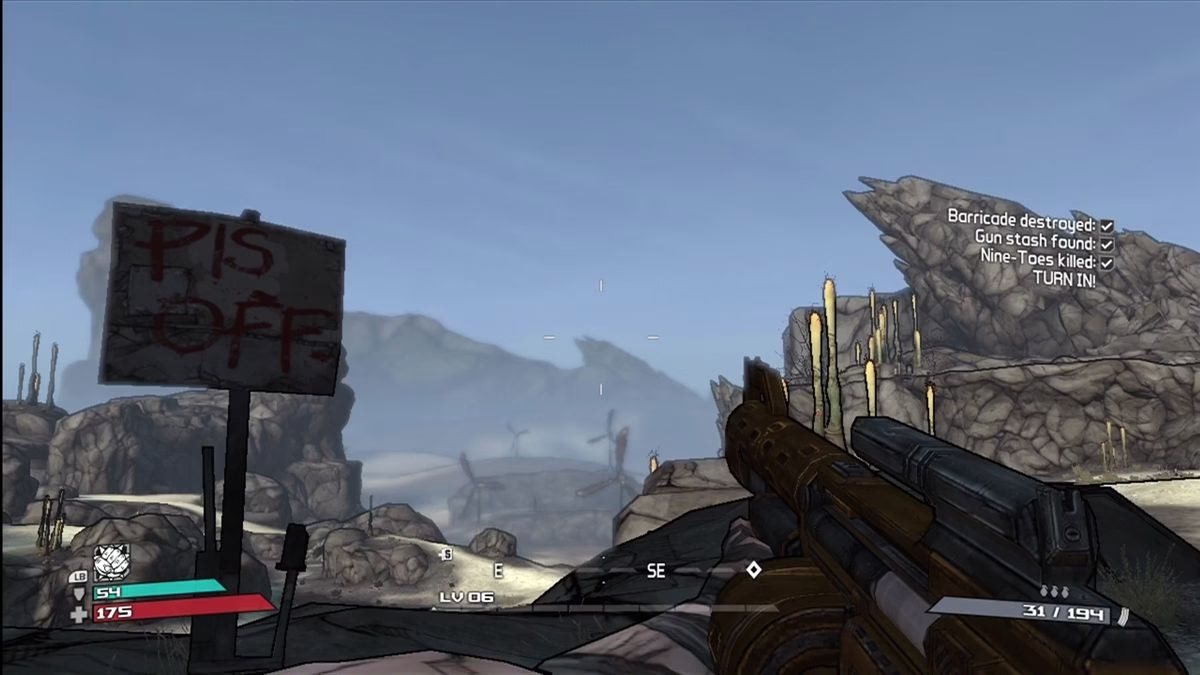 And each manufacturer had its own identity.
Jakobs emphasized raw stopping power. Maliwan specialized in elemental weaponry. Vladof offered rapid-fire weapons, while Hyperion focused on accuracy. Other manufacturers offered their own combinations of strengths, weaknesses, and distinctive characteristics.
There was something immensely satisfying about defeating a difficult enemy, watching a shiny new weapon drop, and wondering whether you’d finally found something better than whatever you were carrying.
For the record: Borderlands used a procedural weapon-generation system that combined different parts, properties, and manufacturers to create an enormous number of possible firearms.
At the time, the sheer variety seemed almost limitless.
Of course, it wasn’t until much later that I began to appreciate just how similar many of those supposedly unique weapons actually were.
There were meaningful differences in damage, accuracy, firing speed, elemental effects, and other characteristics. But beneath the enormous number of possible combinations, the same basic weapon patterns appeared again and again. By the end, it didn’t really matter which weapons you had.
Still, that didn’t bother me much when I was playing.
I’ve never been particularly interested in obsessively min-maxing my characters or equipment. I want weapons and abilities that are effective, certainly, but I also want them to be entertaining.
And what entertained me one evening might be completely different the next.
Sometimes I wanted precision and careful shooting. Other times, I wanted something with a ridiculous rate of fire or an entertaining elemental effect.
It depended on my character, my abilities, and sometimes simply my mood.
I enjoyed experimenting.
And Borderlands gave me plenty of toys to experiment with.
A Beautifully Ugly, Strangely Empty World
One of the most distinctive aspects of Borderlands was its visual presentation.
Interestingly, the game didn’t always look the way we remember it.
Earlier in development, Gearbox had pursued a much more conventional, realistic science-fiction aesthetic. But the studio eventually changed direction, adopting the bold outlines and hand-inked visual style that would become synonymous with the franchise.
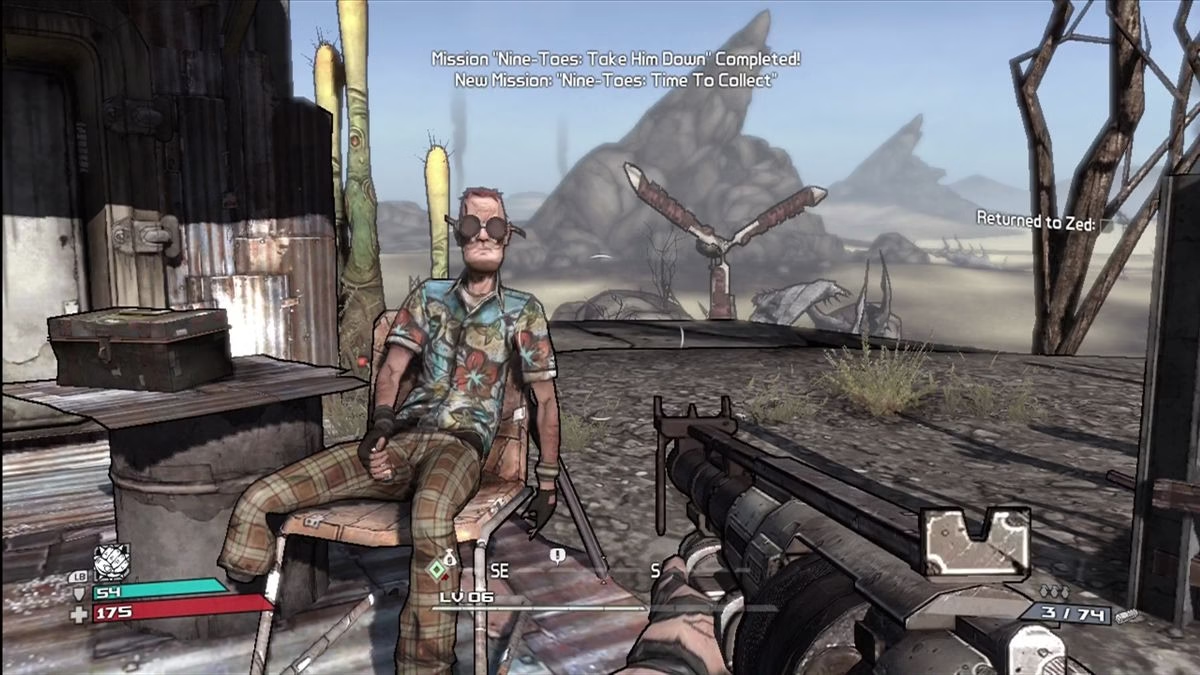 And what a difference that made.
The finished game looked fantastic.
At a time when so many shooters were dominated by muted browns, grays, and an obsession with realistic military environments, Borderlands had an unmistakable visual identity.
Pandora was a wonderfully strange place, filled with sprawling deserts, industrial ruins, ramshackle settlements, and bizarre creatures.
But as much as I enjoyed exploring it, there was something missing.
People.
Well, friendly people, anyway.
There were monsters everywhere. And bandits. And psychos. Lots and lots of angry psychos.
But relatively few ordinary people going about their lives.
Even the settlements sometimes felt more like collections of quest dispensers than functioning communities. There NPCs were simply cardboard cutouts, and it was a bit disappointing.
The world had enormous visual personality, but it could also feel strangely empty.
It was an odd contradiction.
I loved the environments, the art direction, and all the dangerous creatures inhabiting Pandora. But between those encounters, there often wasn’t much life to be found.
There were certainly memorable characters and entertaining moments. I just wish the planet had felt a little more alive beyond the endless parade of things trying to kill me.
And Then There Was Claptrap
Oh, Claptrap.
Where do I even begin?
I know the little robot has his fans.
Somehow.
But as far as I’m concerned, Claptrap belongs near the top of the list of the most annoying NPCs in video game history.
And considering how many RPGs I’ve played over the years, that’s quite an accomplishment.
The relentlessly enthusiastic little robot was intended to provide comic relief, useful information, and a recognizable mascot for the franchise.
Unfortunately, the humor wore thin for me pretty quickly.
He’s the Orko of Pandora.
There’s a fine line between a funny, irritating character and a character who’s simply irritating.
Claptrap crossed that line, turned around, crossed it again, and probably celebrated by making another obnoxious noise.
And the little bastard just kept coming back.
I suppose I have to give Gearbox credit for creating such a memorable character.
I just wish I could forget him occasionally.
When a Successful Formula Becomes a Formula
I’ve spent quite a bit of time with the Borderlands franchise over the years.
And despite my complaints, I’ve enjoyed a great deal of it.
Borderlands 2 was fantastic, and it’s probably my favorite of the numbered games.
But my enthusiasm began wearing thin as the series continued.
I couldn’t even bring myself to finish Borderlands: The Pre-Sequel, with its focus on Handsome Jack’s rise to power.
I managed to cringe my way through Borderlands 3, but by the time I finished, I’d pretty much decided I was done with the series.
 It wasn’t that the fundamental gameplay had suddenly become terrible.
The shooting was still entertaining. The loot system was still addictive. There were new characters, abilities, locations, and weapons to discover.
But it increasingly felt like I was playing variations of the same game.
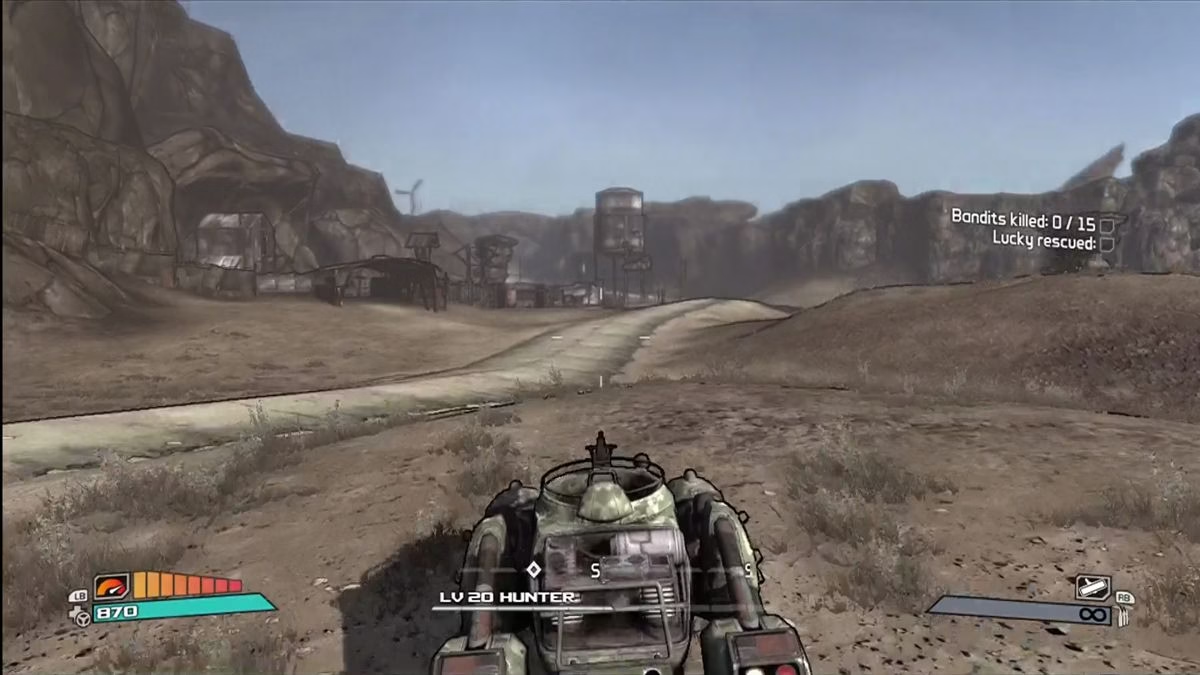
Shoot enemies. Collect guns. Compare equipment. Sell the junk. Drive across the map. Repeat.
The original formula had been so fresh and exciting in 2009.
But after enough sequels, the novelty began to wear off.
And then there was the humor.
What had initially felt quirky, irreverent, and refreshingly ridiculous gradually became louder, more exaggerated, and, at least to me, increasingly tiresome.
Some of the characters became almost unbearable.
And when the writing started leaning into what I considered heavy-handed social messaging, it didn’t exactly improve my opinion.
Which makes my favorite experience from the franchise a little ironic.
Because it isn’t even one of the numbered Borderlands games.
It’s Tiny Tina’s Wonderlands.
Yes, it still has annoying characters. Yes, some of the writing and messaging made me roll my eyes.
But I’m a fantasy guy at heart.
And combining the looter-shooter formula with a fantasy world inspired by tabletop roleplaying games was just what I needed.
Guns, magic, monsters, dungeons, and a wonderfully ridiculous D&D-style adventure?
Now you’re speaking my language.
It took a formula I was growing tired of and gave it a setting that made me excited to play again.
And that’s something I wish the mainline series had been more willing to do.
And Then There’s Gearbox
I won’t turn this retrospective into a long list of complaints about Randy Pitchford and Gearbox.
There are plenty of public statements, controversies, and responses to criticism that anyone interested can research for themselves.
Suffice it to say, I’ve grown increasingly unimpressed with some of the political commentary, the handling of criticism, and the attitude toward the audience.
The suggestion that a “real fan” would find a way to pay a hypothetical $80 for Borderlands 4 certainly didn’t help.
These things have accumulated over the years, and they haven’t exactly encouraged me to return to the franchise.
But that’s a separate discussion.
Because whatever my opinions about Gearbox today, none of that changes how much fun I had with the original game in 2009.
Seventeen Years Later, the Original Still Matters
Looking back, I think what makes the original Borderlands special isn’t necessarily how well every part of it has aged.
It’s how much fun I had discovering it.
The franchise has expanded on practically everything the original introduced. Bigger worlds, more elaborate weapons, additional characters, and increasingly ambitious stories.
But somewhere along the way, I think Gearbox started confusing more of the same with more of what made it special.
And there’s a difference.
I don’t need to pretend the original was perfect, or that everything that followed was terrible, to appreciate what Borderlands meant to me in 2009.
It was something different. Something exciting. And for a while, I couldn’t get enough of it.
Seventeen years later, I still love what Borderlands started. I’m just not convinced I love everything it’s become.
What about you? Were you there for the original Borderlands in 2009? Who was your favorite Vault Hunter? And do you think the franchise has improved with age, or has Gearbox been recycling the same formula for too long?