Retro Replay Retro Gaming History, Reviews & Emulation
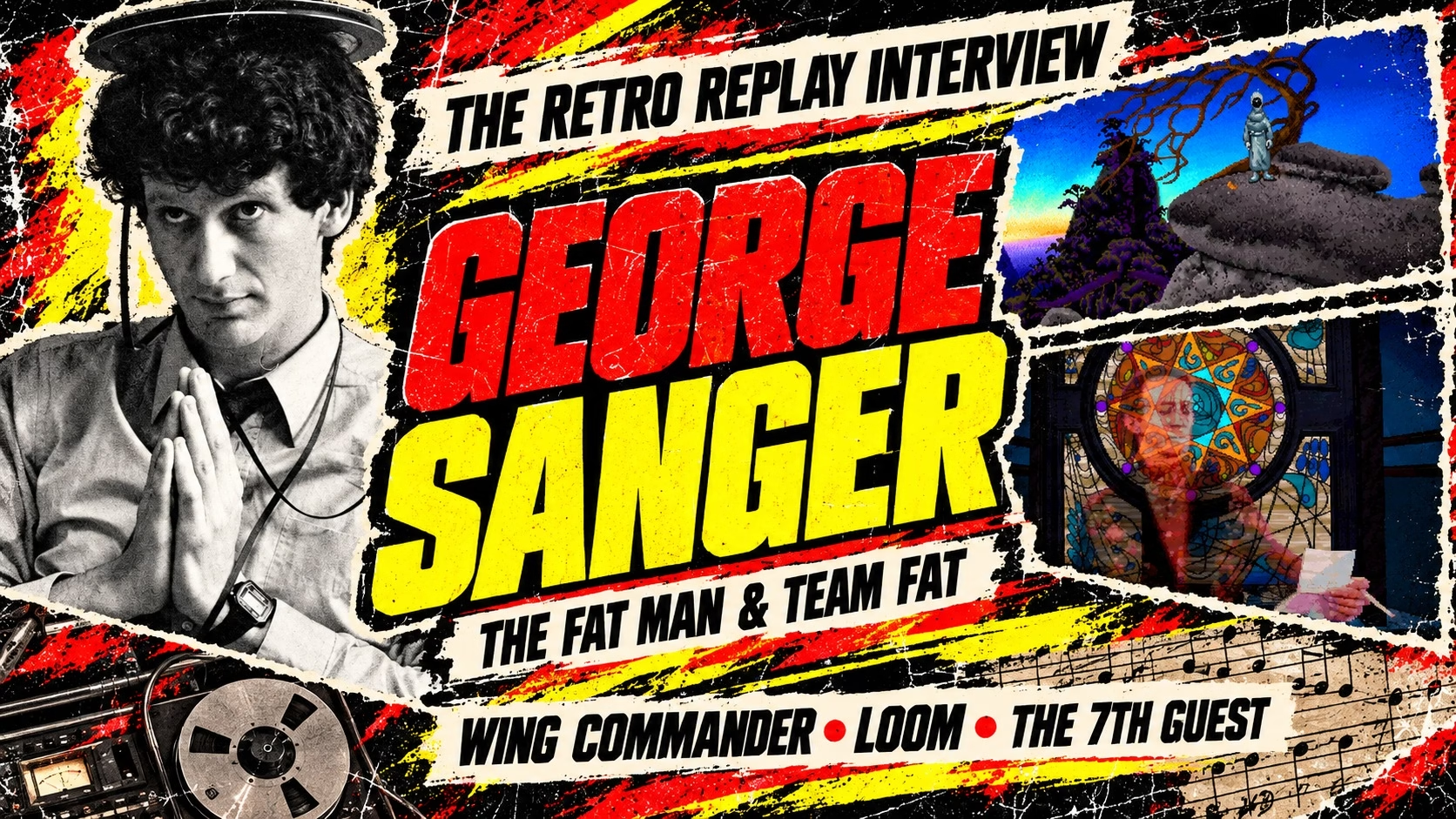
Dave Warhol needed thirty seconds of music for ice-skating penguins. Two voices. George Sanger got out his guitar and four-track recorder, tried bass lines until one sounded like penguins, then worked on a melody that sounded like skating. He wrote the result out by hand and passed it to Warhol to put into Thin Ice.
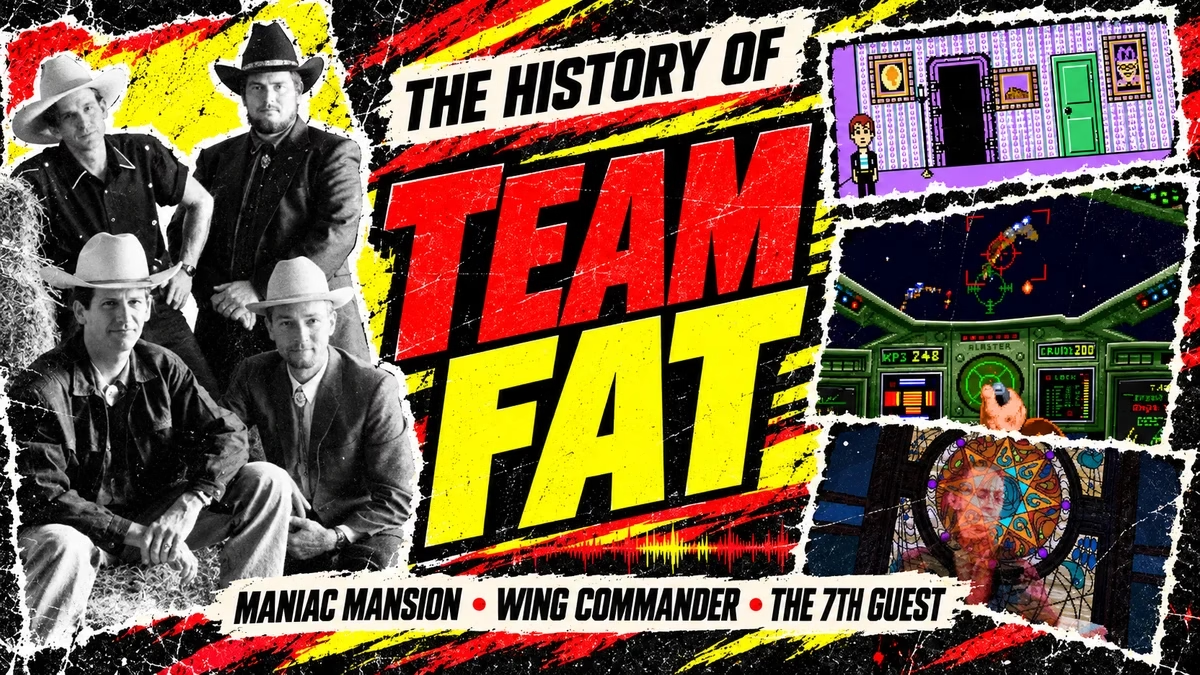
That was 1983. Sanger, known to game-music fans as The Fat Man, would go on to work across the NES, Game Boy and PC years, translating Swan Lake for Loom, bringing songs into The 7th Guest, and building a musical life with Team Fat. For Wing Commander, Dave Govett supplied the theme and dogfight music after Sanger brought him Chris Roberts’ brief.
Console players may also know his work from the character themes of the NES version of Maniac Mansion and his role as music producer on Zombies Ate My Neighbors. On the latter, Team Fat colleague Joe McDermott composed the music, with Sanger producing and mentoring him, a partnership McDermott recalls fondly.
Before the games came the Beatles. Sanger wanted the adventure, the friendship and the chance to make something that reached people. Team Fat’s studio eventually supplied the cowboy outfits, funny cars, instruments and scientific curiosities. It also supplied a ferret with a rather startling route into the next room.
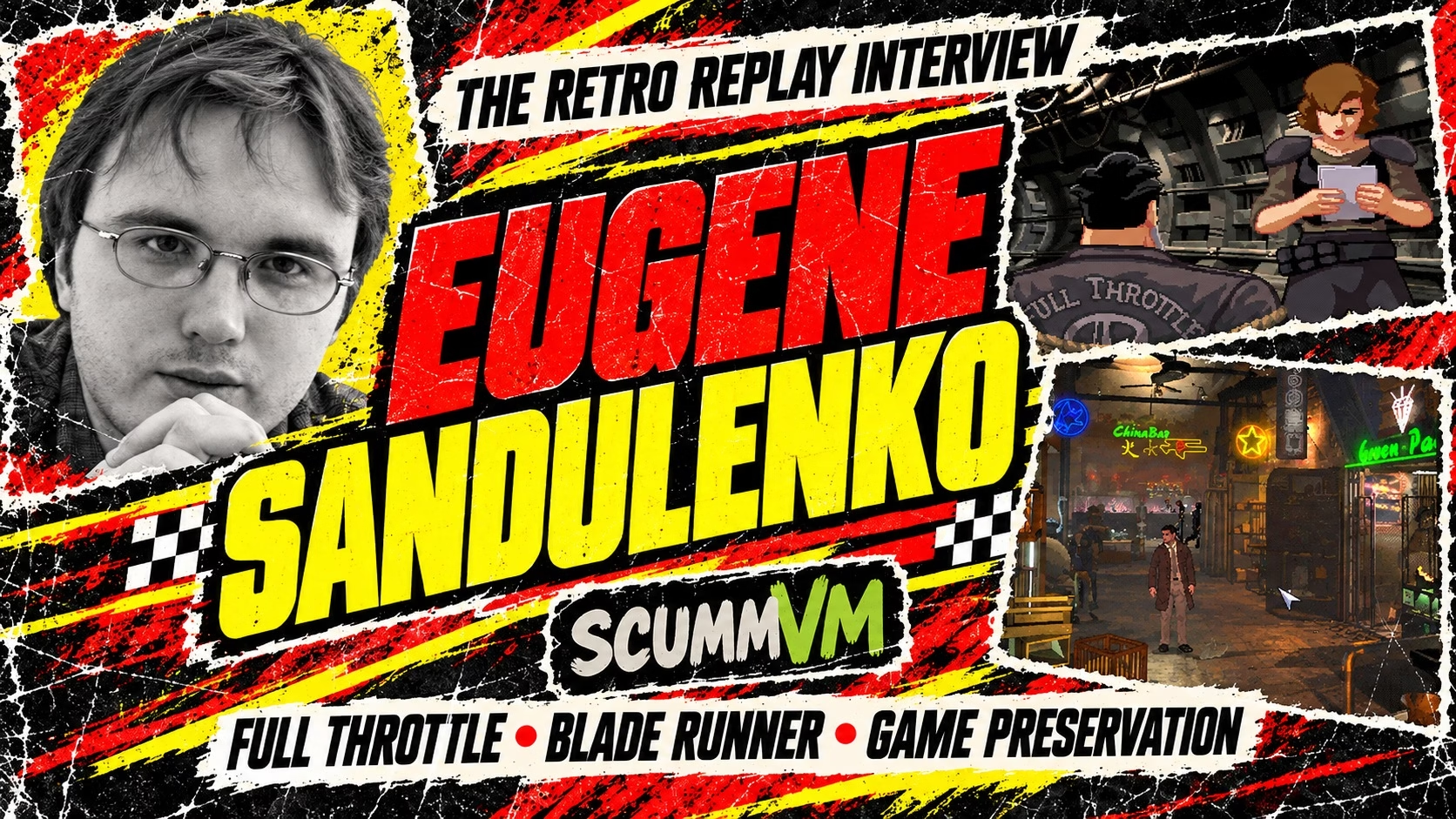
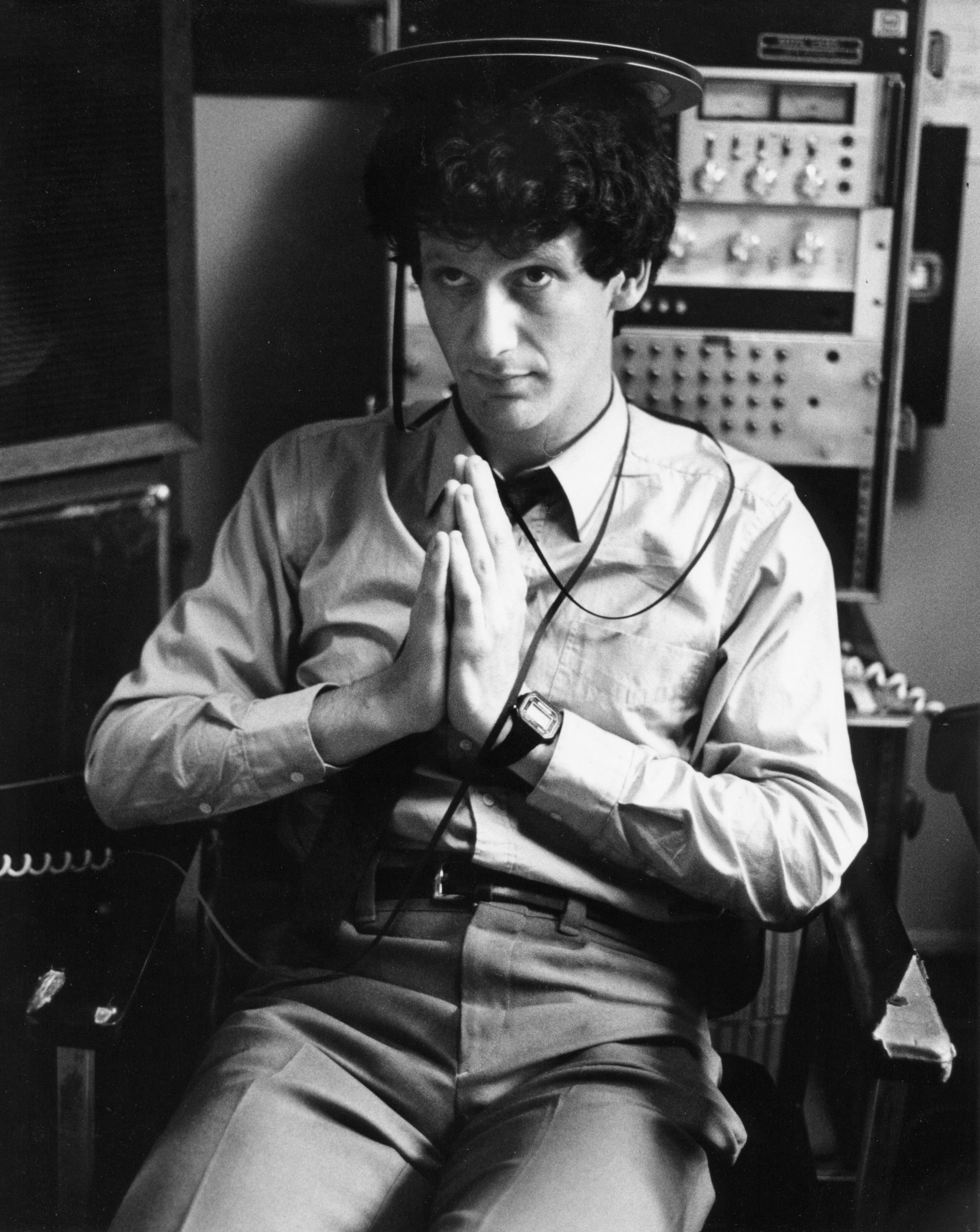
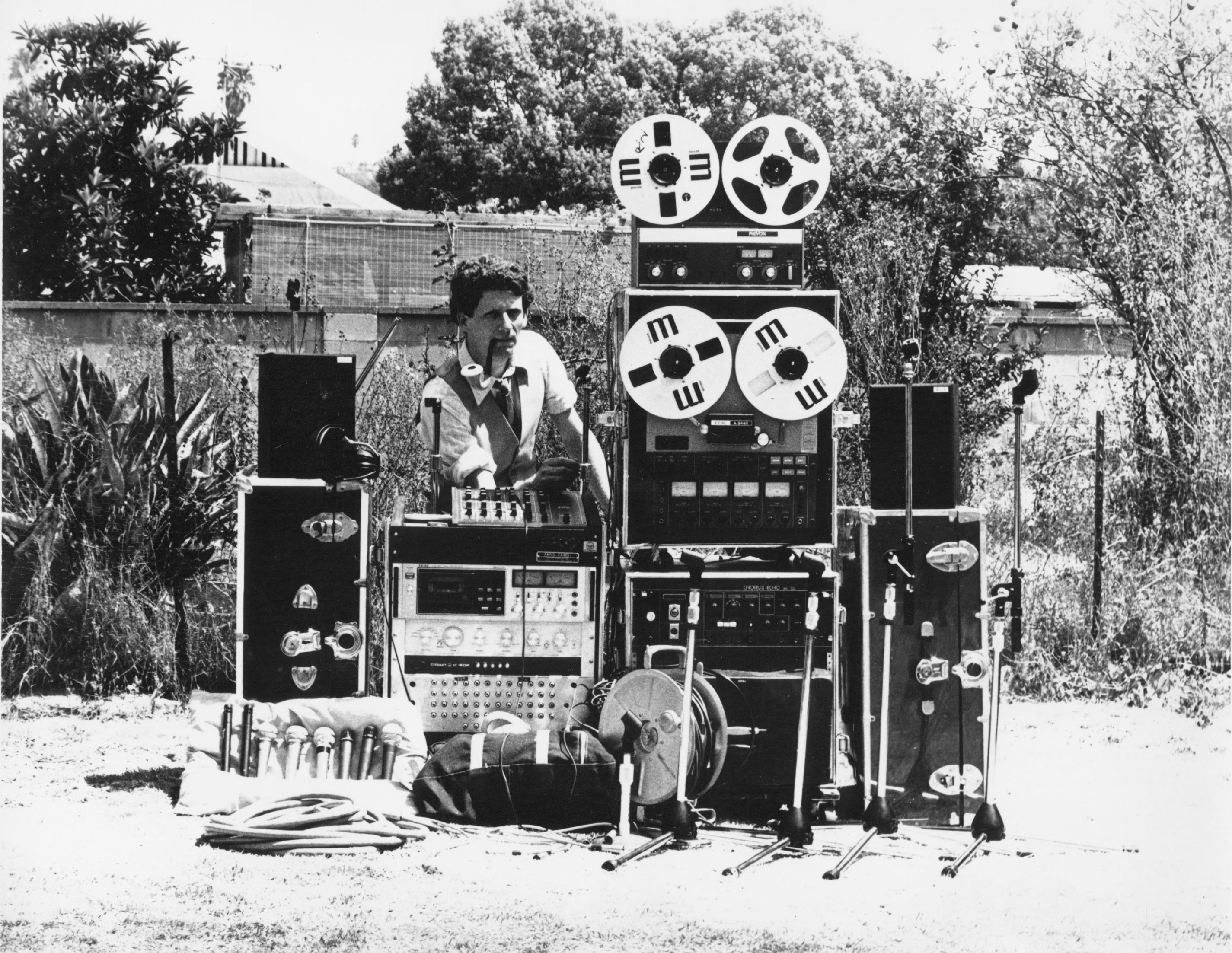
Interview by David of Retro Replay. Answers by George Sanger. Archival photographs supplied by George.
The Beatles, penguins and a new frontier
Retro Replay: How did you first get involved with composing music for games, and what made you think this strange new medium was worth pursuing seriously?
George Sanger: That’s a good question. The Beatles were important to me my whole life, even though my life was a good one, they somehow were a brighter spot than anything else. Not just their music, but their positive impact on people, on the world. How they did it was a mystery, and I had kind of a “prime directive” of wanting to figure that out, and to figure out my angle, how I could parallel them and have my own journey with as much as that impact as I could manage. I was in bands all the time, but it seemed that part of what the Beatles did was that they were trailblazers, and most of the trees in that forest had already been cut. Then in the late ‘70’s I figured out that Space Invaders and Asteroids and Pac-Man and such were a frontier. You’d find an arcade game in the supermarket, figure out how to play it, and get your friends to come try it. Very counter-cultural. Trying to describe Missile Command is just as much of an artistic abstract journey as trying to describe any great painting, it ends with, “oh, just follow me, you have to try it.” So I decided that it would be very cool to pay attention to videogames in parallel with my music, but I had no clue as to how to start.
Retro Replay: Your first game score goes all the way back to Thin Ice for the Intellivision. What do you remember about making music for a machine with such severe limitations?
George Sanger: Well, that was 1983, the moment when music for games stumbled into me, or I into it. Dave Warhol, who had been my brother’s college roommate, was visiting, and I heard he was working for Intellivision. So I offered to take his trash out for free, or whatever it took to get into that business. He said “You compose music, don’t you?” and I tentatively confessed, I had a degree in composition, but it had not been easy for me to qualify for that. He said, “can you write a 30-second tune for ice skating penguins? Two voices?” So yeah I did it. Bear in mind that Dave was a musician, he’d played trombone quite well in Pomona’s awesome pep band, and as a programmer he’d figured out the technical end of putting music and even pioneering digital sound (!!) into the games he was making. So to get back to your question, it was a relief to me to hear that only two voices were required! I got out my four-track tape recorder and my guitar, and played bass lines until I found one that sounded like penguins. Then I rewound and overdubbed and punched in melodies until I found one what sounded like ice skating. Once that was done, I wrote it all out in musical manuscript, laboriously, and handed that to Dave for programming into the game. After many years of working together, he was always very kind about that, he said “if you ask George for music for a dog eating a hamburger on mars, he’ll write it, and you’ll listen and go ‘oh, that’s a dog…now I’m picturing a planet. Is that Mars? and it’s chewing something…’”
Retro Replay: At that point, did “video game composer” even feel like a real profession yet?
George Sanger: Absolutely not. It was barely an activity let alone a profession. It may have been different in Europe or Japan, but in my awareness the only people making sound for games were programmers. I feel like it got awesome with the first Mario Brothers game on NES. Many years later, when I was hired to do music for Wing Commander, Richard “Lord British” Garriott would describe how he went from solo developer to having a team. It was archetypal, he slowly realized that there were people who could do art better than him, so he reluctantly surrendered that job. Then music (he’d mention me), and then eventually even programmers better than him got hired. Wing Commander was a benchmark in composing quality (and for that I credit Team Fat’s Dave Govett). Even up to that time, music for PC games just wasn’t something you’d take seriously. My buddies in Texas used to kid me for “writing music for the ice cream truck.”
Retro Replay: How much of early game music was composition, and how much of it was really creative problem solving with hardware?
George Sanger: There were two more composing opportunities after Thin Ice for Intellivision, and both of those had mild composing challenges, but not really hardware-related for me. Paul Edelstein had me write for Capture the Flag using the Atari Music Composer cartridge, then he’d hack into that and move the stored data into his code. Then there was a small team for which I was to write music for an Atari demo cart, to be played in stores where Atari computers were displayed. They wrote me a little custom command-line composing system. So, no real contact with the hardware for me. After those came The Great Game Crash of ‘84, and things slowed until NES, when Dave W. resurfaced and invited me to do a bunch of Gameboy and NES titles.
For the NES and Gameboy years, Dave served as a technical buffer for me. What a blessing that was! I was early into MIDI (there’s much to be said about that) and Dave was early into NES hardware and software for audio. He was known in the industry for having cracked the code for doing fancy sounds within the Nintendo framework. So I talked him into using MIDI. I’d write music on an MT-32 multitimbral synth using MIDI. Then I’d modem that file to him over the phone line. 300 BAUD, then 600, 1200, etc as the better tech arrived at Radio Shack. He bought an MT-32 so he could hear the work, then he figured out how to convert the MIDI to his audio drivers, and he’d hand-craft the tones to optimize the sound for the hardware. He had some signature sounds, one was two oscillators playing the same note, slightly out of tune, so it had a rich phased sound. The other was an echo-y gliss sound. Once you tune in, you’ll recognize Warhol tones!
A Ferrari ride and the sound of Wing Commander
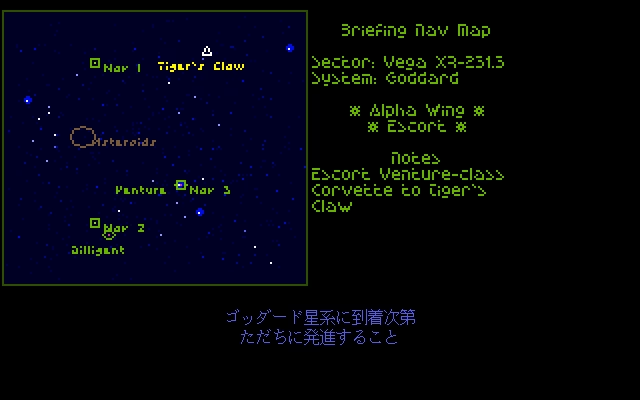
Retro Replay: What was the creative brief for Wing Commander? Did Chris Roberts already have a strong idea of what he wanted musically, or were you given room to establish the sound?
George Sanger: I rode with Chris from the Origin offices to lunch. That was the only time I was ever in a Ferrari. He told me what a fan of movies he was. His favorite was Highlander, I thought that an unusual choice. The creative brief he gave me that day was “something like Star Wars, or the Star Trek movie.” I think there was only one at the time.
Notably, nobody had ever imitated John Williams’ music for a videogame before that.
Now at that time I had my hands full, and I asked Dave Govett if he thought he could handle the assignment. I had only had him do little tunes, the “Computer nerd” music for Maniac Mansion, a Tony La Russa baseball theme, etc. I didn’t realize he was a John Williams FREAK. So he said, very casually, “well, yeah, I’ve got a couple of tunes that have been bouncing around in my head since high school, I’ve been meaning to render them out one of these days.” And out came the Wing Commander theme and dogfight music.
It was a huge leap forward for videogame tunes, and we enjoyed that when it was an innovation. Soon every game gig would be “hey, can you give us something like John Williams or Danny Elfman?” and we rebelled, we stepped down from being those guys when it was all about doing the same as everybody else. But a fun fact, I heard from more than one composer that at first it wasn’t “write like John Williams.” it was “can you do something like Dave Govett did for Wing Commander?”
Retro Replay: The music in Wing Commander also reacted to what was happening in the game. How difficult was it to think about music as something that had to respond to the player instead of simply playing from beginning to end?
George Sanger: That was Chris Roberts’ idea, and he brought it up after we turned in the dogfight music. He wanted “you’re chasing a missle,” “the missile is chasing you,” “your wingman’s been hit” and other things.
So we literally just chopped up the dogfight music we already had, and matched each section to one of the requests. Fortunately, the quirky nature of the timing of that piece made it OK to just cut immediately from one section of the music to another without smooth transitions or regard for tempo.
When it debuted at…CES? it was the hit of the show. The press touted that the music was reacting to the action. But actually at that show it was an illusion. They played the dogfight music as Dave had composed it, end to end, and with the onscreen visuals changing so fast, and the quirky composition, it seemed like it was reacting.
I used to rub that in my buddy Michael Land’s face a little bit. At Lucasfilm Games, he put 10 years and a million dollars into the iMUSE system so that he could get smooth transitions. I teased him that it was hard to notice that the music has changed. Maybe sudden transitions were not only way easier, but maybe more effective for rewarding the player with immediate feedback!
Finding the feeling in Loom
Retro Replay: You also worked on Loom. What do you remember about working with music in a game where music was not merely accompaniment but actually part of the game’s fundamental concept?
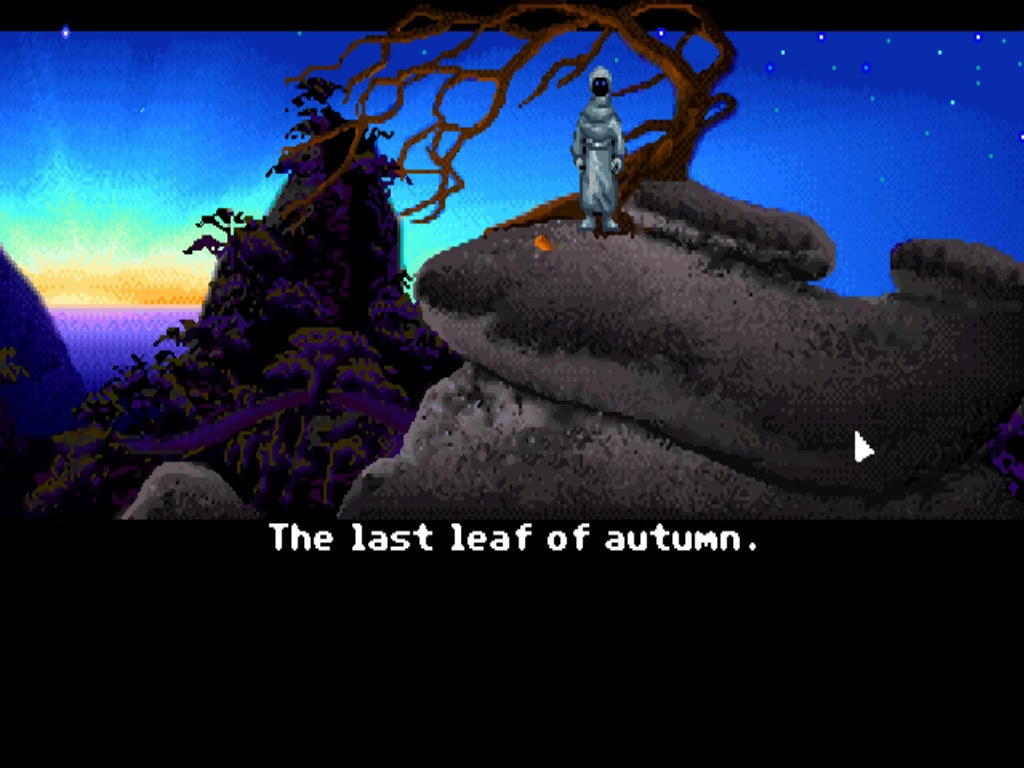
George Sanger: For me it was simply the assignment of translating Swan Lake to MIDI for the MT-32, then paring it down for other sound cards. The integration of the music into the game was for me as delightful to discover as it was for everybody else, as I played the game with my dad and had that magical experience that so many others shared. God bless Brian Moriarty, he became a great friend over the years.
Retro Replay: Was adapting existing classical material for an interactive game creatively different from writing an original score?
George Sanger: The task was very different. Until then, all the classical MIDI files I’d ever heard were constant tempo, no dynamics. My challenge was to honor the depth of musicality that was inherent in that great music. My cheat for that was that I got a recording of Seji Ozawa conducting that piece with the LA Philharmonic. I listened to it over and over, and copied their interpretation of the tempo changes and mixes and variations in volume and dynamics. That made a HUGE impact in the emotion of LOOM, and games in general, I guess. More than a few people have claimed that Loom became their introduction to classical music. I mean, it makes sense. No credit to me, i’s the largest piece of truly time-tested great music to be put into a game, and then for my part it was done in a way to reveal as much of its power as the tech could handle. Also on a sound card (MT-32) that was waaay better than what people had heard before (even though there were very few of them in the field). So yeah, suddenly game music leveled up in a new way.
Ultima Underworld and knowing who did what
Retro Replay: Do you remember any technical or musical challenges from Ultima Underworld that particularly stand out?
George Sanger: Nope, I only remember delivering the MIDI files. And I only did the opening tune, Dave Govett did the rest, so maybe he had technical trials, but if so he kept me insulated!
Songs, Team Fat and the clubhouse
Retro Replay: “The Game” and “Skeletons in My Closet” feel almost like songs from a bizarre stage production rather than conventional game music. Was bringing actual songs into games something you consciously wanted to push?
George Sanger: Not “yes” but “Hell Yes.” And usually it was like pushing teeth, if that’s a thing, because nobody was expecting it, and they didn’t have a place in their minds, let alone the game, for it. But songs make the game’s world so much bigger, don’t they?
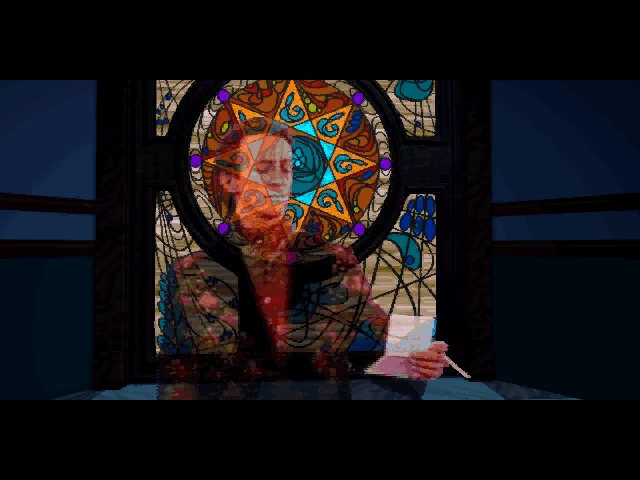
Retro Replay: Team Fat became an important part of your work. How did the group come together, and what did the idea of “Team Fat” mean to you creatively?
George Sanger: It was an important part of my work, but moreover it was the dream come true. We lived like the Beatles or the Monkees, but not like the real ones. More like the ones on TV. We were best friends, making music, monkeying around, wearing cowboy outfits and driving funny cars, in a crazy clubhouse full of artifacts, instruments, tools, pets, science experiments and pictures of me on the walls. Somebody said of Abbey Trails Studio, “It was a tree fort, and mom and dad ain’t comin’ home for a while.”
Retro Replay: Was Team Fat partly a response to game audio becoming too complicated for one person to realistically handle everything alone?
George Sanger: Yes, at first. But also a kind of excuse to start a close-knit group of loyal friends that would fill that Beatles need for me. The miracle was that the right people showed up.
Retro Replay: Your credits range from Wing Commander and The 7th Guest to children’s games like Putt-Putt, titles like Master of Orion, Zombies Ate My Neighbors, and many others. Did you enjoy having to reinvent your musical vocabulary from project to project?
George Sanger: Yeah, I LOVED that. It may have been a detriment to some extent. It can give the impression that there isn’t a consistent through-line, that some lack of artistic authenticity is at play. But when I look at it, I think that my artistic authenticity expresses that I (and we, meaning Team Fat) were stone cold earnest about putting all the love and care we could muster into each bit of music we delivered.
Rad Gravity, wild ideas and a ferret named Booger
Retro Replay: Is there a commonly repeated story about your career, Team Fat, Wing Commander, or The 7th Guest that you wish people would finally get right?
George Sanger: No, but I wish that the theme tune for Rad Gravity had been credited to me rather than Dave Warhol. Dave deserves credit as producer, but I want to be clearly known as the composer on that tune. Dave was always awesome at encouraging me to explore the wilder edges of music, and he totally leaned into me for Rad Gravity. He wanted appoggiaturas, accented passing tones, wild leaps. He cited the Simpsons theme and the Rocky and Bullwinkle theme, and I think maybe some Stravinsky things. Can you imagine working with that kind of encouragement, what a treat!! I swore I wouldn’t let him down. I said I’d write something that was so much before it’s time, it would be like Rite of Spring, people on hearing it would riot and burn their theater seats. So I wrote that tune, and it’s known in some circles as “the worst video game music ever!” I love that, and I’m proud of what Dave and I accomplished together musically. But I’d rather be saddled with that “worst” thing, because it’s true, it’s delightful to me, and I don’t want that to be a burden on Dave.
Retro Replay: Is there a story from those early years that nobody ever seems to ask you about but that you think deserves to be preserved?
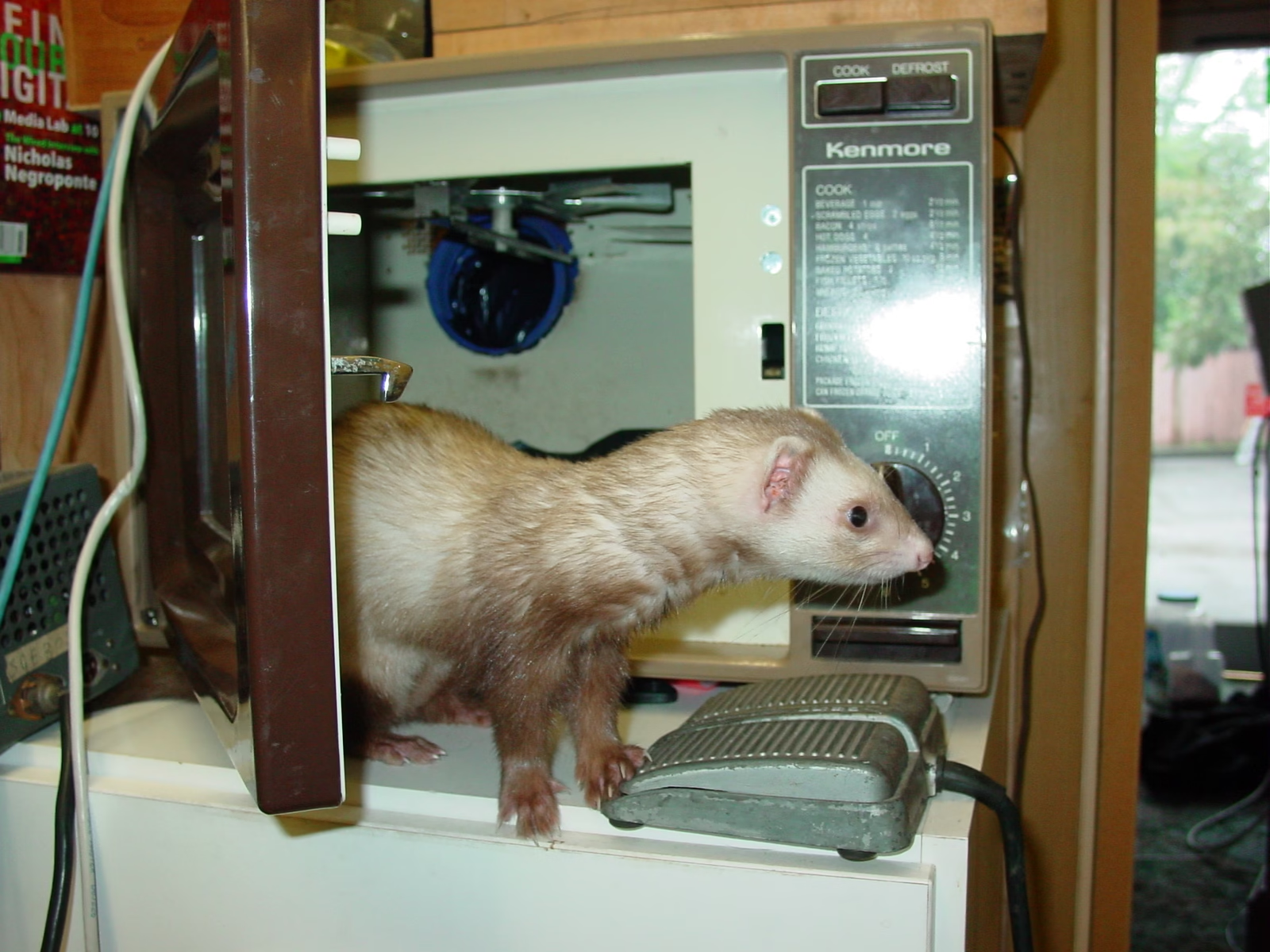
George Sanger: When he wasn’t running free in the studio, I kept Booger the ferret in a cage in my office. But there was a tube that he could crawl up, and through a hole in the wall, which led into the back of a (non-working) microwave oven in the adjacent studio that my brother recorded in.
My brother Dave did a lot of work with Texas acts, and I remember a rockabilly musician wandering into that room before Dave arrived. The guy had the pompadour, the Stray Cats tattoo, the cigarette pack rolled into his sleeve. suddenly I hear a yelp of fear and the words, shouted to nobody, “GAWD DAMN! There’s a POSSUM in the MICROWAVE!!”
Thank you, George
Our thanks to George for his time, his stories and these photographs from the studio archives. We’re particularly pleased that Booger could make an appearance.
Explore more of George’s work at The Fat Man and Team Fat’s official website. For more conversations about game music, read our interviews with Barry Leitch and Mustin of The OneUps, or browse Game Music & Performance.
Read the full story: Our history of Team Fat follows the musicians from Maniac Mansion and Wing Commander to The 7th Guest, the Putt-Putt adventures and the studio behind them.