Retro Replay Retro Gaming History, Reviews & Emulation
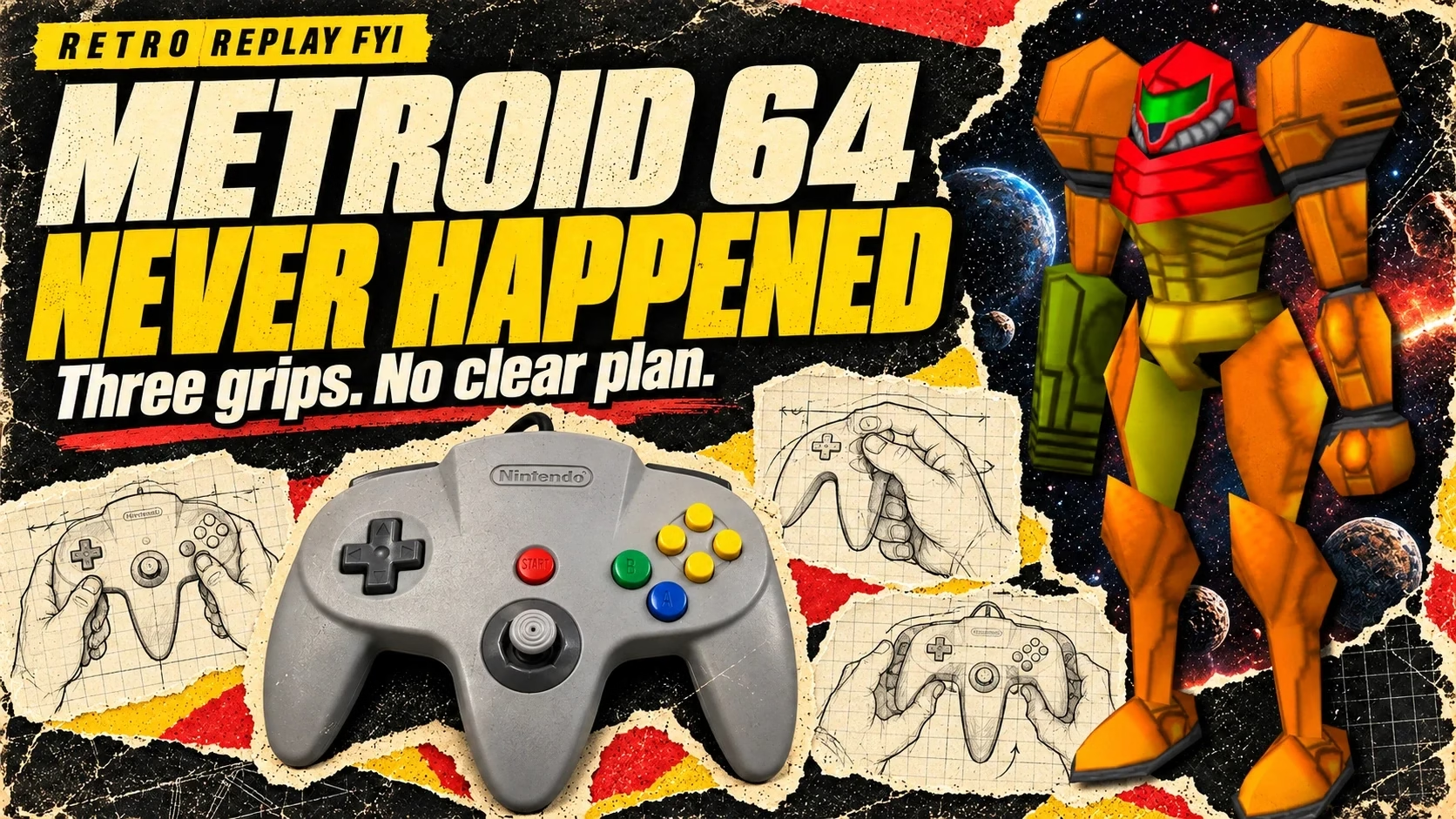
Samus could handle space pirates, lava and a planet about to explode. Nintendo’s three-pronged controller was apparently a different sort of problem. Yoshio Sakamoto, the director of Super Metroid, said he couldn’t picture how to move her with it. Nintendo 64 went through its life without a new Metroid adventure.
Anyone who remembers picking up that pad for the first time will understand the pause. Three grips. Two hands. A thumbstick in the middle, a D-pad off to the left, and a little cluster of yellow buttons on the right. It looked as though Nintendo knew something about human anatomy that the rest of us didn’t.
Where do you put Samus?
Players soon learned the trick: for many analogue-stick games, you held the middle and right grips. The spare handle wasn’t an instruction to grow another arm. Mario made good use of the stick, and Link found his way around Hyrule. But deciding how Metroid should feel on it was another job entirely.
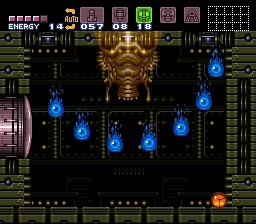
Think about what you’re doing in Super Metroid: running through a room, jumping onto a narrow ledge, firing while moving, then curling into a ball to squeeze through a passage. Samus has to feel right under your thumbs. Give those actions a third dimension and suddenly there’s a lot more to figure out than where to put the camera.
In a 2010 GamesTM interview, preserved in Siliconera’s contemporary report, Sakamoto recalled holding the N64 controller: “I just couldn’t imagine how it could be used to move Samus around.” He felt it was too early for him personally to make a 3D Metroid.
Nintendo asked someone else
That wasn’t the only route Nintendo tried. Sakamoto said the company approached an outside developer about making an N64 Metroid. It declined: the team didn’t feel confident it could produce something that compared favourably with Super Metroid. He took that as a compliment. Fans waiting for a sequel probably found it less comforting.
So the missing game wasn’t simply a finished project killed by a funny-shaped pad. Nintendo considered the idea, Sakamoto couldn’t see his way into it, and another studio passed. No official Metroid 64 came out of those conversations.
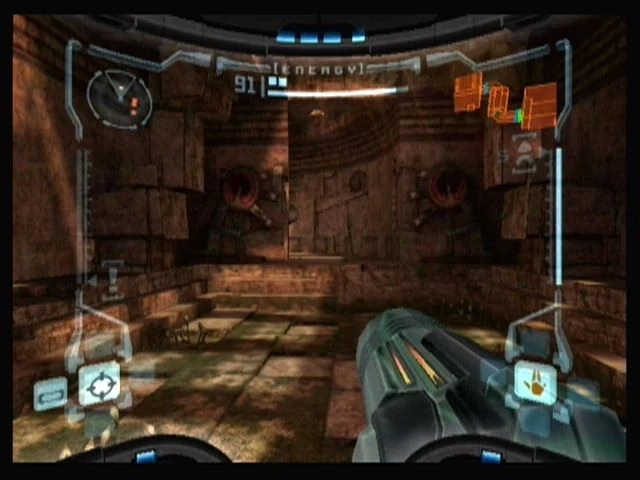
Samus eventually made the leap in Metroid Prime on GameCube, putting players behind her visor. By then, Nintendo had moved on to a controller with two handles. We can’t blame everything on the third prong, but it certainly makes the empty space on the N64 shelf a little funnier.
Sources
- Siliconera: “Why Was There Never A Metroid 64?” (19 September 2010), reproducing Sakamoto’s GamesTM interview comments about the controller and the outside studio.
- Lava Cut Content: “What Happened to Metroid 64?”, the destination of the supplied shortlink. Its unidentified-studio rumours aren’t treated as facts here.
- Retro Replay: Super Metroid, New Nintendo 3DS rerelease, for the gameplay image.
- Retro Replay: Metroid Prime, for the GameCube game and image.
More #RetroReplayFYI
For another unexpected Nintendo origin story, read about Indiana Jones helping inspire Zelda. Or try a very different casting what-if: Arnold Schwarzenegger being approached to play King Koopa.