 Retro Replay Retro Gaming History, Reviews & Emulation
Imagine the 1993 Super Mario Bros. movie with Arnold Schwarzenegger standing at the top of Dinohattan’s food chain. It nearly had that possibility on its casting board. Schwarzenegger was approached to play King Koopa, the film’s version of Bowser, but declined. Dennis Hopper became the villain audiences actually saw.
It is an irresistible casting what-if, partly because the finished movie already feels like an alternate universe. Mario’s enemy became a human-looking ruler with reptilian ambitions. Adding Arnold would have changed the face of that world, though it cannot tell us what sort of movie would have emerged.
The casting possibility was real
a contemporary Los Angeles Times production report confirms Schwarzenegger was approached for Koopa.
Game Informer’s later retrospective reports that both Schwarzenegger and Michael Keaton were approached and passed on the role. That supports the central trivia, but “first choice” is a stronger claim than these accounts establish. There is also no need to invent a reason Arnold said no. An offered part, a declined part and a confirmed performance are three different things.
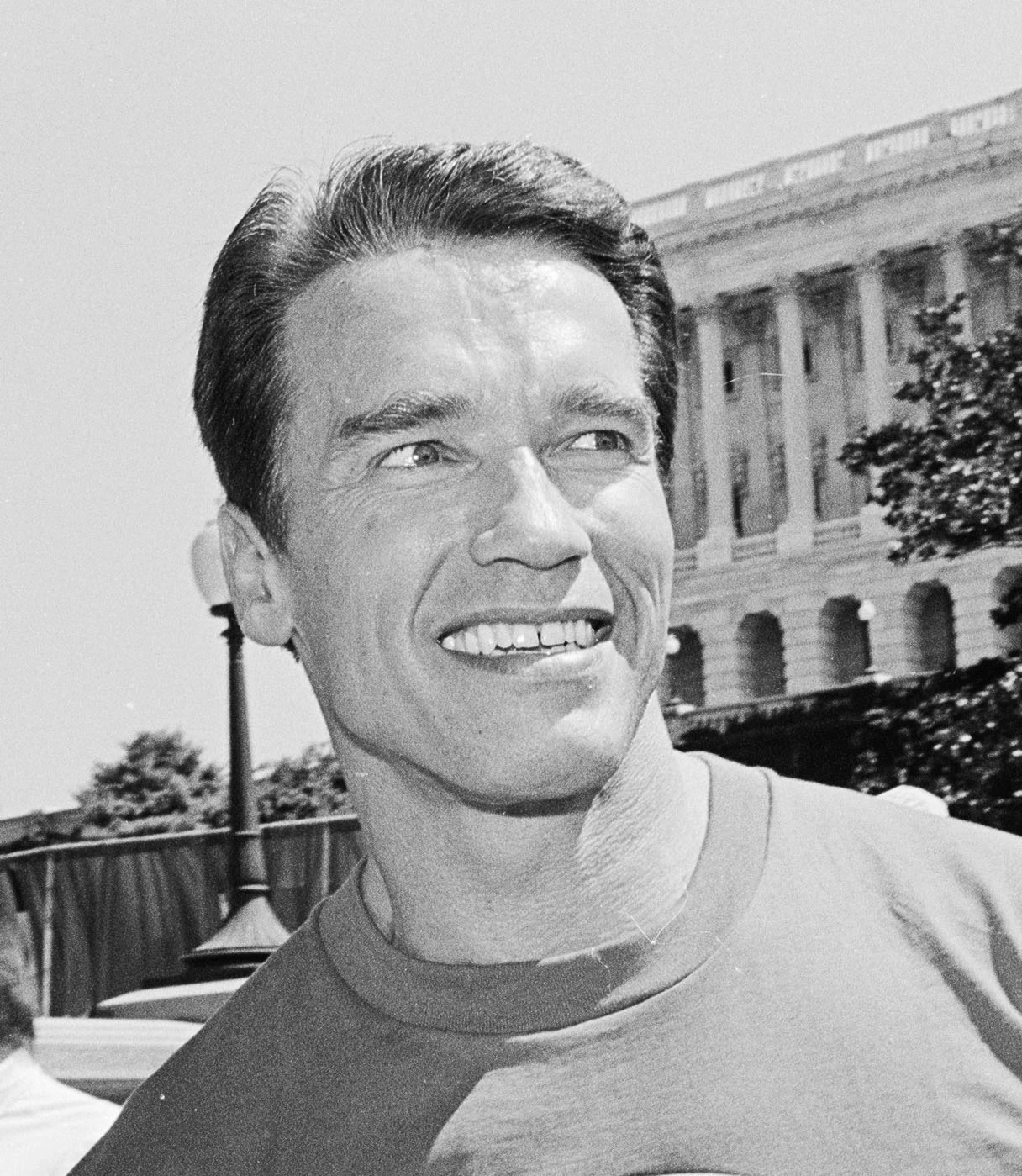
The fun comes from imagining the performance rather than turning speculation into production history. A familiar star brings expectations before the first line is spoken. In a movie already translating cartoon characters into human bodies, that expectation would have become another ingredient in the adaptation.
Bowser became King Koopa
The games make their villain readable almost instantly. A shell, horns and an enormous silhouette tell you what sort of obstacle Mario has reached. The live-action movie takes a stranger route. Hopper’s Koopa can look like a person while making the audience suspect that something about him is wrong.
That difference matters to the casting story. Schwarzenegger was not being asked to voice a cheerful animated Bowser or simply put on the familiar game character’s shell. The part belonged to the particular world being built for the 1993 film. A photograph pasted onto modern Bowser artwork makes the joke quickly, but it skips the most interesting part of the what-if.
The small trick behind Hopper’s unsettling face
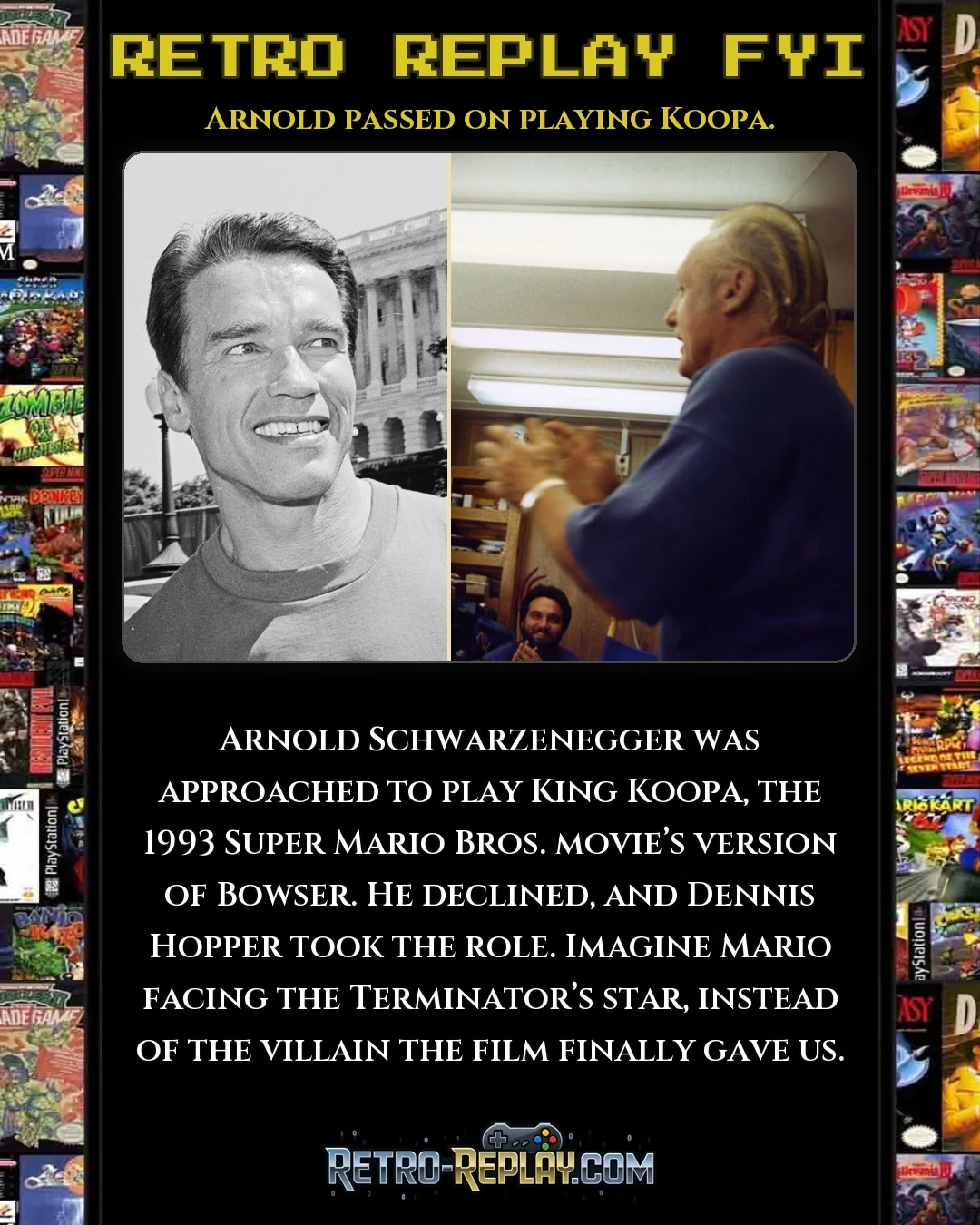
Key makeup artist Jeff Goodwin explained the actual performance’s visual foundation in his 2009 interview with the Super Mario Bros. Movie Archive. He wanted Hopper to look unusual without making the cause immediately obvious. His solution included removing the eyebrows, adding reddish texture around the eye sockets and combining that with hair stylist Michelle Johnson’s distinctive coiffure.
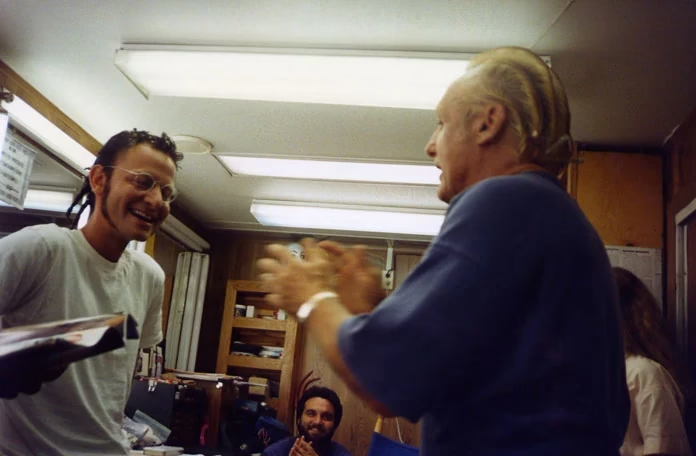
Goodwin recalled that Hopper liked the result. It is a small production detail that explains a large part of the character’s effect. The face does not need to transform completely for a viewer to find it unsettling. A familiar human feature disappears, and the remaining face becomes harder to read.
Seen alongside the casting anecdote, that work is a useful reminder that a screen villain is made by more than the name on the poster. The performer’s face, the hair, the makeup and the world around him all carry the character. Replacing one actor would have changed those relationships too.
A Mario movie that could have sounded very different
Hopper’s Koopa is the version preserved in the finished film. Arnold’s belongs to the paths the production did not take. Keeping that distinction makes the anecdote better: a genuine near-casting is already entertaining without imaginary dialogue, invented costume tests or a made-up explanation for the rejection.
The lasting joke is that one of cinema’s most recognizable action stars might have become Mario’s reptilian nemesis. He passed, and Hopper got the throne. The movie’s strange identity survived to give fans something to argue about for decades.
Sources
- Los Angeles Times: 1992 production report, for the Schwarzenegger casting approach.
- Game Informer: Mario’s Film Folly, for the actors approached and the declined role.
- Super Mario Bros. Movie Archive: Jeff Goodwin interview, for the makeup process and production photograph.
- Wikimedia Commons: Schwarzenegger’s 1991 portrait, for the photograph and its documentation.

.jpg)