Retro Replay Retro Gaming History, Reviews & Emulation
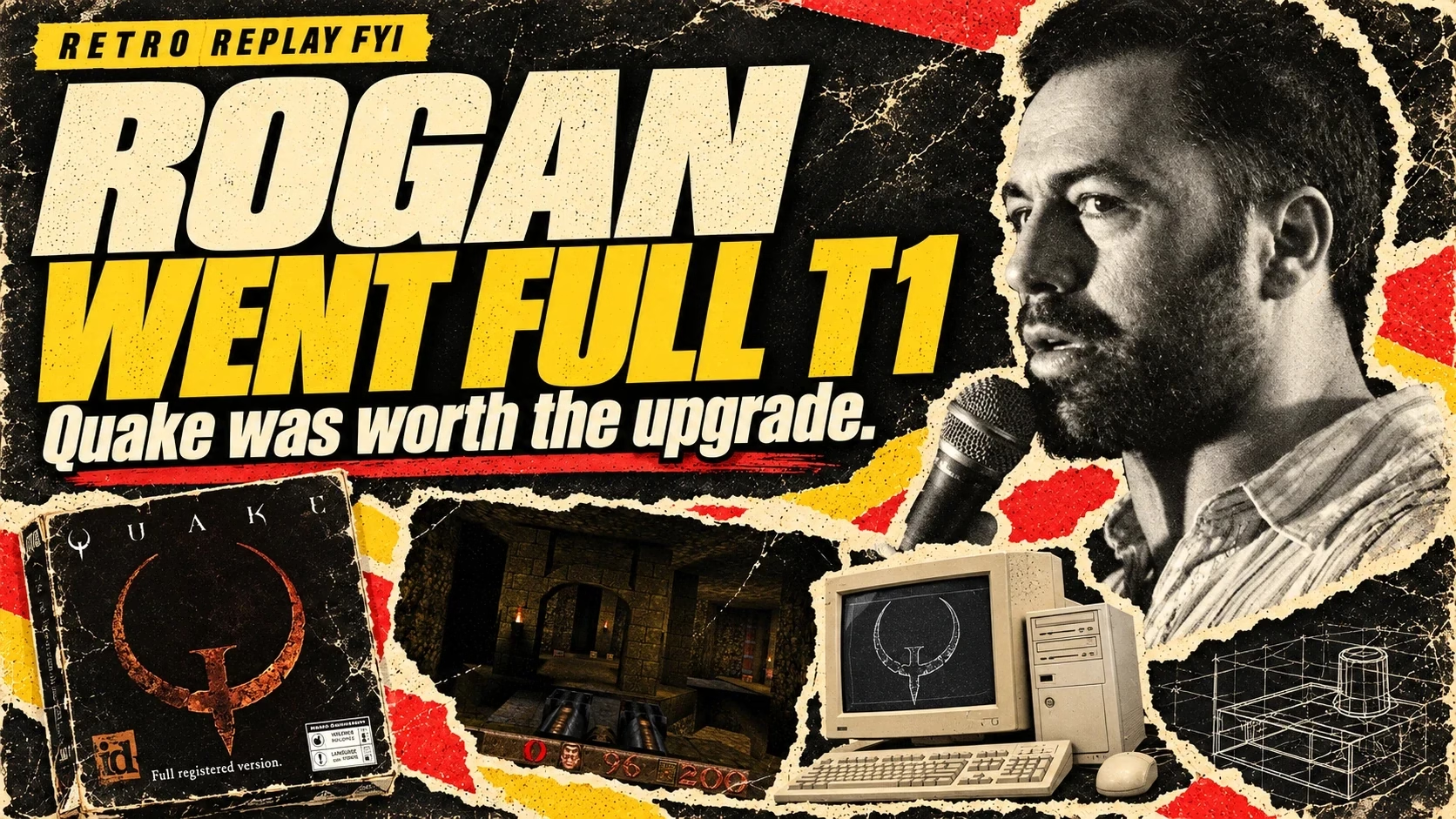
In the 1990s, some players upgraded their graphics card for Quake. Joe Rogan upgraded the connection to his house. During his April 2016 conversation with Kevin Rose, he recalled having a T1 line installed after ordinary internet service left him with miserable ping. Rose remembered those lines costing around $10,000 a month. Rogan’s response was that the upgrade had been worth it.
It is a wonderfully excessive solution to a familiar problem. You can learn a map, practice your aim and buy a better computer, then still lose a fight while waiting for the server to catch up. For someone spending entire evenings in deathmatch, the delay becomes the thing you cannot stop noticing.
Before the podcast, there was the studio LAN
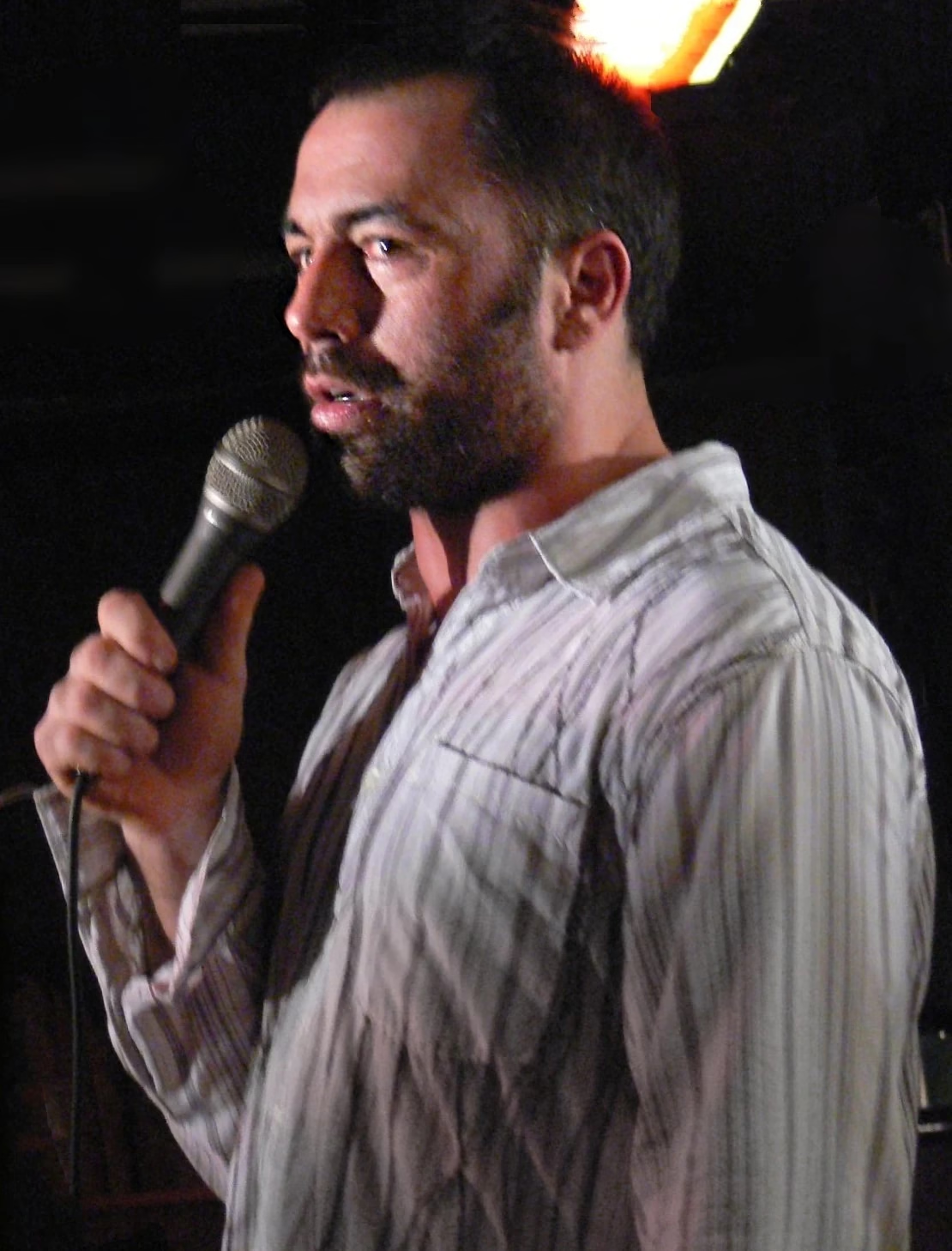
Rogan later traced the obsession to NewsRadio. In his 2024 conversation with Elon Musk, he described the writers playing Quake over a local network at the studio. Hanging around with them became playing with them, and playing became a consuming hobby. He also recalled assembling his own computers from parts bought at Fry’s.
That is a recognizable route into PC gaming. A game becomes more than something you launch. You start thinking about the machine running it, the people on the server and the next improvement that might make everything feel better. An office match can follow you home long after the workday ends.
The upgrade that reached outside the PC
In episode #781 with Kevin Rose, Rogan recalled poor connections from his home in the Santa Monica hills. Cable service was unavailable.
The monthly price needs that conversational context. The $10,000 figure is Rose’s recollection during the exchange, rather than an invoice displayed by Rogan. It is part of their story, not a universal price tag for every T1 subscription.
A T1 carried data at 1.544 megabits per second. That number looks tiny beside modern broadband, but comparing it only with today’s download speeds misses what made the idea attractive. Cisco describes T-carrier access as symmetrical, reliable connectivity widely used by businesses. Bringing that sort of service into a home was an unusually committed gaming upgrade.
Bandwidth and ping also measure different things. Bandwidth describes how much data can move through a connection. Ping measures the time a round trip takes. More capacity alone does not guarantee a shorter trip to every server, but a player suffering through a poor connection has good reason to care about both.
Why Quake made the delay matter
In a deathmatch, a corridor is never just scenery. It is a firing angle, an escape route or the stretch of floor between you and a weapon. You turn a corner, see another player and make a decision immediately. When the response arrives late, the fight you thought you were having can feel different from the one the server recorded.
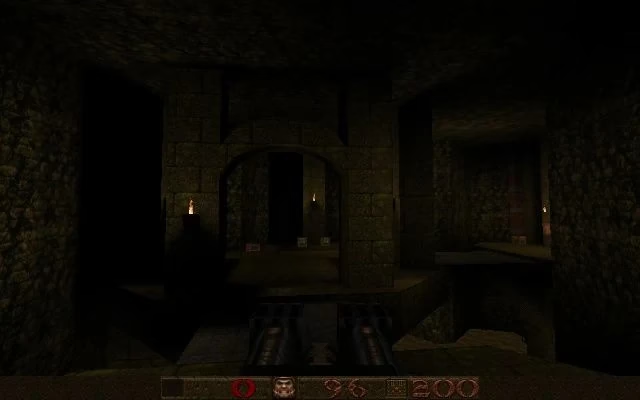
The game’s heavy stone spaces and dark passages made those encounters feel wonderfully physical. You learned where someone might appear and how quickly you could cross exposed ground. A missed opportunity could send you straight back into the same arena, trying to make the next encounter cleaner.
Quake’s networking continued to evolve. The QuakeWorld code released by id Software preserves that multiplayer branch, including its client prediction work. The software was being built around the same problem players felt at their desks: making a fast game work across connections that were anything but instantaneous.
An extravagant version of a familiar feeling
Rogan’s story is funny because the improvement escaped the usual boundaries of a hobby. A new mouse fits on a desk. A dedicated line turns the house into part of the gaming setup.
Most players never took the chase that far. But anyone who has watched a lag spike ruin a fight can recognize the impulse. The unusual part was having the means, and the determination, to call a telecommunications company about it.
Sources
- The supplied JRE #781 interview clip, for Rogan’s T1 account and the price discussion.
- The Joe Rogan Experience #781: Kevin Rose and its searchable transcript, around 1:52–1:54.
- JRE #2223 transcript, around 4:15–4:50, for the studio LAN and computer-building recollection.
- Cisco: T1/E1 and T3/E3 and connectivity and network service options, for the T1 rate and business context.
- id Software’s QuakeWorld source archive, for the multiplayer networking branch.
- Joe Rogan portrait by Rebecca Lai, via Wikimedia Commons.