Retro Replay Retro Gaming History, Reviews & Emulation

Grace is behind the counter, the books are not selling, and Gabriel Knight has found something much more interesting to do than improve the situation. There have been murders in New Orleans. He thinks they might make a good novel. Grace has had considerable practice listening to his good ideas.
You can understand why Gabriel would rather hang around St. George’s Books than worry about the business. There is coffee, a newspaper, and Grace, who can usually be relied upon to make his morning more interesting. When he does venture outside, New Orleans offers a crime scene and plenty of people willing to talk. It takes a while for him to realize that this particular story has been waiting for him.
Jane Jensen sent Gabriel and Grace through three adventures, changing almost everything around them along the way. They began among the painted streets and conversation portraits of 1993, became flesh-and-blood actors in 1995, and emerged as 3D characters in 1999. You had to get used to their faces all over again. Their arguments were reassuringly familiar.
The music helped too. Composer and producer Robert Holmes gave the series melodies that could follow its characters through those changes. In our Robert Holmes interview, he remembers discussing the first game on walks with Jensen, then trying to squeeze a later score and an opera into a two-week vacation. There would be very little about making Gabriel Knight that anyone could call routine.
Explore the history of Gabriel Knight
- Part I: Jane Jensen finds her way to Sierra (1991 to 1993)
- Part II: Sins of the Fathers opens the shop (1993)
- Part III: The Beast Within changes the face of Gabriel Knight (1995)
- Part IV: Blood of the Sacred, Blood of the Damned enters three dimensions (1999)
- Part V: Back to New Orleans, with a new coat of paint (2000 to 2014)
- Part VI: The music, the stories, and the unfinished conversation (2014 to today)
A note before entering: this history discusses the premises, characters, and selected puzzles of all three games. It leaves their final revelations for you to discover.
Part I: Jane Jensen finds her way to Sierra (1991 to 1993)
From business software to an adventure of her own
Before Gabriel had a bookstore to neglect, Jensen had spent six years writing software at Hewlett-Packard. She had studied computer science and wanted to write fiction, two interests that found rather more room together at Sierra than they did in business applications. An adventure could give her a story to tell and a player who wanted to poke around inside it.
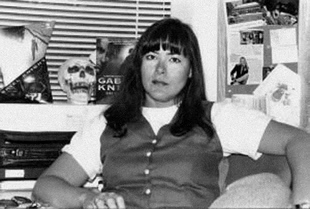
Jensen joined Sierra in February 1991. In a period interview preserved by Adventure Classic Gaming, she identified her first assignments as documentation and text for Police Quest III, followed by co-design work on EcoQuest: The Search for Cetus. She was learning how a Sierra game moved from an idea to the things a player could actually click.
Her next important collaboration put her alongside Roberta Williams on King’s Quest VI: Heir Today, Gone Tomorrow, released in 1992. Prince Alexander’s adventure had islands to explore, characters to question, and routes through a fairy-tale world whose lovely scenery could still conceal an extremely Sierra-like way to die.
After King’s Quest VI, Jensen had a chance to send someone into a world of her own. She wanted a mystery, with horror close enough to make the investigation dangerous. A capable, well-adjusted expert could have handled that assignment. Gabriel Knight was going to need a little more help.
There was an earlier possibility involving werewolves in Germany. Jensen set it aside while finding the beginning of her protagonist’s story. In David L. Craddock’s interviews about the series’ creation, she described abandoning the idea of an already established paranormal expert. Gabriel would have to discover what sort of family he belonged to. It was much more interesting if he was not remotely prepared for the job.
So the expert became a struggling writer in New Orleans, with a used-book business, an active social life, and rather more confidence than his circumstances justified. He could be charming, funny, and perceptive. He could also be lazy, selfish, and spectacularly pleased with himself. Spending time with him was going to require someone who could answer back.
Grace takes the other side of the counter
Grace Nakimura was waiting on the other side of the counter. She runs the shop, does the research, and has heard quite enough of Gabriel’s charm to recognize it approaching. Their exchanges are a pleasure from the start. He makes an overture; she sends it back with a correction. You soon find yourself talking to her even when you have no useful question to ask.
She has plenty of curiosity of her own, though. Give her a subject to investigate and she wants to get somewhere with it. She is also proud enough to jump to a conclusion about someone and stick with it longer than she should. Later, when she finally gets out from behind that counter, both habits go with her.
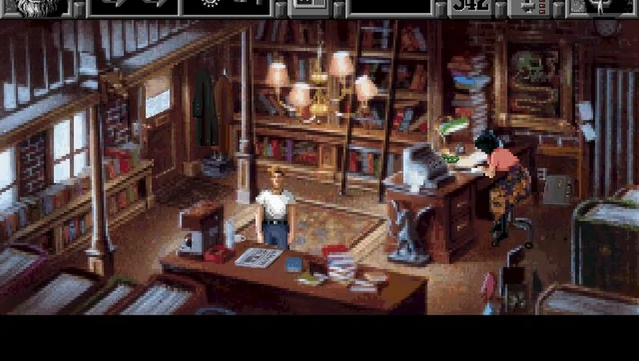
Between conversations, you can wander around the shop, look over the shelves, and inspect the life Gabriel has made for himself. The warm colors make it easy to settle in. Once you have spent a few mornings there, coming back with news for Grace feels like part of the day. Leaving her out of an investigation starts to feel rather less reasonable.
Jensen built much of that New Orleans from books. She had not yet visited the city, and recalled asking a bookstore there to send her picture books to help with the research. The streets and interiors grew out of those images and the supernatural stories that had caught her imagination. Gabriel would have a place worth wandering around before the case began closing in on him.
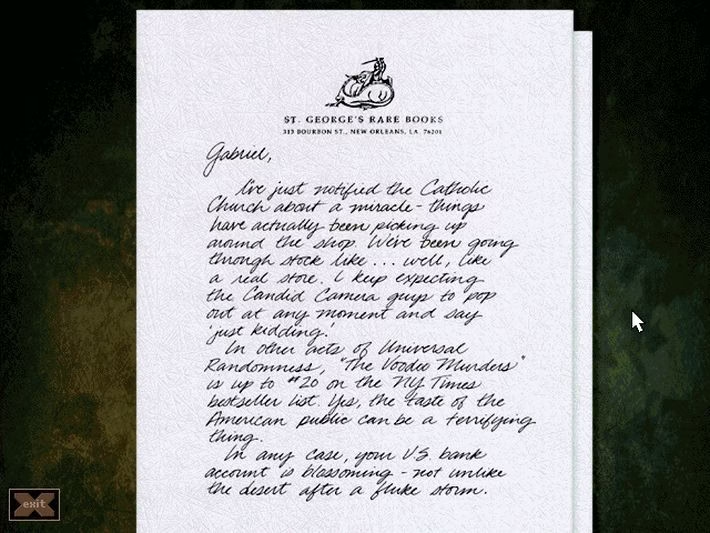
A museum visit can leave you with a name you have no use for yet. Later, somebody mentions it again, and you are back across town with a much better question. Louisiana Voodoo and the city’s history feed Jensen’s fictional conspiracy through encounters like these. Gabriel keeps picking up material for his novel; you keep finding reasons to be more worried than he is.
Making those places meant giving the artists much more than a description of the mood. In her account of the first game’s production, Jensen describes preparing room specifications that listed the actions and puzzle objects a location would need throughout the story. She reviewed the artwork as it developed. A background could be beautiful and still need changing if Gabriel had to find something in it three days later.
A keyboard behind the producer’s desk
Holmes arrived at game composition by a rather unexpected route. He had worked in studios, live music, and postproduction in Los Angeles. After moving to Oakhurst, he sent Sierra music director Mark Seibert samples of his work. A lunch led to a composing job, and a man who had barely encountered a video game was suddenly helping make them.

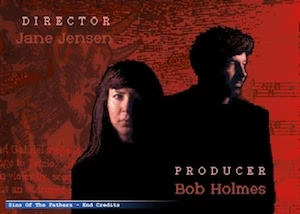
For Sins of the Fathers, Holmes also served as producer. In our interview, he recalls working on production during the first half of the day, then turning to the keyboard behind his desk to compose. He and Jensen took long walks around Bass Lake while the project was taking shape, discussing its research and direction.
Holmes remembers the Oakhurst music department as a place where composers helped one another and admired each other’s work. In our interview, he contrasts it with the competitive advertising and technology workplaces he encountered later. His first game job had brought him into a surprisingly supportive group of musicians, all trying to make their work sound good on equipment that offered considerably less freedom than a recording studio.
His ambition for the score was wonderfully direct: something players would walk away humming and remember just like a good album or song on the radio.
The themes announce themselves. They give a location or a character something you can remember after the screen has changed.
For all its New Orleans setting, the game rarely gives Holmes the obvious excuse to turn every room into a jazz performance. He describes reaching for dark instrumental pop, with melodies strong enough to stay in your head. Spend long enough puzzling over an object and you will become extremely well acquainted with the tune accompanying it. Better hope it is a good one.
Part II: Sins of the Fathers opens the shop (1993)
A crime scene, a notebook, and ten increasingly bad days
Gabriel Knight: Sins of the Fathers arrived in December 1993. Jensen’s first adventure as the lead designer sent players into a murder investigation with the familiar tools of a Sierra game: an inventory, a set of action icons, and a screen full of details that might become useful after several more conversations.
The police call the killings the Voodoo Murders. Gabriel’s friend Detective Mosely gives him a way into the case, although Gabriel’s idea of professional cooperation includes whatever gets him material for his novel. The investigation begins with that slightly grubby opportunism. He is interested in the story before he understands the danger.
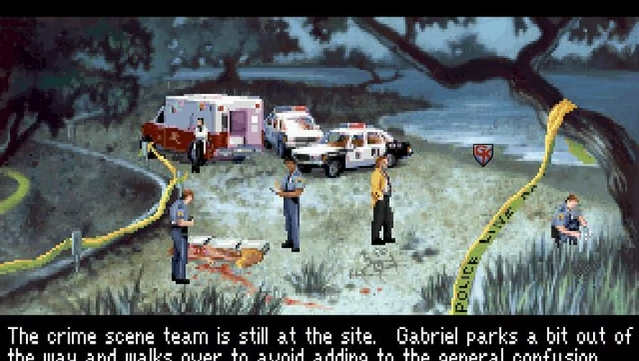
You visit the crime scene, speak to people, examine evidence, and return to the shop with questions for Grace. The game divides the investigation into ten days. Completing the necessary business moves the calendar forward, while the next morning brings another newspaper, another exchange at the counter, and another reason to leave the shop.
Eventually you do enough to bring the day to an end. Gabriel goes to sleep, another morning arrives, and the newspaper gives you a reason to get moving again. After an evening spent worrying at one stubborn lead, that little jump in the calendar feels wonderful. You are getting somewhere. Unfortunately, so is whoever is responsible for the killings.
Often, getting somewhere means going back to a person who seemed to have nothing left to say. The interface separates casual chatter from pointed questioning, and the subjects you learn elsewhere give you more to ask about. Gabriel can make a social call. You are there to see whether someone’s answer has changed.
The extra icons were a deliberate choice by Jensen. She recalled hearing complaints that Sierra’s move to point-and-click had made interaction too simple, so Gabriel received a broader collection of actions, including separate ways to chat and ask questions. A feature that can feel fussy today came out of a real argument among adventure players about what they were losing as the games changed.
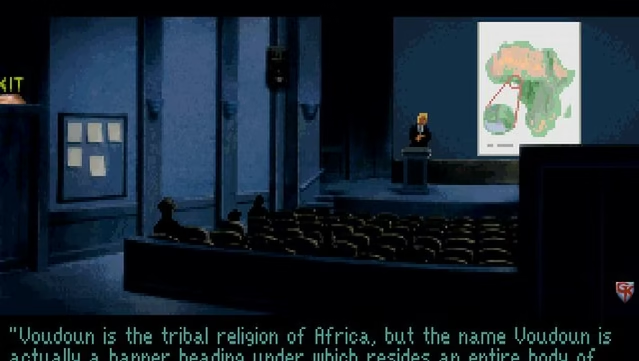
Then an old remark catches up with you. You heard it an hour ago, dismissed it, and now it sounds like the one thing worth following. A symbol in the scenery becomes something to copy down. A colorful acquaintance becomes someone whose explanation you would very much like to hear again. The game is at its most absorbing when it sends you back through a city you thought you had already searched.
Of course, sometimes the next morning refuses to arrive because Gabriel has neglected one tiny errand. Around you go again, checking rooms and trying the other conversation icon. Sins of the Fathers can be wonderfully generous with its dialogue and maddeningly particular about which bit of business counts. Even a promising shadow hunter can lose an evening to administrative trouble.
The people who answer back
The CD version gave Gabriel Tim Curry’s voice, a performance that makes even routine inquiries sound as though they have arrived wearing an open-necked shirt. Leah Remini’s Grace has little patience for him. Mark Hamill plays Mosely, while Virginia Capers’ narrator can give an observation a rich, amused weight. Michael Dorn supplies Dr. John’s imposing presence.
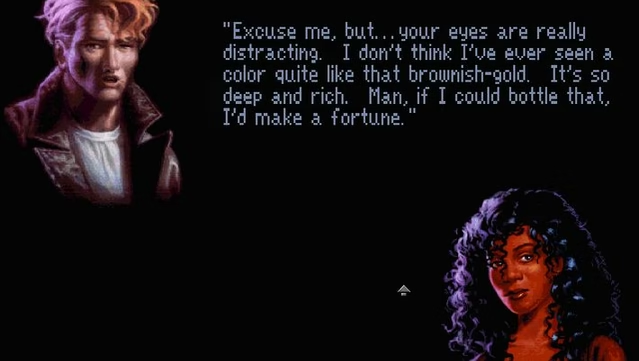
Hamill’s Mosely sounds like someone who has known Gabriel long enough to be suspicious of a favor. Remini can put a warning into Grace’s reply before he has finished being pleased with himself. Capers makes even an unsuccessful attempt worth listening to. You can click on something foolish and still come away with a little performance for your trouble.
Players with the floppy edition read their way through those encounters. On CD, the voices supplied timing, irritation, and affection that could make an already familiar exchange newly funny. It is easy to hear one of those performances in your head while looking at a screenshot today. That would make recasting the game years later a particularly difficult assignment.
Then Gabriel meets Malia Gedde, and his talent for asking questions begins competing with his wish to impress the person answering them. He likes her. He would very much like her to like him. Meanwhile, you are sitting at the computer with evidence to follow and a growing suspicion that your investigator’s judgment may be occupied elsewhere.
Back at the shop, Grace notices quite enough. Their conversations leave room for irritation, concern, and the occasional remark neither of them seems ready to follow up. Jensen lets them get on with the case while those feelings collect around it. By the time the investigation turns dangerous, you have spent enough ordinary time with them to care who makes it home.
The research starts reaching back
The deeper Gabriel looks into the case, the harder it becomes to keep his own history outside it. Family stories, recurring dreams, and a connection to Germany begin drawing him away from the idea that he is merely gathering colorful material.
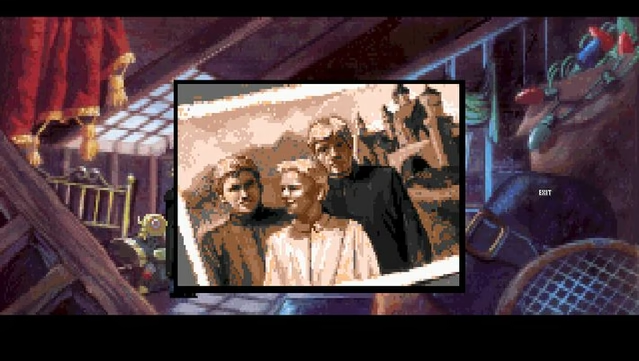
By then you know your way around New Orleans. You know who might help, where to ask a particular question, and how welcome Gabriel is likely to be when he arrives. When the trail finally takes him farther afield, it feels like packing up an investigation you have been living with for days. You would quite like to tell Grace one more thing before going.
The late game is less comfortable. There are dangerous situations and sequences in which hesitation is costly. Saving regularly remains sensible. The increasingly urgent finish does not have the relaxed pleasure of the early investigation, but it does force Gabriel to do something with knowledge he had originally hoped to turn into a manuscript.
Gabriel does not suddenly become a solemn hero when events turn against him. He is still the man who annoyed Grace over coffee, only now he has good reason to be frightened. The jokes have given you time to get to know him. When they stop coming so easily, you notice.
There is a lovely production memory in Jensen’s 2014 PC Gamer interview: the team went to watch the first boxes coming off Sierra’s manufacturing line. After months of making the game, she could see it becoming something a stranger might buy. For all Gabriel’s inherited troubles, this was a new name on a box. Sierra decided to give him another case.
Part III: The Beast Within changes the face of Gabriel Knight (1995)
Villagers at the door
Someone has come to the castle expecting a professional. A child is dead, the villagers believe a werewolf killed her, and the local Schattenjäger is the person they have been told to find. Gabriel now has an ancestral home and a formidable title. Neither has prepared him particularly well for this conversation.
Gabriel has inherited a role whose German name means “shadow hunter.” In The Beast Within: A Gabriel Knight Mystery, released in 1995, that grand title meets the practical problem of having to leave the house and investigate a wolf. His successful book has improved his circumstances. It has not supplied a lifetime of experience.
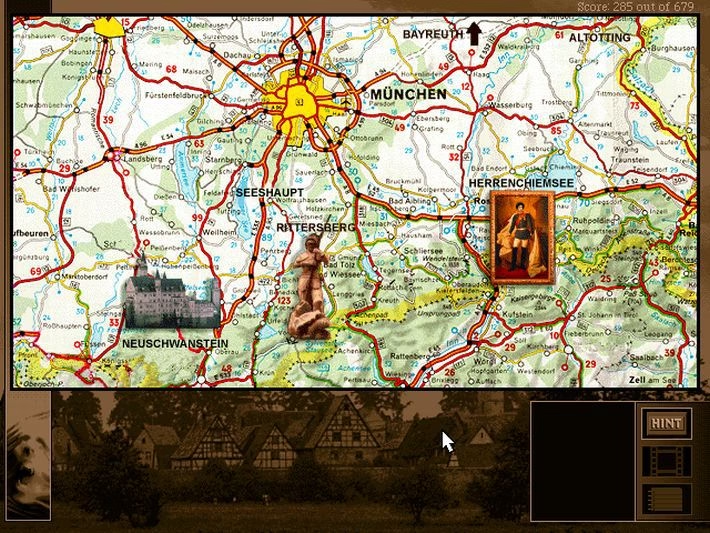
The setting takes up the German thread Jensen had considered before the first game. Gabriel follows the modern killings around Munich. Grace comes to Germany and pursues another trail through the life of King Ludwig II of Bavaria, his castles, and his association with Richard Wagner. Their investigations alternate across six chapters.
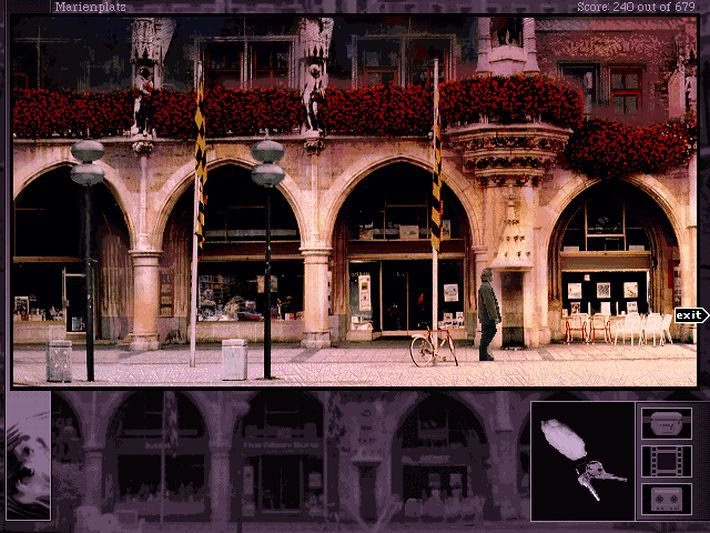
Out in Bavaria, there is often very little warning in the scenery. Jensen had traveled in Germany, and the sequel takes real pleasure in its handsome buildings, castles, and museums. You can spend a sunny stretch of the afternoon looking at somewhere you would happily visit. Then the next lead reminds you why Gabriel came.
Two investigators, two very different methods
Before long, Grace gets tired of being left out and comes to Germany herself. This time, you go with her. The research Gabriel might once have requested from a safe distance becomes your part of the adventure, with a library to search and a historical mystery that keeps getting stranger.
She does not make a wonderful first impression at Schloss Ritter. Convinced that Gerde may be rather more than Gabriel’s housekeeper, Grace turns prickly before she has much evidence to support the suspicion. It is an uncomfortable little encounter, especially when you are fond of her. She is going to have to do some reconsidering along with all that reading.
Soon she has Ludwig II to think about. A visit to a castle sends her back to a book; a reference in the book gives the next exhibit something new to say. You can feel an answer getting closer without yet being able to name it. After spending the first game bringing questions back to Grace, it is a treat to work through a few with her.
Among those discoveries is the trail of a lost Wagner opera, Jensen’s fictional addition to the history of Ludwig and the composer. Grace has to find out what became of it and why it belongs in a case that began with a killing in the woods. An evening at the museum is turning into a fairly unusual werewolf hunt.
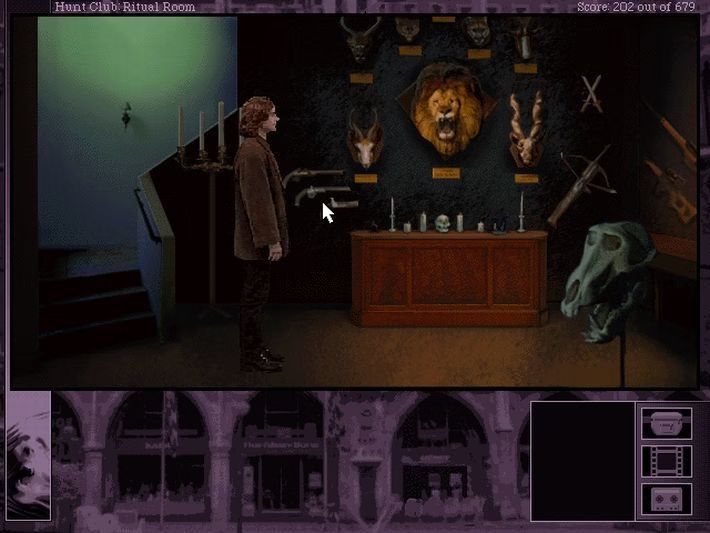
Gabriel’s route is more social. He gains access to a private hunting club and meets Baron Friedrich von Glower, a cultivated, charismatic man whose interest in him is difficult to reduce to the next useful clue. The conversations have an attraction and an unease that make the club feel considerably more dangerous than its expensive furniture suggests.
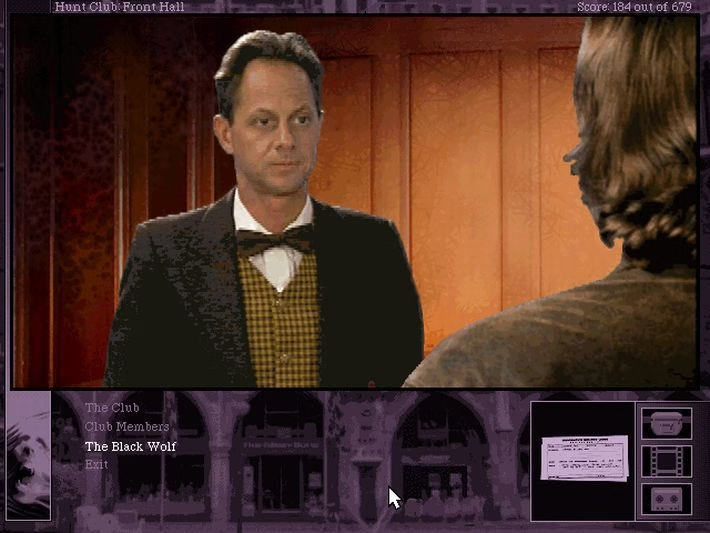
For once, Gabriel is on the receiving end of somebody else’s charm. Von Glower makes him welcome, holds his attention, and draws him further into the club’s company. The attraction between them gives their scenes an intimacy that makes it harder to remain comfortably suspicious. Gabriel is enjoying himself. That is part of the trouble.
At the zoo, his familiar ingenuity takes a less glamorous form. He needs access, the staff are in the way, and his tape recorder contains the makings of a useful deception. Rearranging someone’s recorded words is exactly the sort of solution Gabriel would congratulate himself on. It is also a good puzzle to work out by listening.
Coming back to Grace slows things down enough to think. You read, inspect, and occasionally wonder which small detail the game is still waiting for you to examine. Then a discovery changes the way you understand Gabriel’s latest encounter, and you want to get back to him before he accepts another invitation.
Dean Erickson steps into the role
This time the people on screen were actors. Dean Erickson played Gabriel, Joanne Takahashi played Grace, and Peter J. Lucas played von Glower. Jensen’s game was being filmed under director Will Binder, with Sabina Duvall producing. Players who knew Curry’s voice now had to meet a whole new Gabriel.
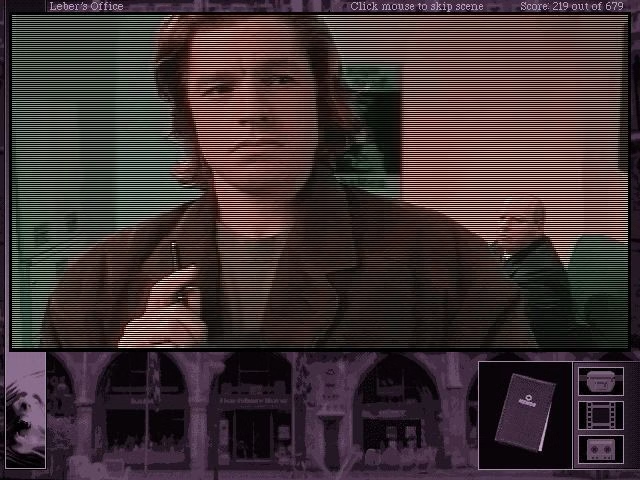
Erickson’s performance is less of a verbal flourish than Curry’s. His Gabriel can look uncertain, cornered, or pleased with an invitation before saying very much at all. The awkwardness sometimes helps: the character has arrived in a social world he does not entirely understand.
Lucas gives von Glower the ease that Gabriel lacks. A conversation can feel welcoming and possessive at once. The sequel needs that attraction to work, and the performance does much of the work without showing a fang.
Filming an adventure brought problems a television production could usually avoid. As Binder explained in Craddock’s interviews with the cast and crew, actors had to begin and end actions in positions that would survive the player choosing what happened next. Scenes sharing a location were grouped together, even when their places in the story were far apart. The schedule demanded substantial quantities of footage each day.
Erickson had to keep up with that pace while settling into a character players already knew. In the same production interviews, he remembers studying the script and working on Gabriel’s accent; evenings at Bass Lake offered time to prepare for the next day’s scenes. Other cast members could arrive, film their material, and leave after a short stay. The continuous investigation players experienced at home was being assembled from a very busy sequence of separate performances.
On screen, you can sometimes see the effort of stitching all those choices together. Gabriel finishes a filmed action, the view changes, and the room settles down to wait for your next click. A simple trip across it can feel surprisingly laborious. Then a conversation gets going, an actor holds your attention, and you stop noticing how the pieces join.
Its context-sensitive cursor also removes much of the original’s verb selection. You point at a person or an object, and the game offers an appropriate interaction. The hard work moves toward following information and choosing where to investigate. It remains a substantial adventure, although repeatedly checking a room for the last active detail can still feel like trying to find a dropped contact lens.
An opera during a vacation
Holmes had participated in the sequel’s early production and research, including travel in Germany and Austria. Then his working life changed. A project involving Paul Allen and Sting took him away from Sierra and to Seattle. When he returned to the game’s music, much of the filmed material was already there.
He tells us he had a two-week vacation in which to write and create the score and opera. Asked whether scoring the live-action scenes felt closer to film or television, he answers: It did. It was more limiting in some ways as the action was defined already, but that was helpful since I only had two weeks to do the music.
An opera would have been an ambitious thing to put at the end of that vacation even if nobody had to play a game around it. Here, Grace has spent part of her investigation working toward the performance. By the time it arrives, you have reasons to listen closely. Holmes’ music has become something the characters need to get right.
There are stretches of The Beast Within when you realize how odd your evening has become. You sat down to investigate a werewolf and have spent a very agreeable hour looking into a Bavarian king. Then Gabriel goes back to the club and the tension returns almost at once. The filmed performances hold those two sides together, even when a stiff transition or a stubborn hotspot interrupts the spell.
Computer Gaming World named it its game of the year. The praise did not make its production method permanent. When Gabriel returned for a third case, the actors would be gone, the camera would belong to the player, and Sierra would once again be building toward the next fashionable way of showing a world.
Part IV: Blood of the Sacred, Blood of the Damned enters three dimensions (1999)
A missing child and a village full of secrets
Gabriel Knight 3: Blood of the Sacred, Blood of the Damned begins with another child in danger. A kidnapping takes Gabriel from a case in Paris to Rennes-le-Château in southern France, where a tour group and a collection of suspicious strangers give him plenty of people to bother.
Released in November 1999, Jensen’s third game follows Gabriel and Grace through a mystery involving vampires, religious conspiracy, local geography, and people who have arrived in the same small area for very different reasons. Tim Curry returns as Gabriel’s voice. The man on screen, however, is now made of polygons.

The move to 3D originated at Sierra. Jensen said so in her interview during the third game’s development, while also explaining that exploring the new world had won her over. The sequel would no longer be built from the same underlying SCI technology as its predecessors.
Walking around the hotel takes some adjustment. You move Gabriel, but you can also send the camera off to inspect a room without marching him into every corner. Look behind something. Move closer. Check an angle that a fixed background would never have shown.

Naturally, you start being nosy. Swing the view behind a piece of furniture. Have a closer look at something Gabriel has walked straight past. For a few moments the room seems to belong to you. Then you mishandle the camera, find yourself looking at an unhelpful angle, and spend the next few clicks trying to restore your dignity.
The character models have aged less comfortably than the scenery. Faces can look rigid, and a close-up sometimes reveals more of the technology than the drama needs. Curry’s voice supplies a familiar personality to a Gabriel whose appearance has changed for the third time in three games.
The engine needs a rescue of its own
In early 1998, programmer Scott Bilas joined the production at Sierra Northwest. The promised summer release looked impossible. His postmortem describes a game still relying on an unstable application built around demonstration code. The team needed working tools as urgently as it needed finished scenes.
Jim Napier’s G-Engine supplied the rendering, animation, and sound foundations. Bilas and his colleagues rebuilt the systems around it, including the Sheep scripting tool, so the designers could put a complicated adventure into that world.
Previously, a small change to a conversation could require an engineer and another rebuild. The designers needed to try a scene and revise it themselves. Getting that process working gave Jensen’s story a much better chance of reaching players.
Artists had another problem: the camera could look almost anywhere. They could no longer hide unfinished work outside a fixed shot. Every extra angle Gabriel’s curious audience might inspect was another angle somebody at Sierra had to finish.

Learning your way around all this takes time. You can lose the thread of a conversation while wrestling with the view, or search an area that has rather less to offer than its size suggested. But finding a useful detail because you thought to look behind something is a small triumph. You forgive a few awkward turns of the camera for another one of those.
Grace gets a computer and a very large puzzle
Grace’s SIDNEY computer is one of the third game’s finest toys. It lets her organize and analyze evidence, search for information, and work on material that will not surrender its meaning merely because Gabriel has asked someone about it twice.
Le Serpent Rouge is the puzzle that keeps Grace at the desk. A poem gives her riddles to untangle; maps, symbols, and the surrounding geography supply pieces of the answer. You make some progress, go back to the case, and return later with something that lets you get a little farther. This one is going to take more than a lucky inventory combination.
Soon you are comparing details, drawing lines, and checking a conclusion against the map. A relationship that was invisible a few minutes earlier suddenly seems obvious. There is a particular pleasure in going back over your own work and finding that, for once, it makes sense. Grace has earned a discovery, and you have done enough of the work to share it.
It can also consume the evening. Anyone eager to get back to Gabriel’s conversations may find the desk work a long interruption. If you enjoy a mystery that gives you a reason to keep notes, though, put the kettle on before you settle down. Grace has found a good one.
Jensen discussed designing puzzles around the explorable landscape in Craddock’s account of the third game. The new technology was awkward, but here it had a job beyond making an old series look more current. Grace could study a landscape whose relationships were part of the problem.
Yes, the cat-hair mustache
Unfortunately, an earlier puzzle would become more famous than all that work. To obtain a motorcycle under Mosely’s identity, Gabriel assembles a disguise involving cat hair, tape, and syrup. The arrangement is absurd, and the demand for a mustache is especially unhelpful when the person he is impersonating does not have one.
By the time you have collected the ingredients, it is quite possible to forget that a kidnapped child is waiting for Gabriel to get on with the case. Another errand, another inventory combination, another concession to the disguise the game has decided you need. The eventual laugh is nowhere near large enough to pay for the trouble.
Erik Wolpaw made the sequence the centerpiece of his Old Man Murray attack on adventure-game design. It became an extraordinarily portable criticism: a whole genre reduced to the phrase “cat-hair mustache.” The puzzle deserves the complaint. The rest of Gabriel Knight 3 deserves to be played beyond it.
Once Gabriel has his transport, there is much better snooping ahead. A guest goes out and leaves you an opportunity. Someone says where they have been, and you have reason to doubt it. A closed hotel door becomes an invitation to listen. These are the moments when you want to stay with the case for another hour, even after the mustache has tried your patience.
A familiar sound in an unfamiliar world
Holmes was no longer part of Sierra’s internal team. He supplied a set of themes that the game’s music staff could adapt, while producing recordings of selected major pieces himself. The method had changed again, but Gabriel and Grace still had a musical connection to their earlier lives.
In our conversation with Holmes, he puts that intention plainly: Jane and I both saw the music as one of the legs on the table of the series, and a character in the mix.
The third game’s expansive main theme makes a strong case for giving that character a prominent entrance.

Gabriel and Grace have their own reckoning waiting among all those secrets. By the ending, you cannot assume that another case will simply find them bickering in the same room again. There are things between them that need sorting out. You finish with a fairly strong wish to see what happens when they next meet.
For a player finishing in 1999, the obvious next step was to wait for that meeting. Around the team, Sierra was going through ownership changes, layoffs, and shifting priorities. Getting the third game finished had already been a long struggle. The fourth never followed it onto the shelf.
Part V: Back to New Orleans, with a new coat of paint (2000 to 2014)
The case that did not arrive
At first, waiting for another Gabriel Knight was much like waiting for any sequel. The previous adventure had left a story to continue, and Jensen plainly had more to do with these people. Then the years began piling up. Fans could replay the trilogy and argue about their favorite Gabriel, but the next case remained out of reach.
Jensen kept writing and making games. She had already adapted Sins of the Fathers and The Beast Within into novels, giving readers another way through the first two cases. Later work included smaller mystery games and new adventures outside Gabriel’s world.

Gray Matter brought a young street magician and a reclusive scientist into an Oxford mystery. Moebius: Empire Rising followed an antiques expert whose unusual perceptions drew him into another investigation. They were different people with different problems, but a Gabriel Knight player could recognize Jensen’s interest in research, damaged relationships, and an ordinary explanation beginning to run out of room.
It was good to have new Jensen mysteries to work through, with Holmes supplying music again. Still, every return to Gabriel Knight 3 left that same conversation unfinished. A new cast in Oxford could keep you happily occupied. Gabriel and Grace were going to have to sort out their own problems.
Pinkerton Road returns to the first case
Jensen and Holmes established Pinkerton Road, and the studio’s 2012 crowdfunding campaign offered a route back into larger adventures. Phoenix Online worked on the new productions, including a remake of Gabriel’s debut under license from Activision.
Gabriel Knight: Sins of the Fathers 20th Anniversary Edition reached PC and Mac on October 15, 2014. The anniversary in the title had become slightly belated by the calendar, but St. George’s Books was open again. There were new backgrounds, new character models, a newly recorded soundtrack, and an entirely new voice cast.
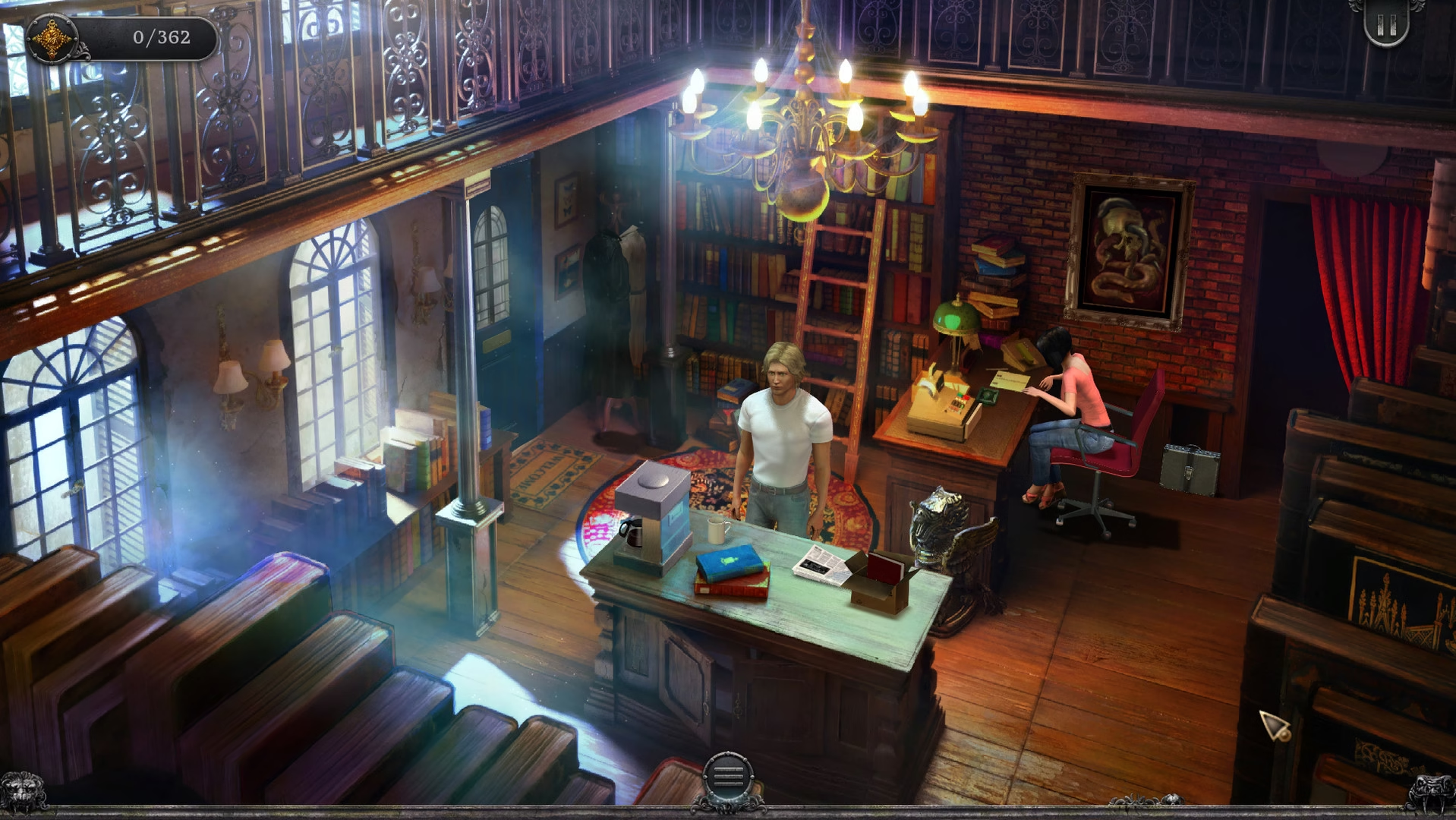
Walk into the remade bookstore and you can recognize it almost at once. There are the shelves, the warm light, and Grace waiting at the counter. Look a little longer and the differences start to register: the extra detail in the background, the way a character moves across it, the pace of an exchange you remember hearing years ago.
Then Gabriel speaks. For anyone who knows the original, Curry is likely to be waiting somewhere in the back of the mind, with Remini ready to answer him. The new performers had the difficult job of making those lines sound natural while some of their audience was silently supplying a different reading.
Jensen explained in her PC Gamer interview that the original high-quality recordings were unavailable to the team and reassembling the old cast was impractical. This was a new production with a much smaller budget, not a matter of checking a box marked “keep Tim Curry.”
Holmes, at least, could return to his own melodies. The remake let him revisit music he had once written to survive the limitations of older sound cards. A tune could receive a richer arrangement and still bring you straight back to a room you knew. Among all the new sights and voices, that familiarity was especially welcome.
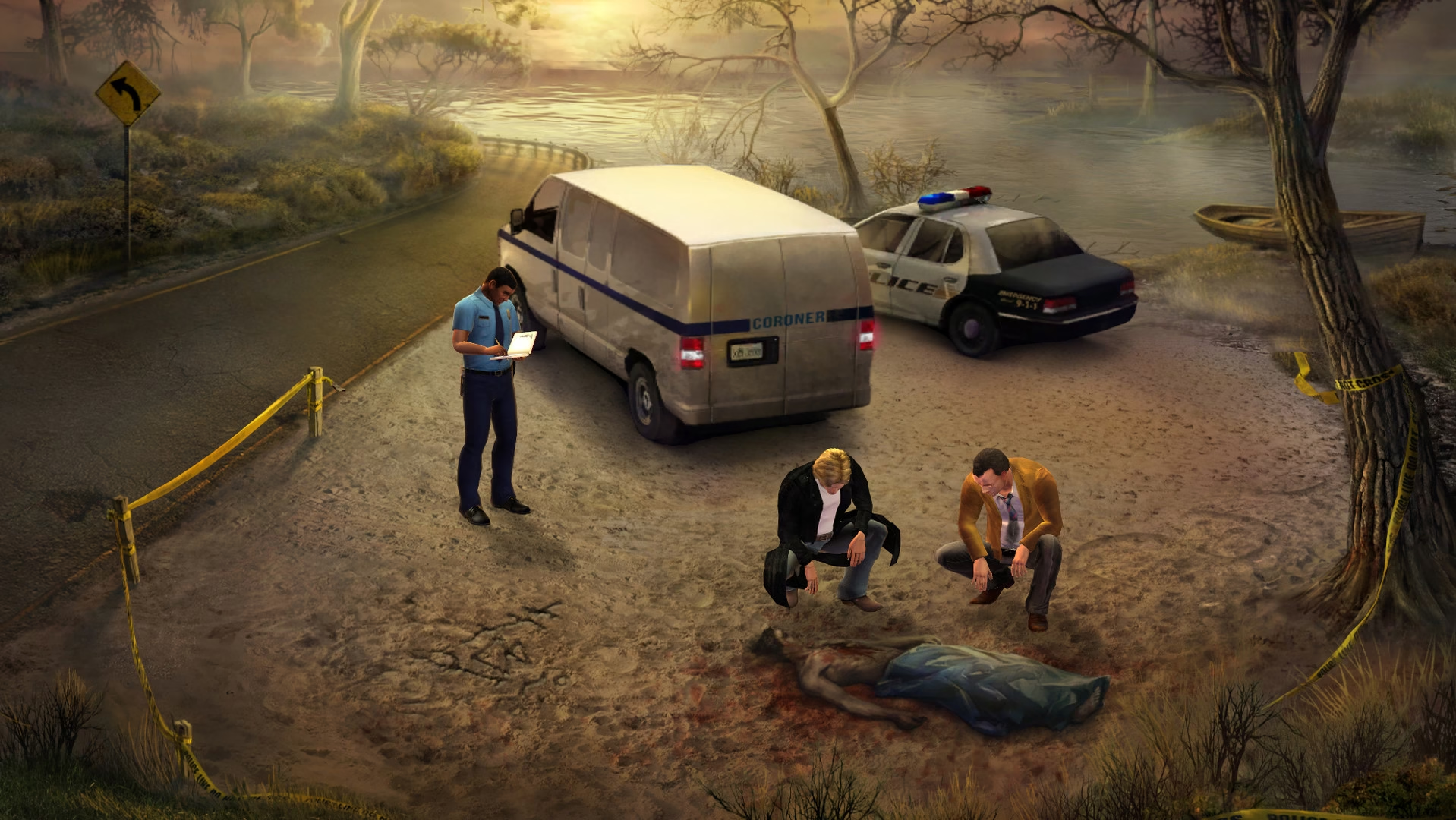
The familiar city has changed its appointments
The remake also revised the timing of the investigation. Some activities were distributed more deliberately across its days, rather than leaving as much available immediately. Jensen described the aim as reducing unproductive clicking while retaining the important material in her 2014 AnaitGames interview.
That makes the opening less sprawling. It also means returning players cannot always rely on knowing when a particular errand can be completed. Familiarity is useful until the game quietly changes the appointment book.
Additional scenes and puzzles give the new edition its own details to discover. Phoenix Online’s release announcement also highlighted concept sketches and development material, a welcome inclusion for people who had spent years wondering how the original was made.
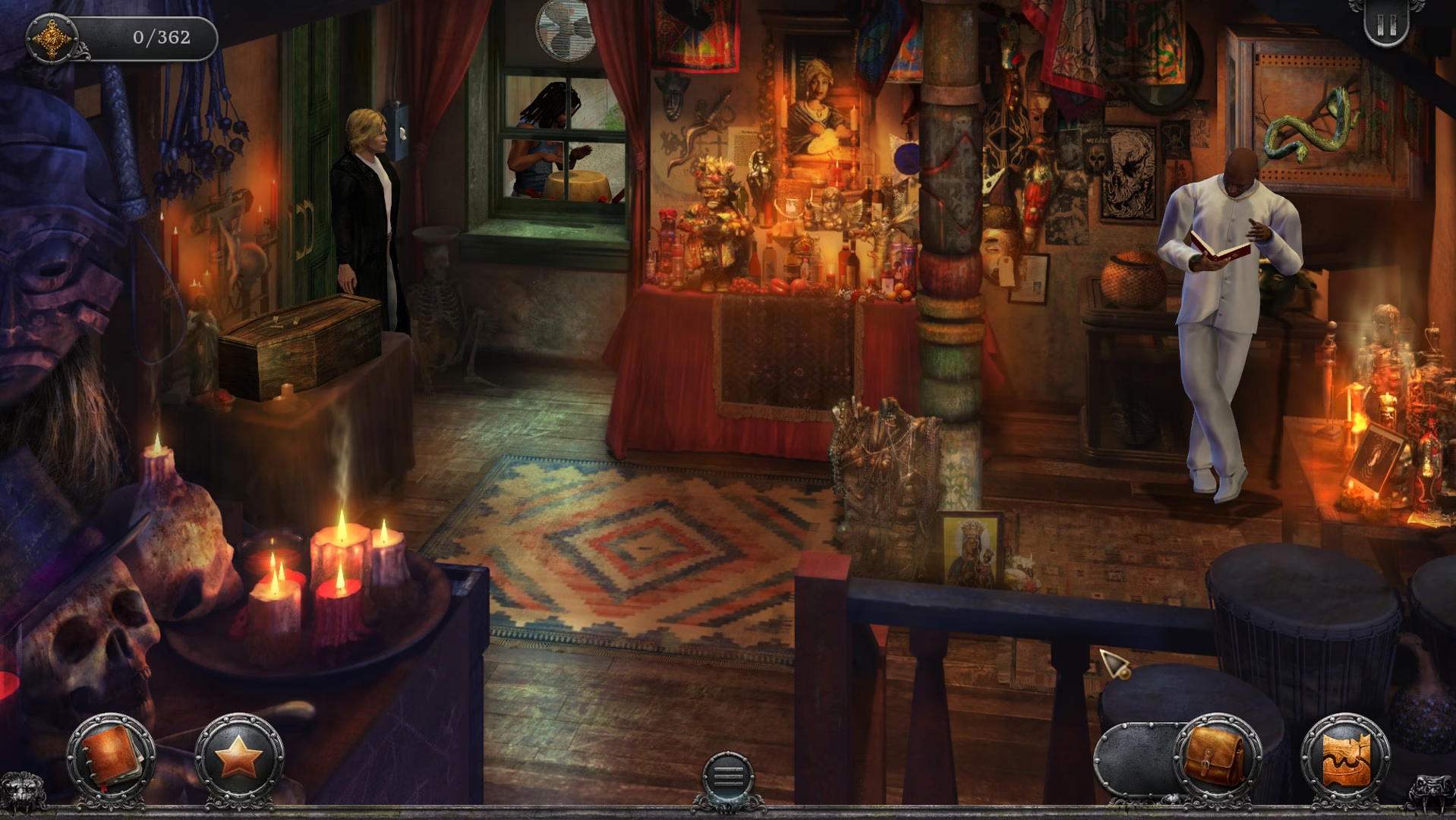
Returning to the original afterward can be a lovely surprise. The old portraits still work, the performances fall into place, and a room built from relatively few pixels can be full of atmosphere. You may miss a convenience from the remake, then hear the next exchange between Gabriel and Grace and forget you were comparing them.
A newcomer has no old performance to compete with. The remake offers clearer imagery, a more recent interface, and another chance to follow the case. Someone who falls for the pair here has the original waiting too, with all the pleasure of discovering how different the same bookstore can feel.
The project was also harder on its creators than the idea of a licensed anniversary release might suggest. In her later Adventure Game Hotspot interview, Jensen said Activision withdrew during production, leaving Pinkerton Road to negotiate completion and carry more of the financing. She and Holmes invested their own money, and the returns fell short of their expectations. That is her account of the experience, and it makes the long wait afterward less mysterious.
For a little while, there had been a new Gabriel Knight release to look forward to. Then players reached the end of the first case again, and the conversation turned back to the fourth. Reopening the bookstore had taken years of work. Getting Gabriel out on another investigation was still another undertaking.
Part VI: The music, the stories, and the unfinished conversation (2014 to today)
Gabriel finds his way back onto the page
The wait for another full adventure has not meant complete silence from its characters. Jensen returned to Gabriel in short fiction, including Five Hearts, available through Robert Holmes’ website with concept sketches by Niv Shpigel.
On the page, Jensen can stay with an uncomfortable thought for as long as Gabriel tries to avoid it. There is no camera to steer or object to find before the next passage. For readers who have wondered what he makes of everything that happened, another visit inside his head is a welcome way to spend some time with him.
The tunes leave the computer
While Gabriel has been making occasional appearances on the page, his music has been finding new company. Pianist Roger Hooper sits down with Holmes’ themes for the A Simple Refrain recordings, bringing pieces once heard during an investigation into performances you can choose to listen to on their own.
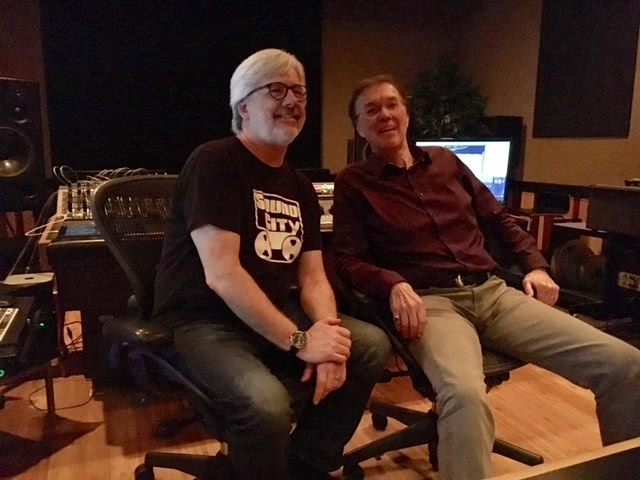
Listening to Hooper, Holmes sometimes hears a part of a tune emphasized quite differently from the way he first imagined it. On other occasions he has had to explain that a thoughtful-sounding hesitation in an old recording was simply him struggling to play the piano. There is something rather endearing about having to tell an admirer not to reproduce that bit quite so faithfully.
The new A Simple Refrain II recordings discussed in the interview include pieces from across the trilogy, alongside music from Gray Matter and Moebius. Holmes supplied performances of “Lost in the Bayou” and “Never Going Back There,” which readers can hear in the interview itself.
Put on “Lost in the Bayou” and the old surroundings come back remarkably quickly. You do not have to be looking at Gabriel or waiting for the cursor to find something useful. For a few minutes, there is just the tune, with plenty of room to remember where you first heard it.
What about Gabriel Knight 4?
Holmes tells us there has been new movement toward a possible Gabriel Knight 4 and Gray Matter 2. He sounds excited, although he describes possible projects with no release date attached.
Jensen has wanted to take them out on another case for years. So have plenty of the people who played the first three. Holmes’ enthusiasm gives that long-running hope a little fresh company, even while the practical work of arranging a new game remains ahead. Gabriel and Grace would certainly have something to talk about.
Until then, there are three very different visits waiting. You can spend an evening with Curry’s original Gabriel, follow Erickson into the hunting club, or sit down beside Grace and try to get another line on that map in the right place. Changing games means learning a few habits again. Getting drawn back into their business is much easier.
Opening the shop today
For a first visit, begin with Sins of the Fathers. The 1993 original introduces the relationships and gives their later changes room to matter. Its CD voices are part of the attraction, and the remake is a separate option rather than the same recording with sharper pictures.
The original and The Beast Within are supported by ScummVM. The project’s official compatibility list records support for both, and our ScummVM history follows the work behind it. You supply your own game files. Gabriel Knight 3 uses a different engine, so check its requirements separately when choosing an edition to play.
For The Beast Within, allow the filmed scenes their pace. The interface and video reveal their age, but the performances benefit from being watched rather than hurried through. For the third game, give yourself time to learn the camera and keep something nearby for notes. Grace is going to be busy.
And when you go back to the first morning, linger at the bookstore. There is a newspaper to read and a conversation waiting at the counter. Gabriel thinks he knows what sort of story he is getting into. Grace has reservations.
More from Retro Replay
- Robert Holmes on Gabriel Knight, Sierra, and A Simple Refrain II
- The complete history of FMV video games
- The history of ScummVM
Sources and further reading
- Robert Holmes interview, Retro Replay. Supplied answers about production, the trilogy’s music, the remake, recordings, and possible future work.
- Jane Jensen, period interview preserved by Adventure Classic Gaming. Her early Sierra assignments, story interests, research and the third game’s change to 3D.
- Hunting Shadows, chapter one, David L. Craddock. Interviews with Jensen about Gabriel’s conception, Grace, and research.
- Hunting Shadows, chapter two. The first game’s team and production.
- Hunting Shadows, chapter three. Jensen and the team on the sequel’s characters, design and filming preparations.
- Hunting Shadows, chapter four. Cast and crew accounts of filming The Beast Within.
- Hunting Shadows, chapter five. Jensen on the third game, its puzzles and the changing studio.
- Gabriel Knight 3 postmortem, Scott Bilas. The lead engineer’s firsthand account of the engine, tools and production difficulties.
- Jane Jensen interview, PC Gamer, 2014. First-game production memory and the remake’s structure, recordings and cast.
- Jane Jensen interview, AnaitGames, 2014. The remake’s intended pacing and interface changes.
- Jane Jensen interview, Adventure Game Hotspot. Her later account of Pinkerton Road, financing and collaboration. Also the source of the archival portrait.
- The original Sins of the Fathers, GOG. Original-game storefront, release record and publisher screenshots.
- The Beast Within, Steam. Game premise and official screenshots.
- The remake, Steam. Development credits, release date and official screenshots.
- Remake release announcement, Phoenix Online. October 15, 2014 PC and Mac release and additional development material.
- Death of Adventure Games, Erik Wolpaw. Contemporary critical response to the third game, continued on the next page.
- The motorcycle puzzle, Old Man Murray, page two. The specific disguise sequence discussed in the article.
- Computer Gaming World, issue 145, August 1996. Period Sierra advertisement displaying The Beast Within’s CGW award.
- Five Hearts, Jane Jensen. New Gabriel Knight short fiction and concept sketches.
- Robert Holmes, official gallery. Portrait, studio photograph and original credits image.
- ScummVM stable compatibility, 2026.2.0. Support for the original Sins of the Fathers and The Beast Within.