 Retro Replay Retro Gaming History, Reviews & Emulation
Retro Replay Review
Gameplay
The first few minutes of MotorHEAT make its priorities unmistakable: go forward, pass traffic, and get uncomfortably close. With no brake available, you are not carefully managing a race line or waiting for a safe opening. You are constantly steering toward gaps that may disappear before you reach them. That forced momentum gives even a basic pass some bite.
The scoring loop is smartly tuned around risk. Passing cars earns points, time, boost, and multiplier progress, while close boosted passes raise the stakes further. You can play cautiously enough to stay alive, but the game clearly wants you leaning into danger. Once a multiplier starts growing, each near miss feels like an opportunity you should not waste, and that is where a simple traffic-dodging premise turns properly compulsive.
Crashes are harsh in exactly the way an arcade score game can afford to be harsh. Losing ten seconds is painful; losing the bonus multiplier can be worse, because it erases the momentum behind a strong run. That punishment will frustrate you when a promising attempt ends abruptly, yet it also prevents reckless driving from being a free route to the leaderboard. The best runs come from knowing when to boost through a narrow opening and when to settle for the safer pass.
As levels advance, speed rises, weather changes, and the pressure increases. There is no elaborate detour from the core idea, but the escalating pace gives each run a clear arc: controlled early traffic gives way to increasingly demanding split-second decisions. It is a focused arcade design, and it works best in short sessions when you are happy to restart after a mistake and immediately try to beat your last score.
Graphics
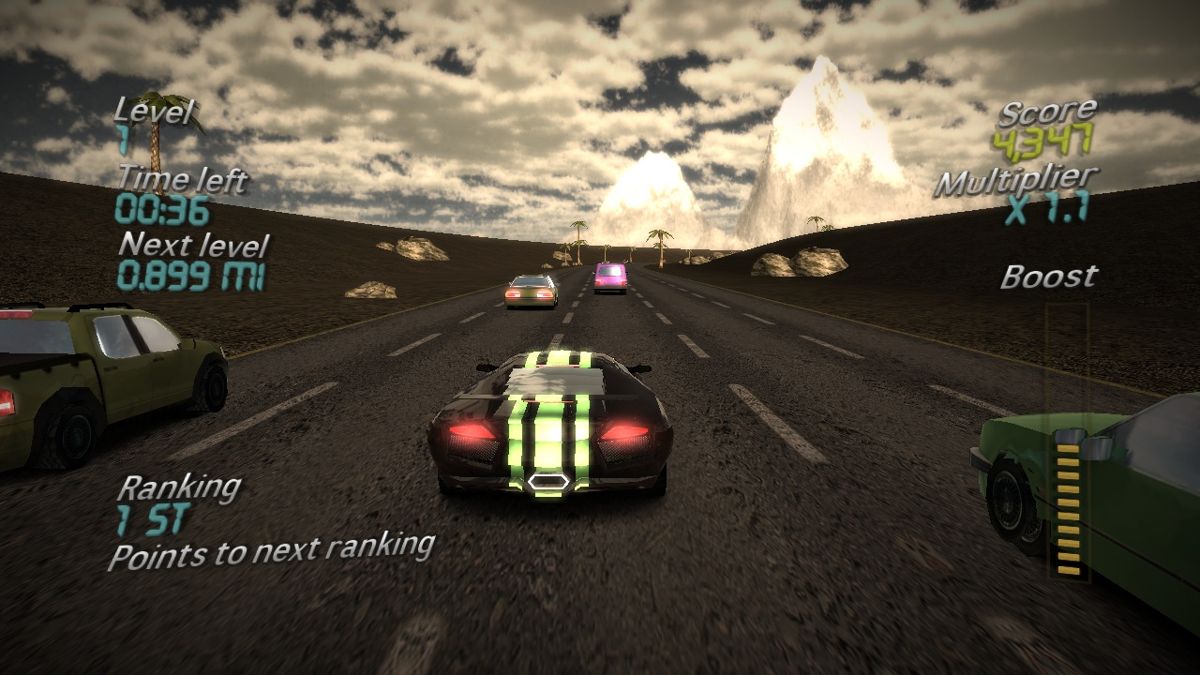
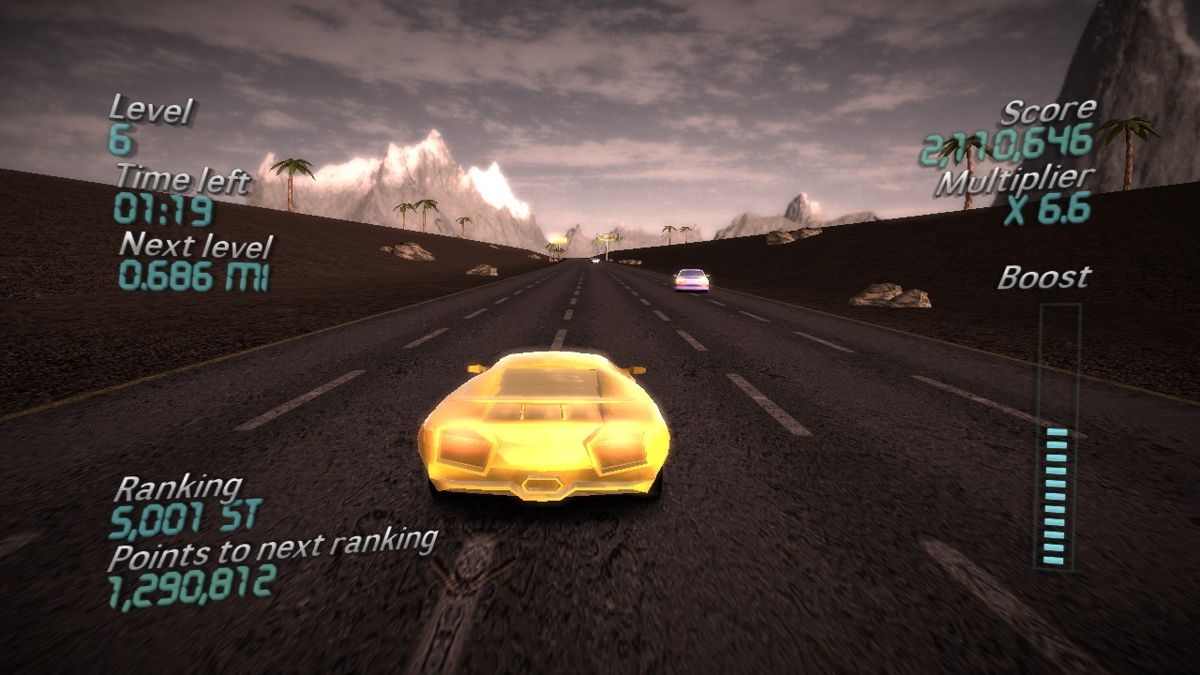
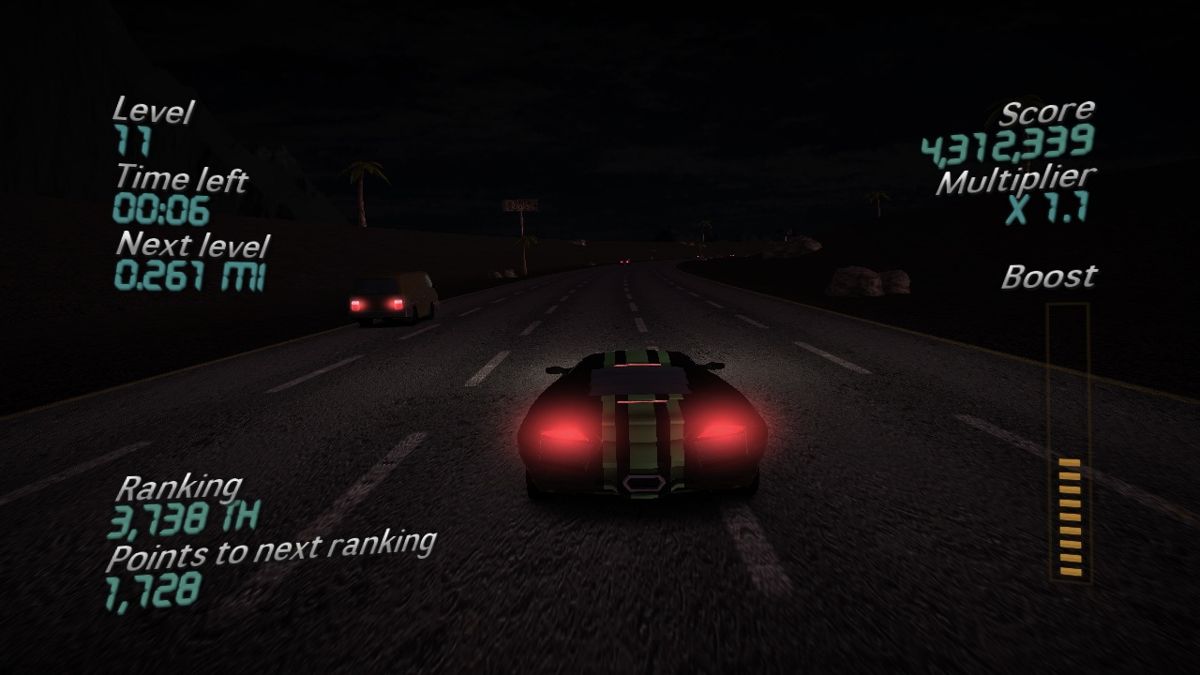
MotorHEAT frames the action from a third-person driving view, keeping your car and the surrounding traffic central to every close call. Changing weather between levels adds variation as the speed climbs, while the important visual information remains the cars ahead and the gaps between them.
Story
There is no story campaign pulling you from event to event. Your reason to continue is the score: extend the clock, preserve the multiplier, and see how far a run can go before traffic finally catches you out.
That absence suits the game’s arcade focus. Rather than interrupting the drive with narrative framing, it lets the tension come from the immediate situation—one more car to pass, one more burst of boost, and less room to recover.
If you need characters, a destination, or a broader racing context, MotorHEAT will feel bare. If you are content to create your own tiny stories of miraculous saves and ruined high-score runs, its score-chasing structure has enough drama on its own.
Overall Experience
MotorHEAT is a lean, demanding arcade driver that understands the value of a clean central rule. Always moving forward and unable to brake, you spend every run balancing survival against greed. The result is direct and immediately legible: getting close pays, boosting closer pays more, and crashing hurts.
Its narrow focus means the game lives or dies on whether that repeatable chase grabs you. There is little room here for someone hoping for a varied driving package, but there is plenty of tension for a score attacker who enjoys replaying a compact challenge until their judgment sharpens. The escalating levels ensure that simply surviving is never quite enough.
Give it a chance if you like arcade driving at its most concentrated, where improvement means reading traffic faster and holding your nerve longer. The payoff is not a grand finale; it is the satisfying realization that the impossible gaps you feared an hour ago have become the ones you deliberately aim for.



Reviews
There are no reviews yet.