Retro Replay Retro Gaming History, Reviews & Emulation
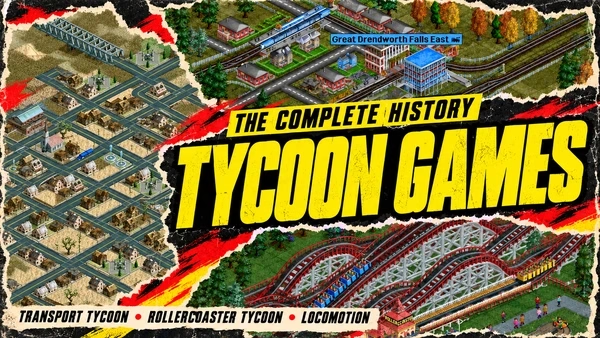
The coaster looks magnificent. It climbs above the trees, twists through the park and has enough loops to justify the money you borrowed to build it. The test train makes it back to the station. You open the ride, sit back and wait for the queue.
Nobody wants to get on.
Welcome to RollerCoaster Tycoon. You may own the park, but the little people wandering around it have opinions. Some want a gentle afternoon. Some want a thrill. Most would appreciate a toilet before you unveil another engineering marvel.
Chris Sawyer’s games were very good at turning a simple plan into an evening. A railway between two towns became a sprawling network. A few rides on a patch of grass became a park you couldn’t quite leave alone. There was always a train to check, a path to tidy or a corner where something would fit beautifully if you moved everything else first.
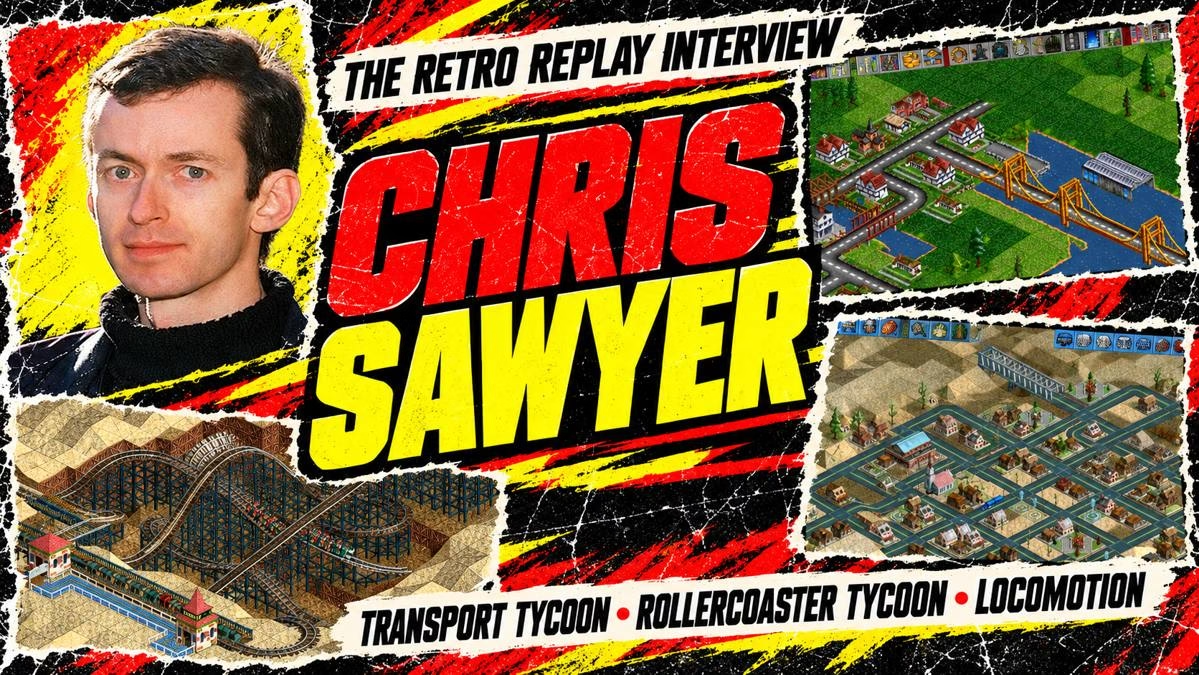
Sawyer built Transport Tycoon, RollerCoaster Tycoon and Locomotion around things he enjoyed watching and tinkering with. Trains and coasters were his obsessions, but his games found plenty of people who had never given either much thought. Our interview with Chris Sawyer takes us inside that work, from his early PC conversions to the crowded parks that pushed his programming so hard. The story begins well before the first profitable railway.
Explore the history of Sawyer’s Tycoon games
- Before Transport Tycoon: learning what a PC could do
- Transport Tycoon (1994): your first useful train
- The world sounds busy: artwork, jazz and the small team
- Transport Tycoon Deluxe (1995): more room for the railway
- Assembly language: the work behind a smooth ride
- White Knuckle: when the trains became coasters
- RollerCoaster Tycoon (1999): a park you can learn to read
- Small guests, expensive decisions
- Simon Foster’s park and Allister Brimble’s fairground
- A much bigger audience than expected
- Corkscrew Follies (1999) and Loopy Landscapes (2000): another reason to open the gates
- RollerCoaster Tycoon 2 (2002): the park becomes your own
- Chris Sawyer’s Locomotion (2004): back to the railway
- RollerCoaster Tycoon 3 (2004): finally sitting in the front car
- The later Tycoon brand: familiar gates, different parks
- Transport Tycoon (2013) and RCT Classic (2016): bringing the old worlds to touchscreens
- TTDPatch and OpenTTD: the railway that kept expanding
- OpenRCT2 and OpenLoco: keeping the gates open
- Wonderworks and the next park
- One more adjustment before saving
Before Transport Tycoon: learning what a PC could do
Sawyer entered the games business in 1983, writing Z80 machine-code games for the Memotech MTX and later the Amstrad CPC. He was making games on home computers where getting a few things moving smoothly could take considerable ingenuity. By the time his official career history reaches 1988, he is working on PC conversions, a job that would occupy him through 1993.
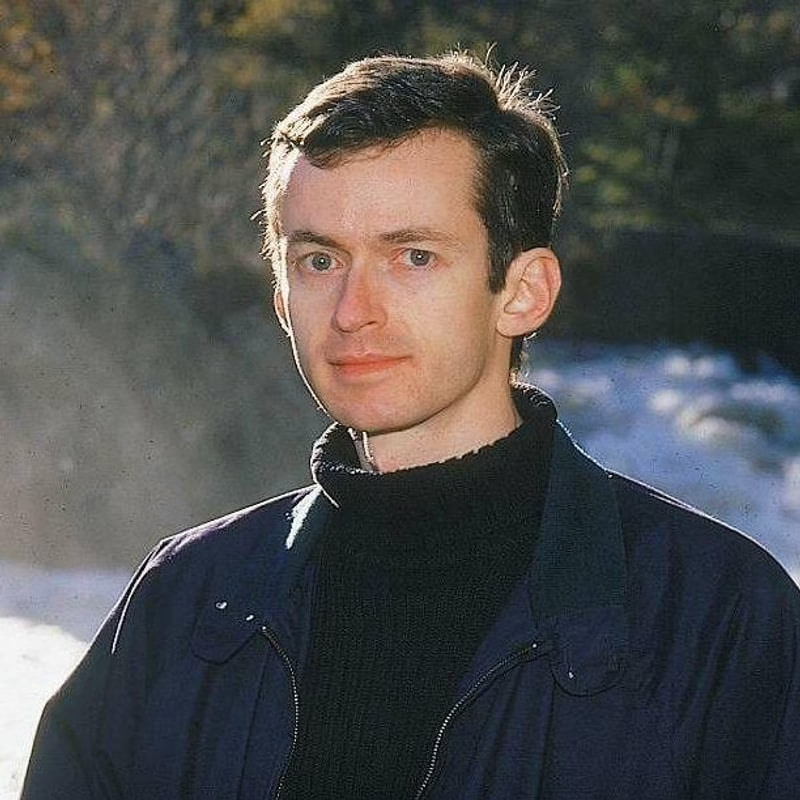
That was a useful education, even when the PC seemed determined to make it unpleasant. The Amiga could handle graphics and sound in ways an early PC struggled to match. A conversion had to preserve the feel of a game while finding another way to make its tricks work. Having the original in front of you helped. Getting the new machine to cooperate was still your problem.
Sawyer’s projects ranged from sports to flight simulations and space trading. Each came with another developer’s approach to study. He learned how games stored their worlds, moved their objects and squeezed more work into the time available. Years later, when a park full of visitors needed updating, he had plenty of experience making a reluctant computer do one more thing.
The less satisfying part was waiting. Sawyer could finish a stage of a conversion before the team making the original was ready with the next. He would run out of work, and the next payment milestone would remain out of reach. In our interview, he is careful to point out that those teams had more to do: they were creating a game, while he was converting it. Understandable delays were still delays.
He worked on his final two conversions, Dino Dini’s Goal and Frontier: Elite II, in parallel to keep things moving. It helped only so much. An original game would let him set his own pace. It would also leave him paying for the experiment until someone agreed to publish it.

Frontier’s PC version carried a small advertisement for what came next. Some spaceport hoardings announced Sawyer’s forthcoming transport game, as his official feature archive records. Amid the starships, there was a programmer thinking about trains. Our Frontier: Elite II entry covers the Amiga edition; Sawyer’s conversion work was on the PC.
He had been playing with an isometric display for years, viewing the landscape diagonally so you could see the tops and sides of buildings. A short railway gave that landscape something to do. Getting a little train to follow the track was pleasing enough that he kept going.
“Just getting a little train to follow a basic track in isometric was quite satisfying, and the game just sort of grew from there.”
Chris Sawyer, Retro Replay interview
In his introduction to the original Transport Tycoon manual, Sawyer dates the idea to October 1992. The first working prototype arrived late in 1993. Its towns and industries were basic, its graphics crude, and only the player’s railway transport worked. Friends and relatives needed some persuading to try it. Once they did, they became engrossed. That was encouraging. People had begun caring about a railway that barely existed.
Artist Simon Foster helped turn it into somewhere worth looking at. His trial artwork persuaded Sawyer to move to a higher-resolution display, and by early 1994 it was running in the game. Road vehicles, aircraft and ships followed. The railway experiment was acquiring a much busier neighborhood.
Sawyer admired the business balance of Sid Meier’s Railroad Tycoon. In our new interview, he also singles out SimCity 2000’s appearance as an inspiration. He wanted that sort of inviting, detailed landscape, with small vehicles going about their work. The financial side interested him less, something he freely admits. Building and operating the railway was the part he wanted to get back to.
Transport Tycoon (1994): your first useful train
A coal mine, a power station and enough money to connect them make a promising start in Transport Tycoon. Put stations where they can do some good, lay the track, buy the right train and give it orders. Then comes the rewarding bit: it leaves, picks up a load, delivers it and earns money. Your little arrangement works.
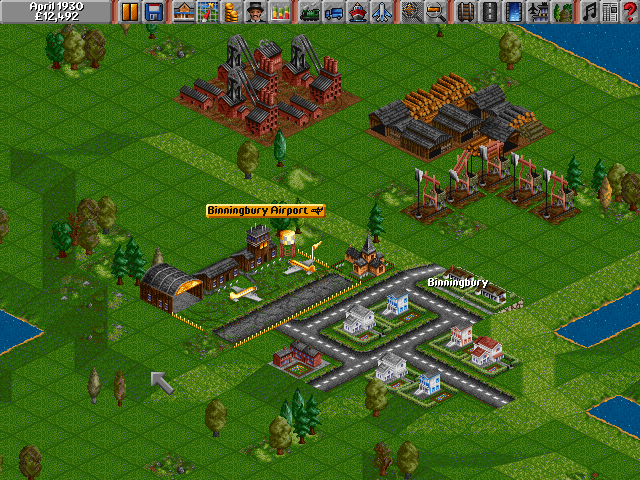
The map looks different after that first delivery. The towns and industries are still in the same places, but now you are spotting possible routes everywhere. That town could use a bus. Those industries could share a line. There is a stretch of water over there, and you haven’t tried a ship yet.
Different vehicles keep the routine varied. A bus service is easy to watch as it works its way around a town. An aircraft makes a much larger journey feel manageable. Ships give the coast a purpose. You can begin with something modest and add another kind of transport when you feel ready, without having to construct an elaborate railway on your first attempt.
The trains are particularly dangerous to your spare time. One train on one line behaves itself. Add a second and you start thinking about passing places. Connect another route and the junction wants attention. Soon you are moving signals around while the rest of the company gets on with making money, wondering why the pair of trains you were so pleased with have decided to sit still.
Untangling a blockage feels great when you understand the cause. When you don’t, it can be maddening. Transport Tycoon was welcoming for a game about running a transport company, but its railway did not explain every mistake kindly. A service might be profitable in theory and completely useless until you sorted out the track.

The rest of the landscape keeps you busy too. Industries change production, towns develop and vehicles get old. A news message might point toward a new opportunity. It might also tell you that the industry at the end of a perfectly good route has become considerably less helpful. Your company is sharing this world with people and businesses that have their own plans.
Once things settle down, you can enjoy the network for a while. Follow a train through a town. Check an arrival. Watch a few services cross the map. The game doesn’t need to produce another emergency immediately. It has given you something to inspect, and you built enough of it to care how it runs.
MicroProse released Transport Tycoon in 1994. Sawyer had called the project Interactive Transport Simulation, but the publisher’s connection to Railroad Tycoon made the final name an easy fit. Its railways shared an inspiration with Sid Meier’s game, while the moving landscape gave Sawyer’s version a character of its own. The company figures were important. So was the train disappearing around the next bend.
The world sounds busy: artwork, jazz and the small team
Look closely at a town in Transport Tycoon and it becomes easier to understand why people kept watching. Foster’s buildings and vehicles were small, but they had personality. Platforms stretched beside the track, houses stood near the roads, and the train passed through somewhere that looked worth serving. You could enjoy the town while checking whether its station needed more room.

That clarity was useful once you filled the screen. Trains, bridges, platforms and buildings had to share a rather limited view. You wanted detail, but you also wanted to find your own vehicles. Foster gave the world enough of both that a busy scene remained enjoyable to pick through.
John Broomhall gave it a soundtrack with a cheerful confidence your railway might not yet deserve. Working at MicroProse, he proposed jazz after playing the game, as Sawyer recalls in the Transport Tycoon anniversary conversation. Broomhall’s career record includes both Transport Tycoon and Deluxe. His music became excellent company for an afternoon of construction.
The tunes carry on through your mistakes. You can have a train stranded somewhere embarrassing and still feel that the business is going rather well, provided you don’t look too closely at that particular train. When the route finally works, the music suits the occasion just as nicely.
Sawyer wrote the simulation and understood its workings intimately. Foster’s artwork, Broomhall’s music, testing and the publisher’s support helped turn it into the game people knew. Keeping the main creative team small made it easier to try ideas quickly. Getting the right people around that core gave those ideas a much better chance of finding an audience.
Transport Tycoon Deluxe (1995): more room for the railway
The next stop was Mars. The World Editor expansion arrived in 1995 with an editor and an alternative Martian landscape, among other additions. Red terrain and futuristic buildings were a peculiar place to run a transport company, but the routes still needed building. Sawyer’s railway could survive a fairly substantial change of scenery.

Transport Tycoon Deluxe followed later that year, adding worlds, vehicles and refinements to the full game. People had been playing the original long enough to discover what they wanted more of. Sawyer had ideas that hadn’t made it into the first release, plus others that appeared through extensive playtesting. The publisher was also expecting another full version after the expansion.
Deluxe gave established players an excuse to start another company. You knew how much time a railway could absorb now, which ought to have been a warning. The extra choices made it an invitation instead. Perhaps this network would be tidier. Perhaps you would leave enough space around the stations from the beginning.

The new settings helped. Snow changed the appearance of tracks and towns, giving familiar vehicles somewhere different to work. When you spend much of a game looking across its landscape, that change can carry you a surprisingly long way. There were fresh details to enjoy while the newest service earned its keep.
Deluxe became the version around which much of the later transport community gathered. The elaborate networks people eventually built can make the game look daunting from the outside. Its invitation was still small: connect somewhere useful, put a vehicle on the route and see what happens. You could learn the magnificent junctions later.
Assembly language: the work behind a smooth ride
The little vehicles were doing a great deal of work behind the scenes, and Sawyer wanted to know exactly what it cost the computer. He wrote in x86 assembly, using the small instructions the processor executed. After years of conversion work, that felt natural to him. He could write it quickly, optimize it and predict what the machine would do.
His account in our interview makes the famous programming achievement sound remarkably workmanlike. Change the code, assemble it in a few seconds, run it and see whether the idea is enjoyable. He preferred that rhythm to waiting through a lengthy compilation. Quick experiments were valuable when a game was growing through things he wanted to try.
For players, the payoff was movement. A coaster train needed to flow through a bend. A crowded park needed to remain usable. If the ride juddered around its track, some of its appeal went with it, however impressive the construction looked when it stood still. Sawyer spent a great deal of effort getting those vehicles to feel right.
His development FAQ supplies the famous figure: RollerCoaster Tycoon was 99 percent x86 assembly, with a little C connecting it to Windows and DirectX. It was an unusual concentration of knowledge in one programmer’s hands. When he wanted to change something deep inside the game, he knew where to begin.
He doesn’t recommend treating that choice as a rule for everyone today. In the new interview, Sawyer says the advantages of assembly are now virtually gone. He is happily writing Python for home automation on a Raspberry Pi touchscreen. The tools have changed; he still enjoys making a machine do something useful.
White Knuckle: when the trains became coasters
A second Transport Tycoon seemed an obvious project. Sawyer began working toward it, then found something else he wanted to build. Roller coasters were becoming a growing fascination: their shape, engineering and the wonderful excess of sending a train around a track simply to give its passengers a fright.
Adapting the transport code was initially a break from the sequel. He wanted to see whether a little coaster would look convincing in his isometric world. In our interview, he says he didn’t immediately imagine a complete game. He knew Bullfrog’s Theme Park, so rides, visitors and economics seemed a possible way forward. Even then, he suspected his own project would appeal mainly to enthusiasts.

Coaster track soon began asking far more of the landscape than a railway had. It needed to climb, drop, twist and cross itself, sometimes with a train passing below another section. Sawyer had to store and display those arrangements efficiently enough that building them remained practical. A simple curve could mean a substantial change to the machinery underneath.
In his 2024 Atari Club interview, he recalls Foster’s early test graphics: track sections at different angles, followed by the work that brought smooth curves into the block-based world. There was plenty of trial and error as the display system evolved. The trains hadn’t just changed their destination. They had given the whole project a new job.
White Knuckle was the development name, and for a while it looked likely to stay. Then Hasbro acquired MicroProse, putting an obvious Tycoon connection within reach. The game became RollerCoaster Tycoon. Sawyer had wandered away from a transport sequel and found a theme park that would become much bigger than he expected.
RollerCoaster Tycoon (1999): a park you can learn to read
Forest Frontiers gives you grass, trees and a path leading into a park that hasn’t done much yet. It’s an agreeable place to start. There is room to try things, and the first few guests are easily entertained. You don’t have to build the coaster from the box before anyone can enjoy themselves.
Released in 1999, RollerCoaster Tycoon quickly gets that first little park moving. Place an attraction, connect its entrance, open the gates and watch the visitors arrive. The paths begin to fill. Someone joins a queue. Your collection of objects has become a place people are using.
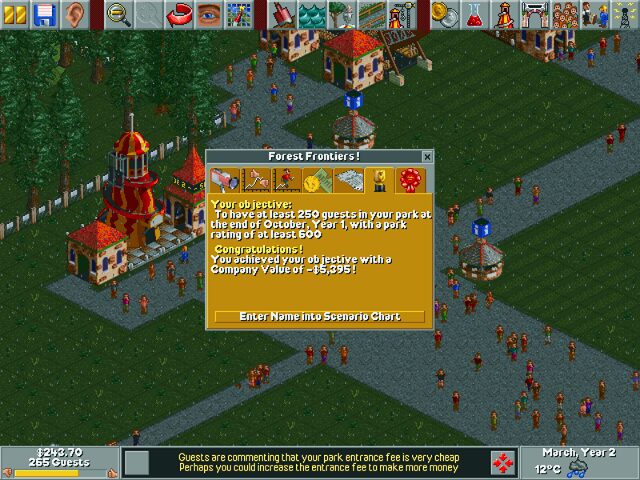
Running an amusement park is a wonderfully approachable idea, even if you’ve never played a management game. Good rides bring people in. People spend money. An afternoon of endless queues and nowhere to buy a drink leaves them less impressed. You can understand the basic problem long before you learn every button along the top of the screen.
The guests make it personal. Click on one and you can check their thoughts, needs and spending. The park may look splendid to you, while the visitor walking past your latest attraction is having a miserable time. It’s difficult to argue with a complaint about a missing facility when you remember spending the last half hour decorating a coaster instead.
Handymen and mechanics soon become as important as the next ride. The paths need looking after, and a broken attraction isn’t doing anyone much good. These ordinary jobs keep a park from feeling like a collection of trophies. You have to run the place after building it, even when you’d much rather be choosing another stretch of track.
Coaster design brings its own enjoyable correction to your ambitions. The original manual separates excitement, intensity and nausea. A spectacular ride can be far too much for its prospective passengers. All those loops looked like an excellent idea while you were placing them. The empty queue suggests a second opinion.
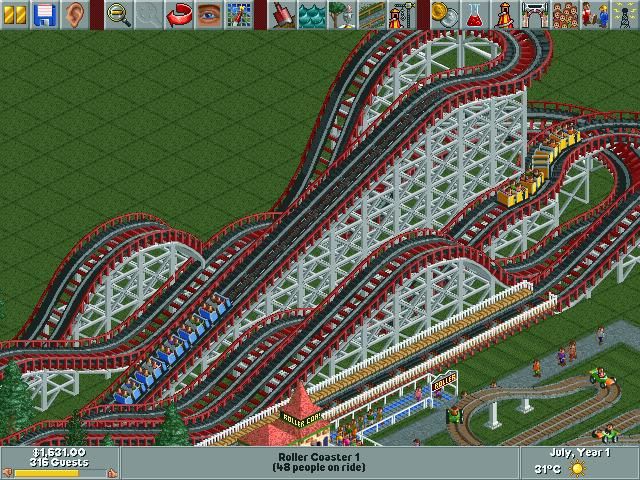
A good design asks you to pay attention to the whole trip. The first drop sends the train toward the next piece of track with speed you need to use sensibly. A bend can look perfectly harmless in the construction window, then produce a ride you wouldn’t recommend to anyone carrying lunch. Testing gives you a reason to take things apart and try again.
The process is satisfying because you can watch the change. Smooth out a troublesome section, send the train around again and check how it behaves. A track that barely worked becomes something you want to follow all the way back to the station. Getting there can take longer than you intended. That’s usually a sign that the game has found you.
Prebuilt rides are there when you want a park before you want an engineering project. You can earn money, learn what guests enjoy and experiment with the surroundings while a ready-made coaster does its job. Then, when curiosity wins, you can build one of your own. There is no shame in letting somebody else’s sensible design finance your first questionable attempt.
The sites help keep things interesting. Trees frame a ride, water interrupts a path, and existing attractions encourage you to build around something you might never have placed yourself. You begin by finding room for another ride. Later you find yourself arranging whole areas, deciding where the people should go and what the park should look like when they get there.
Small guests, expensive decisions
The visitors look simple until you try to make hundreds of them move at once. Sawyer tells us their basic behavior wasn’t especially costly to simulate. Getting the busy display updated quickly enough was much harder. Every moving guest and coaster train gave the computer another patch of screen to deal with.
His solution was to update the areas that had changed. A building standing quietly could stay where it was. The moving visitor beside it needed attention. It saved the machine from doing a great deal of unnecessary work, which left more time for the motion that made the park enjoyable to watch.
Finding routes through the park was the stubborn problem. Sawyer had a search method he liked, but letting it look too far ahead could stall the game for seconds. He had to limit it, adjust it and accept some less convincing decisions from the guests. If you’ve ever watched a visitor struggle with a route that looks obvious to you, you’ve seen the compromise.
He is happy to admit it wasn’t perfect. He also points out in our interview that he gets lost in real theme parks himself. That is some comfort while you’re untangling the paths, although probably less comfort to the person still wandering around them.
“And maybe it helps the illusion of the game world being human by not showing too much in the way of statistics, so you experience it mostly through watching and interacting with it?”
Chris Sawyer, Retro Replay interview
You certainly spend plenty of time watching. A queue tells you a ride is popular before you open its figures. People turning away give you something to investigate. A dirty path is a fairly direct request to stop designing for a minute and hire some help. The windows explain the trouble, but the park has often shown it to you already.
Following one guest can be entertaining all by itself. They buy something, try a ride and wander into another part of the park. A balloon or a small change of expression is enough to give them a little character. You don’t need a biography to become mildly invested in whether someone enjoys the afternoon you have arranged.
Of course, players also discovered how much trouble they could arrange. Dangerous rides and hopeless layouts became part of the game’s reputation. The ordinary pleasures lasted just as well: a full queue, a tidy path, a busy corner that used to be empty. Most of the time, giving the guests a good day is a more rewarding project than finding a new way to ruin it.
Simon Foster’s park and Allister Brimble’s fairground
Foster’s coaster structures are especially good at making you stop for a closer look. A wooden ride has supports tangled beneath it, track bending across the screen and a train that remains easy to follow through the lot. The park is busy, but the things you care about keep their shape.

Those images were prepared in advance and placed into the game, giving the rides a convincing sense of depth without a freely moving 3D camera. You could rotate between fixed views, each offering a dependable angle on the landscape. It looks like a model you might lean over to inspect. An awkward piece of track might still require another look, but the limited angles kept the whole park easy to get your bearings in.
Producing all the artwork was a substantial job. The vehicles had to look right as they moved through different positions, and the surroundings had to remain consistent. That careful preparation is still visible when a train goes around an elaborate ride. It moves through the picture so neatly that you can forget how much work went into making it belong there.
Composer Allister Brimble supplied sound and music, as the credits and his work list record. Rides had music, machinery made noise, and the crowd gave a busy corner the sound of a busy corner. The fairground atmosphere made the view much harder to leave alone.

A quiet area changes as you develop it. Put in a ride, bring visitors over and listen to it settle into the park. Brimble’s audio helped make that transformation feel cheerful and familiar. He would later work on Locomotion too, accompanying Sawyer back from the fairground to the transport network.
Research helpers, testers, additional programmers and the publisher’s staff also appear in the credits. Sawyer’s close knowledge of the game was extraordinary, and the people around him helped get that game into everybody else’s hands. The small central team never meant there was nobody else doing important work.
A much bigger audience than expected
Sawyer thought he was making a game mainly for people who loved coasters and theme parks. He didn’t expect it to outrun Transport Tycoon. Some time after publication, the sales figures began telling him that a much larger crowd had found its way through the gates.
By April 2004, GameSpot was reporting seven million units across the franchise then available: the first two games and their expansions together. This modest-looking park simulation had become a substantial business.
Alan Dunkin’s April 1999 GameSpot review had awarded the original 8.6. The praise fit a game that was easy to get interested in and capable of keeping you occupied for much longer than its cheerful appearance might suggest. A park could be demanding without becoming forbidding.
You could play for the objectives, fuss over the finances or spend an unreasonable amount of time making one area attractive. Someone who knew real coaster designs had plenty to examine. Someone who simply wanted to build a nice park had a way in too. The game gave both enough room to enjoy themselves.
It could be fiddly. Selecting the right object wasn’t always pleasant, and a complicated construction could test your patience. But finishing a ride, opening it and seeing people join the queue supplied a very good reason to try another. There were worse ways to spend an afternoon than making a small crowd happy.
Corkscrew Follies (1999) and Loopy Landscapes (2000): another reason to open the gates
By the time you’d learned to run a park, another batch of rides was a fairly easy sell. The first expansion arrived in 1999 as Added Attractions in some territories and Corkscrew Follies in others. More scenery, new rides and fresh sites were waiting. You could put your newfound competence to work, or discover how much of it depended on the last park being cooperative.

Loopy Landscapes followed in 2000. Its settings and elaborate structures took you well beyond the little patch of green where you had started. A blue coaster against snow made a familiar ride look freshly appealing. New scenery gave you something else to spend money on while telling yourself the visitors would surely appreciate it.

The expansion also removed a comfortable habit. In its new parks, you couldn’t increase the entrance fee. Sawyer’s official FAQ explains that the restriction was deliberate: the rides had to earn their keep individually. A visitor entering the park was now a prospective customer you still had to persuade to spend.
That made a popular attraction particularly welcome. You paid closer attention to the ride people wanted to use, what they would pay and where the next useful addition belonged. Simply getting a crowd through the gate no longer settled quite as much of the business.
Parks based on real places added another sort of curiosity. An enthusiast could inspect the representation and enjoy spotting familiar attractions. Everyone else had another layout to work with. There was plenty of fresh construction to attempt while Sawyer considered how much further the next full game should go.
RollerCoaster Tycoon 2 (2002): the park becomes your own
RollerCoaster Tycoon 2 arrived in 2002 with more room for people who wanted to make things themselves. The scenario editor let you prepare a park’s circumstances. The ride tools gave you space to experiment. You could spend time on a design without first fitting it into the current demands of a running business.
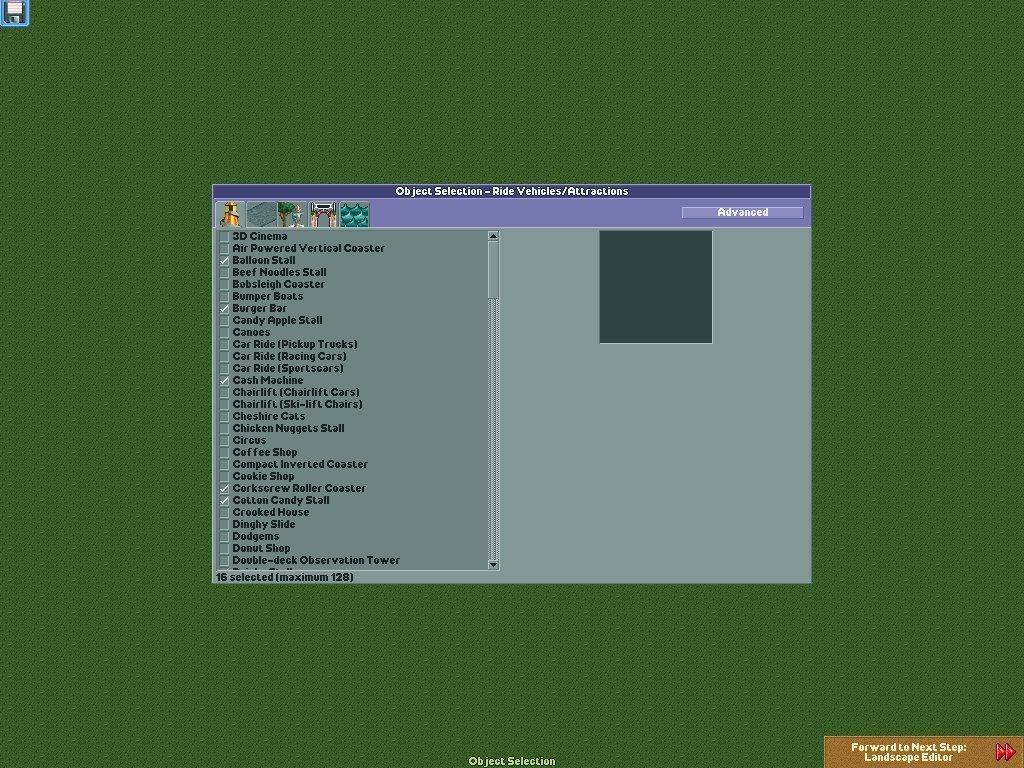
That was a welcome change for players who had begun treating the original as a building set. A coaster didn’t need to solve the next immediate problem to deserve some attention. You could work on it because you liked its shape, test it until it behaved properly and decide where it belonged afterward.
The sequel still looked and felt extremely familiar, which wasn’t universally welcomed. Brett Todd’s October 2002 GameSpot review gave it 7.0, finding plenty for newcomers to enjoy but less to satisfy someone who had spent years with the original. Another box promising a sequel had delivered a park much like the one already on your computer.
For the builders, that familiarity was useful. They knew the rides and understood the view. Better tools let them get on with projects they already wanted to attempt. Features that seemed insufficiently exciting in a launch review could become very valuable after years of elaborate shared parks.
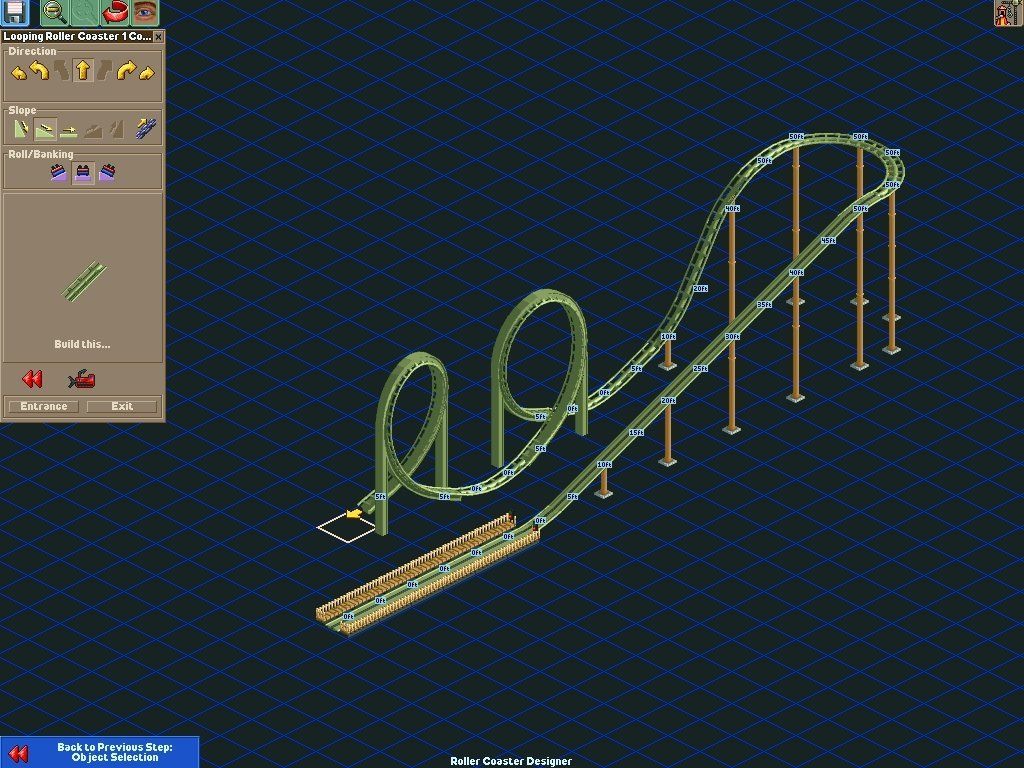
Sawyer has his own reservation about that trade. In our interview, he remembers the pressure from players who wanted more freedom. He thought moving toward a sandbox was sensible, but now wonders whether the sequel sacrificed some challenge and fun along the way. The extra tools hadn’t necessarily given every player a better reason to use them.
The first game was good at giving you a job. Its awkward sites and particular objectives could send you toward a solution you would never have chosen for yourself. An empty landscape offered much more freedom, but it could also leave you staring at the grass, waiting for inspiration.
That helps explain the different loyalties the two games inspire. Some players want the original’s sequence of parks and the satisfaction of clearing another objective. Others want the sequel’s tools and enough room to keep building. Both can be wonderful company. You just need to be in the mood for the park you’ve opened.
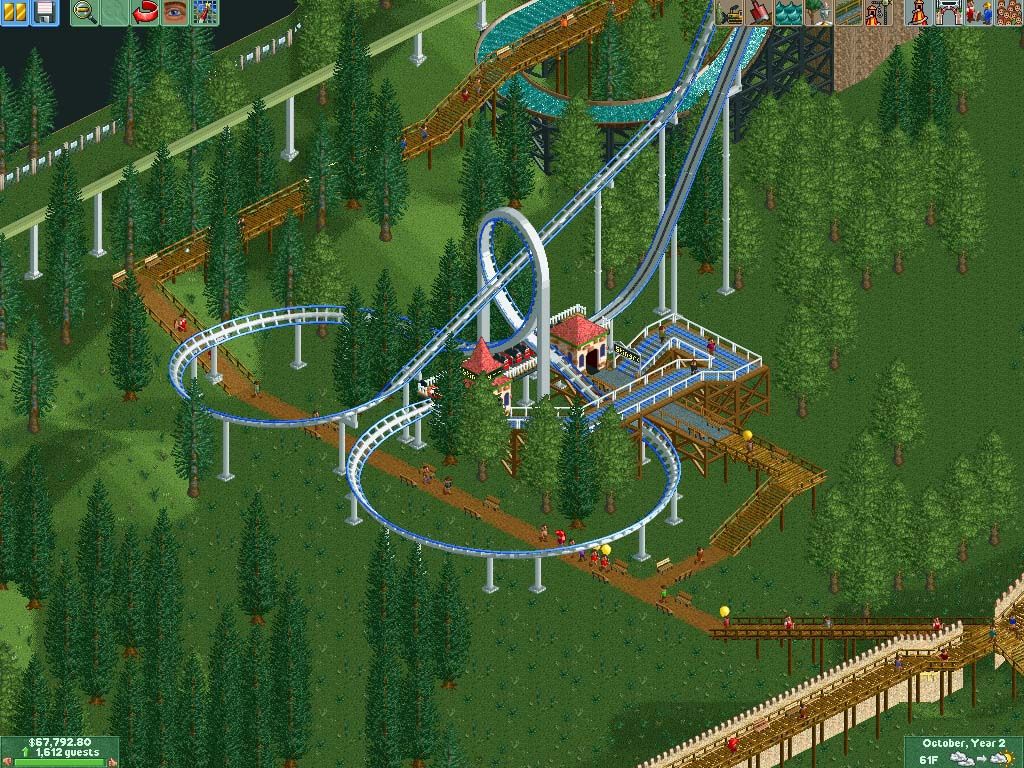
The guests still had opinions, naturally. More elaborate construction hadn’t made them less particular about what they would ride. A beautiful new coaster could stand empty while a humble attraction nearby did brisk business. The enlarged toolbox gave you plenty of ways to become proud of something nobody else wanted.
Chris Sawyer’s Locomotion (2004): back to the railway
The transport sequel had been waiting through two theme-park games. After RollerCoaster Tycoon 2, Sawyer finally returned to it, carrying a more flexible landscape engine and years of work on twisting tracks. Chris Sawyer’s Locomotion appeared in 2004. The trains were back, with more ambitious surroundings to travel through.

Curves were smoother, routes could use multiple levels, and the landscape allowed more complicated arrangements. Bigger maps and more detailed vehicles gave a committed transport builder plenty to look forward to. Sawyer also welcomed the chance to write the game more cleanly, with expansion and customization in mind.
On paper, that sounds like exactly the trip Transport Tycoon needed. In practice, laying the route could be frustrating. Locomotion used a section-based construction system familiar from the coaster games. Carefully tracing an amusement ride and getting a railway across a landscape are different jobs, and the controls didn’t make the second one as comfortable as everyone had hoped.
Jason Ocampo’s September 2004 GameSpot review awarded 6.8. He found a compelling game inside it, but criticized the interface and the limited feeling of progress over the predecessor. A decade had passed. Players had good reason to hope the ordinary business of building a line would become easier.
There was still a satisfying transport game to explore. The more elaborate world rewarded ambitious networks, and you could spend plenty of time watching a finished operation. Reaching that point demanded patience with construction that could feel awkward precisely when you wanted to get on with the next route.
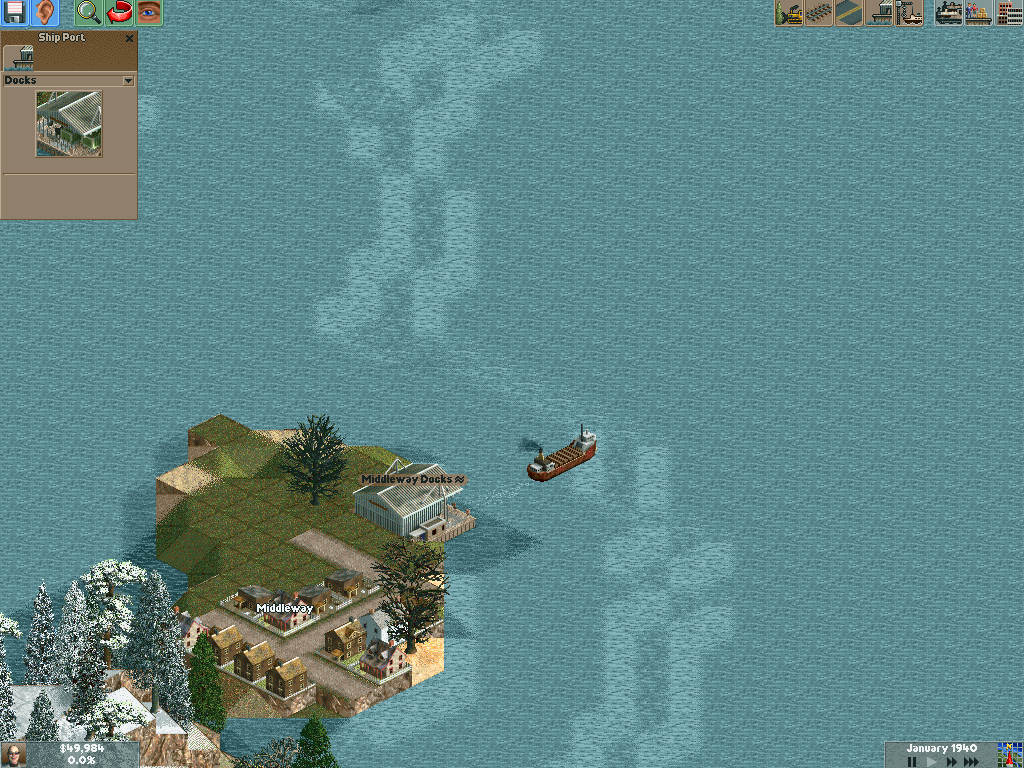
Sawyer acknowledges the disappointment without dismissing what he made. He considers Locomotion some of his best programming. Its internal complexity impressed him, yet it hadn’t captured the affection Transport Tycoon enjoyed. In our interview, he wonders about the visual style, the construction and the older game’s simplicity.
“I still think Locomotion was some of the best programming I ever did (it’s a much more complex game internally than RollerCoaster Tycoon ever was), but clever programming doesn’t necessarily make a good game.”
Chris Sawyer, Retro Replay interview
You can admire the junction Locomotion lets you build and still prefer laying track in the older game. For a series that had so often made construction the fun part, those everyday clicks carried a lot of weight. The new railway hadn’t quite made the old one obsolete.
RollerCoaster Tycoon 3 (2004): finally sitting in the front car
After years of watching the train go around, RollerCoaster Tycoon 3 let you get on. Frontier Developments took the parks into 3D in 2004, putting a camera inside the ride. You could build your coaster, choose the passenger’s view and find out what all that track looked like from the front car.

It was an easy feature to want. The earlier games had made rides look inviting from above. Now the climb could fill the screen, and the drop could send the scenery rushing toward you. The park had become somewhere you could enter after arranging it.
Sawyer was consulting while concentrating on Locomotion. Frontier made this game, as his contemporary news archive confirms. The series was moving beyond the small development arrangement that had produced the first two parks.
The new camera needed some attention of its own. A fixed diagonal view had kept construction conveniently laid out in front of you. In 3D, there were more angles to choose and more opportunities to put something important out of sight. Taking a ride was a lovely reward. Managing the surrounding park could make you miss the old overview.

Visitors still needed to find their way around, and a large park still asked a lot of the computer. Jason Ocampo’s 2004 review praised the game while noting performance and guest-behavior problems. The more impressive view hadn’t persuaded every little person to navigate sensibly.
Frontier’s Soaked! and Wild! expansions brought water-park and animal attractions into the mix. You could assemble a much more varied place, then explore it from the visitor’s side. This branch of the series developed a loyal audience of its own. For those players, the ability to move through a park was worth the extra fuss of looking after it.
Behind the cheerful rides, Sawyer’s relationship with Atari became less agreeable. He began a royalty dispute in 2005. Develop reported a settlement in 2008, with the terms undisclosed. The parks had become a substantial business, and the business had brought contracts and accounting disputes along with it.
Frontier went on to launch Planet Coaster in 2016. Its launch announcement pointed back to the studio’s work on RollerCoaster Tycoon 3. Another generation of builders had more parks to choose from, even if the route between them no longer followed the same name on the box.
The later Tycoon brand: familiar gates, different parks
A RollerCoaster Tycoon title came with a lot of affection attached. People remembered their first parks, favorite rides and evenings that had gone on rather longer than expected. Any new game carrying the name would have to cope with those memories as well as the next competing release.
RollerCoaster Tycoon World had a particularly rough time in 2016. Kyle Bradford’s November review for GameSpew described awkward construction, performance trouble and guests who seemed lifeless. A park game needs to be good company while you build. Sluggish controls and a dull crowd make that difficult, however fondly you remember the title.
Other releases aimed at different ways of playing. Nvizzio Creations’ RollerCoaster Tycoon Touch arrived in 2017 with a mobile park and a coaster builder you could draw through with a finger. Adventures Deluxe brought another version of the park-building idea to consoles, with scenarios and a sandbox.
These were games by other teams, each making its own decisions about how a park should work. By now, asking for another RollerCoaster Tycoon could mean several different things. Some players wanted the first game’s challenges. Others wanted more room for elaborate construction, or a park they could wander around in 3D. Keeping everybody happy was becoming a management problem of its own.
Transport Tycoon (2013) and RCT Classic (2016): bringing the old worlds to touchscreens
Sawyer’s return to his old worlds put him beside a new development team. Origin8 handled the mobile rewrites, while he oversaw authenticity and helped work out the interfaces. Transport Tycoon reached mobile in 2013. RollerCoaster Tycoon Classic followed in 2016, combining elements of the first two park games.
A familiar view could conceal a substantial amount of new programming. The mobile Transport Tycoon FAQ explains that the old assembly couldn’t simply be recompiled for the new machines. The team rewrote the game and incorporated selected improvements from Sawyer’s later work.
Touchscreens also made the tiny objects awkward in a new way. A mouse pointer is quite good at selecting a small piece of track. Your finger is considerably larger, and has an unfortunate habit of hiding the thing you’re trying to touch. Moving around the world and reaching the controls needed careful adaptation.
Sawyer was closely involved. He tells us he wrote and tested some additions for Classic in assembly inside the PC version of RollerCoaster Tycoon 2, then handed the code to the team to convert. He could try an idea in the environment he knew, play with it and pass on something that worked.
Atari’s Classic listing credits Origin8 and describes the combination of the two games. A Nintendo Switch edition followed in December 2024. The parks had reached another generation of machines while keeping much of the appearance people wanted to come back to.
The old graphics still look remarkably comfortable doing their job. Small guests are easy to pick out, rides have clear shapes and the view lets you keep an eye on several things at once. Put it beside a modern 3D park and it has a character all its own. Plenty of players are pleased to return to those fixed angles.
TTDPatch and OpenTTD: the railway that kept expanding
Transport Tycoon Deluxe’s players had been finding their own ways to keep the railway running. TTDPatch modified the existing game, adding features and compatibility work. If a restriction had annoyed you long enough, somebody else might have been working on a way around it.
OpenTTD went further, recreating the game as an open-source project. Its first public version appeared in 2004, a beginning the team looks back on in its twentieth-anniversary account. Developers could keep improving it together, bringing the familiar transport world onto more machines and giving ambitious networks more room.
The results can be quite intimidating. Open a screenshot of an enthusiast’s railway and you may find a junction that looks as though it requires professional qualifications. Somewhere in that player’s past, though, there was almost certainly a much simpler route. The impressive builds give you something to work toward, or just something to admire while deciding your own two stations are perfectly adequate.
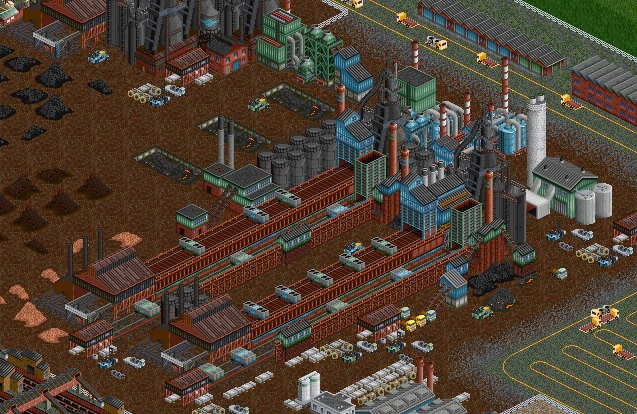
The community supplied help as well as impressive pictures. Players explained signals, shared layouts and argued over which arrangement worked best. There is a particular pleasure in having someone show you why the trains keep stopping, then seeing the same network finally move. A frustrating afternoon can turn into the start of a much more ambitious company.
The original game also returned to commercial attention. Atari acquired Transport Tycoon from Sawyer in November 2024, and Deluxe came back to Steam and GOG in 2026. OpenTTD’s March distribution notice explains the accompanying change: new access through those stores comes with the commercial game’s bundle. OpenTTD remains free from its own website and independently developed.
That leaves two different ways back to the railway. You can return to the 1995 game, or explore what years of community work have added. Either can begin with the familiar business of buying a vehicle and giving it somewhere useful to go.
OpenRCT2 and OpenLoco: keeping the gates open
The parks found a similar following. OpenRCT2 rebuilds and extends RollerCoaster Tycoon 2, improving compatibility and adding conveniences for modern players. Its documentation explains that you need original game assets. With the first game’s files too, you can bring its scenarios into the same environment.
For someone returning after a long absence, there is something reassuring about finding the park still recognizable. The rides and people you remember are there, with a maintained program keeping them busy. For committed builders, the project offers more room to continue making the sorts of parks the sequel encouraged.
Even Locomotion has people keeping it alive. OpenLoco is an open-source reimplementation that likewise needs the original assets. The game may never have replaced Transport Tycoon in everybody’s affections, but it left enough worthwhile possibilities for people to keep working on it.
These projects rebuild game engines rather than emulate an old computer. If you’d like to return, OpenTTD’s official site and the OpenRCT2 and OpenLoco documentation explain how to get started. Check what each needs: having one installed doesn’t supply the game files required by the others.
Sawyer tells us he has mixed feelings about the community projects, while admiring the contributors’ skill and commitment. He is also amazed by how many people still enjoy the games. Decades after the original releases, somebody is always opening another park or adding another stretch of track.
Wonderworks and the next park
There is another park on the horizon. As of October 2026, RollerCoaster Tycoon Wonderworks is awaiting early access, developed by Springloaded and published by Atari. Its Steam page still lists the release as forthcoming. Atari’s description promises new coaster construction and physics-driven mishaps. This is another team’s take on the series, with a fresh set of guests to entertain.
The familiar name earns it some curiosity. The park itself will have to earn the next evening. Building a ride should feel good, its train should be worth following and the visitors should give you a reason to keep fiddling with the surroundings. Sawyer’s old parks set a demanding standard for all three.
One more adjustment before saving
Sawyer began with things he wanted to make move. The railway needed a world, the world needed vehicles and the vehicles needed somewhere to go. Then an interest in coasters sent him off toward a park, where the small people walking past each ride became just as absorbing as the trains.
He is candid about what didn’t work as well as he hoped. Guests got lost, economics required trial and error, and a more elaborate sequel didn’t necessarily feel better to play. Foster’s graphics, Broomhall’s jazz and Brimble’s fairground sounds helped make the successful parts places worth spending time in.
The players took it from there. They built sensible railways, extravagant parks and quite a few coasters that should never have opened. They shared their designs, explained the awkward bits and kept the games running on computers their creators couldn’t have planned for.
You can still open one today, get a modest little operation working and decide that will do for the evening. Then a train waits at a junction, a queue grows around a corner or an empty patch of grass suggests another ride. You were going to stop. This won’t take long.
Read more: Our Chris Sawyer interview explores his programming, design choices and later reflections in much greater detail. For another view of the city-building craft, read our interview with Chris Beatrice.
Sources and further reading
- Retro Replay’s Chris Sawyer interview, the source of all three quoted passages.
- Sawyer’s career and game catalog, development recollections and programming FAQ.
- Transport Tycoon’s original manual and RollerCoaster Tycoon’s original manual and credits.
- Transport Tycoon anniversary interview and mobile-version FAQ.
- Atari Club’s 2024 Sawyer interview.
- RollerCoaster Tycoon review (1999), RCT2 review (2002), Locomotion review (2004) and RCT3 review (2004).
- OpenTTD’s twentieth anniversary and 2026 distribution changes.
- OpenRCT2 and OpenLoco project documentation.