Retro Replay Retro Gaming History, Reviews & Emulation
The houses are getting nicer. The treasury is running out. Somebody wants pottery, somebody else wants a temple, and the person carrying the food has taken the wrong turning again.
If you played an Impressions city builder, you probably recognise the situation. You arrived with a sensible plan for a Roman settlement or an Egyptian town. A few hours later, you were rearranging roads so a woman with a basket would walk past the right houses. The pyramid could wait. This was important.
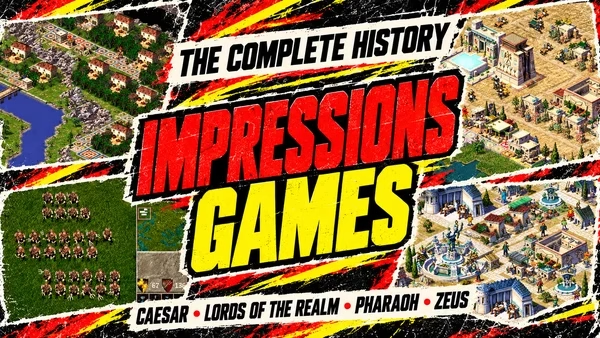
Impressions Games made history feel wonderfully busy. Its worlds had farms, workshops, soldiers, markets and people who were surprisingly demanding for characters only a few pixels tall. You could enjoy watching a place take shape, then discover that making it work was a much larger job. Caesar, Lords of the Realm, Pharaoh and Zeus each found a different way to turn that discovery into a good evening at the computer.
The studio’s story is bigger than its famous cities. It began in Britain with an entrepreneur who had tried accountancy, passed through a remarkably varied run of strategy games, and became part of Sierra’s expanding business. Its people later helped create Stronghold, Children of the Nile and Caesar IV. Impressions itself closed in 2004, but players never quite finished with the streets it left behind.
Our interview with Chris Beatrice, Impressions’ former creative director and studio head, offers firsthand memories of the work behind those games.
Explore the history of Impressions Games
- Impressions Software (1988–1991): an accountant discovers a better use for spreadsheets
- Air Bucks (1992): the empire comes with landing rights
- Caesar (1992): Rome needs a governor, and you need a promotion
- Lords of the Realm (1994): a kingdom begins in a wheat field
- Detroit (1994): sometimes the ambitious idea stays awkward
- Caesar II (1995): the city becomes a place you want to live
- Sierra acquires Impressions (1995): the boxes reach a bigger shelf
- Lords of the Realm II (1996): the army still has to eat
- Ultimate Soccer Manager (1995) and Civil War General (1996): Impressions had other plans
- Lords of Magic (1997): the wonderful idea that needed more help
- Caesar III (1998): the moon colony that became another Roman city
- Pharaoh (1999): give the city something magnificent to do
- Cleopatra: Queen of the Nile (2000): another team takes the plans further
- Zeus: Master of Olympus (2000): the gods walk down your street
- Poseidon: Master of Atlantis (2001): familiar streets, a less familiar civilisation
- Firefly and Stronghold (1999–2001): the castle builders leave the room
- Tilted Mill (2001–2002): trying to keep a way of working alive
- Emperor: Rise of the Middle Kingdom (2002): China brings the last great 2D chapter
- Lords of the Realm III (2004): the sequel that changed the argument
- Impressions closes (2004): the studio and the brand are different things
- Children of the Nile (2004): follow a person instead of a service route
- Caesar IV (2006) and SimCity Societies (2007): familiar names in unfamiliar cities
- Caesar III’s second life: Julius, Augustus and a city that keeps changing
- Pharaoh: A New Era (2023) and a new idea at Tilted Mill: Egypt still has room
- What Impressions left behind
Impressions Software (1988–1991): an accountant discovers a better use for spreadsheets
David Lester liked business. Training to be an accountant was less enjoyable. In an interview about his career, he remembered getting bored within a year at Arthur Young, then starting a computer-games publishing company with friends and contacts from the industry. The profile dates that beginning to 1988, when he was 22.

It is an appropriate background for someone whose games would make players worry about income, workers and supplies. Lester was interested in building a business that could support itself. His early company had to develop or acquire games, prepare physical products and persuade shops and distributors to take them. A good idea on a computer was only part of the job.
The early Impressions name appeared around football games associated with Kenny Dalglish, then around historical warfare and trading. The catalogue was still finding its shape. There were commanders to become, goods to move and businesses to manage, rather than one successful formula being repeated every year.
Rorke’s Drift, released in 1990, approached the 1879 battle through orders, positions and the difficulty of keeping defenders organised. It belonged to a tradition of computer wargames interested in particular historical engagements. The small battlefield symbols demanded attention, even when the presentation had little room for spectacle.

The following years brought more historical scenarios, including The Charge of the Light Brigade and Great Napoleonic Battles. The name on the box could cover different developers and partnerships as well as work within Impressions. That early publishing role is worth keeping in view: the company was building a catalogue before its own best-known development teams had emerged.
Merchant Colony, released in 1991, pointed in another direction. You dealt with trade and overseas enterprise, with a great deal of the action taking place in information screens. There was a particular pleasure in games like this: a map or ledger could suggest a much larger world than the graphics actually showed.
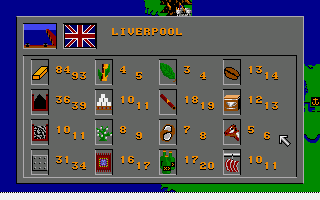
The office-like interface also told you what sort of player it expected. You were here to make decisions, inspect figures and see whether a plan had worked. Somebody who found that satisfying could forgive a fairly plain screen. Impressions would get much better at making the screen inviting, but the fascination with running complicated things was already there.
Air Bucks (1992): the empire comes with landing rights
Air Bucks gave that fascination a recognisable business. You ran an airline, buying aircraft, arranging routes and trying to make the numbers add up. The original manual and strategy guide begins the career in 1946, when postwar aviation offers a growing market and plenty of ways to spend money badly.
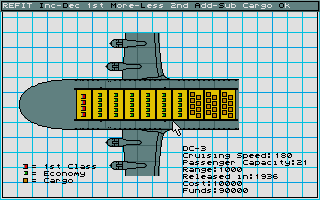
It was an airline game with very little interest in letting you fly the plane. Landing rights, seating choices and ticket prices were more relevant to your success than a steady hand on the controls. A route that looked impressive on the map still had to carry enough paying passengers.
That difference gave Air Bucks its personality. Buying a newer aircraft could feel like progress, right up to the point where the cost became your next problem. Expansion gave you more possibilities to consider and more commitments to keep. It was easy to become attached to a business whose chief products appeared in menus.

There was work to do on the presentation and usability of these early games. Information could be awkward to find, and a promising concept did not always produce a graceful interface. Still, Impressions was already exploring a useful relationship between ambition and consequences. Let the player build something, then ask whether they can afford to run it.
In its next important game, that something was a Roman province.
Caesar (1992): Rome needs a governor, and you need a promotion
The original Caesar made you a Roman governor with a career to pursue. Build a functioning capital, look after the surrounding province and govern well enough to receive a more demanding assignment. You were responsible for people and buildings, but you also had a boss.

The manual credits Lester with design and Simon Bradbury with programming and additional design. Bradbury would become one of the crucial people in Impressions’ development story, finding workable systems behind ideas that could sound simple when spoken aloud.
Caesar’s city and province views asked you to think at two scales. Streets and services mattered inside the capital; defence and connections to surrounding settlements mattered outside it. Ratings measured your performance and set the conditions for advancement. There was a reason to improve the city beyond simply liking the look of it.
The first game’s little buildings are easy to underestimate now. They already create a pleasing moment when an empty area starts to resemble a place. A road makes sense of the houses beside it. A public building gives the settlement a centre. You begin to care whether the arrangement works because you have made the arrangement yourself.

There was also plenty to juggle. Taxation, maintenance and military needs competed for attention, and the capital could not be managed as though nothing existed beyond its walls. Caesar offered the satisfaction of construction with enough pressure to make an attractive city an achievement.
The comparisons with SimCity were obvious, but Civilization also influenced Impressions’ thinking. The mixture helps explain Caesar’s appeal: the city was enjoyable to arrange, while historical strategy supplied a career, demands and reasons to make the arrangement efficient. Rome provided a job to do as well as a place to build.
Rome gave the player familiar things to imagine. Aqueducts, baths and civic buildings were easier to picture than the abstract machinery of an unfamiliar future society. The historical setting could make a technical requirement feel like part of a place. Supplying water was a management problem, but building an aqueduct was also something you wanted to do.
Caesar had not yet reached the visual warmth of the later games. It had established an idea worth returning to, though: governing a historical city could be a strategy game with room for someone who simply enjoyed watching it grow.
Lords of the Realm (1994): a kingdom begins in a wheat field
Lords of the Realm needed its countryside to feel productive before the player ever raised an army. One early art problem was animating a wheat field inside a tile roughly 16 by 16 pixels. The artists and programmers had to find a way to make those small pieces join into a convincing landscape.
Art director Chris Beatrice joined in late 1993, when Impressions had roughly 25 or 30 employees across Cambridge, Massachusetts, and Farmington, Connecticut. The expanding studio brought artists, programmers and testers together around a busy release schedule. It was already much more than a founder with a single project.

The little wheat field belonged to Lords of the Realm, Impressions’ 1994 medieval strategy game. Its larger problem was just as practical: a would-be ruler needed land that could support a population and an army. Taking a county was only the beginning of being responsible for it.
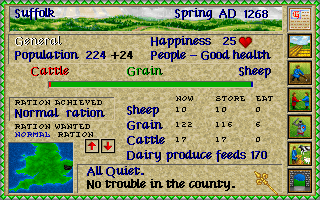
Food and people gave the conquest weight. A county had agricultural needs; the soldiers you wanted to recruit came from a population that also had work to do. The game made expansion attractive while keeping the home front close enough to become troublesome. You could imagine yourself a great lord, then spend a turn worrying about the grain.
That combination was more absorbing than a separate military game and economic game would have been. Preparing for a campaign changed what you could do at home. Winning land increased the things you had to manage. A battle had consequences that continued after the battlefield screen disappeared.

The first Lords could be demanding in its handling of information, and its systems needed patience. Yet the medieval setting helped tie those demands together. A merchant, a treasury and a harvest all belonged to the same world as the army. Impressions gave the player a kingdom that needed attention in ordinary seasons as well as moments of glory.
The graphics mattered to that connection. A field that moved made the county more than a set of agricultural numbers. Animated scenes rewarded achievements, helping an accomplishment feel like something that had happened in a world you had been looking after.
The art department mixed experienced artists unfamiliar with games, gamers with less formal art training, and people comfortable crossing between the two. Artists could work on several projects in a day. That variety suited the catalogue, but it also required clearer procedures so a passing suggestion did not derail a project.
Detroit (1994): sometimes the ambitious idea stays awkward
Detroit put the player in charge of a car manufacturer. You designed vehicles and tried to turn them into a profitable business. It was another Impressions game interested in the relationship between a product, the people making it and the customers who might buy it.
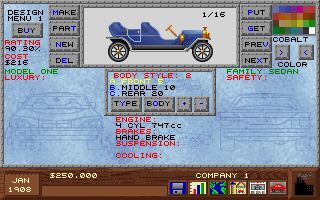
The design screen is a wonderfully direct expression of that premise. You can look at a car and imagine selling it, then return to the business decisions that determine whether the idea deserves its optimism. For somebody who enjoys the product-development side of a management game, the concept is immediately attractive.
Detroit also illustrates why a history of Impressions cannot consist entirely of its hits. The studio tried economic subjects that demanded careful explanations and interfaces, with results that did not all become enduring favourites. A convincing business simulation needed the player to understand how decisions produced consequences. A screen full of figures could help, or it could become the obstacle.
Detroit belonged to a period when the studio was trying an extraordinary range of subjects. That willingness kept the catalogue lively, but each business simulation needed its own explanations, interface and balance. The success of Caesar and Lords did not make the next unfamiliar subject easy.
Caesar II (1995): the city becomes a place you want to live
Caesar II made Rome much easier to admire. Buildings had depth, roofs had colour, and the city could look inviting while being completely unsustainable. It was quite possible to pause over the view and miss the warning that your population needed something.
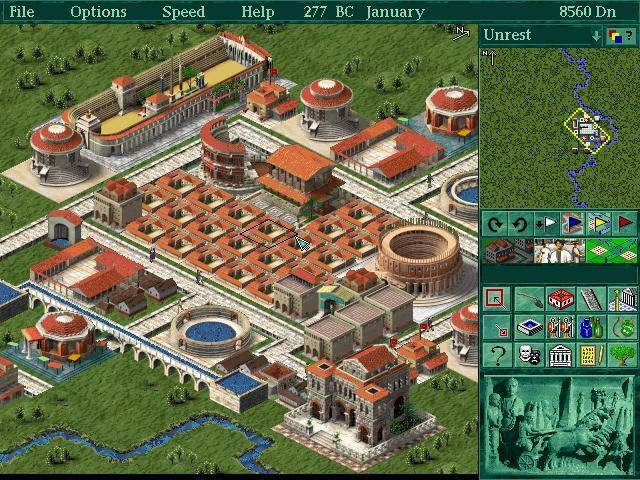
The isometric perspective showed buildings at an angle, giving streets and civic landmarks a sense of space. That attractive view also created technical problems. A building could rise above the diamond-shaped ground tile it occupied, while a walker needed to be large enough to see without matching the scale of an enormous public monument.
A properly scaled amphitheatre could dominate the map, and properly scaled people could become almost invisible. The artists had to make the city believable at a glance while bending its proportions until it was playable. Realism was useful only when the player could still understand the picture.
The art pipeline increasingly used 3D models rendered into the images seen by the player. Artists learned the DOS version of 3D Studio, opening new possibilities for buildings. Caesar II remained a 2D game on screen; the process behind those pictures was becoming more sophisticated.

The improved appearance supported a game still operating at city, provincial and battle levels. You watched individual streets and services, then dealt with a larger territory and its threats. Its ambitions could pull the player between different kinds of decision, but the city was now attractive enough to make those decisions feel personal.
Aqueducts were especially satisfying to arrange. They were recognisable Roman infrastructure, useful to the city’s needs and enjoyable to see spreading across the map. A small collection of reusable graphics could create something that looked much more elaborate.
Caesar II could interest someone who wanted a demanding management problem and someone who simply enjoyed making a city look beautiful. Those interests reinforced each other. An attractive district gave you a reason to learn how the economy and services could keep it flourishing.
Sierra acquires Impressions (1995): the boxes reach a bigger shelf
Making the games was one challenge. Getting them into shops around the world was another. In his later account of founding Crimson Publishing, preserved by Sierra Chest, Lester recalled seeking better worldwide distribution and meeting Sierra’s chief executive. The conversation produced an offer to buy Impressions.
Sierra acquired the company in 1995. For a studio already developing and publishing its own boxed games, joining a larger publisher changed the scale of the business around it. Caesar II and the next Lords of the Realm could reach players through an established international organisation.
The independence did not vanish from the games overnight. Lester remained involved, and the teams kept working through the ideas that had made Impressions distinctive. The new relationship gave those ideas a larger audience, while adding another set of expectations about what the studio should produce.
Sierra itself was entering years of ownership changes. It would pass through CUC International, the Cendant combination and Havas before becoming part of Vivendi’s games business. For a player looking at a familiar mountain logo on a box, those corporate movements could be invisible. Inside the studios, they would eventually become much harder to ignore.
Lords of the Realm II (1996): the army still has to eat
Lords of the Realm II made the struggle for a medieval kingdom more approachable without removing the things that made it interesting. A county could provide food, materials and recruits. An army could win you more counties. Getting those ambitions to agree with one another remained the heart of the game.
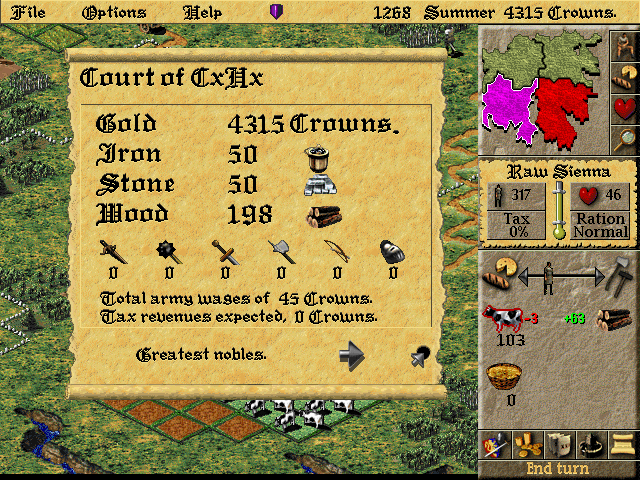
The manual’s credits show a collaborative design led by Lester, with Bradbury handling programming and Eric Ouellette producing. The sequel came from people who had already worked through many of the first game’s problems together.
The management proceeded in turns, giving you time to make plans across the kingdom. Battles unfolded in real time, requiring different attention once the armies met. The shift was useful. You could think patiently about supplying a force, then discover how quickly the actual fighting could upset your expectations.
Recruitment made the connection between the two halves unusually tangible. The people sent into an army were people no longer doing ordinary work in the county. Food, happiness and industry mattered to the military plan. A ruler who treated the population as an inexhaustible recruiting pool was inviting problems well away from the battlefield.
The pleasure came from preparing something that could survive the journey. Weapons and supplies made an army more than a collection of units selected from a menu. You had helped make the force possible, so a disastrous fight was painful in a way that extended beyond losing the current encounter.
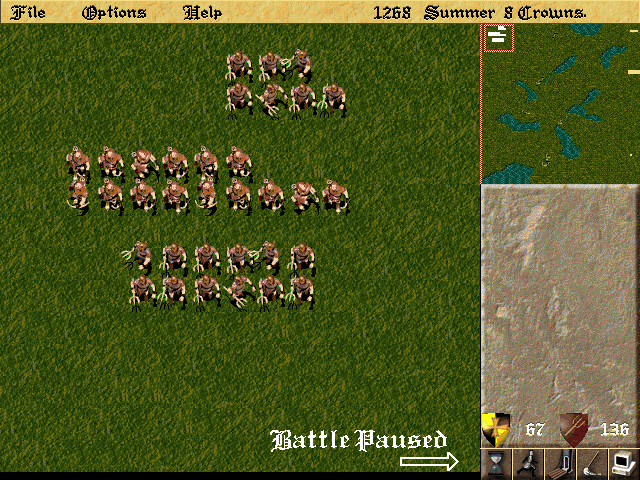
Castles gave those encounters a recognisable objective and a different rhythm. The approach, the walls and the defenders could turn a numerical advantage into a problem you still had to solve. Siege warfare suited Impressions’ habit of making a straightforward ambition require several supporting decisions.
The artwork had taken another step forward through more extensive 3D rendering in the introduction and units. That did not mean the player was moving around a fully 3D kingdom. New production tools supplied images and animation for the familiar strategy view.
Memory still had to be treated carefully. Bradbury’s custom sprite-grabbing tool avoided loading unnecessary pixels and left more room for useful animation. Some of the apparent richness came from saving space in places a player would never notice.
That economy is part of the game’s charm. Units were small and the animation spare, but you could understand what the armies were doing. The medieval world did not have to reproduce every movement to make an engagement compelling. It needed to show you enough to make the next decision.
The 1997 Siege Pack added further challenges and battle-building possibilities. Lords II became one of the studio’s enduring favourites, with a mixture that remained appealing long after its pictures stopped being impressive. The kingdom still gave you reasons to care about both the harvest and the siege.
Ultimate Soccer Manager (1995) and Civil War General (1996): Impressions had other plans
The studio had not become a company that only made Romans and medieval rulers. Ultimate Soccer Manager approached football as an institution to run as well as a team to select. Its manual takes you through the manager’s office, the chairman’s office, the bank and even shops and restaurants. The club’s finances were part of the game.
That was familiar Impressions territory in another set of clothes. A player could become attached to an organisation, then spend the evening making the choices that might keep it alive. Football management also fitted the company’s earliest interests, long before Caesar became the name most people associated with it.
Robert E. Lee: Civil War General turned back toward historical battlefields. Its maps, unit information and turn-based decisions offered a more direct wargaming experience. The following year’s Civil War Generals 2 expanded that line. These games remind us that Impressions’ historical strategy audience included people who wanted to command armies without constructing the city that supplied them.
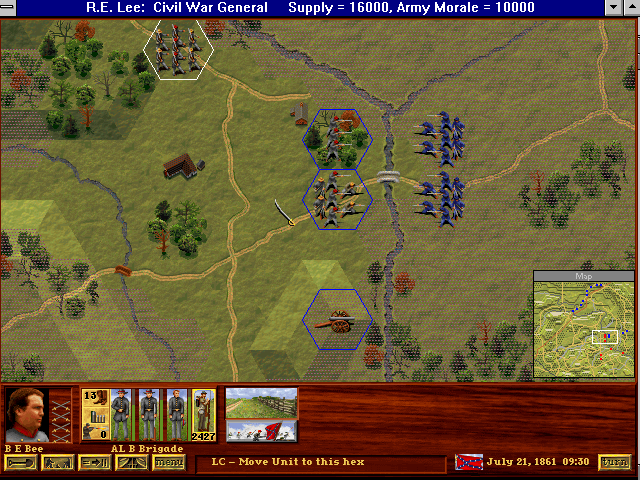
The variety could be exciting for a studio and bewildering for anyone trying to give it a single identity. An art department moving among several projects might draw a car one day and an ancient building the next. The company had people able to do that work, but each game still needed a coherent design and enough time to finish it well.
The wide catalogue also makes its successes more interesting. Impressions did not arrive at the city builder because it had never tried anything else. It had tested many ways of making planning, history and management enjoyable, and was gradually discovering where its strongest work lay.
Lords of Magic (1997): the wonderful idea that needed more help
Lords of Magic sent the studio’s strategy ambitions into a fantasy world. Urak had competing faiths, heroes, creatures and spells, with a turn-based strategic layer and real-time combat. For players who liked the idea of a kingdom but wanted dragons and magic involved, the invitation was excellent.
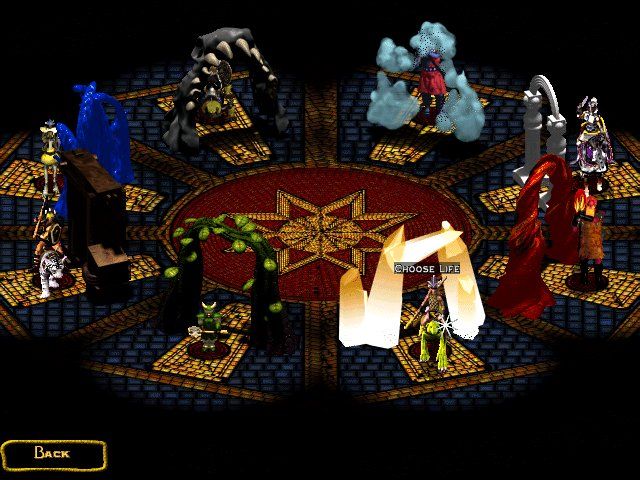
The later Special Edition manual sets out a game built around different allegiances and the possibilities of developing a lord, champions and forces. Choosing a faith helped give a campaign its character. The map promised places to explore and powers to acquire rather than simply another set of medieval counties.
Putting so many attractive ideas together was harder than explaining the premise. The player had to understand exploration, development and fighting, while the interface and balance had to make those activities support one another. A fantasy setting can make almost any individual feature sound appealing. It cannot make all of them fit automatically.
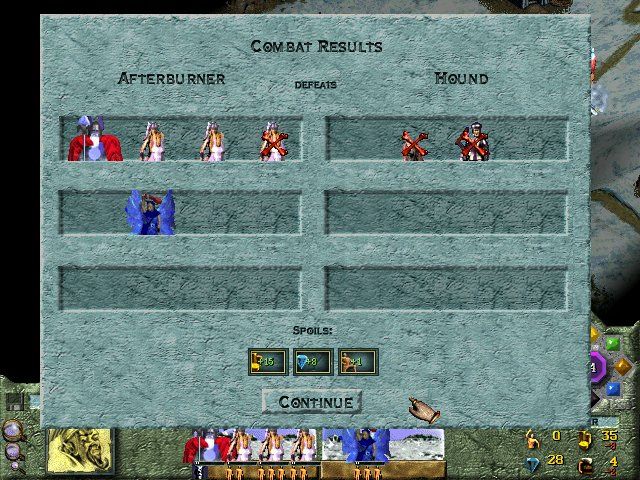
The studio’s former creative director acknowledged in our interview that Lords of Magic had not fulfilled its potential, despite the team’s effort. It is a revealing admission: Impressions could recognise a promising idea without always having the resources to turn it into a fully convincing game.
The Special Edition, with Legends of Urak material, gave the game another chance in 1998. There is still something appealing about its mixture of fantasy adventure and strategy, and it has its devoted players. It also belongs in the history as a reminder that imagination, effort and a recognisable name were not enough to guarantee a great game.
Impressions’ next Roman city builder would take a less sprawling idea and refine it with exceptional care. Even then, returning to Rome was not the original plan.
Caesar III (1998): the moon colony that became another Roman city
Caesar III could have been a science-fiction game. Impressions explored a moon-colony concept rather than simply returning to Rome. New ideas carried prestige, and another sequel could feel as though a developer had run out of them.
“So Caesar III was initially going to be a sci-fi game, like a moon colony.”
Chris Beatrice, recalling the early concept in our Retro Replay interview.
The unfamiliar setting made the game’s feedback harder to get right. Impressions could not make it work with the elegance of the people walking through its historical cities. Lester was persuaded to revisit Rome. What sounded like a safe sequel became the game that made the studio’s city-building approach feel complete.
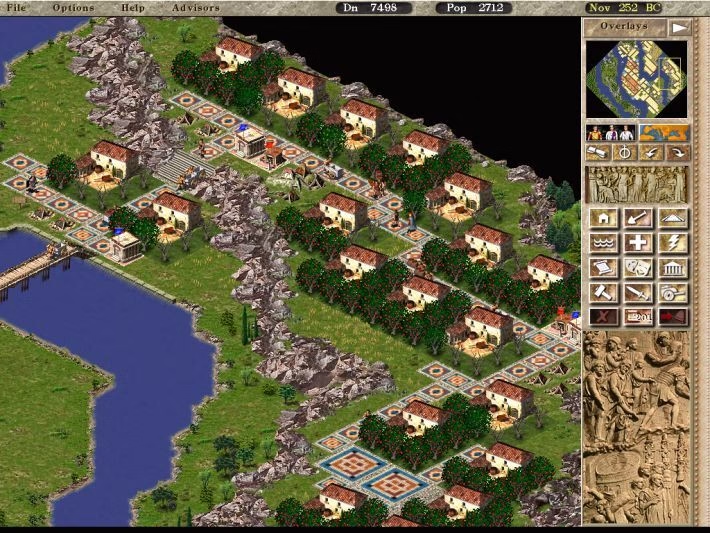
Caesar III brought the city, its industry and its immediate military threats onto the same map. It offered a career of assignments, including choices between more peaceful and more military challenges. The player could see the settlement as one place, rather than repeatedly leaving it to manage a separate level.
Its most memorable inhabitants were the walkers. A market worker took supplies through the streets. Service providers passed houses and gave them access to what their buildings offered. Other people travelled to particular destinations. That visible traffic helped the player connect an institution with the households and workplaces it served.
It also produced one of the great city-building frustrations. A service building could be nearby and properly staffed, yet a house could still miss out because the worker did not pass it. Distance on the screen was only part of the problem. The road network affected how the service reached people.
The original manual explains the interaction among roads, services and housing. Learning those relationships was the difference between placing attractive buildings and governing a functioning city. You began to watch a market worker with an intensity normally reserved for a unit approaching an enemy position.

The system could feel unreasonable when a neighbourhood deteriorated beside the very building meant to help it. It could also be immensely satisfying once you understood what was going wrong. A change to the streets or the placement of a service could make the houses recover, giving a clear visible reward for solving the problem.
Players developed compact neighbourhoods and carefully planned routes to make that service reliable. A city that looked natural and a city that ran efficiently were not always the same city. Choosing between them became part of the enjoyment. You could follow an elegant block design, or insist on making a more organic arrangement survive.
Caesar III’s housing was an excellent source of ambition. A modest district could improve as its access to goods and services grew. Better homes made the city look successful, but they also raised new requirements. The game let you see progress and then made you responsible for sustaining it.
Trade connected the pretty neighbourhoods to less pretty necessities. Workshops, stores and routes to other cities gave the economy work to do. An attractive residential area could depend on supplies produced somewhere you had tried to hide out of the way. Rearranging one part of the city could expose weaknesses elsewhere.
The ratings added a career-sized argument to all that local activity. A settlement that felt busy and prosperous might still fail a target. You had to understand which parts of your performance were keeping you from promotion. Caesar could also ask for goods or troops, turning a comfortable routine into a new calculation.

The game was especially good at keeping those pressures inside a pleasing picture. Red roofs, gardens, temples and little moving figures made the city worth watching between decisions. The art did not merely decorate the systems. It helped you notice that the place was changing.
Animated buildings and a collection of walkers could produce a sense of life greater than any individual element. Repeated houses did not necessarily weaken the illusion. Actual cities repeat their architecture too.
Sound and speech made that life more persistent. The little figures had complaints and observations, while advisers and messages made trouble hard to miss. The voices could be funny, demanding or simply familiar after a long evening. They gave the systems a human surface, even when what you needed was a blunt explanation of a shortage.
For newcomers, Caesar III was a city they could build and watch. For experienced players, it was an increasingly exacting problem in distribution, labour and layout. Those interests could coexist in the same household. Someone who arrived for the lovely buildings might eventually become extremely particular about a junction.
Its success did not remove an awkward question inside Sierra: what kind of strategy game was this? Our interview recalls executives urging Impressions toward real-time games while being unaware that Caesar already operated in real time. The fashionable definition was becoming closely tied to military units and base-building.
Caesar’s pace could make that distinction seem plausible from a distance. Much of its drama happened through supply and service rather than a sudden attack. Sit with the game for an evening, though, and the decisions become very real. A city can create plenty of urgency without asking you to click faster than an opponent.
Impressions had found an audience between hardcore strategy and broadly welcoming simulation. Historical settings and inviting art could bring people in; substantial systems gave them something to learn. A successful city did not require everyone to approach it with the same ambition.
Caesar III’s longevity surprised its makers. Community members have spent decades playing and modifying it, learning interactions that were never likely to receive so much attention during production. The streets that once had to win a place on a shop shelf became a subject people kept studying.
The studio could have kept refining Roman cities. Its designers still wanted to try new ideas. For the next game, Egypt offered a strikingly different way to put a city to work.
Pharaoh (1999): give the city something magnificent to do
A Roman governor could finish a mission by satisfying the right ratings. Pharaoh gave the player something much easier to point at. There, beside the city, was the monument you were trying to build. When it was finished, you would know exactly what all that work had achieved.
The Egyptian setting gave Impressions a tangible purpose for its city-building systems. A pyramid could be the destination of an economy, rather than simply an expensive decoration dropped onto a successful map. The design tied the settlement’s ordinary work to something magnificent.
“But in Pharaoh I wanted to go in a different direction and give you tangible goals, things to do with your city, ways to put it to work.”
Chris Beatrice, discussing the move beyond Caesar’s ratings in our interview.
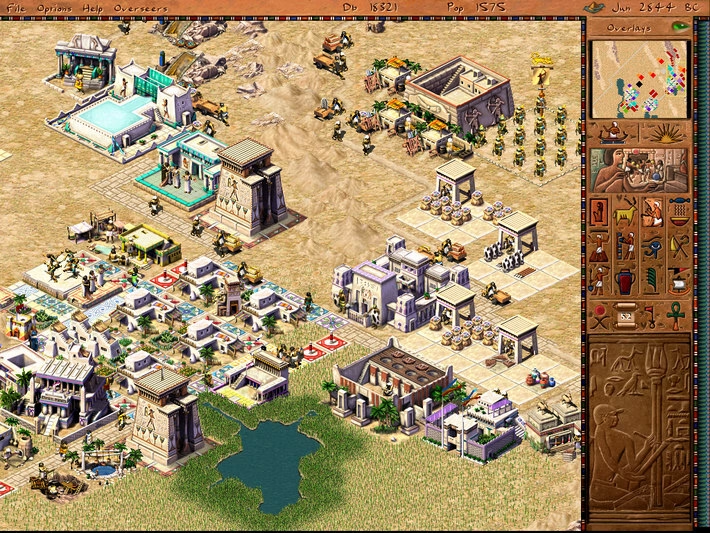
The familiar city-building machinery returned with a different rhythm. Egypt’s floodplain made agriculture seasonal, so you had to think about harvests and the food that would last between them. The Nile was useful, attractive and capable of upsetting a plan. It belonged to the game as much as the streets did.
The original manual describes how labour from work camps serves floodplain farms and monument projects. When the fields did not need that labour, construction could use it. Those connections gave the seasonal cycle a satisfying purpose beyond watching the water rise and fall.
The monument drew on a much larger chain of activity. Materials had to be obtained, work had to be supported, and the surrounding city had to keep functioning through a lengthy project. A beautiful pyramid made the requirement obvious. Getting it built made you care about ordinary supplies that were much less beautiful.
That slow progress was part of the attraction. A monument was substantial enough to become the story of a mission. You could remember the city as the one that completed a particular great project, including the shortages, rebuilding and occasional panic on the way there.

Pharaoh also understood the pleasure of giving the player time to admire an achievement. The completed monument could dominate the landscape, a visible answer to all those small decisions. The city around it supplied the bustle that stopped the achievement looking like an isolated model on empty ground.
Its artwork was warm, detailed and exceptionally readable. Pale streets, colourful buildings and vegetation around the water gave the map a strong identity. Egyptian motifs helped the interface and public buildings belong to the same world. The game could be full of activity without making every object compete equally for your eye.
That clarity came from choices rather than unlimited resources. Fixed colour palettes, short animations and tiny fonts forced artists to communicate economically. The player needed to recognise what a picture meant before there was much room to make it elaborate.
Research supplied recognisable forms. The studio kept an art-department library that included illustrated nonfiction books for children, useful for seeing reconstructions of unfamiliar historical buildings. Designers and other staff used the collection too.
That is a sensible research tool for this kind of game. A written description can explain what a building did. A clear illustration can help an artist turn it into something the player will recognise at a glance. The team still had to simplify, change scale and choose colours so the result worked among dozens of neighbouring structures.
History therefore entered the games through a practical question: how should this place look and function for a player? The settings supplied architecture, resources and distinctive ambitions. They did not require every part of the city to be reproduced at a realistic scale or every resident to behave like an actual person.
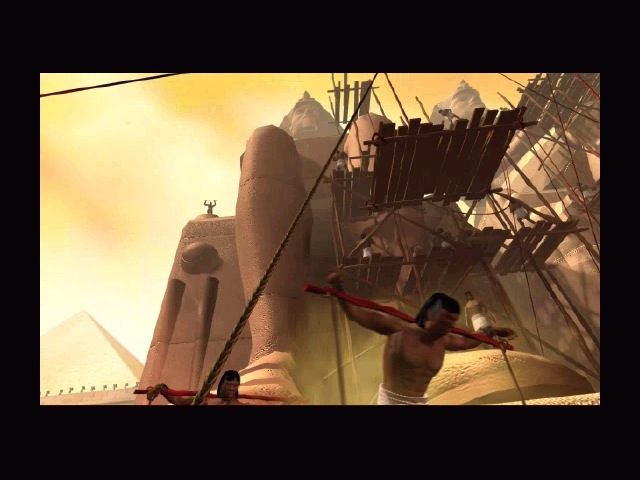
Pharaoh could be demanding. Supply failures could travel through several parts of the city before you understood the cause, and a long monument project could expose weaknesses you had been getting away with. The attractive picture was not a promise of a gentle game.
It did, however, give that difficulty an unusually persuasive setting. Feeding the town, supporting the workers and completing a great monument belonged to one ambition. You could lose track of the evening because there was always a small repair that might help the larger project move again.
Its lasting appeal is partly that the city remains enjoyable to watch after you understand it. Learning the systems does not use up the pleasure of the buildings, the river and the little routes people take. Knowledge can make that view more satisfying, because you can see the work behind it.
The game also made a strong case for changing settings while preserving a good underlying design. Pharaoh recognisably belongs beside Caesar III, but the flood cycle and monuments give it its own problems and rewards. Impressions was extending a language players already understood.
Cleopatra: Queen of the Nile (2000): another team takes the plans further
Cleopatra expanded Pharaoh in 2000 with further historical campaigns and spectacular building projects. It also widened the development story. The expansion was made by BreakAway Games, a Maryland studio, rather than simply being another full production by Impressions.
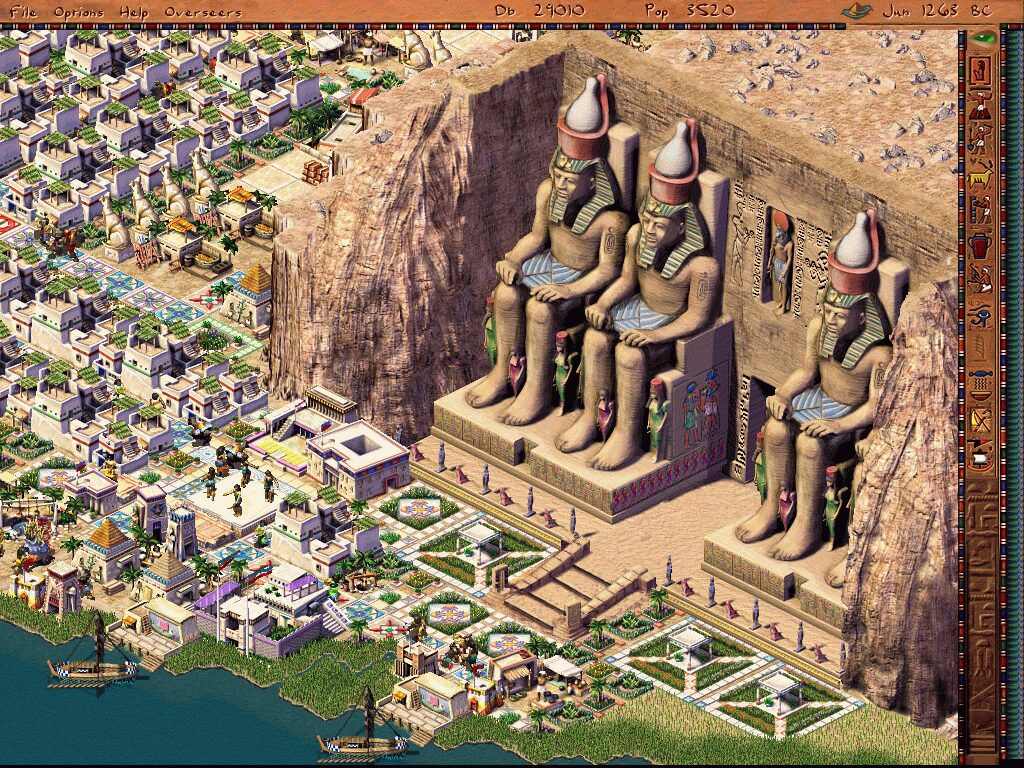
BreakAway’s Ed Beach confirmed that work in a contemporary interview about another expansion project. The relationship would become important again when Sierra wanted its city-building series to visit China.
For players, Cleopatra offered more ways to stretch an already familiar skill. An experienced builder could concentrate on the particular mission and its monuments, with less time spent learning the basic relationship between homes, workers and supplies. The expansion trusted that familiarity and gave it more to accomplish.
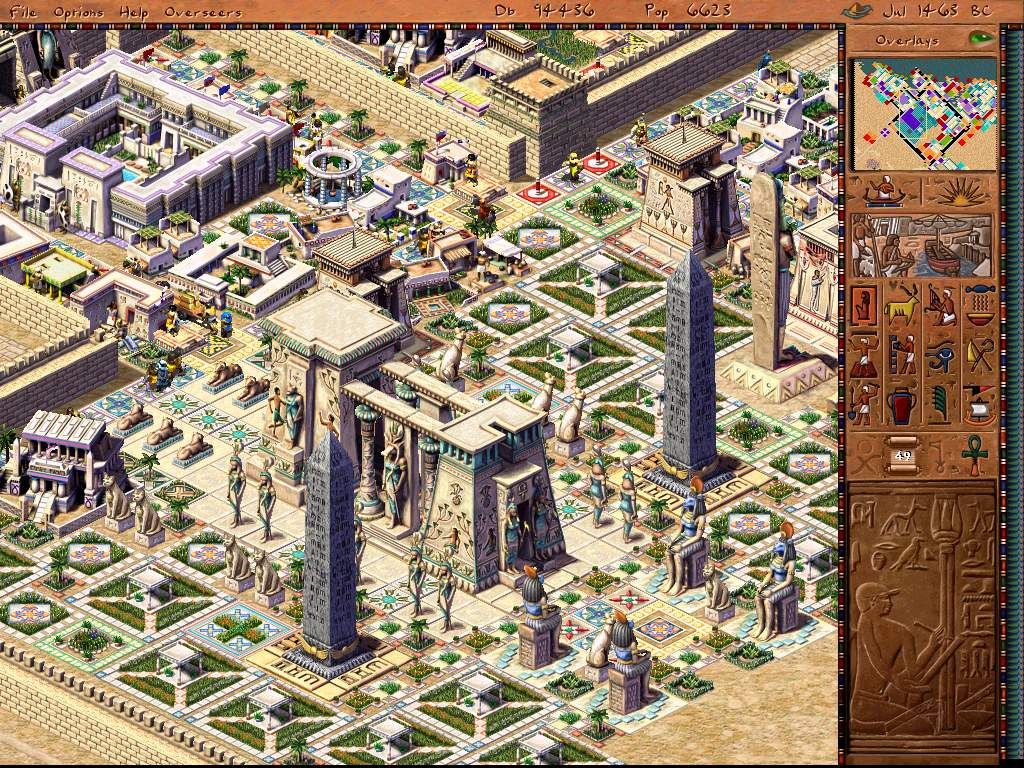
It also helped turn Pharaoh into the substantial package many people encountered later. The base game and expansion became a long Egyptian career, with enough distinctive projects to keep the city-building routine from feeling like the same town rebuilt indefinitely.
While BreakAway added to Egypt, Impressions was making a rather less solemn visit to Greece.
Zeus: Master of Olympus (2000): the gods walk down your street
Zeus made its intentions clear through its people. They had stronger comic personalities, the architecture was more playful, and ancient Greece included the mythical creatures and interfering gods most players expected to find there. A city could be functioning reasonably well until something enormous arrived to express an opinion.
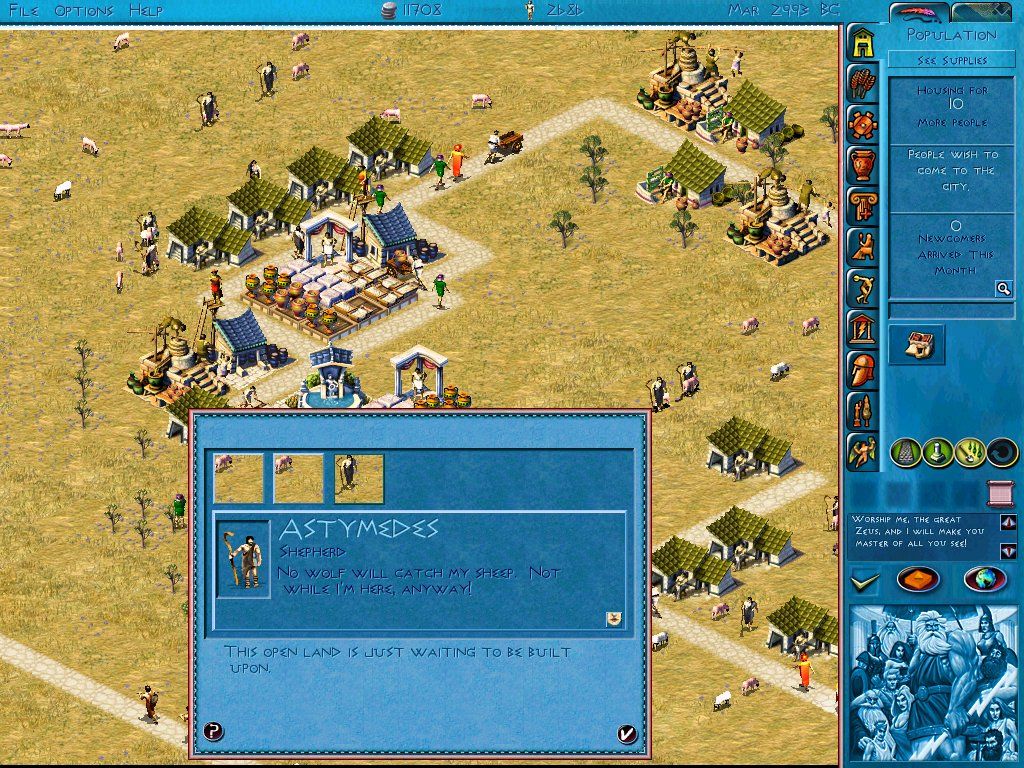
The manual organises Zeus around adventures and episodes. You could work through successive goals in an established city, sometimes leaving to build a colony and later returning. The settlement could have a continuing story rather than being discarded at every promotion.
That continuity made affection for the place more useful. A district you had arranged well could keep supporting you through another challenge. A weakness you had postponed could become the problem waiting for you in the next episode. The campaign gave the city a history of its own.
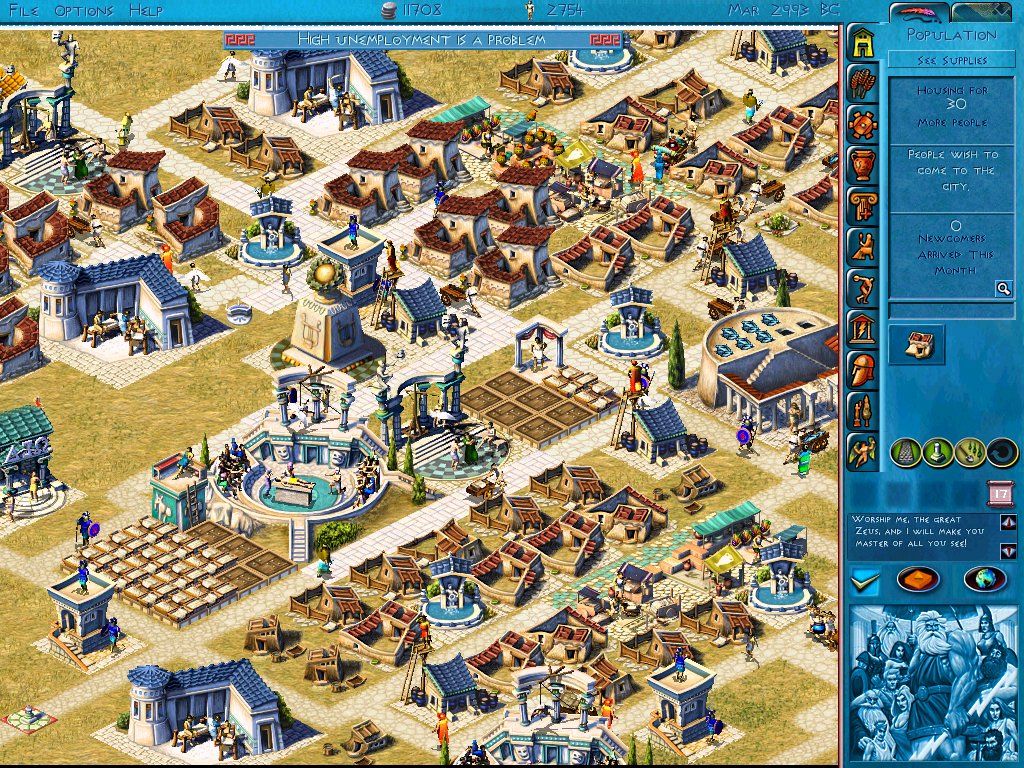
Common and elite housing made social and military needs easier to distinguish. The familiar service problem remained, but the design put more emphasis on readable categories and clear objectives. You could still make a mess. Zeus simply gave you a friendlier invitation to find out how.
The mythology was more than a decorative theme. Gods could visit, help or cause trouble. Monsters created problems a normal military plan would not necessarily solve, and heroes had conditions to satisfy before they would answer your call. A city needed to prepare for its adventure, not merely survive the next ordinary shortage.
That gave the economy a pleasingly absurd purpose. Producing goods and supporting culture could become part of persuading a famous hero to deal with an inconvenient creature. The familiar work of building a supply chain led to an outcome that belonged in a story told around Olympus.
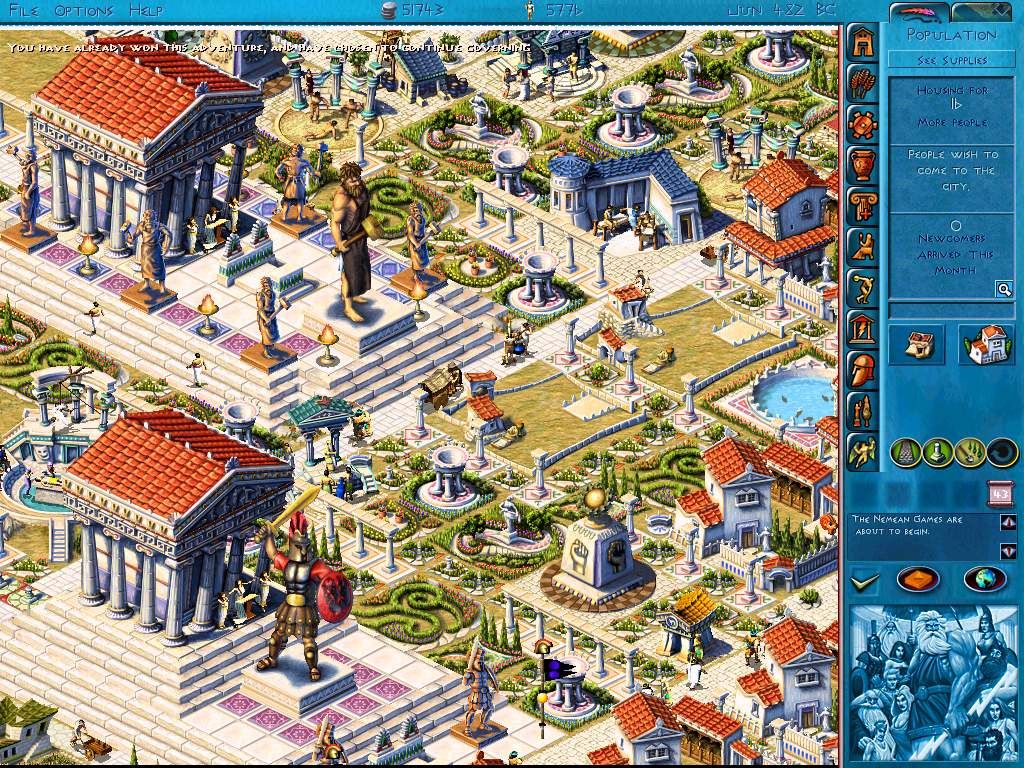
For Greece, gods and mythology offered an instantly recognisable identity. Zeus embraced them alongside the practical city-building work, giving the series a mood quite different from its Roman and Egyptian games. A good supply chain might lead to a memorable encounter with something enormous.
The lighter tone suited the game. It could be genuinely challenging without making every message sound like a warning from a government department. The humour gave a failed plan room to be amusing before you started repairing it.
Zeus also showed how much Impressions had learned about welcoming a player into a complicated system. The company could preserve demanding management while changing the presentation, campaign structure and character of the experience. Enjoying the scenery and enjoying the problem were increasingly difficult to separate.
Poseidon: Master of Atlantis (2001): familiar streets, a less familiar civilisation
Poseidon extended that approach into Atlantis, giving the expansion room for a more fantastic setting and new projects. The player’s existing knowledge remained useful, while the buildings and campaign ambitions supplied reasons to try another adventure.

Its manual presents the additions as an extension of Zeus rather than a replacement for it. The familiar city-building logic could support a place that had never existed. Impressions’ games had always simplified historical reality; here the fantasy was part of the invitation from the beginning.
By this point, the series offered several different moods inside a recognisable family. Caesar had the demanding imperial career. Pharaoh had the river and the monuments. Zeus and Poseidon had a city worth keeping between adventures, with visitors who could make the next task delightfully strange.
The teams were still producing confident work. The company around them was becoming a less dependable place to continue it.
Firefly and Stronghold (1999–2001): the castle builders leave the room
Some of the people who had made Impressions’ best-known systems were already finding new places to work. In August 1999, Simon Bradbury, Eric Ouellette and David Lester founded Firefly Studios. Ouellette gave that history in a 2001 interview about Stronghold, before its release.
Stronghold was a persuasive next step for developers who understood both cities and sieges. The castle needed an economy around it. Food and ordinary work supported the walls and soldiers, while the threat of an attack made those preparations feel necessary. The relationship Impressions had explored in Lords of the Realm acquired a more immediate, physical home.
Firefly’s emergence also shows how misleading a simple studio family tree can be. A company does not need to close before its people start another one. Stronghold was released in 2001 while Impressions still existed and its city-building series was still active.
Lester’s involvement at Firefly belonged alongside the business and publishing interests that drew him away from daily Impressions development. Bradbury carried his programming and systems-design experience into another successful strategy series. The history continued through the people, even as the names on the buildings and boxes changed.
The earlier collaboration had combined conceptual design with practical engineering. Lester could propose a broad idea, such as jealous gods needing equal treatment, and Bradbury could devise a simple system that made it work. That relationship helped turn ambitious settings into manageable games.
That kind of partnership is easy to miss when discussing the finished game. A player sees a temple, a blessing and an angry deity. Behind them are decisions about what the computer tracks, what it shows and how the player understands the relationship. Impressions’ apparent simplicity had required people who could make those decisions well together.
Tilted Mill (2001–2002): trying to keep a way of working alive
After departures from Impressions in 2001, former staff formed Tilted Mill, including Beatrice, Peter Haffenreffer and Jeff Fiske. Its own account describes the leads behind Pharaoh and Zeus striking out to form a new studio. This second branch of the company’s family tree also began before Impressions closed.
The new studio also aimed to preserve a way of working: permanent staff, shared meals, a pool table and the expectation that a successful company should provide continuing jobs. Those priorities had been part of Impressions’ culture as well as its development process.
“We were building companies back then. Not teams.”
Chris Beatrice, reflecting on Impressions’ working culture in our interview.
The distinction gives the story a human cost beyond the fate of a franchise. Artists, engineers, writers, musicians, testers and the other people in the office were part of an organisation built to keep working. A game reaching the shops was an achievement for that whole company.
That culture still involved long hours and difficult decisions. Shared evening meals could accompany the final push to finish a game, and unpromising projects sometimes had to be cancelled. Keeping people employed required a business that could afford to continue.
The ownership above Impressions had changed several times since the Sierra purchase. The small studio’s wish for continuity existed inside a much larger business whose priorities could change independently of the games. Starting Tilted Mill was an attempt to create another place where the developers could shape those priorities themselves.
Emperor: Rise of the Middle Kingdom (2002): China brings the last great 2D chapter
The next city builder carried the series to China. Emperor was developed by BreakAway Games in collaboration with Impressions, rather than by the same internal team that had made Pharaoh and Zeus. Impressions producer Jon Payne explained the arrangement in a contemporary preview: Impressions was occupied with Lords of the Realm III, and BreakAway had already proved a useful partner on Cleopatra.

Emperor retained the readable streets, housing and supply relationships of its predecessors. Its Chinese setting brought a different visual identity and new considerations, including the feng shui of building placement. A beautiful site was no longer only a question of how the finished city looked to you.
The game also added multiplayer to this branch of the city-building series. The familiar activity of running a settlement could now connect players’ cities, extending an experience that had previously been largely personal. Building and trading in a shared setting created another reason to learn the systems well.

Emperor’s presentation could be exceptionally lovely. Rooflines, walls, trees and public buildings gave a mature version of the isometric style somewhere new to work. The view had enough detail to reward close attention without abandoning the practical clarity that made its ancestors playable.
It was also a refinement of an established approach, which could be its appeal or its limitation depending on what a player wanted. Somebody hoping for a completely different kind of city simulation would still recognise the old machinery. Somebody who wanted another rich campaign in that style had good reason to be pleased.
Emperor became the last new setting in Sierra’s classic 2D city-building sequence. It is often gathered with the Impressions games because it belongs to the same family of play, but BreakAway’s role deserves its own credit. That family was already continuing beyond the original studio.
Lords of the Realm III (2004): the sequel that changed the argument
Lords of the Realm III returned to medieval rule after a long absence. It had 3D graphics and a substantially changed design, with strategic events and battles running in real time. The player needed to attend to several places rather than finishing a comfortable management turn and then concentrating on one fight.
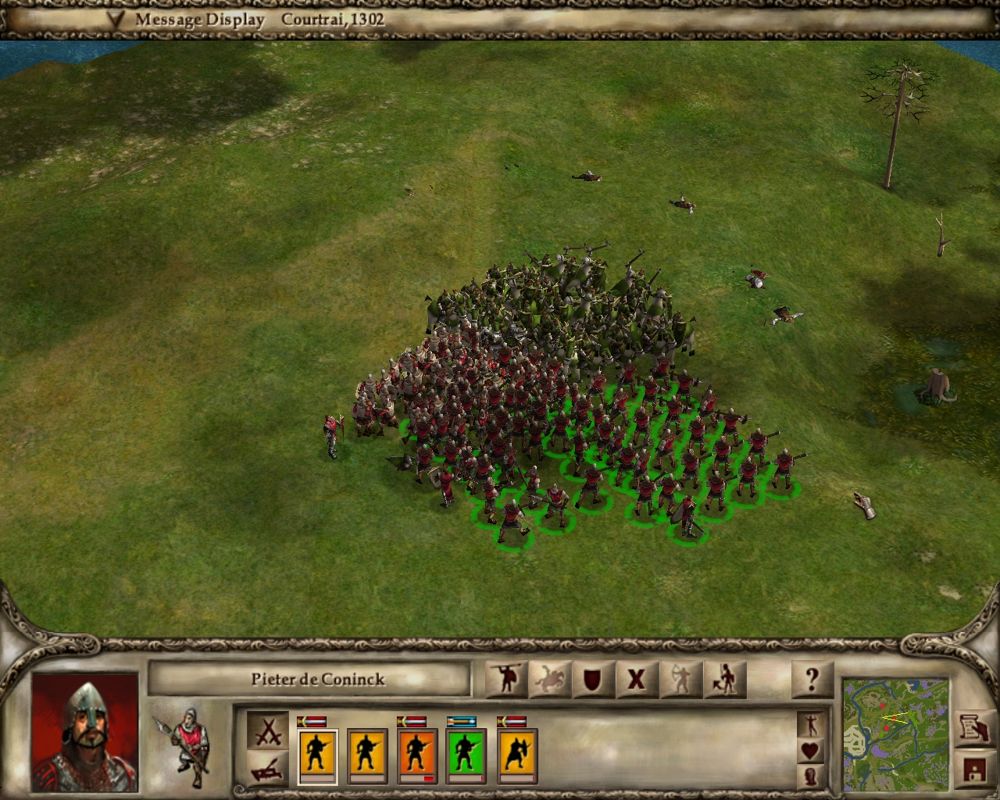
Streamlining the kingdom changed what the title promised an experienced Lords II player. The detailed rhythm of managing counties had been a large part of the earlier game’s appeal. A sequel with less attention to that routine could feel like losing the feature you had returned to enjoy, even if its new approach worked for someone else.
Its troubled route to release did not help the expectations around it. In his March 2004 review, Brett Todd described a delay from the previous autumn and the announcement of a $19.99 launch price shortly before release. Those circumstances could make a buyer suspicious before the game had a chance to explain itself.
Todd nevertheless liked it, awarding an 8.4 and praising its fresh real-time approach. Other reviewers were much less enthusiastic. The game’s 65 Metascore reflects that uneven reception. The final Impressions release was divisive, rather than a game every contemporary critic agreed had failed.
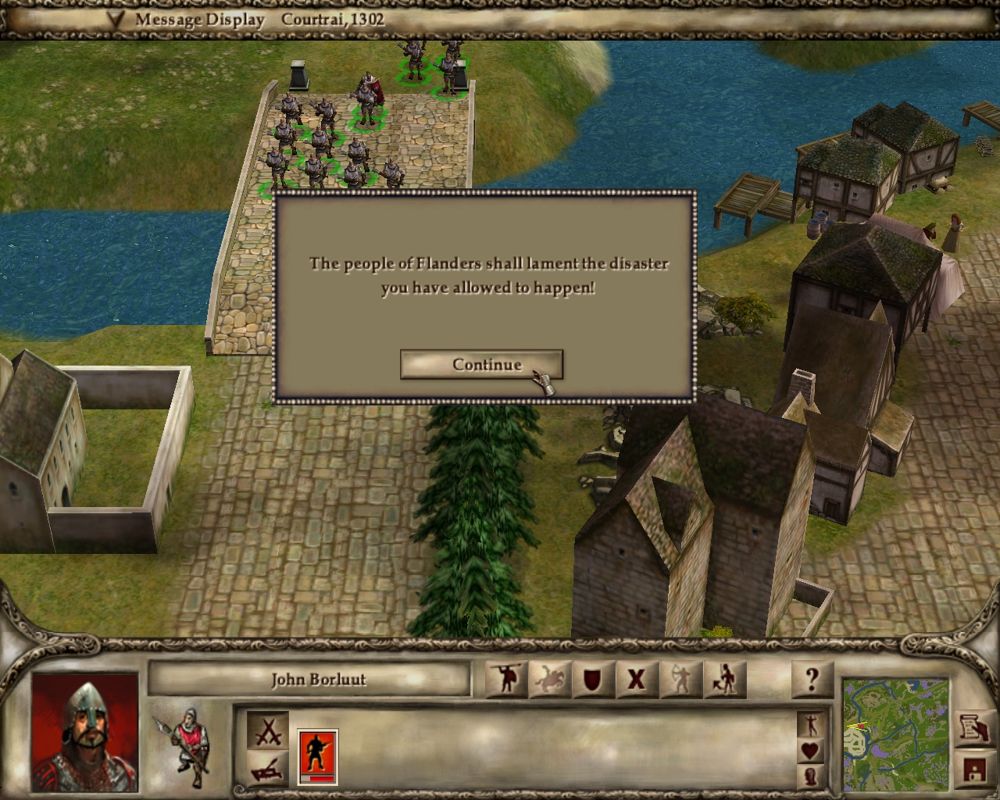
For the company’s history, the change is still consequential. A studio remembered for carefully balancing ordinary management with larger ambitions had revisited one of its defining games with different priorities. After eight years, the title alone could not tell a returning player what kind of experience they were about to buy.
It would be tempting to make that sequel the entire explanation for what happened next. The business around Impressions was in much broader trouble.
Impressions closes (2004): the studio and the brand are different things
Vivendi Universal Games’ 2004 restructuring closed Impressions and fellow Sierra studio Papyrus. A June 2004 Seattle Post-Intelligencer report placed the Boston-area closures inside a larger reduction of 350 North American positions, alongside the shutdown of Sierra’s Bellevue operation.
The Sierra name would continue on published games. The Impressions workplace would not. A company that had made a distinctive series of cities could disappear while the publisher retained the games, their names and the rights to commission more of them.
That is a sadder ending than a final release simply being disappointing. The people who had drawn the buildings, written the systems, composed the music and tested the shortages had made something that continued to matter to players. Their employer’s continued existence was a separate decision.
Some of the experience had already travelled elsewhere. Firefly was making its own strategy games, and Tilted Mill was preparing a new kind of Egyptian city. Impressions’ closure ended the studio, but it did not end the work its developers had begun.
Children of the Nile (2004): follow a person instead of a service route
Tilted Mill’s Children of the Nile offered a more personal view of an Egyptian settlement. It used a 3D world and residents with lives and needs to pursue. The aim was to make the city’s inhabitants behave more like people, rather than simply carry a service through a prescribed system.

That was an appealing ambition for developers who had spent years making cities look alive. You could move around the landscape and pay closer attention to the individuals whose work supported it. The river, farmland and buildings gained a different kind of presence.
It also changed the relationship between a problem and its explanation. In a classic Impressions game, a walker and a route could give you a relatively direct way to investigate access. A simulation based on individual lives could produce richer behaviour while making the cause of a shortage harder to read.
Neither approach automatically makes a better game. Children of the Nile had its own pleasures and substantial ambitions, and its developers remain proud of it. It asked the city-building player to become interested in a different sort of machinery underneath the attractive picture.
The move illustrates a difficult design trade-off. Impressions’ older games had simplified behaviour in ways that made the city easier to read. More lifelike inhabitants could add interest while removing some of that clarity.
“BUT, we lost the simple clarity of 2d isometric, and walkers that DON’T act like real people.”
Chris Beatrice, discussing the move into 3D in our interview.
A resident acting more realistically is impressive. A system the player can understand and manipulate is useful. The old games had sometimes chosen the second quality even when it made their people behave oddly. That compromise helped them become good strategy games.
Caesar IV (2006) and SimCity Societies (2007): familiar names in unfamiliar cities
Caesar IV brought the Roman series back in 3D, developed by Tilted Mill rather than the closed Impressions studio. The title connected it to a long history, but the technology and simulation brought fresh problems. Building a city now meant making it work as a more elaborate visible world.
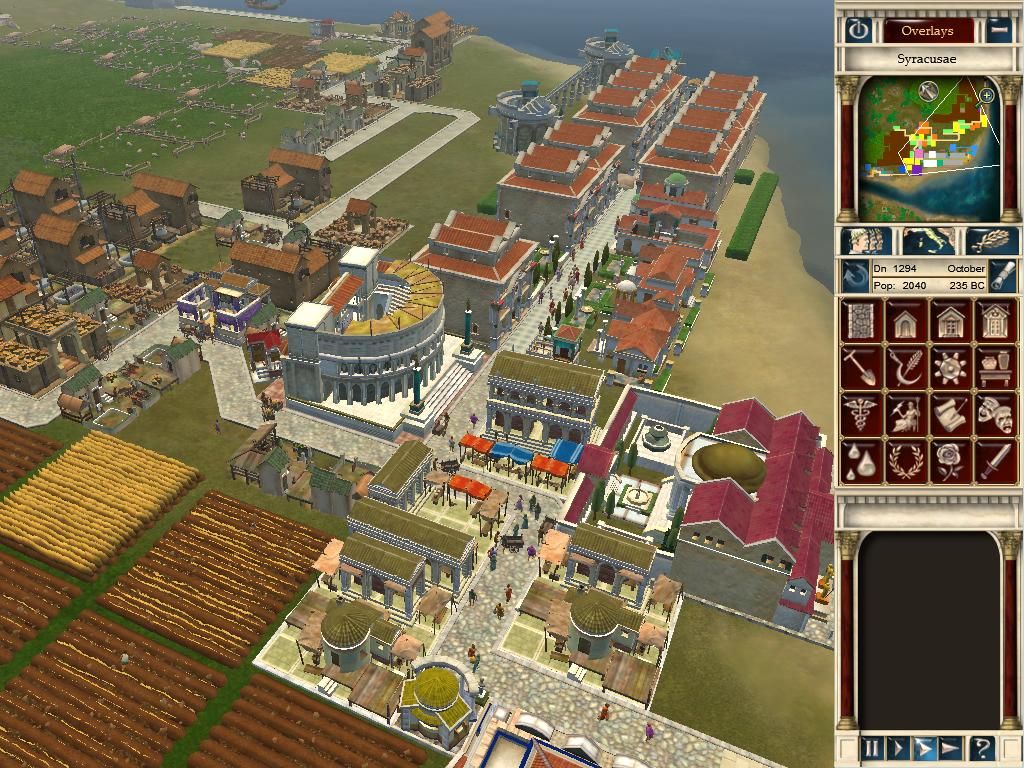
The pressure to make everything visually splendid could complicate development. An event or effect that an earlier game communicated simply might now need an expensive visual implementation. More capable hardware did not make every design ambition cheaper to realise.
The finished game could provide lovely views of Roman life. It also arrived before an audience with well-established ideas about what Caesar should feel like. A player who had mastered the old system did not necessarily want the replacement to be more realistic. They might want the same satisfying clarity at a larger scale.
Tilted Mill then worked on SimCity Societies, released in 2007. It explored the character of a city through combinations of buildings and social values, taking a different approach from the familiar Maxis games. That was another ambitious attempt to make a city builder about something beyond balancing an ordinary municipal budget.
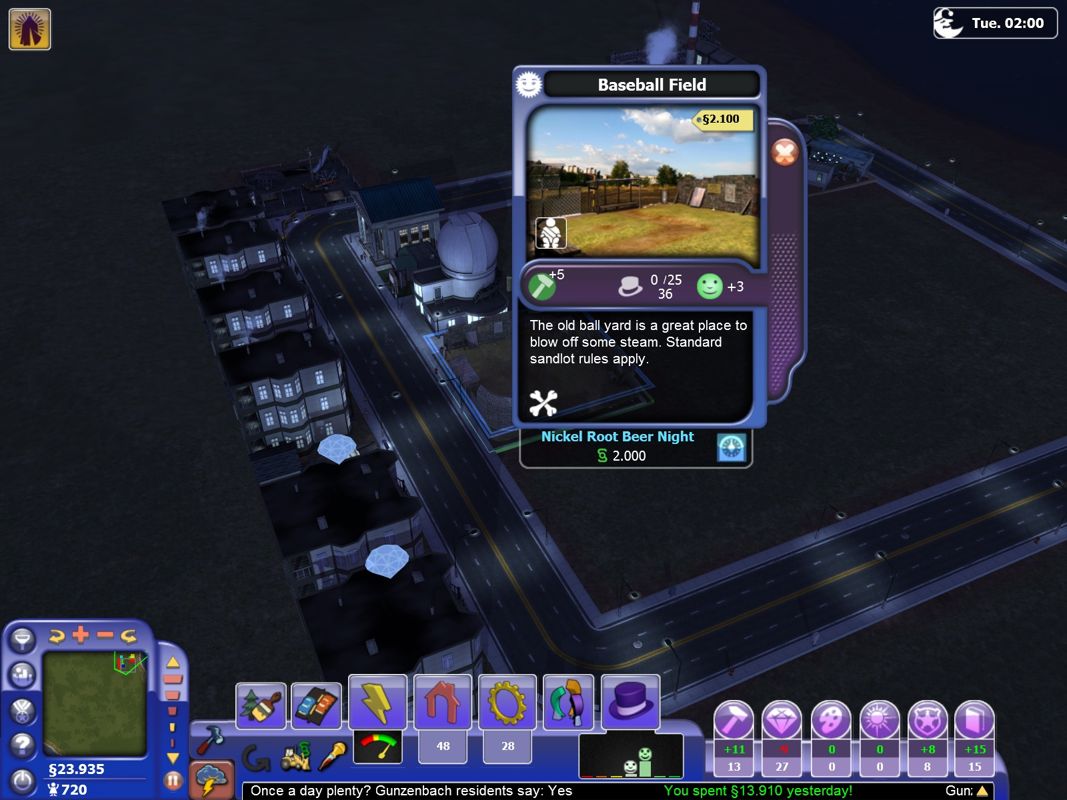
The name created a difficult expectation. SimCity carried its own long history of play, just as Caesar did. Changing the design beneath an established title could attract curiosity while disappointing players who had arrived for a particular kind of simulation.
These games belong to the Impressions story because they show its people continuing to experiment. They are not forgotten Impressions releases, and they should not be folded into its catalogue as though the studio had remained open. The continuity is in the experience and interests of the developers.
Caesar III’s second life: Julius, Augustus and a city that keeps changing
While developers explored new simulations, players kept finding things to do with the old ones. Caesar III’s streets became the subject of elaborate guides, custom maps and arguments about efficient layouts. A game released in 1998 continued to generate new questions because people were still building in it.
The community also worked on making it easier to run. Julius is an open-source reimplementation designed to preserve Caesar III’s gameplay while providing improvements such as support for modern displays and systems. Augustus builds on that work with additional features and changes, including roadblocks and expanded building options.
Those are different ways to look after a classic. Julius offers a route toward keeping the original experience accessible. Augustus gives experienced players more room to alter how their cities work. Neither requires pretending that the old design has nothing left to teach.
The distinction is useful when returning. A familiar game with modern conveniences can be comforting. A familiar game with new tools can expose all the habits you had developed around its limitations. A roadblock is a particularly powerful gift to someone who has spent years negotiating with a wandering service provider.
The amount of knowledge accumulated by these communities changes the relationship between creators and players. A designer remembers making the rules. Someone who has built cities with them for decades may understand an unexpected interaction in far greater detail. The game has become a shared subject rather than a finished object left entirely in its maker’s care.
Pharaoh: A New Era (2023) and a new idea at Tilted Mill: Egypt still has room
Pharaoh returned through another team in 2023. Dotemu and Triskell Interactive released Pharaoh: A New Era on February 15, rebuilding the Egyptian city builder for a modern presentation. Its existence is a substantial expression of how much affection remained for the old game.
A remake also puts the qualities of the original under unusually close examination. An old interface can be awkward; an old visual style can be part of why players love the game. Changing either requires deciding what should be made easier and what should continue to feel familiar.
Another branch of the legacy is still developing. In our recent interview, Tilted Mill described work on a new classic Impressions-style city builder, with a publisher being sought. The project returns to an approach whose clarity and distinctive systems still attract players.
This is a separate project from Triskell’s remake. No title or release date was supplied in the interview.
After the years spent pursuing richer graphics and more lifelike inhabitants, the older compromises have acquired a new appeal. A clear view, a service you can follow and a city you can learn to organise are still strong foundations for a game. The question is what someone can build on them now.
What Impressions left behind
The games remain inviting because their ambitions are easy to understand. Build a city. Support a kingdom. Complete a monument. Give the people somewhere to live and the supplies they keep asking for. The complications arrive through doing those things, rather than needing to be explained before you have started.
The best Impressions games also make improvement visible. The houses change, the monument grows, the treasury recovers and the streets become busy. You can look at the map and recognise something you helped make, even when you are acutely aware of what still needs fixing.
Behind that pleasure were people learning how to combine art, engineering, historical research and design. A tiny wheat tile, a reusable piece of aqueduct and a simple service route each solved a practical problem. Together, they helped create places that players became attached to.
Impressions closed. The cities remained. Their builders still return to see whether a different arrangement might work a little better, and sometimes just to watch a familiar neighbourhood going about its business.
There is usually a shortage to deal with before you leave.
More from Retro Replay
- Our interview with Chris Beatrice: the full conversation behind this history, including pixel art, studio culture and his current city-building work.
- Caesar III, Pharaoh and Zeus: Master of Olympus in our game database.
- The Complete History of Emulation: how old software survives after the organisations behind it disappear.
Sources and further reading
This feature draws on our interview; David Lester’s business interview and preserved publishing memoir; original Impressions and Sierra manuals; contemporary developer interviews and reviews linked throughout; the 2004 reporting on Vivendi’s restructuring; and documentation maintained by the Julius and Augustus projects. Game years refer to original releases; screenshot captions identify the editions shown.