 Retro Replay Retro Gaming History, Reviews & Emulation
Retro Replay Review
Gameplay
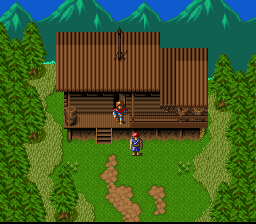
The first hour has an old-school RPG pull because it begins with a town, a trade Reyard hopes to learn, and a relationship that clearly matters to him. Once the story sends him beyond Farell, the structure settles into familiar territory: travel from a top-down view, endure random enemy encounters, and fight in turn-based battles viewed from the first person. It is direct, linear, and easy to understand, even if it asks you to accept the rhythms of a 1990s Japanese RPG.
Monster language is the reason this one rises above mere genre routine. Instead of treating every creature as another mandatory fight, you can learn its language and attempt to persuade it not to battle. The possibility of trading with monsters for rare items makes encounters feel less disposable, too. You are not simply waiting for the command menu to resolve another fight; you have a reason to pay attention to who is in front of you.
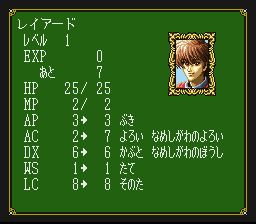
That system also offers a practical answer to the annoyance of random encounters. You will still run into enemies while moving through the world, but successful communication can make those interruptions less tiring. Automatic leveling keeps progression straightforward, though it also means you are following the game’s idea of character growth rather than carefully shaping every level yourself. Come for a guided adventure with an unusual social angle to combat, not a heavily customizable strategy RPG.
Graphics
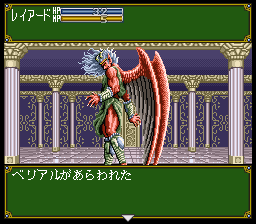
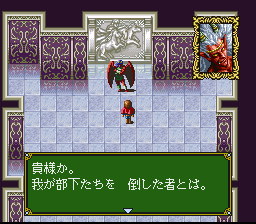
The game alternates between top-down exploration and first-person battle screens. That split gives travel a broad, map-like view while putting enemy encounters directly in front of you when combat begins.
Story
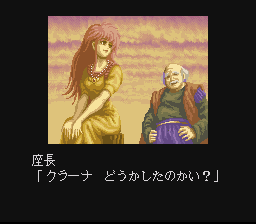
Reyard’s motivation lands because it starts with regret rather than destiny. He falls for Kurana, a performer searching for her birth parents, but cannot tell her how he feels before she prepares to leave Farell. When he learns that the duke of Bern intends to marry her against her will, his decision to act has immediate emotional clarity.
Kurana’s search for her true parents gives the central romance another thread to pull on. Reyard is not beginning as a hardened hero or an obvious chosen figure; he is a young man whose peaceful plans are disrupted by someone he has come to care about. That grounded opening is a strong fit for the game’s otherwise traditional RPG framework.
This is the third Tenshi no Uta game, yet it begins a new story in the same universe. References to earlier stories and returning characters give series followers extra texture, while the self-contained starting point means the central Reyard-and-Kurana conflict can carry the adventure on its own.
Overall Experience
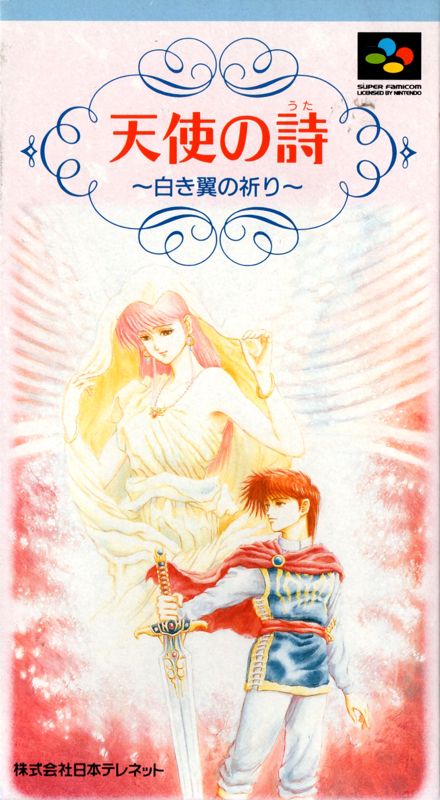
Tenshi no Uta: Shiroki Tsubasa no Inori is most rewarding when its conventional structure meets its stranger idea. Random battles, automatic levels, and linear progression are familiar enough to be comforting or restrictive depending on your taste. Monster negotiation is the piece that keeps it from blending entirely into the crowd, adding choice and occasional reward to a part of the genre that can often become a chore.
The payoff is worth pursuing if you like classic Japanese RPGs that put character motivation ahead of complicated systems. Reyard’s wish to protect Kurana gives the journey a human starting point, and the monster-language system offers a real reason to engage with battles beyond simply winning them. If you need wide-open exploration or deep control over party growth, the game’s direct path may feel confining.
Give it a chance for the mix of earnest romance and monster diplomacy. It does not reinvent the traditional RPG, but it finds a distinctive wrinkle inside it, and that wrinkle makes the familiar travel-and-battle routine easier to remember.


Reviews
There are no reviews yet.