 Retro Replay Retro Gaming History, Reviews & Emulation
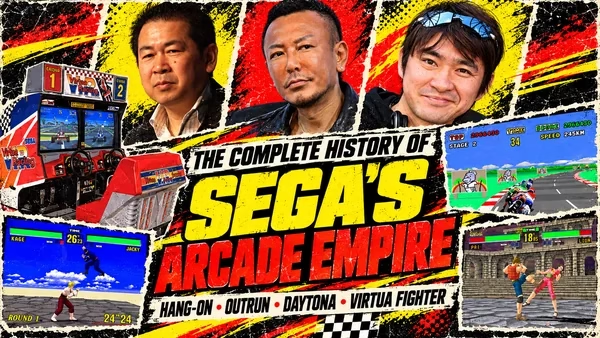
You hear Daytona USA before you see it. Someone is singing the name at full volume. Around the corner, a row of red racing seats is waiting, and your friend is already claiming the one beside you.
For years, Sega made the arcade trip worthwhile. You could have a good console at home and still want a go on that enormous motorcycle, the moving flight simulator or the racer linked to seven other seats. These machines were expensive, noisy and impossible to tuck under a television. That was part of the attraction.
Hang-On, OutRun, Virtua Fighter and Daytona USA helped make Sega a name you could trust with your last coin. Behind them were ambitious developers, demanding bosses and arcade owners hoping the next big machine would pay for itself.
Yu Suzuki became the best-known face of that work, but the story stretches well beyond him. It takes in composers, rival development teams, aerospace engineers and some spectacularly awkward equipment. Before any of them could impress a player, Sega had to find its way into the amusement business.
Explore Sega’s arcade history (click to expand for chapters)
- Service Games (1940s–1960): the people before the logo
- Rosen Enterprises and Sega Enterprises (1950s–1965): two businesses meet
- Periscope (1966): before the screen, there was the spectacle
- Jet Rocket (1970) and Winner (1971): a company still finding its future
- Pong-Tron (1973) and Gremlin (1978): catching the video-game boom
- Head On and Monaco GP (1979): a screen worth stopping for
- Frogger and Turbo (1981), Zaxxon (1982): the arcade floor fills up
- Champion Boxing (1984): Yu Suzuki gets his first project
- Hang-On (1985): Climb onto the controls
- Space Harrier (1985): The limitation that became a fantasy
- OutRun (1986): A holiday with a time limit
- After Burner (1987): Top Gun, without the paperwork
- Power Drift (1988) and G-LOC (1990): how far could a cabinet go?
- Shinobi (1987) and Golden Axe (1989): save some coins for the joysticks
- Virtua Racing (1992): the road becomes a place
- Virtua Fighter (1993): eight people change the fight
- Daytona USA (1994): eight seats, one argument
- Virtua Fighter 2 (1994): suddenly, everybody has a face
- Virtua Cop (1994): the innocent person in the wrong place
- Sega Rally Championship (1995): the corner talks back
- Virtual On (1996): two sticks and a very large robot
- The House of the Dead (1997): Sega invites something horrible inside
- Virtua Fighter 3 (1996): Model 3 changes the ground beneath you
- Scud Race (1996) and Daytona USA 2 (1998): graphics worth crossing the room for
- Sega Rally 2 (1998) and Star Wars Trilogy Arcade (1998): one more leap
- Astro City (1993): the cabinet that let the games do the talking
- Joypolis and SegaWorld (1990s): when the arcade wanted a whole building
- NAOMI (1998) and The House of the Dead 2 (1998): a new route onto the floor
- F355 Challenge (1999): Suzuki gets serious about the car
- Crazy Taxi (1999): the passenger has somewhere to be
- Virtua Tennis (1999), Samba de Amigo (1999) and Monkey Ball (2001): everybody can have a go
- Initial D (2002), cards and networks: give the player a reason to come back tomorrow
- OutRun 2 (2003) and After Burner Climax (2006): familiar fantasies, new equipment
- maimai (2012) and CHUNITHM (2015): the crowd gathers around music
- The Sega signs come down (2020–2022)
- The second life: rust, emulators and one more race
- One more race
Service Games (1940s–1960): the people before the logo
The first customers in this story wanted something to do in their spare time. Long before Sega sold a home console, its predecessors supplied coin-operated amusements to American military bases. Some of those machines played music. Others were slot machines. The business depended on having equipment in the right places and keeping it working.
The Hawaiian roots run through Standard Games and three businessmen: Irving Bromberg, his son Martin Bromley, and their associate James Humpert. Historian David Jacobs describes that connection in an American Journal of Play interview. These were coin-op businessmen, operating decades before the phrase “video-game company” would describe what their successors became.
As the business spread, the Service Games name tied it to its military customers. In Japan, Richard Stewart and Raymond Lemaire developed the operation that would feed into Sega. They imported and supplied machines, then expanded into making them. Sega’s own historical timeline places their Japanese work in the early 1950s.
A jukebox needed records, a working mechanism and someone willing to repair it when the next song refused to play. Renting and servicing equipment kept the business going after the sale. Sega’s foundations were practical, sometimes greasy, and a long way from a blue hedgehog.
In June 1960, the Japanese operation took shape as two companies: Nihon Goraku Bussan handled sales, while Nihon Kikai Seizo handled manufacturing. Sega counts that year as its corporate beginning. The split explains the unfamiliar names that turn up in early histories: one side put machines into businesses, and the other built them.
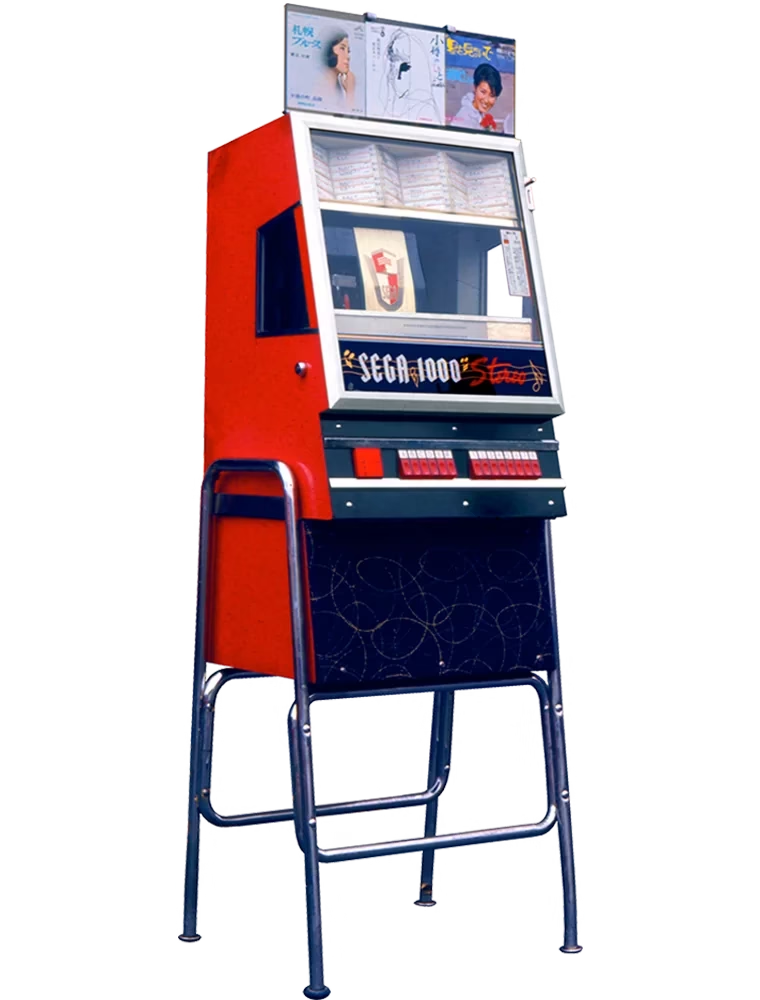
The Sega 1000 jukebox followed in 1960. The name came from Service Games and was already appearing on equipment before Sega Enterprises existed. A customer could encounter “Sega” while choosing a record years before anyone could encounter it while choosing a fighter.
Rosen Enterprises and Sega Enterprises (1950s–1965): two businesses meet
David Rosen, an American former serviceman who stayed in Japan, came at the opportunity from another direction. His early business included inexpensive photographs. In his interview with historian Steven L. Kent, preserved in French translation, he remembered how costly and slow an ordinary identification photograph could be. Offering quick photographs gave him a useful business in a country where people needed them.
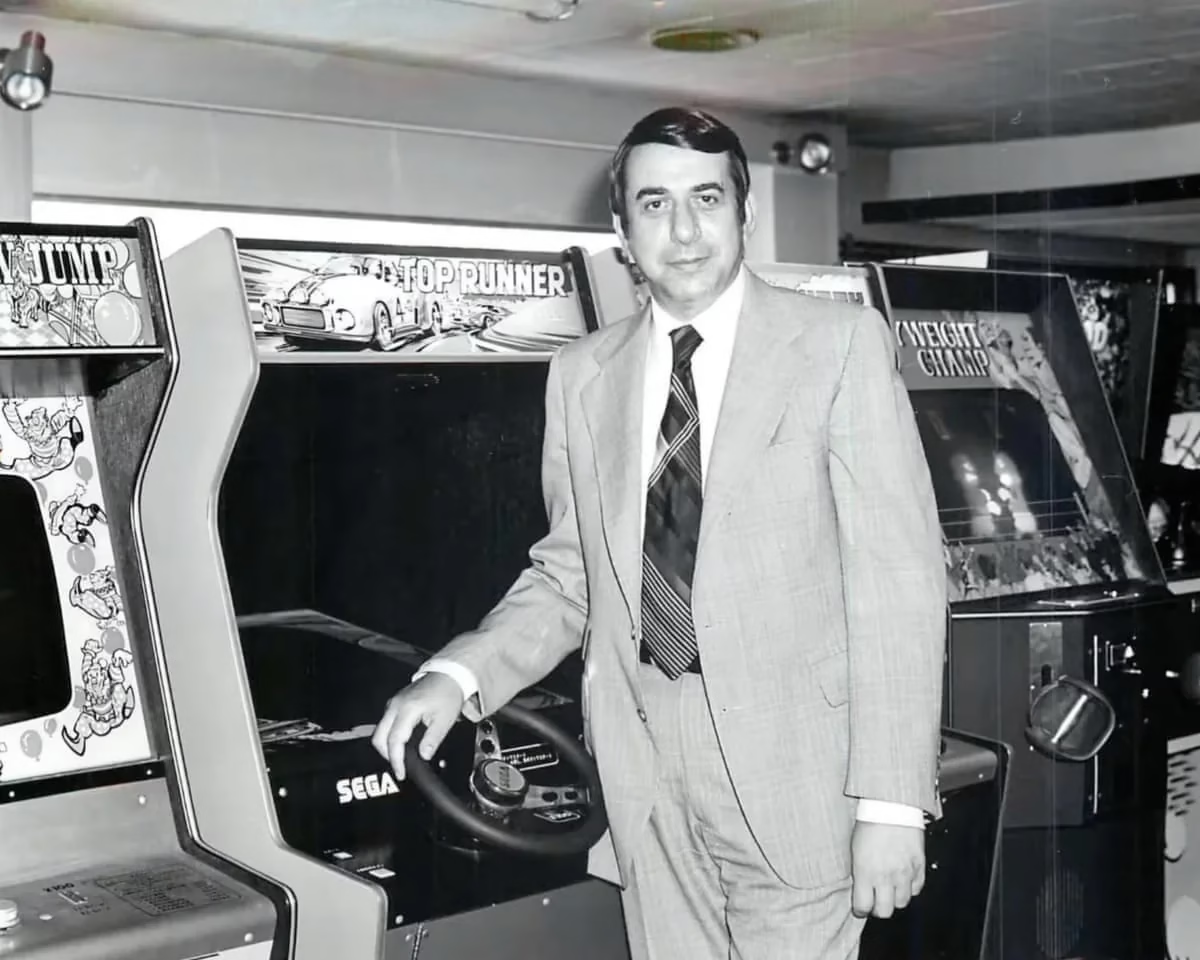
Rosen then saw a growing appetite for leisure. His contacts among cinema operators gave him places to install imported amusement machines. A person visiting the cinema already had a little time and money set aside for entertainment. Something enjoyable beside the main attraction could earn another coin.
Imported equipment brought problems with it. In Ken Horowitz’s researched history of Sega pinball, former director Akira Nagai recalled the poor reliability of used machines. Making replacement guns and flippers locally helped push the company toward making complete games. Repair work was becoming design work.
Nihon Goraku Bussan and Nihon Kikai Seizo combined in 1964. The following year brought the merger with Rosen Enterprises and the Sega Enterprises name. Rosen became the leader of a business with manufacturing experience, distribution contacts and its own amusement locations. The corporate chronology records those steps separately, rather than treating Sega as something that appeared fully formed in 1965.
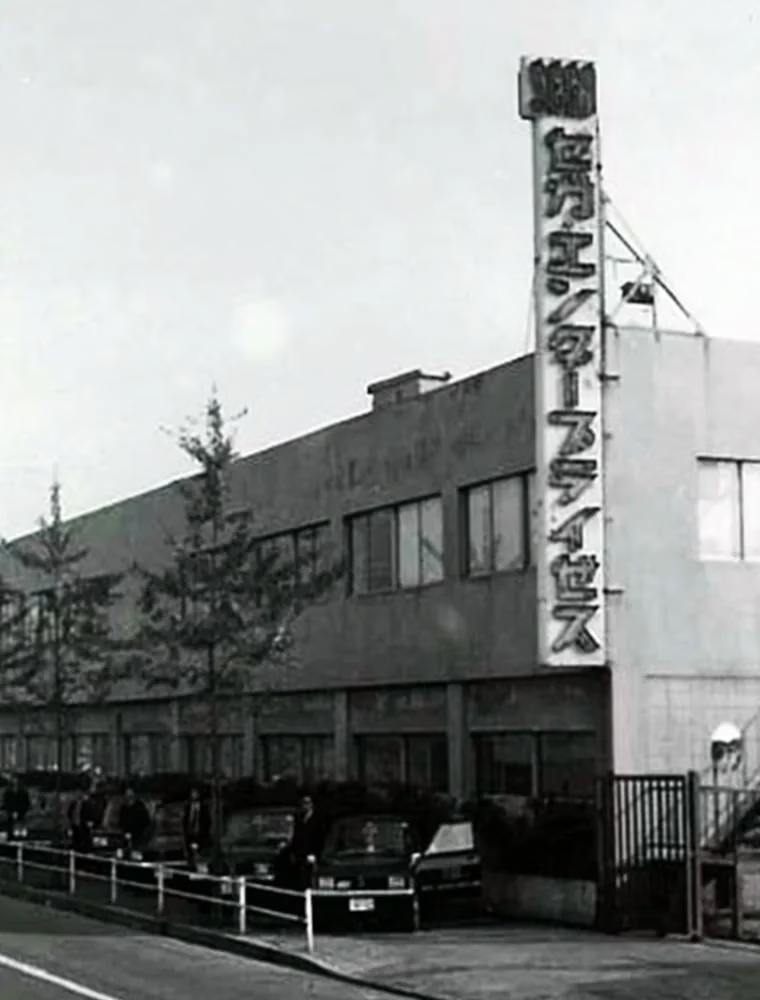
The combined company could build a machine, sell it to an operator, and watch customers play in its own locations. A promising drawing still had to survive the factory, the delivery van and the public.
Periscope (1966): before the screen, there was the spectacle
Periscope put a submarine viewer in front of the player and ships in the sights. Lights, mechanical scenery and sound supplied the sea battle. There was no video screen, but aiming at a ship and watching the torpedo reach it was satisfying all the same.
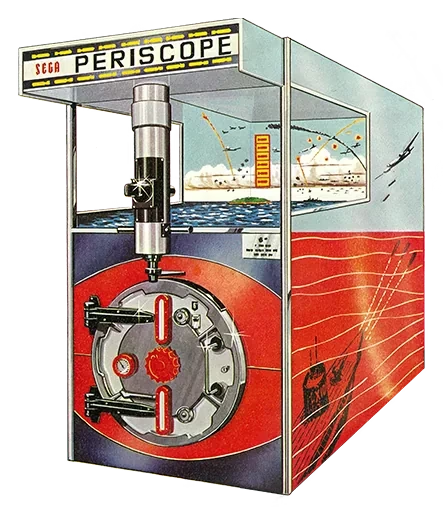
The viewer was an important part of the trick. Leaning into it narrowed your attention to the target, while the cabinet supplied a naval battle on a manageable scale. Sega would later build much more elaborate machines around the same invitation: put your hands here, look in this direction, and imagine yourself somewhere else.
Export buyers worried about the price, Rosen recalled. His answer was to charge a quarter per play, helping establish a higher price for American arcade games. Sega remembers Periscope as an international breakthrough: a costly machine people would pay extra to try.
Namco had its own earlier Periscope, and Sega had plenty of competitors in mechanical games. What Sega gained was an overseas hit and experience in selling a more elaborate attraction. Operators had to believe customers would keep coming back after the novelty wore off.
Jet Rocket (1970) and Winner (1971): a company still finding its future
Gulf & Western acquired Sega in 1969. The sprawling American conglomerate also owned Paramount Pictures, placing this Japanese amusement business inside a much larger corporate family. Rosen stayed on. Sega’s manufacturing and export ambitions continued, but the company now answered to an owner with interests far beyond games.
Jet Rocket let a player fly over a miniature landscape using mechanical scenery and projected effects. It offered the pleasures of a flight game before a computer could draw the landscape convincingly. In Horowitz’s history, drawing on Rosen’s recollections, competing copies helped sour Sega on exporting such expensive attractions for a time. Building something impressive did not guarantee a clear market for it.
Pinball offered another route. Winner arrived in 1971, and Sega followed with more tables. The earlier pinball history describes engineers and factory workers turning drawings into physical parts, then assembling and playing their machines. The work involved metal, wood, switches and moving balls. A mistake could be something you had to take apart.
These games sat alongside the business of running venues. Sega opened Apollo Vegas in Osaka in 1972, bringing casino-style medal games into its amusement operation. The name advertised the atmosphere. Sega was exploring what an entire room could offer, with a selection of amusements to occupy an evening.
Jukeboxes, mechanical games, pinball and medal machines were still Sega’s business. Video games had to earn their place among them.
Pong-Tron (1973) and Gremlin (1978): catching the video-game boom
A video screen gave manufacturers a new way to entertain people without building so much moving scenery. Sega joined in early with Pong-Tron, released in 1973 and preserved in its arcade catalogue. Two players, two paddles and a ball were enough to make an argument out of a television.
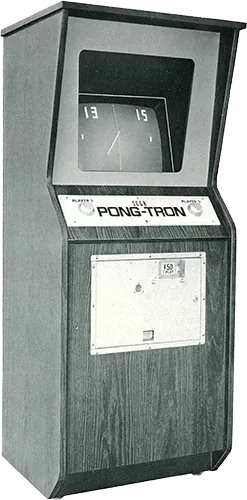
Having a video game did not mean Sega had correctly predicted how quickly the market would change. In a November 1978 Game Machine interview, Rosen admitted that the company had concentrated on pinball while the television-game business grew. His verdict was unusually plain: “we missed the boom.” Sega was now shifting its attention.
The American developer Gremlin, acquired in 1978, gave Sega a stronger position in that market. The partnership connected development and manufacturing in Japan with an American operation that understood local customers. The Sega/Gremlin name would appear on machines and advertisements, a reminder that Sega’s arcade ascent crossed the Pacific in both directions.
Another important arrival came through Esco Trading, the Japanese distributor led by Hayao Nakayama. Sega announced its acquisition in 1978, with the arrangement planned for the following year. Nakayama brought experience selling equipment to the people who actually had to earn money from it.
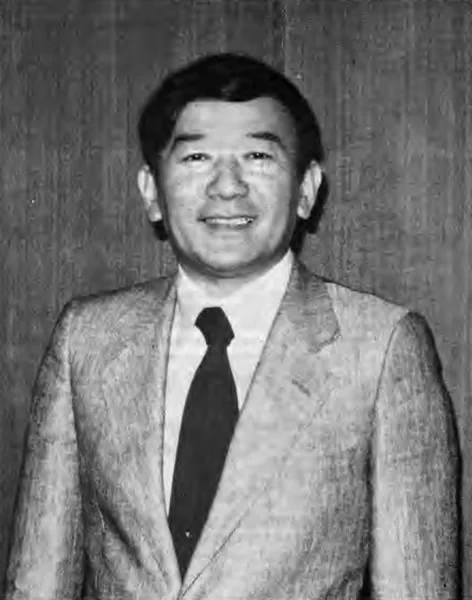
In that interview, Rosen and Nakayama stressed that Esco would still handle other manufacturers’ products. An operator needed a useful selection of games. Sega could benefit from a busy arcade even when every cabinet in it did not carry the Sega name.
Head On and Monaco GP (1979): a screen worth stopping for
Head On put a small car into lanes full of dots, with another car making collection dangerous. Clear the dots and avoid the collision. Its confined circuit turned a simple driving premise into a game of timing and nerve. There was very little room to pretend a crash was somebody else’s fault.
Monaco GP offered another kind of driving. Viewed from above, the road hurried down the screen while you threaded through traffic. It had the quick readability of a miniature racing toy brought to life. Sega was developing the driving obsession that would eventually produce some of its best games, while still trying different views and cabinet sizes.
Nakayama’s August 1980 Game Machine interview catches a company adapting to that demand. He discussed cooperation between Sega and Gremlin, the popularity of small cabinets overseas, and Japan’s preference for table-style machines. A cabinet that worked in one country could disappoint in another.
He also described committing most of Sega’s development effort to video games. The shift was now substantial. Yet the operator’s questions remained familiar: how much space would a machine take, could existing equipment be converted, and would customers play it often enough?
Frogger and Turbo (1981), Zaxxon (1982): the arcade floor fills up
Sega/Gremlin’s American business also handled games made elsewhere. Konami created Frogger; Sega/Gremlin helped bring it to American arcades, promoting it in its 1981 service newsletter. Getting a frog across the road and river offered a clear challenge to somebody who had never touched a joystick. It also allowed the traffic to humiliate experienced players quite efficiently.
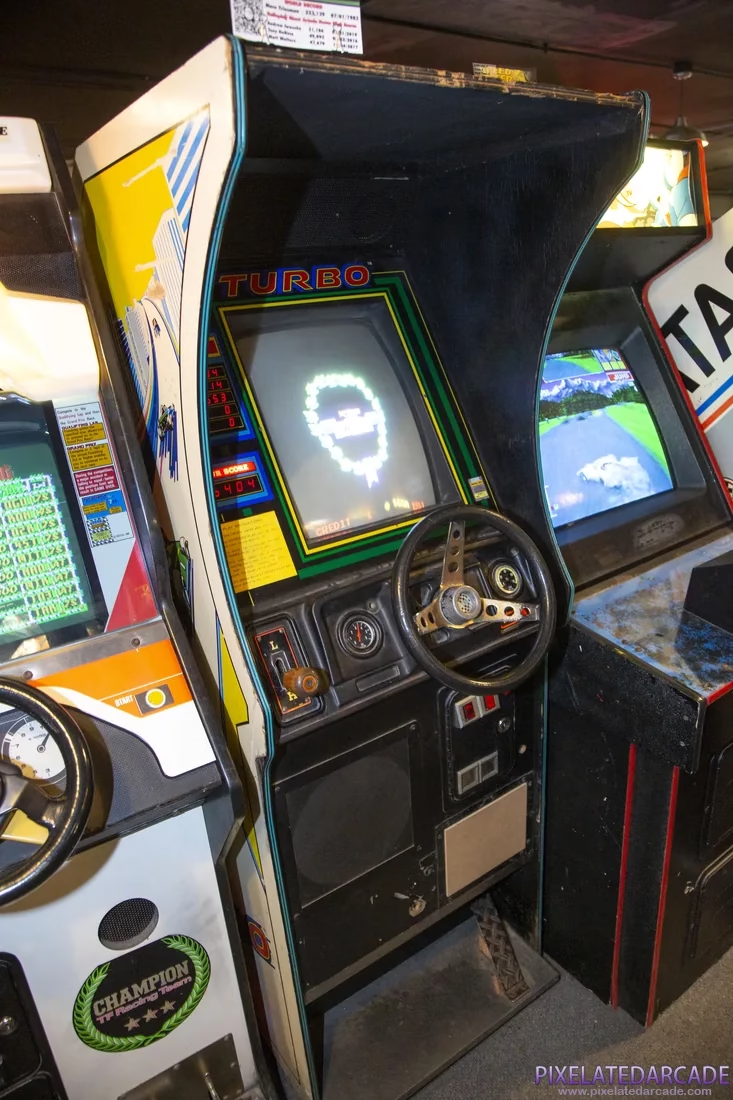
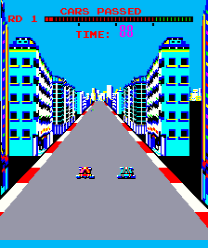
Licensing explains why the Sega name appears around games its own teams did not create. Meanwhile, its home-grown experiments were becoming harder to overlook. Turbo put traffic on a road stretching into the distance, asking you to judge gaps as the cars approached. It was a much closer ancestor of Sega’s later racing spectacle than Monaco GP’s overhead view.
Zaxxon offered a stranger view: a fortress seen at an angle, with a ship that could climb and descend. Getting past a wall meant judging your altitude as well as your position. The shadow underneath the ship suddenly became very useful.
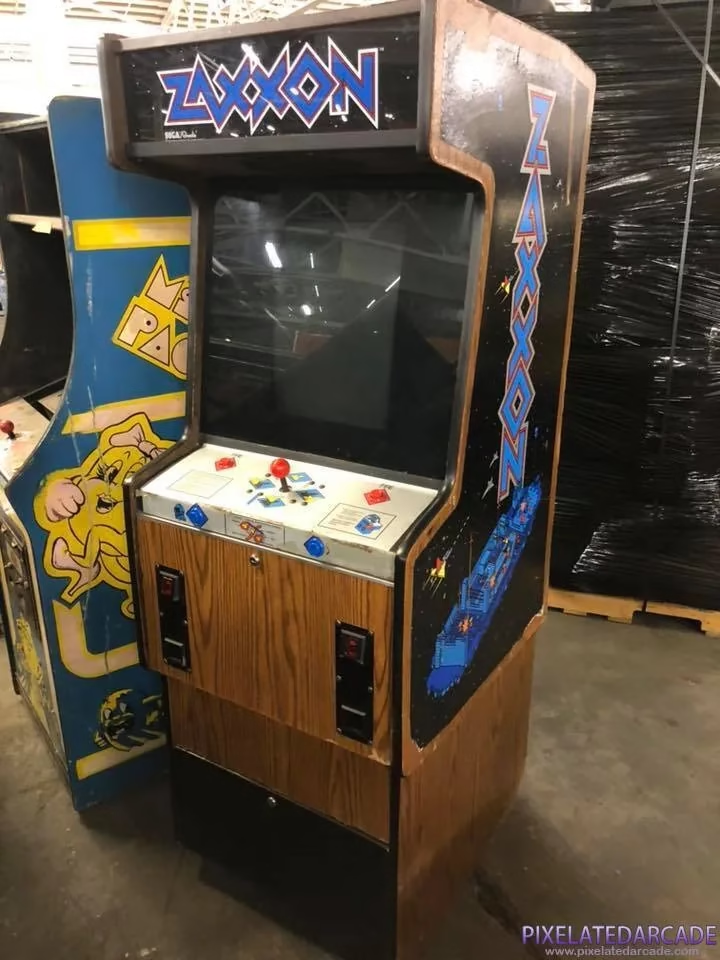
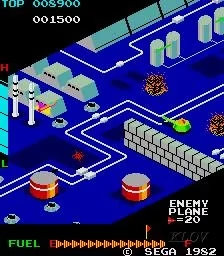
The unusual perspective was attractive and occasionally awkward. A gap that looked reachable could turn out to be above or below you. Learning to read the scene was part of learning to play. Sega was making depth into a challenge before it could build the entire scene from 3D shapes.
Other experiments approached the problem differently. SubRoc-3D used a stereoscopic viewer; Astron Belt mixed game graphics with filmed laserdisc backgrounds. This variety would later give preservationists plenty to untangle, as our emulation history explores.
In 1984, Sega’s Japanese business left Gulf & Western through a buyout involving Rosen, Nakayama and the CSK group. The corporate chronology records the change just as Sega’s next arcade generation was taking shape. Nakayama became president. A young engineer hired the previous year was about to give him some unusually ambitious machines to sell.
Champion Boxing (1984): Yu Suzuki gets his first project
Yu Suzuki joined Sega in 1983 as an engineer interested in 3D graphics. His first project, Champion Boxing, was a small 2D boxing game for the SG-1000 home console.

In a GameCores interview translated by yuc02 at Phantom River Stone, he recalled a small team and considerable responsibility for someone so new. The arcade version even had an SG-1000 inside the cabinet, wired to the controls.
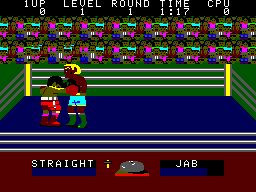
The man who would help make consoles look years behind began by putting one inside an arcade machine. His next game required a motorcycle.
Hang-On (1985): Climb onto the controls
Hang-On’s red motorcycle was hard to walk past. You could climb aboard, lean into a bend and watch the rider on screen do the same. For a child accustomed to a joystick, that was quite an invitation.
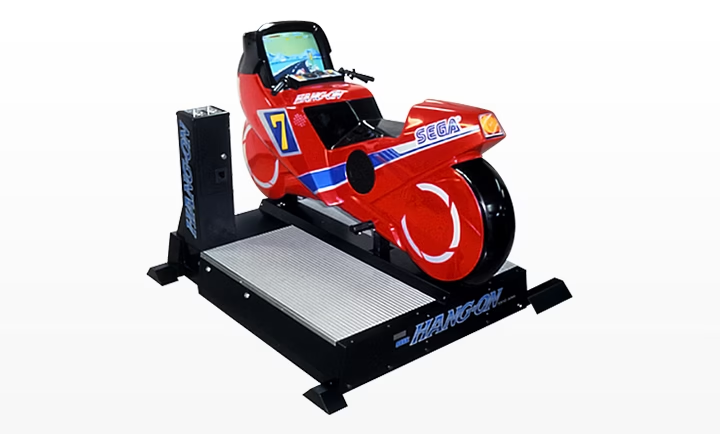
Hang-On also came in other cabinet versions, but the ride-on bike became its calling card. Sega’s historical account puts that machine at the heart of its appeal.
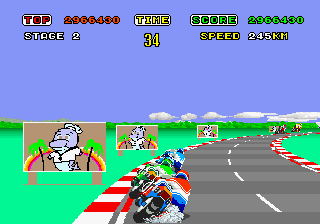
Two Motorola 68000 processors and specialised graphics hardware kept the road, riders and scenery moving. Drawn objects, or sprites, grew as they approached you. Billboards flashed past; another rider got larger alarmingly quickly. It was a convincing impression of speed without a landscape built from polygons.
Reach a checkpoint and the clock gave you more time. Crash and precious seconds disappeared while you got going again. The road always seemed to have another stretch worth seeing, usually just beyond the time you had left.
The bike made that familiar arcade pressure physical. You were leaning while watching the next corner, trying to pass a rival without losing your line. The screen demanded attention even when the enormous red machine had won it before the first coin went in.
That difference is easy to lose in a home conversion. A joystick can reproduce the steering command, but climbing onto the bike changes your relationship with it. A friend can stand beside you, watch your balance and laugh at the crash. The cabinet gives the game an audience as well as a player.
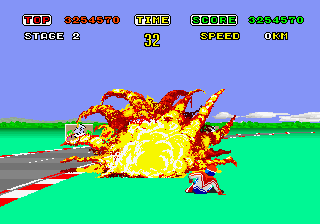
Building the bike took compromises. Suzuki recalled changes to the mechanism to improve its control, while proposed fans that would respond to speed were cut to save money. The engineers had to make something an arcade could buy, use and repair.
Sega called these physical experiences taikan. On Hang-On, the idea needed little explanation: lean the bike, take the bend.
Space Harrier (1985): The limitation that became a fantasy
Space Harrier went straight for the bizarre. A flying man carried a cannon through a world of dragons, stone heads and mushroom-like pillars. The chequered ground rushed underneath him. Even in an arcade, this was an odd place to find yourself.
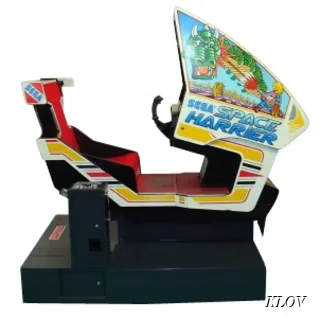

It started with a more conventional idea. In developer interviews translated by shmuplations, Suzuki explained that the hero was originally a fighter aircraft. Drawing it convincingly from enough angles used more memory than the team could spare.
“It was nothing but walls, to be honest.”
Yu Suzuki, recalling development in the Space Harrier interview collection
A human needed fewer animation frames. Once the hero could fly unaided, the setting could be fantasy. Columns that looked much the same from different angles saved artwork too. The team’s practical fixes gave Space Harrier its wonderfully peculiar look.
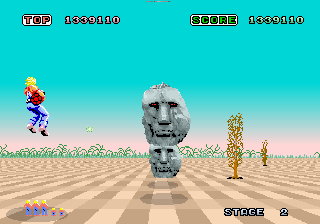
The team also let shots home towards nearby enemies. It helped with aiming at small, distant targets while dodging everything else. There were still plenty of opportunities to hit a tree.
Space Harrier asks you to read two distances at once. You aim toward enemies far ahead while obstacles hurtle into the foreground. A pillar that looked harmless a moment earlier suddenly occupies the exact place you meant to fly. Constant movement helps until your own dodge takes you into the next thing.
The deluxe sit-down cabinet moved with the action. An upright played the same frantic game, but the moving seat made a much better spectacle for everyone waiting behind you.
OutRun (1986): A holiday with a time limit
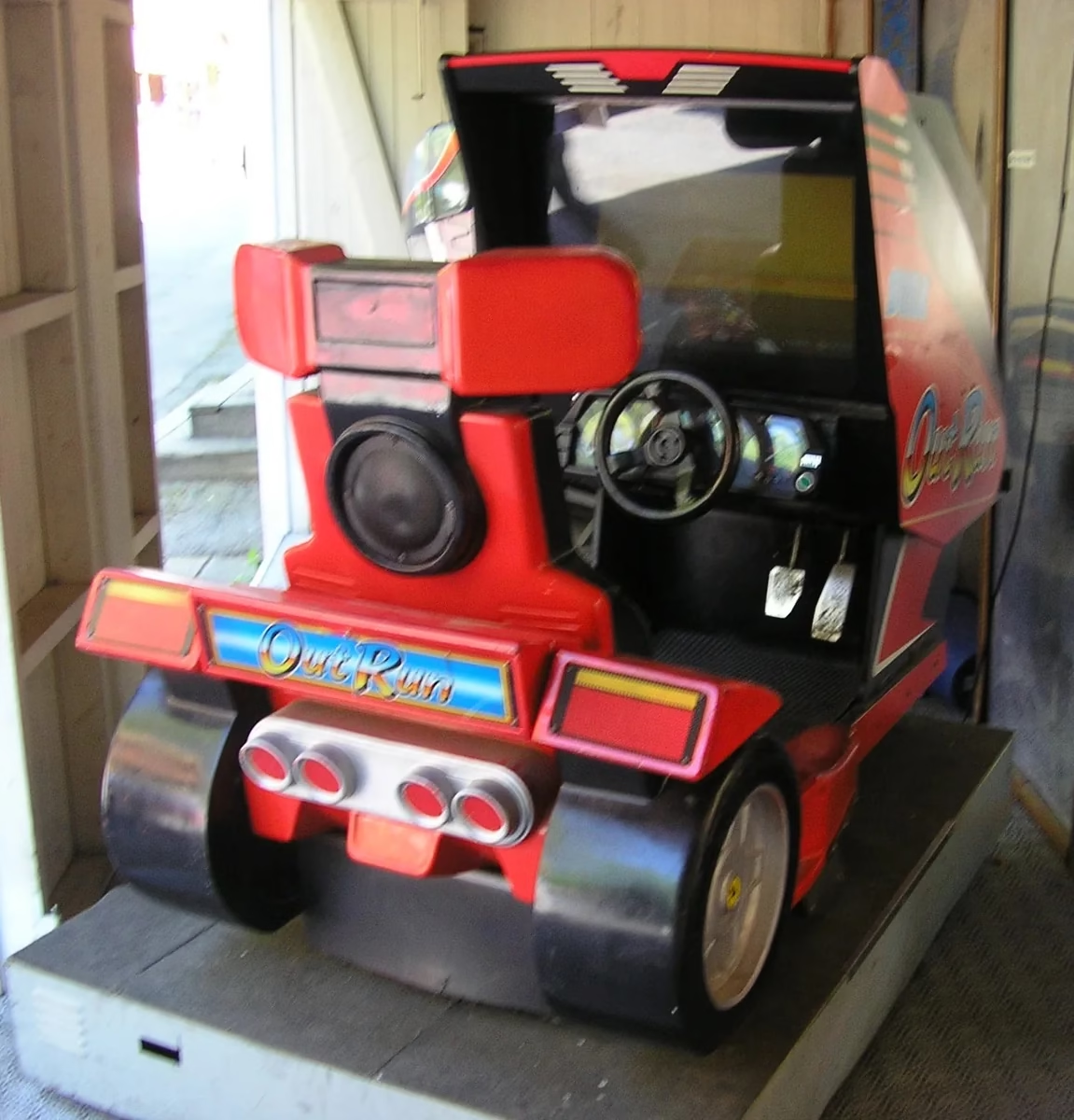
OutRun was a change of pace, even when you were driving far too fast. A red sports car, a passenger and a sunny coast made the race feel like a holiday. The clock was the only thing in a hurry to spoil it.
Suzuki travelled through Europe to research the scenery. His recollections include photographs, language difficulties and mishaps along a loosely planned road trip. The artists came back with places to draw from, rather than a vague instruction to make somewhere look sunny.
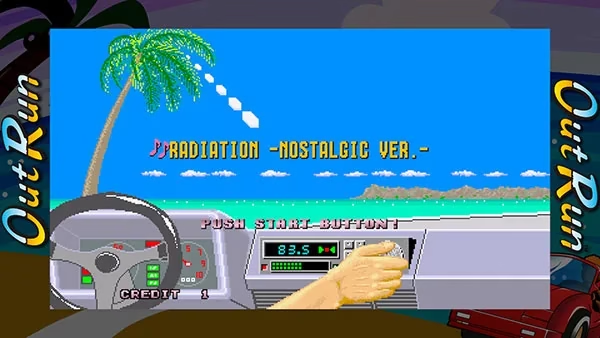
At each fork, you picked the next route. One drive might take you somewhere the last attempt had missed. It was an excellent reason to try again, even after a disappointing crash.
The forks also changed what a successful run meant. You could become attached to a particular route, learn its bends and still know there were other destinations waiting. OutRun gave the player a small amount of ownership over a very short trip. The scenery was something you chose to visit.
Its cheerful surface hides a fairly stern driving game. Traffic can block the clean line through a corner, and leaving the road costs momentum just when the clock becomes troublesome. Good driving has a wonderful rhythm: steer through the gap, settle the car, and let the next stretch open up. A bad collision interrupts the holiday immediately.
You picked the music too. The arcade radio offered Magical Sound Shower, Passing Breeze and Splash Wave, as Sega’s official archive records. Few game menus have ever set a mood so quickly.
Composer Hiroshi Kawaguchi, better known as Hiro, had joined Sega as a programmer. His music helped make OutRun feel cheerful rather than stressful, even with traffic coming at you. Those three tunes became as recognisable as the red car.
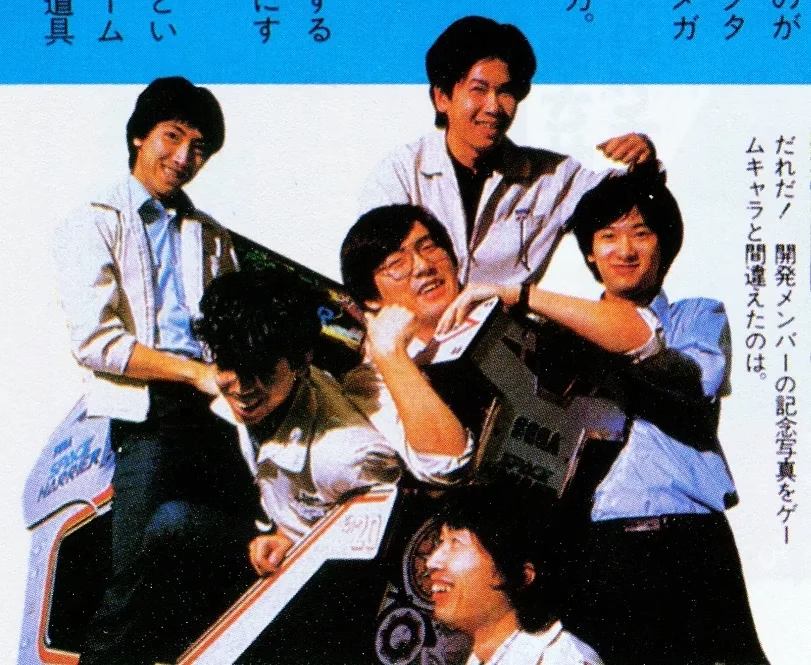
The team interviews also introduce programmer Satoshi “Bin” Mifune, working alongside Kawaguchi and Suzuki. The celebrated games came from a small group learning what its artists, programmers and musicians could pull off together.
The moving deluxe cabinet leaned into the corners, while simpler upright and sit-down versions suited smaller spaces. Wherever you played, running off the road could break a good rhythm. OutRun was beautiful, but it still wanted another coin.
After Burner (1987): Top Gun, without the paperwork
After Burner got you airborne quickly. Grab the stick, leave the carrier behind and find yourself surrounded by missiles. Anyone hoping for a quiet flight had picked the wrong cabinet.
After Burner put an F-14 in a storm of enemy aircraft and curling smoke trails. You lined up targets, fired and rolled away from incoming trouble. It captured the exciting part of the fighter-pilot fantasy and skipped most of the waiting.
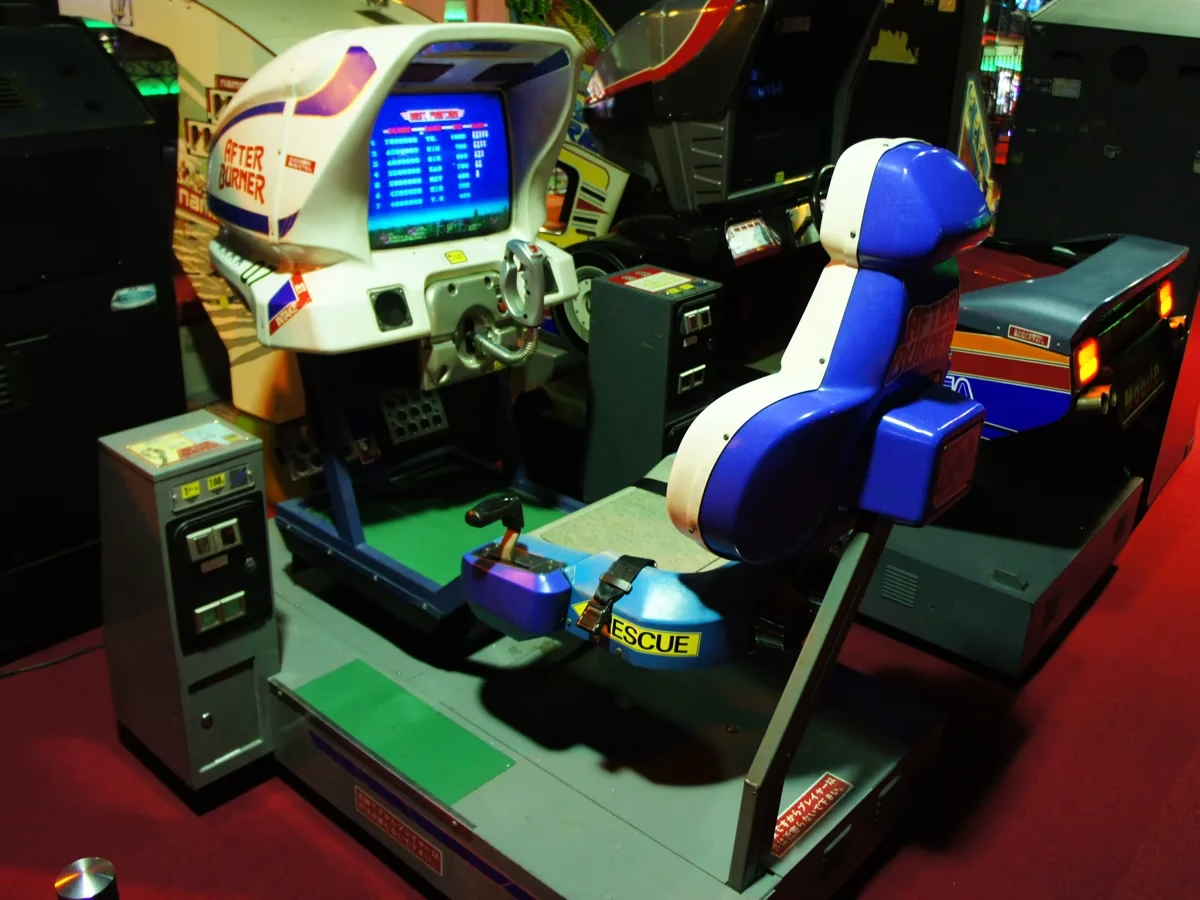

The deluxe cabinet put a moving cockpit around that fantasy. Watching someone rock through an attack was often enough to persuade the next customer to try it.
After Burner is much harder to read than OutRun. The action fills the screen with aircraft, smoke and warnings, and a first attempt can feel like reacting slightly too late to everything. Then a run of successful lock-ons makes the confusion briefly wonderful. You are banking through the spectacle you came to see, with very little time to congratulate yourself.
Development was considerably messier. In contemporary team interviews, Suzuki described wasted work and abandoned approaches. Mifune had to keep the action moving while the electronics, artwork, sound and cabinet were all being developed.
Top Gun had made the F-14 a movie star. Sega gave players a recognisable jet and the chance to do something dramatic with it. Realistic stretches of uneventful flying would have emptied the seat.
The deadline hurt. At GDC in 2011, Suzuki linked the schedule to pressure around Sega’s public listing. After Burner II arrived within months with improvements and throttle control; he recalled that the team had promised an upgrade. The version most people remember was the second attempt.
Home conversions had far less to work with. The Master System gave you the jet and the incoming trouble, but there was no getting that moving cockpit into the living room.

Power Drift (1988) and G-LOC (1990): how far could a cabinet go?
Power Drift sent little racing cars up and down tracks that looked more like roller coasters. The drivers had their own personalities, and the courses banked and plunged with very little concern for anyone’s stomach.
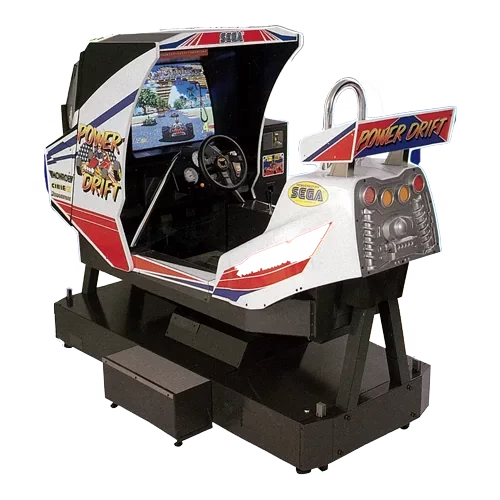
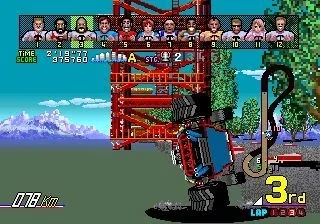
Sega’s Y Board assembled those courses from scaled sprites. Power Drift could suggest startling height and steep drops without building the road from polygons.
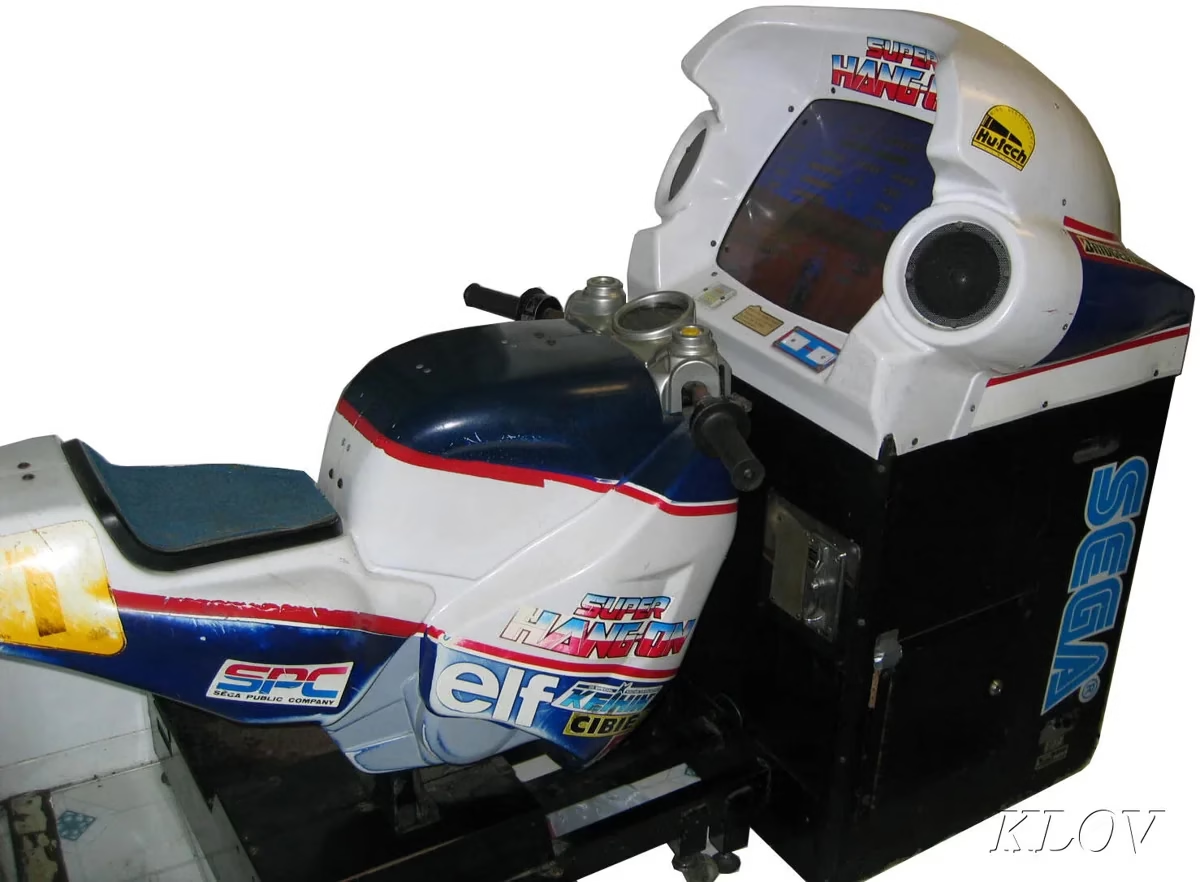
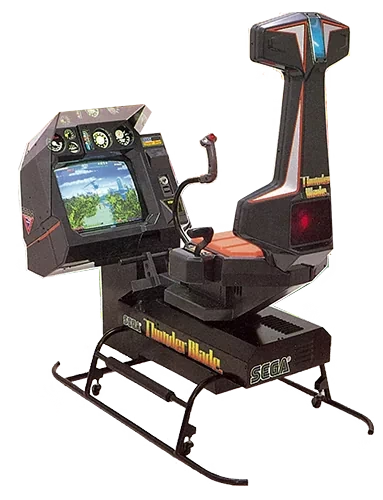
Super Hang-On extended the motorcycle challenge, while Thunder Blade put players in a helicopter. Sega kept finding new vehicles to wrap around a fast-moving screen.
G-LOC: Air Battle took things further. The R360 cabinet could turn a strapped-in player upside down. It required supervision like a ride, and it looked every bit as alarming from outside.
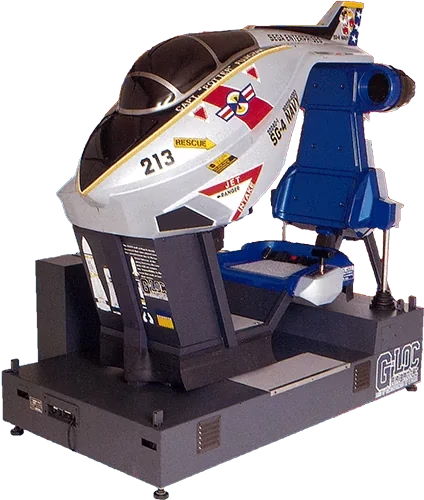
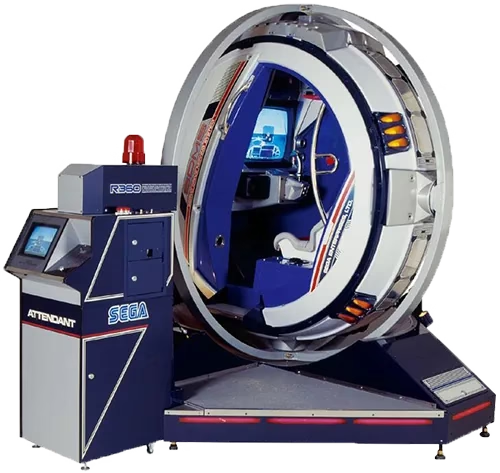
Testing had its hazards. In Suzuki’s later GDC account, a developer ended up stuck in the machine. Somebody had to find these problems before a paying customer did.
Shinobi (1987) and Golden Axe (1989): save some coins for the joysticks
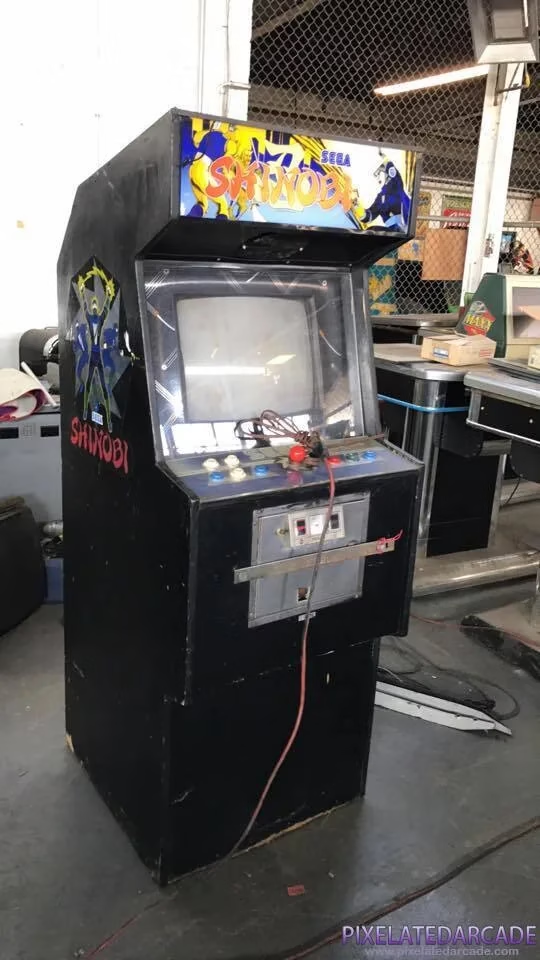
Sega had good reasons to spend your change elsewhere too. Shinobi sent ninja Joe Musashi after hostages, with shuriken for distant enemies and close-range attacks for anyone who got through. Its bonus stage let you throw stars straight at approaching ninjas. Missing one was easy to regret.

Golden Axe made the fighting a shared outing. Three heroes carried different weapons and magic into a fantasy world full of skeletons and armoured enemies. You could knock a rider off a creature, steal it and take a friend along. The pair of you could also squabble over the magic pickups.
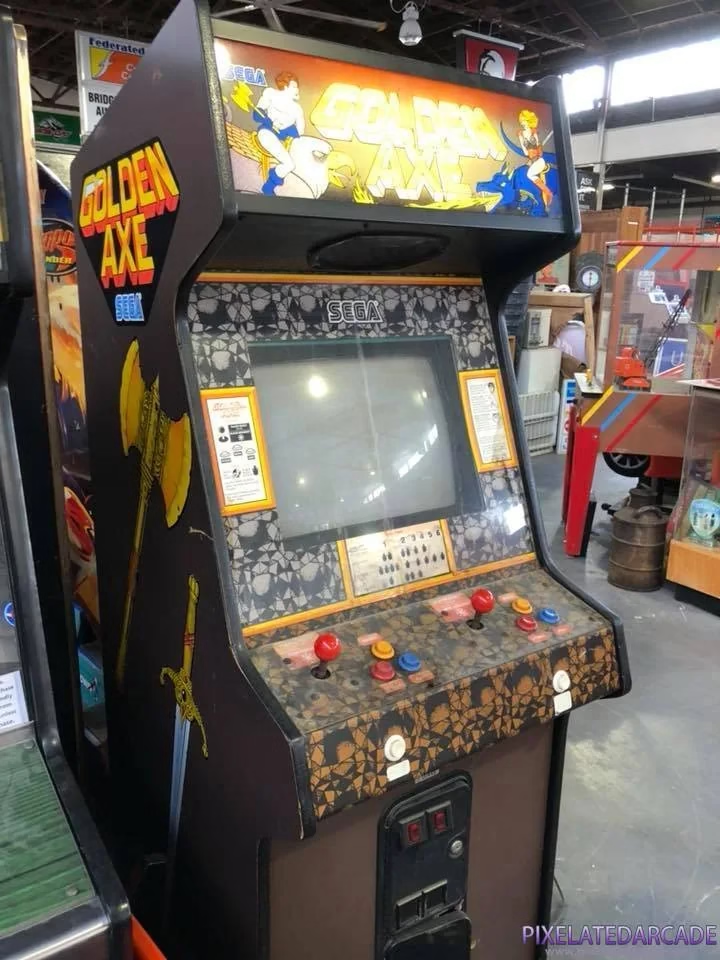
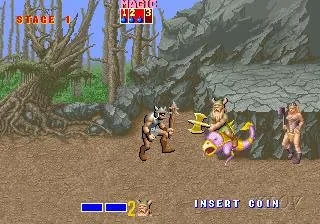
Designer Makoto Uchida helped create Golden Axe and Altered Beast. His games offered the spectacle of a fantasy film through ordinary joysticks and buttons, giving Sega another kind of hit alongside Suzuki’s elaborate machines.
Golden Axe’s pleasures are easy to share. A friend can see the enemy you are trying to reach and help before you have explained anything. You can also knock each other over, waste an opportunity or watch one hero collect what the other wanted. The fantasy becomes a small negotiation between two people at the same control panel.
The rideable creatures are especially good at changing a familiar fight. Suddenly a hero has a longer reach or a breath of fire, and keeping that advantage becomes part of the encounter. The magic attacks provide a more theatrical release: save the pickups, decide when the crowd has become intolerable, and let the screen do something extravagant.
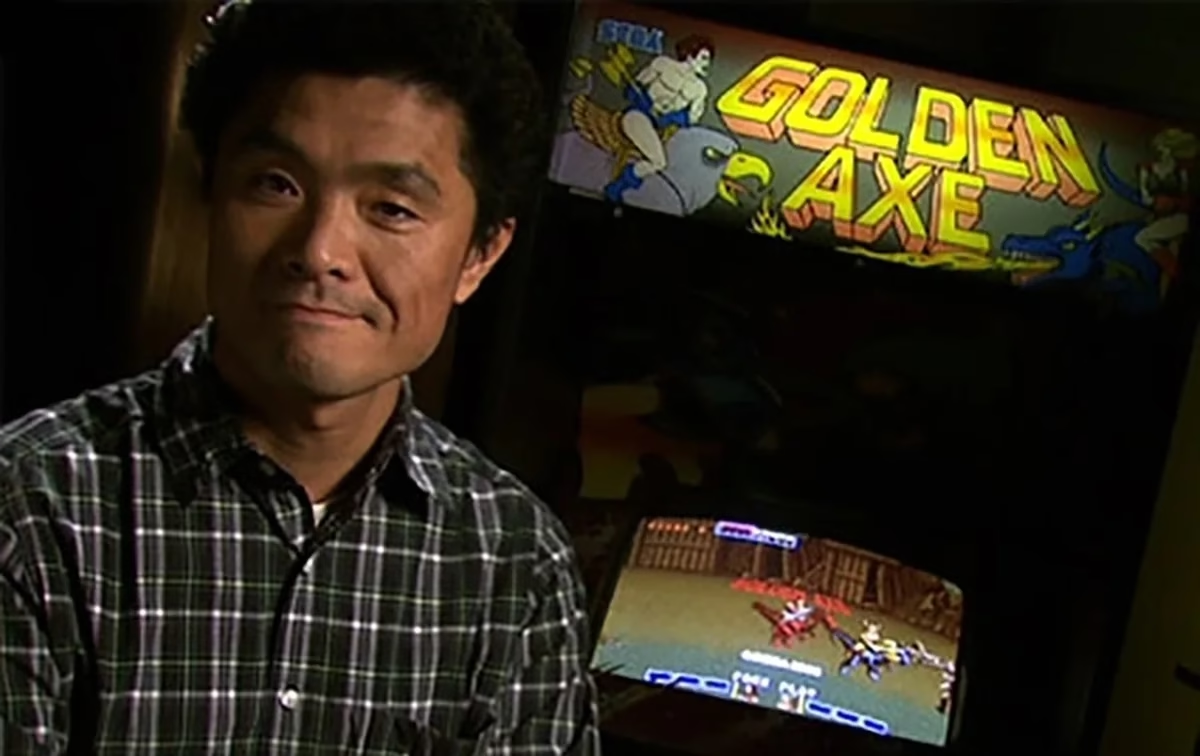
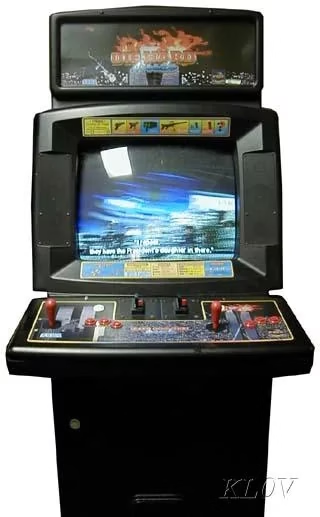
In his later Die Hard Arcade interview, Uchida recalled finding the walks between fights too dull. Putting danger into those gaps kept players busy. Even a brawler had to watch how it spent someone’s time.
Earlier, Pengo had found a smaller, nastier challenge among ice blocks. Push one into an enemy and the cheerful penguin looked quite capable. Push the wrong one and you could leave yourself nowhere to escape.
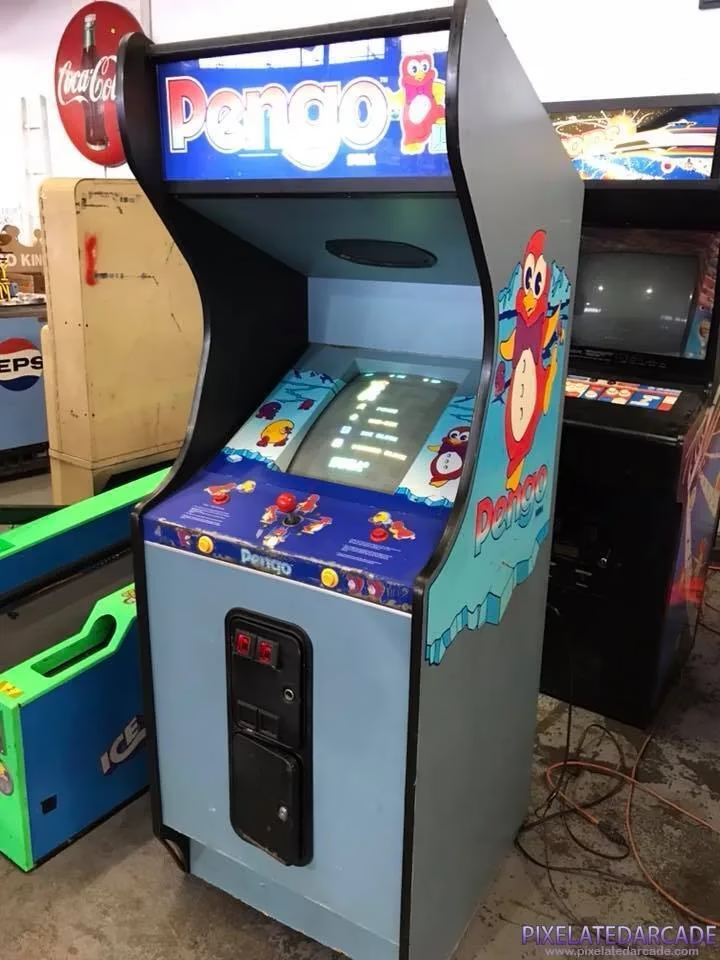
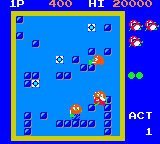
By the early 1990s, Sega was ready to try a road built from polygons. Virtua Racing made the old sprite tricks look surprisingly different.
Virtua Racing (1992): the road becomes a place
Virtua Racing looked rather bare beside OutRun. The cars were angular, the trees simple and the scenery painted in flat colours. Then you changed the camera angle and saw the same race from somewhere else.
You could move the viewpoint around a world that held together. The cars and track were solid 3D shapes. After years of speeding past enlarged drawings, this felt new.
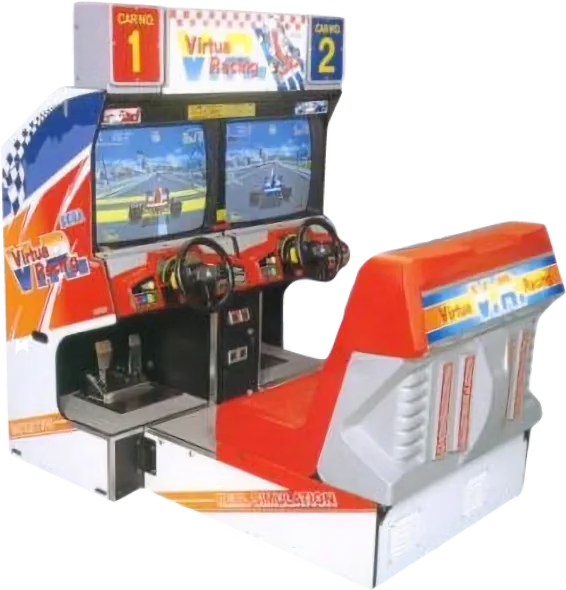
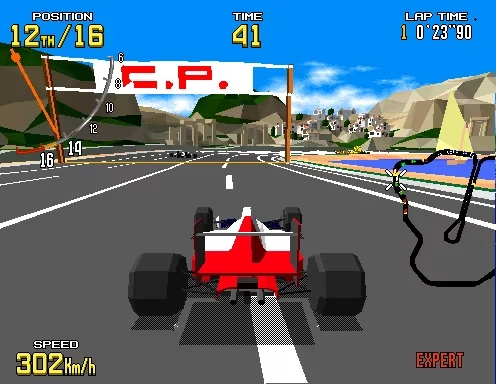
Virtua Racing ran on Model 1. Its polygons had flat-coloured surfaces, without the detailed images later games would wrap around them. That clean look has aged rather nicely.
Three courses and a demanding clock gave you plenty to learn. Brake too late and the next bend made you pay; get the line right and you wanted another lap immediately.
The view buttons let you change how you watched the car, including pulling back to see more of the course. That was a conspicuous benefit of the new graphics. Sega could show the same vehicle and track from different positions because those shapes existed in a 3D scene. The player could explore the technology with a finger while still trying to make the next corner.
Virtua Racing also made its sporting setting feel busy. The car belonged to a circuit with structures, spectators and a pit crew. Those details were simple enough to see their construction, but the movement made them persuasive. Flat colours and clean outlines gave the racing a clarity that more elaborate games sometimes lost.
Linked cabinets added competition that could follow you home. Losing to the computer was frustrating. Losing to a friend meant hearing about it afterward.
An NEC V60 processor and specialised geometry hardware handled the work, documented in the MAME project’s Model 1 notes.
Atari and Namco had already made important polygon racers. Sega brought its own 3D work to a lively, polished game that could draw a crowd. Virtua Racing made a convincing case for what the company should do next.
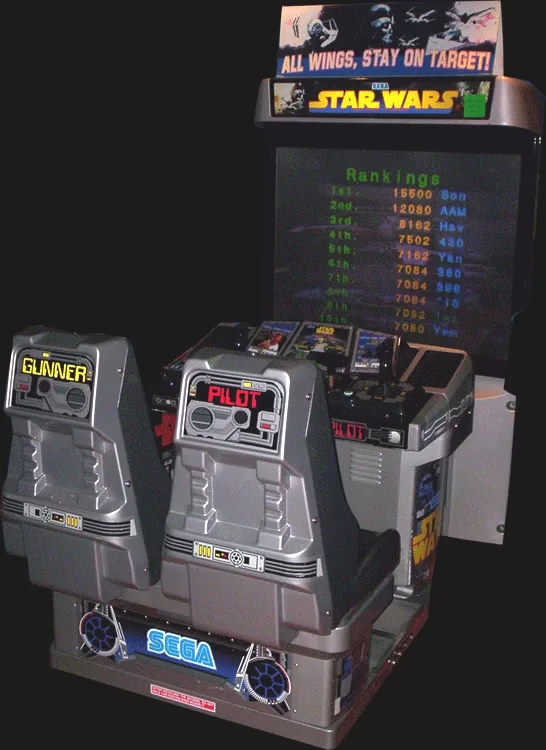
Model 1 also powered Sega’s 1993 Star Wars arcade game. Recognisable ships, music and a two-player cockpit brought a much-loved film series into Sega’s new polygon worlds.

Virtua Fighter (1993): eight people change the fight
Virtua Fighter’s Akira Yuki wore a white gi and headband. Learning to use him well took considerably more effort than recognising him.
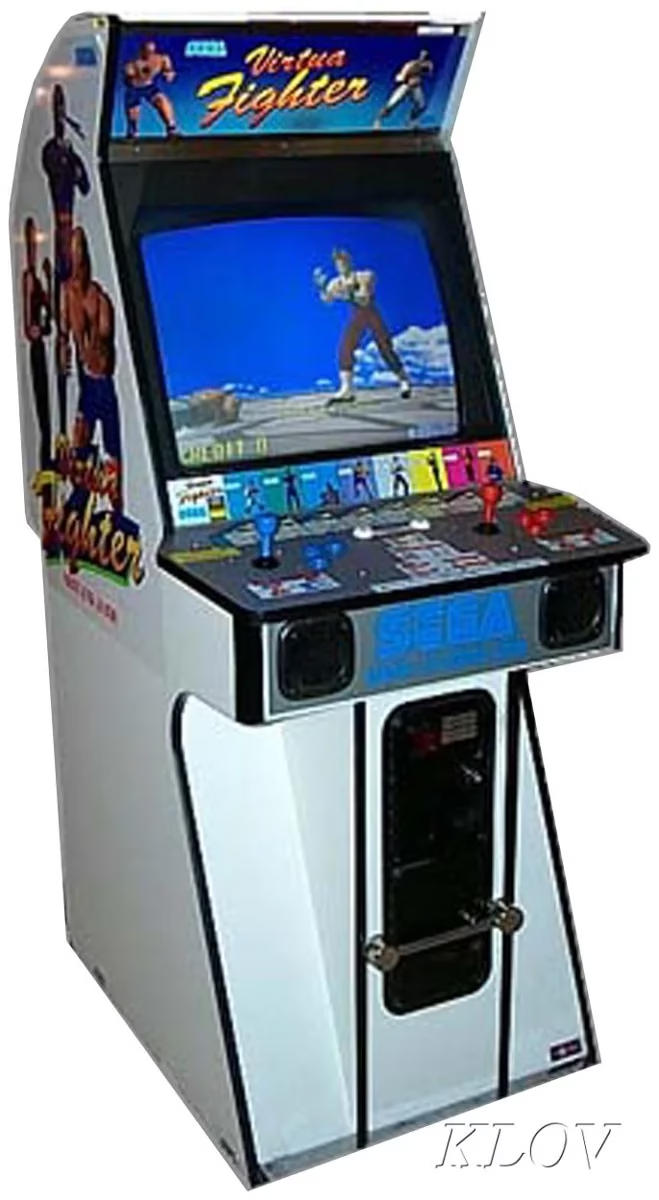

The original Virtua Fighter looked peculiar next to Street Fighter II’s colourful sprites. Its eight fighters were visibly made of angular pieces, but their movement had weight. Throws looked like bodies being lifted and slammed, rather than pictures changing poses.
Punch, kick and guard made a manageable set of buttons. Timing made them difficult to master. Ring-outs added a cruel shortcut: you could have plenty of life left and still lose by stepping into the wrong place.
Suzuki’s team had practised animating people through Virtua Racing’s pit crew. His GDC retrospective traced the connection. Mechanics servicing a car were unlikely ancestors for a fighting-game cast, but the work carried over.
Sarah Bryant’s kicks and Wolf Hawkfield’s wrestling gave the cast distinct rhythms. A small roster helped you recognise an opponent’s habits, though recognising them did not guarantee you could stop them.
A newcomer could enjoy a few rounds by pressing the obvious buttons. An experienced opponent soon exposed how much happened between them. The distance before a kick, the pause before a throw and the risk of attacking near the edge all mattered. Virtua Fighter made watching another person play a useful way to learn.
It also made losing instructive in a particularly irritating way. You could often see the decision that had cost the round. Try again, wait a fraction longer, and perhaps the same attack would leave your opponent vulnerable. That promise gave the cabinet a life beyond the initial surprise of seeing polygon people fight.
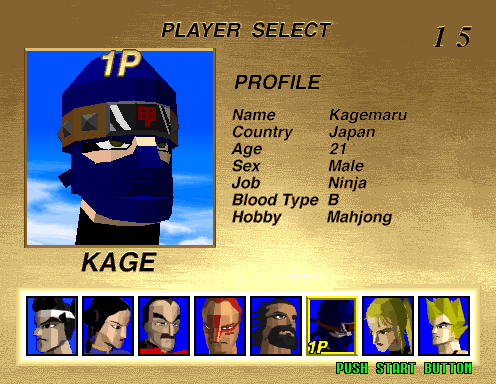
The Saturn conversion would become a showcase for Sega’s new console. Arcade fans naturally wanted these games at home, and Sega’s console teams had to meet expectations set by much costlier machines.
Namco’s Tekken soon joined the 3D fighting contest. Sega had opened a promising new direction and gained a formidable rival.
Daytona USA (1994): eight seats, one argument
Daytona USA was loud even before the race started. Its singing attract sequence could reach you across the room. The cabinets could link up to eight players, giving that cheerful racket a competitive edge.
The beginner oval looked friendly. Join a pack of cars and it became much less relaxing. One driver’s helpful little nudge was another driver’s reason to seek revenge.
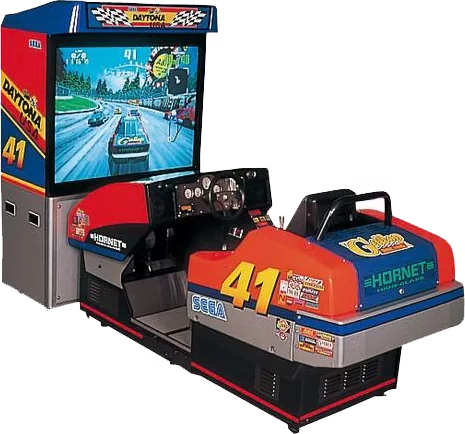
Director Toshihiro Nagoshi made Daytona USA the calling card for Model 2. Years before becoming known for Sega’s crime dramas, he was learning how to make a short race feel worth talking about.

Model 2 added textures: detailed images applied to polygon surfaces. Cars gained racing liveries; buildings gained signs and windows. Compare Daytona with Virtua Racing and the leap is easy to see.
An Intel i960 worked with specialised graphics and geometry components. Later Model 2 revisions changed the arrangement, as the MAME hardware notes explain.
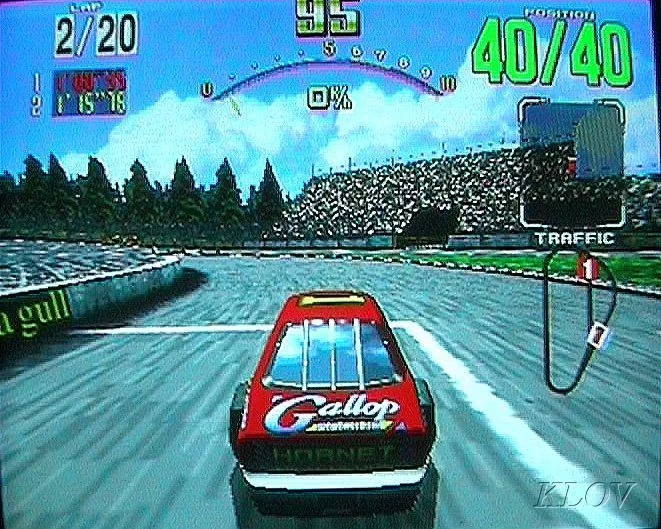
After demonstrations and testing in 1993, Daytona reached its Japanese commercial release in March 1994. Namco’s Ridge Racer was already competing for the same racing fans.
Daytona’s stock car loved to slide. Gears, steering and timing let an experienced driver carry speed through corners, while a first-time player could still enjoy wrestling it around. It was approachable enough for a group outing and demanding enough to swallow a regular’s spare change.
The wheel mattered. Its resistance made the car feel as though it was pushing back, rather than merely obeying a direction. When the rear broke loose, correcting the slide became an enjoyable little struggle. Watching someone else drive well could reveal a whole game you had missed while bouncing between the barriers.
Eight linked seats changed the social stakes. Players chose cabinets, checked who was beside them and settled into a race whose result everyone could see. A last-lap mistake did not disappear when the results screen did. On the journey home, it could become the only part of the outing anyone wanted to discuss.
Composer and singer Takenobu Mitsuyoshi gave it music you could hardly ignore. His vocals made Daytona sound absurdly enthusiastic about being Daytona. The enthusiasm stuck.

In a 2020 interview, Mitsuyoshi recalled a colleague complaining that the song stayed in their head after work. He was pleased. Fitting the vocals into the sound hardware took ingenuity, and those looping syllables did their job all too well.
“It was a victory for me!”
Takenobu Mitsuyoshi, recalling the complaint about Daytona’s infectious music in the translated Denfaminicogamer interview.
The military simulator connection
Model 2 had an unexpected connection to military simulation. Sega’s texture-mapping work drew on expertise from General Electric’s aerospace business. Through acquisitions, that technology passed through Martin Marietta to Lockheed Martin and Real3D.
Lockheed Martin’s 1996 annual report promoted the Sega partnership as a commercial use for its simulation technology. Equipment developed for much more serious purposes was helping teenagers race stock cars.
Interviews with participants at Jalopnik explore the relationship and Desert Tank, a less celebrated collaboration. The engineers could help draw the world. Sega’s developers still had to make it entertaining.
Virtua Fighter 2 (1994): suddenly, everybody has a face
Virtua Fighter 2 made the first game look rough very quickly. Model 2 gave the fighters faces, textured clothes and far richer scenery. A familiar throw now happened in a world you could spend a moment admiring.
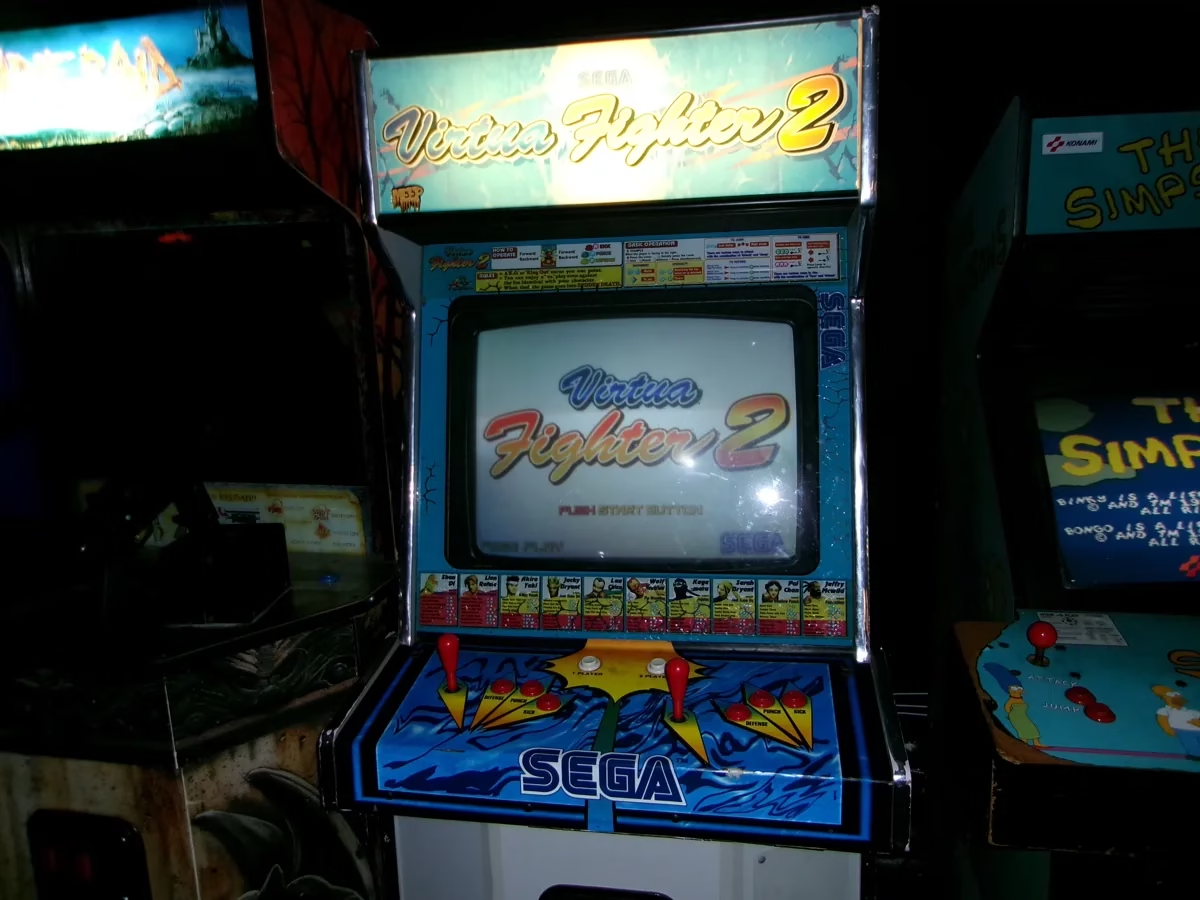

Lion Rafale and Shun Di joined the cast. Shun’s drunken style was especially good at catching someone who expected an attack to behave sensibly. Timing and spacing still mattered more than the prettier clothes.
The visual improvement made the fighters easier to appreciate as characters. Clothing, expression and animation gave each one a stronger presence, while the rapid exchanges rewarded close attention.
The Saturn conversion preserved much of the speed and feel, despite the hardware gap. It was an impressive home version, and it made the next arcade announcement even harder for console owners to resist.
Virtua Cop (1994): the innocent person in the wrong place
Virtua Cop gave you a gun and a clear warning when an enemy was about to shoot. Hit him first and the camera carried you onward. It was easy to feel competent after a few successful shots.
Then a civilian got in the way.
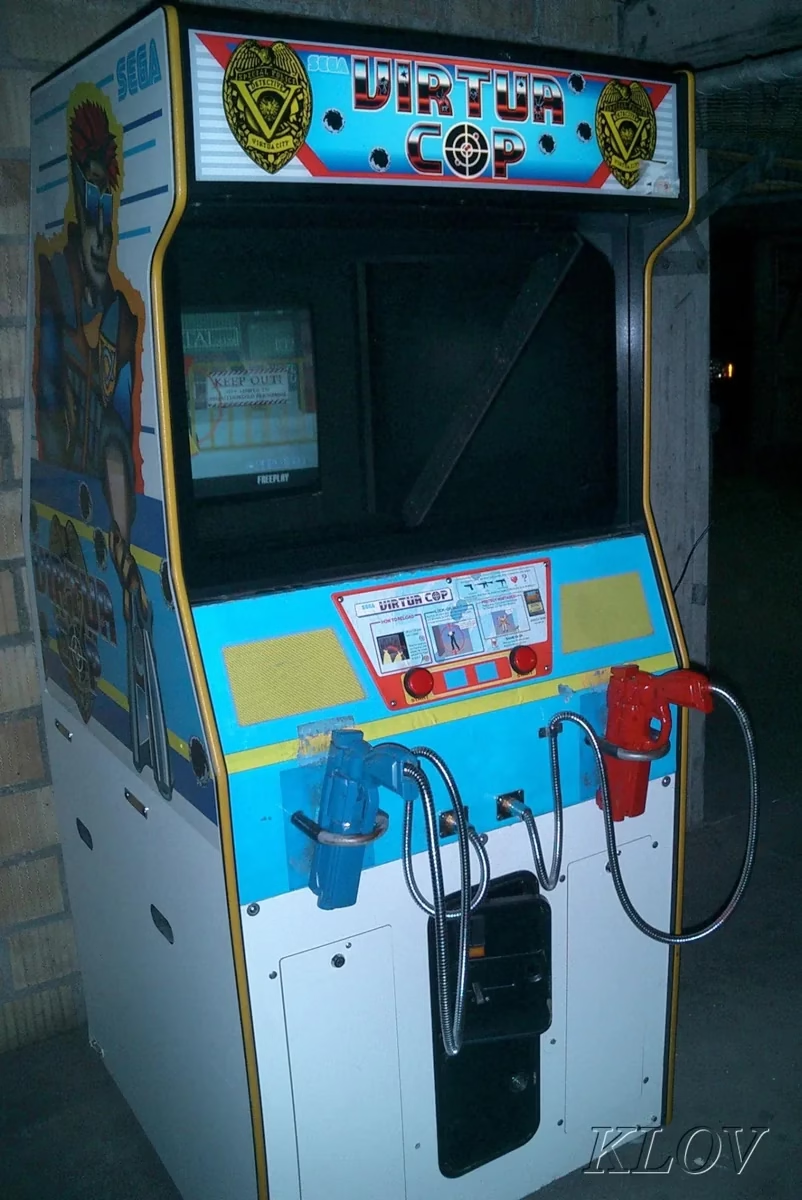
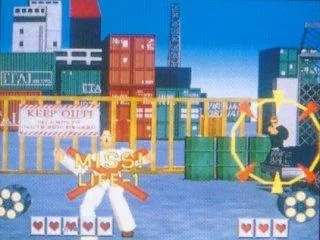
Virtua Cop moved through 3D locations, with enemies appearing around corners and across the scene. The camera handled travel; you concentrated on aiming. A second player could help, provided they were equally careful about who they shot.

Virtua Cop 2 followed in 1995, adding routes and more elaborate action. The Saturn conversions brought both games home, where a light gun and compatible CRT television made a considerable difference.
Sega Rally Championship (1995): the corner talks back
Sega Rally made gravel, mud and tarmac feel different beneath the tyres. You had to catch a slide, listen to the co-driver and judge the next bend. A short run could leave you far more absorbed than its length suggested.
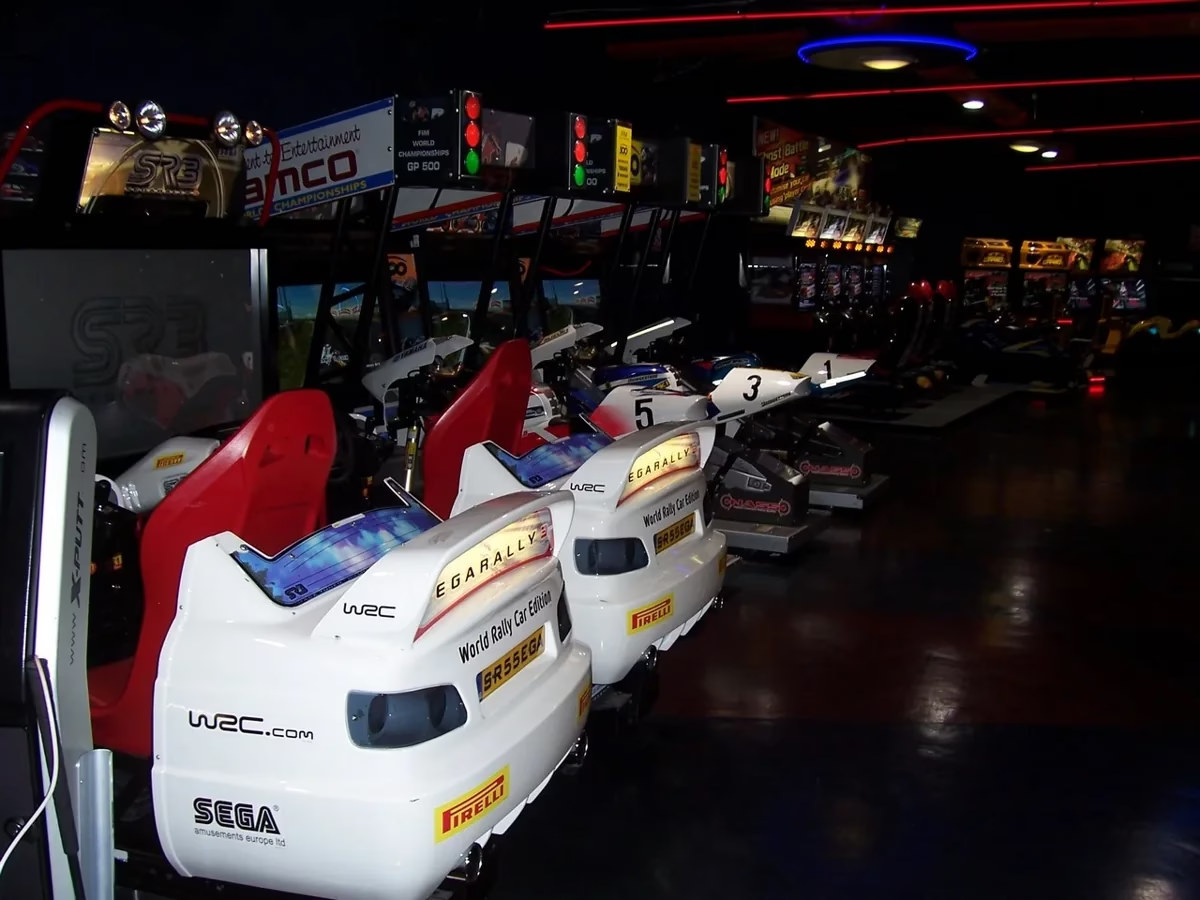
Sega Rally Championship came from AM3. Producer Tetsuya Mizuguchi helped shape it, while director Kenji Sasaki brought experience from Namco’s Ridge Racer. Sega’s teams were developing quite different ideas about a good driving game.
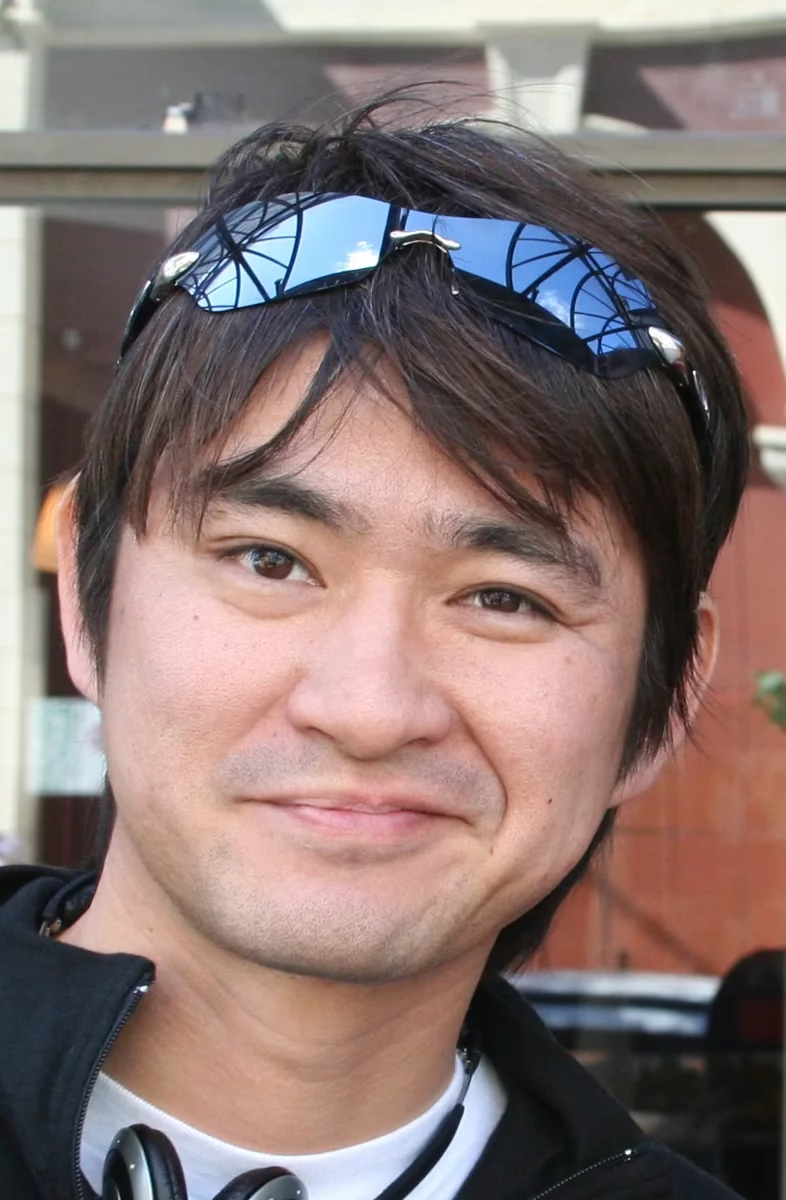
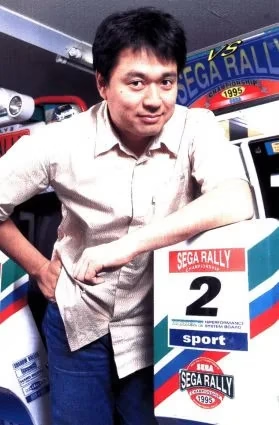
The plan changed during development. Staff recollections collected by Sega-16 describe a broader journey being cut into shorter courses, concentrating the challenge into an arcade-sized session.
Mizuguchi also had to argue for a scouting trip. He recalled being told travel was a reward for making a hit. “I want to go to make a hit product,” he replied. The team went, returning with photographs and video to help build the landscapes.
Championship mode carried your position through successive courses. A good run could unlock a fourth. That gave regulars a prize to chase beyond shaving a little time off a familiar bend.
The handling made those short courses worth practising. You could feel a corner develop into a slide and learn how much steering would bring the car back. A mistake often began before the bend itself, with the wrong entry speed or a poor position. Better driving meant anticipating the trouble while there was still room to do something about it.
The co-driver helped turn that anticipation into a rhythm. Calls came over the engine noise, telling you what was ahead while the scenery confirmed it. Even a spectator could begin to follow a run. For the person at the wheel, a familiar call was often the warning that the difficult corner had come round again.
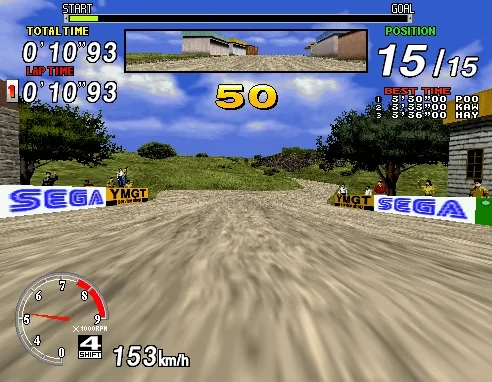
In a 1996 interview, Mizuguchi described the approach as “include a fair and necessary amount of simulation, without excess.” He had seen how a realistic combat simulator could involve long stretches of nothing happening. Sega Rally kept the interesting driving and made it happen quickly.
Virtual On (1996): two sticks and a very large robot
Virtual On took a little more explaining. Two sticks controlled an enormous robot, and the first encounter could be an awkward lesson in how much there was to learn. Once movement clicked, dashing and firing around an opponent felt terrific.
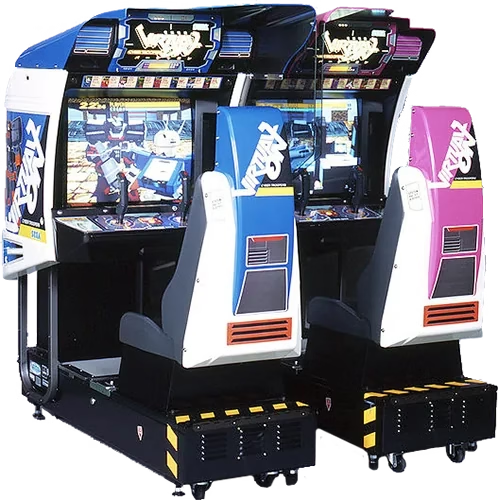
Virtual On made space and speed central to its duels. You could fight at range, close the gap or evade an attack, with those twin sticks giving the robots a feel quite different from a conventional fighter.
The control panel could be a barrier as well as an attraction. Two sticks looked exciting, but a player who knew ordinary arcade controls still had to learn what these did together. Once that uncertainty passed, the big robot became surprisingly nimble. Suddenly the arena had useful cover, dangerous angles and space you wanted to claim before the other machine did.
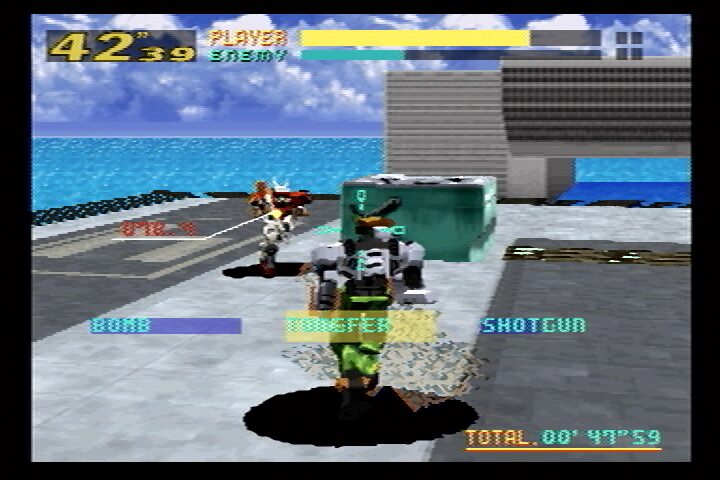
Sega’s Japanese catalogue dates it to January 1996. Its brightly coloured machines made an attractive display even while a newcomer was struggling to steer one.
The House of the Dead (1997): Sega invites something horrible inside
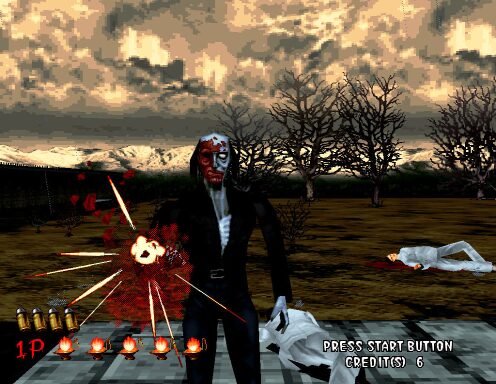
The House of the Dead took Sega’s gun games into a mansion full of things that ought to have stayed dead. It was lurid, gruesome and immediately inviting if you liked that sort of thing.
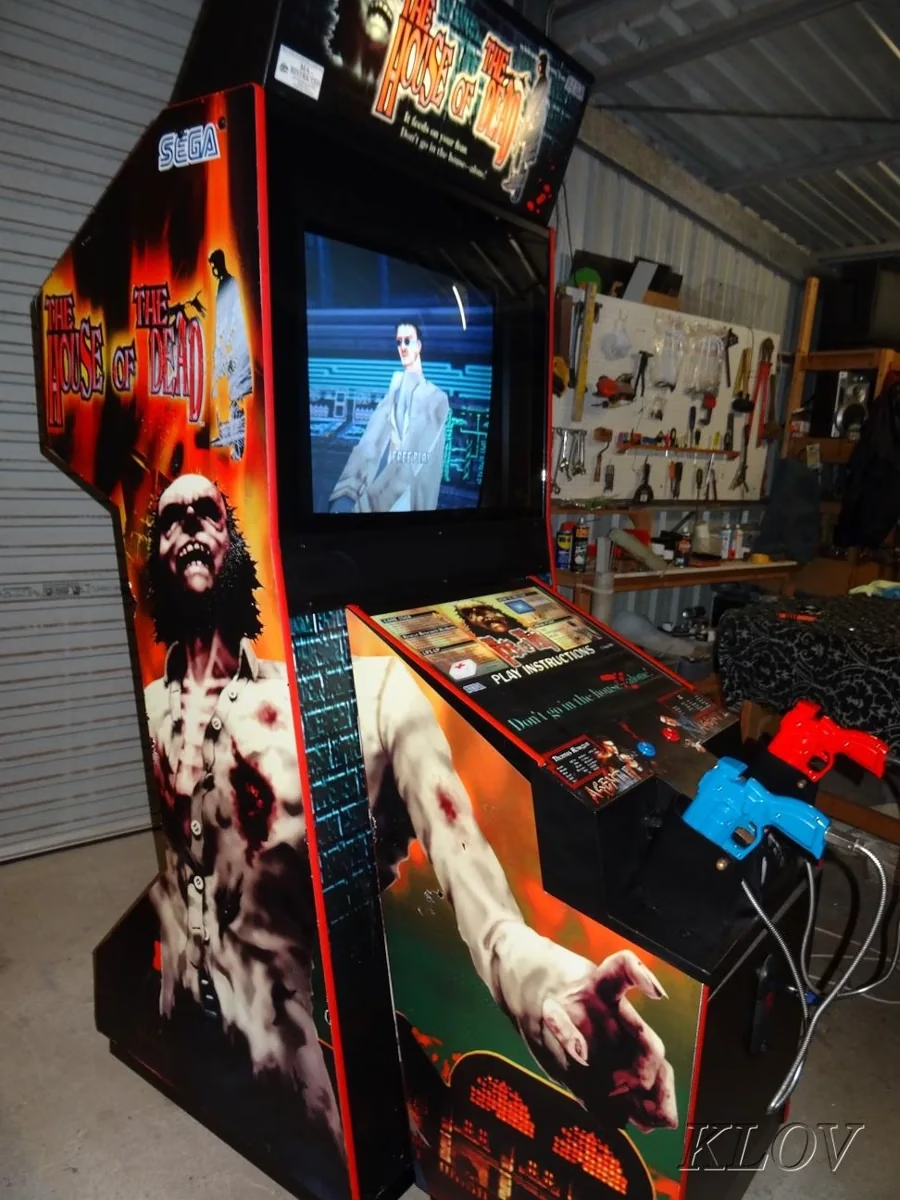
In The House of the Dead, rescuing people could change your route through the building. You aimed at approaching creatures while the camera hurried you toward the next unpleasant room.

The stiff voices only made the monsters seem livelier. There is an enduring pleasure in hearing these people explain a catastrophe so woodenly, then having to shoot your way out of it.
After location testing in 1996, Sega lists the Japanese release in March 1997. The series would survive several generations of hardware.
Virtua Fighter 3 (1996): Model 3 changes the ground beneath you
Virtua Fighter 3 gave the cast more detail, richer lighting and something players could not ignore: ground that was no longer always flat.
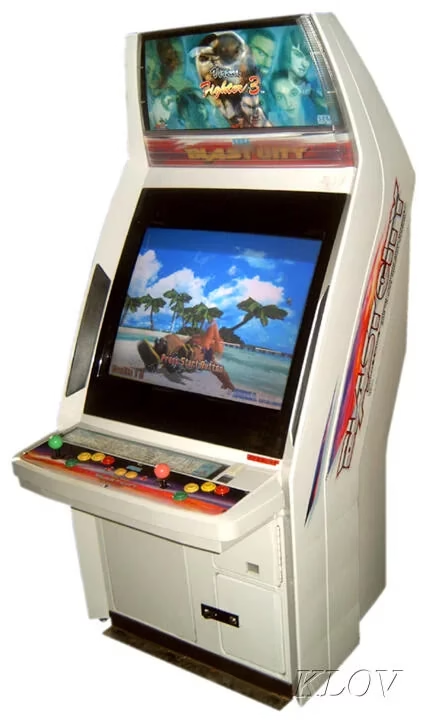
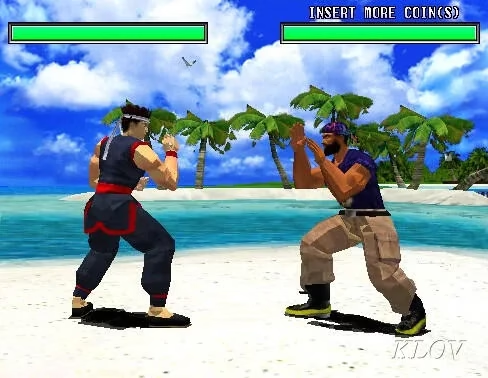
Slopes and steps changed a familiar fight. The new evade button helped you move away from an attack, but the arena itself could now affect how an encounter unfolded.
Those changes carried a cost for familiarity. A player who had learned the earlier game’s level arenas now had another variable to consider. The environment was no longer simply the attractive place behind the fighters. Sega had used its new hardware to make the stage participate, a more consequential decision than adding detail to a jacket.
Released in September 1996, it led Sega’s Model 3 generation. A PowerPC processor and Real3D graphics technology helped it produce scenes well beyond what contemporary home consoles could comfortably manage.
The partnership with Sega appeared in Lockheed Martin’s annual report. Its simulation expertise had found another very public showcase.
Model 3 evolved through Step 1.0, 1.5, 2.0 and 2.1 revisions. Games used different versions of the hardware, a distinction explained in Supermodel’s documentation.
The promised Saturn conversion never reached players. Dreamcast later received Virtua Fighter 3tb, the team-battle revision. For Sega fans waiting to play the new fighter at home, it had been a long wait.

Scud Race (1996) and Daytona USA 2 (1998): graphics worth crossing the room for
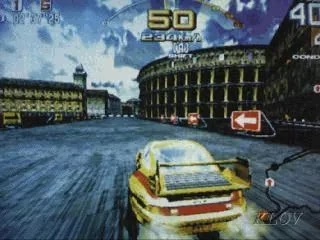
Scud Race, called Sega Super GT in North America, was gorgeous. Licensed sports cars swept past an aquarium and an airport, with glossy bodies and scenery that made the attract sequence worth watching on its own.
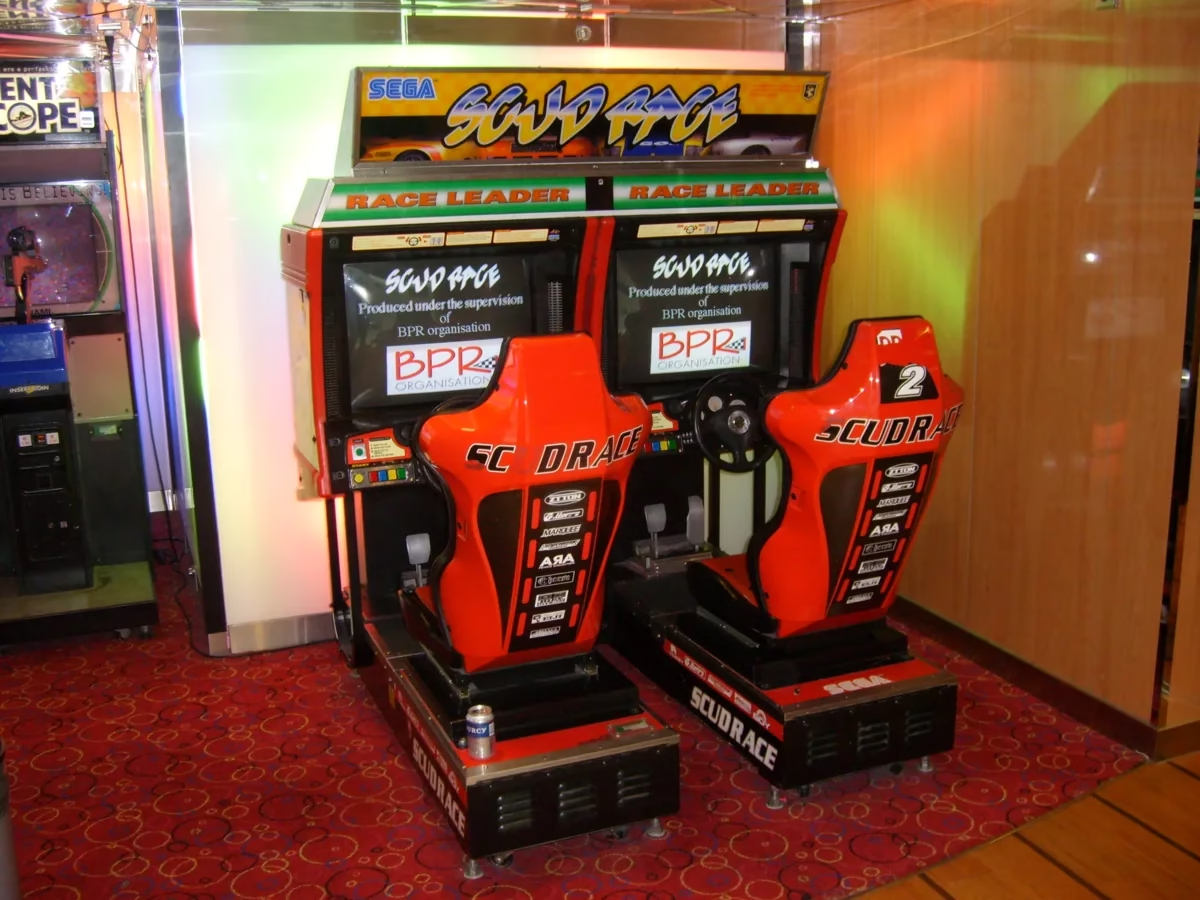
Much of Nagoshi’s Daytona team returned. The development history describes them building the game while Model 3 hardware was still taking shape. They were finding out what the machine could do as they used it.
Scud Race never got a contemporary home conversion. If you wanted those tracks, you needed to find the machine. For years, it remained one of Sega’s most tantalising arcade-only games.
The car selection made it feel different from Daytona before the race began. These were exotic sports cars, and the tracks showed them off in elaborate settings. Reflections, roadside detail and the movement of the scenery gave each lap a richness that photographs struggled to capture. The real temptation was to see it all moving.
For a console owner in the late 1990s, that gap could be frustrating. You could buy increasingly impressive racing games and still find something in an arcade that looked beyond them. Scud Race remained tied to that place and equipment. Finding a working cabinet became part of the experience of being a fan.
Daytona USA 2: Battle on the Edge followed in 1998 with themed courses, crowds and far more elaborate scenery. Power Edition revised the game again. It was a spectacular sequel, though the original’s simpler oval remained hard to replace in people’s affections.
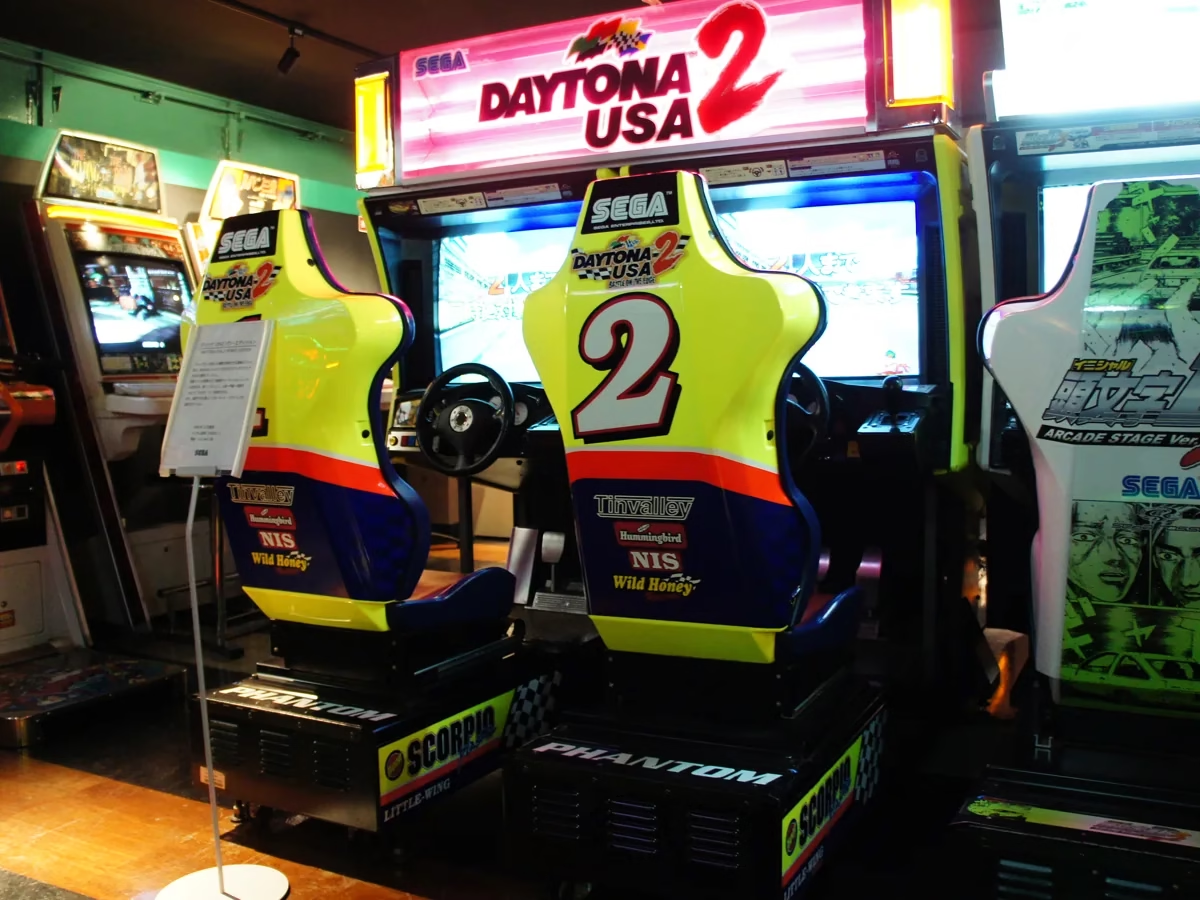

A bank of these racers could fill a venue with competitive noise. It also filled a lot of floor space, whether anyone was paying to use it or not.
Sega Rally 2 (1998) and Star Wars Trilogy Arcade (1998): one more leap
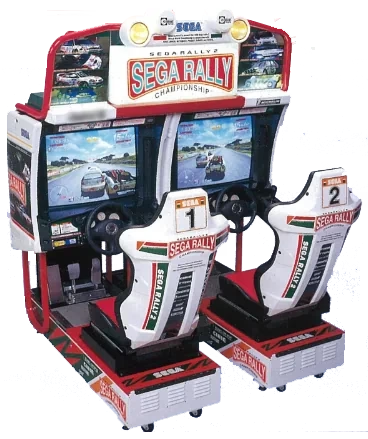
Sega Rally 2 added cars and richer landscapes, including snow. The driving still made you pay attention to the surface. A beautiful view was poor compensation for taking the corner badly.

Star Wars Trilogy Arcade hurried players through the films’ familiar battles. Its joystick handled aiming, and Model 3 supplied an impressive set of places and enemies to recognise.
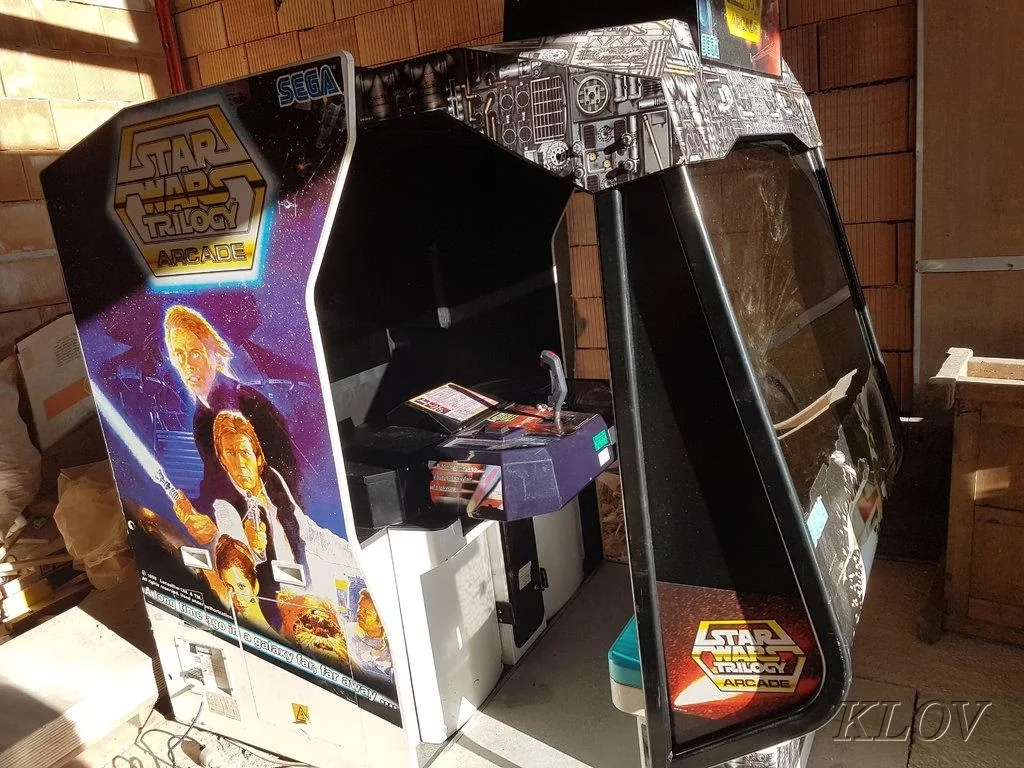
The appeal was straightforward: play the exciting scenes without sitting through the journey between them. You could enjoy it without knowing anything about the board inside.
Recognising the setting did much of the introductory work. Sega could put you in a familiar battle, show you where to aim and let the music fill in the rest. The short session suited somebody passing through with friends as well as a player following every new hardware release.
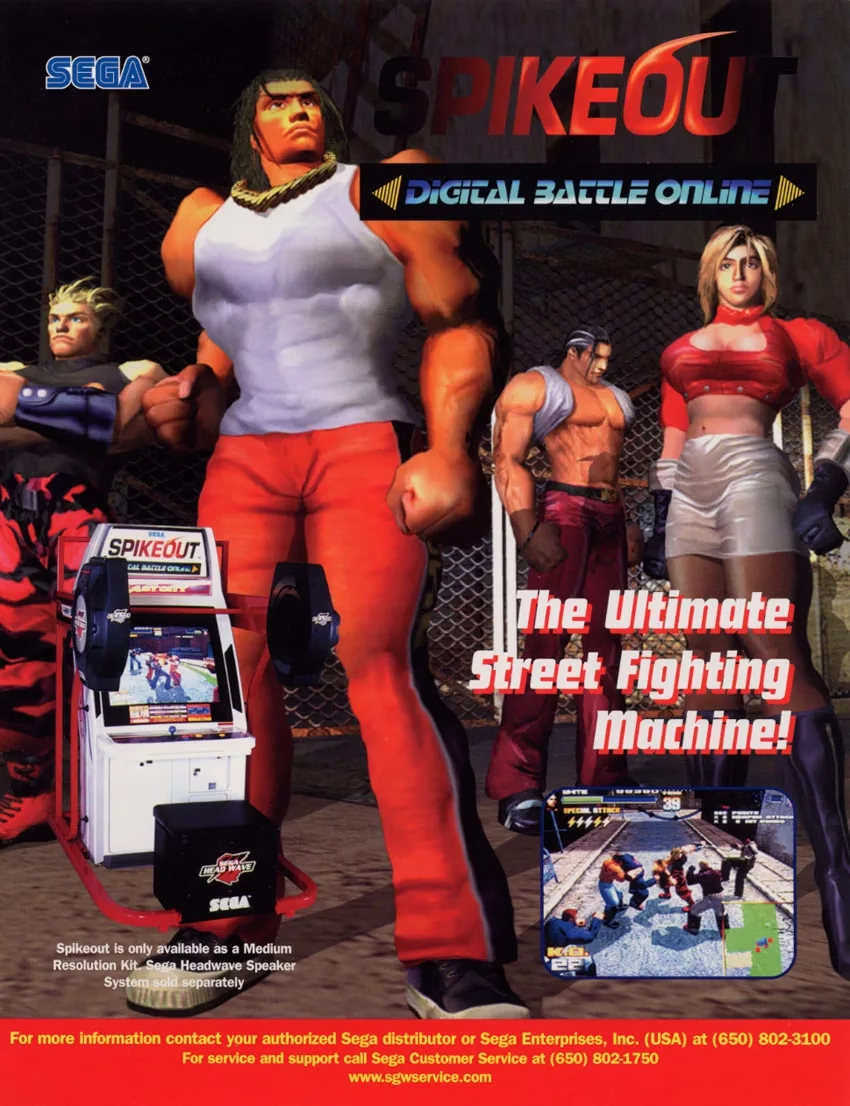
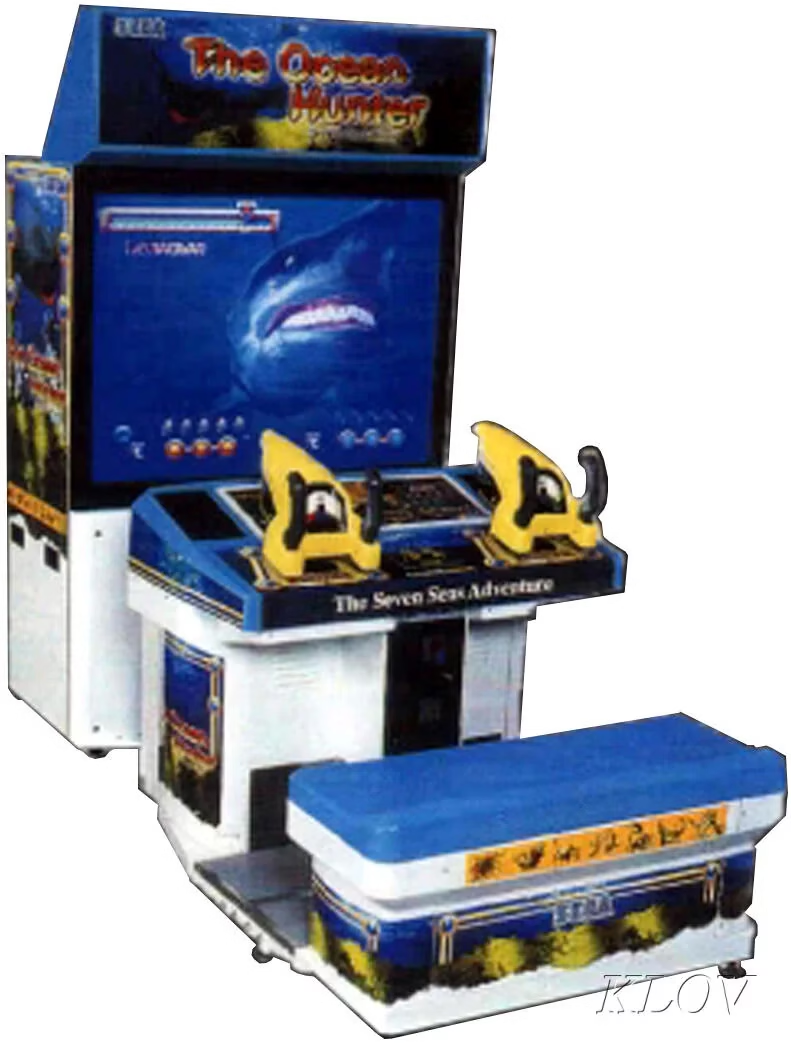
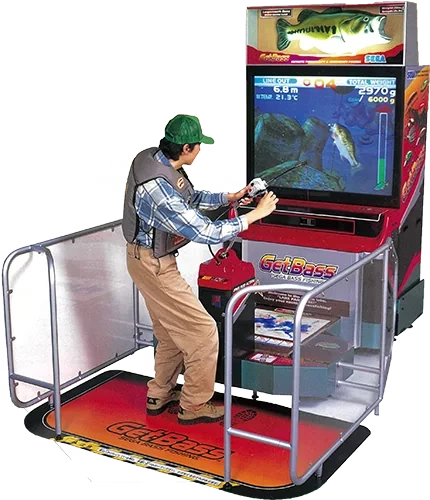
SpikeOut brought street fighting to Model 3; The Ocean Hunter took two-player shooting underwater. Get Bass, better known through Sega Bass Fishing, gave you a rod and a surprisingly absorbing struggle with a fish. The machine could make someone look very busy while standing almost still.

Spectacular games did not protect the balance sheet. Sega’s 1999 annual report recorded amusement-machine sales falling 44.8 percent to ¥56.2 billion in the year ended March 1999. Economic conditions were difficult and operators were buying less equipment.
Sega’s next major arcade platform would share technology with its home console. There were good financial reasons to find a cheaper way forward.
Astro City (1993): the cabinet that let the games do the talking
The Astro City was a different kind of Sega landmark. Its rounded white body, green trim and sit-down controls could become the familiar home of several favourite games over the years.

Sega’s official retrospective dates it to 1993 and describes its practical moulded body. Operators could put compatible boards from different makers inside. A Sega fighter might occupy it one month, another company’s game the next.
Collectors still care about its monitor, controls and distinctive shape. A cockpit made one game memorable; an Astro City could be the cabinet where you discovered several.
The seated position encouraged a different pace from a motorcycle or flight simulator. You could settle at the panel and concentrate on a fighter, a puzzle game or a shooter. Its broad screen and familiar controls gave very different games a comfortable home. For an operator, changing the board could offer customers something new without bringing another enormous machine through the door.
Joypolis and SegaWorld (1990s): when the arcade wanted a whole building
Sega also wanted entire buildings to draw a crowd. Its indoor parks combined arcade games with larger attractions, moving from selling a few credits to selling an outing.
Tokyo Joypolis opened in Odaiba in July 1996, following earlier Joypolis venues. Sega’s twentieth-anniversary announcement looks back at the Tokyo park and its attractions.
SegaWorld projects in London and Sydney took the idea overseas. A famous name and impressive machines could bring visitors through the door. Keeping them happy through queues, repairs and a full visit was a larger job.
Sega’s 1999 report discussed cutting unprofitable overseas amusement operations. Rent, staffing and maintenance kept coming due, even when customers stayed away.
Tokyo Joypolis endured. The overseas projects showed how difficult it could be to expand a successful arcade attraction into a successful park.
NAOMI (1998) and The House of the Dead 2 (1998): a new route onto the floor
NAOMI shared the Dreamcast’s SH-4 processor and PowerVR graphics family, with an arcade configuration and more memory. It offered a broad platform for new games at a more manageable cost than repeating Model 3’s approach.
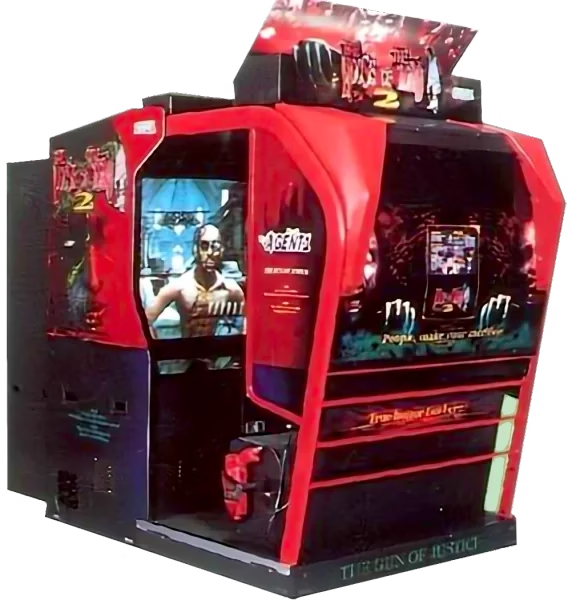
Sega identifies The House of the Dead 2 as NAOMI’s first title. The outbreak moved into a city, with branching rescues and another collection of alarming creatures.
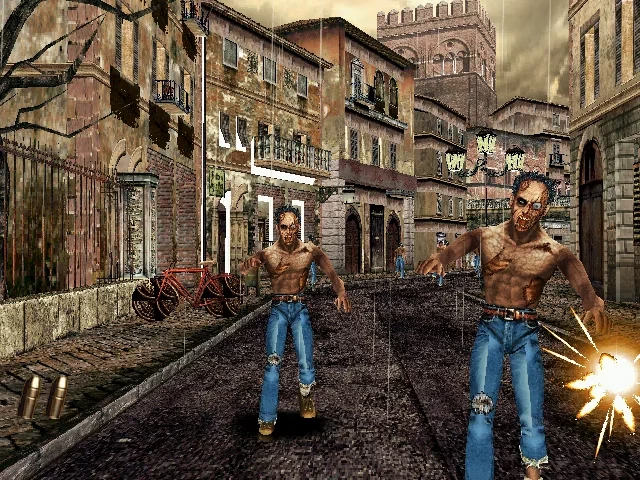
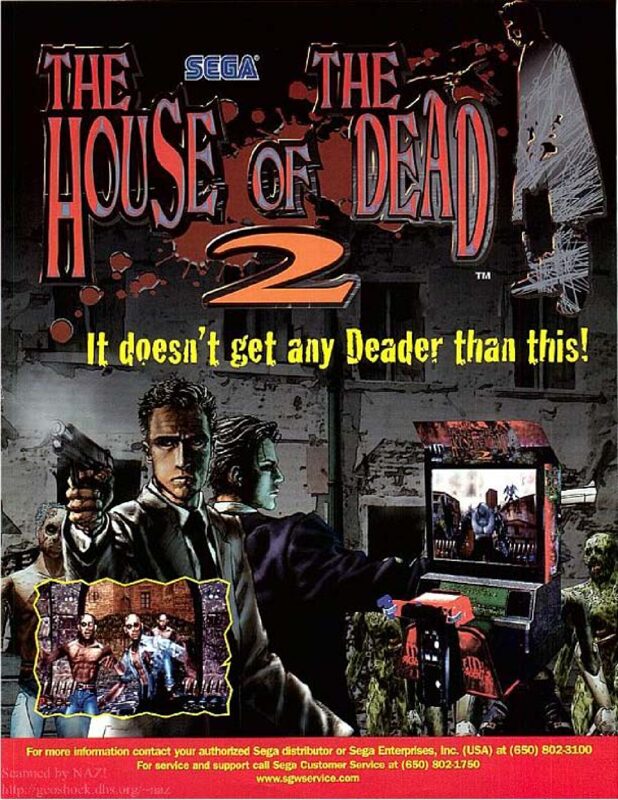
Its Dreamcast conversion brought the new arcade game home unusually well. With two guns and a suitable television, you could spend the evening fighting through it without feeding the cabinet another coin.
Other developers used NAOMI too, including Capcom for fighting games. Its shared technology helped home conversions, although different controls and arcade features still took work.
That closer relationship with the living room altered the appeal of an arcade visit. Home versions could preserve much more of the original presentation, so the cabinet had to offer other reasons to play: a proper control setup, a friend ready for a match, or a game you could sample without buying it. Sega’s developers were still making distinctive games while the hardware gap became less dependable.
F355 Challenge (1999): Suzuki gets serious about the car
F355 Challenge’s deluxe cockpit wrapped three screens around the driver. After OutRun’s breezy holiday, Suzuki was asking you to concentrate on driving a Ferrari properly.

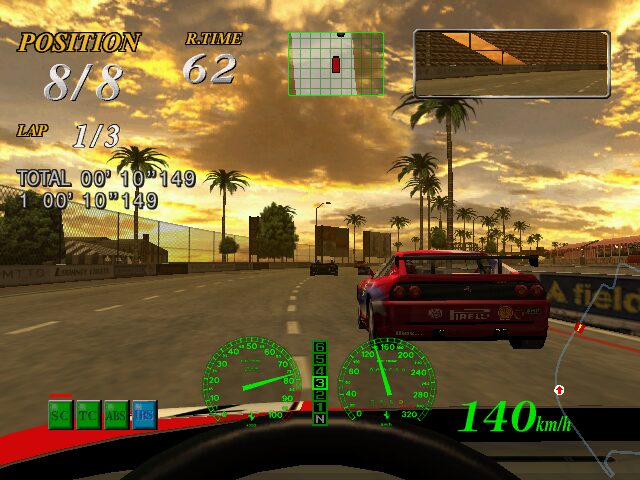
The Sega manual describes training, driving and race modes. Learning the racing line was one thing; following it consistently was another. One car supplied more than enough work.
The side screens gave peripheral vision a job. You could see more of the circuit around the cockpit, rather than imagining everything beyond a single forward view. That made the equipment useful to the driving challenge as well as impressive to a passer-by. It also made finding the deluxe machine worthwhile even if you already knew the home game.
“It is a real driving simulator,” Suzuki told GameSpot in 2000. The cabinet’s wide view made that demanding approach particularly absorbing.
Meanwhile, Shenmue let players find Hang-On and Space Harrier inside its 1980s Japanese neighbourhood. Suzuki’s old arcade games had become part of the scenery in his new adventure, and you could stop to play them.
Crazy Taxi (1999): the passenger has somewhere to be
Crazy Taxi gave you a customer, a destination and permission to drive appallingly. Lawns, traffic and pavements were all negotiable if they helped you reach the fare in time.
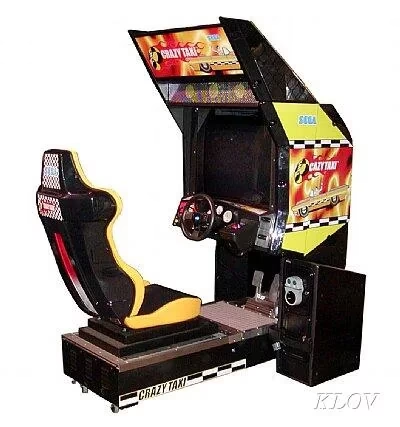
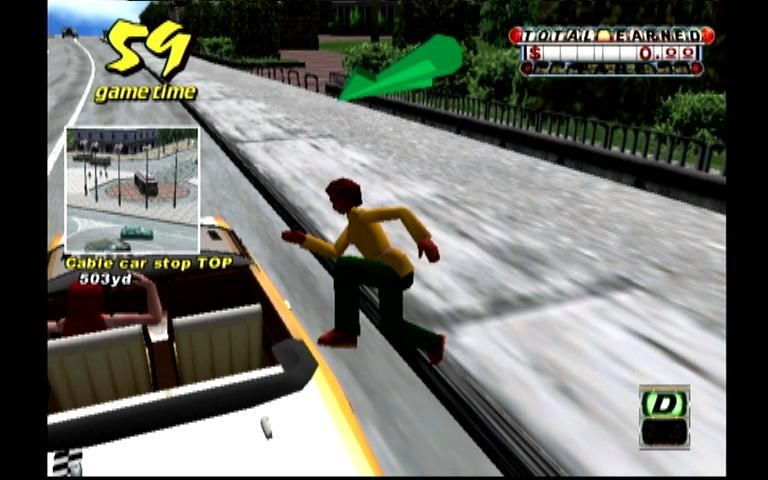
In Crazy Taxi, AM3 turned a city into a map of shortcuts. Learning where to go and how to get there quickly made the frantic first attempt feel like practice for a much better run.
Customers gave the city a structure. You learned which journeys fitted together, where to pick up another fare and when a tempting passenger would send you somewhere inconvenient. The driving remained ridiculous, but a good run needed a plan. Crazy Taxi could make local knowledge feel as valuable as quick reactions.
The impatient passengers and rowdy soundtrack kept it funny. Few games make a job look so enjoyable while encouraging behaviour that would get you dismissed from it.
The Dreamcast version became one of Sega’s best-known home games. Its arcade teams were still supplying hits as the company’s console business approached its end.
Virtua Tennis (1999), Samba de Amigo (1999) and Monkey Ball (2001): everybody can have a go
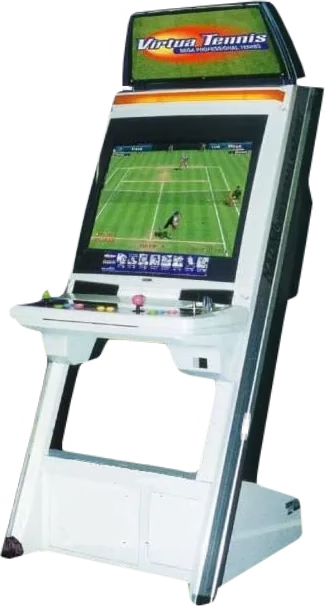
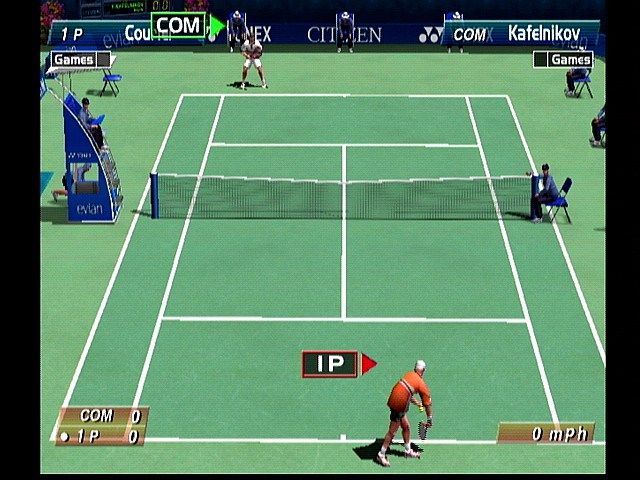
Virtua Tennis was easy to start: move, hit the ball and discover how cleverly your opponent could place the return. A couple of buttons left plenty of room to learn positioning and timing.
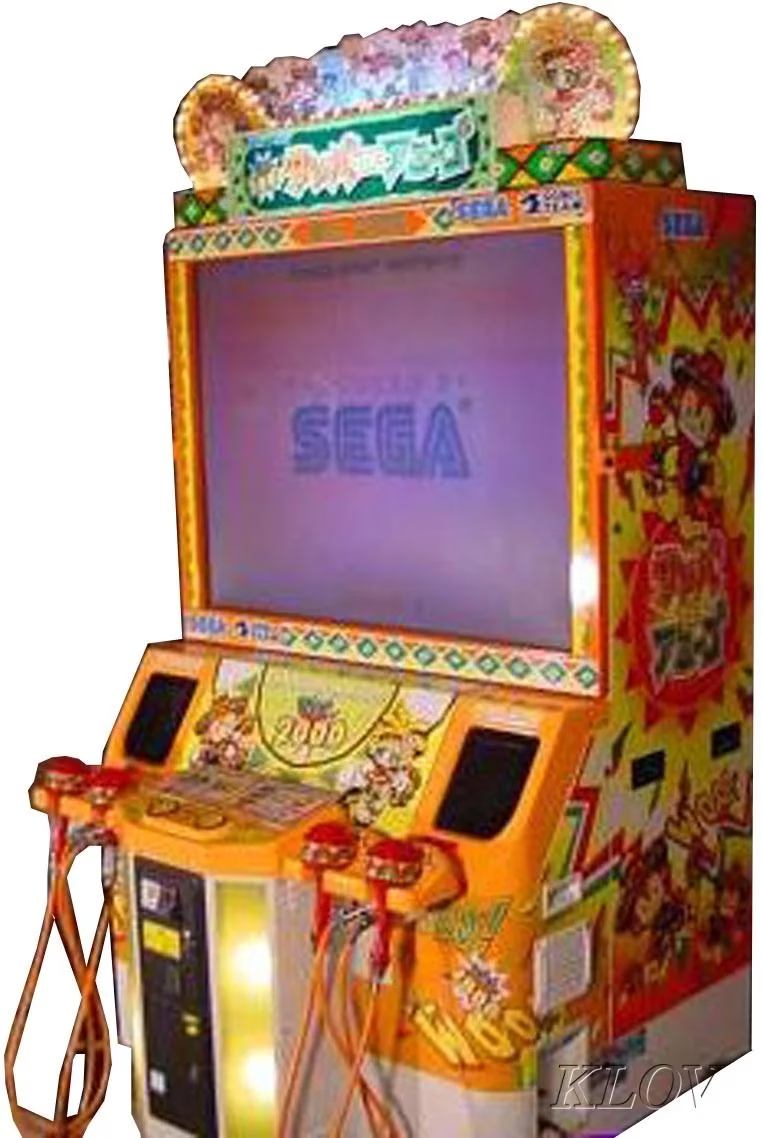
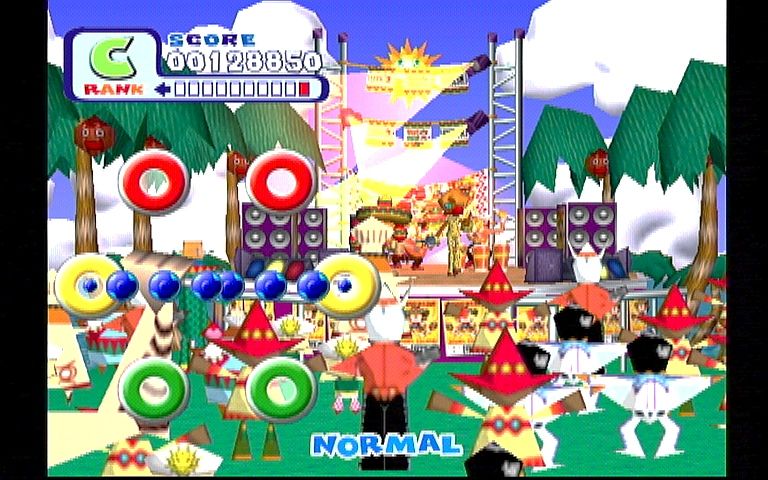
Samba de Amigo handed you maracas. Shake them at the right heights and follow the rhythm, with everyone nearby able to watch your attempt. It was wonderfully cheerful and a little embarrassing, which suited an arcade perfectly.
Monkey Ball gave players a giant banana-shaped stick. Tilt the course, guide the monkey in its ball and try not to overcorrect. The route to the goal often looked easy until you were halfway through it.
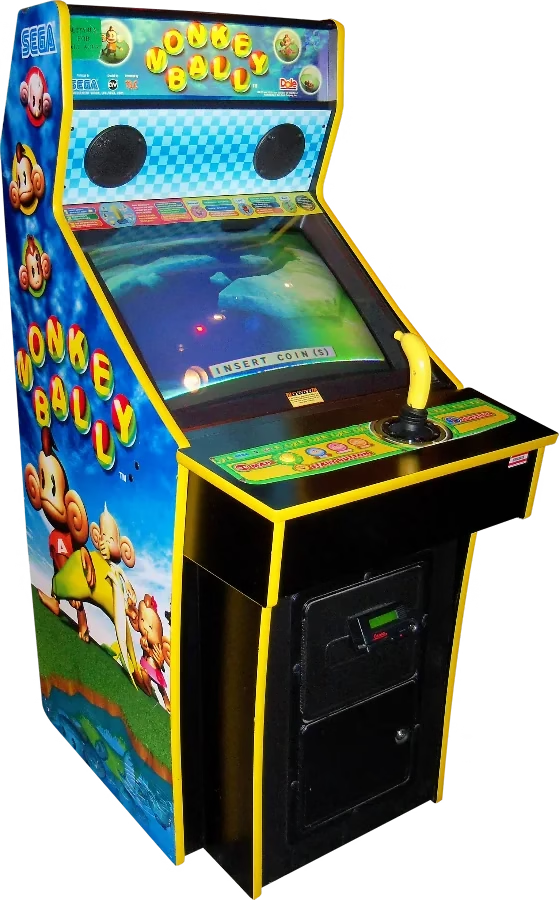
Nagoshi told GameSpot he wanted to make a beautiful, cute game. Super Monkey Ball expanded the idea on GameCube. Sega had stopped making consoles, but its arcade teams had plenty left to bring home.
The simple premise survived because it had room for both delight and disaster. A slight adjustment could rescue a wobbling ball, and a nervous extra shove could send it straight off the edge. Watching someone approach the goal made the last few inches exciting. The cartoon monkey softened the appearance of a game that could be wonderfully unforgiving.
Sega used several hardware routes during these years. Saturn-related ST-V ran Die Hard Arcade; Hikaru served ambitious attractions; NAOMI 2 powered Virtua Fighter 4 in 2001. Each offered developers a different budget and set of possibilities.
Initial D (2002), cards and networks: give the player a reason to come back tomorrow
Initial D brought manga-inspired mountain racing to linked cabinets. A player card could preserve your progress, making the next visit feel like picking up where you left off. Virtua Fighter 4’s network-era features similarly gave players a continuing record.
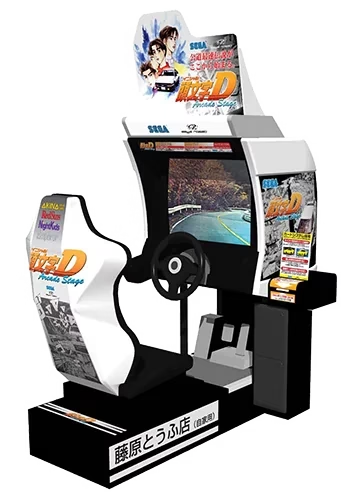
Sega’s 2002 annual report discussed network services and customer loyalty. The company wanted players to have a reason to return beyond trying the newest machine.
A saved record changed the meaning of another credit. The player could return to a car or fighting-game identity they had already invested time in. The arcade machine belonged to the venue, but some of the experience now travelled with the customer. Progress could survive the walk out of the building.
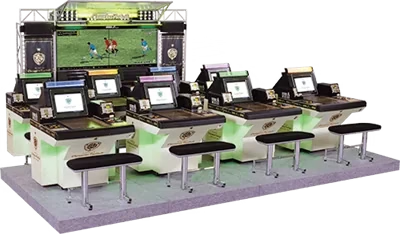
World Club Champion Football used collectible footballer cards; Mushiking reached children through beetle cards and quick battles. Part of the attraction now came in with the customer’s collection.

OutRun 2 (2003) and After Burner Climax (2006): familiar fantasies, new equipment
OutRun 2 brought back the red car, branching routes and sunny scenery, now built in full 3D. Its generous drifting made long slides a pleasure. It felt familiar without being stuck in 1986.
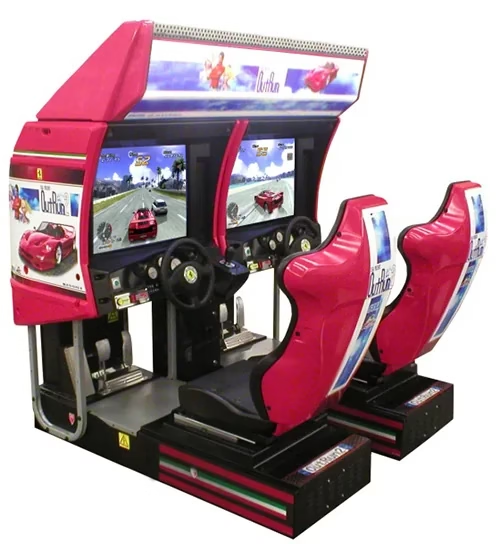
It ran on Chihiro, related to Xbox technology. Sega kept finding useful links between arcade and home hardware.
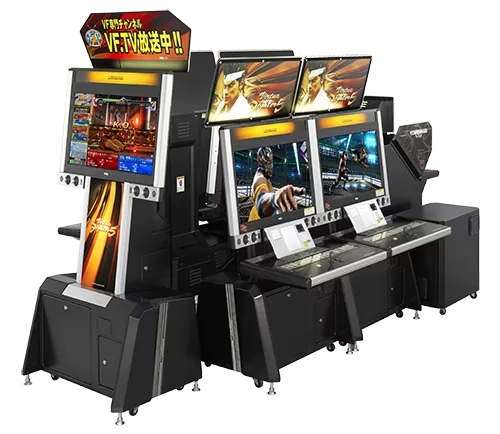
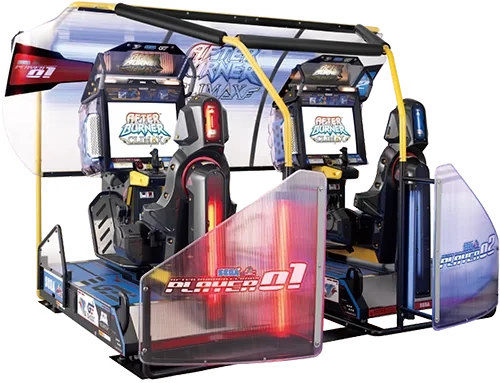
After Burner Climax arrived on the PC-based Lindbergh platform, with a sky full of missiles and a slow-motion Climax mode. Virtua Fighter 5 belonged to the same hardware era. Home systems now offered sophisticated 3D too, so the cabinet and the shared outing had to earn more of the arcade’s appeal.
maimai (2012) and CHUNITHM (2015): the crowd gathers around music
maimai turned a circular screen into a rhythm performance, combining buttons and touch. CHUNITHM used a touch surface and air actions above it. Watching a skilled player could make both look much easier than they were.
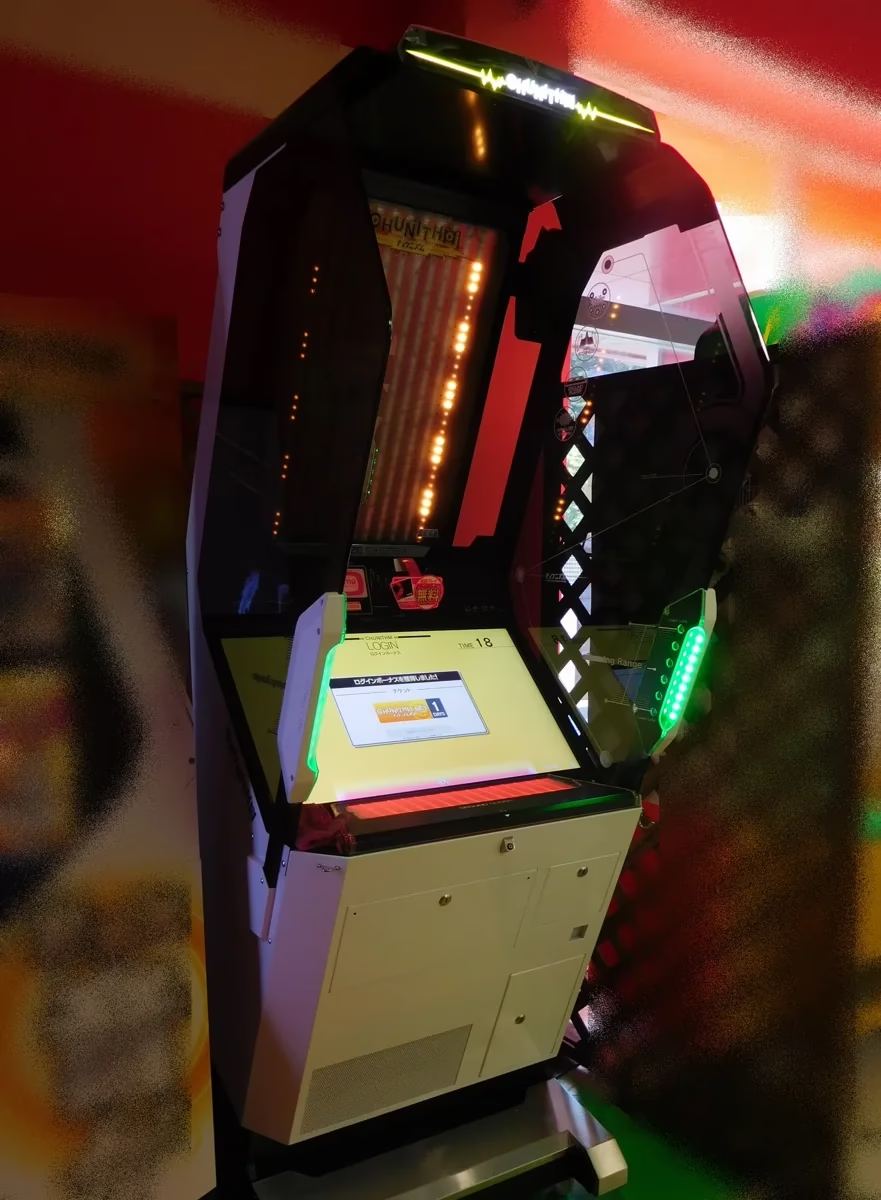
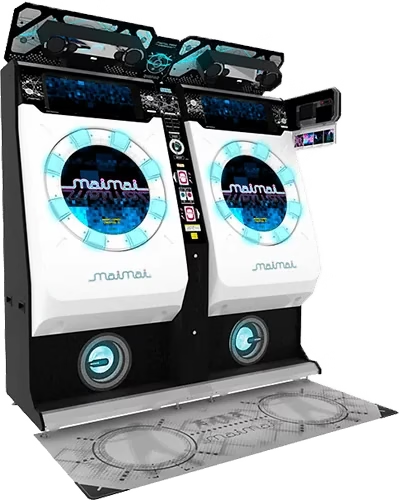
Sega’s catalogue records this later musical direction. Local players could gather around the machines, follow one another’s attempts and improve together.
By then, Sega had merged with Sammy in 2004 to form Sega Sammy. The games were evolving inside a larger group, while the business of running venues faced growing pressure.
The Sega signs come down (2020–2022)
COVID-19 hit that business especially hard. Arcades depended on people gathering indoors, precisely what the pandemic disrupted.
In November 2020, Sega Sammy announced the sale of 85.1 percent of Sega Entertainment to GENDA. GENDA bought the remaining stake in 2022, and the venues became GiGO.
GENDA’s history records the changes. This was the sale of the venue operator; Sega’s arcade development and machine business continued.
Sega Amusements International changed ownership separately through a 2021 management buyout under Kaizen Entertainment, continuing its Sega-branded amusement work.
For regulars, the familiar Sega sign coming down was still a sad sight. A building can keep its games and lose a little of the place people remember.
The second life: rust, emulators and one more race
Keeping an old cabinet alive takes more than enthusiasm. Controls wear out, displays fail and metal corrodes. Finding a replacement part can become a project in itself.
On the Build Your Own Arcade Controls forum, telonio documented a Daytona restoration in 2021. He remembered playing Daytona and Sega Rally in Athens. The machine he brought home came with rotten wood and damaged equipment.
“I did not mind though, since I basically wanted the metal and plastic parts.”
telonio, “Restoring a sit down Daytona USA cabinet,” October 2021.
He worked on the screen and kept the original controls. The wheel, seat and shape were the things he wanted back. His thread shows the hours of repair behind one more enjoyable race.
Emulator developers preserve the games another way. Model 3’s graphics have taken years of work to reproduce in software. The open-source Supermodel project makes games available to explore without finding room for a rare cabinet.
The moving seat cannot come through the emulator. The race, music and handling can. For games that never had a contemporary home version, that is a particularly valuable second chance.
Sega has revisited its own history through SEGA AGES and the Astro City Mini. The little cabinet is a fond tribute to a machine that once did a practical job on a busy floor.
One more race
Sega’s best arcade games still offer something worth learning. OutRun has another route to try. Virtua Fighter has an opponent whose timing you have not quite understood. Daytona has a corner you know you can take better.
The hardware made those games astonishing when they were new. The developers gave people reasons to keep playing after the graphics stopped being new.
Somewhere, a restored cabinet is waiting for another race. The person sitting down probably has the same plan as the last one.
This time, they are going to take that corner properly.
More from Retro Replay
- The Complete History of the Sega CD: another side of Sega’s multimedia ambition.
- Crazy Taxi on Dreamcast: an arcade job with extremely questionable driving standards.
- The Complete History of Emulation: the people and projects preserving hardware after its commercial life.
Sources and further reading
The linked sources throughout this feature include Sega’s corporate history and arcade product archive; preserved developer interviews at Shmuplations, Sega-16 and One Million Power; Sega’s contemporary financial reports; Lockheed Martin’s 1996 annual report; and the hardware work documented by MAME and Supermodel. Release headings follow the Japanese arcade records where available. Later home-version images are identified in their captions.

.jpg)


