 Retro Replay Retro Replay gaming reviews, news, emulation, geek stuff and more!
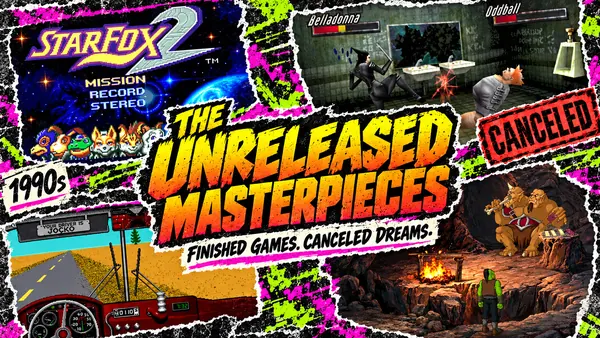
If you grew up reading game magazines, you probably had a shopping list that never quite existed. A screenshot caught your eye. You read the preview twice. You worked out whether you could afford it, or whether this was going to require a birthday. Then the game vanished.
For a while, you kept looking. Maybe next month’s issue would explain the delay. Maybe the shop would know. Eventually, another game took its place. Years later, somebody mentioned the title online and brought the whole thing back: whatever happened to that one?
Sometimes the answer was miserable. The game was sitting there, ready—or close enough that people had played it—and somebody had decided it wasn’t worth selling.
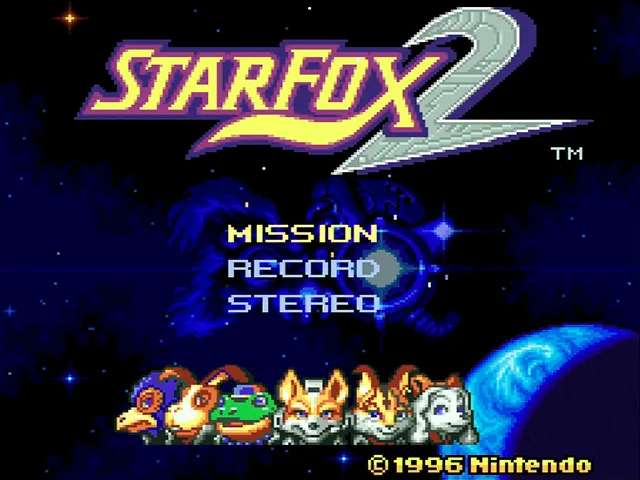
Star Fox 2 is the famous one. Nintendo had a finished sequel for the Super NES, then put it away for more than twenty years. When it finally appeared in 2017, its programmers had moved on, its intended audience had grown up, and the console had become a miniature nostalgia machine. You could finally get the game you’d wanted as a kid. It just took long enough that you might have kids of your own.
Other games had less tidy reunions. A fighting game survived on a rare arcade cabinet. A PlayStation horror show became a bootleg favorite. Two magicians made a Sega CD game so deliberately irritating that playing it became a charity event. Behind each one were people who had done the work, watched the release fall apart, and gone on to other jobs while their old game acquired a legend.
That’s the catch with an “unreleased masterpiece”: waiting can make a game better than it ever was. We remember the best screenshot and imagine the rest. Fortunately, enough of these games survived that we can look past the preview—and hear from the people who were there when the project stopped.
1990–1991: The adventure Nintendo left packed
The first English Earth Bound was supposed to begin on an NES. Phil Sandhop had already done his part.
As Nintendo of America’s localization producer and English script writer, Sandhop helped prepare Mother for players who couldn’t read its Japanese text. The original had reached the Famicom in 1989. Its English version would carry the name Earth Bound, with a space—years before the SNES sequel most Western fans associate with the series.
You can see why bringing it over was worth the trouble. Here was an RPG that let a kid leave an ordinary-looking home and discover that ordinary life had gone thoroughly wrong. A lamp could attack you. The town down the road could hide something bizarre. You didn’t need a medieval kingdom to have an adventure; the neighborhood would do nicely.
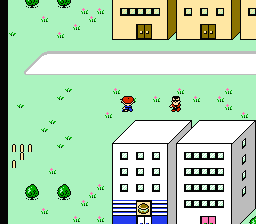
Sandhop told Lost Levels that the final approved build was complete by September 1990. A guide and packaging material had been prepared. This was well past the stage of wondering whether the translation would work. The game was waiting to be manufactured.
Then the Super NES began crowding it out.
“EarthBound’s schedule and marketing got shoved aside.”
— Phil Sandhop, interviewed by Lost Levels
In Sandhop’s account, production was delayed first. After that, the game no longer fitted the mix of products Nintendo wanted to sell. It’s a painfully uneventful ending for a strange little adventure: no spectacular technical disaster, just a finished game slipping down the schedule until it fell off.
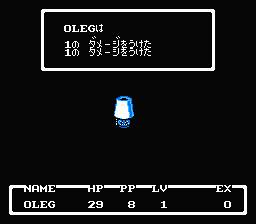
From the publishing side, Nintendo was preparing a new console and choosing where to spend its money. From Sandhop’s side, a job had been finished. The English words existed. The game worked. The remaining step was the one that would let somebody outside the company enjoy it.
Players eventually found their own way in. The English build circulated unofficially, and fans called it EarthBound Zero to distinguish it from the SNES game. That name became part of its identity while its intended release remained a piece of old Nintendo business.
In June 2015, Nintendo finally offered it through the Wii U Virtual Console as EarthBound Beginnings. The official release let an English-speaking player download the adventure with very little fuss. After all those years, that was the lovely part. You didn’t have to explain the missing cartridge or the fan-made name first. You could just start the game.
1995: Fox finishes the job. Nintendo changes the destination.
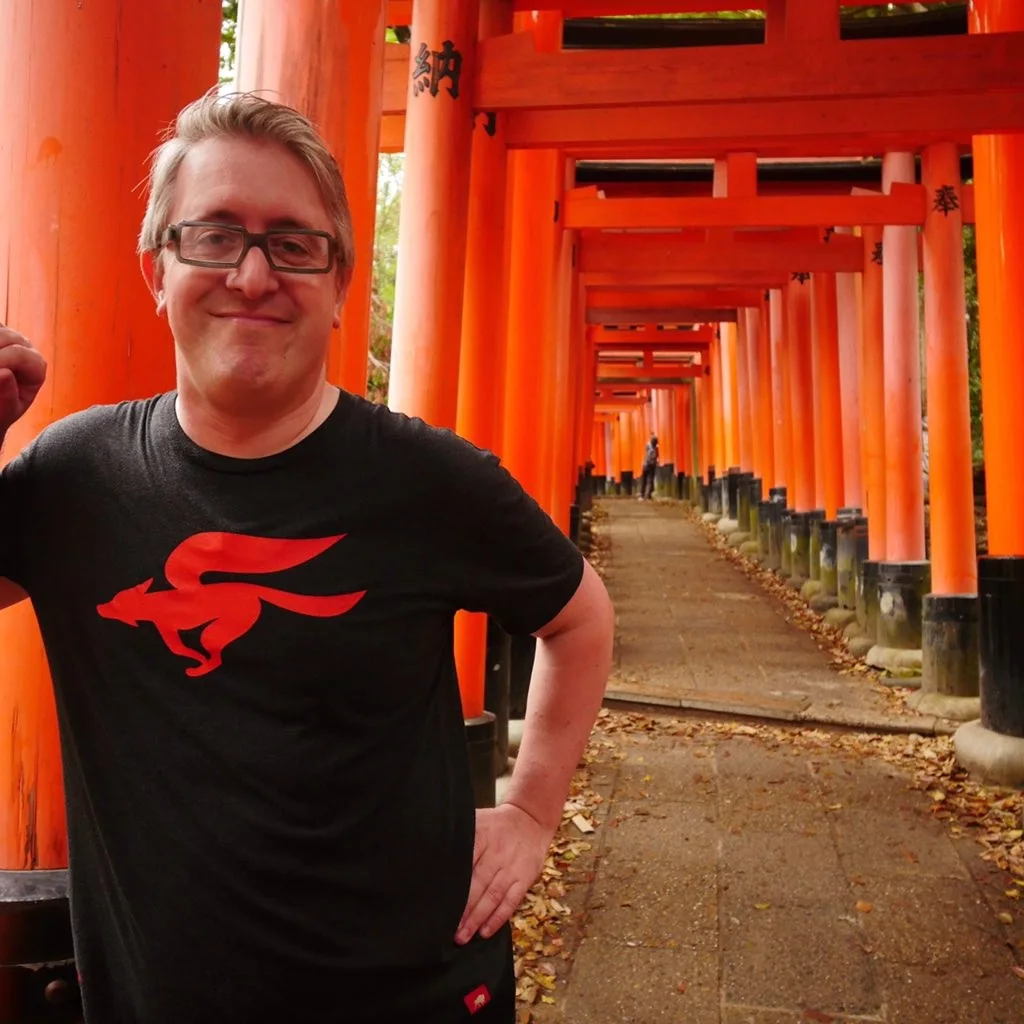
Dylan Cuthbert knew how much could be squeezed out of a Super NES. He had helped Argonaut and Nintendo build the original Star Fox, turning a console famous for colorful sprites into something that could fly you through a polygon landscape. The sequel gave the programmer and his colleagues a chance to get more adventurous.
In the first game, your job was largely to survive the flight ahead. Star Fox 2 gives you a whole solar system to worry about. Enemy forces head toward Corneria while you choose what to intercept. You pick two pilots, watch the map, and decide which trouble needs your attention first.
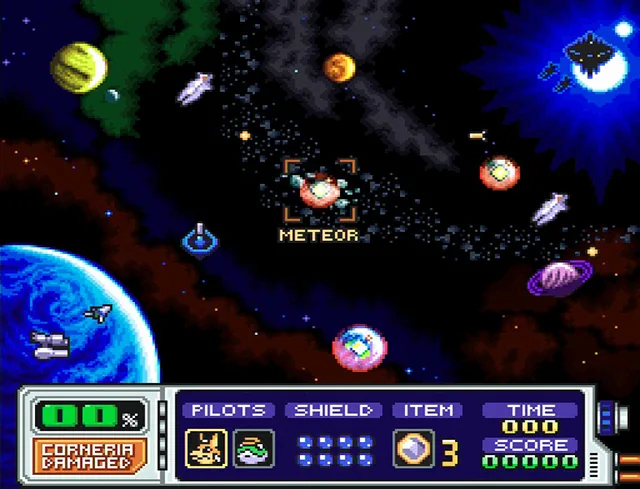
It’s a good way to make a player feel responsible. Winning the fight in front of you doesn’t help much if you’ve let something nastier get through elsewhere. The damage readout keeps reminding you that home is still under attack. Fox can be a brilliant pilot and a terrible planner in the same afternoon.
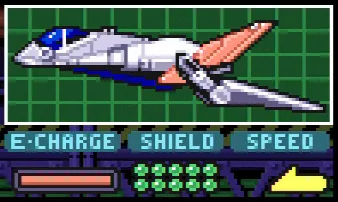
Then you get into a battle and the ship sprouts legs. The Arwing’s Walker form takes the fight onto the ground, giving the sequel another surprise beyond the map. Nintendo’s play guide and combat guide show how the pilots, craft and encounters fit together. For such a small game, it gives you a lot to keep in your head.
It also looks unmistakably like a Super NES trying very hard. The landscapes are angular. Detail is scarce. The frame rate can struggle to keep up with the ambition. There’s something endearing about it now: these little shapes are doing their best to convince you that a solar system is in danger.
In 1995, though, “endearing” was a dangerous sales pitch. The PlayStation and Saturn were arriving with a much bigger promise for 3D games. Nintendo was preparing the Nintendo 64. A customer comparing the machines wouldn’t necessarily care how clever Cuthbert’s team had been. They would see the pictures.
Shigeru Miyamoto, Nintendo’s creative leader on the series, had to consider that comparison. In Nintendo’s 2017 developer interview, he also pointed to the cost of the Super FX 2 chip and the release timing. Every copy needed the extra hardware that made those polygons possible. Nintendo was looking at an expensive cartridge just as attention was moving toward new machines.
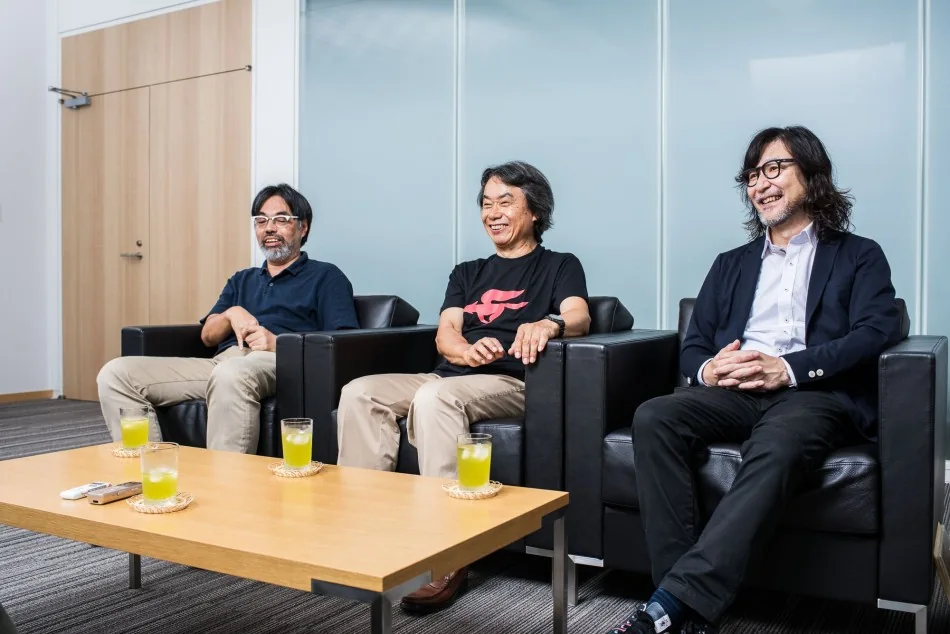
The launch was canceled. Nintendo moved on to a new Star Fox for Nintendo 64.
For Cuthbert and his colleagues, that left an unusually cruel loose end. They had finished the sequel, including testing. As he explained in an interview after the SNES Classic announcement, the unfinished material that later circulated wasn’t the final game they’d made. For years, fans could form an opinion of their work by playing something the team itself had already improved.
Then Nintendo surprised him. Cuthbert told Ars Technica that he hadn’t expected the 2017 announcement either. Star Fox 2 would finally reach players as part of the SNES Classic.
That reunion has a pleasing bit of absurdity to it. The old hardware had once made the game difficult to sell. Now the old hardware was the attraction. Nintendo put the sequel inside a little plastic Super NES, and the audience that had waited for Fox’s next mission could finally bring it home.
1995: Eight hours on a bus, and nobody to sell the ticket
Most games try to make the next few minutes irresistible. Penn & Teller made one that could leave you wondering what you were doing with your life.
The magicians worked with Absolute Entertainment on Penn & Teller’s Smoke and Mirrors, a Sega CD collection built around letting you fool your friends. Penn Jillette and Teller had made a career out of inviting an audience into a trick, then catching it out anyway. A game could give the owner that same advantage.
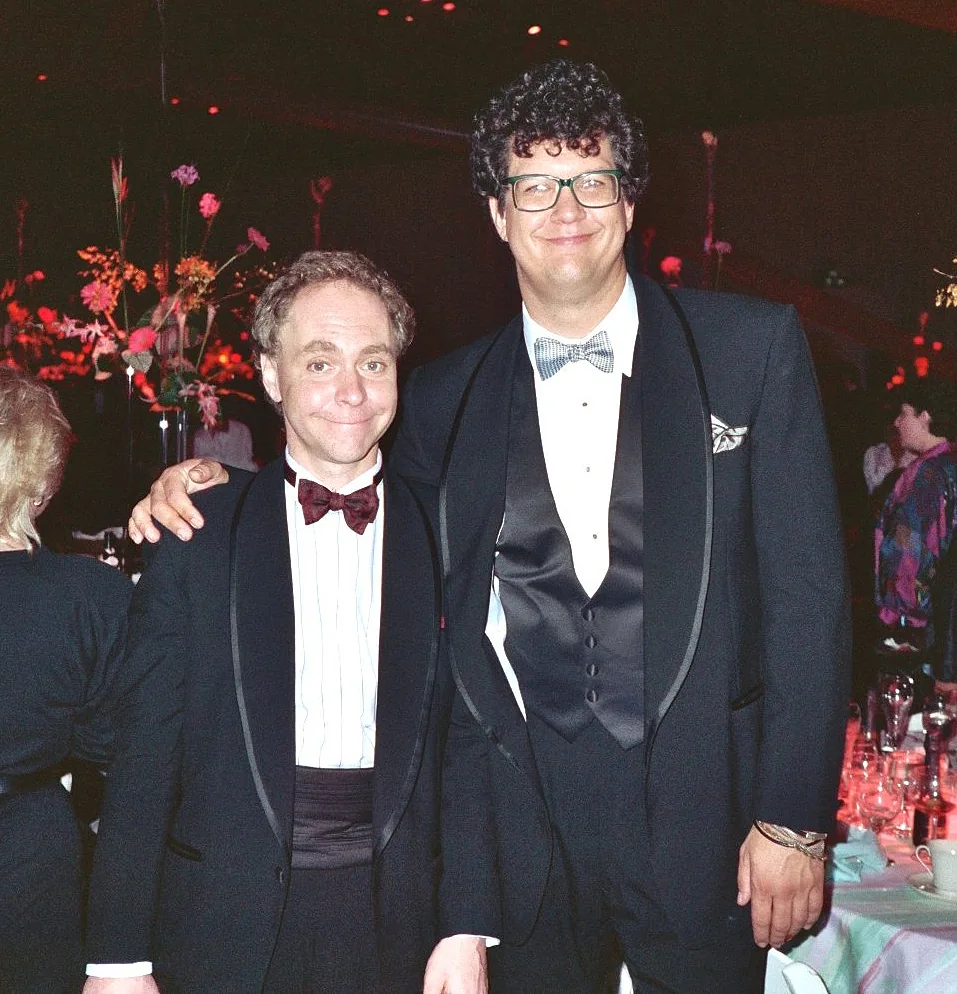
You knew something the other person didn’t. You could steer a supposedly fair contest, or produce an outcome that looked impossible. It was the sort of game that might end an evening with somebody grabbing the controller and demanding to see how you’d done it. Which, for Penn & Teller, seems like a perfectly respectable customer experience.
The compilation also had a more conventional action adventure, with filmed material and the duo’s personalities running through it. In the original promotional interview, they presented the collection as an extension of their act. Their faces were on it because their sense of humor was in it.
And then there was Desert Bus.
You drive from Tucson toward Las Vegas. It takes roughly eight real hours. There are no passengers, no thrilling shortcuts, and very little scenery to reward your concentration. The bus drifts, so you have to keep correcting it. You can’t even leave the room and let the joke play itself.
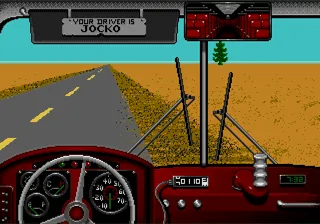
Finish the journey and you earn one point.
One. After eight hours. If a game could look you in the eye while delivering a punchline, this one would.
Jillette explained the idea in a 2009 Game Informer interview: demands for games that prepared people for real life had inspired a deliberately dull alternative to sensational violence. Here was your responsible activity. Please keep both hands on the wheel.
Unfortunately, the rest of the compilation never got its normal chance to annoy a paying audience. The Sega CD version reached reviewers, but Absolute’s collapse left it without a commercial release. Someone could have a disc containing the game while the company needed to manufacture and distribute it was falling apart.
Jillette’s recollection adds a sadder note. He remembered the loss of a key collaborator as part of why the project failed to reach players. The business history explains a stranded product; his account remembers a person missing from it.
Later attempts to arrange a legitimate edition also came to nothing, as the release history records. By then, asking another publisher to rescue an oddball Sega CD compilation was a difficult proposition. The joke had been finished for a machine people were moving away from.
Years later, players found a much better use for the bus. In 2007, comedy group LoadingReadyRun started Desert Bus for Hope, raising money for Child’s Play. Donations kept the drive going. The people on camera supplied songs, performances and cheerful suffering while the software continued doing almost nothing.
That’s a marvelous rescue for a game designed to waste your time. Penn & Teller left the road empty; the players filled it with company. The point finally became worth earning.
1996–1997: The dinosaurs get a sequel almost nobody can play
You didn’t need to read much about Primal Rage before deciding whether you wanted a turn. There were enormous prehistoric creatures on the screen, and they were hitting each other. In an arcade full of people trying to get your attention, that was a strong opening argument.
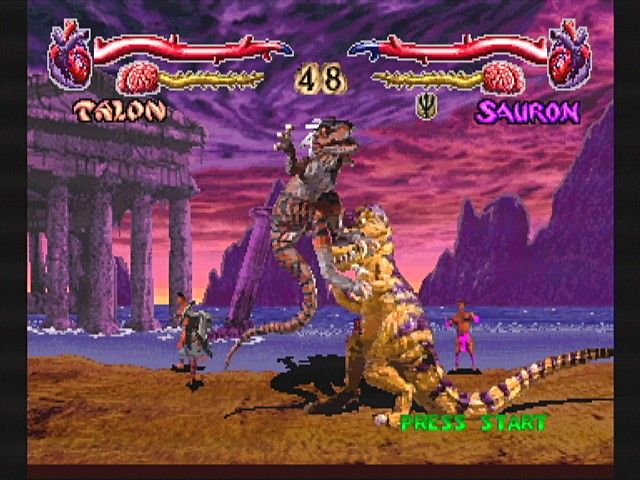
The stop-motion fighters had a wonderfully grubby quality. These monsters looked like someone had made them, moved them, and possibly had to repair them afterward. The violence had more personality than a perfectly smooth creature would have given it.
A sequel could have been another helping of dinosaurs. Primal Rage II took a stranger turn: human avatars joined the fighting, carrying the creatures’ power and transforming between human and beast. The little people who had once stood at the monsters’ feet were getting their own shot at the spotlight.
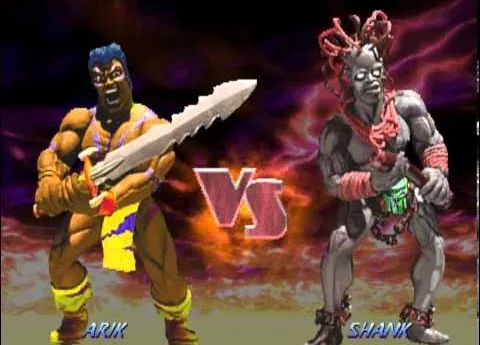
Designer Chris Tang stayed with the series into that sequel. He had already helped make the original; now there was a bigger mythology to build around the battles. But in his Sega-16 interview, the story ends with the team being disbanded and Tang moving on to Capcom.
That’s a less glamorous side of cancellation than the lost screenshots. The team breaks up. People take other jobs. The thing they were making together becomes something they get asked about years later.

Players had already encountered the sequel in location tests. Arcade games had to survive that particularly unforgiving audition: put the cabinet in front of customers, let them spend their own money, and see whether they come back. A magazine could make a game look wonderful. A player walking away after one match was harder to talk around.
Those test machines never became rows of cabinets across the country. Tang dates the cancellation to 1997 in his GDC postmortem. Atari Games was changing owners, and fighting games were competing for attention in a crowded market. This was the arcade business, separate from the Atari company behind the Jaguar. However far the sequel had come, it lost its chance to become an ordinary part of an arcade visit.
For fans, that was maddening. You could hear about someone playing it. You could look at pictures. If you loved the first game, you could spend years trying to decide whether the human fighters were a brilliant idea or a terrible mistake, without ever getting near the joystick.
Galloping Ghost Arcade in Brookfield, Illinois, eventually gave that argument somewhere to happen. Its surviving Primal Rage II cabinet put the game back in front of the public. WIRED’s visit places the rescue among the arcade’s efforts to keep rare machines working; the venue’s own games list still includes the sequel.
Imagine following a canceled game for years, then finding it in an actual arcade. It has a screen. It has controls. Somebody else may be playing it, which means your long-awaited encounter begins with the most reassuring inconvenience imaginable: waiting your turn.
Emulation later brought it to more people. The modified MAME project MAME4RAGE2 drew attention in 2017 for getting the survivor running, an afterlife covered in reporting on Tang’s postmortem. The sequel could finally gather opinions from people who had actually played it. After so long as a rumor, even a disappointed player counted as progress.
1996: Sonic’s missing Christmas
If you owned a Saturn, a new Sonic adventure seemed like a reasonable thing to expect. Sega had a new console. Sega had the hedgehog. Surely the two would get properly acquainted.
Sonic X-treme was supposed to be that introduction. At Sega Technical Institute in America, designer Chris Senn and programmer Ofer Alon were exploring a fisheye view that bent the world around Sonic. The scenery curled at the edges. Platforms seemed to wrap around him. Even in a small screenshot, it looked like the series was trying to go somewhere unfamiliar.
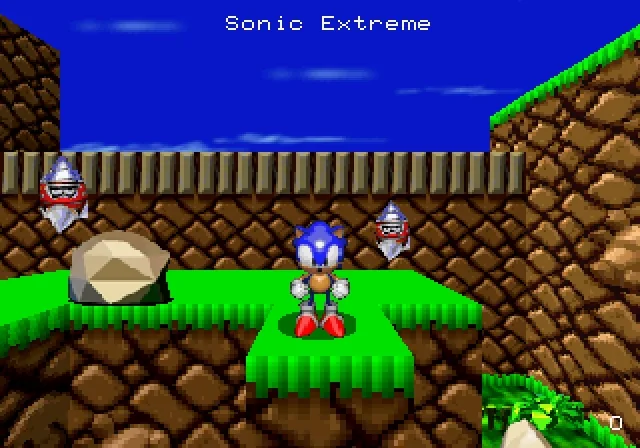
There was a tempting idea in that view. Sonic moved so quickly that keeping track of the space around him had always mattered. Showing more of the world might help. But now the team had to teach a player how to read that world while it twisted around the screen. Making a striking picture was only the beginning.
Producer Mike Wallis had the unenviable job of turning it into a game people could buy. In his 1996 Game Players interview, he talked about speed, graphics and gameplay. These were the promises a Sonic fan wanted to hear. Behind them, the project kept shifting.
Wallis’s later recollection traces the move away from the 32X and through Sega’s changing hardware plans. Work on the main game and boss encounters also followed different technical paths, with management pushing toward the boss technology. The team kept having to answer a question a project this far along badly needed to have settled: which version of this thing are we actually making?
Even a possible shortcut turned into another setback. The Retro Gamer investigation recounts the team receiving access to the NiGHTS engine, then losing it after objections inside Sega. Whatever time that might have saved was gone. Christmas hadn’t moved.
The people trying to meet it were running out of more than time. Programmer Chris Coffin became seriously ill; the same investigation recounts pneumonia during the final push. Senn also suffered under the workload. Read those accounts after the old previews and the cheerful promises start to feel awful. There were actual people trying to hold the project together behind that little hedgehog.
The Christmas deadline collapsed. Saturn owners eventually got Sonic 3D Blast, Sonic Jam and Sonic R, but the big new platform adventure never arrived. Mario and Crash were out exploring their new worlds. Sonic’s most ambitious Saturn outing stayed in the magazines.
This is where X-treme parts company with Star Fox 2. The recovered July 1996 prototype preserves a glimpse of the experiment. A complete adventure never emerged from it. Cuthbert’s team had finished a game and watched it get shelved; Senn, Coffin and their colleagues never got that far.
Their loss has often become ammunition in an argument about why the Saturn failed. Spend a little time with the development story and the smaller loss is harder to shake: a group of people worked themselves into the ground trying to make the game everybody expected, and never got to show players the version they hoped to finish.
1998: Blizzard calls the man who might save Thrall
Thrall was supposed to get out of his cell by pointing and clicking.
For a Warcraft fan, that was an inviting change of pace. Warcraft Adventures: Lord of the Clans would let you stop ordering armies around and spend some time with one orc. You could walk into the buildings, talk to the people, and rummage around for whatever an adventure-game puzzle wanted you to find.
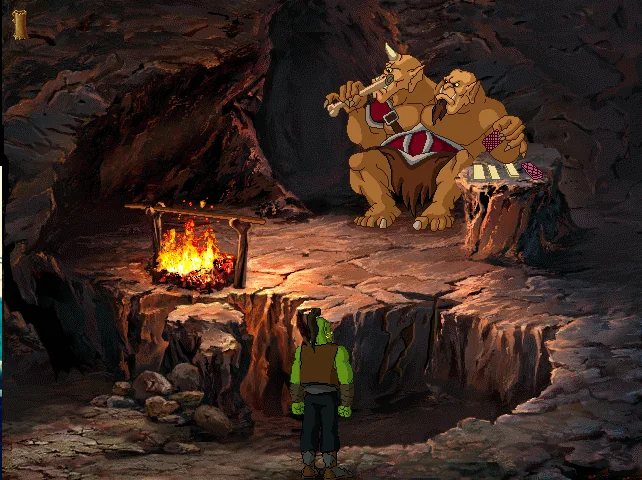
Bill Roper, a Blizzard producer involved in its expanding fantasy world, described that ambition in PC Gamer’s interviews with the creators. The studio loved the LucasArts adventures. Warcraft had room for a game where a conversation could be as important as a battle. Animation Magic supplied the adventure technology and traditional animation.

The pictures offered something the strategy games couldn’t easily give you: time with a face. Thrall could have expressions, speak, and stand in a room long enough for you to get to know him. The world looked like somewhere you could poke around while the armies took the afternoon off.
Roper’s recollection is less happy about what happened once you started poking. Some puzzles and humor didn’t fit the Warcraft story the team wanted. By then, changing the game meant revisiting animation and voice work. A better idea could be expensive before anybody drew the first new frame.
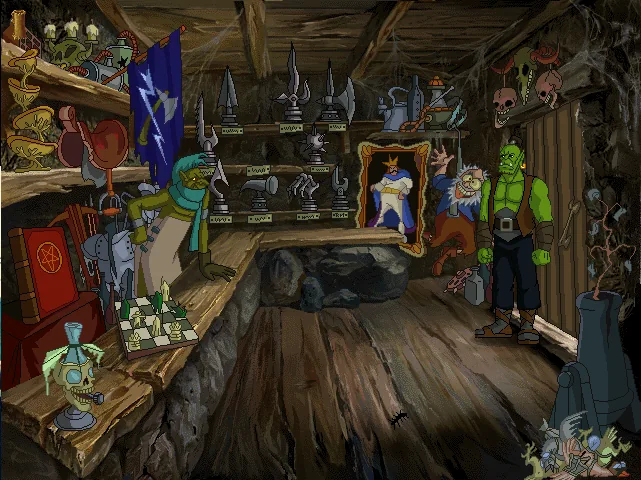
Blizzard brought in Steve Meretzky, an adventure designer whose Infocom work included The Hitchhiker’s Guide to the Galaxy. If anybody could understand how a puzzle might derail a story, it was someone who had spent years making players argue with them.

Meretzky’s assignment, as he recalled to Arcade Attack, was to find improvements the team could still afford to make. He spent time with the developers and wrote up his recommendations. The game was close to completion. A wholesale reinvention wasn’t on the table.
“The game was pretty close to done.”
— Steve Meretzky, describing the game he was asked to help improve
He thought the art fell short of the LucasArts standard. And Blizzard’s expectations were becoming difficult to meet merely by getting a game into respectable shape. The company was building a reputation people would bring with them when they opened the box.
Meretzky recalled being told that a private showing to trusted contacts around E3 went badly. The studio could pour much more into the rescue, or walk away. In May 1998, it walked away. A contemporary report of Blizzard’s announcement records the company saying it couldn’t reach the quality it wanted within an acceptable time.
The unpleasant twist is that Meretzky later understood the decision. The designer brought in to help save the adventure didn’t turn its cancellation into a story about executives failing to appreciate a masterpiece. There was a game there, but he could see why Blizzard wasn’t satisfied.
That leaves a more uncomfortable story than “3D killed another beautiful cartoon.” The industry’s changing tastes were part of the pressure, but so were the puzzles, the tone, and the prospect of spending still more on a game that might never feel right. Finished scenes sat on one side of the decision. A studio’s doubts sat on the other.
Players finally got their chance to disagree when a near-complete build with cutscenes circulated in September 2016. Some found an adventure they were happy to spend time with. Others could see the rough edges the old interviews had described.
A player on r/adventuregames called it “a really beautiful game full of humor.” That’s a welcome voice in this story. A studio can decide a game falls short, and someone playing it years later can still be delighted to have found it.
The Warcraft Adventures Cutscenes Remaster Project went further than affection. Its contributors worked on audio timing, damaged video and missing material, documenting the fixes over years. Blizzard had stopped working on those scenes in the 1990s. Fans picked them up much later, with no launch campaign waiting at the end.
Thrall himself escaped the cancellation. Christie Golden’s Lord of the Clans novel carried his origin into print. The adventure game disappeared, but the character had a future. Players would come to know him without necessarily knowing about the point-and-click game that almost introduced him.
1998: The game’s nearly ready. The new boss hates the idea.
There is a special kind of dread in having your work judged by somebody who wasn’t there when it was approved. For the developers of Thrill Kill, that somebody was Electronic Arts.
Paradox Development had been making the PlayStation game for Virgin Interactive. Its fighters were dead, in Hell, and hurting one another for a chance to return to life. Body horror, medical nightmares and fetish imagery did much of the character design. This was a game practically mailing its future complaint letters ahead of itself.
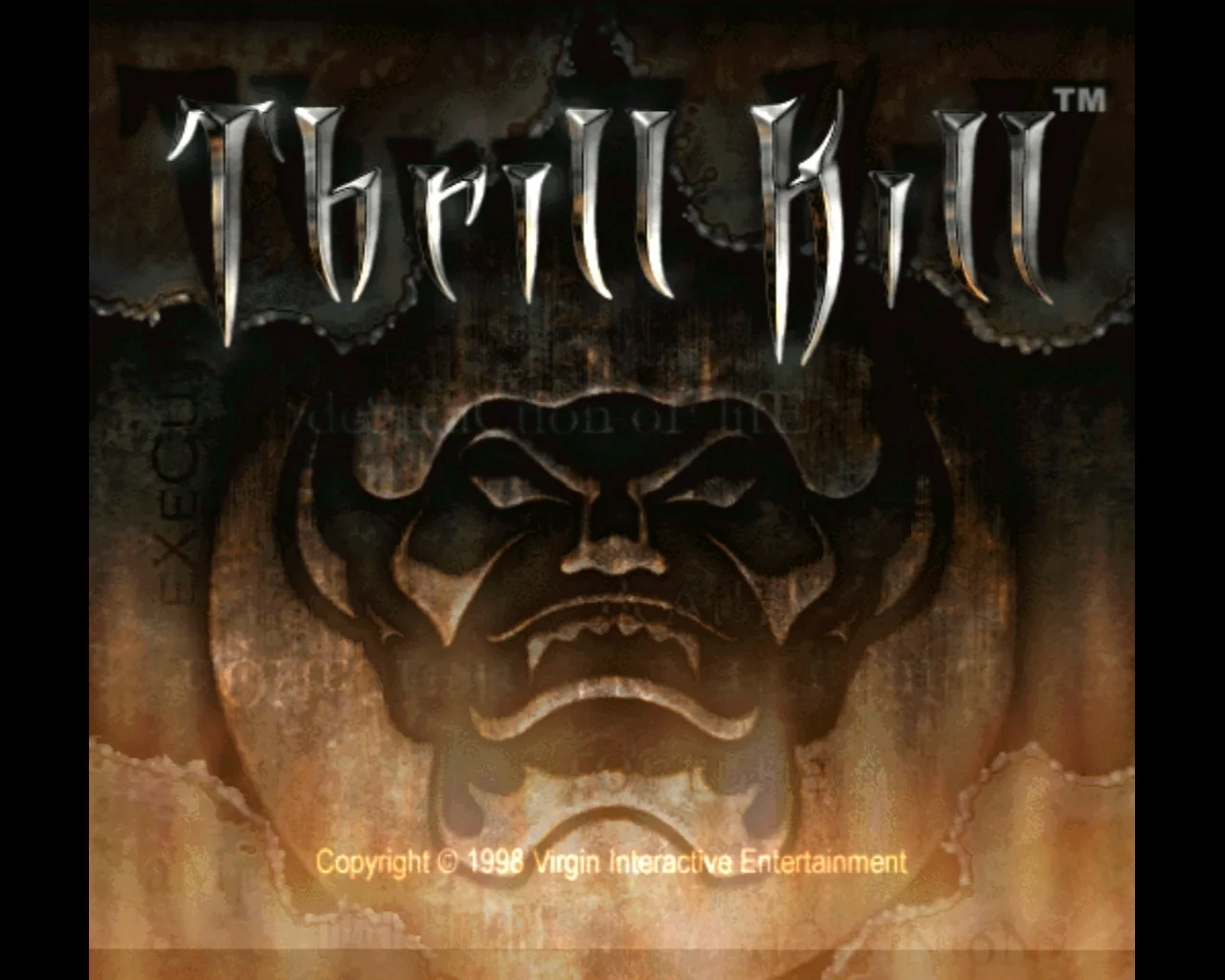
Underneath that enthusiasm for offending people was an interesting fighting game. Several players could occupy the arena together. Aggression filled a kill meter instead of everyone simply defending a conventional health bar. The game wanted a scrum: people piling in, trying to get the upper hand, and making themselves somebody else’s problem.
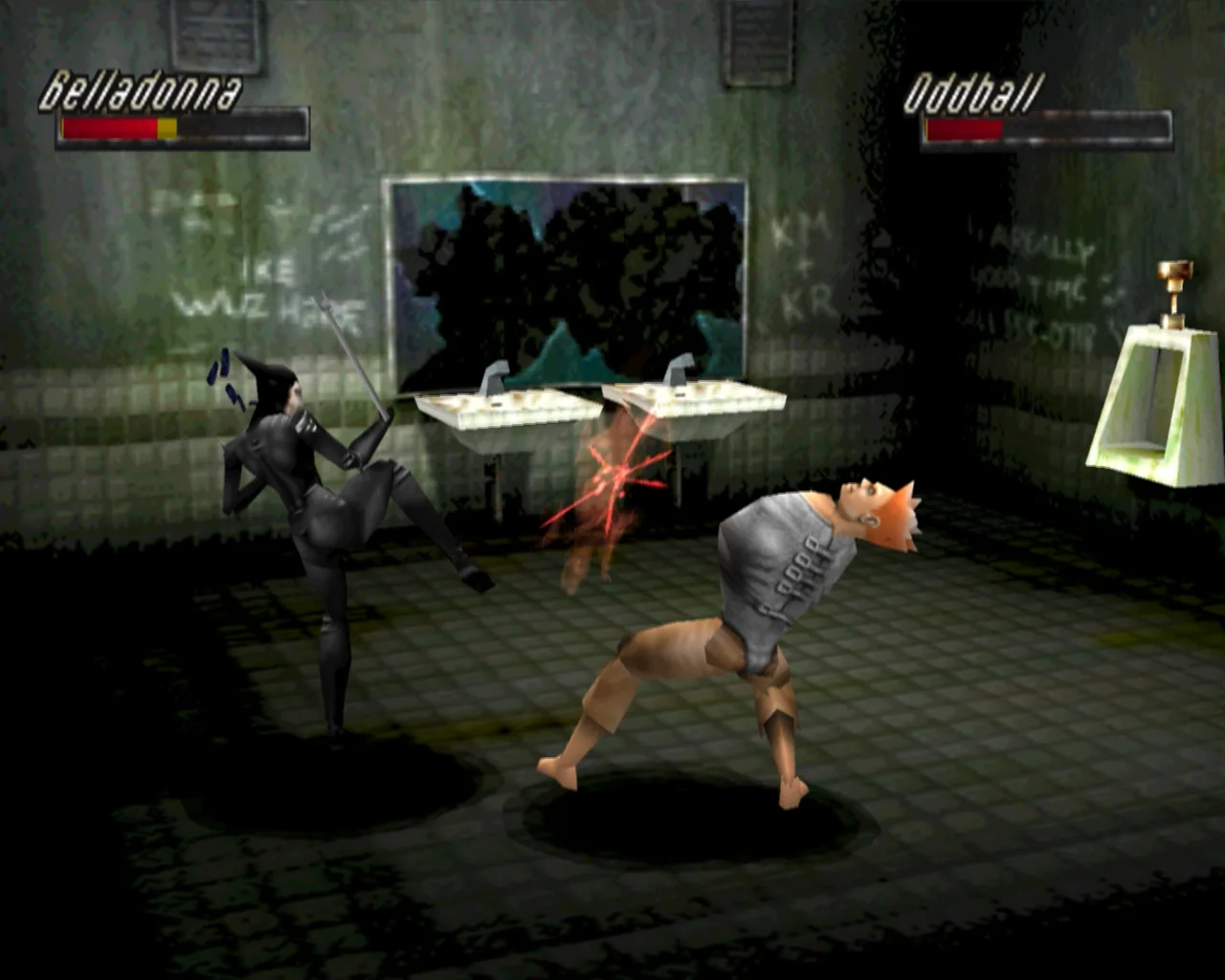
Virgin producer Harvard Bonin made the case for it in an archived interview. Four players could fight simultaneously, including in teams. The grotesque cast got attention, but there was a reason to invite friends over beyond showing them a particularly nasty animation.
Then EA acquired Virgin’s North American development operations in 1998. Thrill Kill came with the deal. EA declined to release it.
By then, it had received an Adults Only rating from the ESRB, a serious obstacle for a console game hoping to reach retail shelves. The project had spent its development pushing the sort of content Virgin had supported. Now it belonged to a publisher that didn’t want to sell that content.
Animator Robert Hunter had joined the team in a junior role and worked on some of the kills. To him, this was work he had helped make, with colleagues who wanted it to reach people. In his Arcade Attack interview, he remembers the reaction when that prospect disappeared.
“Everybody was just devastated.”
— Robert Hunter, on the cancellation of Thrill Kill
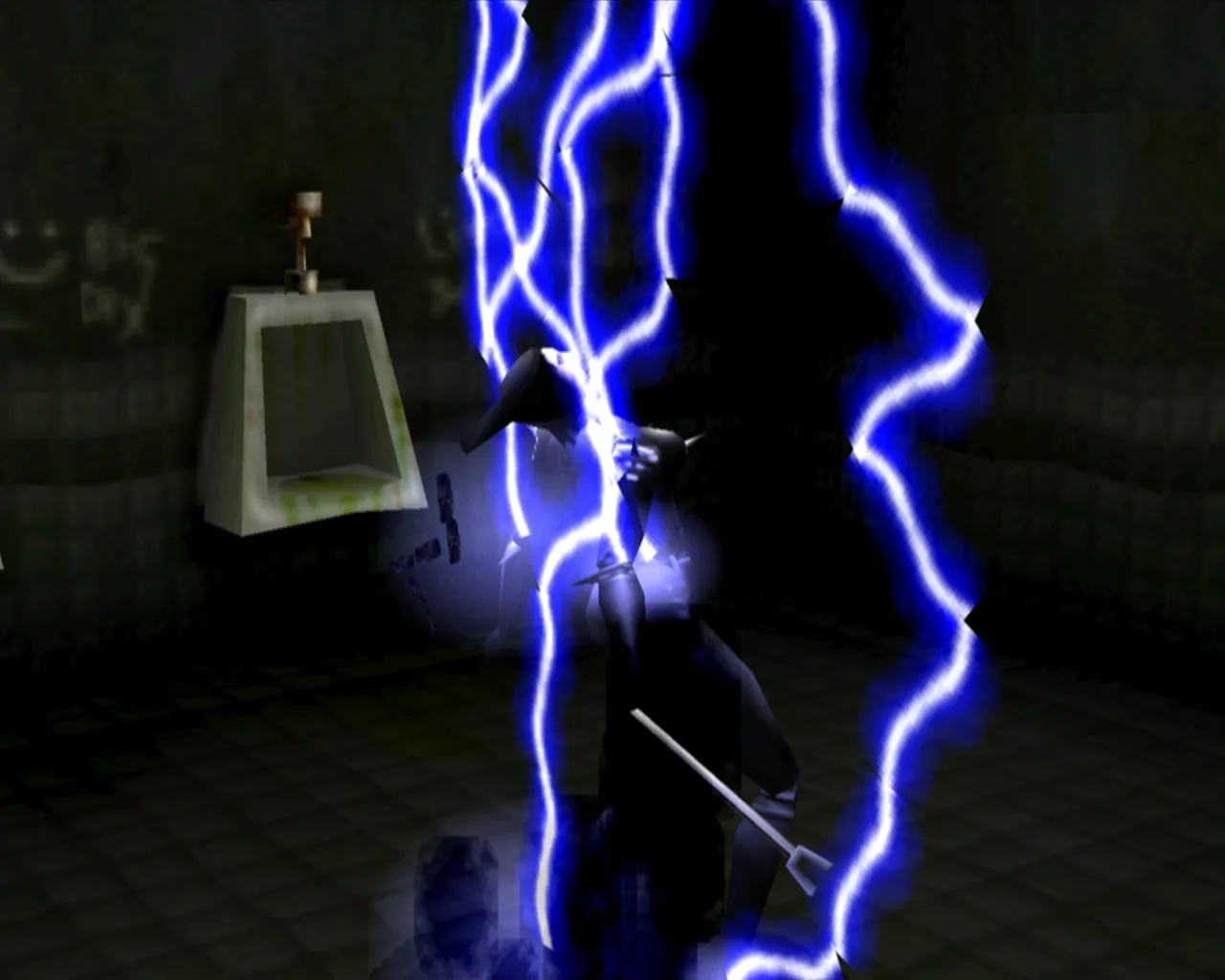
Hunter felt EA could have found another way to get the game out. You don’t have to share his affection for it to understand the anger. A new owner had inherited months of somebody else’s effort and decided the whole thing was a problem.
The public battle over violent games hung over the decision, but no government ban stopped this release. EA chose not to ship it. The contemporary Los Angeles Times report recorded the publisher objecting to the content.
That distinction probably offered little comfort inside Paradox. The people who had approved the game were no longer the people deciding its future. The team couldn’t fix that by improving another animation.
And then the canceled game acquired players anyway.
Bootleg builds spread, carrying the reputation of something you weren’t supposed to have. A PlayStation player’s forum post remembers playing it at a friend’s house, then discovering years later that it had never officially come out. To that player, the game had simply been there. Its missing release was news.
That is a wonderfully odd afterlife. Somewhere, a publisher had stopped a shipment. Elsewhere, friends were passing around a controller and making memories of the game that supposedly didn’t exist. The preserved August 10, 1998 build shows how much they had to play with.

Paradox also got a commercial second chance for its fighting technology. Wu-Tang: Shaolin Style put a different cast into the studio’s multi-character battles, a reuse traced in the project history. The original game was gone, but the developers could carry some of what they had learned into something that reached a shop.
Thrill Kill could sell its personality in one screenshot. Whether you enjoyed spending an evening with it was another question. Its survival lets you make that decision yourself—and gives Hunter’s devastated team something more substantial than an old preview to show for their work.
The game finally starts
There’s a lovely moment when an unreleased game stops being a story somebody tells you. A menu appears. You press a button. A character moves.
Then you miss a jump, lose a fight, or wonder where you’re supposed to go. The mythical lost masterpiece turns out to have the ordinary irritations of a video game. After years of wondering, even that can feel good. You’re finally allowed to have an opinion.
Getting there took people who kept things other people were finished with: a review disc, an arcade board, an old build, an interview that explained why the build looked that way. Hidden Palace, Lost Levels and the Video Game History Foundation help put those survivors back together with their stories. Collectors, developers, arcade operators and emulator programmers have all had a hand in bringing them to players.
None of these reunions can give the developers their original launch back. Sandhop’s translation didn’t meet its English audience on the NES. Cuthbert’s sequel arrived decades late. Hunter’s team never got to watch Thrill Kill go on sale. Sonic’s developers never finished the adventure they had been trying so hard to build.
But the work didn’t all vanish. We can play some of it, look closely at the rest, and hear the people behind it describe what happened. Those names belong beside the games, because cancellation happened to them long before it became interesting to us.
And sometimes the players bring something nobody could have planned. Penn & Teller made an empty eight-hour drive. Years later, people showed up together, kept one another entertained, and raised money while the bus rolled on.
The 1990s moved on. The bus finally found its passengers.
More Retro Replay histories
- The Complete History of the Sega CD — the multimedia machine that nearly delivered Penn & Teller’s tricks.
- Nintendo’s Licensing Rules — the power behind the cartridges and the shelf space.
- The Rise and Fall of Acclaim Entertainment — another view of the publishers behind the box art.
- The History of Emulation — the people and tools that helped playable history survive.
Sources and further reading
The linked reporting above includes developer interviews, official Nintendo manuals, contemporary cancellation coverage, preservation build records and attributed player memories. The main starting points are Phil Sandhop on Earth Bound; Nintendo’s Star Fox interview; Chris Tang’s Primal Rage II postmortem; Mike Wallis on Sonic X-treme; PC Gamer’s Warcraft Adventures investigation; and Robert Hunter on Thrill Kill.

.jpg)


