Retro Replay Retro Gaming History, Reviews & Emulation
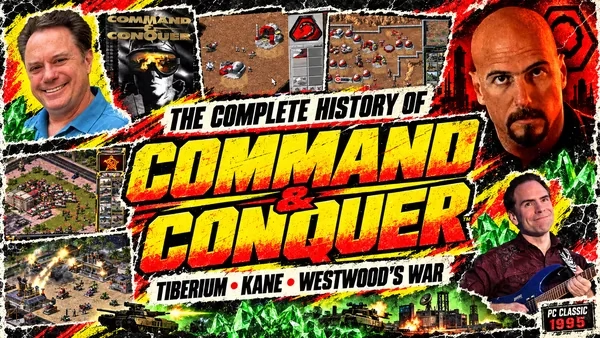
The harvester is miles from home. Your money is almost gone. Somewhere beyond the black edge of the map, an army is getting ready to ruin your evening. Then a voice announces “Unit ready,” the music kicks in, and you decide you can probably afford one more tank.
Command & Conquer understood that particular kind of optimism. It let you build a little military empire, made you feel clever for keeping it running, and then sent somebody through the back gate while you were admiring the front. Between battles, a bald man with a goatee looked straight into the camera and persuaded you that world domination might be a perfectly reasonable career move.
For a generation of PC players, this was what strategy looked and sounded like: green crystals, red scorpions, an unfolding construction yard, and music loud enough to suggest that the sound card deserved its own medal. A new mission could swallow an afternoon. A human opponent could swallow the weekend.
The series would spread across three very different battlefields. The Tiberium games followed a poisoned Earth and the seemingly indestructible Kane. Red Alert turned alternate history into a playground for Tesla coils, mind control, and increasingly ridiculous invasions. Generals brought the fighting into a more contemporary world, carrying some uncomfortable baggage along with its superbly combustible armies.
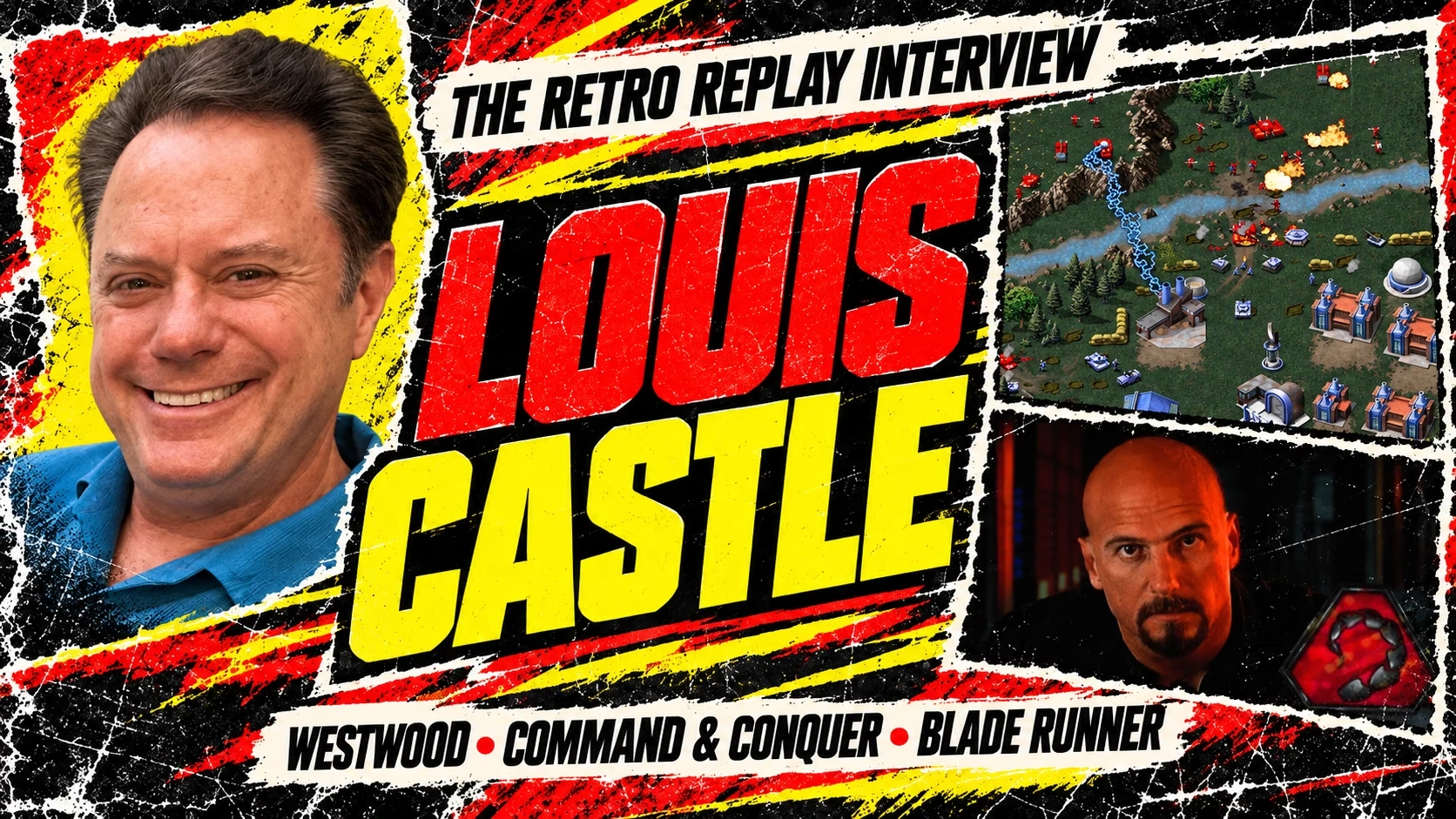
Along the way came extraordinary games, missed deadlines, a beloved studio’s closure, sequels that divided their audience, and a comeback built around the games people had never stopped playing. Westwood co-founder Louis Castle discussed several of those turning points in our interview with him. His recollections also complicate the easy version of this story—the one where every good decision belonged to Westwood and every bad one belonged to EA.
Before the war, there was a printer
Westwood’s origin is pleasingly small for a company that eventually got into the business of blowing up the planet. In Las Vegas, Louis Castle worked at the computer shop Century 23. Brett Sperry was a customer. They became friends, and when Sperry needed to print some source code, Castle invited him over to use his printer.
Castle showed him his computer artwork. Soon they were making things together: Castle supplying art and some programming, Sperry handling programming and design. A printer had become an introduction to the person with whom he would build a studio.

Their company, founded in 1985 as Westwood Associates, learned its trade through other people’s games. Converting software between machines meant finding out what each computer could handle, then finding a way around what it couldn’t. There were role-playing adventures, dungeon corridors, and increasingly ambitious pictures. By the early 1990s, Westwood had acquired the skills to make a world feel alive on a fairly ordinary home computer.
Sperry, the studio’s co-founder and designer, wanted to grow the company. He also loved Dune. That turned out to be a useful combination.

Dune II: The Building of a Dynasty, released in 1992, stranded the player on a desert planet where everything depended on spice. Send out a harvester. Turn the spice into money. Spend that money on buildings and soldiers. Defend the harvester, because an enemy attack—or a very hungry sandworm—could stop the whole operation.
It was a beautifully nasty little circle. You needed money to protect your income, and protecting your income cost money. Sitting comfortably inside a base was never quite enough. The thing keeping you alive was out in the desert, asking for trouble.

Earlier games had already explored fighting in real time. Westwood didn’t conjure the whole genre out of an empty desert. Dune II helped give it a familiar shape: resource gathering, a growing base, competing armies, and a technology ladder that made your next purchase feel like progress toward a glorious breakthrough.
In our interview, Castle traced the team’s inspirations to Military Madness on the TurboGrafx-16 and Rescue Raiders on the Apple II. The first supplied a strategy touchstone; the second offered real-time action around opposing forces and defenses. The Dune license gave that mixture a place to live.
The team could feel that the game worked, even before anyone knew how far its ideas would travel. “We just knew it was a great game,” Castle told us. He also remembers the awkwardness: “Looking back, it’s a little surprising because the UX was really tedious compared to the eventual RTS innovations.”
He isn’t kidding. Returning to Dune II means remembering how much work could go into ordering one unit around. There was a terrific game under those clicks, but your mouse hand had to earn it. Westwood’s next strategy game would remove some of that friction—and finally let another person be the reason your harvester exploded.
1995: The construction yard unfolds
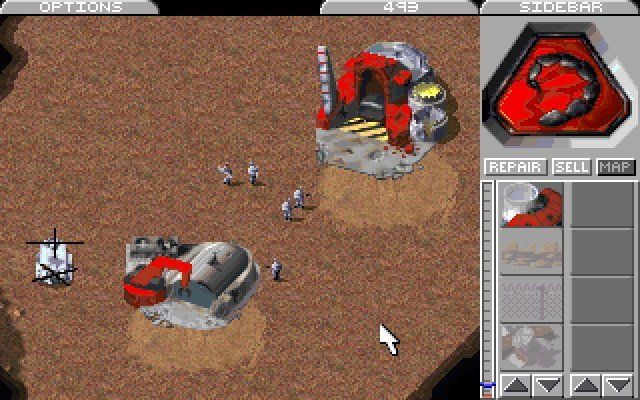
The first great moment in Command & Conquer is a vehicle turning into a building. Your Mobile Construction Vehicle parks, unfolds, and becomes the construction yard. A patch of empty ground suddenly feels like home.
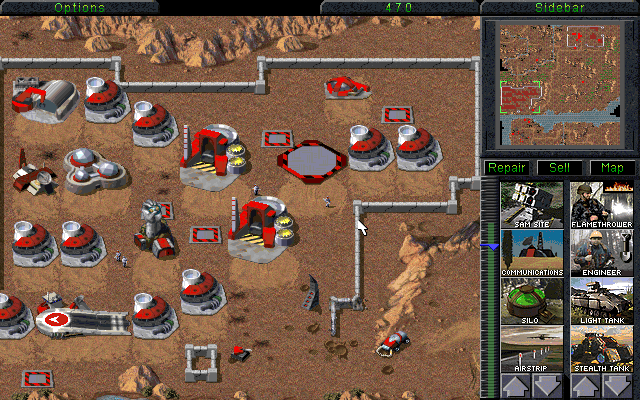
Then you start placing the things that will keep it alive: power, refinery, barracks, factory. The sidebar offers possibilities as the battlefield demands decisions. Select a group, send it somewhere, return to the base, buy something else. Compared with Dune II’s stop-and-start handling, it feels like somebody has taken the handbrake off.
Castle describes that inheritance without hesitation. Asked how much Dune II influenced C&C, he answered: “Everything! We were intentionally making the gameplay successor to Dune II.” Westwood borrowed the idea of a helpful, context-sensitive cursor from its Kyrandia adventures. Spice became Tiberium. Three competing houses became two military factions. The team wanted stronger differences between those sides, and it wanted players to fight each other.
The setting almost went somewhere else entirely. Castle says the original theme was fantasy, with swords and sorcery. Sperry wanted a contemporary story with a wider audience, and the project moved toward a near-future military conflict. You can imagine an interesting game down the other road. You cannot imagine Kane improving it by wearing a wizard hat.
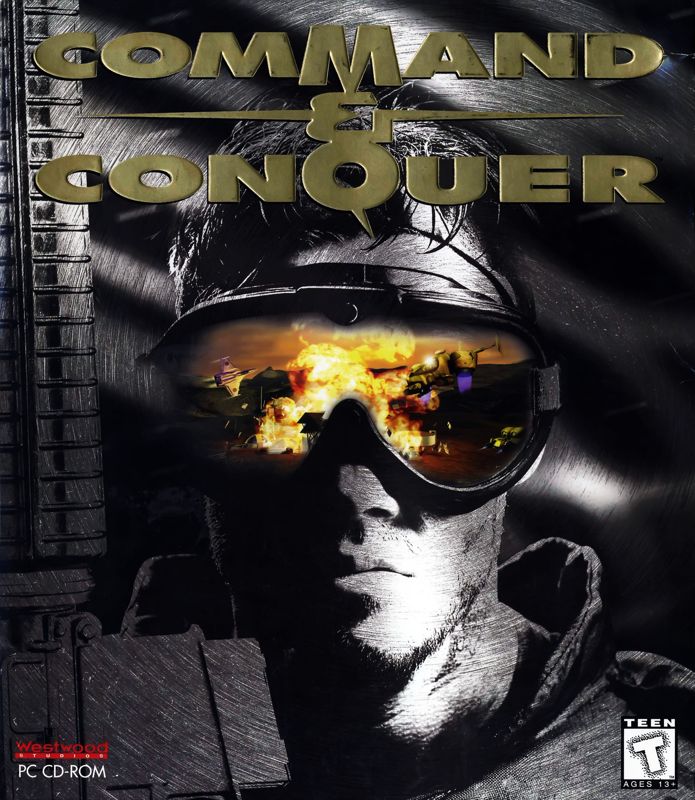
In 1995, the near-future version arrived on DOS PCs. The original game would later become widely known as Tiberian Dawn, a name useful for keeping it separate from the franchise it started. At the time, the box simply promised Command & Conquer.
The green stuff pays for everything—and ruins everything
Tiberium was a wonderfully economical bit of world-building. Those green crystal fields were the money on the map. They were also evidence that something was terribly wrong with the Earth.
Your harvester collected the substance and carried it home to a refinery. The credits rose; the factory went back to work. Infantry wandering through the wrong field could be hurt by the very resource financing their army. The game let you profit from the disaster, then asked you to fight over who would control it.
The Global Defense Initiative, or GDI, wore the face of an international military response. Its heavier equipment made a frontal attack feel reassuringly expensive. The Brotherhood of Nod mixed insurgency, propaganda, fast vehicles, stealth, and exotic weapons. GDI’s Mammoth Tank looked as though it could solve a disagreement by parking on it. Nod’s lighter forces encouraged you to find a less expensive way through.
The differences were imperfect, as Castle acknowledges, but their identities were unmistakable. A Nod base looked like somewhere that had already considered putting a death ray on the roof. GDI looked like the people who would write a report about it, then order an air strike.
Campaign missions changed the scale often enough to keep you uncomfortable. Sometimes you had a construction yard and room to build. Sometimes you were handed a small force and told to do something dangerous without replacements. The Commando turned the usual arithmetic upside down: one man, carefully handled, could demolish buildings and cut through infantry. His swagger made him feel less like a unit and more like someone who had wandered in from a different action game.
The original game manual lays out the machinery underneath: power, harvesting, construction, unit orders, and specialist abilities. On screen, the lesson was quicker. Forget to defend the refinery and find out how long your glorious offensive lasts without wages.
The director steps in front of the camera
C&C’s briefings did something that strategy games seldom made so entertaining: somebody looked at you and acted as though you mattered. Officers issued orders, news broadcasts framed the fighting, and Nod’s leader made promises that probably should have prompted a background check.
Joseph Kucan was Westwood’s cinematic director. He also became Kane, the charismatic center of the Brotherhood. His performance gave the faction a human face, and an alarmingly convincing one. Kane could be warm, amused, threatening, or suddenly furious. You might doubt the mission. You rarely doubted that he expected it completed.
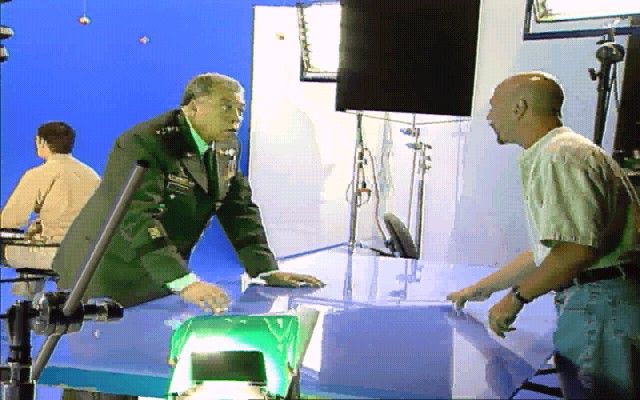
Castle remembers watching auditions with Sperry while Kucan demonstrated how he wanted the actors to deliver their lines. Eventually Sperry decided that the best candidate was already in the room.
“Brett just flat-out asked if Joe would play the character and I think Joe was surprised but honored that Brett felt Joe could make the best Kane.”
Louis Castle, Retro Replay interview
The videos had rough edges. Their compressed pictures belong unmistakably to the CD-ROM years, and nobody is going to mistake every supporting performance for an awards campaign. But they had conviction. Their direct address made the person at the mouse part of the scene. Kane wasn’t discussing a commander somewhere off camera. He was speaking to you.
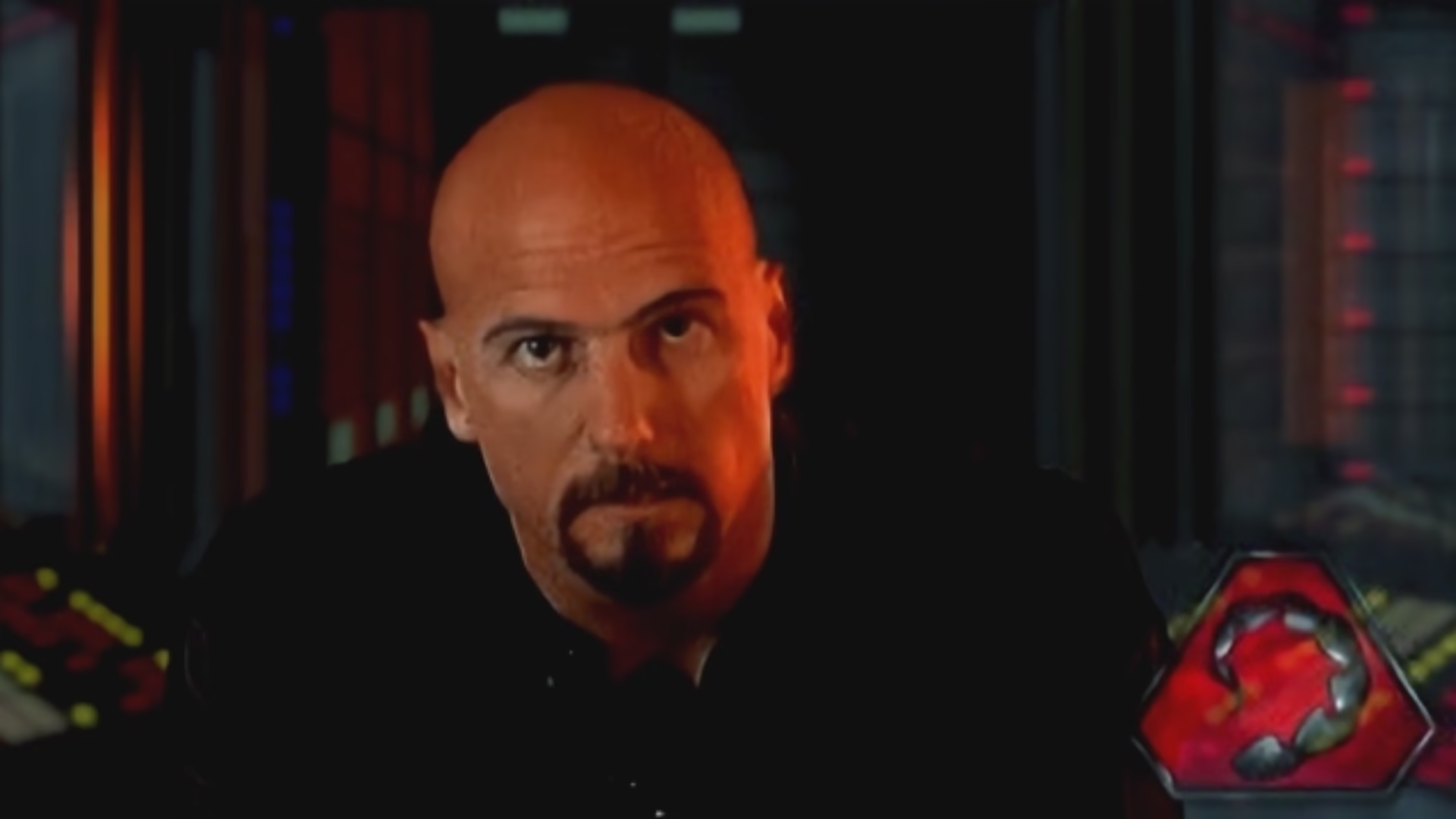
The FMV boom produced plenty of games in which live-action footage was the main attraction. C&C used it as a reward and a recruiting tool. You still spent your time playing a strategy game. The films made the next battlefield feel like an assignment from somebody you wanted to impress—or somebody you very much wanted to disappoint.
A soundtrack with mud on its boots
Composer Frank Klepacki supplied the other half of that personality. His music mixed industrial rhythm, heavy guitar, electronic texture, and the occasional voice sample into tracks that could make routine construction feel like the opening of an assault.
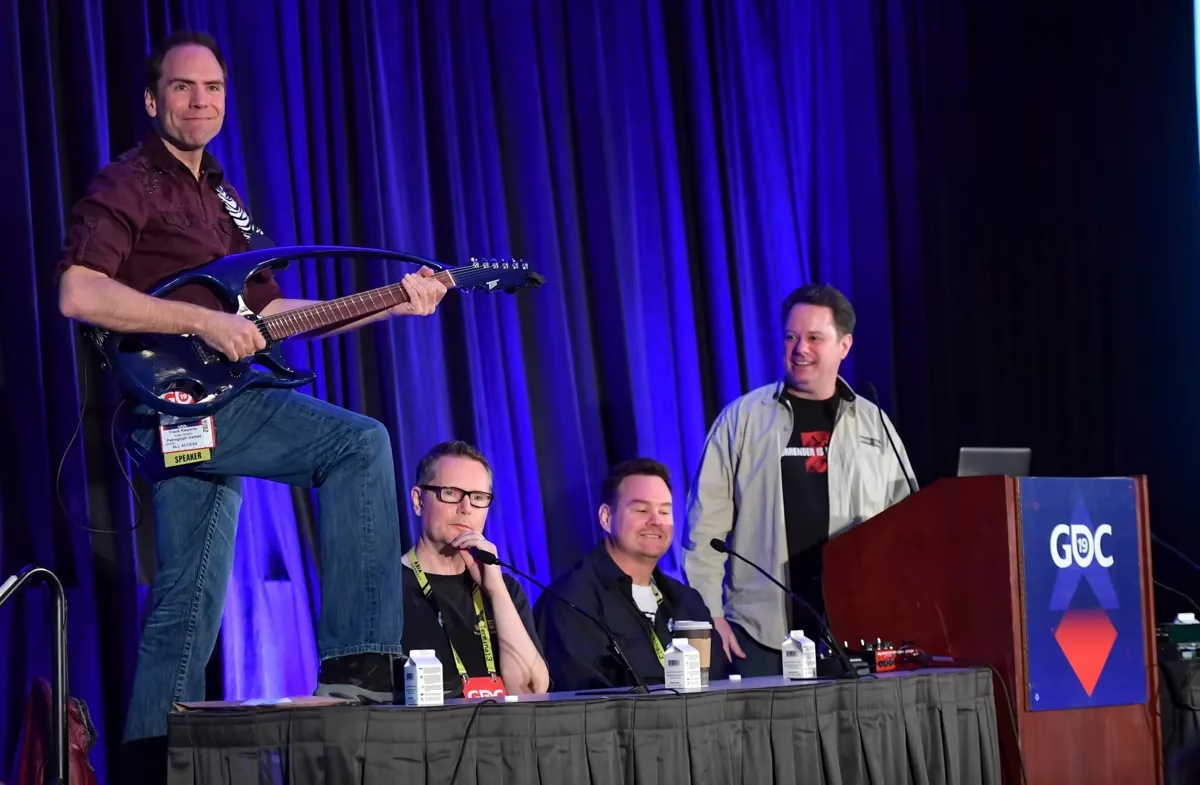
Castle told us that Klepacki was involved in as many creative briefings as possible. “Frank’s unusual ability to fit his music to images on the screen allowed the art and story departments to create the most impactful images which Frank would then augment with music.” The relationship went in both directions: the music belonged to the factions, characters, and mood of a mission.
“Act on Instinct” practically announces the series’ attitude. The beats suggest forward movement even while you are carefully calculating whether you can afford it. Other tracks leave more room for stealth and unease. C&C had enough confidence to let the soundtrack be memorable in its own right.
That confidence carried into multiplayer. A computer opponent could be manipulated. A friend could be insulted afterward. Connecting PCs turned C&C into an argument conducted through harvesters, engineers, and tanks.
Castle still wishes Westwood had built a stronger online layer. “We were so busy trying to ship games for Virgin that we just didn’t have the resources to custom-build something like Battle.net.” LAN play nevertheless gave the team the human contest it wanted. The person across the network didn’t politely wait for the story to catch up. They spotted the unguarded refinery and sent a bill.
The Covert Operations followed in 1996 with extra missions that expected you to know what you were doing. The series had already taught people its language. Now it could use that fluency to be meaner.
Red Alert: Somebody let Einstein near the timeline
A respectable sequel might have continued the first game’s war. Red Alert began with Albert Einstein going back in time to remove Adolf Hitler from history. This prevented one disaster and made room for another: an enormously powerful Soviet Union advancing across Europe.
Released in 1996, it wore the shape of a prequel while inventing a whole second personality for the series. Kane lurked at the edge of the story, suggesting a connection to the Brotherhood’s future. Later Red Alert games would develop a history of their own, and anyone trying to make every timeline fit neatly deserves a pension.

On the battlefield, the Soviet side brought brute force: heavy armor, formidable ground defenses, and the magnificently unfriendly Tesla Coil. Allied commanders had to make more of mobility, intelligence, and naval power. A cruiser could turn a distant shoreline into rubble. A submarine made the sea feel rather less welcoming.
The weapons mattered because they changed your behavior. A Tesla Coil encouraged you to treat the entrance to a base as a genuine personal insult. A spy made a guarded compound into a puzzle. A Chronosphere promised to move units without asking the roads for permission. The technology was absurd, but the decision it created was perfectly legible.
Red Alert also gave solo players a skirmish mode against computer opponents. You could start a fresh war without replaying a campaign mission, set the conditions, and spend an evening discovering whether your latest grand strategy survived contact with a rival base. Multiplayer and skirmish made the battlefield a place to return to, rather than a sequence to finish.
Castle says the outrageous tone was planned. “Yes, the campy ‘50’s B movie’ feel of Red Alert was the original concept.” Where the original C&C imagined military technologies hidden from public view, Red Alert explored the fun of letting mad science work. Tesla weapons and time machines belonged together in that world.

Klepacki’s “Hell March” supplied the perfect entrance. The marching rhythm and massive guitar riff made Red Alert sound ready to kick a door off its hinges. Its later variations became a musical family resemblance: change the technology, change the cast, change the entire timeline, and those boots could still tell you where you were.
Counterstrike and The Aftermath extended the fighting in 1997. The secret giant-ant missions were an especially honest expression of the project’s personality. Once the player has accepted time travel, arguing with a giant ant is really just fussiness.
The war moves into the living room
C&C’s popularity wasn’t confined to people with a PC desk. The original reached PlayStation and Saturn, while Red Alert and Retaliation brought the alternate war to PlayStation. Moving a cursor with a controller was never quite the same as drawing a box around troops with a mouse, but the attraction survived: build something, defend it, and send a very large problem toward the other side.

The Nintendo 64 version of the original C&C arrived in 1999 with a strikingly different presentation, rebuilding the battlefield in 3D. Cartridge space meant sacrifices, especially to the familiar live-action show. It was an unusual translation of a PC blockbuster rather than a perfect substitute. The console versions are part of the series’ history precisely because they show how much of its appeal could survive a change in the player’s hands.
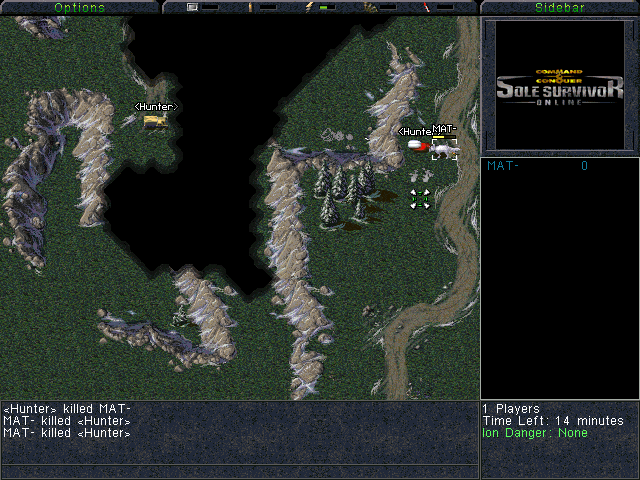
There was another experiment in 1997. Sole Survivor stripped away the base and handed each player one unit in an online arena. Crates, fights, and survival took the place of a growing military economy. Its original manual describes a game organized around multiplayer action. It proved that Westwood was already willing to pull the formula apart; it also became one of the family’s least remembered members.
Tiberian Sun: The future takes longer than expected
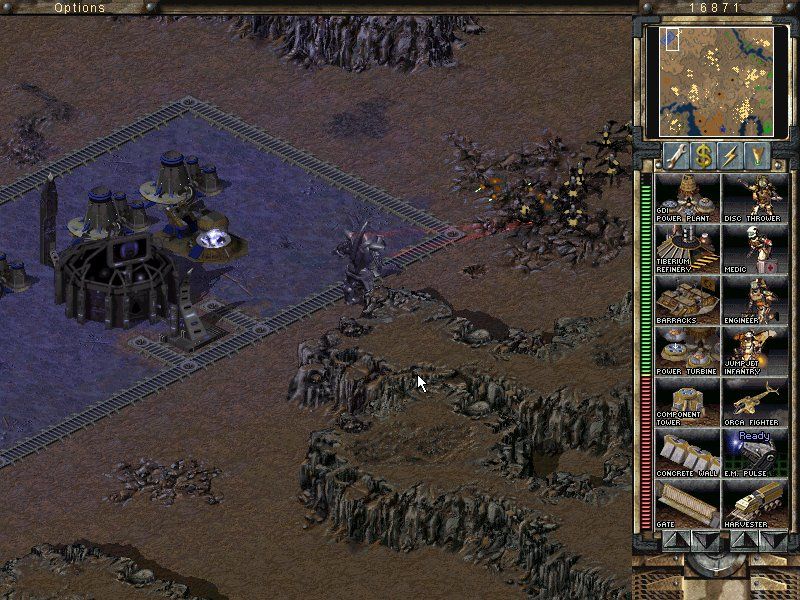
Back in the main storyline, the green crystals kept spreading. Tiberian Sun asked what the world would look like after living with that catastrophe for decades. The answer was dark, scarred, and full of machines that looked as though the human beings inside them were having a difficult time.
Its 1999 battlefield was viewed at an angle, giving cliffs, bridges, buildings, and vehicles a more substantial presence. GDI had walkers and enormous armored machines. Nod could burrow beneath the ground and send troops into places a conventional front line was supposed to protect. Mutants known as the Forgotten lived in a world the great powers were fighting over and poisoning.
Compared with Red Alert’s brash colors, this was a bruised science-fiction landscape. The music made room for dread. Kane’s return was less a reassuring reunion than evidence that the previous war had settled very little.
It also carried a sequel’s enormous burden. C&C had made its improvements feel natural. Tiberian Sun had to impress people who already knew what the series could do, and who had spent years imagining what the next one would look like.
The producer’s contemporary postmortem describes three years of work and a schedule that ran nine months longer than planned. Additional features kept creeping in. Terrain changes created difficult pathfinding problems. Ideas that sounded exciting on paper, including a dropship loadout screen, could still turn out to be less fun in practice.
The films had their own deadline. Actors, sets, and production bookings could not simply wait while the design found its final shape. Once voice recordings and localization were locked, changing a mission could become an awkward exercise in working around material already made.
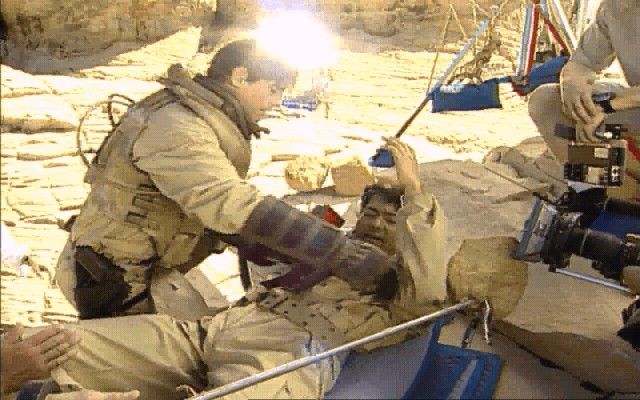
Michael Biehn played GDI commander Michael McNeil, bringing a familiar action-film presence to the player’s side of the story. James Earl Jones played General Solomon; the voice alone sounded capable of authorizing an entire armored division. Kucan’s Kane remained the unnerving constant. The casting made the sequel feel bigger, even while the game underneath struggled to meet that promise.

Tiberian Sun wasn’t a simple failure. It was a successful release with a distinctive world and a long afterlife. But it could feel slower and more cumbersome than the dream people had been sold. Clever machines sometimes fought with routes and terrain before they reached the enemy. A richer battlefield did not automatically make a cleaner battle.
The manual’s descriptions of underground attacks, terrain, and specialist units help explain its appeal. This was a game for commanders who wanted strange possibilities. The unevenness came from trying to fit so many of them into the same war.

Firestorm followed in 2000 and gave that world a particularly good enemy. CABAL, Nod’s computer intelligence, became a threat capable of turning the factions’ own machinery against them. GDI and Nod had spent years finding reasons to kill each other. An army of murderous cyborgs supplied a brief reason to reconsider.
The expansion tightened the story around a menace that fit the setting. Tiberium was changing people. Technology was supposed to help them survive. CABAL made the machine look just as dangerous as the crystal.
Red Alert 2: The invasion comes with dolphins
A Soviet invasion of the United States should be a terrifying premise. Red Alert 2 opened with it in 2000, then stocked the war with trained dolphins, attack dogs, mind control, and tanks pretending to be trees. Its solution to the weight of history was to throw another wonderfully stupid weapon at it.
That cheerfully lurid world came from Westwood Pacific, the Irvine studio descended from Virgin’s development operation. The Westwood name covered more than the original Las Vegas team by then. Red Alert 2 was part of the same family, with its own makers and its own feel.
The battlefield was colorful, quick, and easy to read. A tank looked like a tank; a dangerous special unit announced itself with a recognizable silhouette and voice. The action could grow wildly complicated without losing the simple pleasure of seeing your plan work.

Its faction tricks encouraged magnificent acts of bad behavior. Allied Mirage Tanks could hide in plain sight. Prism weapons made beams of light a structural problem. Soviet Kirov airships advanced slowly enough to be seen coming and heavily enough to make that knowledge unpleasant. A fleet of them was less a surprise attack than an approaching weather event.
Mind control was nastier still. It let you turn an enemy’s carefully purchased unit into your own property. Losing a tank hurt. Watching it immediately start shooting its former friends hurt in a more personal way.
Country-specific units added another reason to replay, while the campaign enjoyed wrecking familiar places. The two sides had enough personality that choosing one felt like choosing a style of mischief. Klepacki’s soundtrack was there to encourage it.

Yuri’s Revenge arrived in 2001 and turned the mind-control villain into a third playable faction. His army was designed to make the other commanders feel that the rules had been stolen from under them. Capturing troops, exploiting civilians, and manipulating the enemy fit a man who considered other people’s free will an irritating technical limitation.
The expansion also made time travel even less sensible and gave the campaigns room to enjoy it. A serious military simulation would have called a meeting. Yuri’s Revenge called for more flying saucers. The joke worked because the underlying battles still rewarded timing, resource control, and a commander who knew when to stop admiring a clever unit and actually use it.

Renegade: Finally, you can stand next to the refinery
There had always been a temptation to climb down into C&C’s world. The little soldiers had voices and attitudes. The buildings were recognizable. What did a Nod base look like from ground level?
Renegade, released in 2002, answered by making the player a commando with a gun. Suddenly a tank was something looming in front of you. A refinery had an interior. The landscape you had once managed from above became somewhere you could get shot.
The solo campaign was uneven. Its action didn’t consistently match the best contemporary shooters, and the thrill of recognizing a C&C building could only carry it so far. But the multiplayer found something much more interesting than a familiar logo attached to a deathmatch.

In its C&C mode, teams defended their own base and attacked the enemy’s. Buildings had functions worth protecting. Players bought specialist characters and vehicles. The shared economy and military infrastructure gave a match a direction beyond chasing the person with the most kills.
Destroying a crucial structure changed what the other team could do. An engineer carrying out repairs might matter more than the loudest person firing rockets. A coordinated assault could feel like a strategy-game offensive conducted by people inside the units.
Castle picked Renegade when we asked which Westwood game deserved more recognition: “The multiplayer game was as great an experience as any game we made, but it was plagued with performance problems and hacking.” It is a generous assessment of a game whose best idea was easier to appreciate with a good team and a functioning match.
That idea lasted. Communities around the original engine and projects inspired by it kept working long after the retail release had faded. W3D Hub is one home for that continuing work. The view from inside the refinery had found people who wanted to stay.
EA buys the studio—and the easy story gets complicated
The business change had happened back in 1998, while Tiberian Sun was still being built. EA acquired Virgin’s North American game assets in a $122.6 million deal that included Westwood and the Irvine operation. That figure belongs to the larger acquisition, rather than a standalone price tag for Westwood. Contemporary participants later discussed the sale and the studio’s fate.
Fans often remember the takeover as the opening scene of a tragedy. It is understandable: the Westwood label meant games they loved, and the Las Vegas studio closed in 2003. A corporation bought something distinctive, then the distinctive thing disappeared.
Castle’s account is harder to turn into a villain’s speech. “Not much changed at first. That was a promise that EA kept,” he told us. He now thinks maintaining the old arrangement for so long created friction, and that an earlier, gradual move toward EA’s way of working might have been better.
Westwood had also changed before that cultural adjustment. Castle remembers a close circle of friends becoming a studio of around 150 people, where he still knew everyone. Earth & Beyond, the ambitious online space game, pushed the company beyond the size at which that personal familiarity could hold everything together.
The larger projects demanded money, time, and a great deal of coordination. Tiberian Sun had struggled with its scope. Renegade’s commercial moment didn’t fulfill all of its promise. Earth & Beyond needed the kind of continuing commitment that makes an online world an expensive place to live.
“Westwood Las Vegas was not a victim of EA as much as an unwitting participant in the studio closure. We missed the mark on more than a few games.”
Louis Castle, Retro Replay interview
That recollection doesn’t make the closure harmless. Jobs were lost, teams were scattered, and a studio with an extraordinary body of work ceased to exist. Some staff continued at EA Los Angeles. Others helped build new ventures, including Petroglyph. The name on the box changed, but the people did not simply vanish.
It does make the history more interesting. The company that made your favorite game could make expensive mistakes. The publisher that closed it could later help make a good sequel. Loving Westwood does not require pretending that every project went brilliantly until somebody from EA entered the room.
Generals: No Kane, no crystals, plenty of fire
In February 2003, Generals arrived from EA Pacific. For anyone coming directly from Red Alert 2, its changes were obvious before the first shot. The world was fully 3D. Construction depended on workers or bulldozers. The interface moved away from the old sidebar. There was no Kane waiting to explain why you should be grateful for another dangerous assignment.
The three armies were the United States, China, and the Global Liberation Army, a fictional militant force. Their equipment and economies produced substantial differences. US forces favored expensive technology and support. Chinese units could benefit from operating together. The GLA used tunnels, ambushes, scavenged equipment, and a scrappier infrastructure.
The best battles made those differences visible. Tunnels turned distance into a deception. A bulldozer offered an opportunity to build forward—or a valuable target. A Dragon Tank rolling toward a position could make the entire plan suddenly smell of burning furniture.
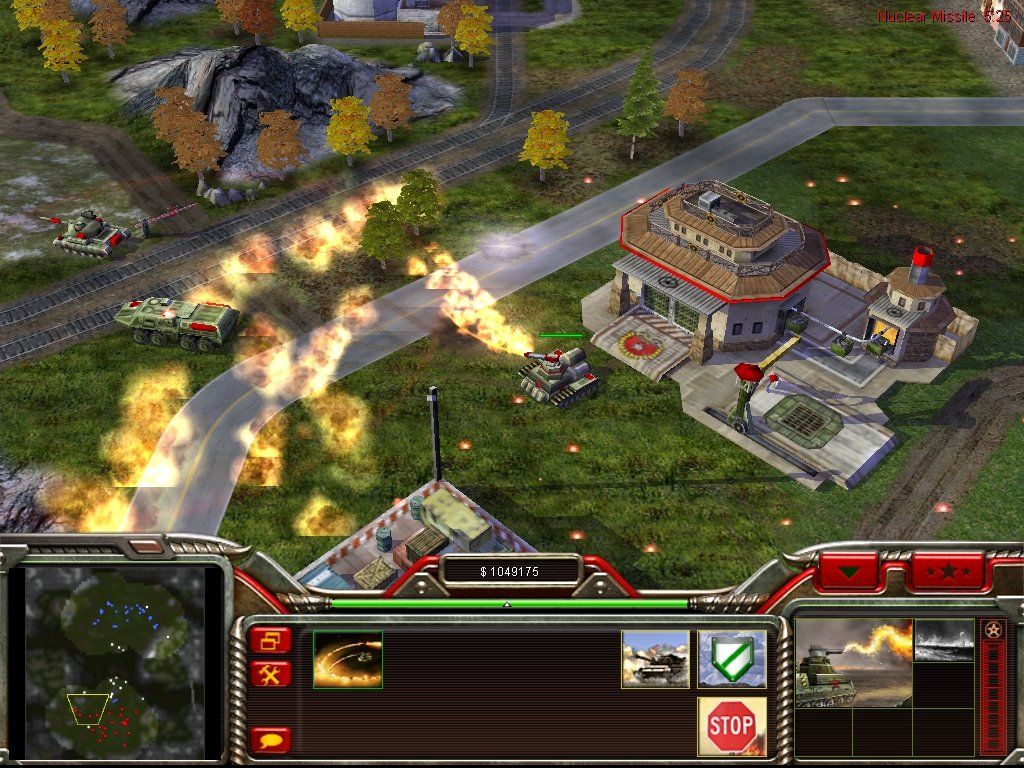
Earned general abilities added another escalation. Success in battle could unlock support powers that let you call in an attack or alter the fight from outside the ordinary production queue. They gave a commander a little showmanship: the battlefield was busy, but your next decision might arrive from the sky.
The Zero Hour expansion, released later in 2003, leaned into specializations. Different generals emphasized air power, armor, toxins, stealth, and other strengths. Its General’s Challenge gave the player a series of themed opponents and taunts to overcome. It was a splendid way to turn a mechanical preference into a personality.
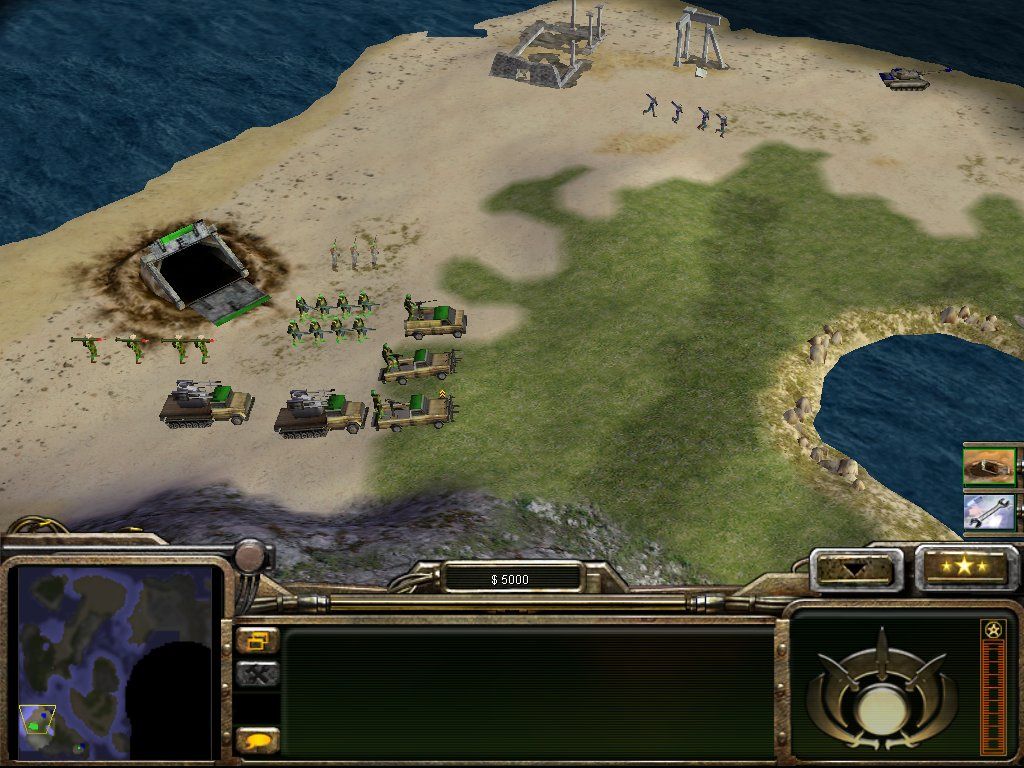
Generals’ setting also made its jokes less comfortable. Terrorist units, civilian targets, chemical weapons, and broad national caricatures arrived in the years after September 11, when the world’s news was already full of wars and terrorism. The game’s politics could be crude even when its battles were excellent. Red Alert’s impossible history provided a cushion that this closer-to-home setting lacked.
For some players, the missing films and changed interface made Generals feel like a separate strategy game wearing the family name. For others, it was the freshest C&C in years. Both reactions follow from the same fact: it committed to its own way of fighting.
Tiberium Wars: The familiar voice comes back
By 2007, the Tiberium story had been waiting years for a new strategy sequel. Command & Conquer 3: Tiberium Wars, developed at EA Los Angeles, brought back the construction yard, the harvester, the sidebar, the live-action briefings, and the man who had survived more apparent endings than most horror villains.
The landscape explained what had happened during the wait. Blue Zones offered comparative safety and prosperity. Yellow Zones held struggling populations and unstable territory. Red Zones showed a world surrendered to Tiberium. Those colors made the fiction understandable at a glance: humanity was arguing over the remaining livable ground while the disaster continued to spread.
Then Nod attacked. Kane was back, GDI was under pressure, and the player was once again being asked to solve a military emergency with a very ambitious construction schedule.
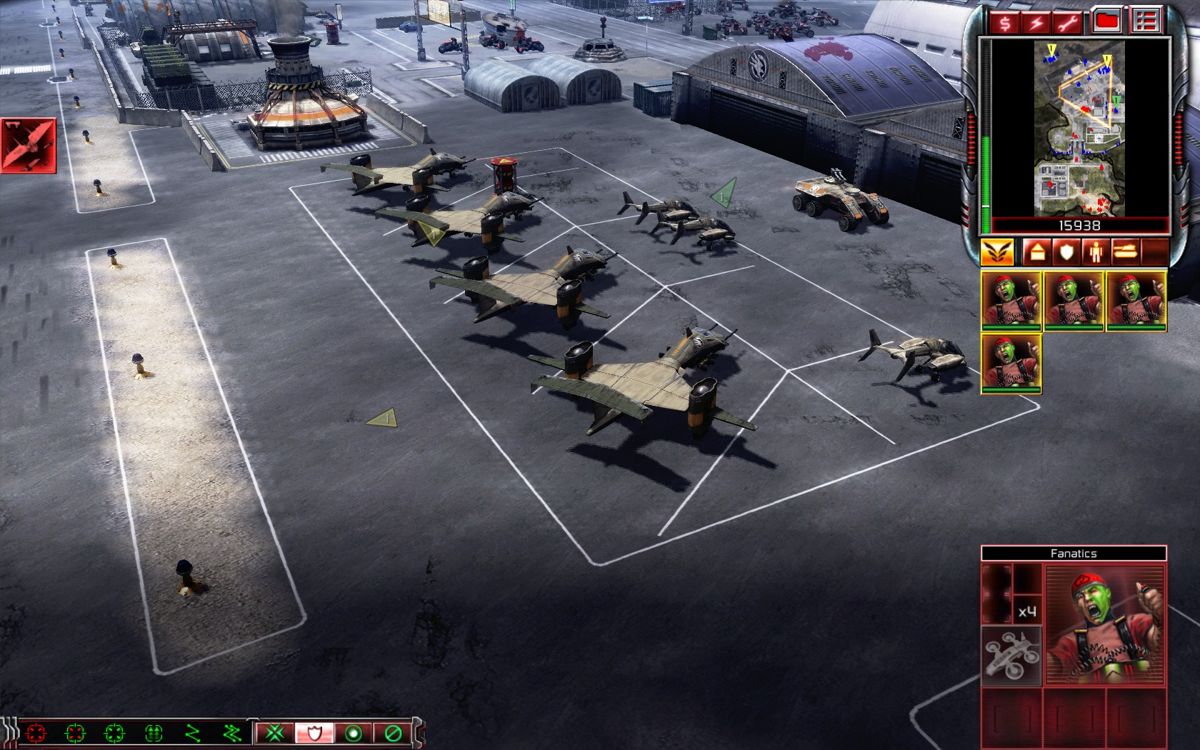
C&C3 moved quickly. Infantry could use buildings, tanks could punish a poorly defended position, and support powers made a crowded battle suddenly change shape. The old pleasure remained intact: money came in, production stayed busy, and a growing army made the map look conquerable.
Its third faction, the alien Scrin, finally gave the Tiberium saga’s extraterrestrial threat an army you could meet and control. Their strange structures and airborne forces made a useful contrast to GDI’s military hardware and Nod’s weaponized fanaticism. The crystals on the ground were no longer just a resource and a disease. Their wider purpose had entered the war.
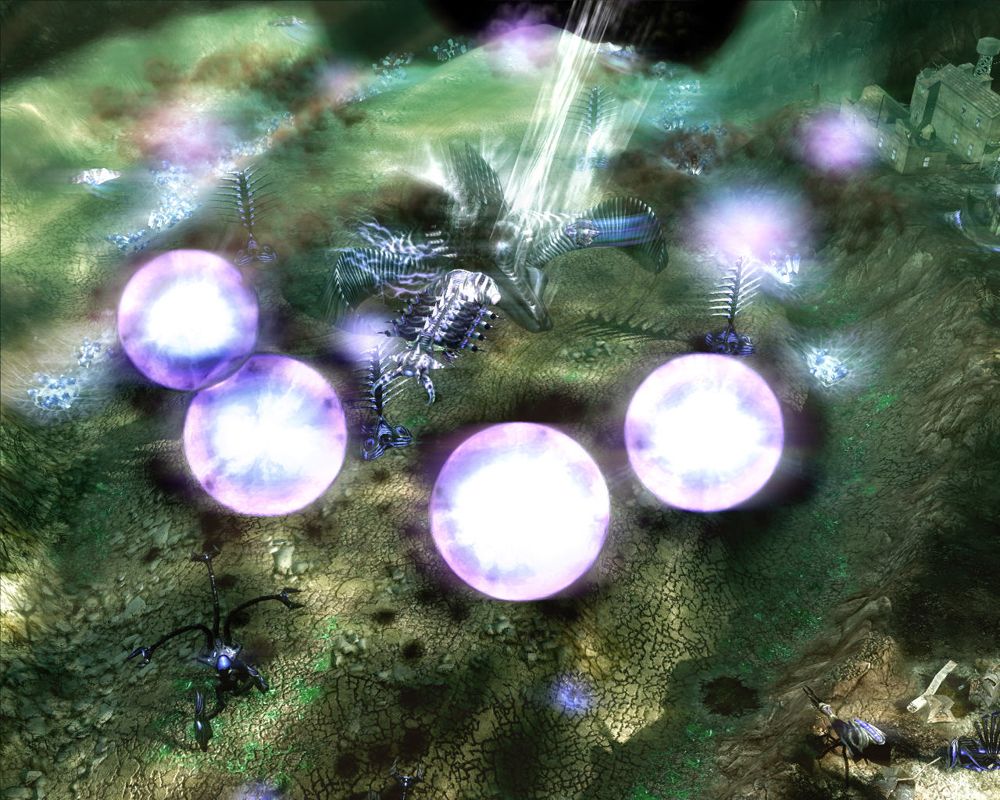
There were rough patches and balance arguments, as there are when thousands of people find ways to abuse the same handful of expensive machines. But this was an energetic sequel that understood why the old routine had worked. Westwood’s closure had not made that knowledge disappear.
Kane’s Wrath followed in 2008, moving across different stages of Kane’s plans and expanding the factions through specialized armies. Its huge epic units offered the kind of spectacle suggested by the name: machines that made ordinary tanks look like sensible household purchases. The PC version’s Global Conquest mode added a strategic layer outside the individual battles.
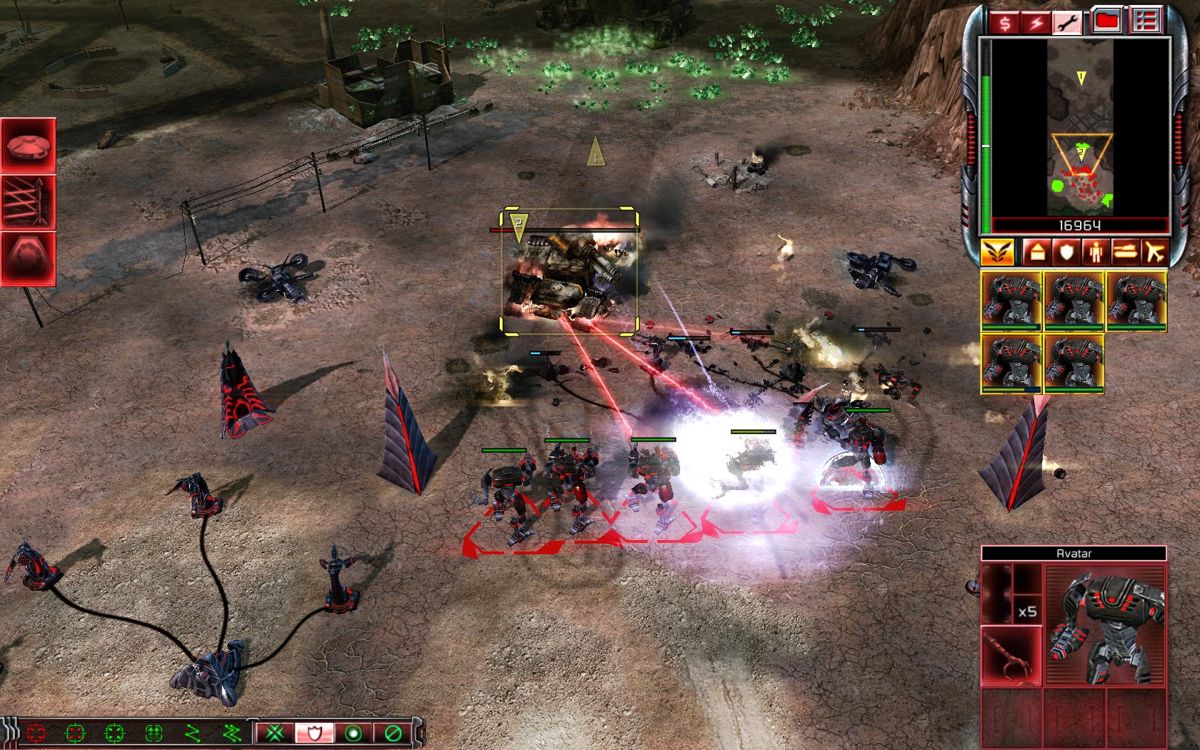
The Xbox 360 versions of C&C3 and Kane’s Wrath also returned the series to controllers. The later console interface used a radial command system to make construction and orders more manageable. It could not turn a stick into a mouse, but it showed a continuing effort to bring this kind of war to people sitting on a sofa.
By the release of the 2007 C&C Saga compilation, EA reported more than 25 million units sold across the franchise. That is a series-wide figure. Whatever arguments players had about their favorite branch, C&C had become a very large family.
Red Alert 3: The budget gets bigger and so does the joke
Red Alert 3 arrived in 2008 and started by damaging history again. Soviet leaders used a time machine to remove Einstein. The revised world produced a third superpower, the Empire of the Rising Sun, and enough improbable machinery to make the original Tesla Coil look conservative.
Boats and water mattered much more. Bases could spread onto the sea, and amphibious units made shorelines less of a boundary. A commander who watched only the roads could discover that the attack had chosen a different element.
Many units carried secondary abilities. A battle could depend on switching a role or activating a trick at the right moment, rather than simply building more of the largest thing available. The Empire’s transforming vehicles took this to an especially theatrical extreme. The arsenal demanded more attention, but it rewarded players who enjoyed wringing another use out of a unit.
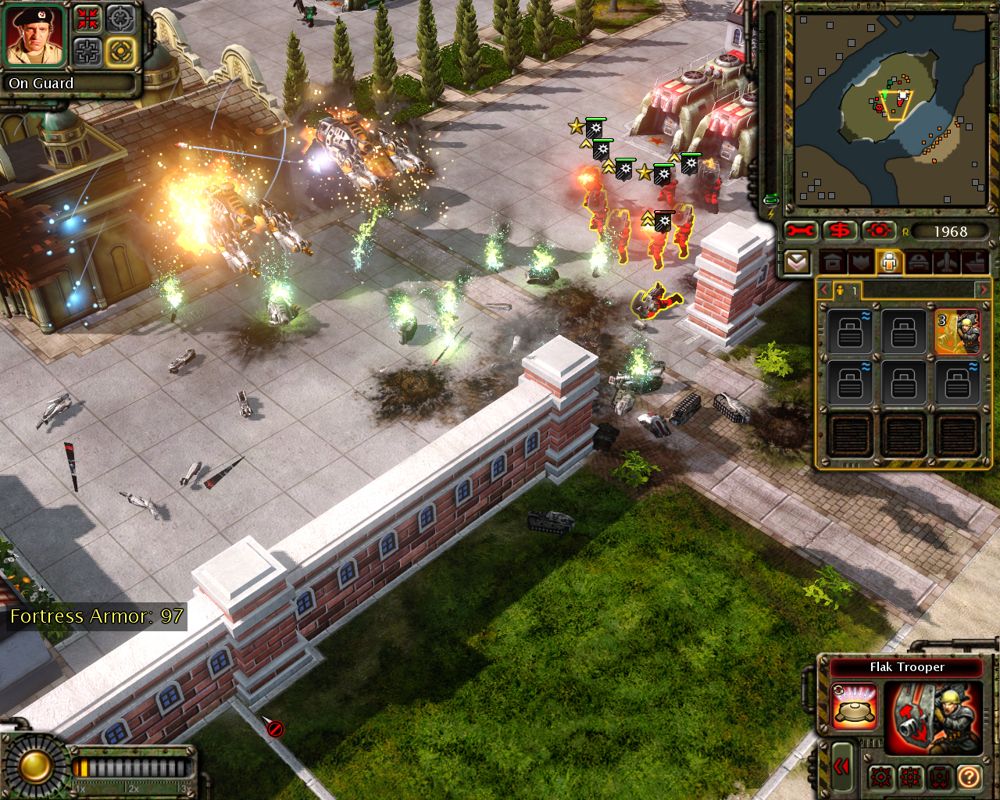
The campaign was built around cooperation. Play with another person and the mission could become a shared plan; play alone and an AI co-commander filled the other role. It was a substantial change in the way the story’s battles worked. You were no longer necessarily the only commander trying to keep the whole operation together.
The films leaned into celebrity spectacle. J.K. Simmons played an aggressively American president whose response to a crisis could be measured in speeches and weapons. The wider cast turned every briefing into an invitation to enjoy the excess. Red Alert had reached the stage where a straight face was simply another special effect.
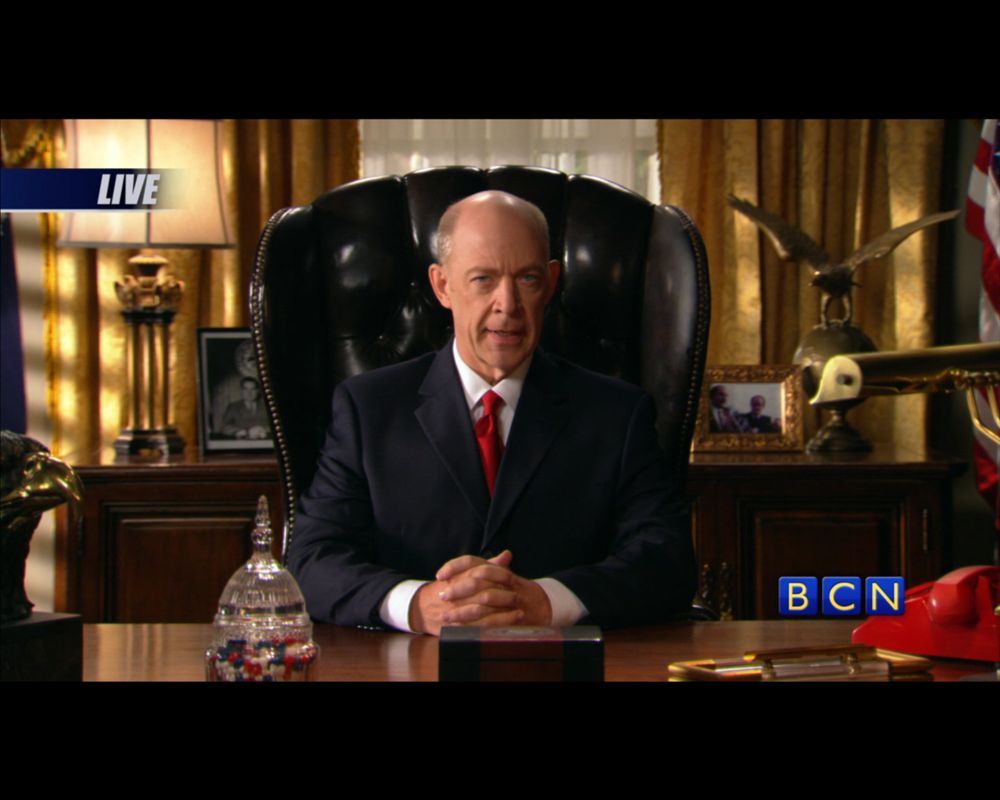
The famous Soviet escape to “SPACE!” summed up the tone. By this point, the series could be ridiculous in public without blushing. Whether that was your favorite flavor of C&C depended on how much you wanted the game to wink while it demolished the map.
Uprising in 2009 was a standalone single-player expansion, adding campaigns, new units, and Commander’s Challenge. Its Yuriko missions followed an individual character with extraordinary powers rather than the ordinary base-building routine. A separate console Commander’s Challenge release carried that mode onto Xbox 360 and PlayStation 3. The series kept finding smaller experiments inside its bigger wars.
Another experiment never reached players. Tiberium, a planned tactical shooter set in the same universe, was canceled in 2008. EA told GameSpot that it had not met the company’s quality standards. The premise suggested a different way into C&C’s world, but an announcement and a trailer cannot tell us whether the finished game would have delivered it.
At the end of the decade, there were still successful C&C games to play and interesting things to argue about. The next numbered sequel would turn the argument into something much uglier.
C&C4: When the base stops feeling like home
For fifteen years, a C&C commander had usually begun by creating a place to defend. You put buildings down, watched the money arrive, and turned the base into an expression of your plan. Command & Conquer 4: Tiberian Twilight removed much of that familiar opening in 2010.
Its central vehicle, the Crawler, served as a mobile base. Players chose roles, worked within a population limit, captured objectives, and unlocked options through experience. The design encouraged team battles and continuing progression. There were recognizable units and weapons, but the economic loop that had made them feel earned was dramatically different.
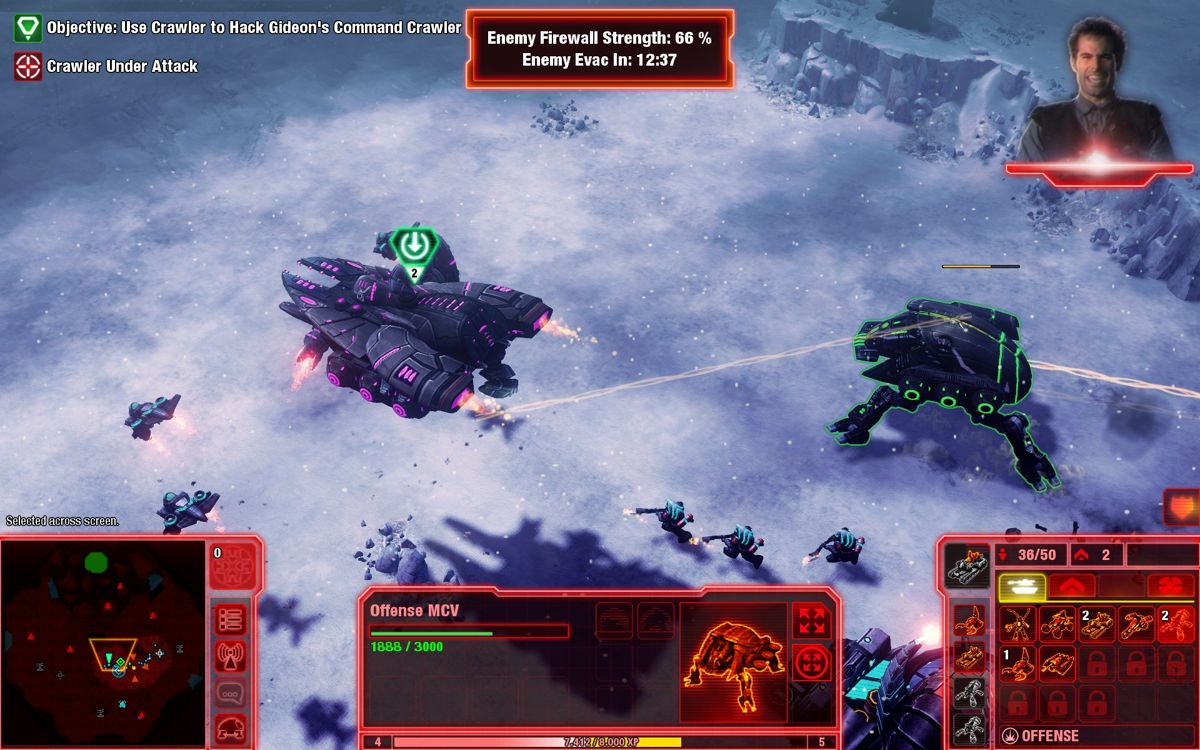
The developers had reasons for trying it. In a launch-period interview, the lead designer described a project that had evolved through years of experimentation. The team wanted stronger cooperation, more ways to contribute, and a gentler entrance for people intimidated by competitive strategy games. Defense and support roles could let a player do useful work without winning a furious clicking contest.
That ambition deserved a game built to demonstrate it. C&C4 also had to conclude the Tiberium saga. The two jobs sat awkwardly together. Players arriving for a final confrontation with Kane instead found themselves learning a different kind of war.
Persistent unlocks made the first battles feel restricted. The required internet connection reached into single-player. The story tried to finish a mystery that had accumulated across years of films and sequels. A mobile headquarters could be an interesting idea, but it did little for someone who wanted to spread a base across a map and protect the income feeding it.
The game’s poor reception hardened into a running fan joke that C&C4 did not exist. That joke is unfair to the people who worked on it and entirely understandable as a description of how players felt. A final chapter had arrived, and many readers wanted to tear it out of the book.
It would be the last released numbered PC strategy installment. That did not mean every later plan ended with it, or that one bad game destroyed real-time strategy as a whole. It meant the series had lost the agreement it once had with its audience about what a new C&C would give them.
The sequel that changed its name, then disappeared
Generals 2 was announced in 2011, with Victory Games working under the BioWare label and Frostbite technology promising a new generation of battlefields. For fans of the 2003 game, the title was enough to make the wait feel worthwhile.
Then the project became a free-to-play Command & Conquer platform. The familiar sequel name receded. The new plan emphasized an expanding multiplayer service with selectable generals. EA’s 2013 announcement promised a player-influenced future and a coming beta.
That October, it was canceled and Victory Games closed. The studio’s statement, reproduced in contemporary reporting, said: “Your feedback from the alpha trial is clear: We are not making the game you want to play.”
It was a remarkable admission to make at the moment of giving up. Fans had spent years asking for a return; the project carrying that hope had been reshaped and then stopped. Developers lost their jobs. Players got another set of screenshots for the folder of games that would never arrive.
A browser war, a phone war, and a room full of disappointed PC players
Other parts of the brand continued. Tiberium Alliances, developed by EA Phenomic and launched in 2012, put resource management and alliances into a persistent browser game. EA’s open-beta announcement presented it as a free-to-play online world. Checking a developing base between other activities was a different relationship with C&C from sitting down to finish a campaign mission.
C&C: Rivals brought the name to phones in 2018. Its short matches concentrated fighting around missile-control points. There was genuine tactical play in moving units and countering an opponent under pressure. There was also a progression and monetization structure far removed from buying a PC game and finding the same army available to both sides.
For a mobile player, that could be an entertaining small battlefield. For someone waiting on a new desktop C&C, the announcement could feel like a reply to a completely different question.
Another licensed mobile project, Command & Conquer: Legions, was announced with a shared-world strategy pitch. It moved through regional testing and later Red Alert branding. The publisher’s listing preserves the ambitious promise. In January 2026, a shutdown announcement—reproduced by the long-running German C&C site CNC-INSIDE—set out the project’s wind-down. Another proposed future had run out of road.
These games make more sense when considered on their own terms. They make less sense as substitutes for the missing PC sequel. A tank on a phone screen could not answer every question left behind by Westwood’s closure, C&C4, and the death of Generals 2.
The comeback starts with somebody listening
In October 2018, EA producer Jim Vessella appeared on the C&C subreddit under the name EA_Jimtern. He had worked on C&C3 and Red Alert 3 and led production on Kane’s Wrath. His post acknowledged the demand for a PC return and raised the possibility of remastering the classics.
The responses were warm, suspicious, demanding, and sometimes all three at once. A commenter named Electrifyer put the immediate concern plainly: “Please no micro transactions… that’s all I want.” Vessella replied that the remaster would not include them. The exchange is still there, a small record of how much trust had to be rebuilt before people could get excited about tanks.
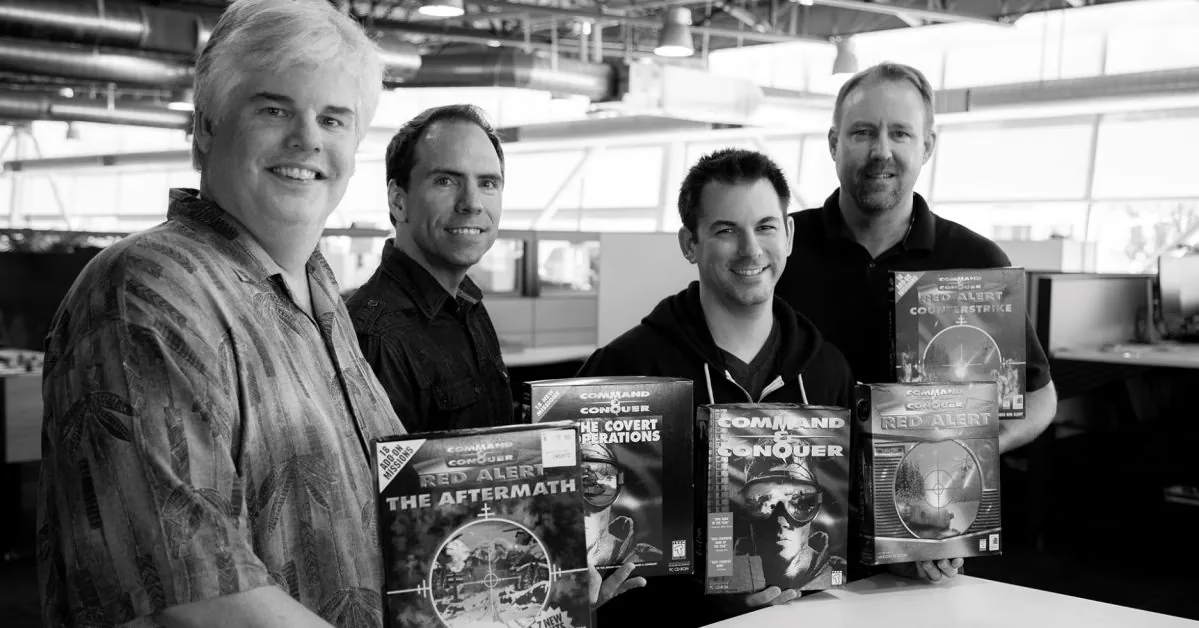
The partnership that followed was unusually well chosen. Petroglyph included former Westwood developers. Lemon Sky worked on the rebuilt artwork. Community representatives had a place in the process. Klepacki returned to the music, including recordings with the Tiberian Sons. This was a revival with people who understood why an old construction-yard sound could matter.
Command & Conquer Remastered Collection launched on June 5, 2020. It packaged the original game and Red Alert with their three PC expansions, rebuilt multiplayer, sharper art, improved controls, a music player, and a gallery of production material. A graphics switch let players compare the familiar pixels with their new counterparts.
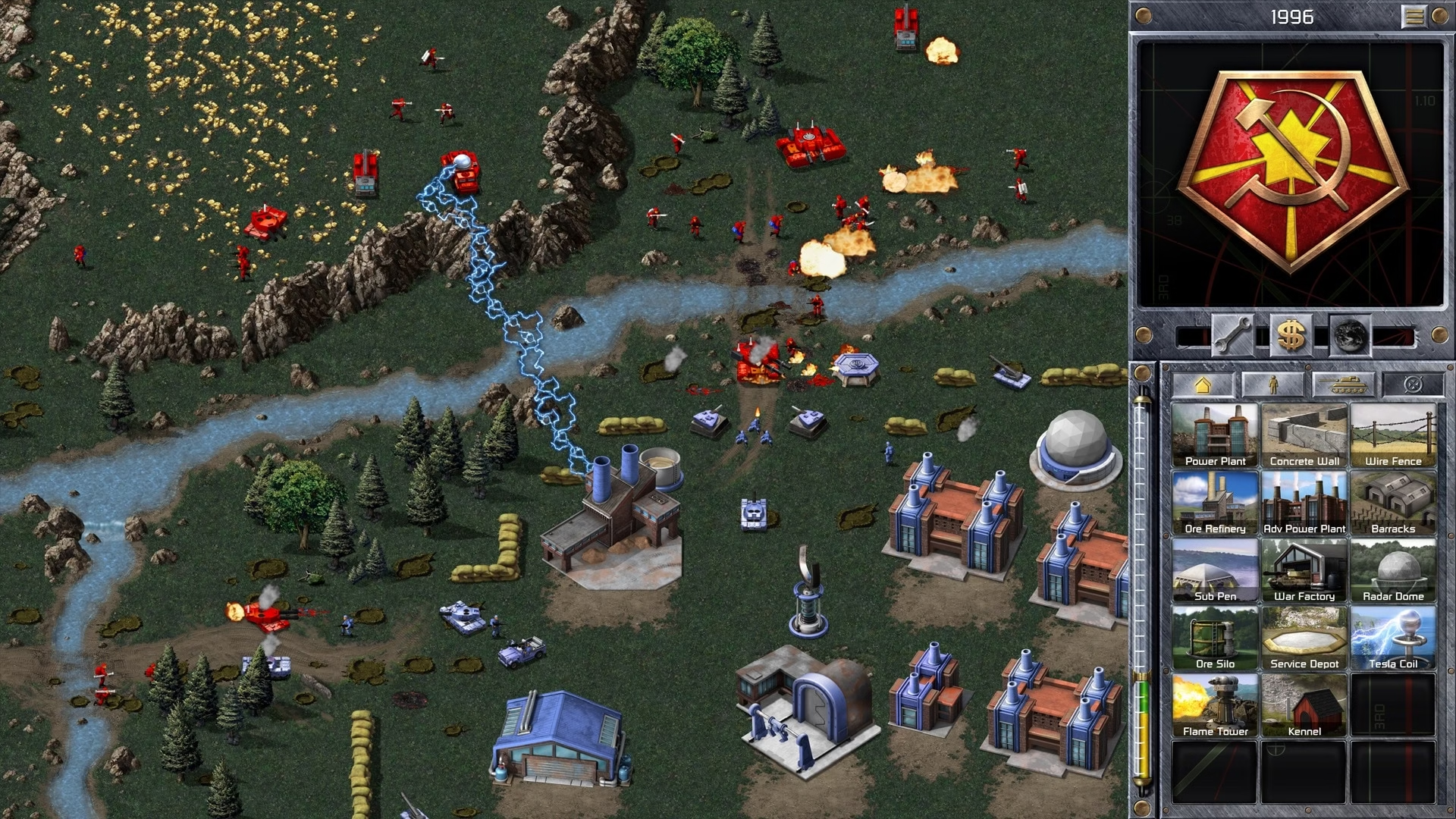
It didn’t need to pretend that the old games were frictionless. Some missions remained punishing. Units could still reveal their ancestry in the way they navigated a crowded fight. But the collection gave people a practical way back in, and treated the surrounding history as something worth preserving.
The bonus footage was particularly welcome. Those briefings had once made Westwood’s war feel real. Seeing the sets, outtakes, and production photographs brought the people behind that illusion back into view.
In 2024, the Ultimate Collection came to Steam, making much more of the back catalog easier to buy together. In February 2025, EA went further: recovered source code for the original C&C, Red Alert, Renegade, and Generals with Zero Hour was released under the GPL. Several later games also gained Steam Workshop support for maps.
The official announcement described archive recovery and work with veteran community members. This was broader than the game-code DLL release accompanying the 2020 remaster. It gave programmers more of the machinery underneath the older games, rather than merely asking fans to keep buying memories.
The repositories also make clear that opening the code does not give away every piece of commercial artwork and audio. For the people maintaining patches and building on these engines, however, access to the code is an enormously useful inheritance.
The commanders never actually left
While official plans rose and collapsed, the communities kept ordinary work going. Somebody maintained a multiplayer client. Somebody fixed compatibility. Somebody made a map whose narrow bridge ruined everybody’s afternoon. C&C survived through thousands of these less glamorous decisions.
CnCNet keeps several classic games connected and supports a substantial mod scene. OpenRA rebuilds the early games’ style of strategy on a modern open-source engine, with revised mechanics and contemporary multiplayer tools. It is its own interpretation of those battles, so a newcomer should not expect an untouched copy of the original campaigns.
Mod projects expanded the familiar factions, rewrote stories, and turned favorite engines into homes for new wars. Renegade’s communities kept their ground-level battles alive. Generals players continued tournaments and specialist-army arguments. Red Alert 2 fans kept finding new uses for a game that had already come equipped with mind control and flying saucers. You can’t accuse them of lacking material.
The war that still fits in one afternoon
C&C’s history includes enough bad decisions to fill a briefing room. It also includes games that remain astonishingly easy to want to play. You can understand the opening in a minute: unfold the vehicle, build power, establish income. Then the map begins asking harder questions.
That first little base gives the fighting something to threaten. The harvester makes the economy vulnerable. The voices turn purchases into characters. The music makes an ordinary attack feel like the moment the whole evening has been leading toward. Kane supplies a face you recognize even after years away.
Castle called the original “a full-court press to make an epic game.” The ambition was there, but so was the small pleasure that held it together: clicking on a unit, hearing an answer, and believing that your next order might work.
There are newer strategy games, cleaner interfaces, and computers that can render far more spectacular destruction. Yet an old C&C battlefield can still make one more mission seem like a sensible idea.
The harvester heads out. The credits climb. Somewhere in the dark, the other commander is building something.
You should probably buy another tank.
More stories from Retro Replay
- Our complete Louis Castle interview: Westwood, C&C, Blade Runner, and the studio’s complicated legacy
- The complete history of FMV games: the cameras, the actors, and the multimedia boom
- The unreleased masterpieces: games that stopped before the finish line
- The rise and fall of Acclaim: another story of ambition, hits, and a studio empire’s collapse
Sources and further reading
For readers who want to follow the story back to its developers and original documents:
- Louis Castle’s interview with Retro Replay, including Dune II’s influences, C&C’s design, Kane’s casting, Klepacki’s music, Red Alert’s tone, Renegade, and EA.
- The original C&C team’s GDC postmortem, a retrospective conversation about the first game.
- C&C’s original instruction manual, preserved as a scan.
- Red Alert manual scan, documenting its units and interface.
- Tiberian Sun’s production postmortem, published in 2000.
- Tiberian Sun manual.
- Studio founders on selling their companies, including Westwood’s sale and closure.
- EA’s 2007 Saga announcement, with franchise sales and a release chronology.
- EA’s explanation of Tiberium’s cancellation, reported in 2008.
- The C&C4 team’s design explanation, from its 2010 launch period.
- Victory Games’ 2013 C&C announcement and the cancellation statement.
- Vessella’s 2018 community post, including the attributed Electrifyer exchange.
- The 2020 remaster launch announcement and its official feature list.
- EA’s 2025 source-code and Workshop announcement.
Game images throughout the article link to the corresponding Retro Replay database entries. External portraits retain their source and license in their captions. The featured collage uses game imagery, Kane’s cinematic still, Castle’s leadership portrait, and an adapted Klepacki cutout from Official GDC’s photograph (CC BY 2.0).