 Retro Replay Retro Gaming History, Reviews & Emulation
Retro Replay Review
Gameplay
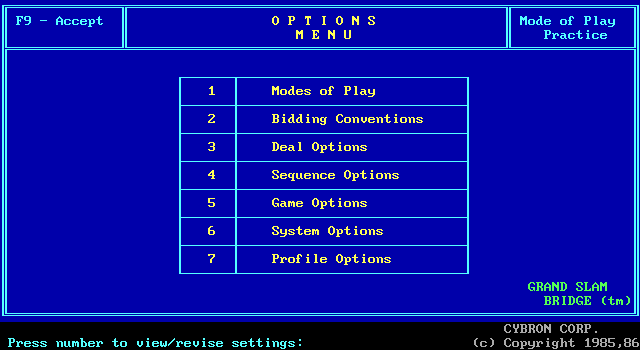
The first hour with Grand Slam Bridge is likely to be spent in the bidding settings as much as at the table, and that is exactly where its value lies. This is Contract Bridge treated with the seriousness it deserves: Cue Bids, Weak Two-Bids, 5 Card Major, 4 Card Major, Jacoby Transfers, Gambling No Trump, and Unusual No Trump can be adjusted for both partnerships. If you already speak that language, the game lets you shape a table around the conventions you actually want to practice instead of forcing you into a generic house style.
That flexibility makes the game more useful than a simple computer opponent. You can choose which hands are human or computer controlled, reveal or hide hands, rotate the table, and place certain cards in certain hands to build a specific situation. Set up an awkward auction, test a disputed convention, then play it through. For a bridge learner, that turns mistakes into lessons; for an experienced partnership, it can turn a DOS machine into a surprisingly focused practice table.
The trade-off is that this is deliberate, rules-minded entertainment. The joy comes from weighing a bid, reading the contract, and seeing whether the play supports your confidence—not from quick rounds or constant surprises. Players who only know bridge casually may find the convention list intimidating before the game starts to click. Give it time, though, and the control over each seat and each deal becomes the real hook.
Graphics
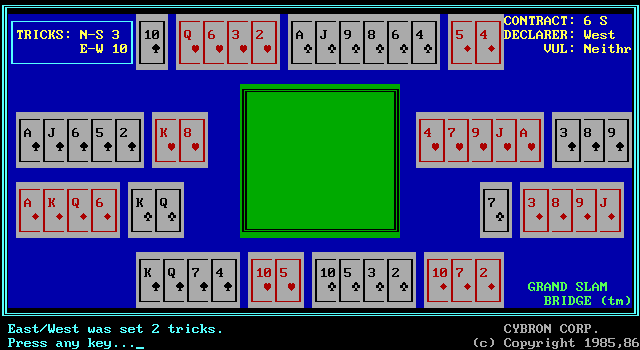
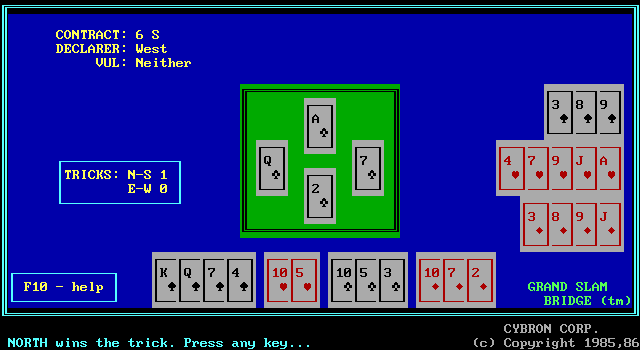
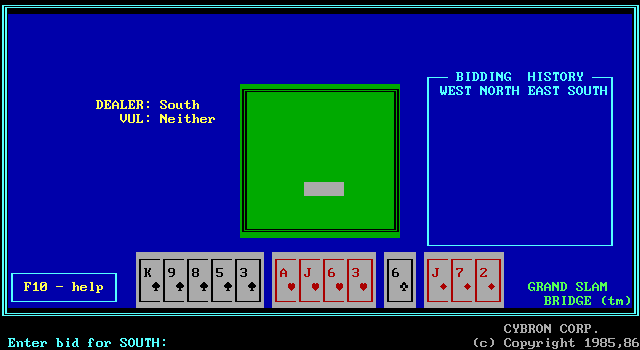
Grand Slam Bridge stays at the card table. You can change the tabletop and rotate the table, while hand-visibility options let you decide how much information is on screen. These are practical touches for following a deal and setting up practice rather than decorative flourishes.
Story
Bridge does not need a scripted plot to create tension. Every deal writes its own small drama: an optimistic bid, a convention understood or misunderstood, and the pressure of making the contract after the auction has committed everyone. Grand Slam Bridge is built around that familiar rhythm.
The game’s strongest “story” comes from the scenarios you make yourself. Giving specific cards to specific hands lets you return to the kind of table argument every bridge group knows: what should have been bid, who should have declared, and whether the contract was ever makeable. That is a far more personal payoff than a preset campaign would be.
It also invites you to inhabit more than one role at the table. Put a human in any hand, hand other seats to the computer, or expose the cards while you work through a problem. Whether you are learning to trust a partnership agreement or dissecting a deal after the fact, the drama is in the decisions rather than in written dialogue.
Overall Experience
Grand Slam Bridge is a strong fit if you want software that respects Contract Bridge as a deep strategy game. Its adjustable conventions, configurable table, saved games, and per-player statistics make it feel less like a disposable card-game diversion and more like a bridge workbench. The game asks you to bring curiosity and a willingness to study; in return, it gives you room to experiment.
There is frustration in that same seriousness. A newcomer can easily be overwhelmed by the bidding vocabulary and the number of ways to configure a deal, while anyone looking for a fast, breezy solo card game will find the pace dry. But for the right player, these are not obstacles so much as an invitation to engage with bridge properly. The payoff is the satisfaction of understanding a hand more clearly the next time you sit down to play.
If this approach lands for you, the later Grand Slam Bridge II is worth investigating as a related entry in the series. For background on this original game, its Grand Slam Bridge history is useful. This first outing remains easiest to recommend to bridge regulars, study-minded learners, and partners who enjoy turning a single difficult deal inside out.


Reviews
There are no reviews yet.