 Retro Replay Retro Gaming History, Reviews & Emulation


Retro Replay Review
Gameplay
Battle Ships starts from a familiar place, then immediately bends the rules in ways that make you reconsider habits learned from paper Battleship. You still hide a fleet and hunt the opponent’s fleet, but surviving ships determine how many squares you may attack in a turn. That turns firing from a single hopeful stab into a choice about coverage, confidence, and risk. Early on, scattering shots across the board is tempting; once a hit gives you a lead, tightening the search becomes the more satisfying play.
The ship placement is the game’s strongest twist. Ships may be rotated horizontally, vertically, or diagonally at 45 degrees, and some are not simply straight lines. You cannot rely on the standard mental picture of a Battleship fleet, so the usual follow-up pattern after a hit can lead you astray. That makes defensive placement more playful too: a diagonal or oddly shaped ship can create uncertainty that a veteran of the tabletop original will not automatically solve.
There is also a welcome pressure curve built into the firing rules. A healthy fleet means a broader attack, while losing ships cuts down your options. Falling behind therefore hurts twice: you have fewer targets remaining and fewer chances to locate them. That can make a bad opening feel harsh, but it also gives careful placement real value instead of treating it as mere setup.
The two-player competitive mode is the reason to return. Battle Ships is fundamentally about trying to read another person’s choices—where they would hide an awkwardly shaped ship, whether a cluster of misses truly clears an area, and how aggressively they will use a large salvo. Solo-style deduction is pleasant enough, but sharing the board-game tension with an opponent is where these altered rules earn their place.

Graphics
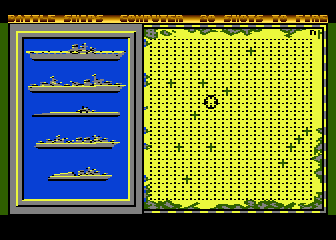
The top-down board view keeps attention on the grids and the information that matters. At the end of each turn, an animated firing sequence shows the selected shots being launched, giving the otherwise measured game a small burst of movement and making a multi-square attack feel more consequential.
Story
There is no campaign or nautical drama pulling you from match to match. Battle Ships is built around the contest itself: conceal your fleet, infer the other player’s layout, and remove every ship before they remove yours.
That stripped-down focus suits the subject. The tension comes from incomplete information and from the changing balance of power as ships disappear, not from a framed conflict or named characters.
If you want a board-game conversion that stays at the table and lets the match create its own little story of bluffs, lucky finds, and stubborn final ships, this direct approach works. Anyone needing a narrative hook will find little to hold onto beyond the next tactical decision.
Overall Experience
Battle Ships is a smart variation on a game almost everyone understands within minutes. The expanded firing turns prevent too many dead turns, while diagonal placement and unusual ship shapes stop the deduction from becoming automatic. It is still simple, deliberate grid strategy, but it has more bite than a straight electronic copy of Battleship.
Its frustrations are closely tied to that same design. Because damage reduces your firing opportunities, an opponent who establishes an early advantage can make the board feel increasingly unforgiving. And if you prefer fast action to slow inference, even the end-of-turn shot animation will not change the game’s patient pace.
Give it a chance if you enjoy compact head-to-head tactics and want Battleship with more room for deception than the original rules allow. For another naval take on the formula from a much later era, Battleship: Surface Thunder makes an interesting comparison. Battle Ships does not need a lot of extra decoration: its fleet rules are the reason to play, and they remain a genuinely worthwhile wrinkle on a durable board-game idea.



Reviews
There are no reviews yet.