 Retro Replay Retro Gaming History, Reviews & Emulation
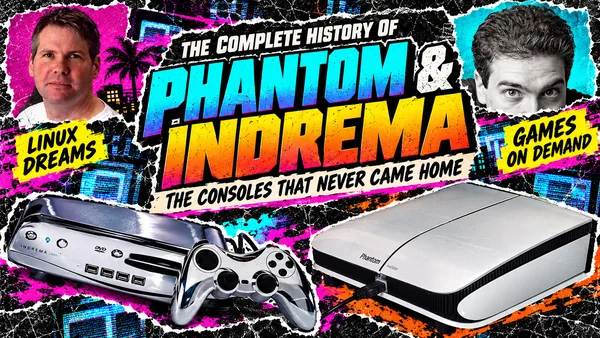
Some consoles leave behind a favorite game, a battered controller and an argument about which version was better. The Phantom and Indrema left behind something stranger: people who still remember waiting for them.
You could picture the empty spot beneath the television. Perhaps you had already decided which games would go there. Indrema offered a silver machine that would welcome small developers into the console business. The Phantom offered a white box that would bring PC games to your couch without a trip to the store. Both sounded like ways out of a familiar problem. Neither became something you could bring home.
They are usually filed together under vaporware: announced products whose release keeps evaporating. It is a tidy shelf for two untidy stories. One involves an earnest attempt to give independent developers their own console. The other involves working prototypes, an Xbox veteran, a bruising fight with a hardware website and a stock promotion that brought in federal regulators. There were real people building real things behind the punch lines.
And there were games. Familiar, wonderfully unruly PC games—the sort that expected you to have a mouse, an internet connection and opinions about graphics cards. These companies wanted to move that world into the living room. Before the vanished release dates and the lawsuits, that was a pretty appealing invitation.
2000: A Quake player wants to open the door
John Gildred, Indrema’s founder and chief executive, traced the idea back to late nights playing Quake with his partners. Games led to a larger ambition: build a console that a small developer could afford to make games for. In a 2000 interview with LinuxDevices, he described Linux as the foundation for a new television platform. The company had been founded that January in Alameda, California.

That origin makes more sense when you remember the distance between making a PC game and getting a console manufacturer to let you into its world. A programmer could distribute a PC project through a website. Reaching a console meant equipment, approval, commercial relationships and money. The walls had changed since Nintendo’s NES licensing era, but a console was still someone else’s house.
Gildred wanted to make a house with a wider front door. Linux, whose source code programmers could inspect and modify, gave his team a starting point without writing an entire operating system from scratch. Existing PC components offered another shortcut. His machine would use an x86 processor, Nvidia graphics and a hard drive; the software would hide the computer beneath a television-friendly interface. A player would get a console. A developer would find tools that looked far less alien than an expensive proprietary kit.
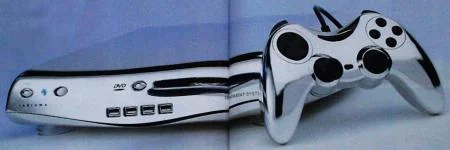
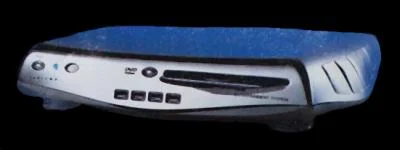
The name was Indrema Entertainment System. Its first planned model was the L600. It looked less like a toy than an unusually sleek DVD player, with a shiny silver case that seemed made for the moment when every electronics company wanted to replace the black boxes in your entertainment center.

The little silver box with a very big shopping list
At E3 in 2000, Gildred told GamesFirst that the machine was meant to cost $299 and arrive with roughly 30 games. He also described an upgradeable graphics system, with future replacements hoped to cost $50–$100. These were plans, not products sitting in a warehouse. Even the choice of the upcoming Nvidia chip was still being discussed.
The graphics upgrade was an especially tempting piece of PC thinking. An ordinary console aged as a single unit. Indrema’s proposed GPU Slide Bay would let you replace the part drawing the pictures. For a player who watched each new PC graphics card make last year’s card feel ancient, that sounded like insurance against buyer’s remorse.
It also raised an awkward question. A console’s appeal includes knowing that the game on its shelf was built for the machine you own. Once owners start swapping graphics hardware, developers have another set of differences to account for. Indrema was trying to keep the advantages of a PC while making it behave like the simpler appliance sitting next to the television. That bargain would keep getting harder as the feature list grew.
The company’s archived FAQ offered DVD playback, MP3 music, a Mozilla browser and planned personal-TV features. Games were to come on discs or as downloads stored on the hard drive. Ethernet would handle cable or DSL connections; a dial-up modem was proposed as an add-on. The advertised television output extended to 1080i. Reading the list today is like opening an early sketch of the connected entertainment center.
But Gildred insisted in the GamesFirst interview that games came first. The extra entertainment features were meant to help sell the box, not turn game development into an afterthought. There was a reason to insist. A machine promising to play, browse, record and replace half your other electronics could easily lose the one thing a game buyer needed to hear: what am I going to play on it?
The games were real. The new audience was still a hope.
Indrema could point toward an existing Linux gaming scene. Porting specialist Loki had brought major commercial games to Linux, and Gildred discussed its work as a way to give his console a running start. That was a sensible place to look. A new company could not conjure a rival to every PlayStation franchise between its first press release and Christmas.
Quake III: Arena was the sort of game that made the pitch feel substantial. Its arenas demanded constant motion: grab a weapon, control the useful pickups, hear trouble coming and try to leave the next encounter with more health than your opponent. It could turn a few familiar corridors into a whole evening. Putting that kind of multiplayer game beneath the TV was a stronger argument than another page of component specifications.

Unreal Tournament offered a different flavor of excess: alternate weapon fire, bots to fight when friends were unavailable and modes that gave players more to do than count kills. Heavy Gear II brought mechanical combat and missions that asked you to think about how to use your armored machine. These were already PC games with their own appeal. Indrema’s challenge was making their presence feel like a reason to buy another box.

The attractive part was the company they might keep. In a new console built around smaller developers, a heavyweight shooter could sit beside an odd experiment nobody would have funded at a larger publisher. That possibility gave Indrema its personality. You were being invited to imagine a shelf that had not yet been assembled.
One surviving window into it is Indrema Informer’s period gallery. Its keeper carefully described the pictures as games that might come to the machine. Among them were Shogo: Mobile Armor Division, Soul Ride, Nanosaur and Tux Racer. These screenshots show existing computer games, not a recovered set of finished Indrema releases.

Tux Racer gave Linux’s penguin mascot a much more enjoyable job than representing an operating system: hurtling down snowy slopes, gathering fish and trying to finish quickly enough. A January 2001 LinuxFocus review describes its courses and charged jumps. It was approachable, cheerful and easy to picture on a television. It was also a long way from the exclusive blockbuster that would persuade someone already saving for a PlayStation 2 to change plans.
Fans could believe both things. In the Slashdot discussion of Indrema’s closure, user Chris Burke called it “a lot of fun,” then argued that it was a difficult game to build a whole console’s excitement around. That is a player’s reaction, not an audited launch list. It captures the problem neatly: liking a game and financing its new platform are very different levels of commitment.
Everyone could knock. Someone still held the key.
As developers started asking practical questions, the open-console slogan became more complicated. The Indrema Developer Network, built with CollabNet, offered a place to find tools, organize projects and ask for help. The company’s free software development kit was supposed to lower the cost of getting started. Its certification system would still decide which finished programs ran on consumer machines.
Gildred’s preserved developer-list explanations describe a signed package: the console would check it before running the game. Commercial software and freeware had different fee arrangements. Freeware avoided the per-copy charge, but a later explanation still included an initial certification fee. Downloading free tools did not mean every part of bringing a game to market would be free.
It was the sort of compromise that could make perfect sense in a business meeting and start an argument the moment it reached a mailing list.
Richard Stallman, the GNU founder and a central figure in the free-software movement, considered the question in November 2000. Could software still satisfy the GNU General Public License if owners needed Indrema’s signature to run a rebuilt version on that console? His response, preserved with the developer discussion, said the arrangement did not violate that license. He also called the certification requirement “somewhat obnoxious.”

You do not need to follow every licensing detail to feel the tension. A developer could study and change a program, yet the living-room machine would still ask for approval before running it. Indrema had loosened the gate. It had kept a gate. The company wanted an enthusiastic community and a business that could survive selling affordable hardware; those wishes did not always point in the same direction.
“OS choice is not even in the top ten reasons why someone would pick one game console over another”
— Slashdot user JunksJerzey, asking John Gildred about Indrema’s audience in October 2000.
Gildred took questions like that directly. In the same Slashdot exchange, readers challenged the marketing, the absence of a must-have game and the difficulty of persuading developers to support an unknown platform. His answer was to begin with enthusiasts and build outward. The community could help make the machine attractive before a wider launch.
For someone writing games at home, that could sound like an invitation to be part of the beginning. For someone buying hardware with a limited budget, it could sound like an invitation to wait.
Picking a fight with the PlayStation 2
Indrema’s publicists were considerably less restrained. On October 24, 2000, the company issued a mocking top-ten list aimed at PlayStation 2 shortages. It poked fun at Sony’s design, Nintendo’s audience and Microsoft’s size. One joke suggested a hacker would make a PS2 emulator for Indrema anyway.
That was a joke in a promotional list, not an emulator announcement. It remains a revealing one. The challenger wanted to sound rebellious, generous and a little rude. Players frustrated with the established companies were supposed to recognize a machine on their side.
Unfortunately, Sony’s problem was finding enough machines for people to buy. Indrema was still trying to reach the point where having that problem would be possible.
2001: The last chat room
Bill Kendrick was among the developers who had taken the invitation seriously. A Linux user and hobby game maker, he built Indrema Informer after the developer network opened in November 2000. His account of the site describes a fan gathering information for other people who wanted the machine to happen. He saved news, pictures and useful answers that might otherwise have disappeared with their original servers.

By spring, those updates were becoming uncomfortable reading. A new picture in Next Generation showed a chrome prototype with its controller. It looked close enough to encourage hope. But the machine in the photograph could not tell readers whether the company would be able to manufacture it.
In the final chat, preserved by Kendrick’s news page, Gildred described difficulties with heat, timing between processes and manufacturing cost. Indrema needed upwards of $10 million to continue. The money had not arrived. He announced that the decision to terminate the company had been made the previous Friday; most staff had already been let go.
The public ending came in April 2001. Contemporary San Francisco Chronicle reporting described a company that had once employed about 50 people, shrinking as funding talks failed. The Register reported that the remaining staff would be laid off. Enthusiasm had survived longer than the money available to pay for it.
The chat had one painfully small consolation. Asked what would happen to the chrome prototype, Gildred said it was his: “My only consolation prize.” His advice for the next startup was equally short: “finish product before talking about it.”
For the people who had begun writing games, there was no controller to keep. They had work, contacts and a community looking for a new home. CollabNet tried to keep the developer sites alive, but by July the network was being shut down and archived. Gildred moved on to Pioneer. His later conference biography credits him with a continued career in consumer electronics and internet television.
That is Indrema’s ending: a game player trying to make room for other game makers, then leaving with a prototype while they looked for somewhere else to build. There was plenty to criticize in the plan. There was also something worth missing.
2003: A new challenger chooses a dangerous name
The Phantom arrived with a problem most products try to avoid: its name already sounded like the joke people would make when it failed to appear.
Its creator, Tim Roberts, founded Infinium Labs in 2002. He came from technology businesses rather than a famous game studio. In January 2003, the Florida startup announced a broadband gaming platform with ambitions large enough to attract immediate attention. Faster hardware. A huge choice of games. An online service that would make getting them easier. A reveal was promised for March and a commercial release for November, according to contemporary GamesIndustry reporting carried by The Register.

The idea had an understandable appeal. PC gaming offered games and possibilities a conventional console could not always match. It also offered installs, updates, hardware requirements and the occasional evening spent trying to make the thing work instead of playing it. Infinium proposed taking care of that trouble for you.
The company would supply a dedicated machine and a service. You would browse games, try them, rent or buy them, and let the box deal with the fiddly parts. No disc tray meant no stack of jewel cases to keep beside it. To someone who wanted PC games without taking up residence at a desk, that sounded convenient.
In a July 2003 GameSpot interview, Roberts described automatic updates, remote management, parental controls and a broad audience. He talked about a price below $400, hundreds of included games and online sales beginning that year. His assurances ranged from features a customer could understand to a striking claim about protecting publishers against piracy. The basic pitch kept expanding before players had seen the basic experience.
There is a particular kind of excitement in reading about an unknown console. You want the strange newcomer to be possible, because a surprise is more interesting than another predictable machine. Then the claims get bigger, and you begin looking for the missing details. Exactly which games? Which publishers? How much does the service cost? What happens when it does not work?
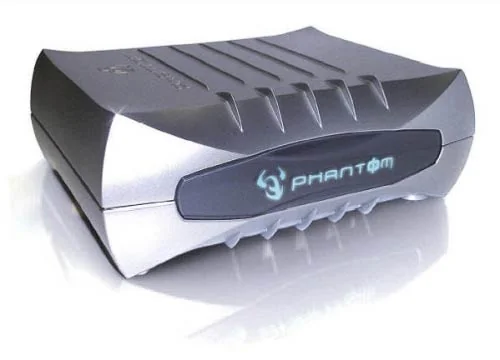
The specifications move faster than the launch
In August, Infinium published a more substantial specification list. GameSpot’s period report listed a Windows XP-based system, a 3GHz processor, 256MB of memory and more than 100GB of storage, alongside Nvidia graphics and a variety of accessories. Online ordering was expected to begin in October.
Those numbers would change. The first look, with its glowing emblem and ridged case, would change too. There is nothing inherently sinister about a prototype changing during development. But when a company keeps promising a release before customers have watched the machine do its job, each change feels less like refinement and more like another reason to ask what is actually finished.
At the January 2004 Consumer Electronics Show, the press could finally look at a physical Phantom. GameSpot’s account describes the case and its many rear connections. It also records the detail everyone wanted to know: the presenters did not turn it on.
A box on a table answered one question. It left the better question sitting right next to it.
HardOCP refuses to go quietly
By then, the argument had escaped the usual preview-and-comment-section cycle. HardOCP, a site read by PC hardware enthusiasts, had investigated Infinium and Roberts in September 2003. It challenged the company’s credibility and looked at the founder’s earlier business history. Infinium said the story was false and defamatory.
The site’s owner and editor, Kyle Bennett, became the public face of the fight. These were readers accustomed to seeing ambitious hardware claims put on a test bench. A console maker threatening a familiar hardware site was unlikely to win them over.

In February 2004, Infinium’s lawyers demanded that the article be removed. The dispute included factual complaints, some of which HardOCP accepted and corrected. A period report of the company’s detailed objections shows that this was not simply a disagreement over whether downloading games sounded like a good idea.
Bennett went to court in Texas seeking a declaration that the site had done nothing legally wrong. Infinium filed its own action in Florida. As the March 2004 reporting observed, the fight threatened to overshadow the company’s next hardware unveiling.
It gave the Phantom an audience waiting for two different events. Some wanted a console. Others wanted to see what the company would have to produce in court. That is an exhausting way to introduce a gaming product.
The Xbox veteran who made people look again
Infinium had also recruited someone with a very different kind of credibility. Kevin Bachus had helped establish Microsoft’s Xbox project and handled its third-party game relationships. He knew what it took to persuade a publisher to support a new machine. Joining Infinium put that experience behind a project many readers had already dismissed.

A May 2004 WIRED profile placed Bachus at the center of the company’s effort to make on-demand games convincing. His presence could not guarantee a successful launch. It did give the press a reason to take another look. Someone who had helped get an Xbox into the world was now trying to get a Phantom into it.
That mattered to the people actually building the system. Their work was competing for attention with a name that had become an insult. A good demonstration might be the first chance to talk about playing games rather than defending a press release.
E3 2004: At last, a game on the screen
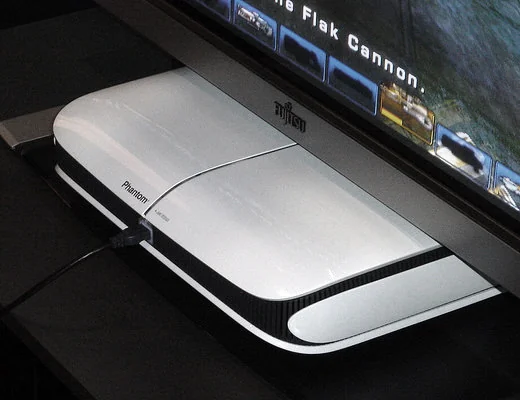
The new Phantom was a smooth white wedge with black trim. The bulky earlier design had given way to something that looked comfortable beside a DVD player. Infinium increasingly called it a game receiver, emphasizing the service arriving through the internet.
Visitors to E3 could do more than look at its case. GameSpot’s firsthand demonstration report describes Unreal Tournament 2004 running and connecting to public multiplayer servers used by ordinary PC players. The menus, accounts and controls were being demonstrated too. After so much doubt, this was a real step forward.

It was a smart game to show. Unreal Tournament 2004 could be gloriously untidy: vehicles racing across a battlefield, someone lining up a shot, another player arriving at precisely the wrong moment to ruin the plan. You did not need to understand Infinium’s business to recognize people having a good time shooting at each other.
The machine was not dependent on a special crowd of Phantom owners to find opponents in that demo. It could join the PC crowd already playing. For a new platform, that was a valuable answer to the fear of buying into an empty room.
The demonstration also supplied a piece of hardware with a clear purpose. The keyboard tilted up above a surface for the mouse, then rotated to suit a left-handed or right-handed player. You could keep the controls on your lap. This was the Lapboard, an attempt to make PC controls usable from the sofa without balancing a keyboard on one cushion and losing the mouse between two others.

A Game Developer E3 report recorded the contrast between an initial tabletop display showing only the interface and the booth where visitors could play. It also noted how far the actual product was from the grander rumors about playing games for every platform. The Phantom on display was a PC gaming appliance with a download service. That was already a difficult enough product to finish.
The free console that came with a $718.80 commitment
Infinium now had a specific offer. The hardware would cost $199, or come without an upfront hardware charge when you committed to 24 months of service at $29.95 per month. Its announced configuration used an Athlon XP 2500+, GeForce FX 5700 Ultra graphics, 256MB of memory and a 40GB drive. The planned launch date was November 18, 2004. The specifications and offer appear in ITmedia’s May announcement coverage.
Two years at that rate works out to $718.80. Broadband came on top of it. So could additional game purchases and rentals. “Free” was doing the same job it did in a mobile-phone contract: making the hardware easy to take home while the monthly bills paid for the relationship.
The announced service model included a base library, games added over time and separately priced rentals or purchases. Infinium talked about retail partners without naming them in that announcement. A customer was being asked to commit to a service whose ongoing value would depend on deals the company still needed to turn into a dependable catalog.
That was a much bigger ask than liking an E3 demonstration. You could admire the case and enjoy the game, then go home to a PC that already played it. Infinium needed convenience to win that argument every month.

The Phantom’s best sales pitch was an evening that did not become technical support. Select the game, settle onto the sofa, play with your friends. Its hardest job was delivering that ordinary evening thousands of times, across different homes and connections, while paying for the hardware and acquiring enough desirable games to make the bill worthwhile.
A booth could prove that a game ran. November would have to prove that a company could run the rest.
November comes. The Phantom doesn’t.
November 18, 2004 passed without the promised launch. The machine that had finally made a respectable showing at E3 became a release date people watched disappear.
By the following E3, the contrast was brutal. The Phantom had made a splash in 2004; in 2005, its absence was the story. CNN’s contemporary report followed the missing service and its funding difficulties. Meanwhile, the established companies were moving toward another generation. Infinium was still trying to deliver the previous promise.
The HardOCP dispute had reached an ending of its own. In a subsequent SEC filing, Infinium disclosed a declaratory judgment that the article’s publishers were not liable for publishing it, and a $50,000 payment to end the litigation. The agreed judgment was entered on February 16, 2005. Trying to remove an unflattering article had left the company with a court defeat and another bill.
Readers remembered that fight long after the console was gone. In a 2021 TechSpot forum thread, user Lionvibez wrote, “it was a very big win for all of us.” A later fan reaction, certainly—but a revealing one. For some of the audience, the Phantom story had become a fight over whether a company could bully a site they trusted.
For players, another missed launch was annoying. Inside the business, the consequences were considerably less amusing. A product that does not ship cannot begin earning the money expected to sustain it. People still need paying, and the money already spent does not come back because the calendar has moved.
The SEC’s later complaint describes Infinium beginning to pay employees in company stock instead of cash around September 2004. That detail belongs beside the release-date jokes. A share certificate cannot do the same job as a paycheck when the rent is due.
The launch pitch becomes a stock pitch
In May 2006, the SEC brought a case against Roberts over a stock-promotion campaign. According to the agency, faxes sent to tens of thousands of potential investors made Infinium appear close to launching the Phantom when it lacked the resources to overcome the remaining technical and manufacturing problems.
The pitch also promised stock-price gains reaching 3,000 percent. The SEC alleged that Roberts used the increased trading to sell personal holdings without reporting the sales publicly. Its 2008 settlement announcement records five-year bans on serving as an officer or director of a public company and on participating in penny-stock offerings, plus a $30,000 civil penalty. Roberts settled without admitting or denying the allegations.
It is an ugly turn in a gaming story. The exciting future pictured for players had become a way to sell investors an exciting future too, while the actual machine remained unavailable.
Those allegations concern Roberts’s stock promotion. They do not erase the people who built the prototypes or the game demonstrated at E3. The Phantom’s failure is more troubling when those efforts are left in the picture. There was something real for the company’s promises to outrun.
Bachus had been promoted to chief executive in August 2005. By November he had resigned. His presence had encouraged a second look; his departure made that second look difficult to sustain. A May 2006 Shacknews report described his lawsuit over roughly $51,000 in unpaid wages. Even the person brought in to help the Phantom reach the market was leaving with money still owed.
The company renamed itself Phantom Entertainment in 2006 and turned toward the Lapboard. By the end of that year, its cumulative net loss had reached $73,550,242, reported in Ars Technica’s examination of its filings. That figure is an accounting loss, not a tally of cash spent building a console. It was nevertheless an extraordinary number to attach to a machine no ordinary customer could buy.
The keyboard that outlived its console
The oddest part of the Phantom’s afterlife is that one piece of the original pitch really did become a product. By July 2008, Yanko Design was reviewing a physical Lapboard. After years of wondering whether the company would ship anything, people could buy its keyboard and mouse.
The review liked the rotating, tilting design and the way it accommodated left-handed use. It was less impressed by the mouse’s feel and the absence of illuminated keys. These are wonderfully ordinary complaints after everything that came before them. Someone was finally assessing a Phantom product by how it felt in their hands.
A 2010 Missing Remote review found it useful around a home-theater PC, while noting wireless interference, a slippery mouse surface and other irritations. The reviewer’s household kept using it. A device conceived to help change how games were sold had found a quieter job making a living-room computer easier to operate.
That was a modest destination for such an extravagant journey. Still, a keyboard doing something useful on a coffee table is a better ending than another concept image promising to revolutionize one.
Inside a survivor: PC parts and a Pepsi box
A surviving second-generation Phantom prototype received a hands-on teardown in 2016. Under the white case were a modified PC motherboard, an AMD processor, Nvidia graphics and an ordinary hard drive. Its configuration differed from the public launch specification. A prototype is a snapshot of development, not a retail machine.
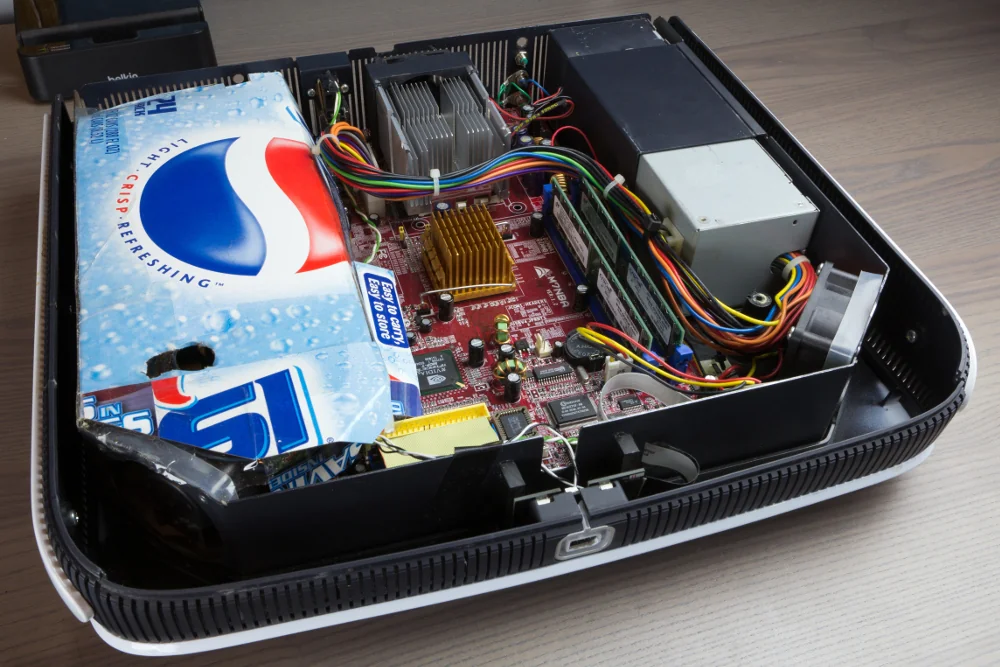
The best detail was hidden beneath the lid. An airflow duct had been made from a Pepsi carton. Some rear connections were not wired up. The front lighting, meanwhile, had its own little electronics arrangement. Here was the gap between a sleek trade-show object and the improvised work required to make it function.

The collector worked through hardware faults to get the computer booting. There was no magical component waiting to explain the whole saga. There were familiar parts, unusual packaging and unfinished work.
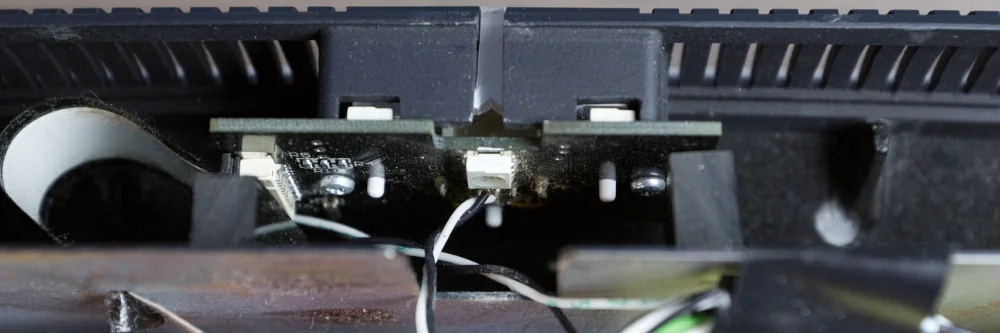
A photograph of that improvised interior tells a different story from the early promotional render. People had been cutting, fitting, wiring and trying things. The work existed. The product and service that customers had been promised never came together.
The future arrived without these boxes
Indrema and the Phantom make easy “ahead of their time” stories. Downloads, approachable developer tools and PC games played away from a desk no longer sound especially radical. Their promotional images seem familiar in a way they could not have when they first appeared.
But resemblance is a lousy substitute for a launch. It cannot pay the engineers who stayed late, find the missing publisher agreements or get the first shipment into a customer’s hands. Plenty of people can imagine a better evening playing games. Someone still has to deliver it.
Indrema’s most appealing idea was the person on the other side of the screen: a small developer who might have a wonderful game and no way into a console market. Its surviving community pages make that person visible. They contain questions, suggestions, patient explanations and people trying to save the gathering even as the company behind it failed.
The Phantom’s most appealing idea was closer to your sofa: the game you wanted, delivered without an installation becoming your evening’s main activity. Its surviving hardware shows that people tried to make the invitation tangible. Its business history shows how far a good demonstration can be from a trustworthy, working service.
Neither machine acquired the ordinary memories that make a console belong to its players. Nobody wore out an Indrema controller finishing a favorite exclusive. Nobody discovered a childhood classic because their parents brought home a Phantom on launch day. Their place in retro gaming comes from the anticipation, the disappointment and the bits left behind.
The chrome box in a magazine. The white wedge at E3. A developer’s website that kept the final chat. A keyboard that eventually did reach a coffee table.
For years, the question was whether these machines would arrive. What survives now is the story of the people waiting on both sides of that question.
Play the games, even if the consoles never arrived
You can still spend an evening with the games that made these pitches appealing. Explore Retro Replay’s entries for Unreal Tournament, Unreal Tournament 2004 and Heavy Gear II for their released computer versions. There was no retail Phantom or Indrema library, but those games had plenty of life without either machine.
Keep reading
- Nintendo’s licensing rules — the older fight over who got to make console games.
- The Sega Channel’s lost online library — an earlier service that actually delivered games to televisions.
- The complete Philips CD-i history — another living-room machine with an enormous entertainment promise.
- The complete history of emulation — the developers and communities who found other ways to bring games to new hardware.
Reporting and further reading
This feature draws on period interviews and demonstrations, preserved developer discussions, contemporary reporting and public filings. The most useful starting points are LinuxDevices’ John Gildred interview, GamesFirst’s E3 interview, Gildred’s Slashdot Q&A and the Indrema Informer archive. For the Phantom, see Roberts’s 2003 interview, GameSpot’s E3 demonstration, Game Developer’s period E3 report, the company’s litigation disclosure and the SEC settlement announcement. Later physical evidence includes the 2016 prototype teardown and Missing Remote’s Lapboard review.