 Retro Replay Retro Gaming History, Reviews & Emulation
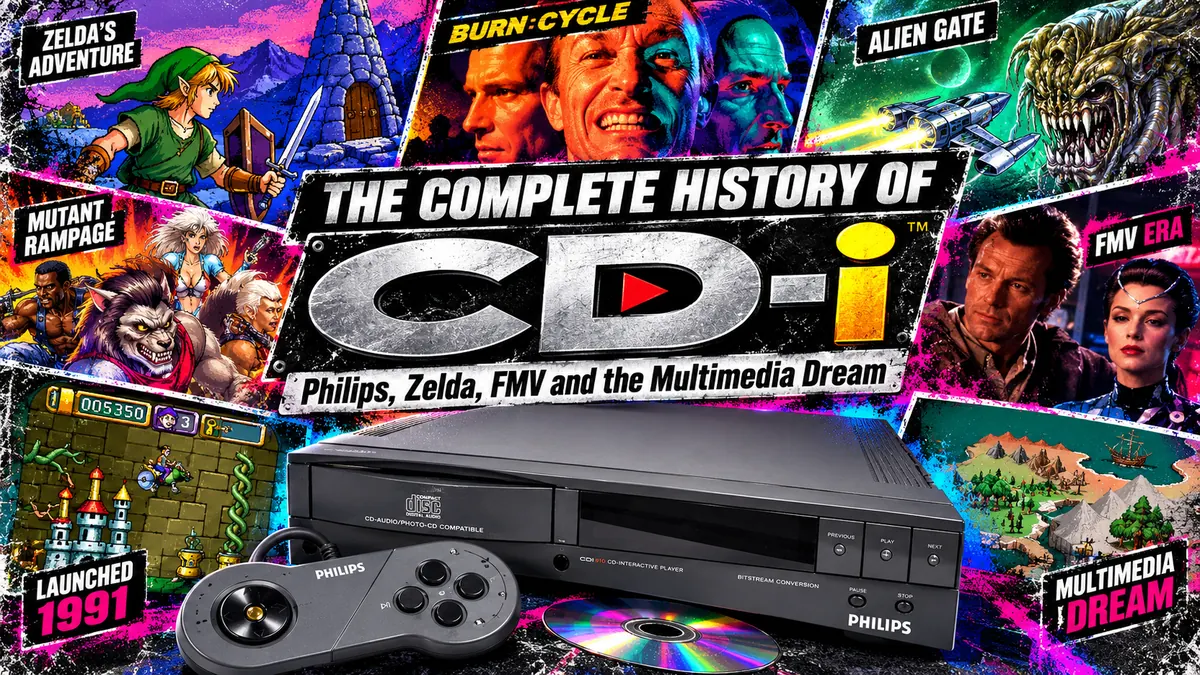
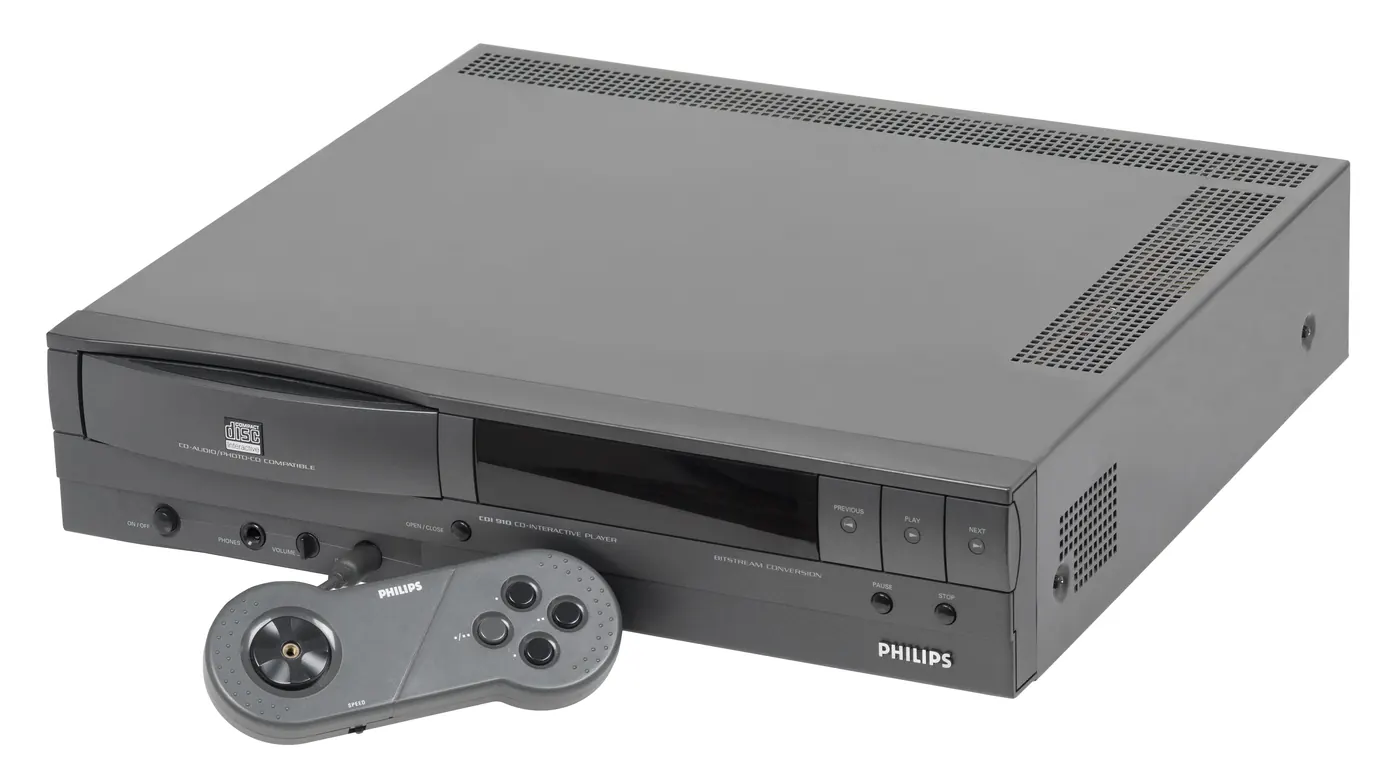
In 1991, Philips put a disc player beneath the television and asked families to buy a piece of the future. It played music. It could show pictures, video, and encyclopedias. It even played games. The machine looked as if it belonged in a hi-fi cabinet, and its pointing controller seemed perfectly happy with a menu. Then someone asked it to be a Nintendo rival.
The first American CD-i player cost $899, according to a contemporary industry report. That was an extraordinary sum to spend before choosing your first disc. A Genesis or Super Nintendo made a simpler promise: buy the box, connect a controller, play a game. Philips wanted its customer to imagine a new household appliance. It might teach a child geography, display a catalog, play a music CD, guide you through a museum, or host an adventure. The question waiting at the register was less exciting: which of those things was worth nearly nine hundred dollars today?
It is tempting to start this story with Mario and Zelda. They are the reason many people still know the initials CD-i. But Philips had been working on the format for years before its agreement with Nintendo. The company and Sony had helped make the audio compact disc a consumer standard. In the 1980s they developed a way for discs to carry software, text, sound, and images that responded to a user; the specification became associated with the Green Book. CD-i stood for Compact Disc Interactive. It was meant to describe a medium, not just one console.
A future built before anyone could buy it
That larger ambition explains the long road to a shop shelf. Professional machines and tools for making discs arrived before an ordinary family could buy a player. Educators, publishers, museums, and companies needed a way to create interactive material; otherwise the living-room machine would launch into silence. The International CD-i Association’s history traces that early work, while archived multimedia newsletters show Philips pursuing catalogs, training, and education as seriously as games. An early format history even describes a Renault dealer-training project.
Those uses were not absurd. A showroom could let a customer choose a car model and call up images and information. A school could put maps, narration, and quizzes on one durable disc. At the end of the 1980s, a television that could answer a question without a home computer sounded exciting. The trouble was that a specification designed to serve a classroom, showroom, and stereo cabinet would eventually be judged by children who wanted to move Link across a screen without fighting the controller.
The hardware had an operating system, a Motorola 68070 processor, graphics and sound capabilities, and a small amount of persistent storage. It could play audio CDs. Its single-speed drive could hold far more art and speech than a cartridge, but fetching material from a disc took time. The machine also needed enough processor and memory to do something useful with what it fetched. A beautiful still image can wait politely for a drive. A platform hero has to jump when the player presses the button.
That difference could disappear in a showroom demonstration. A photograph fills the television; a narrator speaks; the presenter points to a menu and another screen appears. It looks effortless because the demonstrator knows exactly where to click and how long the next screen will take to arrive. At home, a child might click the same icon several times, wonder whether the remote had registered, then watch an animation begin just as they tried to back out. Philips had designed an appealing way to select information. Developers still had to build games that felt responsive inside it.
The earliest CD-i promise also arrived during a peculiar moment in home technology. Computers were becoming useful and affordable, but many families did not want a computer at the television. A CD player felt familiar. An interactive disc could be sold as a safe route into the digital world without a keyboard, a command prompt, or the sight of a parent negotiating an installation. That promise was stronger for a geography atlas than for a platform game. It explains why the format made sense to Philips long before game fans began treating it as another console in a hardware war.
Philips made many forms of CD-i player over the years, including component-style units, compact living-room machines, and professional hardware. This was proof of the format’s reach and a source of confusion for buyers. A later game might call for a particular controller or a Digital Video Cartridge. That optional hardware added MPEG video decoding, making more ambitious moving-picture discs possible and enabling Video CD playback. It did not turn every old game into a faster one. Every additional requirement gave a customer one more reason to hesitate in the aisle.
A professional buyer could accept that complexity. A training company would choose authoring tools and players for a specific project, then put the same setup in every office or shop. A household buyer faced a patchwork of discs with different demands and much less help. The format’s flexibility, which looked so strong in a planning meeting, became a question on the back of a retail box: will this particular title work on the player I brought home? That uncertainty becomes especially painful once the software is sold as entertainment. Nobody wants to study compatibility requirements before a Saturday game night.
The announcement Sony never forgot
In 1991, another optical-disc plan was developing around Nintendo’s Super Nintendo. Sony had been working with Nintendo and expected to show a “Play Station” arrangement. Then, at the Consumer Electronics Show, Nintendo announced a different CD-ROM partnership—with Philips. The Los Angeles Times and UPI reported the clash while it was happening, before decades of PlayStation mythology made every detail feel inevitable.
Ken Kutaragi was the Sony engineer most closely associated with the PlayStation project. He and his colleagues had been working toward an optical-disc future of their own. Nintendo’s announcement did not instantly create the PlayStation that later reached stores, but it publicly exposed how badly the companies’ plans had diverged. The proposed Nintendo CD attachment never appeared. Sony continued down a separate path. Philips retained a relationship that would eventually let outside teams put Nintendo characters on CD-i discs.
Corporate stories often make the eventual winner look as though it had known the ending all along. This one was messier. Nintendo wanted to protect its game business while exploring new storage. Sony wanted a place in console hardware and discs. Philips wanted partners and recognizable content for a format it had already invested in. Each company was playing a different game at the same show. The public announcement made the split dramatic; the consequences took years to appear on shelves.

This is where two stories often get flattened into one. The CD-i was not a failed Nintendo peripheral repackaged as a Philips console. Its development predated the Nintendo deal. The agreement later gave Philips access to a handful of Nintendo characters, and those games came to dominate the system’s reputation. It did not supply the original reason CD-i existed.
There is still an irresistible irony. Philips got Link and Mario for a machine that had never been built around them. Sony lost the Nintendo arrangement and went on to sell a CD-based console that changed the business. But the funny ending should not hide the serious problem facing Philips in 1991: it had a costly new format, a broad library to assemble, and no single game that made the purchase feel urgent.
What did a family take home?
At launch, a customer could find reference material, children’s activities, art, music, and games on CD-i discs. An encyclopedia could look remarkable in a demonstration. A family might still wonder why they needed a second appliance for it. The earliest catalog seemed to be arguing several cases at once: CD-i was a school aid, a catalog, a movie player, a game system, and a better music machine. The box asked buyers to make sense of the whole category before it offered them a favorite thing to do.
Some game ideas fit the hardware better than others. A quiz could use recorded hosts. A measured strategy game could pause while the drive found the next image. Mystic Midway: Phantom Express and Rest in Pieces put the player in a carnival atmosphere where showmanship was part of the attraction. Golf was another natural match: it gave photographed scenery time to register and asked for decisions rather than split-second movement. A 1994 trade report identified Palm Springs Golf as the format’s best-selling game before the Digital Video era.
None of that looked much like the cartridge battle raging nearby. Philips had created room for forms of software the consoles rarely carried. The company would soon learn that buyers interested primarily in games could admire a filmed tour or an interactive encyclopedia and still go home with a Super Nintendo.
Four Nintendo games and one impossible assignment
Imagine being asked to make a Zelda game for a machine that Nintendo did not make, using controls that had not been designed for Zelda, while making the result look unlike the cartridge adventures players already loved. That was the problem waiting behind the 1991 corporate handshake. The agreement gave Philips access to famous characters. It did not give the development teams Nintendo’s designers, technology, or years of experience making Link feel effortless to control.
Dale DeSharone led the team behind Link: The Faces of Evil and Zelda: The Wand of Gamelon. His route into the job was unusual. He had taught school and made software for his students before moving into commercial games—a plausible path into an interactive format Philips wanted to sell to educators as well as players. In a detailed Zelda Universe interview, he remembered joining a CD-i launch effort years before families could buy the hardware. The delays turned what he had imagined as a shorter commitment into four years.

By the time his new group pitched the Nintendo-character games, the clock was running. DeSharone recalled budgets of roughly $600,000 per game, a shared engine, and a little more than a year to complete two adventures. Those are his recollections, not an audited account, but they make the assignment tangible. Art, music, levels, animation, testing, and approvals had to come together while the team itself was still finding a workflow.
Philips wanted the games to demonstrate what a CD could do. An overhead view like Nintendo’s existing Zelda games risked looking ordinary in a showroom. DeSharone’s team chose side-scrolling areas with large characters and animated interludes. The choice made the machine’s visual difference obvious. It also left combat, jumping, and item use resting on a controller that could make ordinary movement feel awkward.
It is easier to see the bind if you think about a single encounter. Link approaches an enemy in a side-view room. In a good action game, the distance closes in a way your thumb can read: stop, attack, retreat, jump. Here, the player also has to manage the CD-i’s particular inputs, the hit detection, and the possibility that the useful item is buried behind another action. You can learn the system. The act of learning it is much more visible than in a Zelda game where your intention seems to flow straight into the character. The disc can supply a lovely background; it cannot make a sword swing feel right by itself.
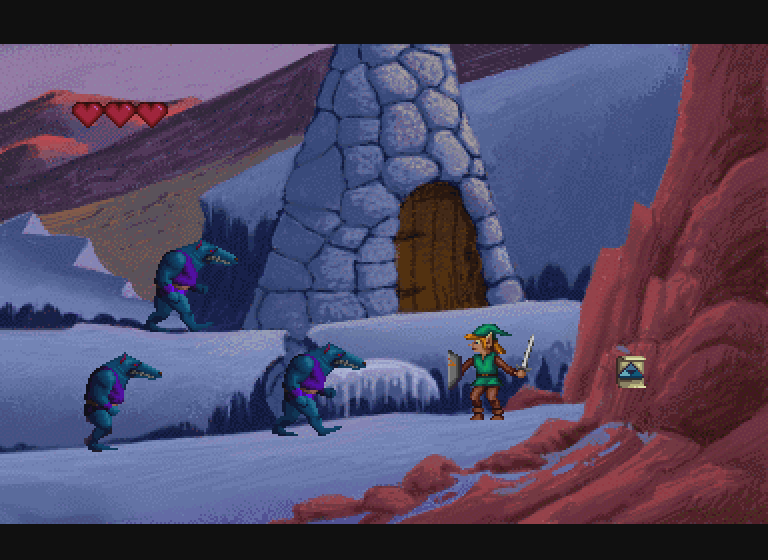
There is more game here than the clips suggest. Link crosses areas, collects equipment, searches for the right item, and meets characters who point him onward. Zelda gets the playable role in The Wand of Gamelon and moves through a related structure. Yet the work required for a simple action can keep pulling the player out of the adventure. A fight feels ungainly. The needed item is not always obvious. Returning through a familiar screen can mean another interruption. The map promises a journey; the moment-to-moment controls make the journey harder to enjoy.
That is why playing even half an hour changes the conversation. The famous dialogue may be the first thing you notice, but it is not what you wrestle with most. You wrestle with how a room connects to the map, how much damage a small mistake costs, and whether the item you bought is the answer to the next blockage. The games have the outline of two genuine adventures. Their reputation as odd films misses the frustration of trying to bring those adventures out through the interface.

How the cutscenes became the whole story
Meanwhile, a separate animation effort gave the games their most durable afterlife. DeSharone described recruiting artists with Eastern European animation experience, bringing them to Massachusetts, and helping them turn paper drawings into digital material the CD-i could play. The thick lines, outsized expressions, and theatrical voices looked nothing like Nintendo’s familiar house style. Nintendo reviewed character designs; Philips wanted animation that made its disc format look special. Each party was trying to protect or advertise something different.
The finished scenes became perfect internet material. Link’s face, a booming line of dialogue, a sudden musical cue—any one could be clipped without asking the viewer to play the level that surrounded it. The animation is often funny for reasons its makers did not intend. But those few minutes have become a stand-in for two complete, troubled games and sometimes for the entire CD-i. The joke travelled farther than the hardware ever did.
The production story makes the clips harder to dismiss with one easy line. Artists were learning a new digital pipeline while adapting familiar characters under an outside license. A cutscene had to look bold on a television and still be compressed, stored, and played by the machine. Their visual language came from a different tradition than Nintendo’s. None of that makes an awkward close-up beautiful, but it replaces the idea of a faceless corporate accident with actual people making choices under unfamiliar constraints.
“You put effort into that, and it doesn’t go elsewhere.”
DeSharone, discussing the push for music, visuals, and animation in his Zelda Universe interview.
His point is visible on the screen. The games spend attention on being unmistakably CD-based, and sometimes ordinary play suffers for it. That explains the pressure; it does not excuse every clumsy fight or opaque puzzle. A good history can hold both thoughts at once. These were not counterfeit games made by people who had never heard of Zelda. They were licensed productions working under sharp limits, and the results remain frustrating to play.
The third Zelda took another road
Zelda’s Adventure came from a different team. It restored the overhead viewpoint many players expected, then filled that view with photographed environments and acted footage. On paper, it seemed to answer the obvious complaint about the earlier pair. In motion, it found a new way to test patience. Moving through its large world could be slow, and each new screen reminded the player that photographed scenery still had to be fetched and displayed by the machine underneath.

The game’s shortcomings show why the camera angle was never the entire problem. A familiar perspective cannot rescue slow traversal or a response that arrives too late. Its world has scale and odd character. Reaching the next part of it can feel like waiting for the machine to catch up with your curiosity.
There is a peculiar melancholy in that version of Zelda. The photographic landscapes suggest a fantasy world too large and strange for the cartridges of the time. The player can imagine an adventure in those images. Then movement becomes work, and the dream slows to the pace of fetching another screen. It is the CD-i’s broader history condensed into one game: plenty of room to store a world, much less ability to make that world feel alive under your hand.
Mario closes the doors
Hotel Mario gave Nintendo’s other great mascot a task he had never trained for: close every door on a hotel floor while enemies try to reopen them. Released in 1994, it is a compact puzzle-action idea rather than a conventional Mario platform game. The cutscenes are as easy to share and laugh at as the Zelda animation. Underneath them is a clearer arcade loop than the memes usually acknowledge. See a door open. Reach it. Avoid the enemy. Keep the floor under control as the pressure rises.

A designer’s later account, discussed by Nintendo Life, describes a game deliberately shaped and submitted for Nintendo’s approval. That does not make it a hidden masterpiece or a Nintendo-made release. It makes it a real game with a real production history. The four Nintendo-character discs deserve precise criticism, not a blanket punchline. Their existence grew out of an extraordinary business deal. Their awkwardness grew from the work of trying to make those characters sell a machine built for many other things.
A better reason to own the machine
If the Nintendo games tell you why CD-i became infamous, Burn:Cycle tells you why someone still keeps a player working. It opens with an appropriately 1994 problem: a data thief has a computer virus in his brain and very little time to put things right. The setup could have been pure multimedia decoration—glowing interfaces, ominous video, and a soundtrack doing the work of a game. Instead, you investigate, talk, decode, move through action scenes, and feel the clock in the story bearing down on your choices.
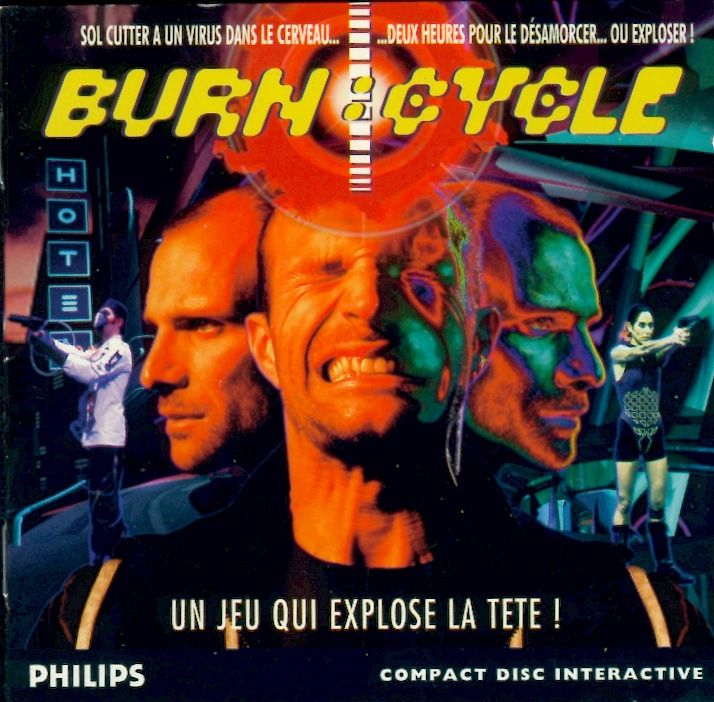
The acting and technology carry the period on their sleeves. A few puzzles can still test patience. Yet the game has a pulse that many expensive-looking discs lacked. Its video makes the world feel busy and paranoid, then leaves the player with something to do inside it. A fan in a GameFAQs discussion called it an “excellent adventure / cyberpunk shooter game.” That is one person’s enthusiasm, but it explains why a machine remembered for memes has defenders who remember whole evenings.
Time pressure is a risky choice for a machine with loads and filmed sequences. In Burn:Cycle, it mostly helps the fiction: the player shares the protagonist’s impatience. A conversation may contain the clue needed for a later puzzle, but stopping to think feels costly. The game can be opaque in the way 1990s adventures often are, and its future looks like the 1990s imagining a future that has already passed. Those qualities give it personality. A modern remake could smooth the puzzles; it would have trouble reproducing the anxious, period-specific mood of the original disc.
Voyeur pursued an entirely different kind of filmed tension. You watch a politically connected family through concealed cameras, trying to find evidence and decide what to expose. Its premise is sleazy by design; its controls at least suit the fantasy. A person monitoring a camera is supposed to sit still, choose a feed, and wonder what was missed elsewhere. The surveillance game in Night Trap had found another, seedier relative. The video could not show every spontaneous response to your choices, but it could make the act of watching feel purposeful.
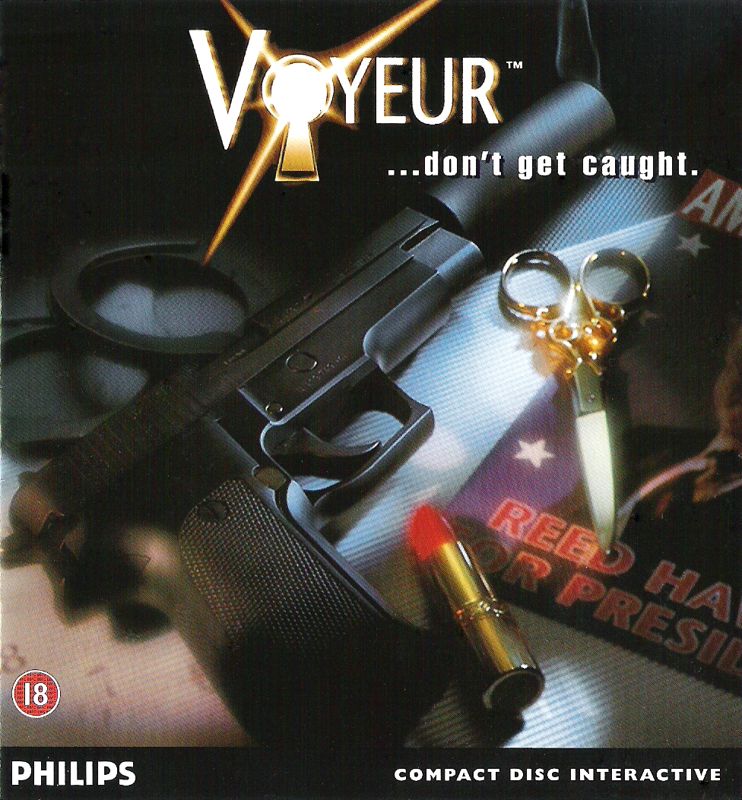
Other filmed discs were less comfortable with their limitations. A short clip could answer a click, and an actor could deliver a line, but the recording ended at the edge of what the team had shot. On a system sold as an interactive-video appliance, that edge was especially visible. CD-i could show footage that a cartridge would have struggled to hold. It still had to make the player’s next action worth taking.
The format was well suited to watching with a purpose. It was less suited to promising that an actor would improvise with you. A camera can show a family member entering a room, and a disc can store another clip for what happens when you expose them. It cannot create a new reaction to a theory no writer anticipated. The strongest filmed games learned to make the recorded nature of the material feel plausible. Surveillance, interviews, evidence, and a ticking clock gave the player work that belonged beside a screen. Mere footage gave them a show.
The platform game that refused the joke
The Apprentice made its case without live actors. The Vision Factory built a colorful platform game with distinct stages, legible movement, and a cartoon personality of its own. It did not need to prove that video was the future. It needed the player to enjoy reaching the next ledge.

That sounds like a small achievement until you remember what the hardware and its marketing encouraged. A disc with no lavish filmed hook had to earn its place through control and level construction. The Apprentice is not evidence that CD-i secretly outclassed Nintendo’s platformers. It is evidence that developers could make satisfying games on it when they designed for the player’s hands instead of a sales demonstration. One reader at GameFAQs went so far as to call it “platform perfection”—a fan’s verdict, certainly, but a useful corrective to the notion that no one had fun with the library.
It also gives the Nintendo games an uncomfortable comparison from inside the same format. When a CD-i platformer reads your input more cleanly, the argument that the machine alone made every side-scrolling adventure miserable becomes less convincing. Hardware shaped the ceiling and added friction; design still mattered. The Apprentice found ways to keep its movement clear. DeSharone’s Zelda games tried to combine movement with an adventure’s inventory and a license’s presentation demands. The difference is visible each time the player has to decide whether they are fighting a monster or the act of using an item.
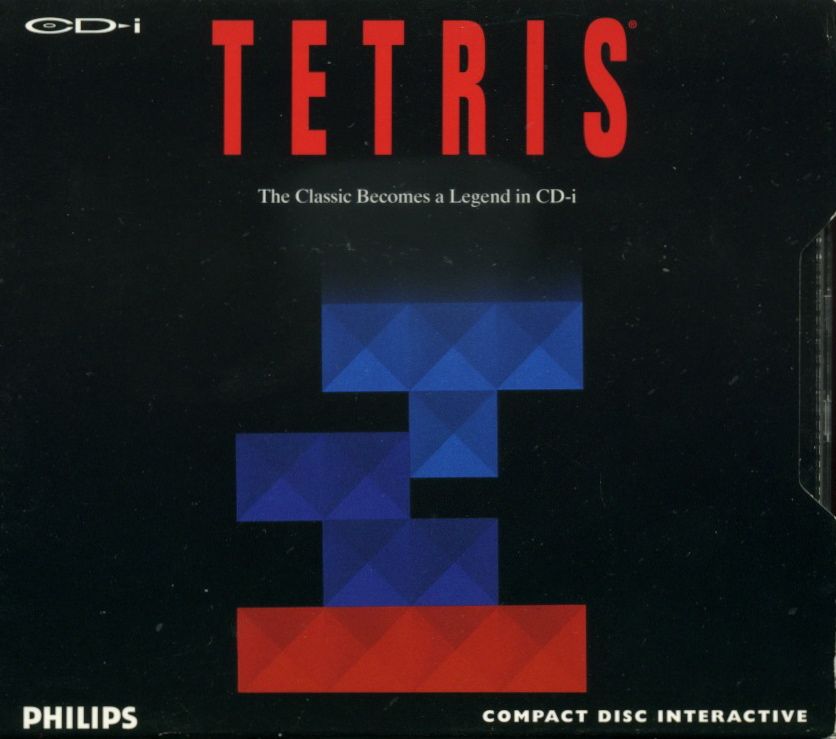
The CD-i version of Tetris is a stranger success. Its blocks follow familiar rules, while scenic backgrounds and calm, New Age-flavored music make the screen feel like part of the room’s atmosphere. That choice has divided players for years. In one retrogaming discussion, a fan praises the “calm and peaceful soundtrack”; another replies, “I love the vibes, I hate playing it.” Both are credible reactions. The same soothing presentation that gives this version a personality can make the act of playing feel too soft or slow for someone who wants a brisk Tetris duel.
The rest of the shelf
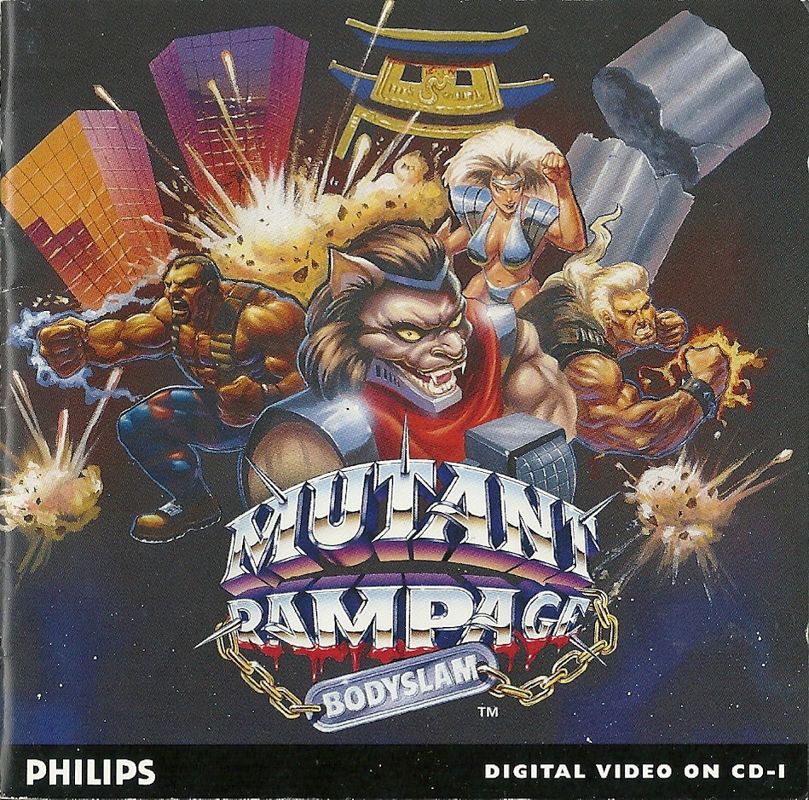
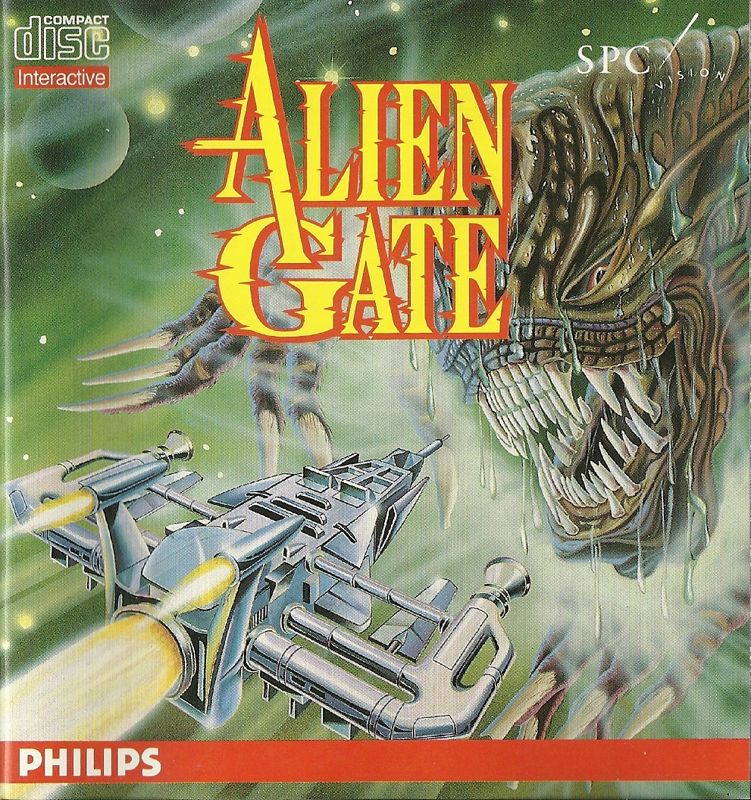
Action fans had options beyond those unlikely cult favorites. Alien Gate offered direct science-fiction shooting. Mutant Rampage: Bodyslam went for grotesque cartoon brawling. The sight of these boxes beside a photographed thriller or a quiet puzzle disc says more about CD-i’s identity crisis than a marketing slogan ever could. They shared a format, not a common idea of what playing should feel like.
Adventure players could disappear into the odd alien worlds of Laser Lords or explore the haunted puzzles of The 7th Guest. The latter was a famous PC CD-ROM attraction first, and its appearance on CD-i was a way for Philips to show that the living-room machine belonged in the same multimedia conversation. Ports came with tradeoffs. A setting that felt generous with a mouse and a faster computer could become more laborious with different controls and loading. The picture might still impress; the path between rooms might not.
The shelves extended well beyond what a games-only history usually counts. Children’s discs could show photographs, speak instructions aloud, and let a young viewer click through a lesson on the family television. Earth Command wrapped environmental questions in the era’s faith that interaction could make serious subjects exciting. Zombie Dinos from Planet Zeltoid promised a very different afternoon. These were not afterthoughts in Philips’s original pitch. They were part of the reason the machine had been designed as a home multimedia player in the first place.
This part of the library is easy for a game historian to skip because the usual measures—tight controls, challenge, replay value—do not describe it well. A child who spent an afternoon clicking through a dinosaur story was still using the system as Philips intended. A retailer, however, had to shelve that disc somewhere near action games and convince a family that both belonged to the same expensive purchase. CD-i’s greatest variety was therefore both a creative possibility and a problem at the checkout.

For an adventurous owner, this range was part of the charm. For a family about to spend a great deal on one player, it was harder to read. A store could place a Genesis cartridge beside other Genesis cartridges and trust the customer to know what kind of evening it promised. A CD-i disc might be a shooter, an encyclopedia, a filmed thriller, or a golf lesson. The logo told you what machine it fit. It did not tell you why you would want to stay with it.
Philips tries to make it look like a game console
By the middle of the decade, the CD-i that looked like a piece of stereo equipment was giving way to smaller players with a more obvious gaming pitch. The CD-i 450 belonged beside a television and a controller, not stacked with serious audio components. Philips and its partners cut prices too. A University of Luxembourg history notes a Magnavox-branded player announced at $299 in 1994. The new offer sounded much closer to a game console. It also arrived after years in which game buyers had been learning to think of CD-i as something else.
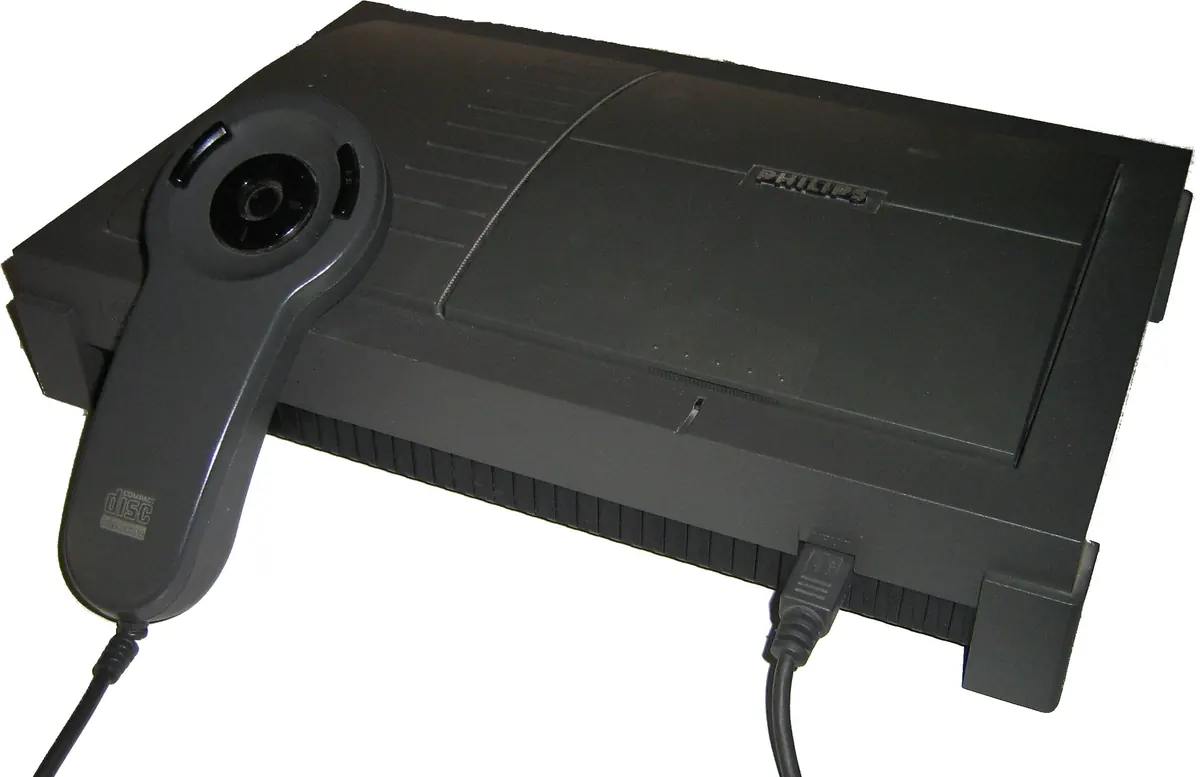
A buyer could see the shift in the shape of the box, but the software still carried the older format’s mixed personality. Controller options improved, yet games had already been designed around several different assumptions about input. Some video-heavy releases needed the Digital Video Cartridge, adding cost and another compatibility question. The add-on supplied MPEG decoding for moving footage and Video CD playback; it did not make the player generally faster. A parent trying to buy a birthday game now needed to check the title, controller, player, and video hardware. A cartridge marked for the Super Nintendo demanded less investigation.
This was a particularly awkward time to ask customers for patience. The promise of CD-ROM had spread through magazines and shop displays. A buyer had seen larger voices, orchestral soundtracks, and glossy stills; they expected the new format to deliver them with less trouble, not more. CD-i could offer those ingredients, but often asked the customer to learn the machine’s family tree first. A consumer may forgive a complicated professional tool because it earns money or completes a job. A living-room entertainment purchase gets judged on how quickly the family can enjoy it.
Philips understood that the pitch needed work. A 1994 Washington Post report described a multimedia makeover and concern about the supply of software hits. In Britain, a newspaper feature framed the promise with unusual honesty: CD-i technology might outclass cartridges, but the writer was waiting to be impressed. The machine could show more recorded material. A player still wanted a reason to press the next button.
The market found a clearer version of the dream
While Philips adjusted its offer, the rest of the industry moved. Home PCs with CD-ROM drives became more common. The 3DO tried to sell its own premium multimedia future. The Atari Jaguar fought for attention with a very different pitch. Then Sony’s PlayStation made optical discs normal for a game system without asking customers to buy a machine whose purpose needed a long explanation. The disc was no longer an unusual attraction by itself. The game on it had to do the selling.
The competitive picture changed faster than a broad multimedia standard could reposition itself. An early CD-i demonstration might have impressed people because it put narrated pictures on a television without a PC. A few years later, a computer owner could buy a CD-ROM drive for software with better support, while a console player could buy an optical-disc system built squarely around games. What Philips had once offered as a unique combination became a set of features distributed among products that did one job more clearly.
CD-i’s original price had already set a brutal standard. An $899 player invited comparison with computers and major household electronics, and the available games struggled to justify that leap for most families. Later cuts could lower the barrier, but they could not remake the first impression. The famous Nintendo games brought attention without the smooth play people expected from those characters. The best CD-i games could reward a curious owner; there were too few that made a stranger decide they had to become one.
It is difficult to pin one neat sales figure on a family of players sold across markets and years. Sources may count players shipped, sold, or installed. The HCI Museum’s historical summary records a Philips claim of roughly 570,000 players worldwide by late 1994 and about 400,000 US sales by 1996. Those are not the numbers of a product nobody ever touched. They are also a long way from the household standard Philips imagined. Its US push faded in the latter 1990s, and the format was discontinued by 1998.
The CD-i’s trouble came from several pressures meeting at once. The audience for a classroom disc was not necessarily the audience for an action game. The remote that suited an encyclopedia could make a fight awkward. The drive that held lavish art could interrupt a difficult level. The expensive opening price demanded a must-have experience, while the broad catalog made it hard to point to one. By the time Philips had a cheaper, game-shaped machine, competitors had clearer libraries and stronger habits behind them. None of these problems alone makes an interactive-disc player impossible. Together they made this one difficult to choose.
The Nintendo license illustrates the bind better than any business diagram. Mario and Zelda could make someone recognize the box. They also invited an immediate comparison with games designed by teams that had spent years tuning those characters for dedicated consoles. Philips wanted famous faces to sell its format. The faces brought their own standards of movement, pacing, and polish. A newcomer curious about CD-i might have approached through Link, found the controls clumsy, and never discovered Burn:Cycle or The Apprentice. The best-known software was not the best guide to the whole library.
The owners who remember more than the joke
People who spent real time with CD-i tend to name games, not just cutscenes. In a community discussion, one owner says The Apprentice is the title they still play most. Another names The Apprentice, Burn:Cycle, and Hotel Mario. Someone else remembers playing Zombie Dinos from Planet Zeltoid religiously. Those are personal memories, not proof that Philips secretly won the generation. They do remind us that a child could love a strange educational disc as intensely as another loved a cartridge platformer.
The internet’s CD-i is often four cutscenes on a loop. An owner’s CD-i might be a quiet session of Tetris, a hard-earned level in The Apprentice, or a parent and child finding their way around an odd geography disc. The viral clips preserved the machine’s strangest faces. They also made it easy to forget the rest of the library that had been designed for the television, not for a later joke.
Physical collecting adds another angle. The variety of player shells, controllers, add-ons, manuals, and large game cases is a record of a market that had not yet settled on the shape of living-room multimedia. A collector can hold the uncertainty in their hands. Was this a console accessory, a learning machine, an audio component, or a future movie player? Different boxes answer differently. That makes the format fascinating even when a particular game does not reward much time.
There is no need to turn that affection into a defense of every release. Long loads, hesitant controls, accessory confusion, and thin games are real. So is the delight of a machine willing to try something outside the clean boundaries of a console catalog. The CD-i’s enthusiasts have spent years making that mess legible. Without them, the surviving story would be much smaller and much less interesting.
Playing CD-i today
Original hardware has its own appeal and its own complications: different player models, aging drives, varied controllers, and game-specific Digital Video requirements. Emulation is another way into the library. MAME is an actively developed starting point for CD-i software, though compatibility and video behavior vary by title and version. The SAME_CDI documentation covers another libretro route and its disc-image and firmware requirements. Retro Replay tracks MAME releases and has CD-i game entries for choosing what to investigate. Use disc and firmware files you are authorized to use.
A four-game first tour gives a better picture than a meme marathon. Try Hotel Mario for the licensing oddity, The Apprentice for straightforward platform play, Burn:Cycle for interactive cinema, and CD-i Tetris for the machine’s peculiar living-room mood. Then try a Zelda game with the controller in your hand. Its animation becomes funnier—and its compromises easier to understand—when you have played what connects the scenes.
What was under the television
Philips imagined a television that could become a school, showroom, music player, game machine, and movie screen as soon as you changed the disc. Much of that future arrived eventually, just not in this box. The CD-i reached for it early and with extraordinary confidence. Its many purposes made it adventurous. They also made it hard to explain, expensive to enter, and vulnerable when dedicated game machines improved around it.
The image that stays with me is the original player beneath a television, waiting for a family to decide what they had bought. Philips offered several answers. A few discs gave wonderful, odd ones. The market, meanwhile, was learning to ask a simpler question: what do I most want to play tonight?
More retro histories
- The complete history of the Sega CD — another attempt to make a disc feel like the future of games.
- The complete history of the Panasonic 3DO — multimedia ambition at a premium price.
- The rise and fall of the Atari Jaguar — the hardware contest surrounding CD-i’s game pivot.
- Night Trap and the ratings era — when interactive video reached a national argument.
Sources and further reading
- International CD-i Association’s technical FAQ and hardware FAQ.
- Los Angeles Times reporting on the 1991 Nintendo–Sony–Philips dispute and contemporary UPI coverage.
- Dataquest’s 1996 consumer-multimedia report and the 1994 Music & Media trade report.
- Dale DeSharone’s Zelda Universe interview.
- University of Luxembourg CD-i history, the HCI Museum exhibit, and a later oral history.
- CD-i owner memories and player views of CD-i Tetris. Forum memories illustrate personal reception, not sales or company decisions.