Retro Replay Retro Gaming History, Reviews & Emulation
You select a game from a menu on your Genesis. There is no cartridge to push in, no disc spinning beside the television, and no modem making a noise. The software arrives through the same cable that brings in cartoons and basketball. For a child in 1994, the technical route hardly matters. A game just came through the wall.
That was Sega Channel’s trick. It was also the reason its rarest games nearly vanished. A cartridge can turn up at a garage sale. A broadcast disappears when the cable company stops sending it. For years, players argued over which Genesis games had truly existed only on the service, which were regional releases, and which had never reached a subscriber at all. Then an old distribution disc and a cache of staff tapes began answering questions that memory could not.
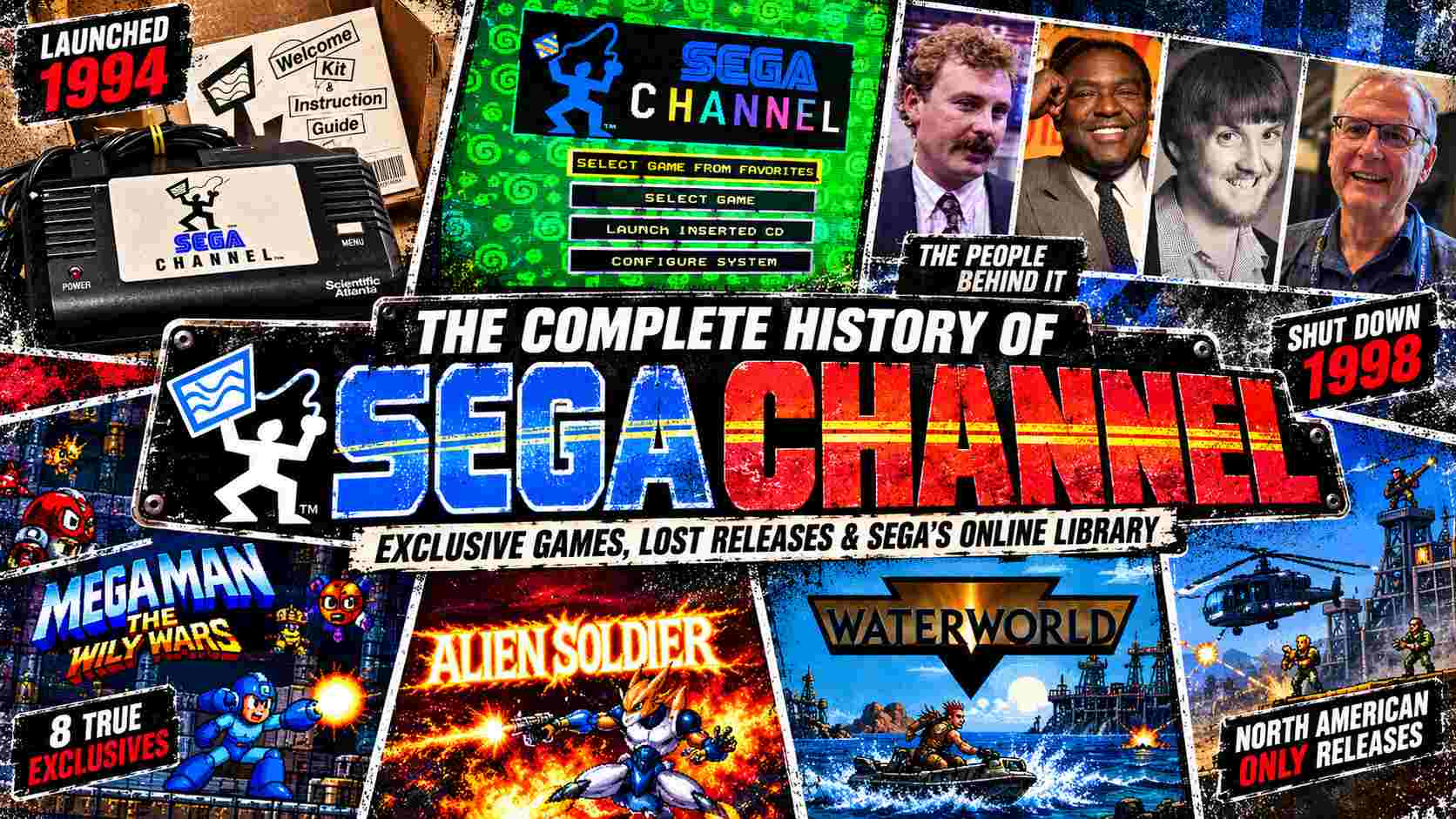
A September 1996 distribution disc recovered in 2024 gave preservationists access to The Chessmaster and Klondike. In 2025, the Video Game History Foundation reported 144 game ROMs and variants, plus 97 pieces of menu and system software, from its Sega Channel recovery project. Six more unique exclusives emerged. That is where this history begins: with games once delivered to homes every month, then almost lost between a broadcast tower and a forgotten tape.
The Genesis gets a cable subscription
In April 1993, Sega, Time Warner, and Tele-Communications Inc. announced a joint venture that would send Genesis games over cable television lines. The Los Angeles Times reported a goal of one million subscribers by the end of 1994. It was a huge target for a service that would need local cable companies to sign on, install hardware, explain a new monthly fee, and persuade parents that a game console belonged on the coaxial cable.
Doug Glen, Sega of America’s vice president of business development, helped sell the idea to cable operators. Wired’s 1993 coverage caught Sega in its most expansive mood: the Genesis was no longer just a cartridge machine but a base for discs, data services, and whatever came next. In a 1994 interview, Sega Channel programming executive Michael Shorrock credited Glen’s years of traveling and pitching for making the cable plan real. Sega could build the adapter; Glen had to persuade the companies with the wires.

The plan was born in the “information superhighway” years, when cable and telephone companies promised interactive living rooms. Sega found a practical shortcut: use the cable line already in the home. The cleverness was real. So was the dependence on partners Sega could not control. A game might be ready to transmit nationwide while a family in the next town had no participating operator to call.
The People Who Built Sega Channel
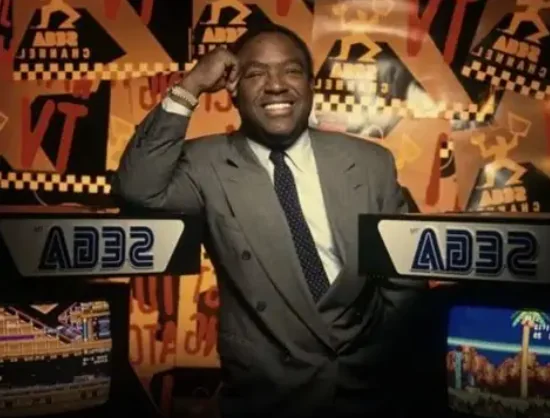
The service quickly became more than an engineering project. It needed cable-industry executives, Sega game people, production staff, licensing specialists, programmers, marketers, and local operators to cooperate. In May 1993, Time Warner executive Stanley B. “Stan” Thomas Jr. was named president and chief executive of the proposed venture. A contemporary UPI report noted that Thomas had spent years at HBO and Time Warner, giving Sega Channel leadership from someone who understood subscription television and affiliate relationships rather than only the cartridge business. That background was a logical fit for a product that had to be sold to cable systems before it could ever be sold to players.
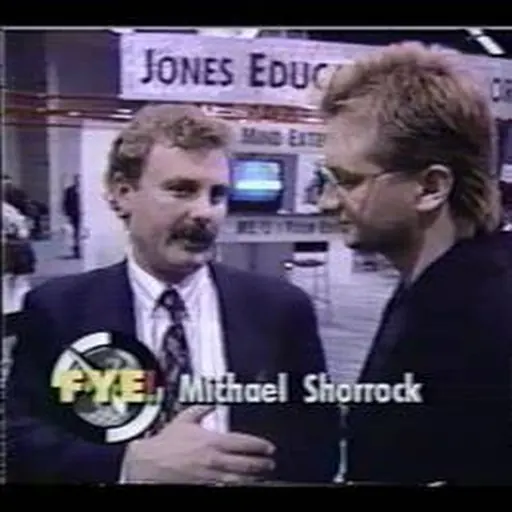
Michael Shorrock, Sega of America’s vice president of programming and Sega Channel program director, became one of the people most closely associated with what subscribers actually saw. In an April 1994 interview published in the May issue of the French magazine Mega Force and later translated by Sega-16, Shorrock and production manager Ray MacFadden explained the service while it was still being assembled. MacFadden described continuous 24-hour programming and a monthly selection of fifty games, while Shorrock described an on-screen BIOS menu dividing the library into categories and highlighting ten-minute “Test Drives” of forthcoming games. The interview is especially valuable because it captures expectations before years of hindsight reshaped the story.

Shorrock and MacFadden were not merely describing a static rental catalog. Their comments show that Sega Channel’s team already imagined a service that could add levels, characters, previews, and other content that did not fit the traditional cartridge model. The 2026 Video Game History Hour Sega Channel reunion, featuring Shorrock, Ray McFadden, and Willard Stanback, adds valuable retrospective detail about the technical hurdles, licensing pressures, and leadership culture surrounding the project. The spelling of MacFadden’s name varies in later online references, but the 1994 interview and later VGHF reunion make clear that he was a production manager directly involved in the service.
Another staff member who deserves attention is programmer Patrice Sartor, remembered internally as “PsychoCat.” Time Extension’s oral history and its separate feature on Sega Channel subscriber art show how programming, quality assurance, menus, community material, and parental-control testing overlapped. The service’s human story is easy to lose when the hardware gets all the attention, but Sega Channel was effectively producing a new digital issue every month. Somebody had to select games, secure rights, test builds, create menu assets, make sure age-restricted titles were actually blocked when necessary, prepare instructions, coordinate cable distribution, and repeat the entire cycle again.
The project suffered a serious personal loss when Stan Thomas died in 1995 after an illness. Former colleagues interviewed decades later remembered him as a leader who helped turn a risky joint venture into something teams believed could work. His death did not single-handedly determine Sega Channel’s fate, but it removed a figure who had experience bridging the cable and entertainment worlds at exactly the moment the service still needed broad industry cooperation.
How Sega Channel Actually Worked
Modern descriptions often call Sega Channel “streaming,” which is understandable but technically misleading. The Genesis was not opening a two-way session with a server and requesting a private copy of a game. Most cable systems of the period were built primarily to send information downstream. Sega Channel therefore used a broadcast carousel: a large package of game and menu data was transmitted over and over. When a subscriber picked something, the adapter listened for the relevant data as it came around in the stream and loaded it into local memory. From the user’s point of view it felt on-demand; under the hood it was a clever way of faking on-demand behavior on a largely one-way network.
The adapter plugged into the Genesis cartridge slot, took its own power, and connected to coaxial cable. Hardware came from cable-industry companies including Scientific Atlanta and General Instrument. Reverse-engineering work documented by InfoChunk shows how unusually specialized the system was. The adapter contained 4 MB of DRAM, enough to hold a Genesis game as large as 32 megabits. Because DRAM is volatile, the downloaded game disappeared when power was removed. A subscriber did not slowly accumulate a permanent digital collection. Sega Channel was closer to a temporary software feed than a storefront.
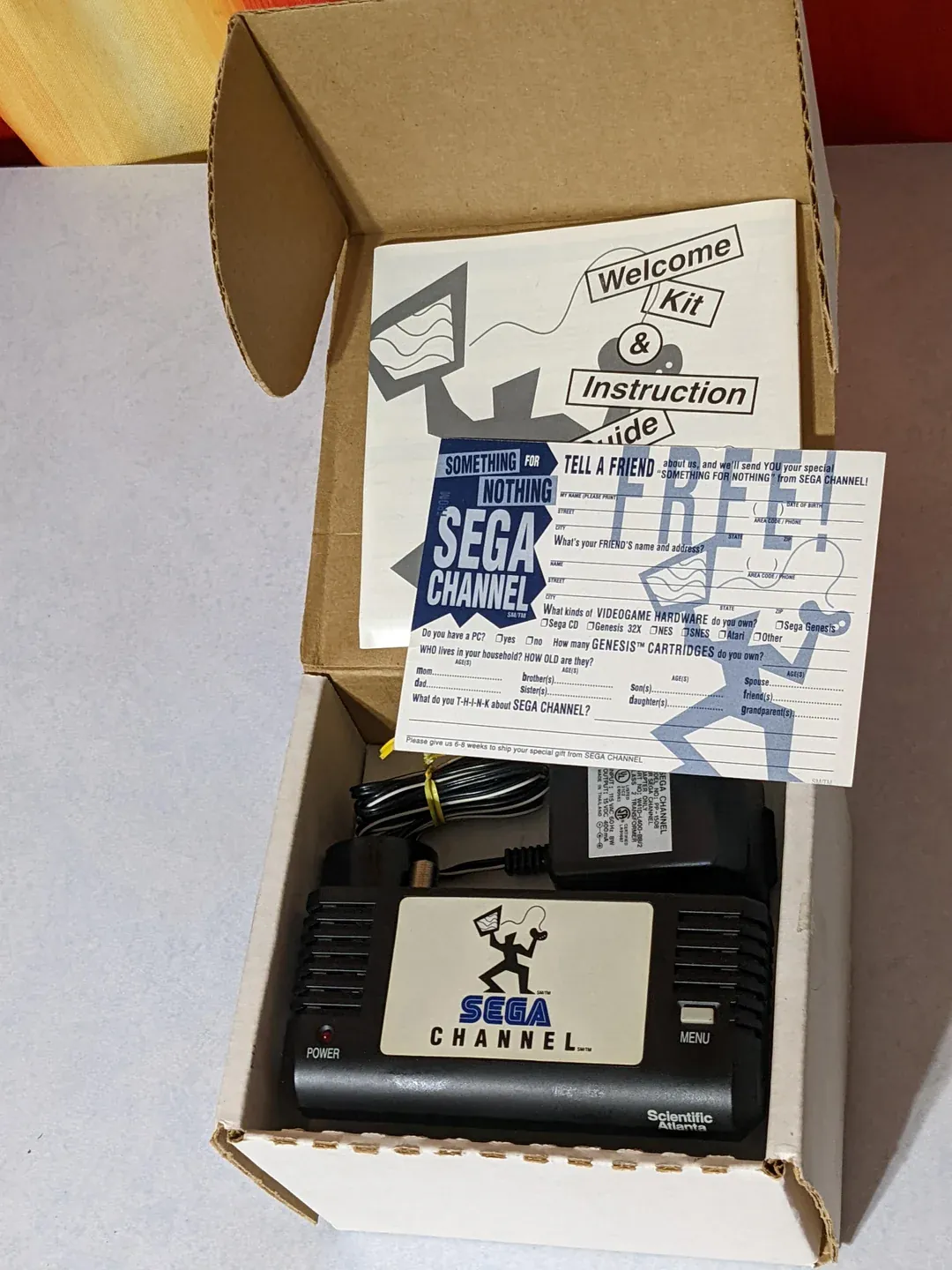
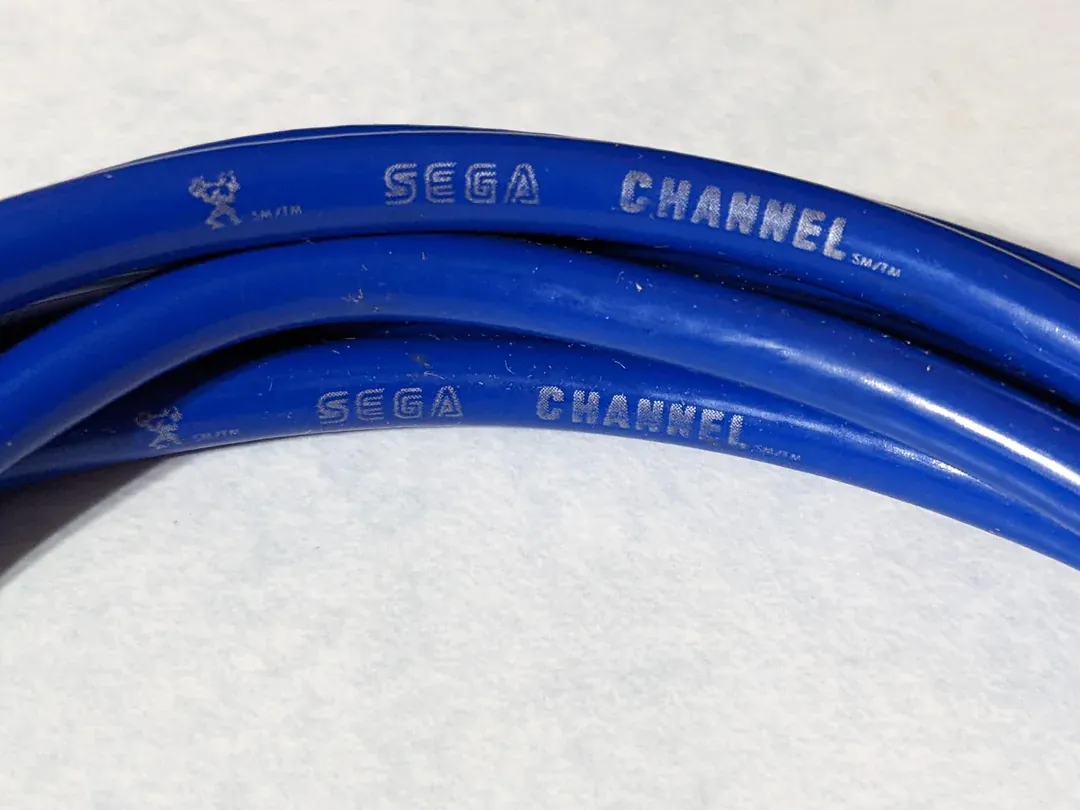
The monthly data image was itself a production. Material had to be assembled, games prepared, instructions and graphics created, and the package delivered to the uplink side of the network. InfoChunk’s reconstruction of the process describes roughly 60 MB monthly images, internal utilities, and a sequence of encoding steps that turned ordinary game files and menu resources into something Sega Channel’s distribution system could transmit. The recovered September 1996 CD is especially valuable because it preserved not only game data but a snapshot of the service’s production pipeline.
A Rotating Digital Library, Not a Cartridge Store
Sega Channel’s original programming model centered on about 50 games at a time. In the 1994 Shorrock/MacFadden interview, MacFadden said the team expected roughly 75 percent of the selection to turn over each month. Later accounts describe the lineup expanding toward 70 titles, with more frequent updates near the service’s final years. This constant rotation was central to the appeal. A subscriber did not need to decide which single $50 or $60 cartridge to buy. The fun was turning the system on and seeing what had appeared.
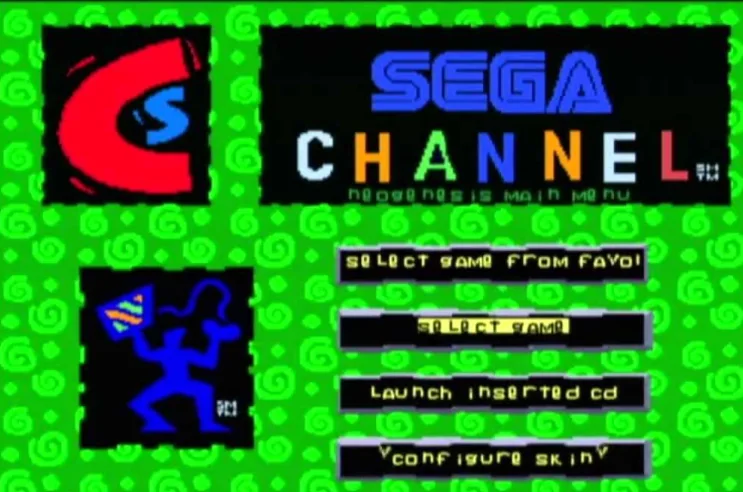
The menu grouped games into broad themed rooms and categories. Over the service’s life, users encountered areas for sports, arcade-style action, role-playing and fantasy games, racing and vehicle games, family material, classics, and other rotating themes. Two non-game areas helped make the channel feel more like a media service than a cartridge jukebox: Game Guide offered tips and instructions, while Newslink carried gaming news and promotional information. Sega also built parental controls into the experience, reflecting cable-industry concern over children’s access to age-restricted content.
The most forward-looking part was the Test Drive. Sega could distribute a time-limited or content-limited version of a forthcoming game, let subscribers try it at home, and then replace it later. In the 1994 interview, Shorrock described ten-minute previews. The recovered archive proves that these were not merely theoretical. VGHF’s list includes Test Drive versions of The Adventures of Batman & Robin, Comix Zone, Earthworm Jim, The Lost World: Jurassic Park, The Magic School Bus: Space Exploration Game, and X-Men 2: Clone Wars. Sega Channel had effectively invented a recurring digital demo program inside a 16-bit cable subscription.
The Four Categories That Make Sense of Sega Channel’s Library
The easiest way to get Sega Channel history wrong is to use the word “exclusive” for everything unusual. The preservation record now supports a cleaner taxonomy. Category one is the strictest: games that were genuinely distributed as unique Sega Channel Genesis releases and did not have a normal Genesis/Mega Drive cartridge release elsewhere in the same form. Category two covers games that did receive cartridge releases in Japan, Europe, or Australia but reached North American Genesis owners through Sega Channel instead of a contemporary U.S. cartridge. Category three contains altered Sega Channel builds: Test Drives, limited editions, split games, VideoHints, special editions, and data/header variants. Category four contains prototypes or cancelled projects that passed through Sega Channel’s hands but are not proven public releases.
That distinction is not pedantry. It changes the answer to the exact question people search for: “What games were exclusive to Sega Channel?” A strict answer is surprisingly short. A broader answer about software that was uniquely available to North American Sega Channel subscribers is longer. Both are interesting, but they should not be merged.
Part I: The Eight True Sega Channel Exclusive Games
VGHF’s 2025 project identifies six “unique Sega Channel exclusive games”: The Berenstain Bears’ A School Day, BreakThru, The Flintstones, Garfield: Caught in the Act – The Lost Levels, Iron Hammer, and Waterworld. Two additional exclusives, The Chessmaster and Klondike, had already been extracted from the September 1996 Sega Channel image in November 2024. Taken together, those eight releases form the strongest current answer to the question.
1. The Berenstain Bears’ A School Day
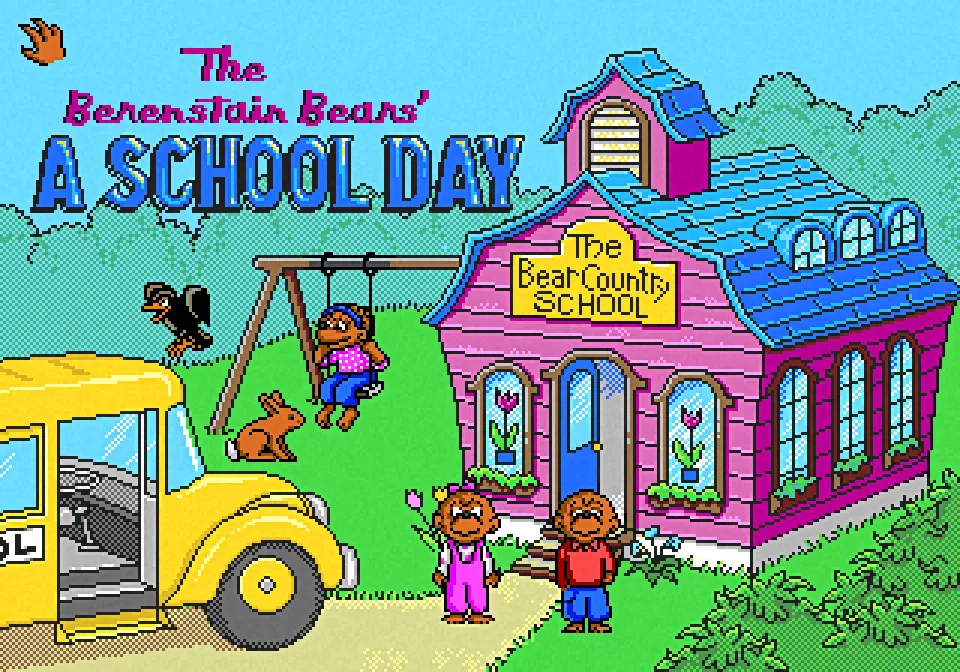
The Berenstain Bears’ A School Day sits at the edge of what most people imagine a Genesis release to be. The project was associated with Sega’s Pico educational platform, where children interacted with book-like cartridges and simplified activities. Sega Channel offered a Genesis-compatible version built from a selection of those activities and adapted for a normal controller. That makes it important for two reasons. First, it shows Sega Channel distributing material that never had an obvious reason to become a boxed Genesis product. Second, it demonstrates how the service could repurpose software from elsewhere in Sega’s ecosystem and create something that existed only because digital delivery made a small, odd release economically plausible.
That low-risk flexibility is easy to underestimate. Manufacturing a cartridge meant forecasting demand, ordering physical inventory, producing packaging, shipping cases to retailers, and competing for shelf space. A cable-delivered educational conversion did not have to clear the same threshold. Sega Channel could use unusual software as programming, much as a television network fills a schedule with material that would never justify a theatrical release. The Berenstain Bears release is therefore not just a curiosity; it is evidence of a fundamentally different distribution model.
2. BreakThru
BreakThru is a puzzle game whose Genesis history became tangled with the larger fame of Tetris creator Alexey Pajitnov. Marketing prominently used Pajitnov’s name, but the important Sega Channel fact is simpler: the planned Genesis cartridge did not reach normal retail, while the build survived as channel content. That makes it a particularly clear example of Sega Channel rescuing a commercially stranded game. Instead of becoming a cancelled title known only from previews and prototypes, it became playable software for subscribers.
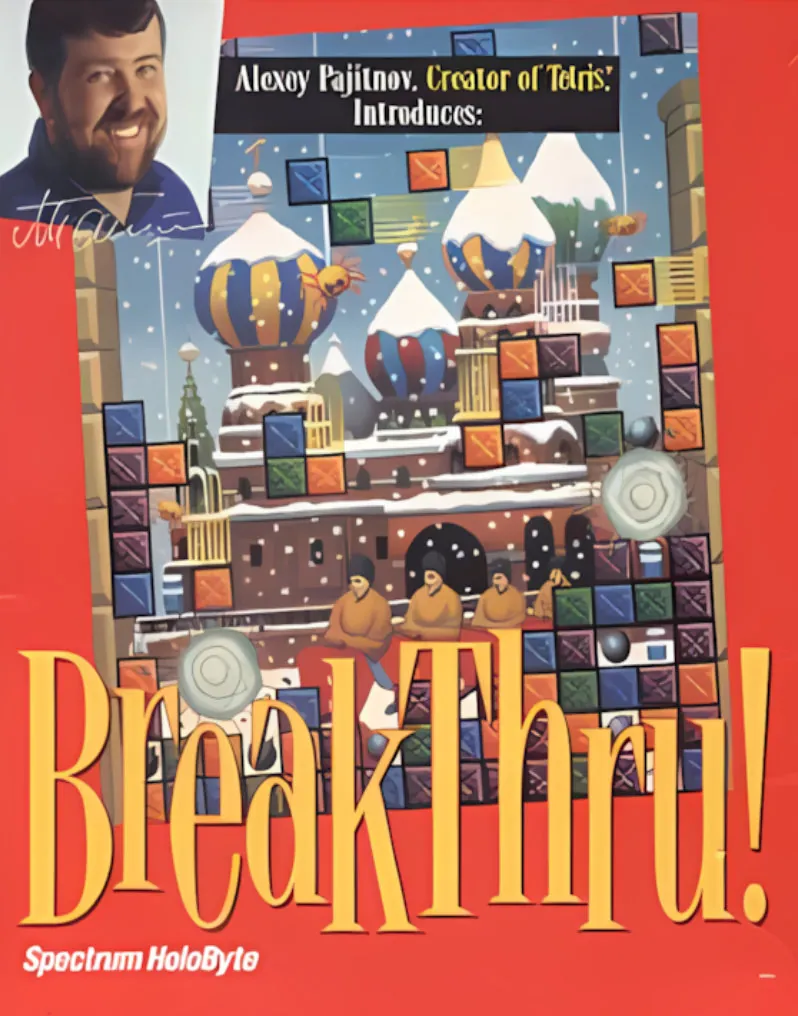
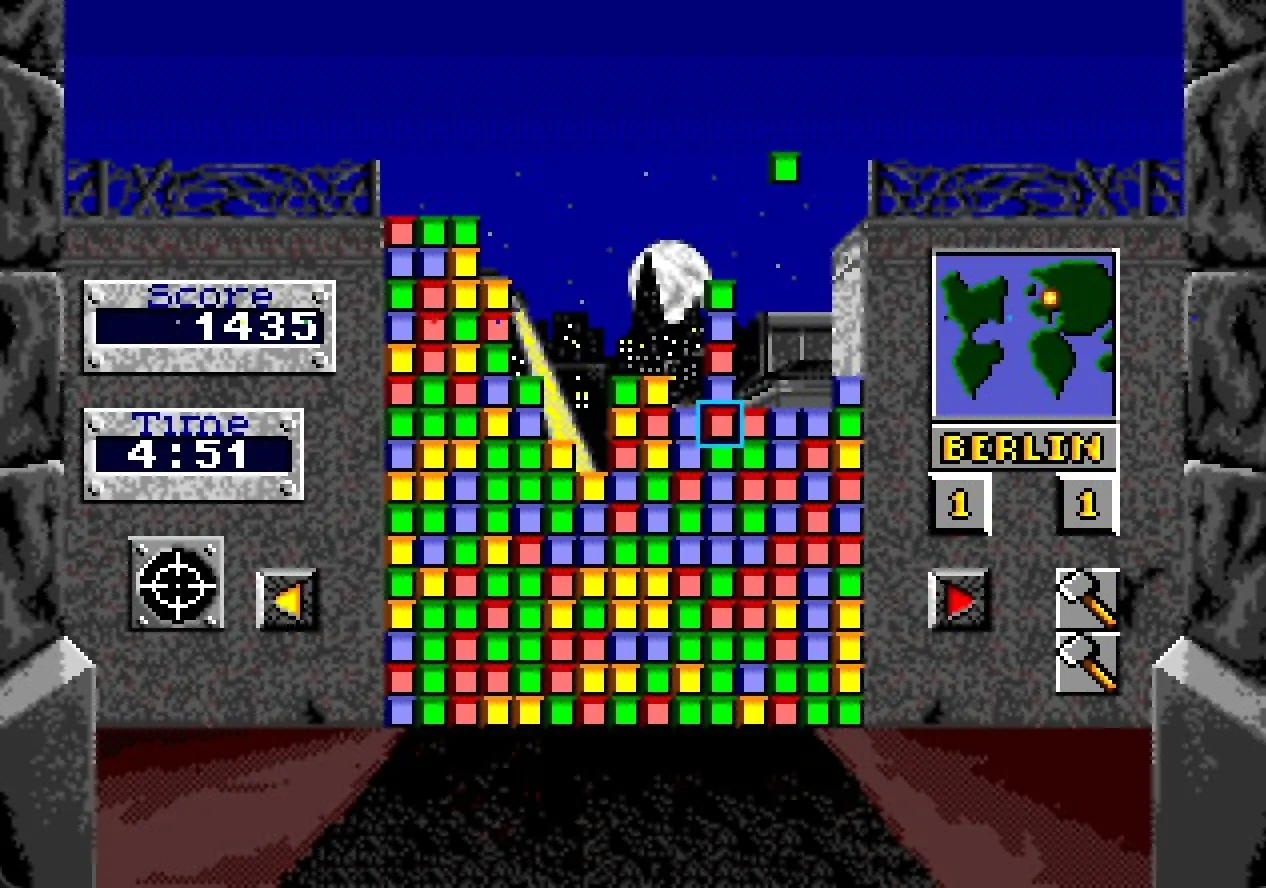
BreakThru also illustrates why Sega Channel’s archival history cannot be reconstructed from store catalogs. A researcher looking only at North American Genesis cartridges would never see the release. A researcher looking only at development prototypes might incorrectly classify it as unfinished or unpublished. The cable schedule was a third path: real distribution without a retail object.
3. The Flintstones
Ocean’s Genesis version of The Flintstones, tied to the 1994 live-action film, became one of the most famous “lost Sega Channel” stories because related versions existed elsewhere while the Genesis build slipped through the cracks. The Super Nintendo game reached stores, but the Genesis conversion did not receive a normal cartridge release. Sega Channel ultimately became its home. When the service disappeared, collectors could not simply hunt for a rare cart because no ordinary commercial cart had existed.
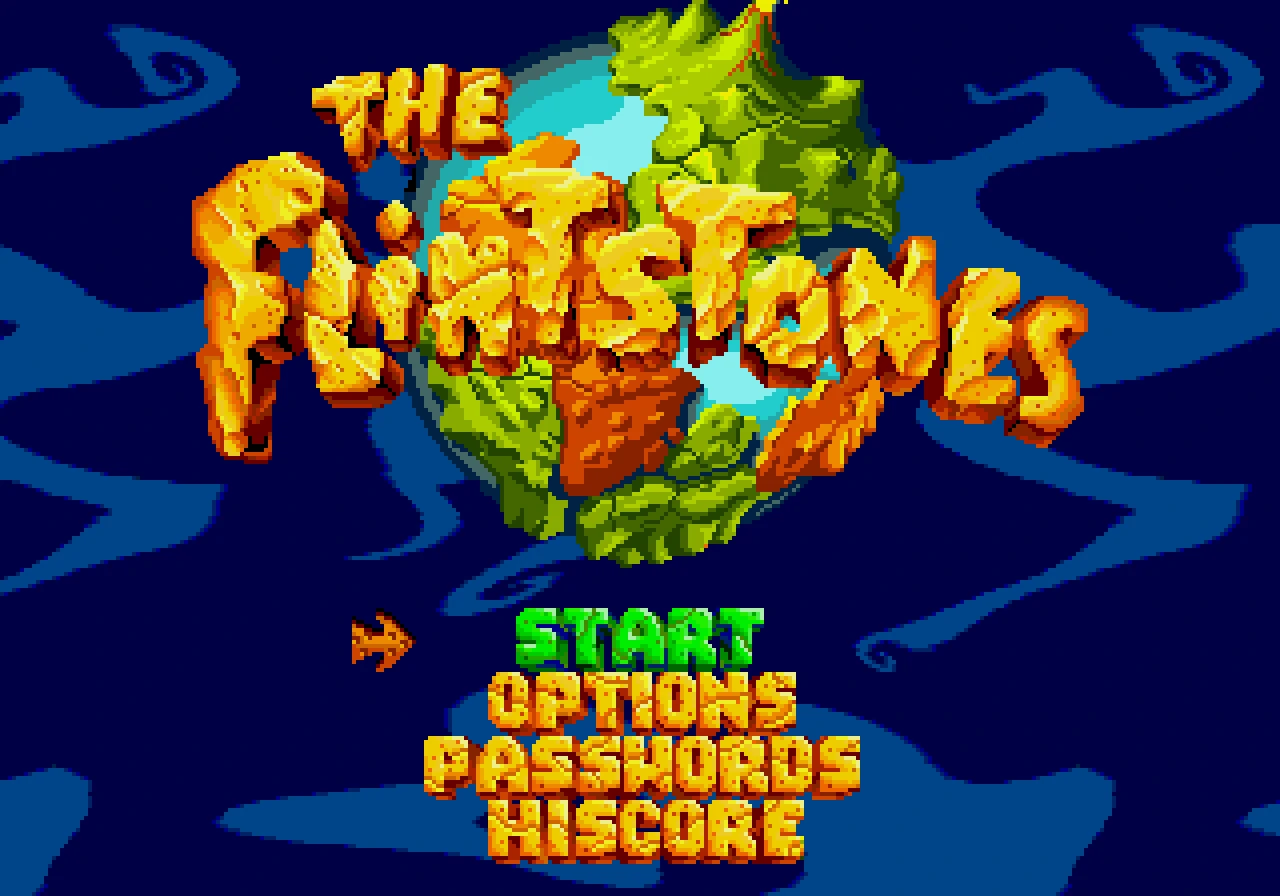
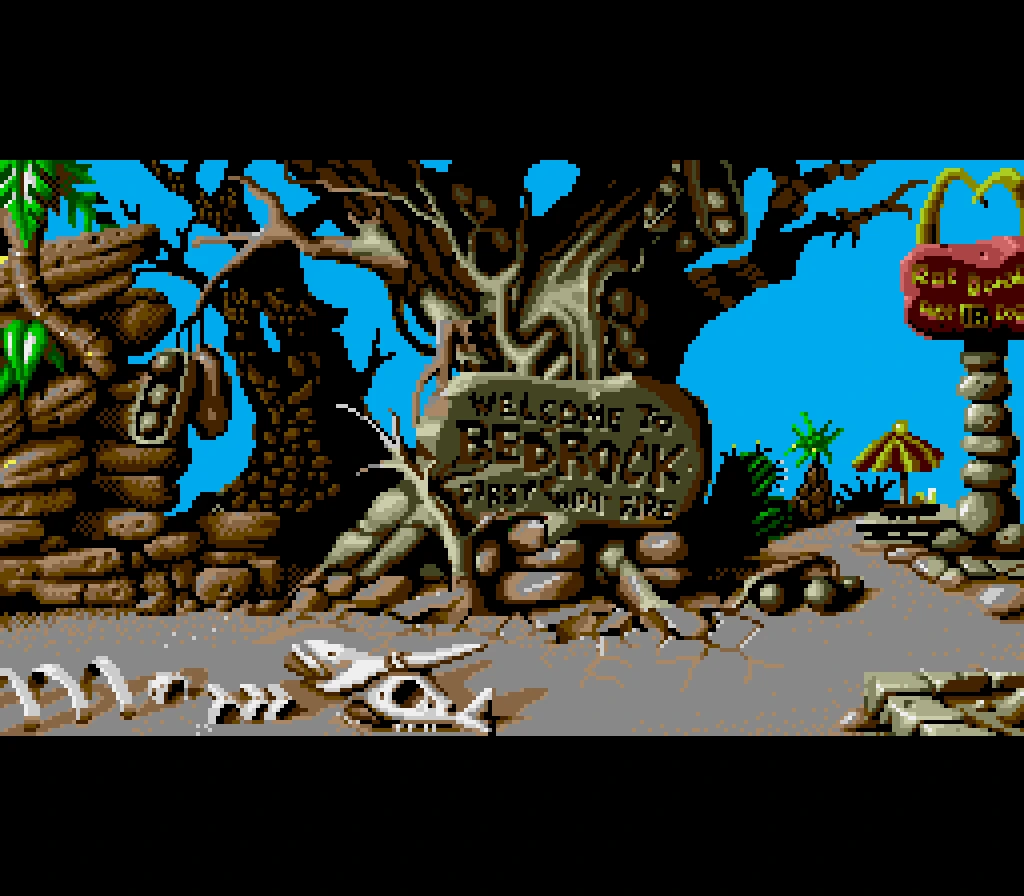
The 2025 recovery gave historians a more secure preservation copy and stronger documentary context. It is a good case study in why “exclusive” does not always mean “designed from scratch for the service.” Sometimes the exclusive was an abandoned or redirected console version that found a second life because Sega Channel did not require manufacturing thousands of cartridges.
4. Garfield: Caught in the Act – The Lost Levels
Garfield: Caught in the Act – The Lost Levels is arguably the perfect Sega Channel preservation story. Rather than a full sequel, it collected material that had not fit into the retail Garfield: Caught in the Act. The Sega Interactive team could use digital distribution to give those discarded ideas an audience. Decades before downloadable expansions became routine, Sega Channel was already being used to distribute cut or bonus material that existed outside the boxed release.
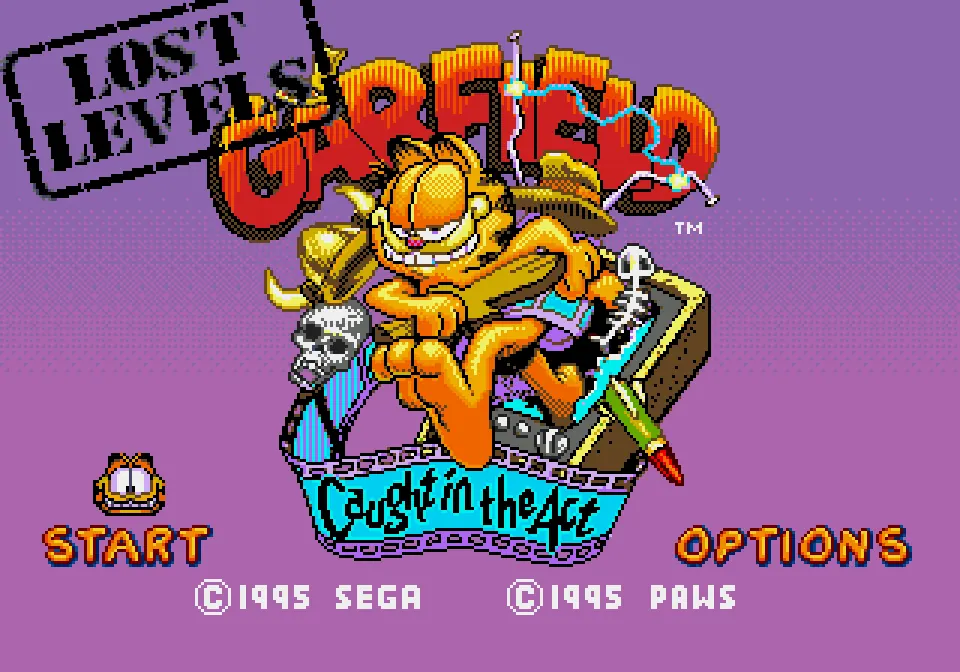
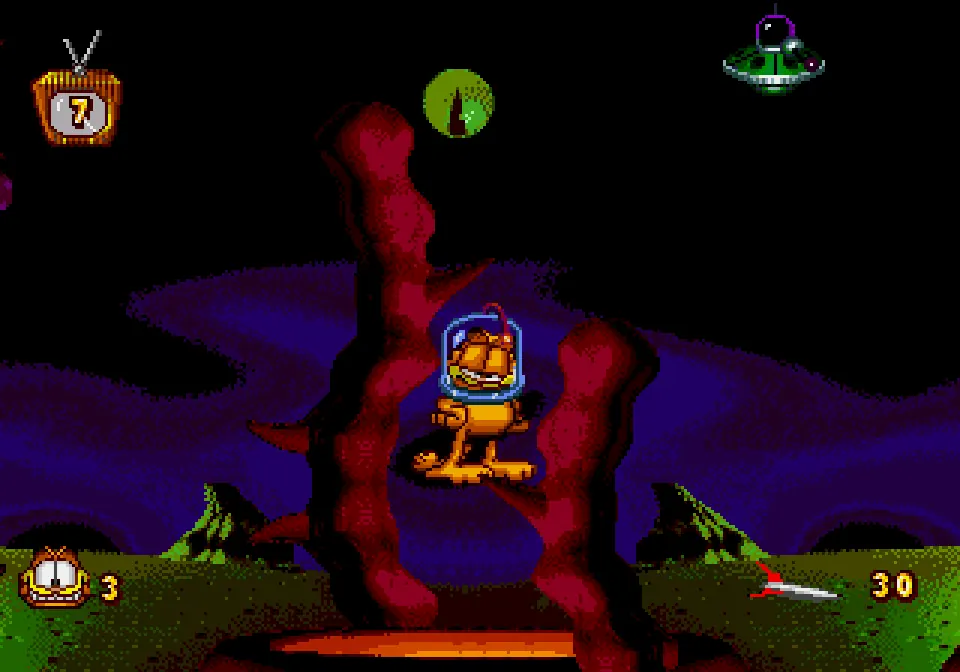
Its long absence also demonstrates the problem with digital-only software. A cartridge game can survive in attics and used-game stores even when its publisher vanishes. A temporary cable download survives only if master media, development backups, or distribution images survive somewhere else. For years, The Lost Levels existed mostly as memories, screenshots, old references, and partial documentation. Its recovery turned a piece of lost media back into a playable artifact.
5. Iron Hammer
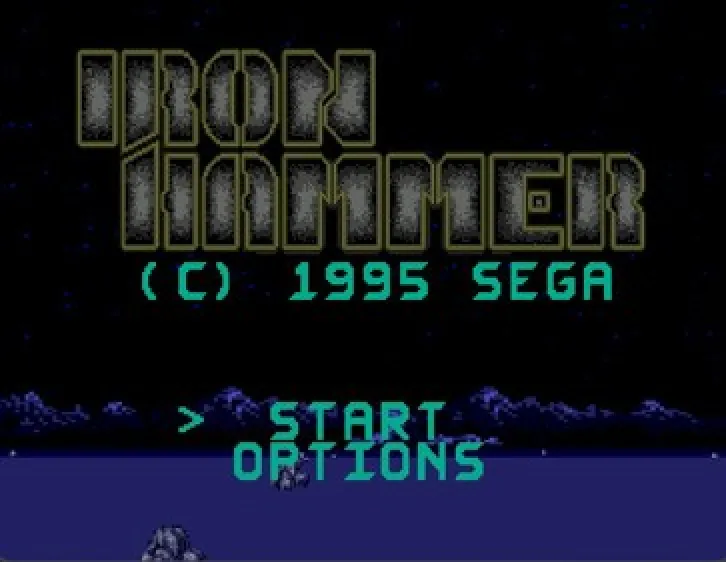
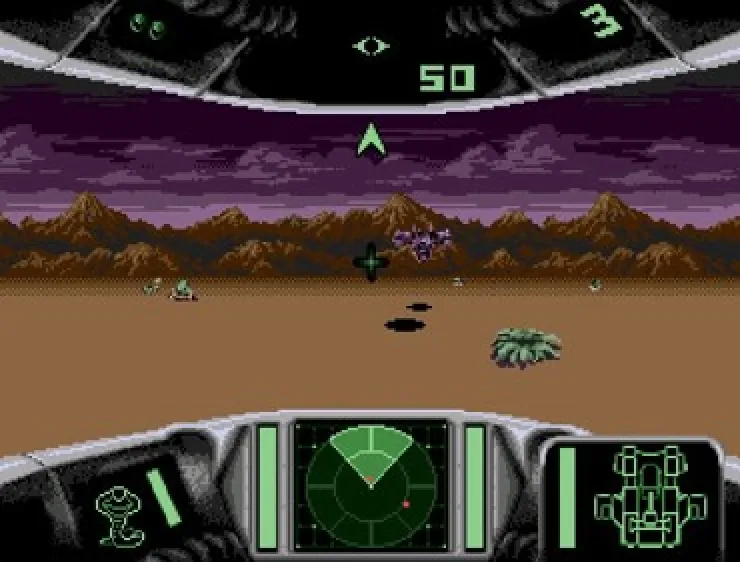
Iron Hammer connects Sega Channel to another ambitious Sega project that never reached consumers: Sega VR. The game began life in the orbit of Sega’s proposed Genesis virtual-reality headset and was later reworked into a conventional controller-driven release after the hardware project collapsed. Instead of becoming a standard cartridge, the resulting game reached players through Sega Channel. That gives it unusual historical weight. It is surviving software from one abandoned Sega future preserved through another experimental Sega future.
The game’s first-person presentation also stands out against the service’s many conventional platformers, sports games, and action titles. It shows that Sega Channel was not simply recycling low-risk catalog filler. Its exclusives could include projects with complicated development histories that no longer fit the company’s original commercial plan. The recovered build is therefore valuable both as a Sega Channel exclusive and as evidence of the software experiments surrounding Sega’s unrealized VR ambitions.
6. Waterworld
Ocean Software produced games based on the expensive and famously troubled 1995 film Waterworld for multiple platforms. The Genesis/Mega Drive version became another case where Sega Channel functioned as the final distribution route for software that did not reach American retail shelves. It is important to distinguish this from the SNES or Virtual Boy releases: what matters here is the specific Genesis build and its Sega Channel distribution.
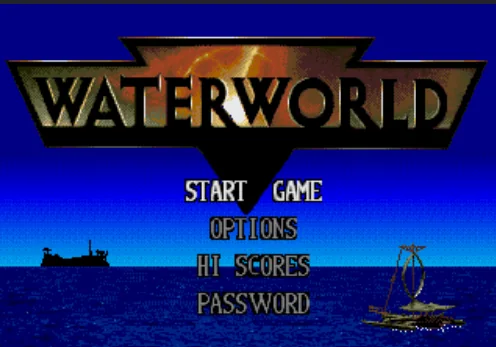
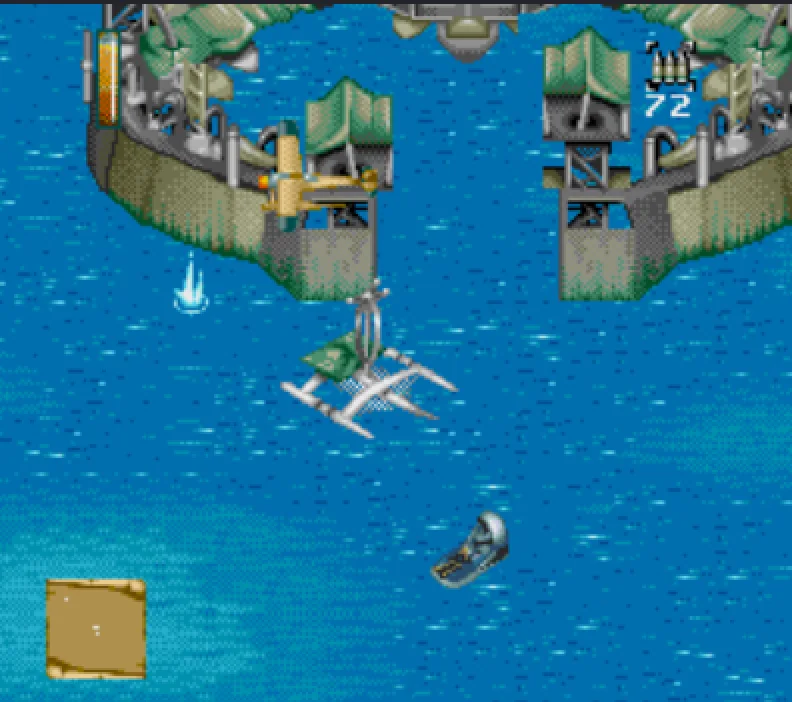
Waterworld and The Flintstones belong together conceptually. Neither proves that Sega was commissioning a huge slate of expensive original games solely for the channel. Instead, they reveal how digital distribution could salvage completed or nearly completed console projects after the economics of boxed retail had turned against them.
7. The Chessmaster
The 2024 recovery of The Chessmaster was a turning point because it showed what could still be hiding on old Sega Channel distribution media. A September 1996 monthly game-image CD surfaced through Sonic Retro community member RisingFromRuins. The files were not presented as ordinary Genesis ROMs, so researcher Nathan Misner, known in the community as ndiddy and associated with InfoChunk, reverse-engineered the Sega Channel encoding process and wrote tools that could unpack the image. Among the recovered software was a Genesis version of Mindscape’s long-running chess franchise that had never received a normal Genesis cartridge release.
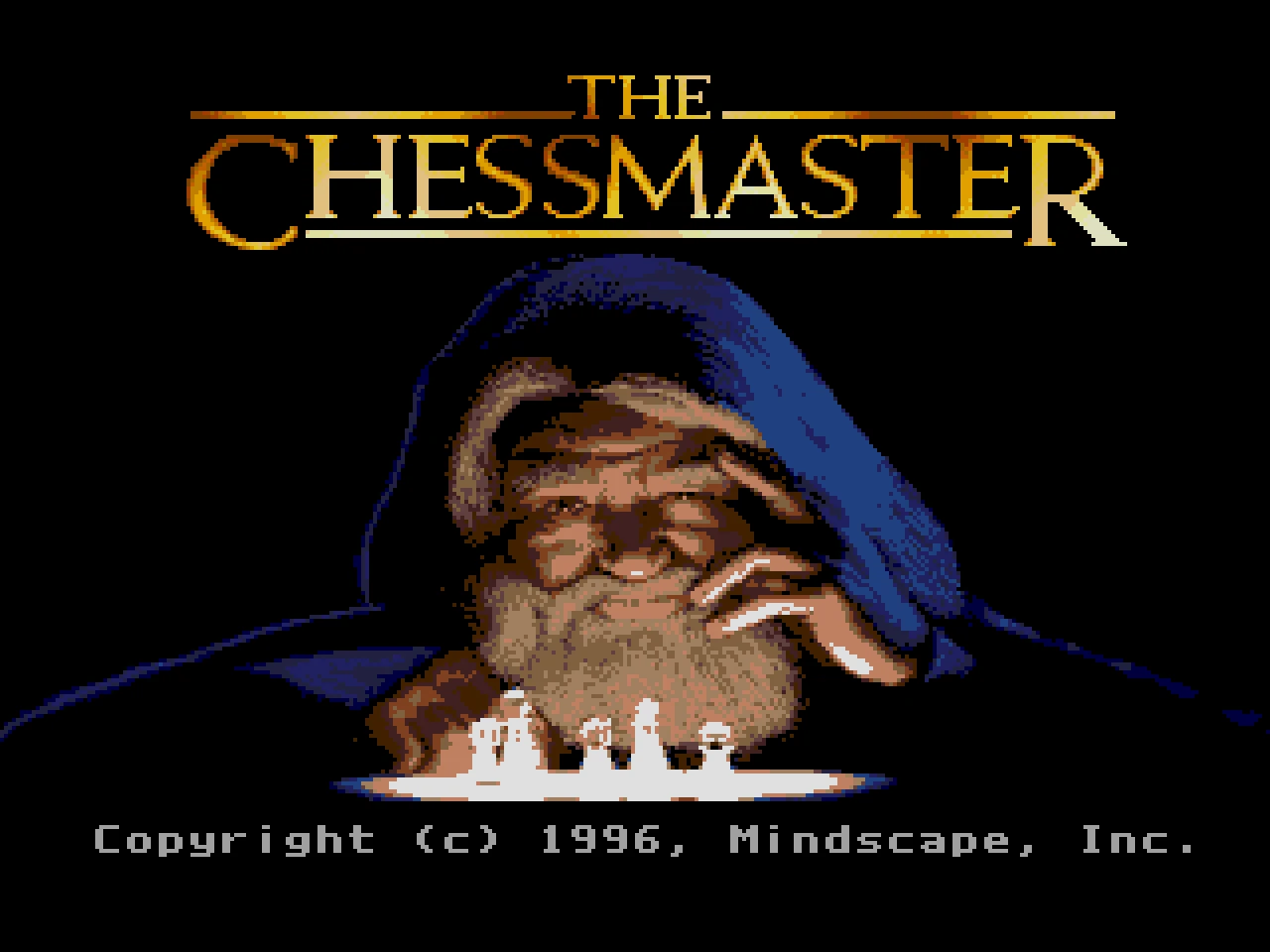
The discovery mattered beyond one chess game. It proved that an intact monthly image could preserve an entire slice of the service: games, menu material, utilities, and data relationships that isolated ROM dumps could not explain. It also helped provide technical knowledge that made later preservation work easier to interpret.
8. Klondike
The same September 1996 image yielded Klondike, a solitaire game programmed by David Crane, the Activision co-founder best known for Pitfall!. On paper, a small card game may sound less exciting than a lost action title. Historically, that is exactly why it is important. Software preservation tends to favor famous franchises and visually impressive prototypes, while small utility-like games disappear quietly. Sega Channel treated Klondike as programming; the recovered disc treated it as data; the preservation community recognized it as a unique commercial artifact.


Part II: North American Sega Channel-Only Releases
This is the category that older histories often fold into the “exclusive” list, and it deserves its own substantial section because it was enormously important to American subscribers. These games were not worldwide Sega Channel exclusives. Most existed as cartridges in Japan, Europe, Australia, or another territory. But during the Genesis era, a North American player could officially encounter them through Sega Channel without importing a foreign cartridge. In practical terms, that meant the service acted as a regional digital import channel years before console storefronts normalized worldwide catalog differences.
There is no reason to minimize these games simply because they fail the strict exclusivity test. In fact, several are far more famous today than the eight genuine exclusives. They demonstrate a different advantage of cable distribution: Sega could offer an already-finished game to American subscribers without committing to a North American cartridge print run, packaging, retailer orders, warehouse inventory, or the risk of unsold stock.
Mega Man: The Wily Wars
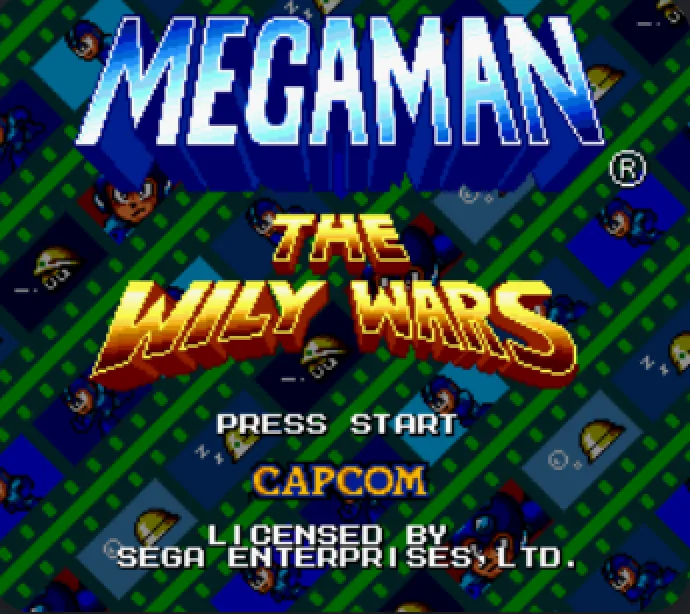
Mega Man: The Wily Wars is probably the single most recognizable North American Sega Channel-only release. Capcom and Minakuchi Engineering rebuilt Mega Man, Mega Man 2, and Mega Man 3 in 16-bit form and added the unlockable Wily Tower scenario. Japan received a cartridge in 1994, and Europe received a PAL release in 1995. The planned North American cartridge did not happen during the original commercial period. Instead, American Genesis owners got the game through Sega Channel.
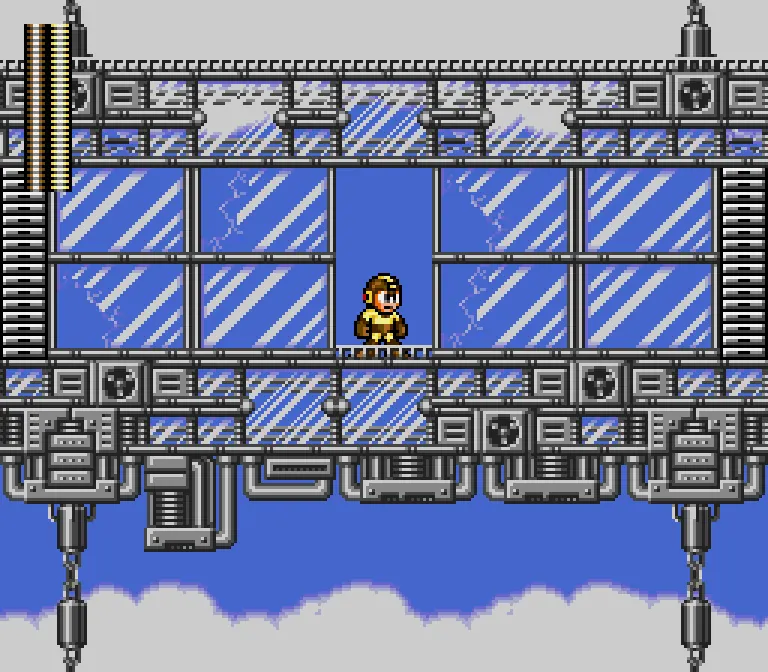
A 2007 Sega-16 interview with former Sega production manager Chris Bergstresser is particularly useful here. Asked about titles such as Pulseman and The Wily Wars that appeared through Sega Channel but not U.S. retail, Bergstresser recalled that there were no conventional retail plans at that point and that the channel team grabbed whatever useful completed or partially completed software it could obtain. That comment captures the opportunistic side of the service: Sega Channel needed programming every month, and regionally stranded games were valuable content.
The Wily Wars story also shows how later reissues can blur historical memory. North American players can now buy or access versions through much more conventional retro channels, and Retro-Bit finally produced an officially licensed physical North American cartridge decades later. None of that changes the original 1990s fact: Sega Channel was the game’s official U.S. Genesis distribution path.
Alien Soldier
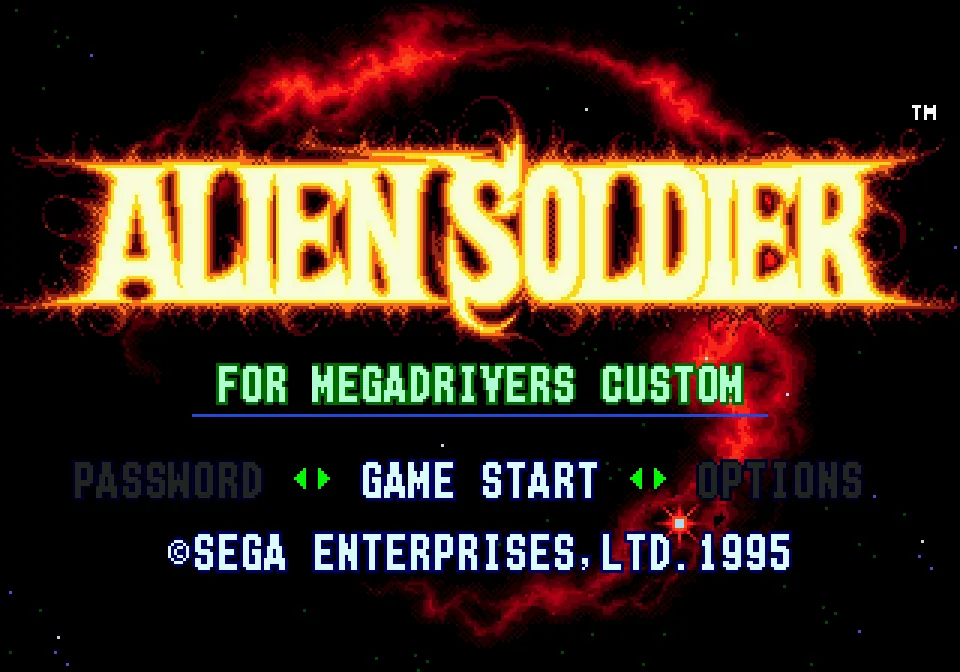
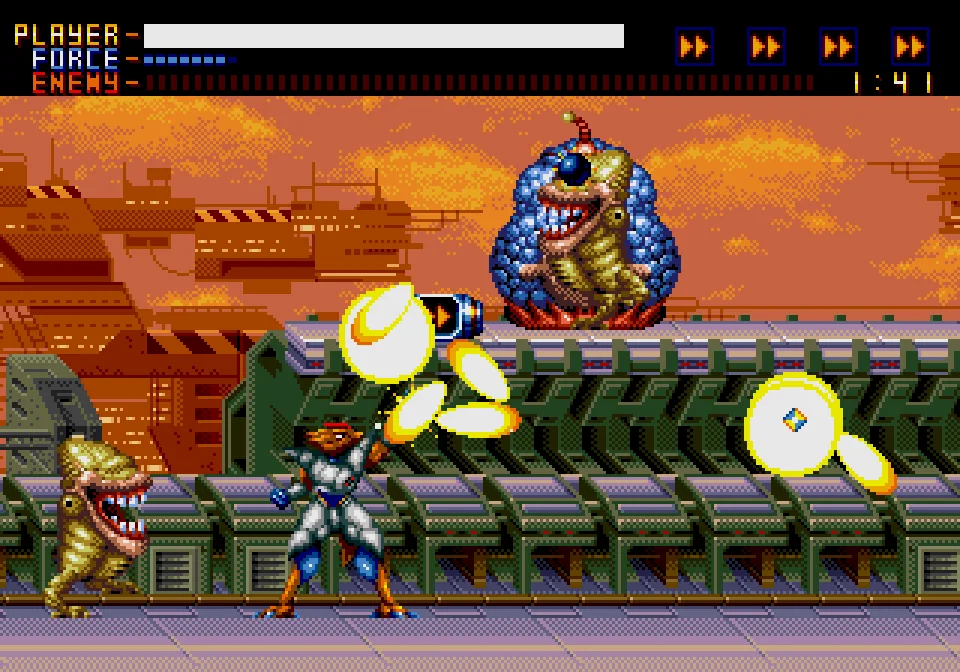
Treasure’s Alien Soldier is another powerful example because its reputation grew enormously after the Genesis era. The game was released physically in Japan and PAL territories but not as a contemporary North American cartridge. American Sega Channel subscribers, however, could play it officially. That makes the service part of the reason some North American players encountered one of the Mega Drive’s most technically aggressive action games at all.
Alien Soldier is also evidence that Sega Channel could serve enthusiasts even when retail logic said otherwise. A late-generation, extremely difficult Treasure game arriving after attention had begun shifting toward 32-bit hardware was not necessarily an obvious mass-market cartridge proposition in the United States. As monthly subscription content, it did not have to be. The channel could make a niche title useful simply by adding it to the schedule.
Pulseman

Pulseman has become far more historically famous because it was developed by Game Freak before Pokémon transformed the studio. Directed by Ken Sugimori with contributions from several names later associated with Pokémon, the game debuted on Mega Drive in Japan. North American players did not receive a standard cartridge during the original era; Sega Channel became its official route into the region.
That role makes Pulseman a particularly good example of how Sega Channel altered the geography of the Genesis library. Without the service, an American player interested in the game would have needed import knowledge, compatible hardware, and access to a specialist seller. Through Sega Channel, the title could sit beside mainstream American releases in the same menu. The cable system temporarily erased a regional retail boundary.
Golden Axe III
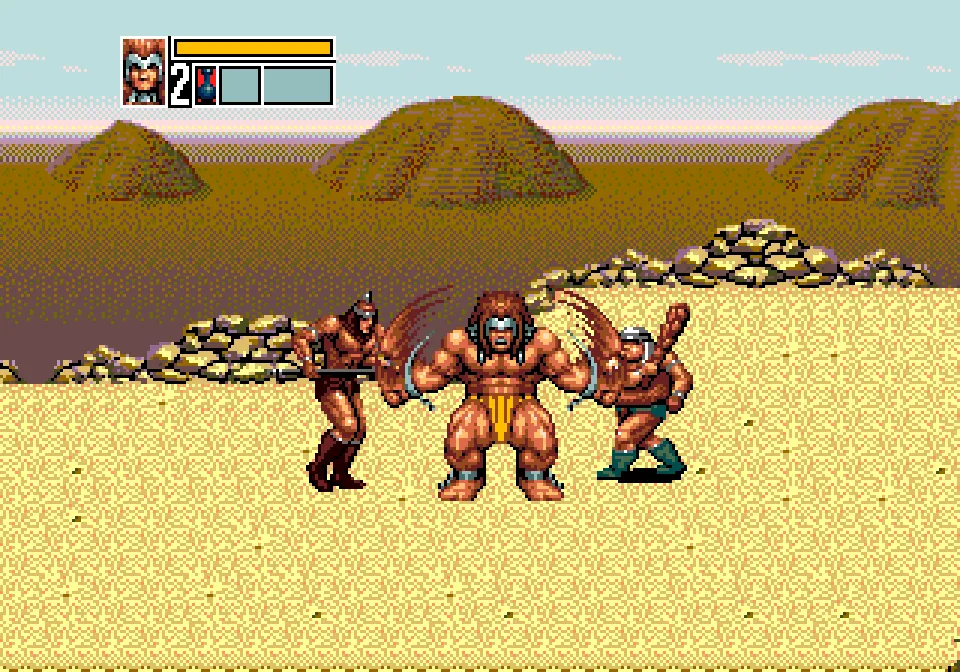
Golden Axe III is sometimes omitted from shorter Sega Channel exclusives lists because it is obviously not a worldwide exclusive: Sega released it as a Japanese Mega Drive cartridge in 1993. But its North American history belongs here. Later retrospectives, including GameSpot’s Virtual Console review, note that the original North American release was available only through Sega Channel. This is exactly the distinction our taxonomy is designed to preserve.
For American Genesis owners, Sega Channel therefore offered an official way to play a numbered entry in a major Sega series that local stores had skipped. That alone makes the service more than a rental substitute. It was reshaping the effective regional catalog.
Power Drive
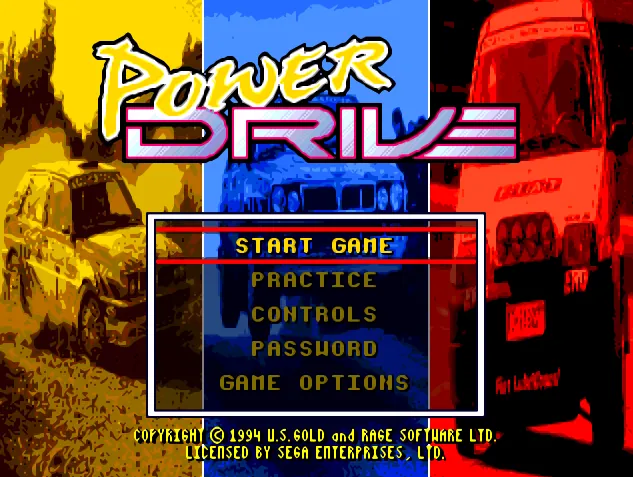
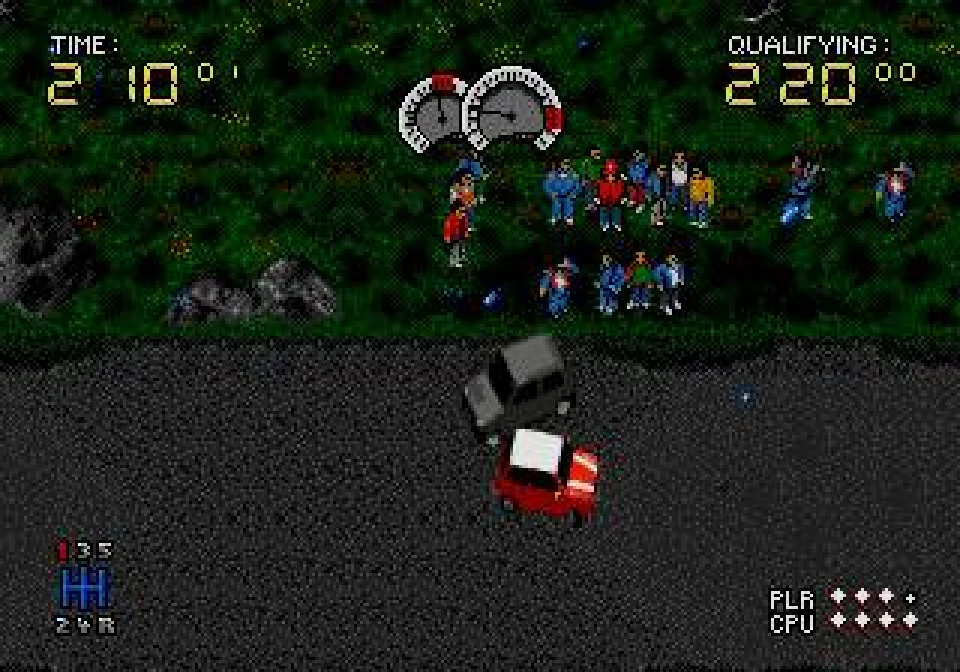
Power Drive belongs in the same regional category. The rally game had a retail life in PAL territories, while VGHF’s Sega Channel archive includes a U.S.-header build broadcast through the service. That preserved header is small technically, but historically it is meaningful: it records Sega Channel adapting an overseas release into a form intended for American subscribers without manufacturing a conventional North American cartridge.
Power Drive also demonstrates why recovered headers and minor data differences matter. A collector comparing gameplay videos might conclude that the Sega Channel version was simply the European game. The internal distribution data reveals the service-specific preparation that occurred before broadcast.
Battle Frenzy / Bloodshot
Battle Frenzy is another complicated regional case. The first-person game was sold in Europe and Australia under the name Bloodshot, while North American Sega Channel material used the Battle Frenzy identity. VGHF’s recovered collection includes a U.S.-header version. This is the kind of title that makes simplistic lists collapse: is it an exclusive, a renamed import, a service variant, or all three depending on the question being asked?
For this article, the answer is straightforward. It is not a worldwide Sega Channel-exclusive game because a cartridge version existed elsewhere. It is a legitimate North American Sega Channel-only release from the original period, and the service-specific U.S. data makes its regional history worth documenting separately.
Why These Regional Releases Matter
The broader significance of these games is that Sega Channel was quietly doing something digital storefronts would later make routine: allowing a platform holder to distribute software in one territory without committing to all the costs and risks of physical retail. The Wily Wars, Alien Soldier, Pulseman, Golden Axe III, Power Drive, and Battle Frenzy were not one coherent publishing initiative, but together they show how useful a digital subscription could be for regional catalog gaps.
They also explain why so many older fans sincerely remember these games as “Sega Channel exclusives.” From a North American living room in the 1990s, the distinction between “globally exclusive” and “only officially available to me through Sega Channel” was academic. The modern historian needs the distinction; the contemporary player often did not.
Part III: Limited Editions, Split ROMs, Test Drives, and Service Variants
The recovered VGHF material makes clear that Sega Channel did not merely rebroadcast untouched retail cartridges. The team altered software to fit the channel’s technical limits and programming goals. Some versions were shortened previews, some were special-event builds, some removed content, some split large games into separate halves, and some differed only in headers or small data regions. Collectively, these variants are among the strongest evidence that Sega Channel was functioning as its own software platform.
The adapter’s memory ceiling created the most obvious engineering problem. If a game was too large, Sega could not simply tell the subscriber to install a bigger hard drive. One solution was to cut content. VGHF recovered Super Street Fighter II: Limited Edition, a reduced version with fewer characters and stages. Another solution was to split software into multiple broadcasts. Recovered material includes Mortal Kombat 3 Part A and Part B, Sonic 3D Blast Part A and Part B, Virtua Fighter 2 Part A and Part B, and The Lost World: Jurassic Park in separate parts.
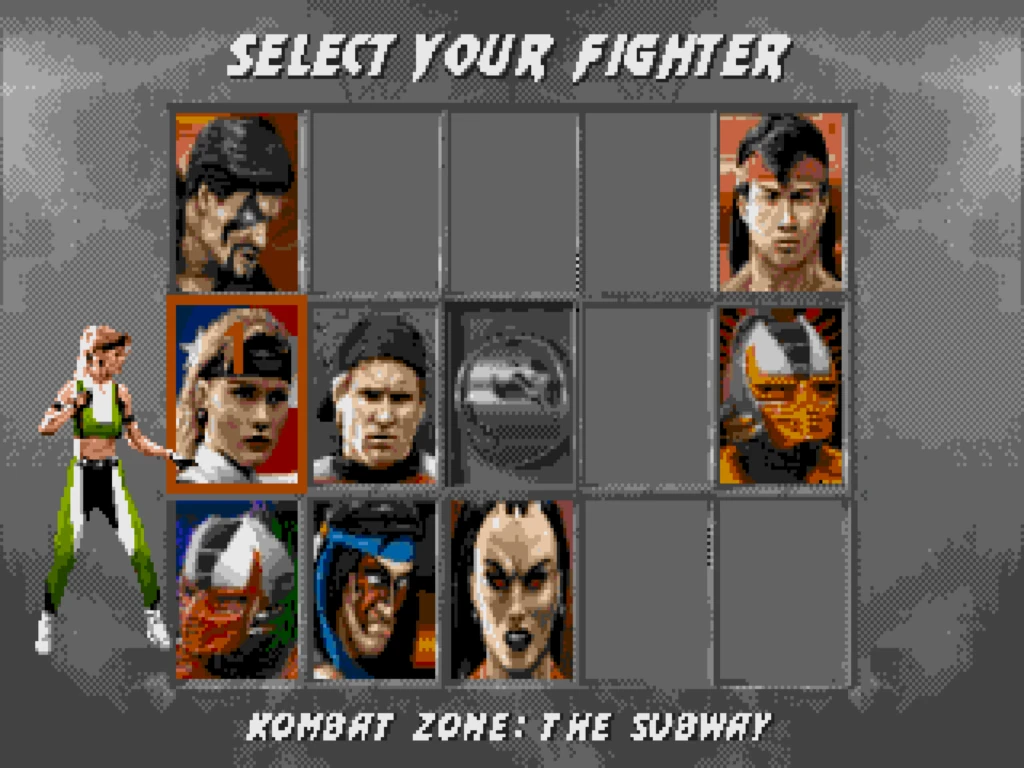
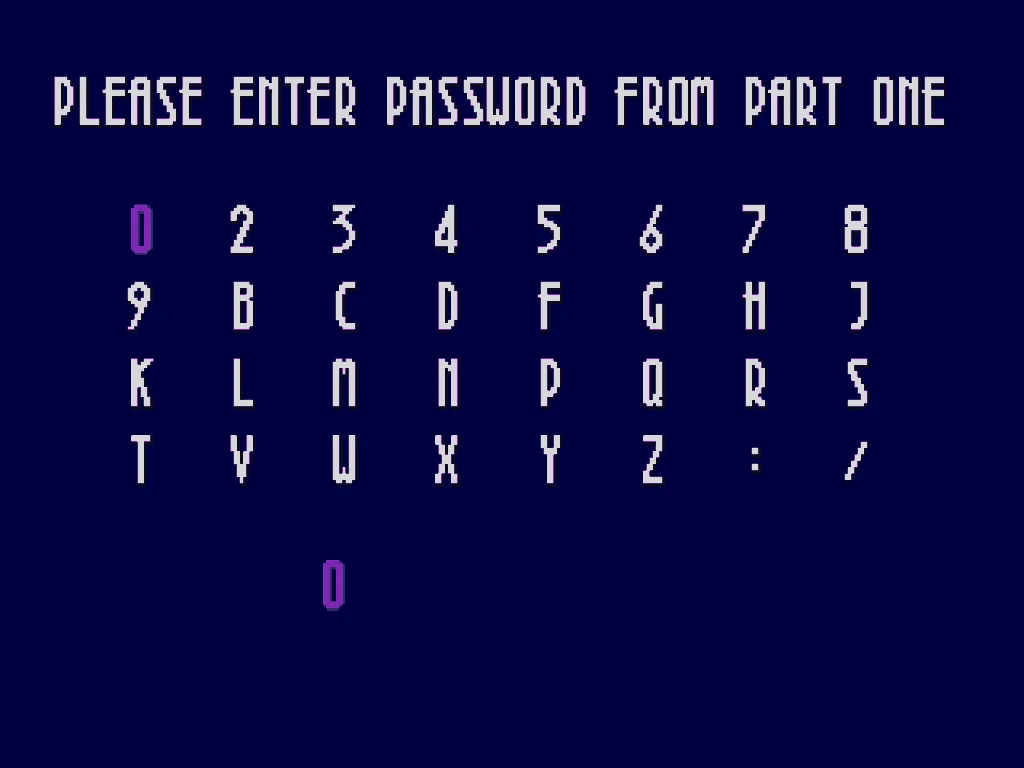
Other variants were promotional rather than technical. The archive includes Earthworm Jim VideoHints, The Great Earthworm Jim Race, sports-game special editions, and a series of Test Drives. These are ancestors of several modern digital practices at once: downloadable demos, timed trials, event software, patched promotional builds, and subscription-only editions. They also show why preservationists cannot treat “same game title” as “same software.” A Sega Channel version may have content or structural differences that never existed in the retail cartridge.
VGHF also categorized a number of recovered titles as having smaller data differences or header differences only. Pulseman, Maui Mallard in Cold Shadow, Primal Rage, Richard Scarry’s Busytown, and Shining Force II appear in the data-difference group, while titles including Battle Frenzy, Power Drive, QuackShot, Super Hang-On, Wacky Worlds Creativity Studio, and X-Men 2: Clone Wars appear in the header-difference group. These may sound like archival trivia, but they reveal the production fingerprints left by the channel.
Game Guide, Newslink, VideoHints, and Digital Spotlight
A raw ROM collection cannot recreate the whole Sega Channel experience because a large portion of the service lived around the games. Menus changed, instructions were delivered electronically, tips and promotional material appeared alongside the library, and Sega experimented with community content. VGHF’s recovery of 97 pieces of menu and system software is therefore as historically important as the games themselves.
Game Guide provided hints and instructions. Newslink functioned as a gaming-news area. VideoHints could turn help content into a service-specific software item. These features were especially important because a downloaded game did not arrive with a paper manual. The channel had to solve information problems that physical packaging had previously solved automatically.
Sega Channel also hosted Digital Spotlight, a feature built around artwork sent in by subscribers. Time Extension’s later reporting, with help from Shorrock and Patrice Sartor, preserved examples of children’s drawings and the staff’s memories of receiving large amounts of mail. It is tempting to describe this as a primitive social network, but that goes too far; subscribers were not directly posting to a live public feed. Still, the cultural impulse is familiar. Sega was taking user-created material, digitizing it, and placing it inside the console service so the audience could see itself reflected back through the television.
Part IV: Prototypes Sega Received Are Not Automatically Sega Channel Releases
The VGHF archive also contains prototype builds Sega Channel received during the content-acquisition process. The list includes Al Unser Jr.’s Road to the Top, Dan Marino Football, Light Crusader, Nick Faldo’s Championship Golf, Popeye in High Seas High-Jinks, Shadows of the Wind, WildSnake, Wrath of the Demon, and Yogi Bear’s Cartoon Capers. Their presence in Sega Channel’s files does not prove that ordinary subscribers ever downloaded them.
This is one of the most important corrections preservation research can make. A ROM existing in a corporate archive proves possession, not distribution. Sega Channel was constantly looking for material. Chris Bergstresser’s recollection that the team would take completed and partially completed titles helps explain why unreleased builds could enter the pipeline. Internal schedules, monthly images, transmission discs, and other documentation are needed before we can move a title from “received” to “broadcast.”
Ozone Kid: The Famous “Exclusive” That Apparently Never Shipped
For years, Ozone Kid, also known during development as The Environmental Detective, occupied a special place in Sega Channel lore. The June 1995 issue of Electronic Gaming Monthly identified Ozone Kid as the first Sega Channel exclusive, and later lists repeated the idea. In the absence of accessible channel data, it was easy for an announcement to become indistinguishable from a release.
VGHF’s recovered planning information finally provides a stronger answer: the project was pulled from Sega Channel’s programming plans in July 1994 and apparently never distributed to subscribers. Internal tracking suggested the code still had serious issues when the project was shelved. Ozone Kid therefore remains historically important, but as a cancelled Sega Channel project rather than one of the service’s released exclusives. It is the perfect warning against building a definitive release list from magazine previews alone.
Web Blaster: A Genesis Web Browser Hiding in the Archive
One of the strangest items recovered in the 2025 project is an experimental Genesis browser concept often referred to as Web Blaster. It did not turn the Genesis into a normal mid-1990s personal computer and it never became a commercial subscriber feature. Instead, the experiment explored delivering highly constrained, compressed, static web-like information through Sega Channel’s cable infrastructure.
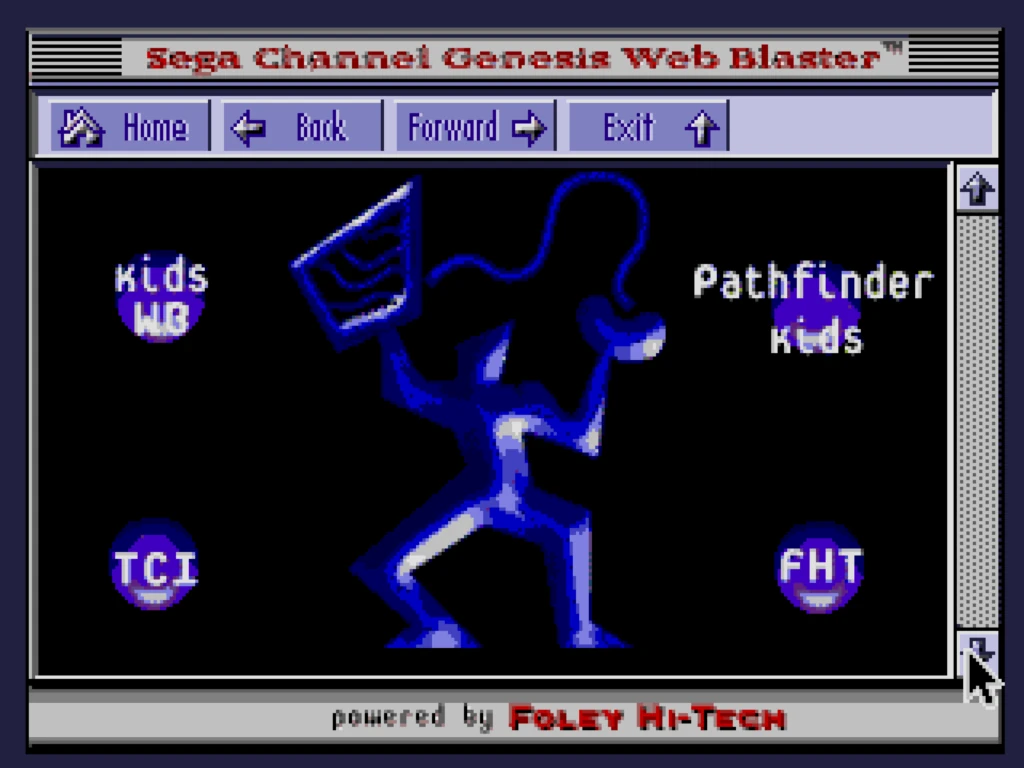
The browser experiment makes more sense when placed in the media climate of the time. Cable television, set-top boxes, CD-ROM encyclopedias, proprietary online services, and the early public web were all competing visions of interactive home media. Sega Channel’s team had already built a method for sending executable code and menu data to a game console. Asking whether the same system could deliver broader information was a natural next step.
Express Games: The Successor Sega Channel Almost Had
Shorrock’s preserved papers also document Express Games, an unannounced successor concept that would have pushed the cable-delivery model toward computers. VGHF’s library includes presentations dated in 1997 and research material extending into the period when the original Genesis service was nearing its end. This is significant because it challenges the idea that Sega Channel staff simply ran an aging 16-bit service until management switched off the signal. People inside the project were actively thinking about what came next.
Had Express Games moved forward at scale, Sega’s experience with rotating subscription libraries, digital trials, service-specific builds, and cable distribution could have transferred into the emerging PC internet era. It did not. Cable modems, conventional internet access, new console hardware, and Sega’s own changing corporate priorities were moving too quickly. Still, the plans show that the people running Sega Channel understood the core idea had value beyond the Genesis.
Why Sega Channel Was So Hard to Scale
Sega Channel’s biggest weakness was built into its greatest innovation. The service used cable infrastructure because cable already reached millions of households, but that also meant Sega did not control the last mile. A potential subscriber could own a Genesis, want the service, and still be unable to get it because the local operator had not signed on or its equipment was unsuitable. Every expansion required business negotiation and technical integration with cable systems that varied widely in age and design.
Time Extension’s oral history describes systems that had accumulated old hardware through years of acquisitions and local upgrades. A concept that looked simple in a national marketing presentation could become difficult when technicians encountered the equipment actually sitting in a regional headend. Sega Channel also faced regulatory and contractual complexity that ordinary cartridge publishing did not. It was simultaneously a video-game service and a cable product.
The timing became increasingly awkward. By the time Sega Channel achieved its full national launch in December 1994, the Genesis was already approaching the stage when Sega wanted consumers excited about 32-bit hardware. The Saturn reached the United States in 1995. Supporting a technically unusual cable service built around the older console required attention and money during one of the most chaotic hardware transitions in Sega’s history.
How Big Did Sega Channel Become?
Early projections were enormous. The 1993 Los Angeles Times report said the partners expected one million subscribers by the end of 1994. That did not happen. Later histories commonly cite a peak above 250,000 subscribers. By the closing period, a contemporary GameSpot report described roughly 150,000 subscribers despite a much larger theoretical cable footprint.
Those numbers can be read two ways. Compared with the initial ambition and the installed Genesis base, Sega Channel fell far short. Compared with the number of people who had to obtain a specialized cable service for one aging game console in the mid-1990s, hundreds of thousands of subscribers is still significant. The service was not a mass-market replacement for cartridges, but it was far more than a laboratory demo.
When Did Sega Channel Shut Down?
The shutdown date deserves careful wording because contemporary and later sources are not perfectly aligned. Sega announced that the service would end on June 30, 1998, and contemporary GameSpot reporting used that date. Later histories commonly state that some service remained available for roughly another month and give July 31, 1998 as the final end. The safest historical description is therefore that Sega planned a June 30 shutdown, with the channel apparently lingering into July before disappearing completely.
Once the broadcast stopped, a Sega Channel adapter could no longer perform the trick that had made it magical. The games stored in volatile memory vanished with power, and the hardware did not contain a permanent subscriber library. For ordinary users, years of digital programming effectively evaporated at once.
Why Sega Channel Became a Lost-Media Problem
Physical cartridges are remarkably good preservation objects by accident. They can sit forgotten in closets for decades, move through flea markets, survive corporate bankruptcy, and eventually reach collectors who dump their contents. Sega Channel’s software had no equivalent consumer object. A monthly game existed temporarily in adapter RAM. The permanent versions lived on corporate development drives, production discs, distribution images, backup tapes, and other media most customers never saw.
That made the service especially vulnerable to institutional forgetting. Employees changed jobs. Offices closed. Backup media became obsolete. Some material survived only because individual staff members or collectors decided not to throw it away. When preservationists later tried to reconstruct the channel, they were effectively doing digital archaeology: matching file formats, magazine references, internal schedules, memories, discs, and tape backups.
The 2024 Breakthrough: A September 1996 Monthly Image Surfaces
In November 2024, Sonic Retro community member RisingFromRuins surfaced a surviving Sega Channel game-image CD for September 1996. The discovery was not immediately useful in the way finding a conventional ROM cartridge image would have been, because the disc contained Sega Channel’s own encoded distribution format. Nathan Misner/ndiddy reverse-engineered the tools and structure needed to extract the contents. InfoChunk’s technical write-up remains one of the most valuable explanations of that work.
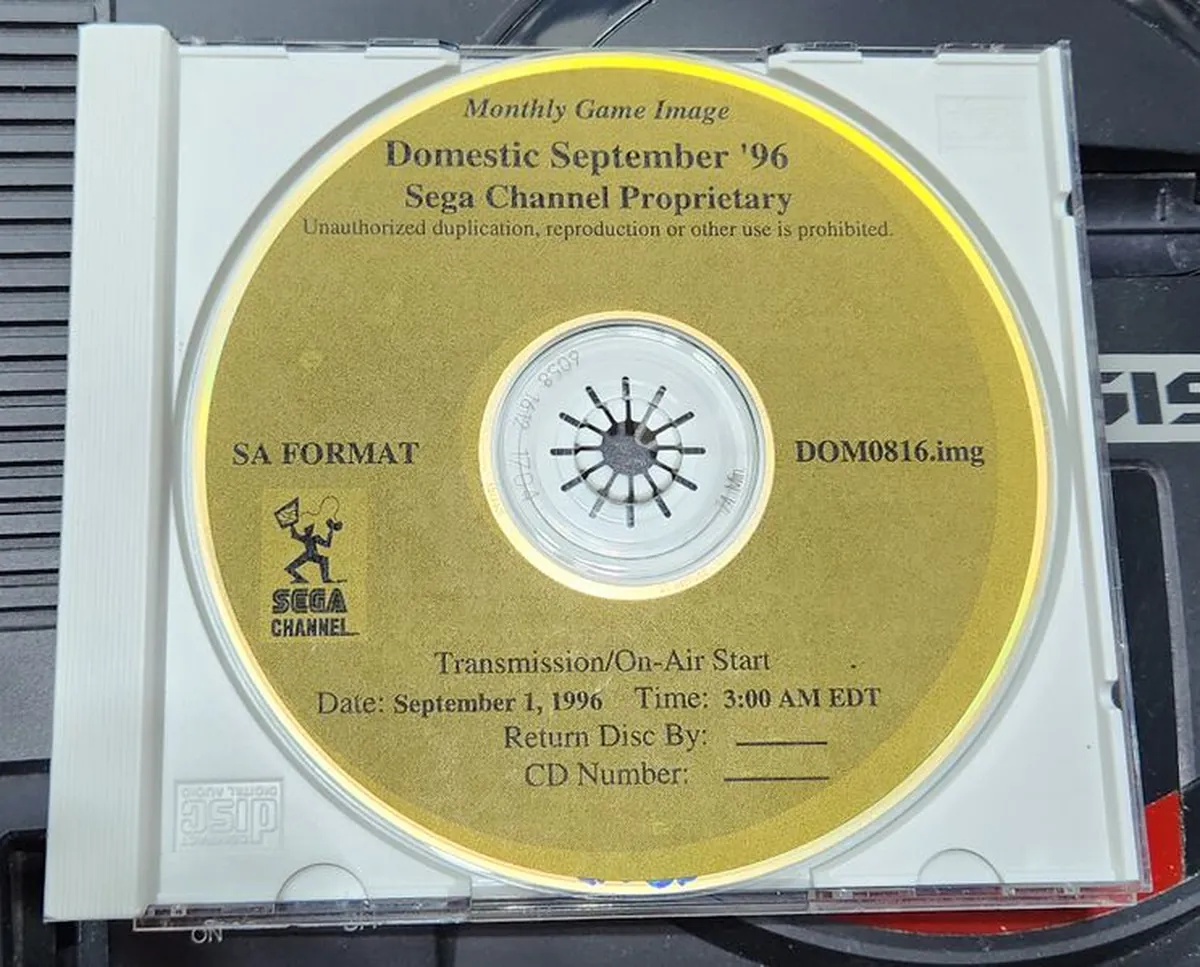

The extraction recovered The Chessmaster and Klondike and also improved understanding of the menus and file formats. Time Extension reported the two games when the discovery became public. More importantly, the technical work demonstrated how much context can survive inside a complete service image compared with an isolated ROM.
The 2025 VGHF Recovery: The Library Reappears
The next leap was vastly larger. VGHF’s project began after staff met Michael Shorrock in 2024 and realized that his personal Sega Channel material could become an archival collection. At roughly the same time, a community member using the name Ray / Sega Channel Guy had obtained backup tapes from former staff. That “Ray” should not be confused with Sega Channel production manager Ray MacFadden. The two collections complemented each other: Shorrock’s paperwork, correspondence, presentations, and media could explain the organization and strategy, while the tape backups contained a large amount of the service’s actual digital data.
Specialists were needed to read old media and decode old formats. VGHF credits tape expert Chuck Guzis with digitizing the backup tapes and Gaming Alexandria with helping provide access to recovered ROM data. The result was not simply a pile of games but one of the most complete reconstructions yet attempted of a dead console-distribution service.
VGHF ultimately reported 144 newly recovered Sega Channel ROMs and variants, plus the 97 pieces of menu/system software mentioned earlier. The archive includes the six unique exclusives, limited editions, Test Drives, split games, prototypes, data variants, internal paperwork, audience research, video recordings, and the Web Blaster experiment. The preservation work also made it possible to say something historians rarely get to say with confidence about a lost digital service: VGHF believes the recovery accounts for essentially all outstanding unique Sega Channel-exclusive Genesis games.
Oh, before you go, check out 10 Hidden Gems on the Sega Genesis You Need to Play Before You Die!
Can You Still Play Sega Channel Games?
You cannot plug an original adapter into a modern cable outlet and reconnect to Sega’s 1990s service. The broadcast infrastructure and commercial operation are gone. The adapter is now a collectible, a museum object, and a research device. But the software picture is dramatically better than it was only a few years ago. Preserved ROMs can be studied and, where legally obtained and appropriately used, run through emulation or compatible hardware. Community projects have also attempted to reconstruct historic Sega Channel menus so the games can be experienced with at least some of their original context.
Several former regional oddities are now commercially accessible through later reissues. Alien Soldier, Pulseman, Golden Axe III, and Mega Man: The Wily Wars have all escaped the strange availability that defined them in the 1990s. That does not make Sega Channel preservation redundant. The service-specific versions, menus, limited builds, lost exclusives, and production context remain unique historical material.
The Definitive Sega Channel Exclusive Games List
If the question is strictly “What games were exclusive to Sega Channel?”, the current preservation record supports these eight core Genesis releases:
- The Berenstain Bears’ A School Day
- BreakThru
- The Flintstones
- Garfield: Caught in the Act – The Lost Levels
- Iron Hammer
- Waterworld
- The Chessmaster
- Klondike
That list is deliberately shorter than many older fan lists. A historically useful list should not inflate the number by mixing in games that were sold on cartridge elsewhere, prototypes that were never transmitted, or limited versions of ordinary commercial releases.
North American Sega Channel-Only Games
A second list should be kept beside the first because these games were major benefits for American subscribers even though they were not worldwide exclusives:
- Mega Man: The Wily Wars — cartridge releases in Japan and Europe; original North American Genesis availability through Sega Channel.
- Alien Soldier — physical release in Japan and PAL territories; available in North America through Sega Channel.
- Pulseman — Japanese Mega Drive cartridge; distributed to North American players through Sega Channel.
- Golden Axe III — Japanese cartridge release; original North American availability through Sega Channel.
- Power Drive — PAL retail release; a U.S.-header Sega Channel build survives in the VGHF archive.
- Battle Frenzy / Bloodshot — European/Australian cartridge release under the Bloodshot name; North American Sega Channel distribution used the Battle Frenzy identity.
These titles are exactly why the phrase “Sega Channel exclusive games” needs explanation rather than a single undifferentiated list. To an American subscriber, they felt exclusive. Globally, they were not. Both statements can be true at once.
What the surviving evidence settles
The recovered service files separate several claims that once traveled together. A game could be unique to Sega Channel, available only through the service in North America despite a cartridge elsewhere, or merely present in Sega’s planning records. A magazine preview is not proof that subscribers received the finished game. The case of Ozone Kid is especially sharp: archival plans indicate it was removed in July 1994 before distribution, despite period coverage calling it an upcoming exclusive.
The original adapter cannot reconnect to the cable service; that broadcast is gone. Its hardware can still be studied, and recovered ROMs and menus can be preserved. The crucial evidence came from the discs, tapes, and papers that employees and collectors kept after the monthly signal stopped.
What disappeared when the signal ended
When Sega Channel shut down, a subscriber could not pull a purchased cartridge from a drawer and replay the favorites. Games, menus, art, news, and service-specific builds were no longer arriving over the cable line. The adapter’s memory lost its downloaded game when power went away. That made the service feel futuristic while it ran and almost invisible as an archive when it stopped.
Modern subscription libraries make its monthly rotation, demos, parental controls, and digital-only releases seem familiar. Sega Channel was built with a different network and different business partners; it was no direct ancestor of any one current service. Its lasting lesson is more concrete. Distribution can be effortless for a player and terribly fragile for a historian. This library survived because somebody kept a disc, a tape, a binder, and enough curiosity to read them decades later.
Sources and Further Reading
- Video Game History Foundation — The Secrets of Sega Channel: VGHF recovers over 100 Sega Channel ROMs
- VGHF Library — Michael Shorrock, Sega Channel collection
- VGHF Digital Archive — Sega Channel materials
- Video Game History Hour — Episode 153: Sega Channel
- InfoChunk — Reverse engineering the Sega Channel game-image format
- Sega-16 — 1994 Michael Shorrock and Ray MacFadden interview
- Sega-16 — Interview with Sega product manager Chris Bergstresser
- Time Extension — The Full Story Behind Sega Channel
- Time Extension — The Chessmaster and Klondike recovery
- Time Extension — Digital Spotlight subscriber art
- Los Angeles Times — 1993 Sega/Time Warner/TCI announcement
- UPI — Stan Thomas named Sega Channel president
- Wired — Sega’s 1993 connected-media ambitions
- GameSpot — Sega Channel Goes Down
- Hidden Palace — Garfield: Caught in the Act – The Lost Levels
- RetroAchievements — Mega Man: The Wily Wars
- RetroAchievements — Waterworld (Genesis/Mega Drive)
- LaunchBox Games Database — BreakThru
- GameSpot — Golden Axe III retrospective/re-release review