 Retro Replay Retro Gaming History, Reviews & Emulation
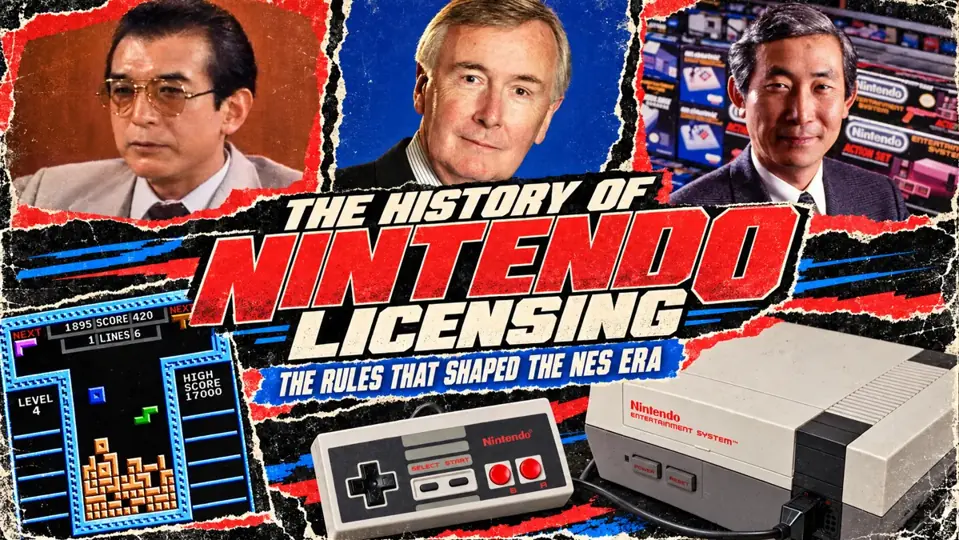
A gold seal on the box. A lock inside the console. Five games a year, and a contract that could keep those games away from the competition. Nintendo’s happiest era had a remarkably ugly business side.
In 1989, two very different versions of Tetris became part of Nintendo Entertainment System history. One came from Nintendo. The other came from Tengen, in a black cartridge that looked slightly wrong beside the familiar gray slabs in your collection.
Tengen’s game had a wonderful idea: let two people share the same pit. Blocks dropped into a wider playfield while both players tried to build something tidy out of each other’s mistakes. It turned a lonely puzzle into a small domestic emergency. You could cooperate, compete, or watch your carefully arranged stack disappear beneath a friend’s terrible decision.
Then that version was pulled from sale.
The courtroom fight behind its removal concerned who actually owned the console rights to Tetris. But the black cartridge belonged to a much larger rebellion. Tengen was trying to sell NES games without letting Nintendo manufacture them, ration them, or decide when they could reach another machine. A game could run perfectly well on the hardware and still be unwelcome in Nintendo’s kingdom.
That kingdom gave us some of the finest games ever made. It also gave Nintendo an extraordinary amount of power over everybody else making them. Publishers needed access to its customers. Retailers needed its merchandise. Children trusted its name. Nintendo could lean on all three.
There is plenty to admire about the NES. This is the history of the bully standing behind it.
1983–1986: The rescue came with a padlock
The American video game business had already demonstrated how quickly a boom could turn into a clearance bin. The crash of the early 1980s left retailers with unwanted machines, mountains of cartridges, and very little appetite for another company promising that this time would be different.
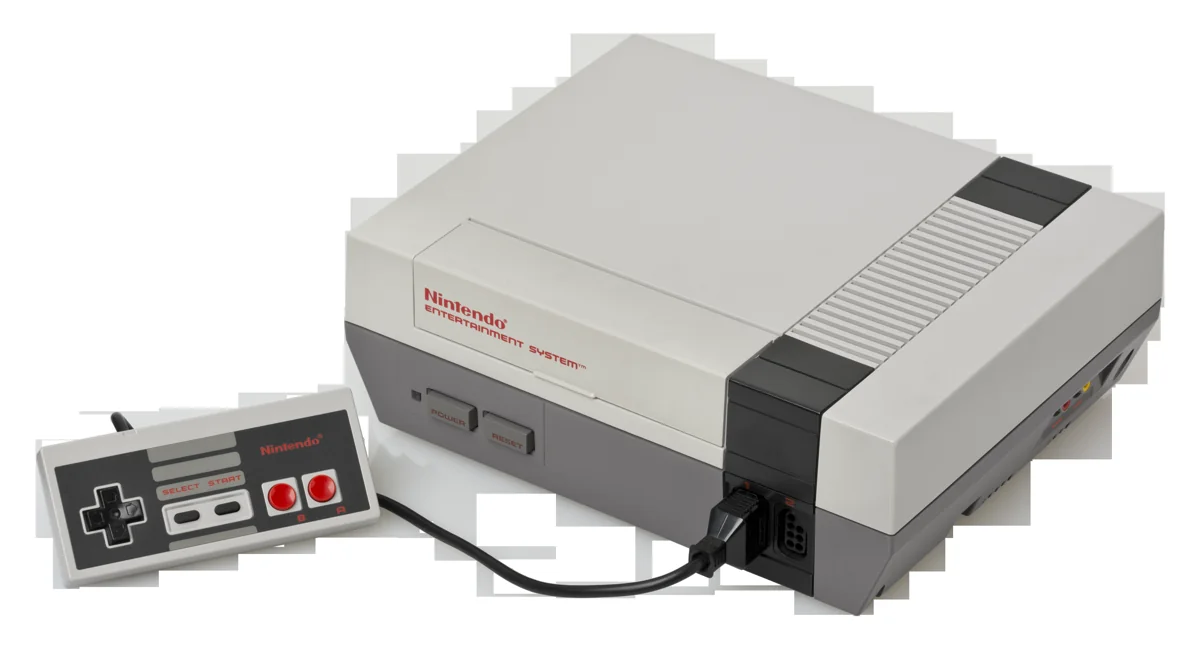
Nintendo did have something different. Its Famicom, released in Japan in 1983, was a capable little machine with games people wanted to play. When its American counterpart arrived in 1985, the Nintendo Entertainment System dressed itself like a piece of home electronics. The front-loading gray box looked more at home beside a VCR than beside the woodgrain consoles retailers had learned to distrust.
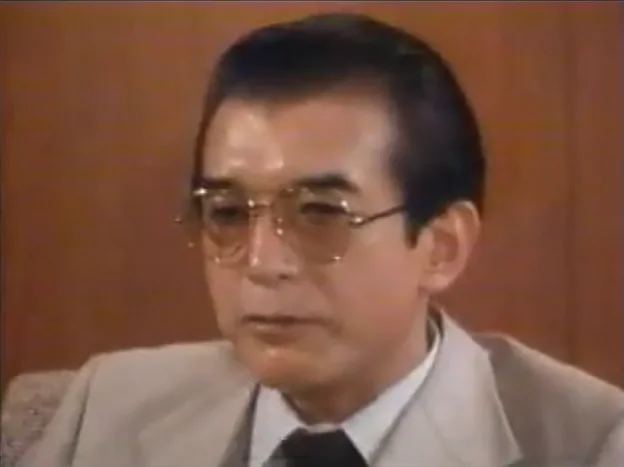
Behind it stood Hiroshi Yamauchi, Nintendo’s president and the man who had pushed the company into electronic entertainment. His Nintendo was willing to take enormous bets on games. It was much less willing to let other businesses determine how those bets paid off.
The idea that uncontrolled publishing could wreck a console market had become a powerful argument for control. Nintendo’s own retrospective interviews about the Famicom describe trouble with faulty third-party cartridges and the development of a licensing system meant to give buyers a manufacturer’s guarantee.
A working cartridge was a reasonable thing to promise. Nintendo built a much bigger arrangement around that promise.
The NES contained a security system called 10NES, reflected in Nintendo’s authentication-system patent. A chip inside the machine communicated with a matching chip inside an authorized cartridge. Without the expected response, the console refused to run the game. The player saw a machine that would not cooperate. The publisher saw a door that Nintendo could keep shut.
That little exchange happened before the game had a chance to prove anything. It did not judge the jumping, the music, the difficulty, or whether somebody had turned a beloved movie into an awful afternoon. It checked whether the cartridge possessed the right electronic credentials.
Nintendo had moved permission out of the sales office and into the hardware.
The people holding the keys
Minoru Arakawa, Nintendo of America’s president, built the American operation that put the NES into living rooms and game aisles. His job required rebuilding retailer confidence after the crash. Once Nintendo became the product those stores could not afford to miss, the balance of that relationship changed.
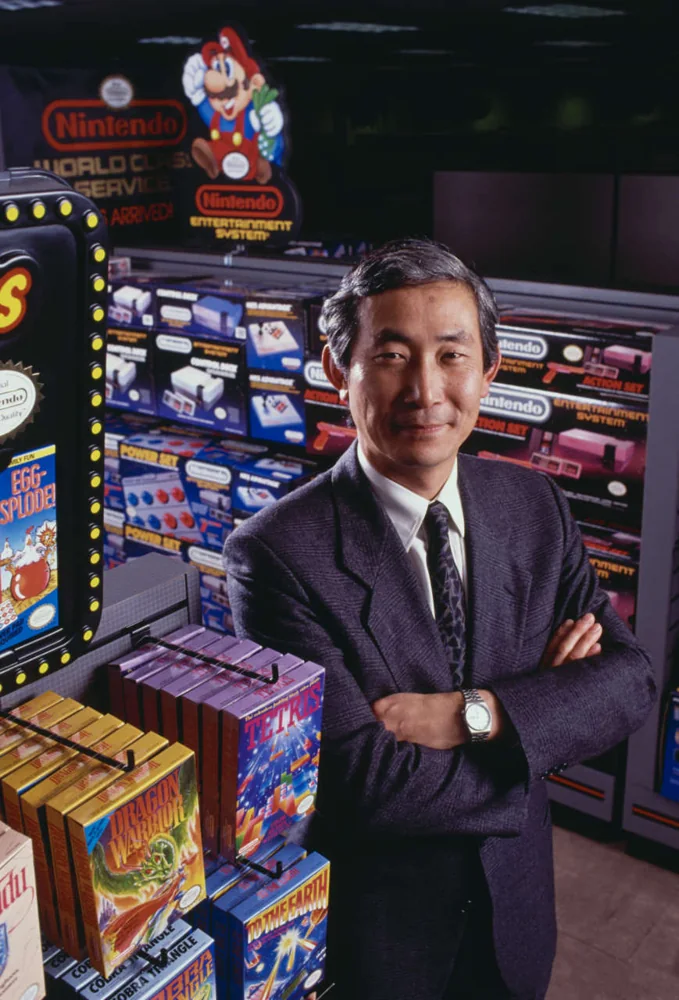
Alongside him was Howard Lincoln, Nintendo of America’s lawyer and senior executive. Lincoln became one of the company’s most formidable public defenders: in legal disputes, in arguments over violent games, and eventually in front of Congress. A publisher challenging Nintendo could expect the company to fight.

These were serious businesspeople selling a brand built around cheerful characters. The smile on the packaging did not make the contract friendlier.
Five games, two years, and a factory you did not own
Imagine finishing a game, paying the people who made it, and discovering that your next problem was getting permission to manufacture your own product.
The late-1980s American NES agreement described in the Tengen litigation gave Nintendo control of cartridge production. A publisher submitted its game; Nintendo put it into authorized cartridges and sold those cartridges back to the publisher. The arrangement also limited licensees to five new NES games a year and prohibited licensing those games to other home video game systems for two years after their first sale.
Some early Japanese Famicom partners had enjoyed more freedom. By the late 1980s, a publisher joining the American NES business faced a much tighter bargain: Nintendo owned the factory, set the release limit, and made the competition wait.
The manufacturing arrangement could be frightening even when everybody got along. A cartridge was a physical investment: memory chips, circuit board, plastic shell, packaging. Publishers had to commit to quantities before finding out how many customers would buy them. An unwanted game could come back from retailers as overstock, leaving its publisher with the bill.
A former Sunsoft developer’s account of the 16-bit business describes minimum orders, rising costs for extra memory, and the risk of unsold stock. He also makes clear that Sega used a comparable manufacturing model. Nintendo helped establish a lucrative gatekeeping business that its competition had reasons to copy.
For a small publisher, ordering cautiously could mean watching a hit disappear from shelves while waiting for more cartridges. Ordering boldly could mean paying for a warehouse full of mistakes. Nintendo earned money manufacturing the stock while somebody else had to persuade children to take it home.
The five-game limit added another pressure. A publisher with six promising projects could not simply let six development teams compete for buyers. Somebody had to wait, move platforms, find another arrangement, or lose a place on the calendar.
That encouraged caution. If a company had only a handful of slots, a recognizable movie, cartoon, or sports name could look safer than an unfamiliar idea. Nintendo’s stated protection against a flood of junk did not somehow make every licensed tie-in good. It made getting a slot valuable.
Konami finds another name for Konami
Look at the lower corner of an American Teenage Mutant Ninja Turtles II: The Arcade Game box and you will find Ultra Games. The game still had Konami’s arcade pedigree. Ultra was Konami’s additional publishing label.
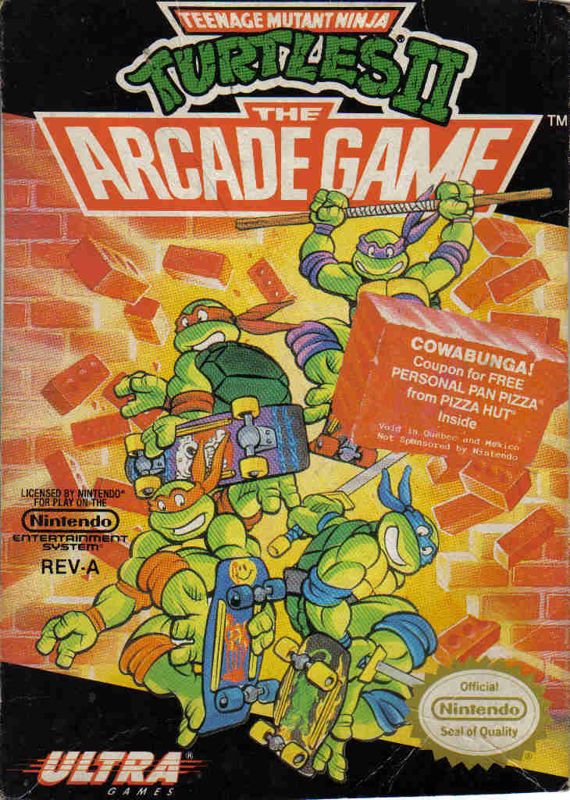
Created in 1988, Ultra let Konami expand the number of games it could release under separate licenses. Acclaim later had another label in LJN, the rainbow logo we explore in our LJN history. The arrangement is described in histories including The Ultimate History of Video Games.
This often gets retold as if Konami put on a false mustache and Nintendo never noticed. The boxes were sitting in the same stores, carrying the same official authorization. Nintendo still controlled entry. A second publishing identity was a way through the system, available when another license could be obtained.
“Konami had a cheat code for everything.”
Reddit user drogonninja, discussing Ultra Games.
The extra label bought Konami breathing room. It still needed Nintendo to open the window.
Kids were busy trying to survive the first Turtles game’s underwater bombs or the sequel’s arcade brawls. A publishing limit was invisible to them. Yet that limit helped determine the names on their boxes and the choices on their shelves.

Even an early partner could lose its privileges
Namco had helped establish the third-party Famicom business in Japan, where some early licensees enjoyed terms that later companies did not receive. Its original deal allowed a degree of independence that mattered enormously once Nintendo had a huge audience.
When the agreement came up for renewal in 1989, Nintendo wanted Namco on the newer terms. A 1995 Harvard Business School case, drawing on the period’s reporting, describes Namco’s angry criticism of Nintendo’s market control—and its eventual acceptance of the new arrangement.
That is a colder story than the cartoon version of a publisher escaping through a loophole. Helping make a platform successful did not guarantee that Nintendo would preserve the bargain under which you had joined it. Once the customers were there, leaving them behind could be more expensive than swallowing the new deal.
The gold seal was doing a lot of work
The Official Nintendo Seal of Quality was an extraordinarily effective piece of packaging. It looked reassuring. Parents could identify it without understanding a single thing about memory chips or licensing contracts.
For Nintendo, it distinguished the approved market from the outsiders trying to sell compatible products. For customers, the word “quality” invited a much broader interpretation. Surely a company would not put a gold seal on a game that was miserable to play.
The licensed NES library answered that assumption with plenty of evidence to the contrary. There were great games, ordinary games, and games whose most attractive feature was the film title on the box. Our Acclaim history follows the commercial machinery behind many of those recognizable licenses.
The seal could tell you that a product belonged to Nintendo’s authorized ecosystem. It could not tell you whether you would enjoy it. That gap let a business credential wear the clothes of an editorial recommendation.
1987–1992: Tengen picks a fight—and hands Nintendo a weapon
Tengen did not begin as a little operation making suspicious copies of somebody else’s games. It was Atari Games’ home publishing arm, bringing arcade experience to a market Nintendo increasingly controlled.
This was Atari Games, the arcade company. The Jaguar would come from a separate business, Atari Corporation. Nintendo managed to make enemies of both.
On the NES, Tengen had games people wanted. R.B.I. Baseball offered quick, approachable baseball with real major-league players. Gauntlet brought crowded dungeon combat to a machine whose two controllers were made for arguing over food and treasure.
Those games made Tengen a particularly awkward opponent. A worthless cartridge could be dismissed as the kind of product Nintendo’s system was supposed to exclude. An established arcade company selling desirable games made the fence harder to explain as consumer protection.
Atari Games accepted Nintendo’s license in December 1987. It also pursued a route around the lockout. Its engineers had already tried watching the chips communicate and examining the silicon. The security system was small, but reproducing its conversation correctly proved difficult.
Then Atari’s lawyer obtained a copy of Nintendo’s source code from the U.S. Copyright Office by claiming it was needed for an existing infringement lawsuit. That lawsuit did not exist. The Copyright Office’s summary of the later appellate case identifies the improper acquisition as a crucial problem for Atari’s defense.
It was a spectacularly bad shortcut. Tengen had a serious argument about Nintendo’s power. It weakened that argument by giving Nintendo evidence of copying obtained through a false representation.
The replacement security program was called Rabbit. It let Tengen’s cartridges communicate with the NES without Nintendo supplying the authorized chips. By the end of 1988, Tengen was openly challenging the official system and selling its own distinctive cartridges.
For a buyer, the practical question was simple: did the game work? For Nintendo, a successful unauthorized cartridge threatened a business in which every authorized one passed through its hands.
The pressure moves into the shops
A cartridge still needed a retailer willing to stock it. Nintendo’s legal campaign therefore reached beyond the company making the games to the businesses distributing and selling them.
The 1990 appellate decision in the patent dispute describes a lower-court injunction that had restrained Nintendo from pursuing certain suits against Tengen’s customers. The appeals court lifted that protection, finding that the lower court had not established the facts needed to support it. Tengen’s customers were exposed again.
For a store, the legal uncertainty was its own deterrent. Stocking a game meant earning a retail margin. Defending a lawsuit meant paying lawyers. An exciting new release could become a remarkably unattractive box to keep behind the counter.
That was the cruelty of the contest for outsiders. Reaching customers required surviving pressure at several points: the hardware, the manufacturing relationship, the distribution network, and the courts. A publisher could have a good game and still find that nobody wanted the trouble of selling it.
The two Tetris wars
Meanwhile, Tetris supplied a separate fight over a separate permission slip.
Rights to the Soviet puzzle had traveled through a tangle of companies and agreements. Computer rights, arcade rights, home-console rights, and handheld rights did not all mean the same thing. Tengen believed its chain of licensing arrangements allowed the NES release. Nintendo secured rights directly through the Soviet agency Elorg and challenged that claim.
The June 1989 injunction stopped Tengen’s NES sales. Tengen had paid for rights that its suppliers apparently had no authority to sell. The legal history of the dispute explains the contractual chain. The better multiplayer game could not rescue a broken licensing chain.
Tengen’s version remains fascinating because you can feel what disappeared from the official market. Its cooperative mode lets two minds work inside one shared mess. Competitive play puts two players side by side. It gives the same falling blocks a different social life.
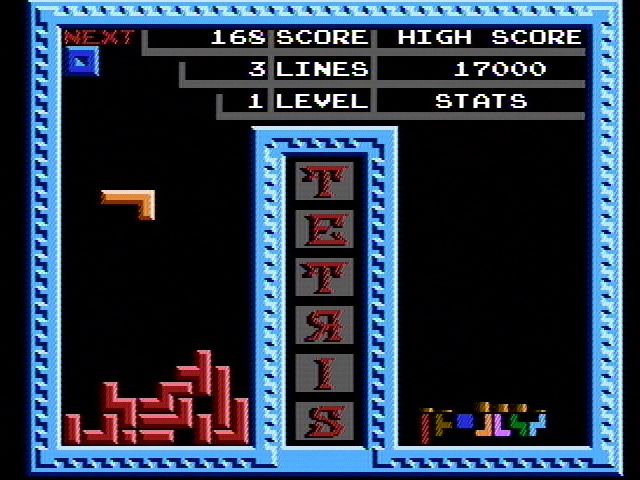
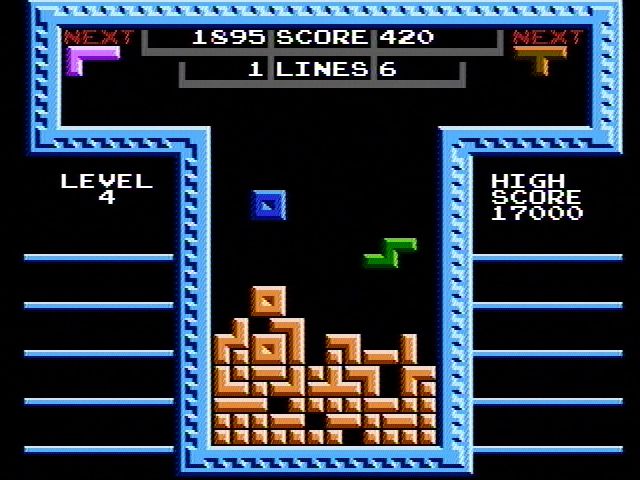
Nintendo’s NES Tetris is a terrific solitary obsession. Its spare presentation keeps your attention on the next piece and the height of the stack. A clean four-line clear feels like getting a deep breath back. You can lose an evening to it without ever needing a second controller.
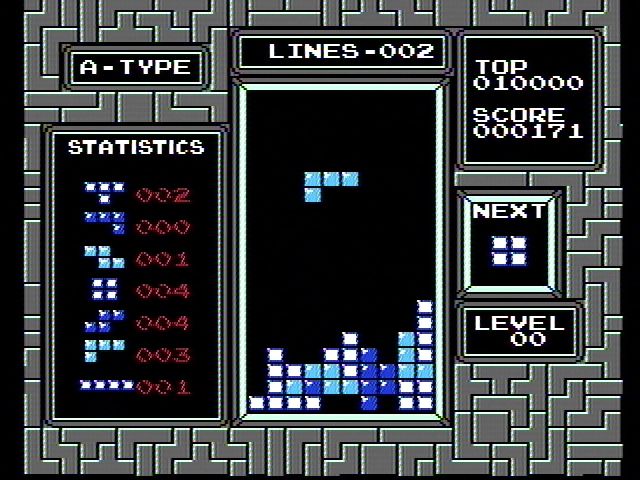
For players, the loss was a second controller left idle. Tengen’s interesting multiplayer ideas disappeared from ordinary sale, and Nintendo’s solo game became the version most people knew.
The lockout case ran on. A 1991 injunction went Nintendo’s way. In 1992, the appellate court upheld preliminary relief on the copyright claim.
Tengen’s shortcut kept haunting it. The court allowed room for legitimate reverse engineering, but improperly obtained code and unnecessary copying left this attempt on much shakier ground. Nintendo had the evidence it needed to stop Rabbit.
The rebel had supplied its opponent with the best ammunition. Nintendo used it.
1988–1991: Scarcity, leverage, and the five-dollar apology
A child staring at an empty game shelf did not care whether a shortage began at a chip factory or in a production schedule. The game was missing, Christmas was coming, and the next store might have it.
Cartridge supply became a contentious part of Nintendo’s power during the late-1980s boom. A January 1989 Billboard report records disputes over shortages and Nintendo’s explanation that memory-chip supply was the culprit. A shortage could be genuine and still leave the company controlling allocation in an enviable position.
Publishers could not solve the problem by taking their approved NES game to whichever manufacturer offered the fastest turnaround. Their access to the market was tied to Nintendo’s supply system. Retailers, meanwhile, had customers demanding the Nintendo products that were hardest to obtain.
That pressure created fertile ground for another kind of control: the price of the console itself.
In 1991, Nintendo settled Federal Trade Commission allegations concerning resale-price maintenance. The FTC’s annual report describes alleged agreements to maintain retail NES prices and a consent order restricting the practices. This time, the fight was over what a family paid at the checkout.
Nintendo settled without admitting wrongdoing, and agreed to stop using the challenged methods to enforce minimum retail prices.
Consumers received something much more Nintendo-shaped.
The accompanying state settlement provided qualifying console purchasers with a $5 coupon toward an NES game. The court’s approval of the settlement details the program, including purchases within the specified 1988–1990 window and potential retailer reimbursements of up to $25 million.
To collect those five dollars, a customer had to buy another game.
There is a grim little elegance to that. People allegedly made to pay too much for admission to Nintendo’s world were offered a discount on spending more money inside it.
The five-dollar punchline: the price-fixing settlement’s consumer remedy came as a coupon for another purchase. Nintendo’s customers could collect their compensation at the checkout.
After all that, the customer’s share of the victory could fit beside the loose change in a wallet.
How the rules starved the other machines
The two-year restriction mattered far beyond the publisher signing it. A rival console needed games to attract buyers. A publisher needed buyers to justify making those games. Nintendo already had a large audience, and its agreement could keep a desirable release from helping another home console build one.
A 1996 Justice Department speech on network industries used Nintendo’s exclusivity as an example of how a market leader’s existing customer base could make competing platforms less attractive. A publisher giving up NES access would be walking away from the very customers most likely to make its game profitable.
So a buyer looking at Sega’s shelf might find fewer familiar names. Nintendo’s shelf looked stronger. The next publisher had another reason to choose Nintendo. The restrictions helped that cycle keep feeding itself.
By the time a family compared the two consoles in a shop, Nintendo’s contracts had already helped decide what would be on the shelves.
Sega’s 16-bit Genesis gave publishers a more persuasive alternative. Nintendo eventually loosened its exclusivity requirement. In a later oral history, Lincoln described the change as a business decision rather than a concession forced by litigation. The FTC settlement dealt with retail prices. The Genesis supplied a different pressure: a growing audience Nintendo could no longer keep publishers from wanting.

By the early 1990s, seeing related franchises on both Genesis and Super NES became normal. Players could argue about the best version. That was a healthier argument than wondering why one machine was being kept away from the game in the first place.
1989–1992: You bought the game. Nintendo still wanted a say.
The Game Genie did something gloriously simple for children who were tired of dying. You plugged a game into the adapter, put the assembly into the NES, entered a code, and changed the rules.
More lives. Different jumps. Protection from the enemy that had been ruining Saturday morning. A game you already owned could suddenly become manageable—or wonderfully ridiculous.
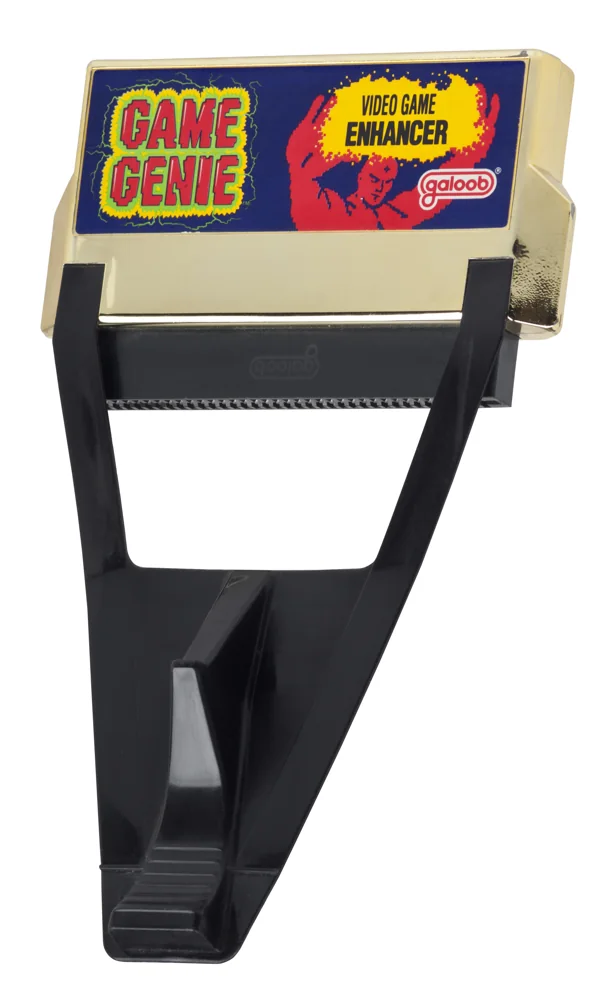
The device, developed by Codemasters and sold in the United States by Galoob, did not provide a library of Nintendo games. It needed your cartridge. It intercepted selected data while the game ran. Turn the machine off and the original cartridge remained what it had been.
Nintendo tried to stop it.
In Galoob v. Nintendo, the company argued that the alterations infringed its rights. The 1992 appeals decision upheld Galoob’s victory: the changes did not create the infringing derivative work Nintendo claimed, and the court also considered fair use.
It was a welcome limit on how far a game company could reach into somebody else’s living room. Nintendo could object to the commercial device. It could not simply make its preferred way of playing the only lawful one.
For players, that fight was wonderfully easy to understand. You had paid for the game. You were sitting in your own house. If you wanted to jump too high or stop a boss from draining your health, why should Nintendo get the final word?
Some games were better without cheats. A hard-won finish could feel magnificent. Other games wasted your time with punishment that had little to do with satisfying play. The Game Genie let the owner make that judgment. Nintendo’s challenge tried to place the judgment back with the company.
Nintendo had already fought over who could make a cartridge and who could sell it. With the Game Genie, the argument followed that cartridge home.
The rental shop’s photocopier
Game rental created a related irritation for Nintendo. A cartridge could entertain a succession of households without producing a new cartridge sale every time.
The company’s dispute with Blockbuster reached the instruction manuals. In 1989, the chain agreed to stop photocopying Nintendo manuals for rentals. A contemporary report records that agreement.
Nintendo also lobbied over software-rental legislation. An August 1989 Billboard report describes cartridge-format games being excluded from the proposed restrictions despite that lobbying.
Blockbuster had to stop copying the manuals. It could keep renting the cartridges. Customers still had a way to try an attractive box before paying full price for it.
That escape mattered. You could find out whether a game was actually worth owning, discover that the film license was the best thing about it, and take it back on Monday. A gold seal was reassuring. A weekend with the cartridge was more informative.
1991: Noah slips through a different door
While Nintendo and Tengen fought over circuitry and source code, another outsider found a remarkably different customer.
Bible Adventures arrived in 1991 from the unlicensed business associated with Color Dreams and its Wisdom Tree label. Its three scenarios put biblical stories into small platform games. In the Noah section, you carried animals to the ark. The screen could look like a religious lesson had wandered into a slapstick livestock problem.

It was also a product that could be sold in Christian bookstores. Nintendo’s strength in mainstream electronics and toy retail did not give it the same relationship with those shops.
A firsthand interview with Wisdom Tree’s owner traces the early release and its market. The books-and-faith route gave the company an audience interested in the subject before asking whether Nintendo had approved the cartridge.
That audience does not turn every Wisdom Tree game into a lost masterpiece. Bible Adventures can be clumsy, repetitive, and unintentionally funny. Animals stack over your head, enemies interfere, and the mechanics often feel stretched well beyond their charm. Nintendo’s outsiders were perfectly capable of making weak games.
But weak licensed games were already on store shelves. Artistic merit was never a dependable dividing line between those who got into the official market and those who had to find another route.

The religious games exposed an odd collision. Nintendo’s American content standards restricted religious references and imagery, among many other subjects. An explicitly biblical game had an obvious audience but an awkward fit with those rules. Publishing outside the license could solve both the subject problem and the approval problem, if the company could get compatible cartridges working and persuade shops to carry them.
The joke became that Nintendo was afraid to sue Jesus. Wisdom Tree had found something more practical than divine protection: shops whose business did not depend on keeping the Nintendo aisle stocked.
That was a real opening. The official system had taught outsiders to think about distribution as creatively as they thought about code.
“They were true indie developers (way before that was a term)”
A Boss Fight Books interview about Bible Adventures, describing Wisdom Tree’s work outside Nintendo’s system.
1991–1994: Nintendo’s rules move onto the screen
A publisher could accept the manufacturing bill, secure a place on the release calendar, and still have to go back into the game to remove something Nintendo disliked.
Nintendo of America’s content restrictions covered sexual material, violence, offensive language, religious imagery, drugs, alcohol, and political messages. The period guidelines reproduced by Tanooki Site show how broadly the company drew those boundaries.
The rules shifted, and some games slipped through with material others had to remove. A publisher could finish a game and then find itself repainting, renaming, or cutting pieces of it to get Nintendo’s approval.
The assumption underneath the policy was that Nintendo’s American brand should remain suitable for children. Parents could appreciate that. Adults who owned the same hardware had much less reason to appreciate being treated as if every cartridge needed to pass through a family-room filter.
Mortal Monday, minus the blood
On September 13, 1993, Acclaim released home versions of Mortal Kombat. The advertising called it Mortal Monday, which sounded considerably more exciting than “the day you discover what your console manufacturer removed.”
The arcade game’s appeal included digitized fighters, a grim martial-arts tournament, and the outrageous finishing moves everybody wanted to see. Its violence was part spectacle, part playground rumor. Knowing the secret input gave a player a moment of theater at the end of a match.
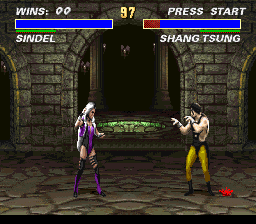
Nintendo’s Super NES release removed the red blood and altered fatalities. Sega’s Genesis release could restore blood with a code. A buying decision suddenly became a vote on which company trusted its customers with the game they had asked for.
The ESRB’s oral history preserves Lincoln’s acknowledgment that Nintendo required the change. It also preserves the company’s reaction to the competition’s success:
“We got our clocks cleaned!”
Howard Lincoln, in the ESRB’s oral history of the ratings system.
Customers wanted the game with the blood. Nintendo had handed Sega a selling point that no clever slogan could improve upon.
And there was something faintly absurd about Nintendo’s edited version. Two fighters still knocked each other senseless. The objection centered on how that damage looked. It invited teenagers to see the restriction as squeamish branding rather than a coherent moral position.
The console could draw the pixels. Nintendo had decided which pixels its customers should be allowed to buy.
Wolfenstein walks into the same wall
The Super NES version of Wolfenstein 3D made the same kind of intervention unusually visible. The PC game sent players through Nazi fortresses, hunting guards and collecting keys. Its enemy imagery was blunt because the premise was blunt.

In the Super NES release, Nazi symbols were removed and Hitler’s appearance changed. Attack dogs became rats, and the blood was stripped back. These changes sit alongside the compromises involved in bringing an early PC first-person shooter to a console, but they were about content rather than raw computing power. The game’s database screenshots make the altered presentation easy to inspect.

The game remained a maze shooter. You still moved through corridors, watched doorways, and fired at hostile figures before they reduced your health. Nintendo’s approval process changed the setting’s vocabulary while leaving the violence that drove the action.
That is a strange artistic bargain. A developer could make a game about fighting Nazis, then have to soften the visible identification of the Nazis to get it through the platform’s rules.
Noah returns—with a borrowed cartridge
Wisdom Tree’s Super 3D Noah’s Ark took the maze-shooter format in a more peculiar direction. You explored the ark and fed troublesome animals with a slingshot. The engine underneath came from the Wolfenstein lineage.
The cartridge’s physical workaround was memorable: it accepted a licensed Super NES cartridge on top to help it get past the console’s security. An outsider literally borrowed the credentials of an insider.
A persistent story claims id Software gave away its technology to punish Nintendo for censoring Wolfenstein. Reporting based on the project’s history describes a licensed engine instead. The published development account follows the unusual route from a proposed Hellraiser project to a biblical shooter. Nintendo had supplied enough real absurdity here; it does not need a revenge story added afterward.
The adapter arrangement looks comical now. In its day it was a physical answer to an approval system: if you could not obtain permission, you might still find a way to make the machine acknowledge somebody else’s.
1993–1994: Nintendo takes its moral superiority to Washington
On December 9, 1993, the argument over violent games moved into a Senate hearing. Mortal Kombat and Night Trap supplied alarming footage. Nintendo supplied Howard Lincoln.
Lincoln had a powerful advantage in that room. His company had already imposed the kind of restrictions lawmakers were discussing. Sega had tried a different approach, including its own age-rating scheme. Nintendo could present its control of content as evidence that it was the responsible adult.
The hearing became a public stage for a business rivalry. Games that were sold in competing stores and played on competing machines now had competing accounts of how dangerous they were.
Lincoln’s most memorable promise was blunt:
“Night Trap will never appear on a Nintendo system.”
Howard Lincoln at the December 1993 hearing, reported by The Washington Post.
It was a sweeping declaration for a game about watching cameras and triggering traps to protect people in a house. The images looked lurid when lifted out of play. Understanding what the player actually did was less convenient for the outrage.
Our Night Trap and ESRB history follows that controversy in detail. Here, the hearing reveals another use for Nintendo’s approval system: it gave the company a ready-made claim to moral authority while a rival was being dragged across the national stage.
Every time Sega looked reckless in that hearing, Nintendo’s family-friendly image looked a little more valuable. The account of the hearing in the Mortal Kombat oral-history coverage captures how quickly regulation and console warfare became tangled.
The industry’s eventual answer was an independent ratings organization. The ESRB began in 1994, giving buyers a way to distinguish content without forcing every game into one company’s notion of suitability. Nintendo could keep selling family games while a mature-rated title carried its own warning. The ESRB’s institutional history records that development.
The North American Super NES version of Mortal Kombat II arrived in 1994 with the blood and the gruesome finishing moves intact. Nintendo’s line had moved.
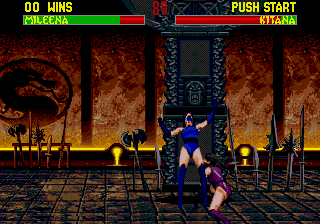
A year earlier, red blood had been too much for the brand. With a rival taking customers and a ratings system providing another way to label games, Nintendo found room for it.
Parents could still choose. Adults could choose. Publishers had a clearer route to selling something outside the old family template. The change did not erase every content restriction or make approval disappear, but it gave the business more room to grow up.
1991–1995: The partner Nintendo pushed away
While Nintendo was fighting outsiders over permission to make cartridges, it was also arguing with a partner over permission to make the next generation of discs.
The proposed Sony–Nintendo CD project tied new hardware to a question both companies understood very well: who would control the software business built around it?
At the June 1991 Consumer Electronics Show, a Sony collaboration was followed by Nintendo’s announcement of a Philips alliance. Contemporary reporting records the split. Nintendo wanted a future in which disc technology did not cost it the control it had built around cartridges.
The Philips relationship eventually helped put Nintendo characters on the CD-i. Those peculiar Zelda and Mario games have a whole other story, told in our complete CD-i history. They are an astonishing footnote to a company so protective of what could appear in its own ecosystem.
Nintendo’s discarded partner still needed to build a console business: hardware, tools, distribution, and above all games. But Sony had an opening. Publishers who had spent years accepting somebody else’s terms might welcome a company willing to court them.
The World Intellectual Property Organization’s history of the PlayStation describes Sony courting developers with better economic terms and easier development. CD-ROM also changed the cost and storage calculations that had made cartridge publishing such an expensive gamble.
For a publisher, being offered a more attractive deal was considerably more persuasive than being told that another console had a nicer slogan. Developers could take their experience, franchises, and grudges to a company that needed them.
Sony would run its own licensed platform, with rules of its own. To get it started, though, it needed publishers to want to be there.
By 1995, Nintendo’s negotiating position faced stronger alternatives. A publisher did not have to treat the biggest 8-bit library as the only audience that mattered. The next generation had begun to make the old permission structure feel less inevitable.
The rules do not vanish at the border
Regulators were still looking at console arrangements. Britain’s Monopolies and Mergers Commission examined the supply of video games in a report published in 1995. The investigation concerned Nintendo and Sega, including restrictive licensing and manufacturing arrangements. A legal account of the report summarizes the restrictions and recommendations.
The company that marketed itself against Nintendo could participate in the same broad business model. Having an outsider’s advertising voice did not exempt Sega from wanting the benefits of platform ownership.
In Europe, territorial restrictions created another problem. Official European Commission findings, issued later, examined Nintendo distribution conduct spanning 1991–1998, including barriers to trade between territories. Investigations began in 1995. The fight had moved from release calendars to the movement of finished products across borders.
For a customer, a border could become another gate. A cheaper legitimate product in another territory threatened a distribution arrangement built to keep those markets apart.
A publisher trying to get a game made and a customer trying to find a cheaper copy could run into the same obstacle: Nintendo wanted the sale to happen on its terms.
The childhood favorite with a hand around the market
A publisher waiting for cartridges. A rival console waiting for a hit. A store wondering whether a black cartridge was worth the legal risk. A player typing a Game Genie code while Nintendo argued that the altered experience infringed its rights.
Those are the people on the other side of the Nintendo success story.
Nintendo made brilliant games, backed inventive hardware, and helped rebuild an American console market that retailers had nearly abandoned. None of that required us to pretend that its licensing power was gentle.
The darkest part was how naturally the restraints could be presented as care. Restrict supply to protect the market. Restrict releases to protect quality. Restrict rival versions to protect an investment. Restrict content to protect children. Each claim could contain a reasonable concern while the company accumulated another means of saying no.
And the people paying for that protection were not always the people choosing it.
Tengen’s misconduct gave Nintendo a legitimate copyright case. The Game Genie gave Nintendo a defeat. The FTC allegations brought a settlement whose most memorable consumer benefit was a coupon. Sega’s competition and Sony’s arrival made publishers more valuable partners. No single event broke the system; pressure accumulated until Nintendo could no longer assume that everybody had to accept the old bargain.
You can still see both sides in the games. Nintendo’s NES Tetris is clean, absorbing, and beautifully suited to the machine. Tengen’s has multiplayer ideas that deserved a wider life. Bible Adventures is an awkward outsider with a real audience. The first Super NES Mortal Kombat wears a corporate decision in every bloodless blow.
We can love the cartridges without applauding the terms under which they were allowed to exist. The best part of this era belongs to the people who made those games—and the players who made them part of their lives. Nintendo’s business rules deserve their own place in the history, with the gold seal peeled back.
More histories from Retro Replay
- The history of LJN video games — another name on the box, another route through the publishing business.
- The rise and fall of Acclaim — movie licenses, Mortal Monday, and the risks behind the biggest brands.
- Night Trap and the ESRB — the games dragged into Washington’s violence debate.
- The complete Philips CD-i history — the unexpected Nintendo games that came out of the disc-era negotiations.
- The complete Power Glove history — another NES dream with a complicated reality.
Sources and further reading
The court records and reporting behind this story include the 1992 Atari Games/Tengen opinion, the Game Genie appeal, the 1991 consumer-settlement approval, the FTC’s 1991 annual report, and the ESRB’s oral history. Period trade reports and firsthand interviews follow the battles beyond the courtroom, into factories, stores, and living rooms.






The two-player shared pit sounds like the real standout here. It is a shame that the version with such a good couch-game idea was also caught up in Nintendo’s lockout system and the fight over who owned the console rights.