Retro Replay Retro Replay gaming reviews, news, emulation, geek stuff and more!
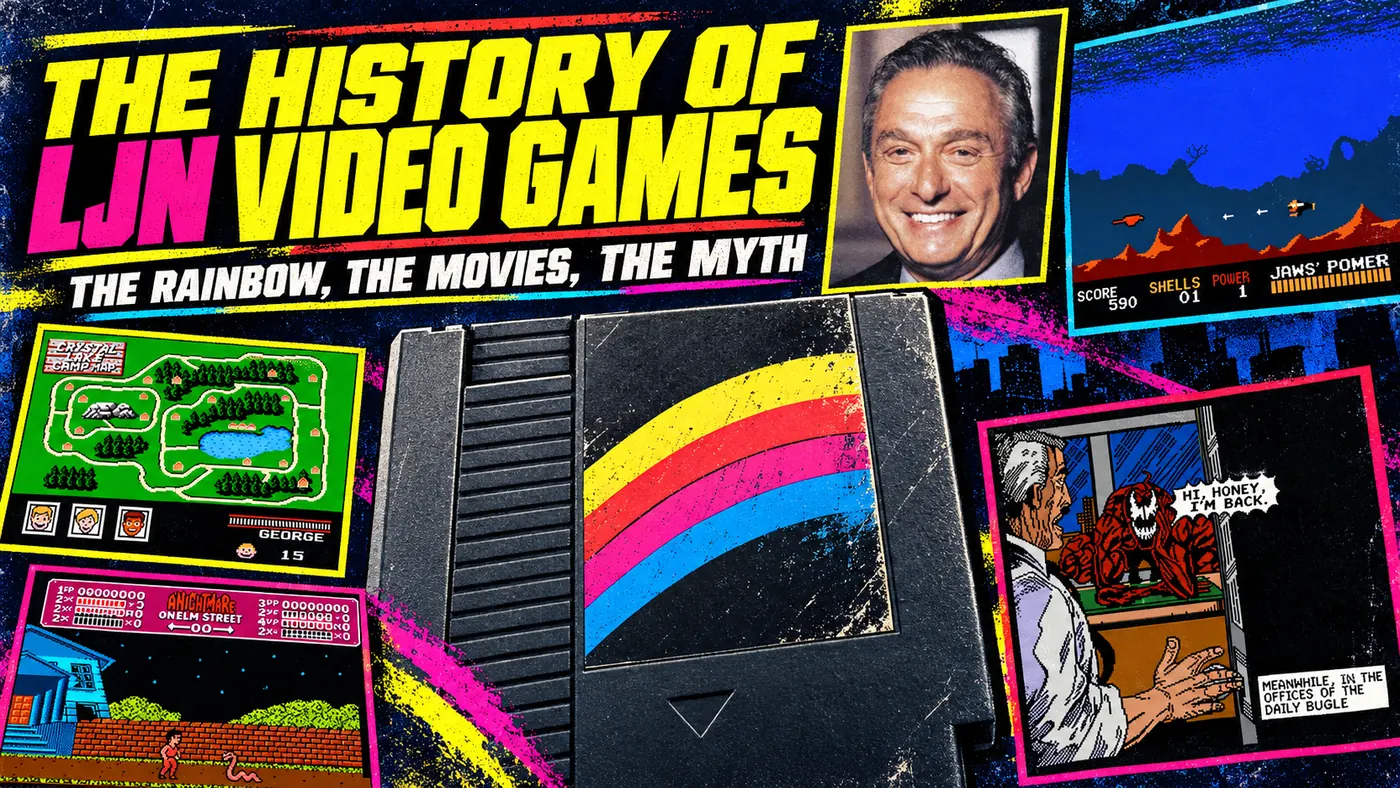
For a generation of NES owners, a little rainbow on a box could inspire hope, dread, or both. It promised a movie you loved. It did not promise that the game would love you back.
Consider the rental-store decision. You have one weekend, one cartridge, and a wall of familiar faces: Marty McFly, Jason Voorhees, Freddy Krueger, Roger Rabbit, Spider-Man. The movie poster in your head does the sales pitch before you read the back of the box. Then comes the rainbow: LJN. Years later, that mark would become a punchline so durable that it can drown out the actual games.
That is the mystery worth solving. How did a company famous for putting huge entertainment licenses on cartridges earn one of gaming’s ugliest reputations? Why do some players still defend Jaws, Friday the 13th, and A Nightmare on Elm Street? Why does Spider-Man and Venom: Maximum Carnage belong in the same corporate story as Back to the Future? And who actually made these games? Follow the rainbow from the NES boom to Acclaim’s 1990 purchase and the label’s fading 16-bit years, and the answer becomes more interesting than “LJN made bad games.”
The crucial distinction
LJN was primarily the publisher: the company that acquired rights, financed and marketed releases, and put its logo on the package. Different studios built different games. Jaws traces to Westone; Friday the 13th and The Karate Kid to Atlus; Who Framed Roger Rabbit and A Nightmare on Elm Street to Rare; Back to the Future to Beam Software. One logo did not mean one designer, one engine, or one standard of quality.
The rainbow arrives in the Nintendo aisle
LJN entered video games with a skill that had already worked in licensed merchandise: identify a name customers know and get a product onto the shelf while that name matters. Its founding history and toy lines explain the access to entertainment properties, but the game story begins with the North American NES market. Nintendo had rebuilt retailers’ confidence after the American video-game crash. A licensed NES cartridge could now reach an enormous audience. Hollywood, television, comics, and sports were full of names that could sell before anyone saw a screenshot.
Meet Jack Friedman. The LJN founder was a licensing entrepreneur before the NES became a household fixture; a later company filing records his LJN years. His company learned to work with entertainment properties in the toy aisle, a connection that later made movie and character games a natural business extension. Friedman’s personal story is not the explanation for every jump, hitbox, or impossible stage: he did not sit at a computer programming each game. He matters because he built a company whose strength was getting famous names onto products. MCA’s acquisition in the mid-1980s placed that company within a larger entertainment business, just as console games were becoming a valuable destination for licensed characters.

That opportunity created a particular trap. Games take time to design, test, and revise; a film campaign has its own calendar. A publisher paying for a property wants the game out when audiences recognize it. A developer working to that deadline may be asked to make something playable from a premise that does not naturally fit an NES platformer. The label can buy recognition. It cannot buy extra development months after the holiday shelf has moved on.
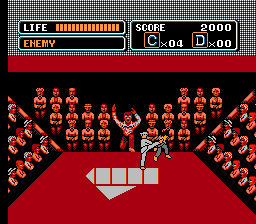
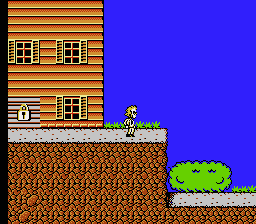
LJN’s early catalog displayed both the attraction and the awkwardness. The Karate Kid promised tournament drama and familiar martial-arts iconography. The finished 1987 NES game moved from a quick tournament into side-scrolling stages and little skill tests such as chopsticks and catching flies. It has ideas beyond simple punching, but it is short, strict, and inconsistent. Fans of the films could recognize ingredients without getting the emotional arc that made the films work. That gap between a recognizable license and a satisfying adaptation would become an LJN specialty.
The black comedy of the LJN reputation is that people can remember the logo more clearly than the mechanics. That was partly the point of a publisher’s label. A bright, consistent mark followed different properties across a crowded shelf. Once buyers had a bad weekend with one game, the rainbow gave them an easy way to connect it to the next. It became a form of quality shorthand, even when the actual studio behind the next cartridge was entirely different.
Before the movie curse: paintball, surfboards, and a Zapper
The rainbow did not begin as a warning about movie games. LJN’s first 1987 NES group also included Gotcha! The Sport!, a paintball game built by Sanritsu. The premise sounds like an odd companion to Jaws and The Karate Kid, but it shows the publishing method in miniature: choose a recognizable craze, then find a team and a control scheme that might turn it into a cartridge. Gotcha! asks you to advance with the controller while aiming the NES Zapper at opponents and flags. That two-device setup feels wonderfully peculiar now. It also made the game inseparable from the television technology and plastic gun in a late-1980s living room.
Its capture-the-flag stages are more arcade exercise than deep sports simulation. A round can become a simple rhythm of advancing, shooting, grabbing the flag, and returning. Yet the game has a clear idea of what the player is doing. It is instructive to compare it with later licensed disappointments: an unusual peripheral is a hurdle, but an understandable objective can carry a modest design. A GameFAQs reader review by CaffeineCommando remembers that dual-control arrangement as the game’s main attraction even while finding the stages repetitive. That is a player’s judgment, not a production fact, and precisely the kind of mixed verdict the rainbow often earns.
T&C Surf Designs: Wood & Water Rage followed in 1988. Atlus developed it around skating and surfing events, mascot characters, bright beaches, and a score-chasing loop. The title came from a surf brand, but what matters to the game history is the action: quick reactions, momentum, and controls that do not give up their timing immediately. Some NES owners learned the skateboard sequence so thoroughly that the cartridge became a comfort game. Others never stopped wrestling with the surfing. A GameFAQs reader review remembers playing with friends and still finding the surfing the weaker half. Those two reactions can coexist. The game is a little piece of arcade-like 1980s style, not a conventional movie tie-in.
LJN returned to the property in 1992 with Thrilla’s Surfari, but the sequel changed the format. MobyGames credits Sculptured Software and describes a long stage-based adventure with skating, surfing, enemies, bosses, and a rescue plot. Compare the two games and the danger of a shared label becomes obvious: same publisher, same brand, different studio and different design goal. The first is a sports-flavored score challenge; the second is a sprawling cartoon action game. Neither fits the neat claim that LJN simply made movie platformers.
The other early detour was Major League Baseball. An official league license could promise authentic teams while still leaving a game short of every fan’s imagined roster. That distinction would soon produce one of LJN’s strangest public disputes. For now, notice the pattern: a paintball sport, a surf label, a real baseball league, a martial-arts film, and a shark movie all arrived through the same commercial gateway. The rainbow identified a publishing strategy before it identified a genre.
Jaws: a small game inside a giant title
Jaws, also released in 1987, is a perfect first test of that shorthand. It is not a film retelling. You move a boat over a sea map, enter repeated underwater shooting encounters, collect shells, raise your power, and eventually face the shark. The basic loop is easy to understand and can be completed quickly once the rules are known. It has a curious arcade directness. That is why it feels charming to one player and shallow to another: its whole design is nearly visible after an hour.
Westone did the development work, with Atlus involved in the production chain. That matters because it breaks the lazy sentence “LJN programmed Jaws.” The game was made within a publishing and licensing arrangement, not in a single mythical LJN coding room. The Japanese studio behind the action also had a different design vocabulary from the American film on the cover. Rather than simulate a suspense movie, the NES cartridge turns the shark into a repeated arcade target and a final timing test.

The disagreement is still alive in player communities. In a GameFAQs discussion, user FortuneCookie described beating Jaws on a first attempt in less than an hour after weeks spent mastering Friday the 13th. Another poster, starcrunch061, remembered beating it quickly as a childhood rental and added that the cheap one-day rental softened the disappointment. They are not objective verdicts; they are unusually useful evidence of how the same short game felt under two different prices and expectations. A rental that fills an afternoon is a different proposition from a full-price purchase expected to last a month.
“I rented Jaws as a kid from the video store nearby, and beat it quickly.”
starcrunch061, GameFAQs NES board
Friday the 13th: a horror game that refused to explain itself
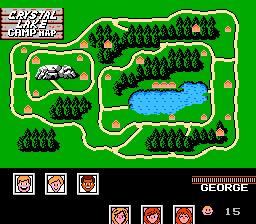
The 1989 Friday the 13th is where the rainbow became truly radioactive; its release record credits Atlus. The player manages camp counselors around Crystal Lake while Jason stalks them. A map, cabins, weapons, children to protect, and a three-day structure make it a far more elaborate thing than a simple licensed platformer. Atlus developed it. The publisher’s logo sat on the box, but the maze-like design and opaque rules came from a particular game team facing a particular brief.
The game can be frightening in a way its clumsy interface did not intend. An alarm sends you across a map whose perspective changes direction in ways many players struggle to read. Enter a cabin and movement becomes a first-person maze. Jason can arrive while you are still trying to work out where you are. The game withholds practical guidance: who should carry which weapon, how to defend the children efficiently, and why a seemingly strong run can collapse. Horror thrives on uncertainty, but a game also needs enough clarity for the player to believe that learning matters. Friday the 13th sits painfully close to that line.
Modern defenders often hear a survival-horror idea ahead of its time: vulnerable characters, resource allocation, a roaming killer, and a location you gradually learn. Critics hear the same idea muffled by confusing navigation and punishing feedback. Both readings can be true. The design is ambitious. The player experience can still be miserable. A recent r/NES discussion captured that split, with one participant arguing that once you learn which counselors to preserve and where stronger items are hidden, the game becomes a distinctive early survival-horror experiment. That is a claim about how it plays after study, not evidence that a new renter in 1989 was wrong to be frustrated.
The GameFAQs player FortuneCookie offered the other side from experience, recalling that Friday the 13th seemed to resist letting the player win. The full discussion immediately follows with tactical replies about potions and surviving later encounters. That back-and-forth is a better portrait of the game than either “masterpiece” or “trash.” Players can teach each other its rules; the cartridge often fails to.
Back to the Future and the danger of a famous face
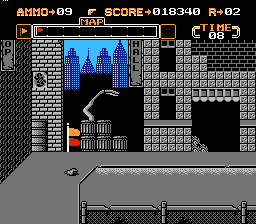
Back to the Future had almost everything a game publisher could want in 1989: an instantly recognizable movie, a beloved lead, a skateboard, a clock tower, and an audience who wanted to step into Hill Valley. The NES game Beam Software developed under LJN’s label instead sends Marty down repeated streets collecting clocks while dodging obstacles. Mini-games nod at memorable scenes, but the main loop does little to capture time travel, comic timing, or the relationship between Marty and Doc. Even the strongest license could not make an uninviting core game feel like the movie.
The disappointment is not that every scene differs from the film. Adaptations should change scenes when play demands it. The problem is that the changes seldom produce a satisfying substitute. The clocks create pressure but little purpose. The side activities feel like interruptions to a loop that was thin to begin with. A child who rented it because of the poster might spend the weekend learning how to survive a street rather than why any of it belonged to Back to the Future. The label’s reputation grew when the cover could set expectations the game had no intention of meeting.
One lesson of this period is that a license is a design problem, not an art asset. What action defines the fantasy? For Jaws, shooting a shark is clear, if limited. For Friday the 13th, protecting a camp while a killer moves through it is rich, if poorly explained. Back to the Future needed a playable answer to cause and effect, time pressure, and Marty as a resourceful hero. Its NES street loop does not get there. The LJN name became a convenient target for the result, while Beam’s specific design choices and the business brief deserve their own scrutiny.
Roger Rabbit and the point where ambition became friction
Rare’s Who Framed Roger Rabbit is another game that resists a one-word dismissal; its game record documents the detective-adventure format. It translates the film’s detective structure into a town full of buildings, objects, conversations, and clues. That is more imaginative than a generic run-and-jump adaptation. It also asks players to endure obscure item logic, awkward action, and a climactic challenge that has haunted childhood memories for decades. It is a game whose ambition is easier to admire than to finish.

The developer distinction is especially revealing here. Rare also made games that fans cherish. Its name on the code does not absolve every frustrating interaction, any more than LJN’s name on the label explains it. Talking Pixels’ retrospective begins with a familiar memory: “my friends and I wanted to like” the game. It credits Rare for following the movie’s plot while recalling how hard the game was to enjoy as a child. That blog reaction is useful as a reader’s experience, not a substitute for a production document. It shows why the game can be remembered as both an inventive adaptation and a bad weekend.
Freddy, sleep, and a better multiplayer idea
A Nightmare on Elm Street arrived in 1990 with Rare behind the controls and LJN on the label. Its playable hook is smarter than the rainbow’s reputation might suggest. A sleep meter fills as the teenagers move through stages collecting Freddy’s bones. Fall asleep and the environment shifts into a dream version with different threats and character powers. Up to four players can join with the proper adapter. It turns the film’s waking-versus-dreaming premise into a visible game system.
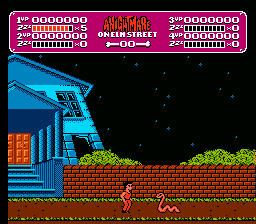
It remains a curious tonal compromise. Freddy’s films were gruesome; an officially licensed Nintendo game aimed at a broad audience was not going to reproduce them directly. Instead you get bright monsters, platforming, and a dream-world gimmick. Some players see the mismatch as another failed adaptation. Others see a competent, oddball multiplayer action game wearing a horror license. Time Extension’s account of the game’s making is a useful reminder that the Rare team learned from the project, even if it never escaped the LJN joke.
Beetlejuice and the sequel problem
The 1991 NES Beetlejuice is a case study in how badly a license can fit the expected genre. Rare developed a platform game full of unusual obstacles and little transformations. The film’s ghostly visual imagination offers plenty of material for a game, but its appeal also depends on jokes, strange characters, and a sly tone. Turn that into strict jumping and repeated enemy contact and the player may recognize the costumes without feeling the comedy. It is easy to see why someone rented the box. It is harder to see why they would immediately understand the rules.
Sequels posed a different challenge. A title like Back to the Future Part II & III could advertise more movies in one cartridge, but that promise only increased the amount of recognizable material players expected to see. Reworking scenes into disconnected collecting tasks made the relationship between film and game more distant, not richer. The awkwardness was structural: the sequel license enlarged the marketing pitch faster than it enlarged the room for a coherent game design.
The reason these titles remain fascinating is that they are rarely anonymous. Even a failure carries traces of a team trying to compress a film into a few NES screens. Sometimes that attempt produces a mechanic that almost works. Sometimes it produces a memorable image and a task nobody wants to repeat. Treating all of them as identical “LJN trash” erases the useful question: what exactly broke between the source material, the developer’s idea, and the player’s hands?
Bill and Ted, Pictionary, and the strange art of translating a brand
The catalog’s overlooked games tell a more complete story than another list of movie failures. Take Bill & Ted’s Excellent Video Game Adventure on NES. Its source is a comedy about two friends moving through history, a premise that seems to invite travel, discovery, and conversation. The cartridge instead builds a large scavenger hunt around searching periods for historical figures and the items they want. Finding the right route is the game. If you enjoyed making maps and solving a stubborn adventure, there is a real structure to uncover. If you expected the movie’s comic momentum, the errands could feel like being assigned homework by a very colorful travel agent.
The Game Boy Bill & Ted’s Excellent Game Boy Adventure is a different game, and that distinction matters. Portable spin-offs were often compressed or redesigned rather than simply shrunk from television to handheld. The Game Boy’s four shades of green, tiny screen, and short-session use changed what a recognizable license could plausibly do. An article that treats every matching title as one game misses how the same property could be sold twice to the same child with different expectations.
Then there is Pictionary on NES, a game based on a drawing-and-guessing party game that had no obvious reason to become a conventional action title. Software Creations’ NES version blends board-game prompts with short video-game challenges to earn drawing clues. That concept is goofy in a useful way: instead of pretending a pencil game needs a hero’s quest, it uses the console to make clue acquisition competitive. The music has become a separate cult attraction among chiptune listeners. A shallow account of LJN as only horror and movie disappointment would never leave room for a title like this.
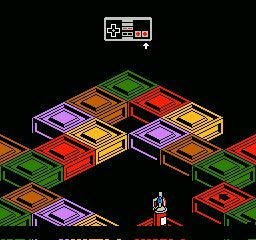
Consider, too, The Incredible Crash Dummies. The safety characters were already built around spectacular collisions, which sounds unusually suited to a game. Versions appeared on NES, Game Boy, and Super Nintendo under the LJN label, but they are not interchangeable demonstrations of one idea. Platform, screen size, and team changed the pacing. The central joke—bodies flying apart—could be a visual reward and a mechanical annoyance. The license did not dictate whether a particular version was fun. It supplied an image that a designer had to turn into rules.
Warlock, released near the end of the SNES run, points the other way. A horror-fantasy film name did not guarantee the sort of instant household recognition that Back to the Future had. By then the advantage of LJN’s approach could shrink: if the property was less magnetic, the game needed stronger play to earn attention on a crowded 16-bit shelf. This is why the complete catalog is more interesting than a montage of disasters. The same strategy could produce a novel adaptation, a well-liked action game, an obscure curio, or a famous disappointment.
Who bought the rainbow, and why?
In 1990, the corporate plot changed. MCA agreed to sell its troubled LJN unit to Acclaim. The contemporary Los Angeles Times report mentions LJN’s poor toy-business performance, but the video-game line is the important part here: the agreement gave Acclaim the right to release five additional NES titles per year under the LJN label. Nintendo’s licensing limits made that extra publishing capacity valuable. The rainbow was more than a reputation. It was a channel through which Acclaim could put more games into the world’s most important console market.
That is the moment many simple histories blur. LJN did not begin as a secret Acclaim pseudonym. It existed before Acclaim bought it and had already published games. After the purchase, the same logo also served Acclaim’s larger licensed-game machine. It let the company spread titles across labels and exploit a commercial rule. The timing matters: many notorious NES releases were not conceived as a cynical Acclaim workaround, while later LJN-branded games were part of Acclaim’s portfolio strategy.
Acclaim itself had a talent for promotion and licensing. It pursued familiar names, mass retail, and fast-moving entertainment tie-ins across the NES, Super Nintendo, and Genesis years, a strategy its executives described to Wired in 1995. The company did not need every LJN release to become a beloved classic. It needed a portfolio with recognizable properties at price points and dates retailers could sell. From a business perspective that is understandable. From a player’s perspective, it could mean a cartridge that treated the brand name as the finished design brief.
Publisher, developer, license holder: three different jobs
The logo on the front tells you who released the game. The studio credit tells you who built it. The film, comic, or sports rights tell you what the game was allowed to depict. Those parties could have different goals and deadlines. Knowing the difference does not erase a publisher’s responsibility for what it sold; it helps explain why games with the same rainbow on the box could feel so different.
The baseball complaint that reached a courtroom
The unease over what a license promised became literal in 1990. A nine-year-old player and his family sued over LJN’s NES Major League Baseball, naming LJN, Nintendo, and Major League Baseball. A contemporary Deseret News report describes the complaint: the family believed the game and packaging suggested a fuller major-league managerial experience, including identifiable players, than the cartridge provided. The game’s teams had league branding; players appeared chiefly as numbers rather than familiar names. Those are different permissions. A league license does not automatically grant every individual player’s identity.
The story is irresistible because it sounds like a child’s version of every disappointed rental-store argument, filed in court. It deserves careful wording. A filing records what the plaintiffs alleged; it is not a finding that LJN or its partners deceived anyone. The sources we found establish the lawsuit and the complaint, not a final judgment. What the case unquestionably illustrates is how much work the words on a box could do. To a buyer, Major League Baseball might mean the full televised sport, real teams, and the players they knew. To the rights holders, the licensed elements were a narrower set. The space between those ideas was big enough to trigger a legal fight.
LJN’s later Roger Clemens’ MVP Baseball shows the same problem from another angle. A famous pitcher was on the box, while the rest of the baseball world required separate rights or invented substitutes. The series reached NES, Game Boy, and Super Nintendo. Those versions gave LJN a sports shelf presence beyond one disputed cartridge, but the licensing puzzle remained: whose face, whose team, whose statistics, and whose name could appear? Today’s sports games still negotiate those layers. LJN was doing it while players were only beginning to learn that an official league mark did not promise a complete roster.
The 1990 sale brought a second dispute. UPI reported in July that Acclaim and MCA disagreed over the final adjusted purchase price after an April transaction it valued at $22.25 million. The acquisition was not a simple handshake followed by more rainbow cartridges. It involved accounting, shares, and an argument over what the business was worth. Meanwhile, as the Los Angeles Times noted when the deal was announced, LJN’s publishing identity could add five NES releases to Acclaim’s yearly allotment. The name was valuable even if every customer did not love it.
The 16-bit years: from stinkers to red cartridges
As the NES era gave way to 16-bit systems, the label’s range widened. Film sequels, superheroes, and sports continued to appear. Some releases still invited the old complaint that the license was doing the work. Others were noticeably more accomplished. The clearest counterexample is Spider-Man and Venom: Maximum Carnage, which turned a sprawling comic crossover into a hard-driving beat-’em-up. The red cartridge, comic-panel presentation, heavy music, and waves of villains made the package feel like an event. It was also punishing and, despite featuring two heroes, lacked two-player cooperation. The result is memorable rather than frictionless.

Years later, GameFAQs user TheDecepticons opened a help thread by calling it “a great snes beat’em up” and saying it remained a regular replay. That enthusiasm is not a review score; it is evidence that the label’s later output could acquire loyal players. The post goes on to offer detailed strategies, the kind of knowledge people share only when they have spent real time with a difficult game.
The contrast with Back to the Future matters. Maximum Carnage also asks you to tolerate repetition and sometimes cheap difficulty. But its core action looks and feels connected to its fantasy: Spider-Man and Venom fighting through comic-book New York. Its license supplies characters and style; the game supplies a legible reason to keep playing. That is what the weaker LJN releases often lacked.
The fax, the deadline, and Arcade’s Revenge
For the drama behind a game, look at Spider-Man and the X-Men in Arcade’s Revenge. Released for Super Nintendo in 1992, it sends Spider-Man into Arcade’s deadly amusement-world, then hands separate stages to X-Men whose abilities demand different controls and level ideas. On paper that is exactly the kind of Marvel game fans wanted: not a generic sprite wearing a familiar costume, but a roster whose powers alter play. In practice, the stages can be punishing and uneven. Storm’s underwater segment, Gambit’s action, and Wolverine’s challenges ask different things of the player, sometimes before the controls have earned trust.
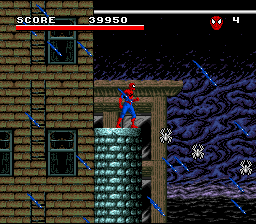
The production record makes those rough edges more than an easy punchline. A developer from Software Creations later shared an Acclaim production fax demanding a dense list of fixes on a short schedule. Time Extension reproduced the account, including a request to remove the term “Murderworld” after Nintendo objected. That is a tiny but revealing detail. Even the name of the villain’s setting could be renegotiated at the point when a team needed to finish code. The publisher, console maker, licensor, and studio were all present in the final cartridge, though only a fraction of that negotiation appeared on the cover.
A later Time Extension investigation interviewed people connected to the project and revisited a story told by Software Creations’ cofounder: the troubled schedule drew threats of litigation, work was spread across multiple teams, and a vacation-time dispute with Acclaim was followed by the studio losing a hoped-for Mortal Kombat assignment. The cofounder later recalled an executive claiming that lost opportunity had been worth $40 million in royalties. That figure is a recollection of what someone told him, not an audited loss. The larger point does not depend on it. A licensed game could place a small studio under exceptional pressure while the buyer saw only a famous superhero and a publisher’s logo.
Was Arcade’s Revenge doomed by its schedule? We cannot isolate a single cause from accounts decades later. The game still has fans who like its visual imagination and challenging variety. The reporting does, however, dismantle the idea that every flaw was born from indifference. Artists and programmers were trying to ship a complicated roster game under changing requests and a hard commercial calendar. The result can be criticized honestly while the conditions that produced it remain part of the story.
The contrast with Maximum Carnage two years later is instructive. Both came from Software Creations under the Acclaim/LJN umbrella. One tries to give several heroes distinct stage designs; the other narrows most of the action into a brawler and lets story, sound, and presentation make that action feel grander. The later game’s simplicity is not a failure of ambition. It is one reason its best ideas communicate immediately.
Marvel under the rainbow: heroes, mazes, and a very crowded screen
The Marvel games show the label’s range in miniature. The Uncanny X-Men on NES offers a roster of recognizable mutants and two-player action, then asks players to tolerate confusing stages and computer-controlled partners that are more liability than help. It is not enough to put Cyclops and Wolverine on the character-select screen. The appeal of a team game is that their powers create interesting choices. When the level design and partner behavior get in the way, the famous roster becomes a reminder of what the game ought to have been.
The Punisher takes a very different route: a gallery shooter with the cursor standing in for a gun. It understands the license’s blunt action appeal more immediately, even if the pad is an odd substitute for an arcade cabinet. The label was clearly not committed to one genre. It was committed to recognizable properties, with the genre selected by the team and commercial circumstances around each project.
By Maximum Carnage, comic-book style was finally built into the whole package: panels, speech, a noisy soundtrack, and a beat-’em-up structure that gave the heroes constant enemies to hit. Its notorious difficulty still makes it divisive. But compare its first ten minutes with the NES X-Men and you can see that a publisher can learn to sell a license more effectively without suddenly becoming a perfect curator of games. The red cartridge is not just a gimmick; it signals that somebody understood how to make the physical object feel like a comic event.
Inside Maximum Carnage: a comic event becomes a cartridge
The red cartridge did not appear out of nowhere. In an oral history of Maximum Carnage, an Acclaim producer recalled visiting Marvel after work on Arcade’s Revenge and hearing about the coming comic storyline. The team recognized that it had something more specific than a general Spider-Man license: a named saga with a beginning, a villain, a rotating cast, and a reason to fill a game with street fights. Development began while the comic was still taking shape. That timing explains both the opportunity and the risk. The game could arrive while the story was fresh, but it could not wait years for the definitive collected edition.
The story’s panels became more than a visual garnish. They organize why Spider-Man and Venom move from one fight to the next and make a brawler feel tied to a comic rather than merely decorated with comic characters. Players can choose between the two heroes at points, and allies arrive as dramatic assists. The soundtrack pushes the package toward a loud, almost theatrical 1994 mood. The Video Game History Foundation’s production archive preserves an Acclaim producer’s papers that include a stage-by-stage breakdown, a story outline, and Green Jellÿ music demos. Those surviving production materials are a useful antidote to the notion that a famous license automatically became a game. Someone had to decide which battles, panels, music cues, and transitions could fit a cartridge.
The marketing was equally deliberate. The same producer recalled the red shell’s impact and a theatrical trailer. A special comic-shop package linked the game to a hardcover edition and collectible pins. That is a striking escalation from the earlier LJN habit of letting a film title do most of the work. Here the physical cartridge, comic source, soundtrack, trailer, and shop display reinforced one another. The toy tie-ins are incidental to our game story; the lesson is how a publisher could surround an actual game with an event-sized campaign.
None of that turns Maximum Carnage into a flawless beat-’em-up. It is long, hard, and repetitive, and the lack of simultaneous two-player play remains a common complaint. The later Venom/Spider-Man: Separation Anxiety, sold under Acclaim’s identity rather than the same LJN presentation in many markets, did offer cooperative play. That comparison gives players a useful experiment: which matters more, the first game’s comic-event atmosphere or the second game’s chance to fight alongside a friend? The answer differs by living room.
Wolverine, Spider-Man, and the hard question of superhero movement
Superheroes expose a problem that a movie tie-in can sometimes hide: players already know exactly what a hero should be able to do. Wolverine ought to move like a compact, furious fighter whose claws change close combat. Spider-Man ought to swing, climb, and dodge with an ease that makes gravity feel optional. An NES pad gives a developer a directional cross and two action buttons. The gap between the comic-page fantasy and the available controls is enormous.
Software Creations’ 1991 NES Wolverine puts that problem in the foreground. It offers jumping, claw attacks, and a health bar that can regenerate, but using the claws can cost energy. That decision gives the player’s most famous ability a price. It might be defended as a way to prevent effortless slashing. It also produces a strange emotional effect: the game asks you to save Wolverine’s defining move for when it is worth the damage. The result is less like inhabiting an indestructible hero than bargaining with a strict resource meter. A player who learns that bargain may find a real action challenge. A fan who simply wants to be Wolverine may feel the design fighting the license.
Spider-Man: Return of the Sinister Six, released on NES in 1992 and developed by Bits Studios, faces an even more visible expectation. Its title promises six villains, so the game becomes a tour of stages and boss encounters. Webbing and climbing are present, but having those abilities is not the same as making them feel fluid. Early superhero games repeatedly confused a hero’s list of powers with the physical pleasure of using them. That is why the later success of Maximum Carnage should not be summarized only as better graphics. It chose a form—close brawling, assist characters, comic panels—that could communicate its source’s energy within the hardware and schedule it had.
The Game Boy Amazing Spider-Man trilogy offers another experiment. In your hand, on a small screen, Spider-Man’s movement must remain readable in four shades. Complexity can make him feel clumsy; simplicity can make him feel generic. Each title is a negotiation with that constraint. They also show why the rainbow’s reputation cannot be graded only from a television set. For some children, LJN’s Spider-Man was a portable companion on a school trip rather than a cartridge rented for a weekend.
By the SNES era, Wolverine: Adamantium Rage and Spider-Man had more color and animation to work with, but the design question stayed. More detailed art can sharpen the mismatch if the movement still does not feel heroic. That is the recurring test across LJN’s Marvel output: did the game translate the character into actions, or did it use the character to make ordinary actions seem more exciting on a box?
The wrestling series becomes a living-room rivalry
There is a similar test for the WWF titles, although it happens between two players on a couch. WWF Super WrestleMania on SNES gave fans a roster and the ring, but a roster alone cannot recreate the pace of wrestling television. WWF Royal Rumble made the promise more explicit: the headline match is about surviving while new opponents arrive and the ring becomes crowded. WWF Raw followed with another round of bigger 16-bit spectacle. Sculptured Software’s work on key entries made this a recognizable line within the much more scattered LJN catalog.
These games live or die in the moment when two players lock up. Can you read who has control? Do reversals feel earned? Is a signature move a climax or just another button sequence? The 16-bit titles offered more expressive sprites, more wrestlers, and more modes, yet they also relied on timing and button knowledge that a first-time player might not grasp. A friend who owned the cartridge could dominate a newcomer before the newcomer understood what the grapple system was asking. That asymmetry could make a game a household obsession or a very brief rental.
The platform labels add another useful wrinkle. The SNES Royal Rumble bore LJN’s mark, while the Genesis edition commonly appeared under Flying Edge, another Acclaim label. A player could have essentially the same licensed wrestling experience without ever seeing the rainbow. That is a warning against treating the logo as a magical property of the game code. It was a publishing imprint operating inside a larger company. Acclaim could route releases through different names and territories while studios worked on the play itself.
Some modern players remember these wrestling releases warmly because they were social games. A r/SNES discussion contains memories of spending hours with Royal Rumble and Raw, alongside complaints about moves and differences between versions. That mixture is more useful than another blanket verdict. The game a single critic calls shallow might have hosted a year’s worth of sibling rivalries. The game a family loved could still have been awkward for someone meeting it without a manual.
This does not excuse every thin mechanic. It locates the value where it was actually felt: a television license, a favorite performer, and an opponent sitting within arm’s reach. For a company so often associated with solitary frustration, the WWF line is an important reminder that LJN also sold games meant to make a room noisy.
Wrestling: the stars on the label and the struggle in the ring
Wrestling was another license category with built-in sales power. A roster full of television stars could make a child point to a box before knowing what kind of wrestling game was inside. LJN-published titles such as WWF WrestleMania Challenge and WWF WrestleMania: Steel Cage Challenge came from different development teams; the latter credits Sculptured Software. They offer the novelty of controlling recognizable performers, but the mechanics and presentation do not always reproduce the spectacle of a televised match.
That difference matters more in wrestling than in some other sports. A wrestling fan wants character: entrances, signature moves, feuds, crowd momentum, and the feeling that an outrageous comeback is possible. An NES game with a limited move set and small sprites can offer competition without delivering the theater. Those limitations were not unique to LJN, but the publisher was selling the names that heightened the gap. A familiar performer on the box could make a mechanically thin match feel especially disappointing.

The 16-bit systems improved what could be shown and heard, but they did not automatically solve wrestling design. Bigger sprites and more buttons helped. They also raised expectations as arcade wrestling games demonstrated how wild a match could look. The WWF releases are an important part of the LJN story because they remind us that the movie-adaptation stereotype was never the whole catalog. The same publishing instinct—put a famous entertainment property in front of a game buyer—operated in a ring as well as a cinema.
The portable rainbow and the sports shelf
Many accounts of LJN stop at the NES and SNES because their screenshots make better jokes. The Game Boy catalog shows the strategy adapting to a very different screen. The handheld received The Amazing Spider-Man and two sequels, WWF Superstars and its follow-up, WWF King of the Ring, NBA All-Star Challenge and a sequel, Alien 3, Terminator 2, True Lies, The Incredible Crash Dummies, and more. These were often not simple portable mirrors of their television counterparts. Limited space, monochrome art, and a short battery-powered session forced developers to choose which part of a property mattered most.
For Spider-Man, that meant the web-slinging silhouette and a sequence of obstacles that could read on a tiny screen. For wrestling, it meant recognizable names and a match structure, even when dramatic entrances and crowds could barely be represented. For an action film, it meant selecting enough set pieces to keep the title recognizable. A big console adaptation might disappoint because it left out a beloved scene. A Game Boy version had to leave out almost everything. The question was whether what remained still made a coherent game.
Sports also gave LJN steady shelf space beyond fictional licenses. NFL appeared on NES. NBA All-Star Challenge and NFL Quarterback Club reached handheld or 16-bit systems. Roger Clemens’ MVP Baseball crossed generations. WWF Royal Rumble and WWF Raw put television personalities in bigger 16-bit rings. The spread suggests a company seeking properties with an audience already attached, regardless of whether they came from film, comics, or televised sport.
The discipline required to judge them is the same. Do not award a baseball game extra bases because a star is on the label. Do not dismiss a Game Boy Spider-Man game because it cannot show the splashy colors of a comic. Ask what actions the hardware lets you perform, what the game explains, and whether the license adds a meaningful choice or only a reason to pick it up. That approach makes LJN’s catalog less uniform, and far more revealing.
Alien 3, Terminator 2, and the film that would not fit
The 16-bit movie licenses inherited a challenge that had tormented the NES games: what do you do when the film’s actual plot resists a conventional action game? Alien³ is an instructive answer. The film is grim and constrained; a game must give players something repeatable to do. Probe Software’s SNES version builds missions around rescuing prisoners from alien-infested spaces. It can feel busy and tense, but it is not simply a playable copy of the movie. The film supplied setting and threat. The developers invented a mission structure.
The Terminator 2: Judgment Day games show how slippery a single license could become. Arcade gun action and home-console side scrolling were different products with different strengths, even when the title was the same. Bits Studios developed the SNES side-scrolling game published by LJN; it mixes combat, driving, and film objectives. That variety can sound generous on the back of a box. In motion, abrupt shifts in control and pacing can make it harder to settle into a satisfying rhythm. The movie’s iconic scenes become a checklist rather than the foundation of one strong game loop.
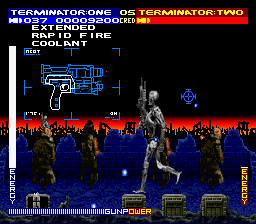
These games are often judged by how faithfully they reproduce a movie. That is only half the test. Faithfulness can be a problem if the source story is too passive, too short, or too varied to make a repeated action loop. The stronger question is whether the game found a playable equivalent to the film’s central feeling. Alien³ could make danger and rescue into a mission. Terminator 2 had a machine, a chase, and a threat from the future, but tying them together consistently was harder. The rainbow advertised the movie; the controller exposed the adaptation choices.
True Lies and the last movie-game gamble
True Lies arrived in 1995, near the end of the familiar LJN run, with Beam Software developing the SNES and Game Boy editions. It is an especially useful counterexample to the claim that a movie adaptation under the rainbow had to be a careless side-scroller. The SNES game views action from above, letting Harry move through chateaus, malls, and other environments with a range of weapons and objectives. The perspective gives the player more room to plan than a corridor platformer would. It also makes civilian safety a part of the pressure rather than treating every moving sprite as a target.

It still runs into the adaptation wall. The film mixes espionage, comedy, family deception, and huge stunts. A cartridge can recreate locations and shootouts more readily than a comic performance or a marriage under strain. That selective translation is not automatically wrong. It is a reminder that a game’s fidelity must be measured in what the player does. Beam found a more cohesive action language here than in its earlier Back to the Future street loop, even if no screen could deliver the whole film.
The late Marvel side of the label was similarly uneven. Wolverine: Adamantium Rage on SNES pursued a more elaborate solo adventure with wall-climbing, fights, and a healing mutant. Spider-Man on SNES in 1995 drew from the animated television era. Their celebrity did not solve pacing or difficulty, but neither is merely a retread of the NES Uncanny X-Men. The 16-bit years gave developers more expressive art and sound, while asking them to satisfy a comic audience that already had strong images in mind.

One small trap for historians is the word “version.” A title shared across NES, SNES, Genesis, and Game Boy may describe separate games or substantially altered designs. Platform credits may also move between LJN, Acclaim, and Acclaim’s other labels by territory. That is why this history follows the rainbow where it actually appears, then notes related versions without claiming every platform was an identical LJN release. It is less tidy than a single master list, but it respects the games.
The games that refuse a neat verdict
The full catalog is too varied for a ranking that pretends every title can be judged by one standard. The NES Punisher turns Marvel’s vigilante into a light-gun-style shooter controlled with a gamepad. Beetlejuice, Bill & Ted’s Excellent Video Game Adventure, The Uncanny X-Men, and sports adaptations all make different kinds of bets on what players wanted from familiar names. Some are awkward, some are punishing, and some have defenders who learned their eccentric rules. They do not form a single school of game design just because the package shared a logo.
One recurring problem was expectation-setting. A movie name invites a player to ask for a particular scene or feeling. A good adaptation can answer that demand indirectly with a mechanical equivalent. A poor one offers a character sprite and a generic obstacle course. The NES market was full of licensed games, and LJN was hardly alone in making that mistake. Its unusually consistent visual identity, combined with several high-profile disappointments, made it unusually easy to remember as the villain.
Another problem was the weekend-rental economy. These cartridges often met players through a plastic case at a video store, not through weeks of research. A cover could make a choice obvious; a magazine review might not be available. If the game demanded a manual, a map, or patience to reveal its strengths, a rental could punish it. If it was short, a rental might actually suit it better than ownership. The same business channel could make Jaws seem worth a dollar and Friday the 13th seem impossible to learn before Sunday night.
The rainbow catalog at a glance
No short checklist can capture every regional imprint or platform variation, but the GameFAQs company catalog provides a practical map of the North American and selected European releases attributed to LJN. The groups below name the major console and handheld games in that record; a repeated title on another system may be a different build, not an interchangeable port.
1987–1989 · The NES establishes the label
Gotcha! The Sport!; The Karate Kid; Jaws; T&C Surf Designs: Wood & Water Rage; Major League Baseball; Friday the 13th; Back to the Future; NFL; Who Framed Roger Rabbit; and The Uncanny X-Men.
1990–1991 · Horror, comedy, superheroes, sports
Pictionary; Game Boy The Amazing Spider-Man; Back to the Future Part II & III; A Nightmare on Elm Street; WWF WrestleMania Challenge; The Punisher; Beetlejuice; NES and Game Boy Bill & Ted games; Wolverine; Roger Clemens’ MVP Baseball; and the first Game Boy WWF and NBA titles.
1992–1993 · Many systems, many versions
Terminator 2: Judgment Day; T&C Surf Designs: Thrilla’s Surfari; Spider-Man: Return of the Sinister Six; Spider-Man and the X-Men in Arcade’s Revenge; WWF Super WrestleMania, Steel Cage Challenge, Royal Rumble, and King of the Ring; Alien 3; The Incredible Crash Dummies; NBA All-Star Challenge; NFL Quarterback Club; and Game Boy Spider-Man sequels.
1994–1995 · The final familiar run
Spider-Man and Venom: Maximum Carnage; Wolverine: Adamantium Rage; WWF Raw; Warlock; Spider-Man; True Lies; and later handheld sports variants. GameFAQs also lists the 2000 Dreamcast Spirit of Speed 1937 under the company, a late reuse of the name rather than a continuation of the NES-era rainbow program.
Why spend space on a catalog? Because the famous five or six NES disasters are only one slice of what buyers encountered. The entries reach paintball, baseball, drawing, surfing, licensed horror, superhero action, wrestling, handheld sports, and a late Dreamcast oddity. A claim about “every LJN game” has to survive this diversity. The stronger historical argument is narrower: LJN made property recognition central to its publishing business, then had wildly inconsistent success turning those properties into playable designs.
Manuals and box copy are part of this history, too. The rental store often separated a cartridge from its instructions, and used games rarely came with a complete package. That changed the difficulty of experiments such as Friday the 13th and Bill & Ted: a system that might be legible with a map or explanation could look arbitrary when encountered cold. Conversely, a familiar movie poster on a box required no instruction at all. A publisher could win the purchase decision in seconds while the game needed hours to explain itself. This imbalance was especially sharp for LJN, whose strongest commercial asset was immediate recognition and whose more interesting designs often asked for patience.
That gap is also why retrospective play can produce an honest disagreement with childhood memory. Today a player can pause, consult a manual scan, compare strategies, and restart without a Sunday rental deadline. Those tools can reveal a clever mechanic that was always present. They cannot erase the frustration of the original encounter. Both experiences belong to the history of a game: the design on the cartridge and the conditions under which people first met it.
How the internet put LJN on trial again
The company faded, but the rainbow became a character in internet game criticism. Angry, comic replays of old cartridges turned frustrating design into entertainment. The Angry Video Game Nerd made LJN a recurring target, and his theatrical disgust gave new audiences a simple visual cue: if the rainbow appears, prepare for pain. The videos did not invent every complaint. Players had been frustrated by these games for years. They did amplify a retrospective identity that could be applied to titles that scarcely resemble one another.
The response has produced its own counter-movement. Forum conversations now often begin by pointing out that LJN published games made by different studios. Some fans argue that Jaws, Friday the 13th, Nightmare, or Maximum Carnage are better than their meme reputation. Others answer that knowing the developer does not make a bad session enjoyable. Both sides sometimes overcorrect. A publisher can be responsible for choosing, funding, and releasing uneven games without literally coding them. A critic can be funny and accurate about a frustrating moment without delivering the final word on every game’s design.
That is why the voices in old and new discussions belong in this history. They tell us how games are experienced across time. A GameFAQs player who rented Jaws cheaply, another who took weeks to conquer Jason, and a Maximum Carnage regular are reporting different bargains with the same publisher’s catalog. None should be reduced to a meme reaction shot.
A participant in a separate r/NES conversation called Who Framed Roger Rabbit “a surprisingly complex open world detective adventure.” Another player could describe the same game as confusing. The quote matters because it notices the idea beneath the frustration. A critic who sees only a rainbow can miss the design that did not quite work.
One last rainbow on the Dreamcast
The neat ending would be to say the LJN name vanished with the mid-1990s cartridge business. The actual catalog has a coda. Spirit of Speed 1937, a racing game for Dreamcast in 2000, carried an LJN credit years after the familiar NES and SNES run. Its premise was miles from Jason, Marty, and Marvel: prewar racing machines, tracks, and a game trying to evoke an older era of motorsport. That is why it makes such a strange final image. A name remembered for brightly licensed 8-bit cartridges appeared in the credits of a late-1990s 3D racer on Sega’s last console.
This was not the start of a bold new LJN lineup. The GameFAQs company record lists the Dreamcast release after a five-year gap, and the Dreamcast preservation archive treats it as the label’s final credited game. The significance is symbolic rather than commercial. A corporate imprint can linger long after the publishing strategy that made it famous has ended. The logo may still be usable on a box even when the market, hardware, and audience have changed around it.
It also sharpens the question of what “LJN game” means. If the phrase means any game with the name on its package, the Dreamcast racer belongs. If it means the Nintendo-era system of acquiring famous film, comic, and sports properties, it barely resembles the series that built the reputation. Historians need both definitions. The first captures a verifiable credit; the second captures the experience of a generation of players. Confusing them makes the ending look tidier than it was.
The retro afterlife is stranger still. The internet turned the rainbow into an instantly readable visual joke, but that joke sent some players back into the catalog. They found a short Jaws loop they enjoyed, learned the routes of Crystal Lake, heard an outsized Pictionary soundtrack, or discovered a True Lies game more considered than its cover reputation suggested. Others replayed Back to the Future and concluded that the old joke was fully earned. That is a healthy historical outcome. A meme can be an invitation to inspect the evidence, provided it does not replace the inspection.
There is no single secret that explains the rainbow. It was a publishing mark used across studios, eras, genres, platforms, and owners. The company chose licenses and put games on shelves. The teams beneath it made systems with varying skill, time, and support. Retailers and children supplied their own hopes. Sometimes the box and game met in the middle. Sometimes they missed by an entire movie theater. The reason LJN endures is that both outcomes are still visible, side by side, under one small set of colors.
The end of the label, and the part that survived
By the mid-1990s, the LJN mark had largely disappeared from new game packaging as Acclaim concentrated its releases under other names. The rights, people, and studios behind individual games followed different paths. The logo’s reputation, however, grew stronger in hindsight. It survived in lists of bad adaptations, video essays, collector conversations, and arguments over whether the disliked titles were misunderstood. In a strange way, the rainbow outlived the business plan that put it there.
The fairest verdict is not a pardon or a conviction of every cartridge. LJN released games whose movie covers promised more than their mechanics delivered. Back to the Future remains a painful example. It also published games with genuine ideas: Friday the 13th‘s hostile survival map, Nightmare‘s sleep-state shifts, Roger Rabbit‘s detective structure, Jaws‘s brisk arcade loop, and Maximum Carnage‘s comic-book brawling. The quality of execution varied wildly. The effort to translate famous entertainment into play was real.
If the rainbow still makes you wince, that memory deserves respect. A child had one rental, not a historian’s spreadsheet of subcontractors. But if you want to understand LJN rather than repeat a joke, play a few titles back to back and ask what each studio tried to make, what its license demanded, and what its publisher chose to put on the shelf. The result is a messier and much better story: an NES-era publishing machine that could sell a dream before the first button press, then sometimes struggled to make the dream playable.
Play them now, with the history in mind
Start with Jaws for the short-form argument, Friday the 13th for the ambitious and punishing one, Nightmare for its sleep mechanic, and Maximum Carnage for the 16-bit label at full volume. Retro Replay’s Mesen emulator entry is a place to begin exploring NES software on modern hardware. Use copies you own or are otherwise authorized to play. The games are more interesting when you can test the arguments yourself.
Sources and reading trail
Catalog and production archive: GameFAQs LJN release catalog, Video Game History Foundation’s Maximum Carnage stage breakdown, and the Maximum Carnage oral history. Developer testimony and reporting: the Arcade’s Revenge production fax and follow-up interviews. Contemporary business reporting: Los Angeles Times on MCA’s agreement to sell LJN and UPI on the subsequent price dispute. Developer credits and game records: MobyGames’ Friday the 13th credits, GameFAQs’ Nightmare release data, and Retro Replay’s linked game entries. Retrospectives: Time Extension on Rare’s Nightmare and Talking Pixels on Roger Rabbit. Community quotations link directly to their public GameFAQs threads; these are individual player memories and opinions, identified as such.
More video game history from Retro Replay
Follow the stories that intersect with LJN’s era, from its parent company’s rise to the consoles and genres competing for the same players:
- The rise and fall of Acclaim Entertainment — the publisher that bought LJN and put the rainbow to work in its larger licensing machine.
- The history of Double Dragon — how beat-’em-ups developed around the same era as LJN’s comic-book brawlers.
- The complete history of the Sega CD — another 1990s attempt to turn big entertainment promises into playable games.
- The rise and fall of the Atari Jaguar — the console race taking shape as the LJN label faded.