Retro Replay Retro Gaming History, Reviews & Emulation
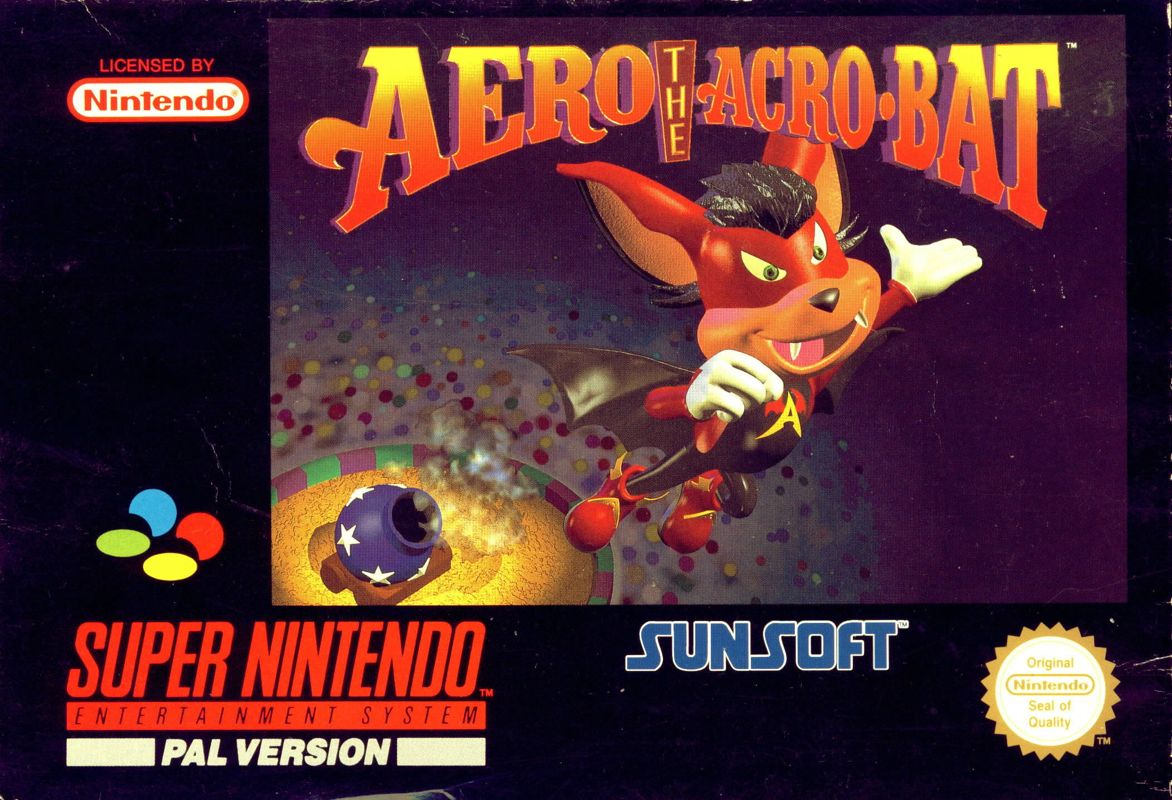
Before Aero the Acro-Bat saves a single circus performer, the game asks him to jump through a hoop. Then another. Then to find the exit that those hoops have opened, while clowns, spikes, and a timer make his first day at work feel like a hostile audition. He can fly a little, drill through enemies, and throw stars. He cannot simply run to the right and call it a level.
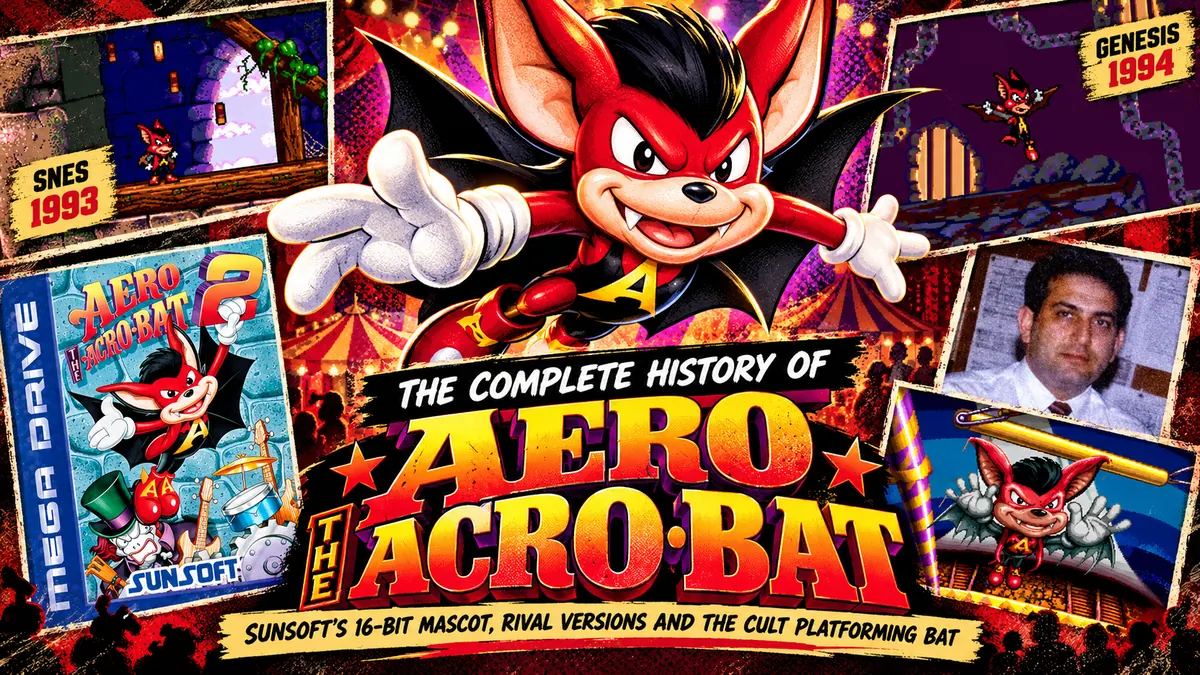
That is a good way to meet Aero: upside down, late for an objective, and trying to decide whether the red bat on the box is the next great video game mascot or the reason you have just lost your last life. Sunsoft launched him into a 1993 market full of animals with attitude. He got two 16-bit adventures, a spin-off for his former enemy Zero, a Game Boy Advance return, and then a long stretch in the wings. The story is stranger and more human than another mascot chasing Sonic. It begins with a game journalist who wanted a different kind of platformer, his son drawing its cast, and a development team making the circus dangerous enough to swallow its own star.
The man behind the mask and the bat
David Siller had already worn one improbable game-industry identity. At Electronic Gaming Monthly, he helped build the Review Crew and played the original Sushi-X, the magazine’s mysterious reviewer whose face readers were not meant to see. He also sold ads, covered shows, wrote copy, and answered angry calls when issues were late. In a 2007 interview, Siller remembered doing enough jobs to keep the young magazine afloat and then watching someone else take the ad role as business improved. It is his account, and it has the tone of a man who has not forgotten the bill.

There is a dating wrinkle in the published interviews. Siller told Sega-16 he was hired by Sunsoft in January 1990; a 2005 Game Developer profile puts the move in 1992. The exact month is less important to Aero than what Siller carried into the job: a critic’s feel for expensive cartridges and a designer’s suspicion that reaching the end of a stage had become too easy an answer. At Sunsoft, he had latitude to plan games around the company’s licenses. He wanted an original character of his own, too.
Justin Siller, David’s son, was studying graphic design and contributing concept art before the project was approved. In his account of Aero’s creation, he traces the bat’s shape to Looney Tunes, Mickey Mouse, comics, and Batman: a cartoon body that could sell movement, with a trace of superhero confidence. For Edgar Ektor and his gang, Justin mixed circus clowns with the theatrical menace of glam and heavy metal. That is why the villains do not look like cheerful party entertainers. They look like a rock band that has locked the exits.

David said Aero had lived in his head for years. Sunsoft considered him as a possible company mascot, and David recalled a discussion with Sega executive Hayao Nakayama about making him exclusive to Sega hardware. Sunsoft chose a broader path. The game would ship for Genesis and Super Nintendo. This was sensible reach for a publisher; it also meant that the same character would meet players through two machines with different color, sound, and screen strengths.

The outside developer was Iguana Entertainment. Justin praised the team’s professionalism; the work itself would make their name more interesting than a logo at startup. Iguana’s artists and programmers had to turn a peculiar design request into something readable at speed: the hero should move through a stage, but the exit should stay closed until he had performed the act. A hoop might be the goal. Another stage might ask him to ride an attraction or find a particular sequence through the scenery. The instruction screen tells you what the act requires, then the circus starts trying to kill you before you have memorized it.
The World of Amusement turns ugly
The plot is Saturday morning excess with a mean streak. Edgar Ektor was expelled from the World of Amusement after a childhood prank almost killed a circus animal. He returns years later as an industrialist with a grudge, a gang of clowns, and the power to turn a fun park into a trap. The performers are kidnapped. Aero, the star acrobat, must retrieve them and rescue his girlfriend Aeriel. The modern publisher’s game description still tells the story with that gloriously overcommitted logic: a billionaire has decided to destroy fun because a circus banned him as a child.
The first Aero the Acro-Bat arrived in 1993. Its four areas contain five stages each, and the locations make amusement-park promises they cannot keep. You balance on tightropes, launch from cannons, dodge moving hazards, and work out where the next required hoop is hiding. Aero’s signature drill is a diagonal lunge through the air; lining it up is satisfying when an enemy is in the way, awkward when the enemy is a little lower than expected. Stars offer a safer ranged attack, but they are limited. The game encourages acrobatics and then taxes every misjudged landing.
That mixture gives the first game its character. The circus is colorful enough to suggest a toy box, but the level design is willing to waste your afternoon. A spike can undo several careful minutes. An objective can send you back across a stage you thought you had conquered. And, on the original cartridges, there is no password system to soften a bad evening. You learn the route or you begin again. When a modern player calls Aero difficult, it is more precise to say that the game combines exacting movement, large stages, and a demand that you remember what the act was supposed to be.

Justin Siller later supplied the production explanation. Internal testers played every day, grew skilled, and made the balance look gentler than it was to a new owner opening a cartridge at home. He said the team realized after release that it had tuned the game too hard for beginners. That is a remarkably candid answer, and it fits the feel of the game better than pretending every punishing jump was a calculated masterpiece. The sequel would add passwords and revise movement and difficulty. Aero’s first outing was a hit sturdy enough to earn that correction.
Period critics did not speak with one voice. Electronic Gaming Monthly favored the Super Nintendo edition and later named Aero its best new character of 1993, while some reviews admired the challenge more than others did. A collection of period review excerpts is useful for seeing the range without pretending a single score settled the argument. Aero stood out on a crowded shelf. He also asked more patience than the bright box suggested.
A player in a 2024 discussion of the rerelease trailer remembered going to rent Sonic, finding only Aero, and being told it was “basically the same thing.” It is a memory, not a sales record, but it catches the shelf-level mistake the creators kept fighting. Both heroes were cartoon animals with large shoes and big marketing energy. Sonic rewarded the line you found through a stage. Aero frequently stopped you at the exit and asked whether you had finished the assignment.
A sequel that lets the bat breathe
By the time Aero reached his second game, a circus tent was too small for the job. Aero the Acro-Bat 2 begins with Ektor’s museum of horror and a magic box that sends the hero somewhere far from the park. The setup is ridiculous in the useful platform-game sense: it gives the artists permission to take a bat through strange worlds, winter scenery, dungeons, and machines. Justin Siller remembered that freedom plainly. Leaving the circus opened room for snowboarding and environments that the original premise could not comfortably hold.
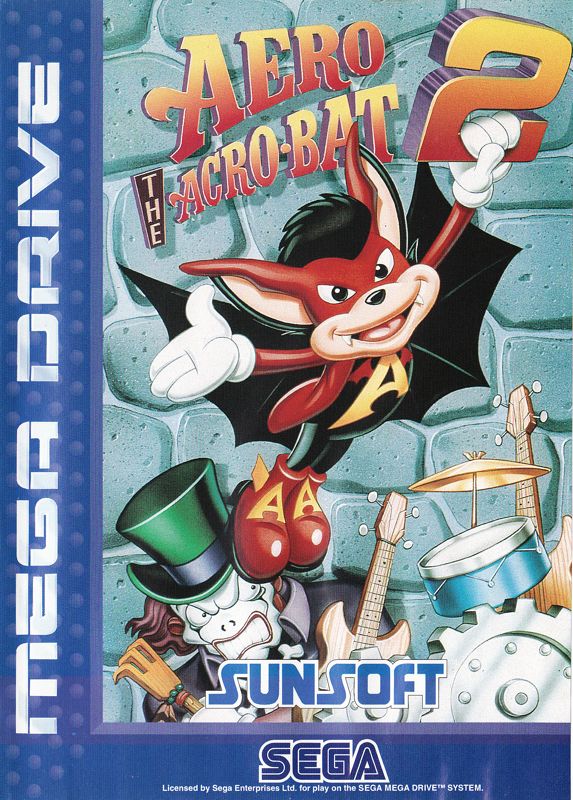
The sequel came in 1994 on Genesis and Super Nintendo. David Siller and Nigel Cook handled much of its design, Justin said, while Sunsoft and Iguana produced it alongside Zero’s spin-off. The change you feel first is not the backdrop. Aero has more room in his animation and more confidence in his moves. He can still drill, but the control language is clearer, and the game gives him a wider variety of situations in which to use it. Secret spaces reward curiosity. The environments have a stronger sense of travel than the original’s succession of circus trials.
It is still possible to get lost or punished. Aero did not turn into a carefree sprint just because a new cartridge had a “2” on it. But the password system changes the relationship between the player and the large levels. Losing a life no longer threatens to erase the whole trip. That sounds mundane until you remember how many early 1990s platform games made a child replay the beginning because dinner happened. Here, the team acknowledged that its first game had asked for too much repetition and gave the audience a way back in.

There are small machine-level differences worth noticing. Both versions tell the same adventure, but Genesis and Super Nintendo draw and sing it through different hardware. Iguana artist Jools Watsham, who worked on the Aero family of games, described the everyday tradeoff: Genesis offered more horizontal resolution and could handle more sprites, while Super Nintendo gave the artists a deeper palette. The latter’s music hardware suited the cinematic mood Justin wanted for Zero. These are production choices, not a verdict that every scene is automatically better on one console. A screen full of animated hazards can benefit from one machine; a rich gradient and a piece of music can favor the other.

Contemporary reviewers noticed the repair job. GamePro praised the darker theme, larger levels, new moves, and improved controls. Electronic Gaming Monthly found a satisfying sequel in its secrets and techniques; Next Generation thought the games still lacked originality. Those disagreements are more illuminating than a consensus score. Aero 2 can be a better-playing sequel without having invented a new genre. Its achievement was to make the first game’s unusual obstacle course more inviting to live inside.

The henchman takes his own exit
The bat was not the only character the team wanted to follow. Zero had entered the series as one of Ektor’s people, a squirrel with sharper edges than the hero. Justin Siller thought there might be an antihero in him, but said the separate game was not seriously discussed until Aero had succeeded. Once it was, the teams moved quickly. Zero the Kamikaze Squirrel was built alongside Aero 2, with Justin and Iguana’s Neill Glancy as core design partners.
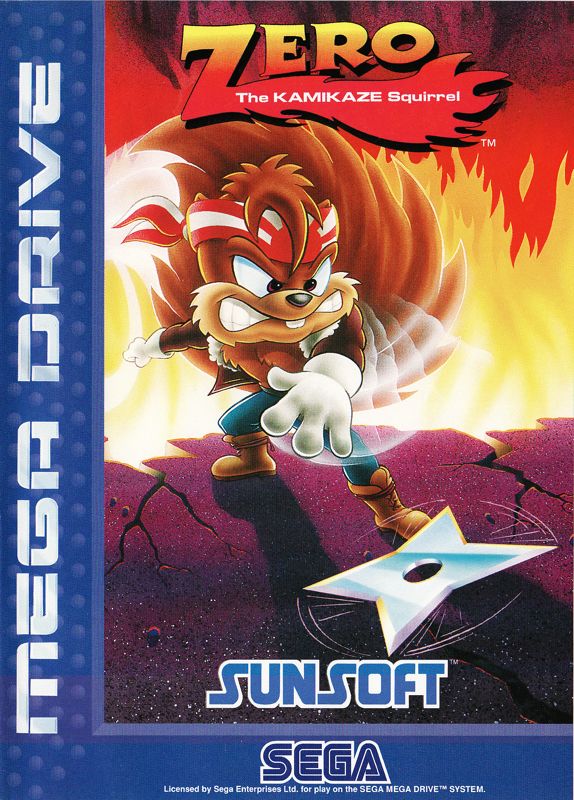
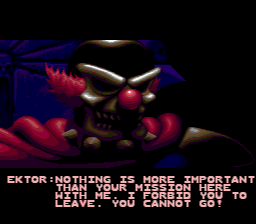
The plot gives that turn just enough excuse. Zero receives word that his home forest is in danger and his girlfriend’s father has been taken. Ektor refuses to let his employee leave. Zero leaves anyway, and the boss sends trouble after him. The joke is that a henchman suddenly has a better moral compass than his employer. The game takes that modest rebellion and runs it through forests, water, mines, rides, and fights with bigger personalities than the first Aero sometimes allowed.
Justin wanted Zero to feel different, not like Aero in a squirrel costume. He drew on anime for the character and planned a more ambitious set of vehicles. Budget, schedule, technology, and the distance between Sunsoft and Iguana forced some of that plan to shrink. This is the sort of cut that rarely appears on a box: the finished game suggests more variety than many mascot spin-offs, but the design team could see the larger version it had been unable to build.
Jools Watsham’s account gives the art its own story. On the first Aero, he had made a single enemy. For Zero, he became lead artist, working on character animation, backgrounds, enemies, and even fonts. He remembered art director Matt Stubbington as an important mentor and said the small team studied Disney’s Aladdin frame by frame to understand how animated bodies stretch and snap back. This does not make Zero a Disney cartoon. It explains why his movements have such appetite: he seems eager to arrive at the next frame before the player is.

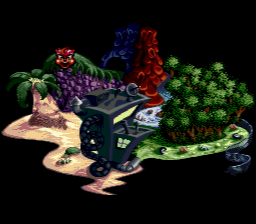
Zero’s attacks are faster and more direct than Aero’s careful hoop work. He slashes, spins, and vaults through stages that want him to look capable. The early fun is momentum: get a feel for his arc and a screen that looked crowded becomes a path. Some hazards still insist on old-fashioned memorization, and the game’s tone cannot entirely decide whether it is silly circus fiction or a darker action cartoon. That tension is part of its appeal. The former villain has left the big top, but he has not left its excess behind.
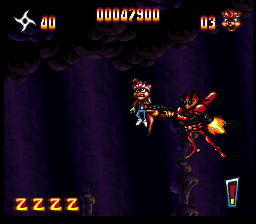
Watsham told Sega-16 that Sunsoft’s Aero and Zero assignments felt more creatively exciting to him than some of Iguana’s licensed sports work. It is a small but telling piece of the studio’s history. Iguana would later be associated with Acclaim’s sprawling rise and fall, but here its artists were helping invent a world nobody had licensed from a movie or a league. They had room to make a bat and a squirrel more peculiar than any brand manager would have requested.
The show closes before the next act
Three games in roughly two years should have been the beginning of a franchise. Then Sunsoft lost the conditions that had made it possible. Justin Siller said the company’s downsizing “quashed the momentum” for more Aero and Zero games. David Siller offered a sharper personal account: he believed Sunsoft resources had been redirected toward a golf-course venture and left for Universal Interactive Studios when other opportunities appeared. His explanation is one participant’s account of the company’s decline; the visible result is less disputed. The mascot did not get the sustained follow-through that a publisher gives its lasting stars.
There were ideas. David and Justin spoke of wanting new Aero and Zero games. A later proposed third installment, A3RO, never became a released PlayStation sequel; Unseen64 documents the cancelled pitch. That distinction matters. Aero was not retired by an onscreen finale or a decisive public rejection. The people who made him moved, the company contracted, and the industry’s appetite shifted toward 3D. A cartridge mascot can disappear that way, through schedules and budgets rather than a dramatic defeat.

David’s next chapter makes the interruption sting. At Universal, he produced on Crash Bandicoot, another animal mascot who found the institutional backing and new hardware Aero lacked. Later he worked on Maximo: Ghosts to Glory. None of that proves a hypothetical 3D Aero would have worked. It does show that his taste for cartoon danger and demanding movement was still commercially useful. The bat had lost his place in the schedule, not necessarily his creator’s interest.
A smaller screen, a second chance
In 2002, Aero returned on Game Boy Advance. Atomic Planet adapted the original game; David Siller said he produced the port. Outside North America it carried the longer subtitle Rascal Rival Revenge, while Japan knew it as Acrobat Kid. The handheld version was not a new third adventure, and Justin Siller described it as an enhanced port rather than a project that needed his design work.

The most meaningful change was small and merciful: battery-backed saving. A player could leave the circus and come back without surrendering every completed act. On a portable console that might be closed because a bus arrived or a parent called, it was more than a convenience. It corrected the original cartridge’s harshest assumption about a player’s time. The tighter screen brought its own visibility costs, and the 1993 design had not suddenly become a new game. Still, the GBA release let a different generation discover why Aero had been memorable, including the parts that could make them put it down.

David was still proposing a fuller return. In a 2005 interview with Frank Cifaldi, he described an “A-Z Force” idea: rework the second Aero game and Zero together for GBA. It did not become the announced two-game package. The detail is revealing because it puts the series’ absence in proportion. There were people willing to try again, but a project needs a publisher, money, a team, and a market moment. Fondness alone cannot compile a cartridge.
The long route back to the shelf
Aero’s games survived through collectors, older hardware, and later digital releases. In 2024, Ratalaika Games and Shinyuden brought the series to current consoles one title at a time. The original arrived on August 2, Aero 2 on September 6, Zero on October 4, and the GBA version on November 1. The releases offered save states, rewind, galleries, and other modern conveniences. They did not erase the original design, but they let a curious player see more of it without making every mistake a demand to start the entire show again.
By September 2026 the physical Aero the Acro-Bat Legacy + Sunsoft Lost Gems collection had also arrived for Switch and PlayStation 5, bundling the Aero titles and Zero with two other Sunsoft games. A once short-lived mascot now had the kind of boxed retrospective that did not seem likely when Sunsoft contracted. Modern availability is a better chance to judge the games than a half-remembered rental, though that rental experience remains part of their history.
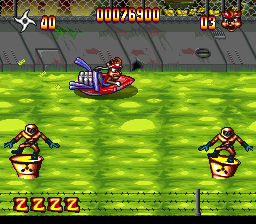
If you want to try the original console editions on a computer, Retro Replay’s Snes9x profile points to a well-established Super Nintendo emulator. Use a game copy you are entitled to play. The current console releases are the simpler route and include their own rewind and saving tools. For a fair first encounter, try Aero 2 after the original: the first game shows the ambition and the rough edge; the sequel shows the team responding.
There is a temptation to judge every 1990s mascot by whether it became Sonic. Aero never had that scale of fame, and the original game sometimes made its own case too painfully. Yet few of the era’s hopeful animals arrived with such a specific proposition. The exit stayed shut until you did the act. The sequel listened when players struggled. A villain’s henchman proved interesting enough to steal his own game. Then the business around them changed faster than the characters could. Aero’s story does not need a lost masterpiece hiding behind every cancelled plan. It has something more recognizable: a talented team got a strange, bright idea into the world, improved it in public, and was called away while the circus lights were still on.
Reporting notes and sources
Creator and team accounts: David Siller interview; Justin Siller interview; Jools Watsham interview; Frank Cifaldi’s 2005 David Siller profile. Game and release documentation: original Aero manual scan; Ratalaika’s original-game page; 2024 release announcement; Selecta Play collection announcement. Period reception is discussed via archived review excerpts.