Retro Replay Retro Gaming History, Reviews & Emulation
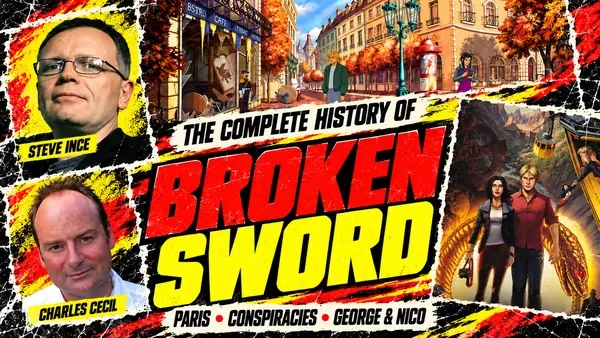
George Stobbart went to Paris for a holiday. A clown, a bomb, and a dead man had other plans.
George is an American tourist whose afternoon outside a Paris café ends in an explosion. He survives, but a man inside does not. Most people would give the police a statement and book an earlier flight home. George starts investigating. He has no special training for this sort of thing, just a quick wit, a stubborn streak, and a habit of asking another question when he should probably leave.
His search brings him to Nicole “Nico” Collard, a French journalist following the same mystery. Nico already has leads of her own, and George’s arrival gives her another complication to deal with. She is sharp, determined, and quite capable of taking him down a peg. He keeps coming back anyway. Between the teasing, disagreements, and growing affection, they become a partnership you want to spend time with.
That partnership is the heart of Broken Sword, Revolution Software’s adventure series. You guide George (and, in later games, Nico) through conversations, suspicious locations, and puzzles, piecing together conspiracies that mix real history with invented secrets. Much of the fun comes from meeting people who know something useful and finding a way to persuade them to talk.
The first trail leads from that ruined café toward the Knights Templar. Later adventures would take the pair much further, while their games survived an awkward move into 3D, a studio shake-up, and a comeback funded by fans who missed them.
And somewhere along the way, a goat became everyone’s problem.
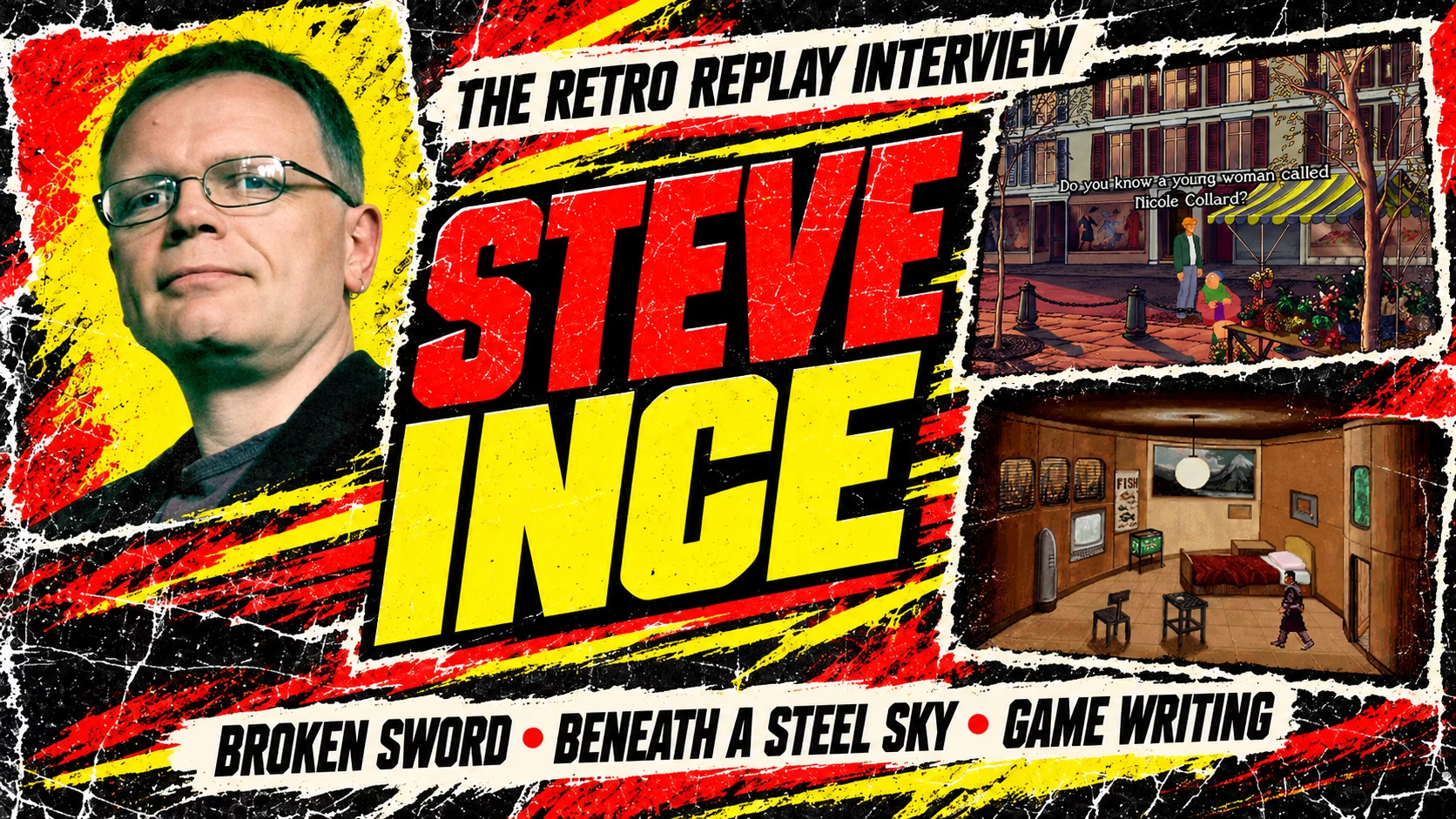
Our recent interview with Steve Ince helps tell the story behind those games. The Revolution artist who unexpectedly became a producer remembers how a small team grew into a much larger production, and how difficult it could be to keep an adventure feeling like an adventure.

A small studio discovers a much bigger mystery
Before George and Nico, Revolution Software had made Lure of the Temptress in 1992 and Beneath a Steel Sky in 1994. Its villages and futuristic city were full of people whose habits and problems could interfere with yours. The studio already understood the pleasure of a good conversation, and the usefulness of someone who refuses to cooperate.
Charles Cecil, Revolution’s co-founder and Broken Sword’s director, wanted to turn that experience toward an historical thriller. The project might have gone to Egypt. A conversation with Virgin Interactive instead led him toward the Knights Templar, a medieval order whose history offered plenty of room for a modern mystery. He recounts the change of direction in his GDC postmortem.
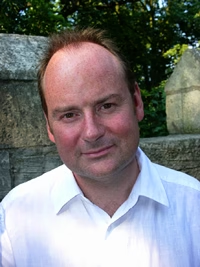
Paris was an inspired place to begin. George could arrive as a tourist, notice something he did not understand, and start asking the questions a player would ask. Nico could bring local knowledge and an investigation of her own. Neither needed to stand around explaining the entire plot. They could discover it together.
Making that city was another matter. Revolution initially imagined a game closer to Beneath a Steel Sky in resolution and character detail. Once it committed to a sharper picture and richer animation, the workload grew with the ambition. More people came aboard. Someone had to keep track of everything they were making.
That someone turned out to be Ince. He had joined Revolution as an artist in 1993, but began organizing resources alongside his drawing work, including animation file names that had to make sense within an eight-character limit. Then Cecil called him into the office.
“I was convinced that I was in trouble. However, he said that the project needed an internal producer and I was that person. He said that I had a ‘tidy mind’ which I took as a compliment.”
From our Steve Ince interview
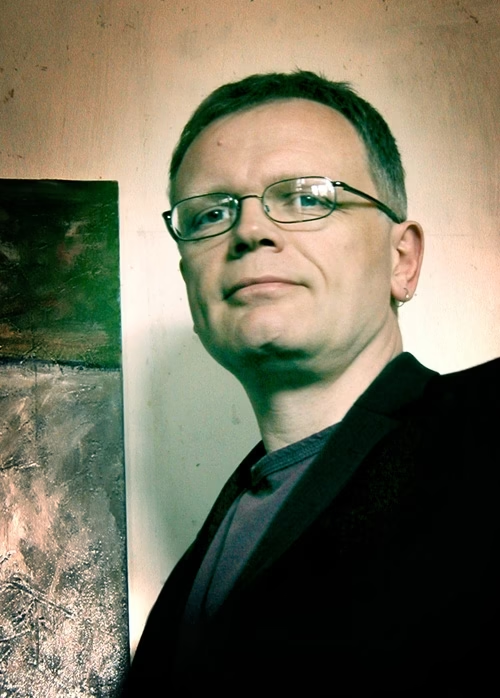
It is a wonderfully ordinary way to acquire an extraordinary amount of responsibility. He had come to draw; now he was helping get everybody else’s work into a finished game. Cecil’s anniversary recollections describe a studio growing from roughly eight people to around fifty and moving from Hull to York.
On screen, all that effort became places you wanted to linger: an apartment, a quiet street, a church interior. Behind the scenery was a team discovering just how much work a beautiful adventure could demand.
Broken Sword: The Shadow of the Templars (1996): The holiday that refused to end
Broken Sword: The Shadow of the Templars arrived in 1996. North American PC players found it under the name Circle of Blood, which made this rather talkative adventure sound considerably more bloodthirsty than it was.

After the explosion, you can investigate the café, explore the street, or follow the clown’s trail into the alley. There is a story to uncover, but the opening gives you some freedom in how you uncover it. You are looking for an answer rather than waiting for the game to hand you the next scene.
Much of the investigation happens through people. A witness knows something. Someone else wants something before they will help. An object that seemed unremarkable becomes useful when you realize whom to show it to. You leave with a new lead, return with another question, and gradually assemble a picture nobody has given you in full.
George makes those errands good company. He can sound enormously confident just before discovering that the person in front of him is unimpressed. A failed attempt may still earn a funny response. His curiosity gets him into the mystery; his commentary makes you willing to follow him around it.
“George was just an everyday kind of bloke with no superpowers or exotic skills. He just got by on his wits and determination to get to the bottom of the conspiracy. People could easily relate to him.”
Our conversation with Steve Ince
Rolf Saxon’s English performance gives that ordinary man a great deal of warmth. George’s dry remarks sound like thoughts occurring to him, rather than jokes announced for an audience. Saxon’s voice would remain a familiar presence as the series changed around him.
Nico is an equally important part of the chemistry. She is determined, resourceful, and perfectly capable of puncturing George’s self-assurance. Their attraction grows through working together, teasing, and occasional irritation. You want to see them solve the mystery, but you also want to hear what they will say to each other along the way.
The original gives George most of the exploring. Later installments would make more room for Nico, whose work and independence deserved to be more than background to his adventure.
Paris was more than a pretty backdrop
Revolution’s conspiracy drew on real history without asking players to mistake its invented secrets for fact. Cecil visited Paris and pursued research about the Templars, including translated texts, as he describes in a making-of interview. His enthusiasm helped pull the team into the subject.
“Research and historical knowledge was vital to giving the game a believable basis. Charles had a great love of the Templar history and when we all got on board with that it became intriguing as to how we would mix the fact with the fiction.”
Revolution’s producer, speaking to Retro Replay
A manuscript gives George something to decipher. A church has a history that might conceal a clue. You learn enough to follow the trail because learning is part of following it. No homework required.
The paintings do their share of the work. Layout artists Eoghan Cahill and Neil Breen helped give the original its distinctive spaces. Cecil’s anniversary interview describes compositions that could bend literal perspective to produce a convincing view. The place felt right, even when its geometry had been arranged to make a better picture.
The trip expands into Ireland, Spain, Syria, and Scotland. Each arrival offers a new setting to inspect and another set of people to persuade. Sometimes the person in your way is wonderfully petty. The world does not become less ridiculous just because George has stumbled into a serious threat.

Dave Cummins, Revolution’s scriptwriter, helped supply that dry humor. Cecil has discussed their creative disagreements in a BFI interview: the trick was keeping the thriller’s seriousness while letting the characters be funny. Meanwhile, composer Barrington Pheloung, also known for Inspector Morse, gave the adventure a score that could move from warmth to unease. His professional credits include both early Broken Sword games.
Years later, fans would compare the mystery with The Da Vinci Code. Broken Sword had got there first, although a resemblance between religious thrillers is no evidence that one borrowed from the other. The game had already found its audience through a much simpler promise: here are two people worth following into trouble.
The goat had a different idea
At an Irish castle, George encounters a tethered goat. Against everything else he is investigating, this should be a minor inconvenience. Instead, it becomes the game’s most notorious puzzle.
Until now, the adventure has mostly let you take your time. Examine a scene, pick an object, wait for George to act. The goat introduces a brief opportunity that demands a faster response after it knocks him down. Plenty of players understand that they need to get past the animal without realizing what the game now expects them to do.
You can spend an evening looking for a clever inventory solution when the obstacle is partly a change in timing. That is an especially cruel trick in a game that has taught you to be methodical.
Cecil acknowledged the problem in his postmortem, calling it “very unfair” and “absolutely bewildering.” The joke improved with distance. Players who loved the adventure kept telling the story of the animal that had defeated them.
Broken Sword also reached PlayStation, finding a home on a machine whose reputation was being built around polygons. A painted adventure could still offer a compelling evening with a controller. Cecil recalls Sony’s enthusiasm, a magazine demo, and a scramble to get the port ready for Christmas in his anniversary interview.
The finished game’s calm streets hid a production that had overrun its original budget and schedule. It reached players anyway, and left them wanting another trip with George and Nico.
Broken Sword II: The Smoking Mirror (1997): Another visit, another disaster
The Smoking Mirror opens with George tied to a chair while a room burns around him. Nico has been abducted. Whatever their visit was supposed to accomplish, it has gone badly enough that getting out alive takes priority over understanding the mystery.
Released in 1997, the sequel leaves the Templars behind and follows an ominous stone into a conspiracy built around Mayan mythology. The journey crosses the Atlantic, with the fictional country of Quaramonte supplying soldiers, political intimidation, and people who make asking questions a dangerous occupation.
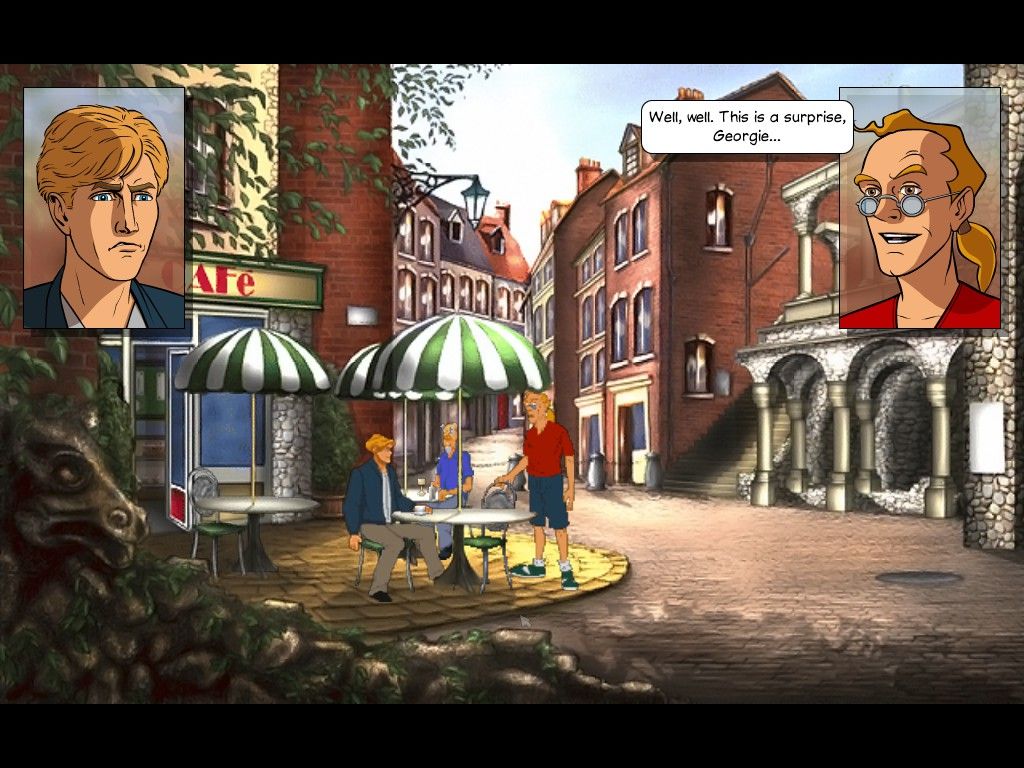
The familiar interface gets you back into the habit quickly. Study the location, talk to everyone, keep an interesting object, and work out what might change someone’s mind. Revolution could spend its energy on another adventure because the first had established a style that worked.
Nico receives playable sections, which help the partnership feel more evenly shared. George can be busy with one problem while she pursues another. Her investigation is something you do, rather than something he hears about afterward.
The sequel is funny in the same wonderfully inconvenient way as the original. Somebody has a perfectly ordinary concern that stands between George and his urgent business. A conversation about that concern becomes an entire detour. His situation may be desperate, but the world is under no obligation to organize itself around him.
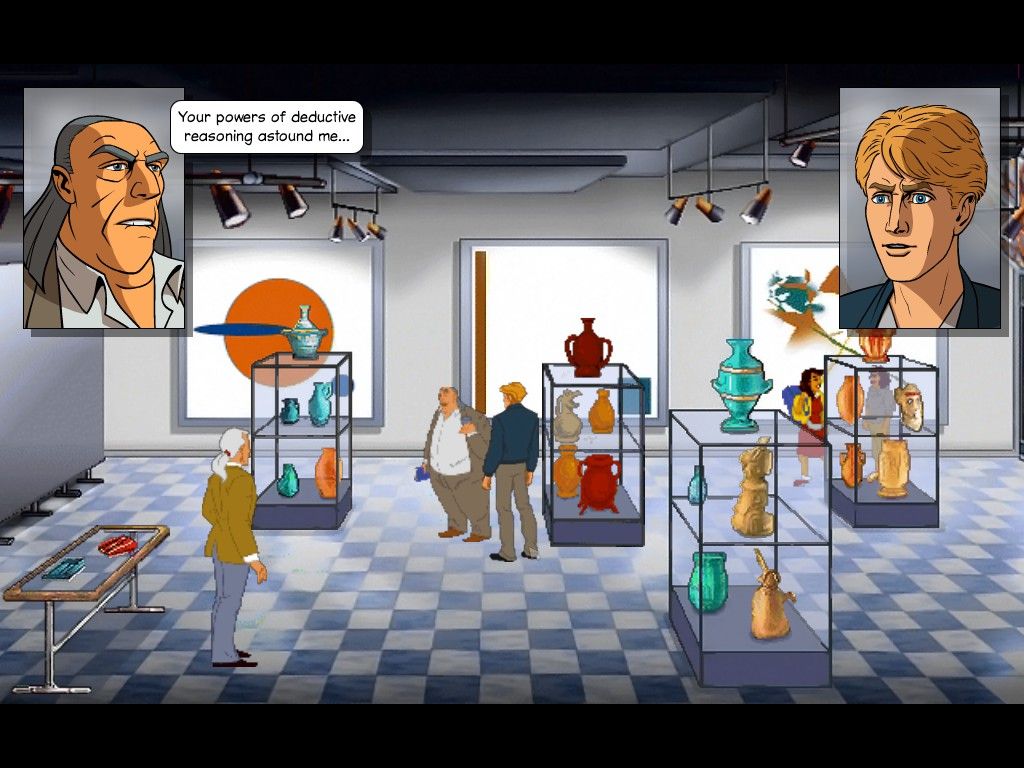
The Caribbean locations and a film-production setting give the trip a looser, sometimes sunnier mood. The larger threat remains, built from fiction around historical material, but there is room for the pleasures of simply arriving somewhere and getting drawn into other people’s affairs.
The Smoking Mirror has often lived in its predecessor’s shadow. It cannot introduce the pair or surprise you with that first Paris opening again. What it can do is prove that you enjoyed their company enough to want another mystery. For many players, that was plenty.
In Cold Blood (2000): A planned sequel becomes a spy thriller
By the end of the decade, Revolution was under pressure to add action. According to our interview, a project that began as a third Broken Sword included a publisher request to give George a gun.
That suggestion ran into the character himself. George’s courage had come from curiosity, persistence, and improvisation. An armed operative needed a different story. The team created John Cord, and the project became In Cold Blood, released in 2000.
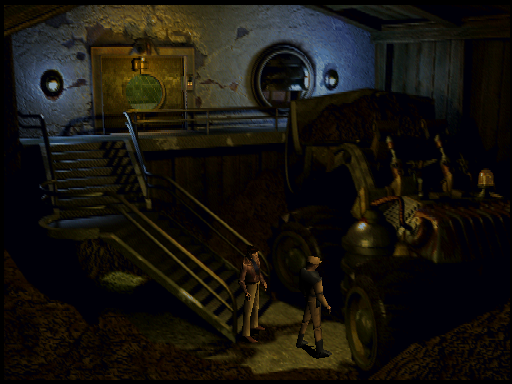
The change let Revolution explore espionage and a harsher world while keeping George recognizable. He could still end up somewhere dangerous. The next Broken Sword would find other ways to make the danger playable.
There was a business problem underneath the creative pressure. More elaborate games cost more money, while the audience for traditional adventures did not necessarily grow to match. The studio had to persuade somebody that its next mystery was worth financing.
Broken Sword: The Shadow of the Templars on Game Boy Advance (2002)
The first game also made a smaller journey in 2002, reaching Game Boy Advance. Its painted world and elaborate plot had to fit a little screen and a handheld’s buttons. Moving George directly turned out to work better than the team had expected. That discovery would help shape the series’ much bigger leap.
Broken Sword: The Sleeping Dragon (2003): A bigger world, with an awful lot of boxes
George’s journey to the Congo goes wrong almost immediately in The Sleeping Dragon. Elsewhere, Nico’s investigation leads her into a murder. Their separate troubles eventually bring them together against a conspiracy involving an ancient power.
The 2003 adventure arrived on PC, PlayStation 2, and Xbox with 3D scenery, direct character control, and a camera that could move around the action. George and Nico could climb and negotiate physical spaces. The player could help them escape a predicament by finding a route through it.

The surprising rehearsal for all this had happened on Game Boy Advance.
“We only considered the 3D version of Broken Sword after successfully making the GBA version of the first game where we used direct control of George, which worked way better than we could have hoped.”
Steve Ince, speaking to Retro Replay
The little handheld had helped convince Revolution that moving George yourself could suit an adventure. On the newer machines, that idea came with ledges, climbing, and encounters that sometimes wanted a quicker response than the old mouse-driven investigations.
When it worked, the presentation gave danger a satisfying physical presence. A room could become somewhere to escape from. A camera angle could add tension to a conversation. George and Nico still had the chemistry that made their reunion worth waiting for.

Unfortunately, they also had a lot of freight to shift.
Pushing and arranging crates became a recurring way to reach the next part of the adventure. One spatial puzzle could be an enjoyable change. Another, and another after that, could make an international mystery feel like a rather ambitious warehouse job.
The earlier games often made an obstacle interesting through the person attached to it. A box rarely had the same conversational appeal. Spending time moving it could slow the story without giving George much chance to be George.
The bigger spaces brought another difficulty: filling them with enough worthwhile interaction. In our interview, the writer-designer recalls that challenge and having to discard two whole sections because the game had grown too large. The production had limits even when the new world looked expansive.
Its writing still earned recognition, including a co-nomination for Excellence in Writing at the 2004 Game Developers Choice Awards. The Sleeping Dragon can be engaging, awkward, and ambitious in the same sitting. That makes it a revealing chapter in the series, even for someone who would happily retire its crates.
Broken Sword: The Angel of Death (2006): A new mystery after the studio shake-up
Revolution restructured in 2004, closing its in-house production operation. Ince was made redundant. His later freelance writing and design career began with losing the job he had grown into across eleven years at the studio.
Cecil explained the new arrangement in a 2006 interview. Revolution would handle writing and design, while a partner took on production. The fourth Broken Sword was made with Sumo Digital, including former Revolution staff.
That game, The Angel of Death, arrived on PC in 2006. North American players knew it as Secrets of the Ark. George was now working in New York when Anna Maria appeared with a manuscript and a problem guaranteed to complicate his life.

Her arrival pulls him toward religious secrets and organized crime, with Nico returning to a partnership made less comfortable by the new woman. George has aged and his working life has become less glamorous. His willingness to get involved when somebody needs help remains entirely intact.
The game keeps 3D environments but restores point-and-click control alongside direct movement. More traditional adventure puzzles bring George back to examining, talking, and thinking his way around a problem. Cecil acknowledged that the previous game’s action sequences and overused crate puzzles had not worked as intended.
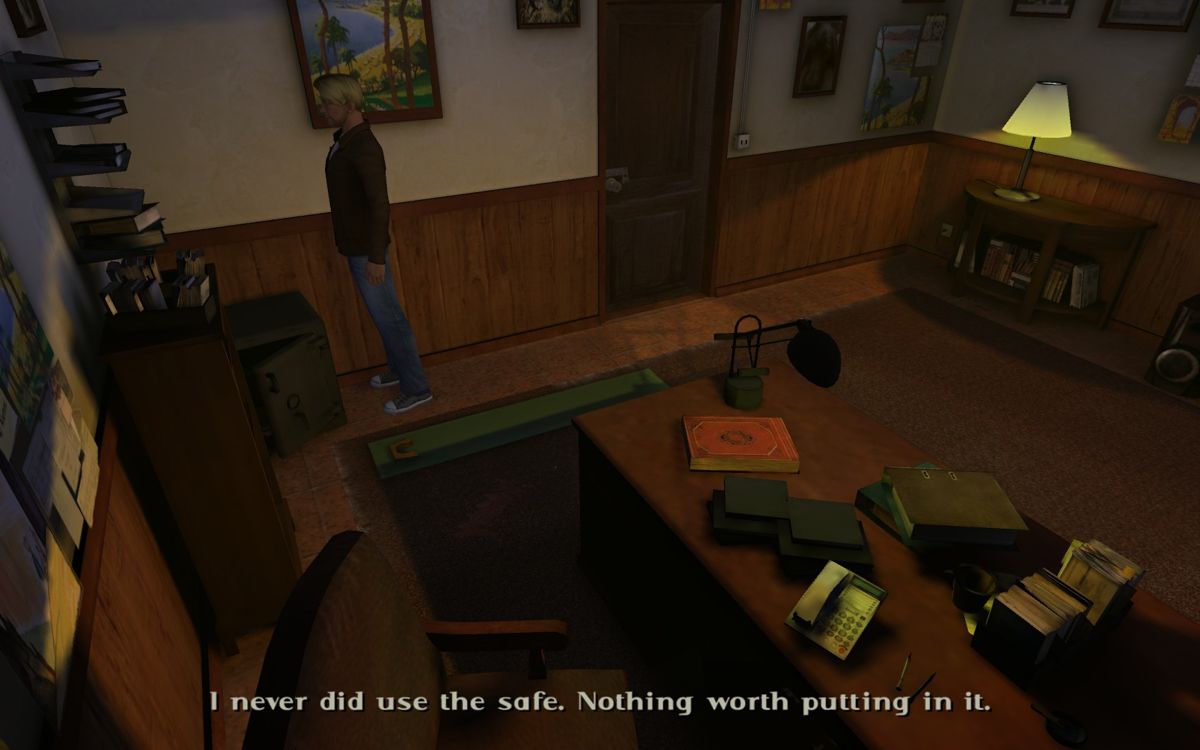
The course correction had its own rough edges. Hacking puzzles could feel detached from the people and places around them, and navigating the scenery could still be clumsy. The new engine did not make every errand graceful.
But George’s uncertain relationships gave the fourth game a different kind of tension. After everything that had happened to him, he could still be drawn into another person’s mystery. The series had found a way to keep him going. It would take longer to find the money for his next adventure.
Broken Sword 2.5: The Return of the Templars (2008): The fans bring George back
The next adventure came from people who missed the old ones. The fan team mindFactory spent years making Broken Sword 2.5: The Return of the Templars, released in 2008.
It is an unofficial game, its numbering placing the story between the second and third adventures. George returns to a familiar-looking Paris, with new scenes and puzzles built around the earlier style of investigation.
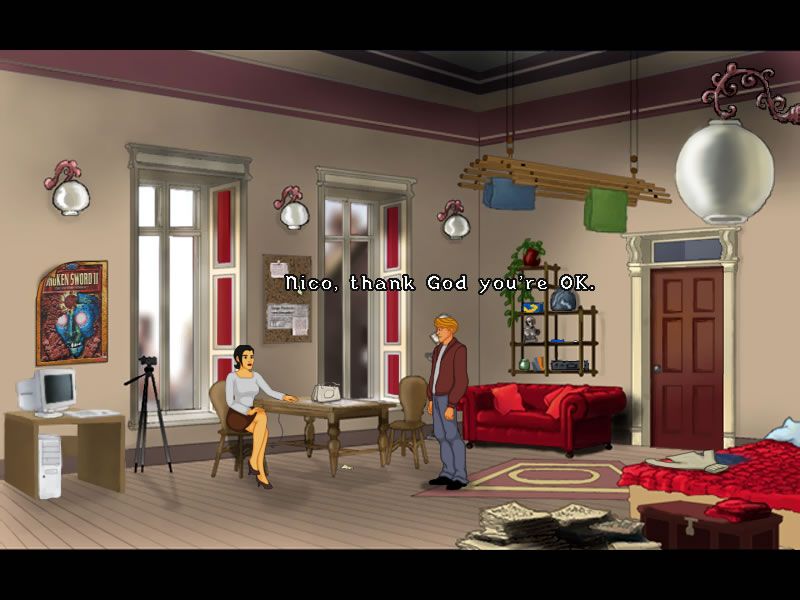
There is something endearing about the scale of that commitment. These fans wanted another afternoon with George and Nico badly enough to draw the rooms, animate the characters, and build the problems that would keep them there. The project’s archive preserves the effort behind a wish that became a playable game.
Broken Sword: The Shadow of the Templars: Director’s Cut (2009): Nico starts the story
Revolution’s own return began with a revision. The Shadow of the Templars: Director’s Cut reached Wii and Nintendo DS in 2009, with other versions following.
Nico now gets the opening investigation. Before George’s café explodes, she is already caught up in a murder and a mystery connected to her past. It gives her more to do and lets a newcomer meet the partnership from her side first.
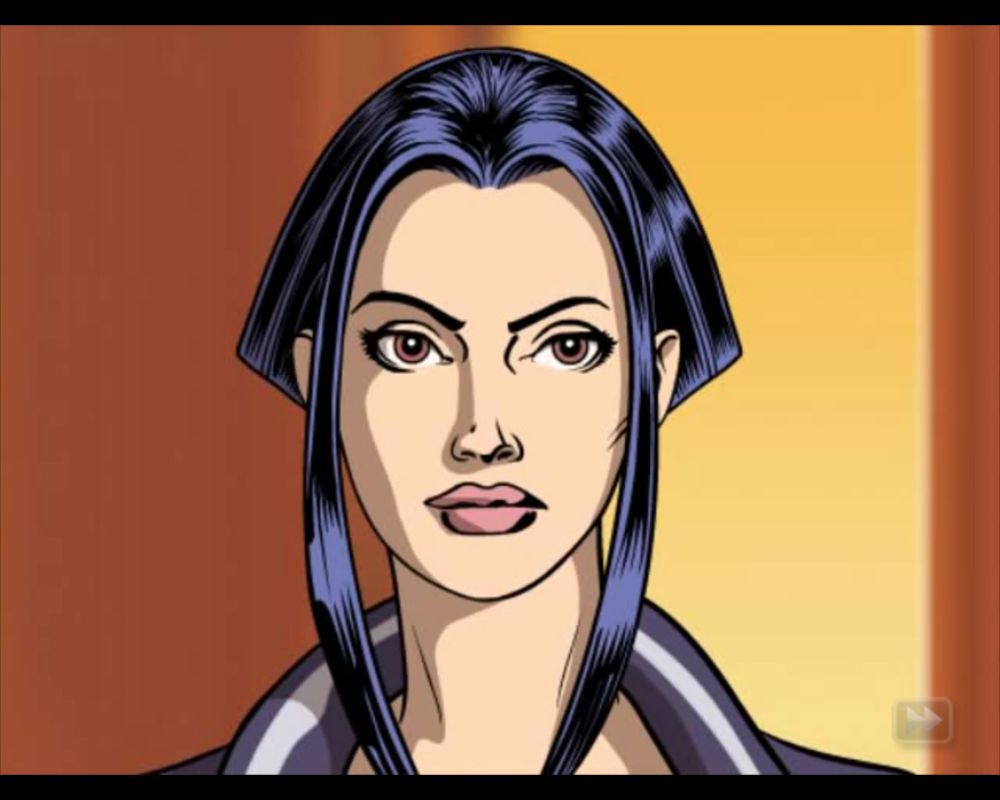
New puzzles, visual material, and help options made the adventure more approachable on newer platforms. A touchscreen was a comfortable home for a game about inspecting objects and choosing conversation topics.
The change also divided familiar territory. Veterans who loved being thrown straight into George’s ruined holiday could miss the original’s entrance. The Director’s Cut tells an expanded version of the story, with a different opening rhythm. Preferring one does not require pretending that the other has nothing to offer.
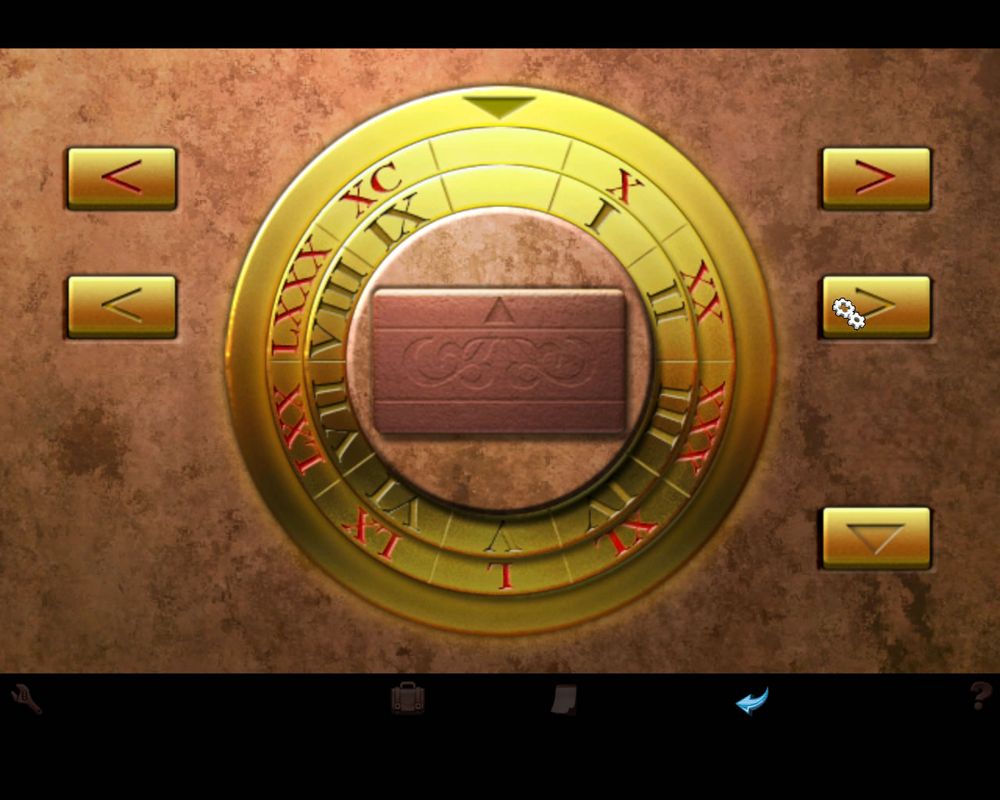
Broken Sword II: The Smoking Mirror: Remastered (2010)
The Smoking Mirror followed in a 2010 remaster, adding features including a diary, help system, and digital comic. Digital releases and self-publishing gave Revolution another route to players. The old mysteries were helping make a new one possible.
The Serpent’s Curse Kickstarter (2012): “One to get REALLY excited about”
In August 2012, Revolution asked the audience to help finance Broken Sword: The Serpent’s Curse. The promise was irresistible to plenty of returning players: George and Nico, painted backgrounds, and a new point-and-click investigation.
The Kickstarter raised $771,560 from 14,032 backers, passing its $400,000 goal. Those are the campaign’s figures, excluding separate contributions.
On the Telltale Community forum, Irishmile called Broken Sword “one to get REALLY excited about.” The same thread contains arguments about character designs and people weighing how much they could afford to pledge. Wanting the series back did not mean agreeing on every detail of its return.
The visuals were one such detail. Revolution explained in its campaign FAQ that the painted backgrounds would be paired with characters animated in 3D and rendered into the 2D presentation. It was a new production method aimed at recovering a familiar feeling.
Broken Sword 5: The Serpent’s Curse (2013–2014): A painting, a murder, and a reunion
The Serpent’s Curse begins at a Paris gallery, where a murder and a stolen painting give George and Nico another reason to start asking questions. Once again, an understandable crime leads toward something much stranger.
The first episode arrived in December 2013; the second followed in April 2014. Its original audience had to wait for the investigation to continue. The complete game can now be followed without that enforced intermission.

Gnostic ideas give the conspiracy a different foundation from the Templar story. Art and religious belief become things to decipher as the journey moves beyond Paris. The adventure knows how to introduce its larger mystery through something the player can examine.
The old habits return comfortably. Study a scene. Find a useful object. Get somebody talking. George’s confidence still creates opportunities for embarrassment, and Nico still has the drive to keep following a lead. Their conversations give the elaborate plot a human scale.
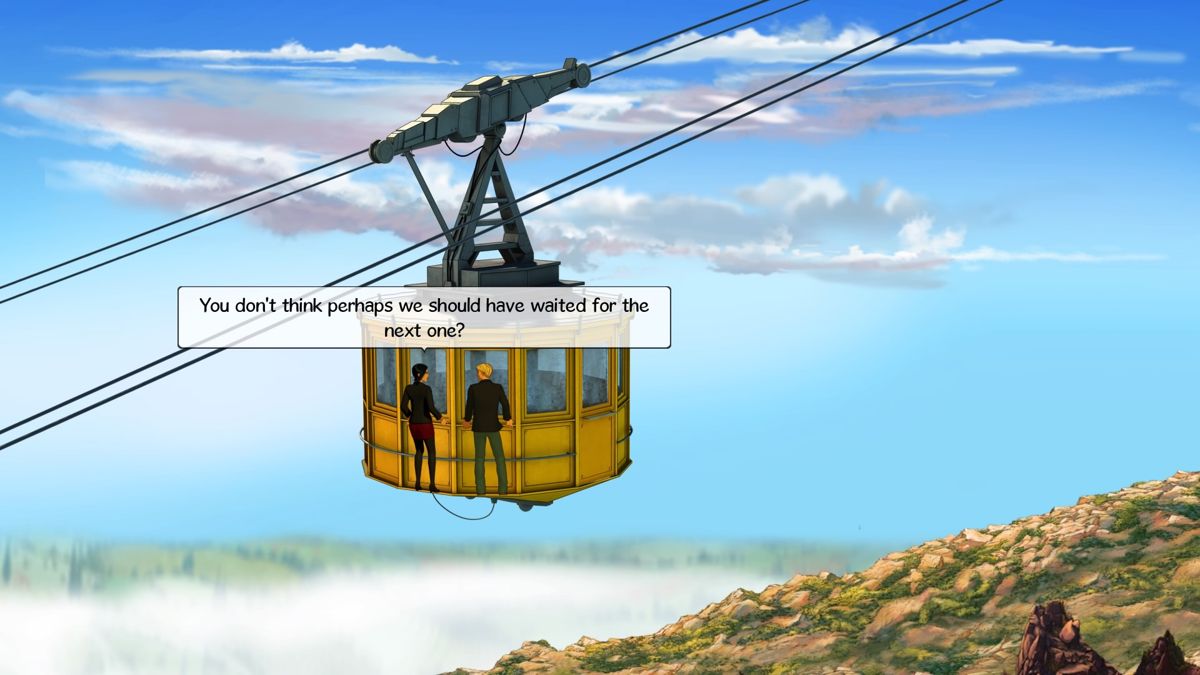
A help system makes it easier to stay with the story when a puzzle has outlasted your patience. A returning goat supplies a joke that requires very little explanation to veterans.
The comeback did not make the 3D experiments disappear. It gave players another adventure in the style many had wanted to revisit: and let them help pay for the decision.
Broken Sword: Shadow of the Templars: Reforged (2024): The café is still there
Shadow of the Templars: Reforged released on September 19, 2024, returning to the original adventure with rebuilt high-resolution artwork, enhanced audio, and more helpful interface options.
It opens with George’s café disaster, rather than the Director’s Cut’s expanded Nico introduction. A veteran arrives back at the scene that started everything. A newcomer gets the same excellent reason to follow the clown.
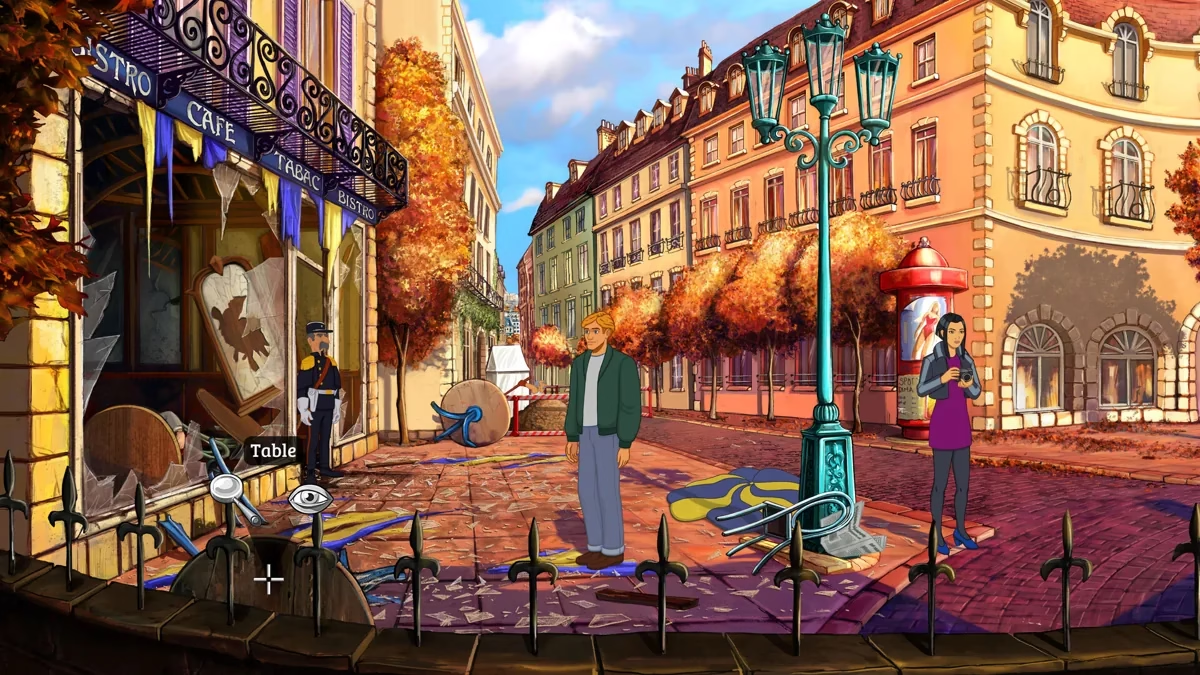
Classic and story modes accommodate players who want different amounts of assistance. The most important job is preserving the character of those places. A sharper café still needs to feel like the café you remember.
Keeping the versions distinct matters, too. The original, Director’s Cut, and Reforged represent different decisions about the opening, puzzles, and help. A convenient modern edition does not make the earlier games cease to be part of the history.
Broken Sword II: The Smoking Mirror: Reforged (Upcoming): Another mirror
The Smoking Mirror is receiving its own Reforged treatment. As of October 2026, its official Steam listing still says “Coming soon.”
In a September 2026 production interview, Cecil describes 55,000 manually redrawn character-animation frames. He also discusses AI upscaling as an initial background-preparation step followed by artists’ work. The character redraws and the background workflow are different processes. The interview reports a 2027 expectation; the store has no firm release date.
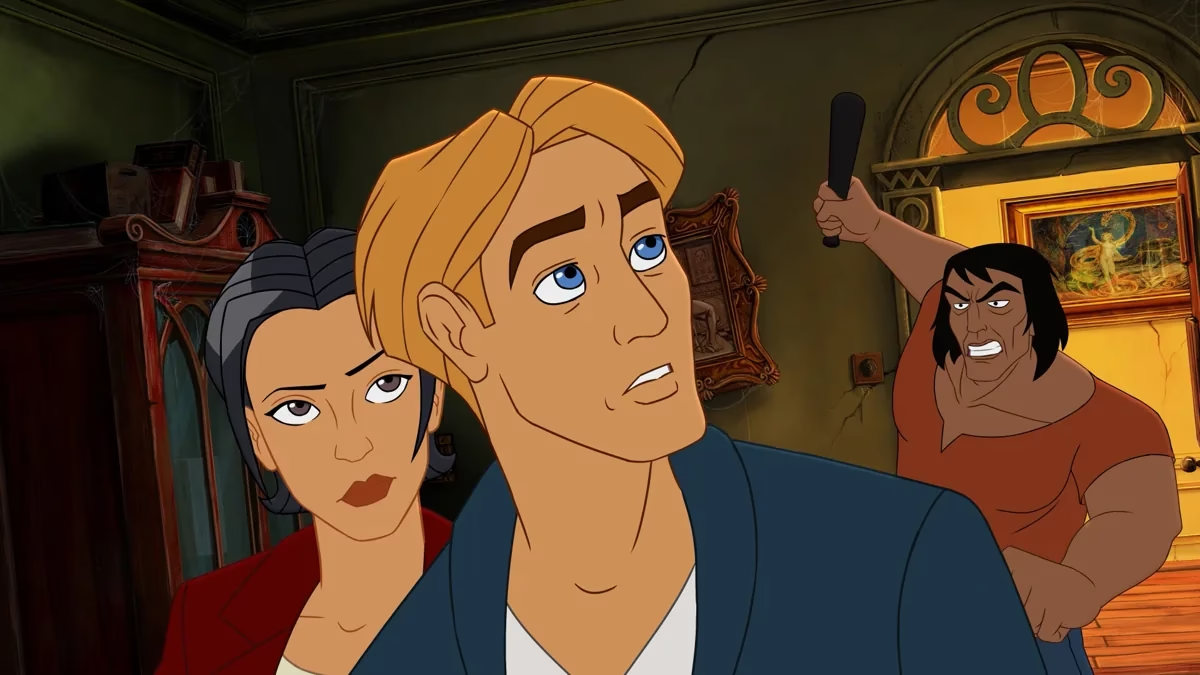
Broken Sword: Parzival’s Stone (Announced 2023; release TBA)
Beyond that is Parzival’s Stone, announced in 2023. Another George and Nico mystery involving a stolen manuscript and the Grail is planned with a presentation Revolution calls “Super 2D,” combining painted visual character with 3D scenery. Its release remains “To be announced.”
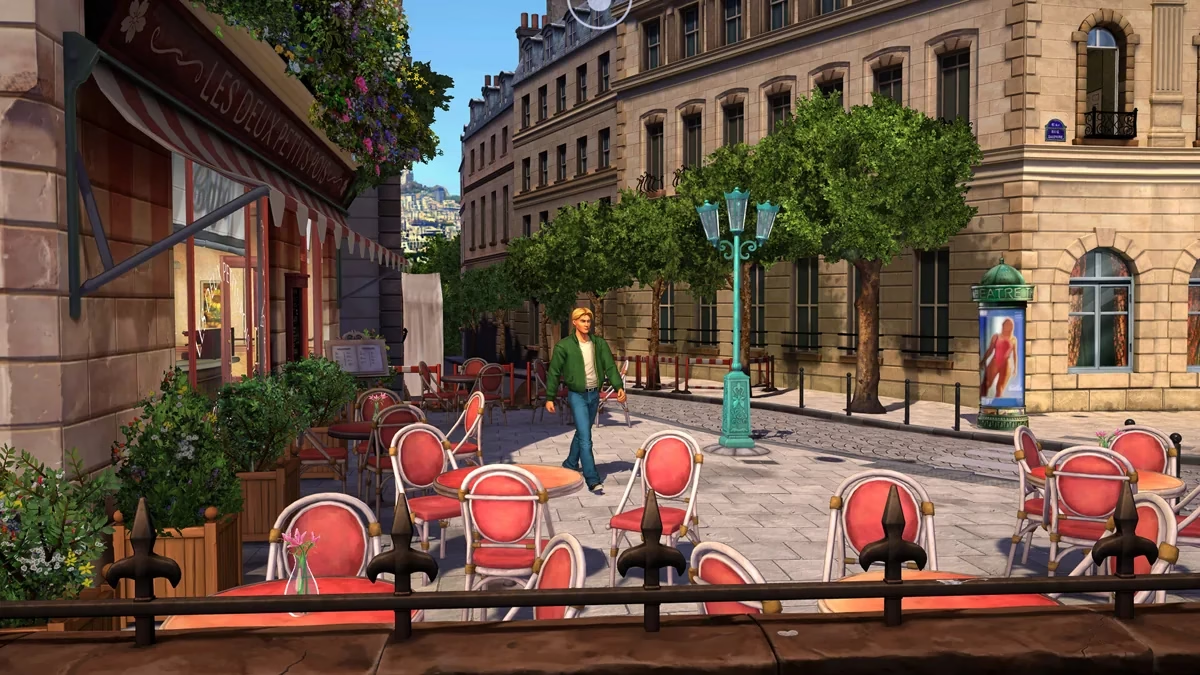
The series is still trying things. The finished game will have to show how well its new presentation suits investigating, but the invitation is familiar: George and Nico have found trouble again.
Why we still follow them
Broken Sword is remembered through particulars. A café. A conversation with somebody who will not help. Nico finding a lead of her own. A gorgeous location that you enjoy looking at until you realize you are stuck there.
And, inevitably, the goat.
The series has made awkward choices and lovely ones. It has changed how its worlds are drawn, how its characters move, and how its games are financed. Yet the reason to return remains unusually simple: you like spending time with these two people.
George’s holiday should have ended at the airport. Instead, he asked another question. Thirty years later, there are still players willing to hear the answer.
Behind the adventure
Read our full interview → The conversation covers Revolution’s early days, producing Broken Sword, and the craft of making a story unfold through the player’s choices.
More Retro Replay histories
- The complete history of FMV games: another route through the 1990s dream of playable cinema.
- The complete history of the Sega CD: CD storage, voiced adventures, and the multimedia gamble.
- The unreleased masterpieces: projects caught between changing ambitions and a changing market.
Sources and further reading
Developer recollections, original campaign records, and official release listings underpin this feature. Steve Ince quotations come from Retro Replay’s own interview. The fan quotation reflects one contemporary player’s reaction.
- Our Steve Ince interview
- Charles Cecil’s GDC postmortem
- Charles Cecil’s 25th-anniversary interview
- The making of Broken Sword: developer interview
- Cecil on The Angel of Death and Revolution’s restructuring
- Steve Ince’s career and writing nominations
- Cecil’s BFI interview
- Original Serpent’s Curse Kickstarter and FAQ
- Contemporary fan discussion, August 2012
- Broken Sword 2.5 project archive
- Cecil on the Smoking Mirror Reforged art process, September 2026
- Official Reforged release listing
- Official Smoking Mirror Reforged status
- Official Parzival’s Stone status
Upcoming-project status checked October 9, 2026. Game screenshots retain their respective owners’ rights.