Retro Replay Retro Gaming History, Reviews & Emulation
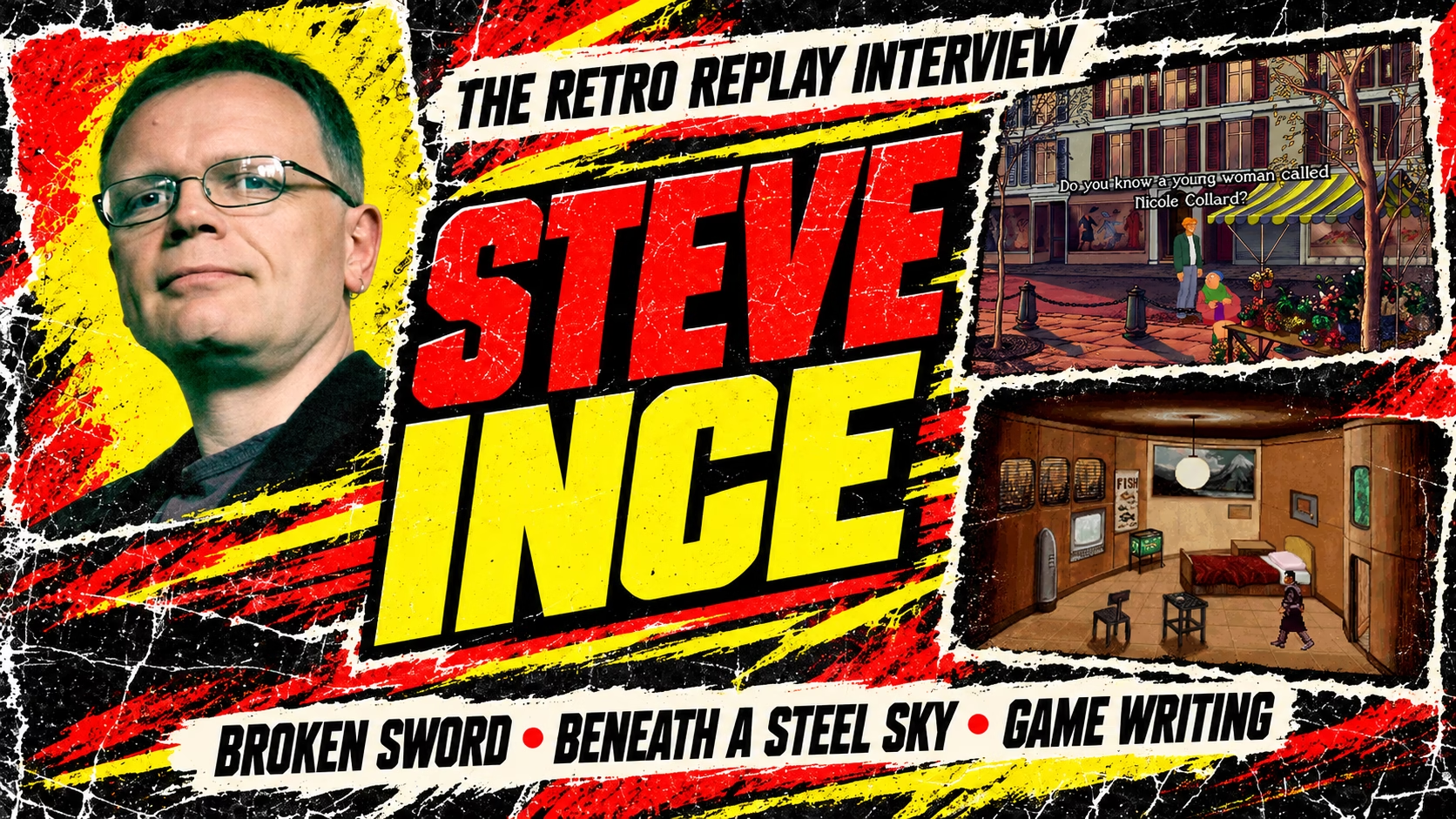
Interview by David, Retro-Replay.
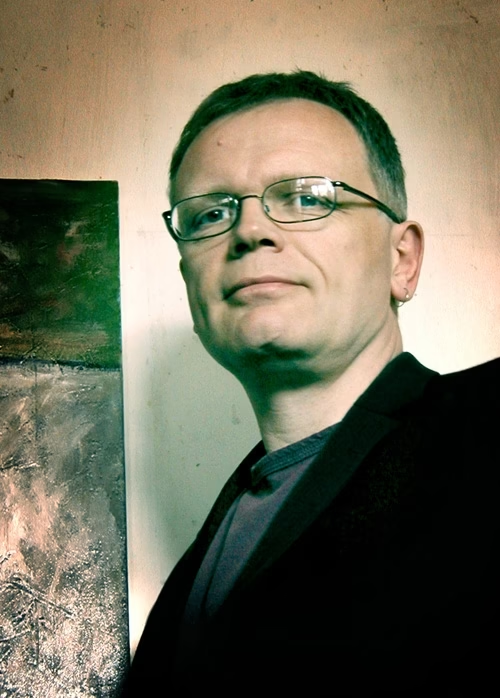
An adventure game can begin with a painted cityscape, a conversation, or a mystery the player cannot leave alone. Steve Ince has helped shape all three. Across his career, he moved from creating artwork to organising production and then writing and designing the stories players would uncover for themselves.
Ince spent eleven years at Revolution Software, moving from artist to producer to writer and designer. His work on Broken Sword: The Sleeping Dragon brought a co-nomination for Excellence in Writing at the 2004 Game Developers Choice Awards. After turning freelance, he wrote and designed So Blonde, whose script earned a Writers’ Guild nomination. His official career page traces that journey.
For this written interview, Retro Replay’s David asked Ince about the small team behind Beneath a Steel Sky, the characters and production decisions that made Broken Sword memorable, and what happens when a game writer gives the player room to act. His memories include a surprise promotion, the origins of In Cold Blood, and the challenge of cutting a huge RPG script down to size.
Now retired from the games industry, Ince continues writing and illustrating. Explore his work on his official website and find his books on the Amazon author page he shares below.
This interview was conducted in writing. Steve Ince’s answers are reproduced as supplied, with paragraph spacing normalized.
Finding a Place at Revolution
Retro Replay: You entered the games industry relatively later than many people, after studying astronomy and astrophysics and working in completely different fields. What finally convinced you to try to make a career in games?
Steve Ince: I didn’t set out to join the games industry but I was between jobs and wanted to do something creative, ideally working with computers, although I had little experience in the field. I managed to get an interview with Revolution through a mutual acquaintance and after showing them my art portfolio they took me on for a month on a trial basis and made me permanent after that.
Retro Replay: You originally joined Revolution Software as an artist. What do you remember about your first days there and the atmosphere inside what was still a relatively young studio?
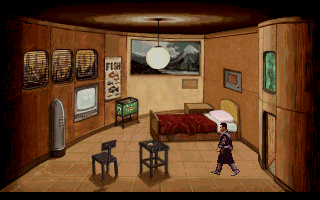
Steve Ince: It was a very small team. A programmer and I joined at the same time and we made the total number up to eight. There was a real feeling of developing Beneath a Steel Sky by the seat of our pants, yet we still managed to do so to a high quality and to a clear vision for the game. I was very fortunate to work closely with everyone and learned so much in such a short space of time.
Retro Replay: Beneath a Steel Sky was already in development when you joined Revolution. What were your responsibilities on the project, and what stands out most when you look back at making it?
Steve Ince: A lot of what I did on that game consisted of converted the 24-bit scanned background paintings down to a palette of 128 colours for the PC and then down to 32 colours for the Amiga. I also did a number of sprite animations for some of the locations, such as the steam in the power room and the falling rocks in the diagonal tunnel.
Retro Replay: Dave Gibbons brought an extraordinary visual identity to Beneath a Steel Sky. What was it like working with him and translating that comic-book sensibility into an adventure game?
Steve Ince: I’d loved Dave’s work prior to joining Revolution so being able to work on something he was involved in was a real pleasure. I got to meet him as part of my interview process and he was very kind about some of my artwork. He’s a great person to work with.
Retro Replay: Beneath a Steel Sky mixed some very dark science-fiction ideas with a lot of humor. How difficult is it to balance comedy with a story that also wants the player to take its world seriously?
Steve Ince: Quite often, using humour is the best way of making sense of a dark world; you only have to look at the current real world to see that. Dave Cummins, who wrote all of the dialogue for the game, managed to balance the humour and serious tones really well and I learned a lot from him during his time at Revolution.
Broken Sword: Art, Production, and Characters
For the wider story of George and Nico’s adventures, read our complete history of Broken Sword, tracing the series through Paris, conspiracies, and the changes that shaped its enduring appeal.
Retro Replay: You moved from art into production while working at Revolution. Was that something you deliberately pursued, or did your responsibilities simply keep expanding until you found yourself in that role?
Steve Ince: Broken Sword was a much bigger game than Beneath a Steel Sky and more personnel came on board because of that. This in turn led to a lot of resources being created, so as well as my art duties I began organising such things as the naming of animation files so that they made sense at a glance while still fitting the eight character limitation on the names. Then one day Charles called me into the office and I was convinced that I was in trouble. However, he said that the project needed an internal producer and I was that person. He said that I had a “tidy mind” which I took as a compliment.
Retro Replay: What did being a producer on the original Broken Sword teach you about storytelling that you had not learned while working primarily as an artist?
Steve Ince: The thing about games is that the storytelling has to be interactive to a large degree. The story should only move forward through the actions of the player. But at the same time we have detailed locations and background animations that establish the world in which the story takes place. Everything must work together to deliver the storytelling vision for the game, which includes the engine that runs the game and other systems that enable the writers, designers and artists to maximise their talents.
Retro Replay: Broken Sword: The Shadow of the Templars remains one of the defining adventure games of the 1990s. Did the team realize during development that it had something particularly special?
Steve Ince: Not at first. We set out with the idea that it would be similar to BASS in terms of screen resolution and character detail. However, we weren’t far into development when we realised that we would have to move up to a higher screen resolution, which in turn meant that we create much more detailed locations and give the characters more depth of animation. Then, when Sony wanted us to do a Playstation version we knew that we were onto something special.
Retro Replay: George Stobbart and Nico Collard became characters players remained attached to for decades. What do you think made their personalities and relationship work so well?
Steve Ince: George was just an everyday kind of bloke with no superpowers or exotic skills. He just got by on his wits and determination to get to the bottom of the conspiracy. People could easily relate to him. Nico was a great foil for George and kept him grounded in many ways, but she was also determined and resourceful in her own right, too. It’s a real shame we didn’t make more of her in the first game.
Retro Replay: Broken Sword mixed fictional conspiracy with real history, religion, locations, and organizations. How important was research when building a story like that?
Steve Ince: Research and historical knowledge was vital to giving the game a believable basis. Charles had a great love of the Templar history and when we all got on board with that it became intriguing as to how we would mix the fact with the fiction. I think we balanced that really well.

The Leap into 3D and a Changing Adventure Genre
Retro Replay: The first two Broken Sword games were traditional 2D adventures, while The Sleeping Dragon made the leap into 3D. How dramatically did that change the way you had to think about writing and game design?
Steve Ince: We only considered the 3D version of Broken Sword after successfully making the GBA version of the first game where we used direct control of George, which worked way better than we could have hoped. A 3D environment gave us some opportunity to have George and Nico clambering about and to use some 3D puzzles, but the essence of the storytelling was the same as the previous games. The biggest difference was that the game’s environments were much larger than the 2D screens had been, which sometimes meant it was difficult to give the player enough to interact with.
Retro Replay: You moved much more deeply into writing and design on The Sleeping Dragon. Was there a moment when you realized that writing and narrative design were the part of game development you wanted to concentrate on?
Steve Ince: Dave Cummins had left Revolution during the development of In Cold Blood so I began working closely with Charles on the design and writing side of things, helping to meet deadlines. So when The Sleeping Dragon came along I was in the perfect place to continue that. I count myself very fortunate that Revolution allowed me to make these transitions.
Retro Replay: The Sleeping Dragon earned you a co-nomination for Excellence in Writing at the Game Developers Choice Awards. Did recognition like that change the way the industry viewed dedicated game writing at the time?
Steve Ince: It was definitely the start of the shift in perception of the role of game writing, which was also helped by the fact that the game was also crowned game of the year by The Independent newspaper.
Retro Replay: Adventure games went through a difficult period commercially as the industry moved toward 3D action games. Did it ever feel during that period as though traditional narrative adventures might disappear entirely?
Steve Ince: The problem wasn’t just 3D action, but the fact that game development costs were rising rapidly and the number of adventure game fans didn’t rise to match that, which made adventure games difficult to justify making in the eyes of traditional publishers. It did feel that the genre might disappear completely for a time until publishing models changed and gave a lifeline to adventures again.
Retro Replay: You also worked on In Cold Blood, which blended adventure-game storytelling with espionage and more action-oriented ideas. What did that project allow Revolution to experiment with that Broken Sword did not?
Steve Ince: In Cold Blood actually started life as a third Broken Sword game. The publishers wanted more action and wanted to give George a gun. However, it quickly became apparent that this was not going to suit the Broken Sword franchise and certainly didn’t fit George’s character. So John Cord was born and Revolution developed its first action game, although I like to think of it as an adventure game with action. We really wanted to keep to a strong sense of storytelling alongside the action without the latter taking over and the story feeling that it was tagged on, like quite a lot of games did at the time.On a slightly connected note: at my youngest son’s wedding some years ago I was chatting with one of his friends and he asked what I did, so I told him that I worked in games. This always leads to the question, have you worked on anything I might know? So when I mentioned In Cold Blood he said that it was favourite game. Always nice to get good feedback.
Freelance Life, So Blonde, and The Witcher
Retro Replay: After leaving Revolution, you became a freelance writer and designer. Was it difficult adjusting from spending more than a decade with one studio to moving between completely different development teams and genres?
Steve Ince: When I was first made redundant by Revolution my intention was to get a job at another studio, but after a series of different interviews it became clear that none of them offered me the creative output I needed. So I decided to turn freelance, particularly as most developers don’t need a writer on the team full time. It took a little time getting regular work, which worried me a little, but word began to spread and I was fortunate to begin this journey at a time when there weren’t so many game writers plying our trade. I loved switching between projects and the different requirements that each genre demanded. It helped keep my mind fresh.
Retro Replay: You wrote and designed So Blonde largely from the ground up. How different was it having that degree of ownership over the story, characters, gameplay, and dialogue?
Steve Ince: When I came onto the project, the team had artwork for a couple of locations along with sketches for the main characters. I spent three days in Paris working with some of the team to thrash out basic ideas and get a clear vision for the game. After that I came back home to develop those ideas into a full story, making sure the team was happy with everything as I went along. Because I work in a fully transparent way, they were happy with the way things progressed and although I was mostly in control, I also responded to feedback to make the game the best I possibly could. I did a lot of work on that project but it was all done with the rest of the team in tandem.
Retro Replay: So Blonde also received a Writers’ Guild nomination for its script. What were you most proud of in that game’s writing?
Steve Ince: I really enjoyed working on the variety of characters, but was also pleased with the story arc for Sunny, turning her from someone who was a bit hopeless and dependent on her parents for everything to someone who helped save the people of the island. I also loved working with the voiceover actors to get the best one for each character.
Retro Replay: You worked as a script editor on The Witcher. What does script editing actually involve on a huge RPG where there are enormous amounts of dialogue, branching situations, and world-building?
Steve Ince: I was originally asked to write the dialogue for the game but couldn’t fit it into my schedule. So when the dialogue was mostly complete I was asked to edit the existing dialogue. It wasn’t the best job I’ve done because they had 100,000 words and needed it cut to 60,000. This didn’t really give me much room for manoeuvre, style wise, and left me feeling a little disappointed.
Writing Games Around the Player
Retro Replay: Is improving someone else’s dialogue a fundamentally different creative skill from writing your own characters from scratch?
Steve Ince: At a basic level it is very different, in that I have to discover what the characters are like through the dialogue and try to maintain that as I edit the dialogue. When I create my own characters I have them already living in my head. Some of the editing I have done have involved translations from other languages into English. Some of them have been very good and the editing became more of a polishing task. Some have been so poor I didn’t know what many of the lines were meant to say, so I had to put the original lines into Google translate and use a combination of the two to get the right meaning. I also worked on Wanted: A Wild Western Adventure, which was originally created in Spanish and was a humorous game. The trouble was that the translation had been a bit literal and had lost all of the humour. So I asked for a Spanish version of the game to play (although I don’t speak Spanish) so I could get the right tone for all of the characters and put the humour back in.
Retro Replay: You have written extensively about the craft of game writing. What mistake do you see beginning game writers make most often when they approach games as though they were simply films or novels with interaction added?
Steve Ince: I’m firmly of the opinion that game writers should not only play games but also understand what game design is. For me, the story should unfold on the actions of the player and many writers either didn’t understand this or simply ignored it. Some writers wanted to be in control of how the story is told regardless of what the player is doing or wants to do during the game. As an example, let’s take the beginning of Broken Sword. It would have been very easy to force the player/George to go straight into the café and push the story forward without consideration of what the player wants to do. Instead, we give the player three main options: go into the café, go up the street, or follow the clown into the alley. Eventually all three will be covered by the actions of the player, but by giving choice the player feels they have some control of how the story begins to unfold.
Retro Replay: How has the role of the game writer changed since your early Revolution years? Do writers have more influence over design now, or has the increasing size of development teams sometimes made that relationship more complicated?
Steve Ince: Everyone in a development team wants to feel that they are making important contributions to the final shape of the game. Sometimes this can lead to more people wanting to influence the story or the dialogue than is good for the project. Sometimes the project lead thinks they know enough storytelling not to involve a writer and often bring one on board too late into the development of a game. But a good writer who’s brought into the development early on, can work closely with the development team to not only deliver a great story, but one that influences the high level design and also the structure of the levels as they are inspired by and contribute to the story. Game writing is not like novel or film writing, where the writer is in solitary control of his ideas, but an integral part of the overall development of a game.
Retro Replay: Modern games can contain extraordinary amounts of dialogue. Do you ever think the industry confuses having more words with having better writing?
Steve Ince: I have known writers who write way too much dialogue and then are unable to edit down to something more reasonable. They seem to see all their lines as being precious and a good writer should be able to throw away anything and everything if doing so makes the overall writing of the game better. During the making of The Sleeping Dragon, I had to throw away two whole sections of game design because the game had become too big. If a game has a lot of dialogue because it’s important for the story, that’s fine, but if there is a lot of dialogue because the writer didn’t know when to stop or how to edit, then it can spoil the overall feel of the game.
Overlooked Games and New Creative Chapters
Retro Replay: Looking back over Beneath a Steel Sky, Broken Sword, In Cold Blood, So Blonde, The Witcher, and everything else you worked on, is there one project you feel deserves more attention than it receives?
Steve Ince: Mr. Smoozles Goes Nutso. This was a project I created totally on my own (apart from a couple of bits of coding work and the music) and would have loved it to have been more successful. Unfortunately, I think the design fell a bit between genres and didn’t take off. As far as more commercial projects are concerned, I’m a little sad that Captain Morgane and the Golden Turtle didn’t do as well as it might. I had a follow-up story all ready to go.
Retro Replay: Finally, what are you concentrating on creatively these days, and are there any books, artwork, websites, social media pages, or current projects you would like me to link to when I publish the interview?
Steve Ince: As I’ve retired from the games industry I’m mostly pottering around with my own ideas, which vary from online comic strips to writing novels. Over the years I have published four books on game writing, an urban fantasy novel, Blood and Earth, and children’s books, Amanda Alexander and the Very Friendly Panda, The Quinton Quads and the Mystery of Malprentice Manor. I’m currently working on another children’s novel, No One Wants a Werewolf for a Friend. All of my books can be found on my Amazon author’s page: https://www.amazon.co.uk/stores/Steve-Ince/author/B0034P8F9Q
Thank You, Steve
Our thanks to Steve for giving his time so generously and taking us inside the work behind these much-loved adventures. From squeezing painted backgrounds into a handful of colours to deciding what George Stobbart should be free to do next, his memories show how many small, thoughtful choices sit behind a game that stays with us. It is lovely to hear that the same creative curiosity now finds its way into his novels, illustrations, and comics. We wish him every success with those new stories, and encourage readers to explore his website and books.
For more conversations with the people behind classic games, read our Louis Castle interview on Westwood, Command & Conquer, and Blade Runner, and our Barry Leitch interview on the music behind Lotus, Top Gear, and beyond. You can find the rest in Retro Replay’s interview archive.
Featured image: Retro Replay collage, with an adapted Steve Ince portrait credited to Steve Ince under CC BY-SA 3.0. The collage design and portrait adaptation are shared under the same license; game imagery remains the property of its respective rights holders.