Retro Replay Retro Gaming History, Reviews & Emulation
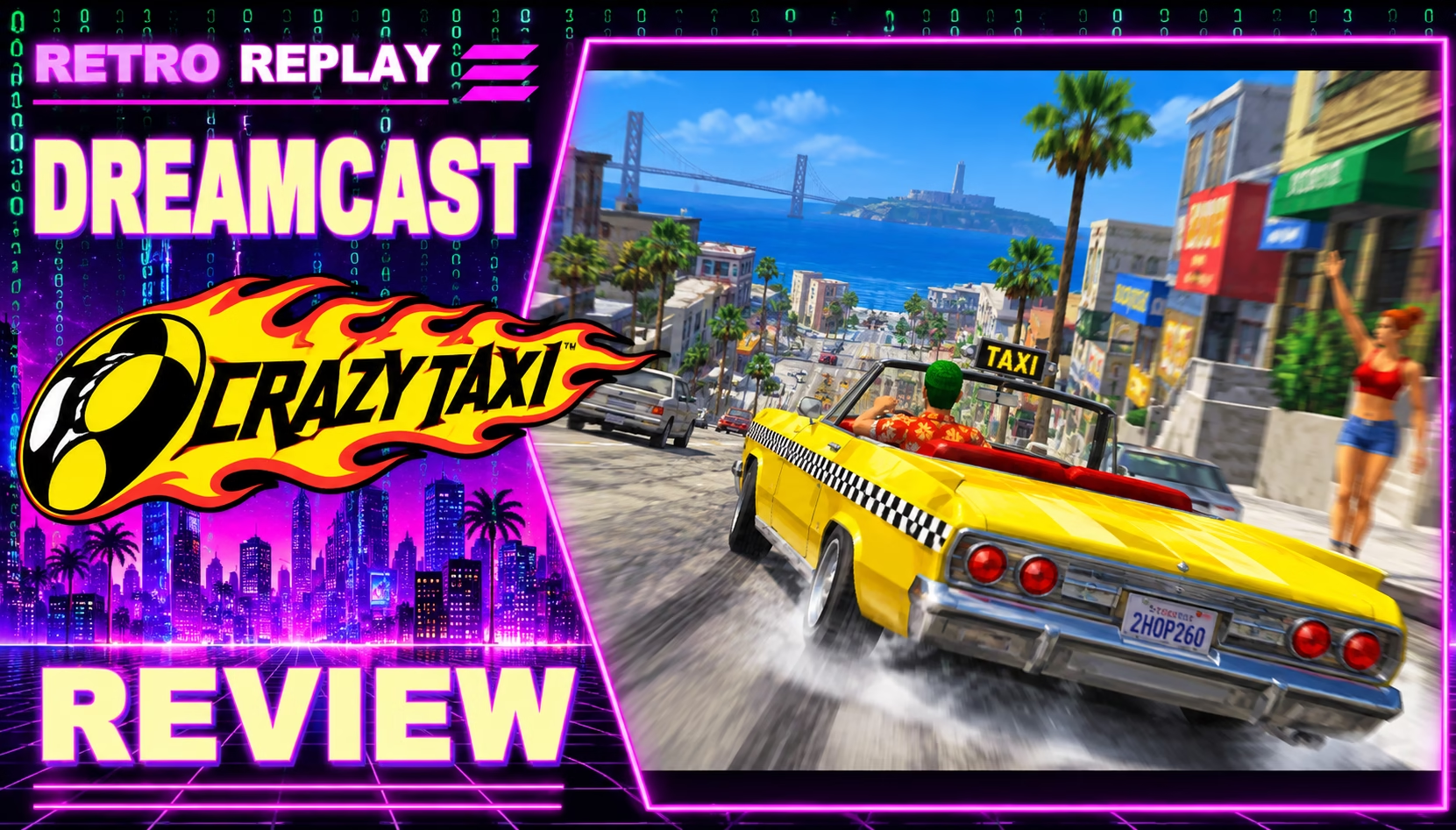
Some games take a while to explain. Crazy Taxi is not one of them. You drive a taxi. You pick up passengers. You drive as fast and as recklessly as humanly possible. And somehow, more than twenty-five years later, it’s still ridiculously fun. Originally released in arcades before making its way to the Sega Dreamcast, Crazy Taxi is one of those games that perfectly represents Sega during that era.
Fast. Loud. Colorful. Slightly ridiculous. And completely uninterested in behaving like a normal driving game. This isn’t a simulation. You aren’t worrying about turn signals, traffic laws, insurance premiums, or whether your passenger feels safe. Your passenger wants to get across town. You have thirty seconds. There’s a park between you and the destination. So naturally, you’re driving straight through the park. That’s Crazy Taxi.
The concept is incredibly simple, but Sega and developer Hitmaker managed to turn that simplicity into one of the most recognizable arcade games of its generation. So let’s break it down.
Graphics — 8.5/10
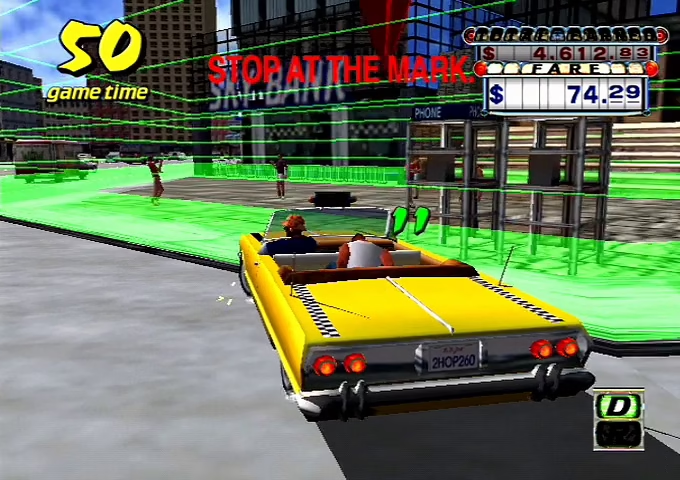
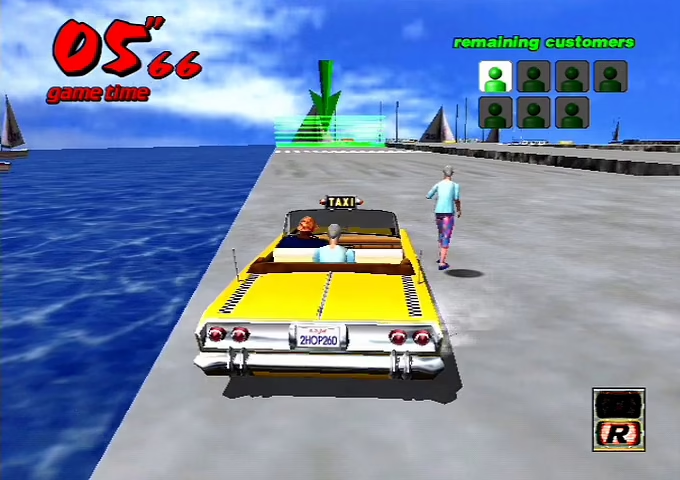
Crazy Taxi is one of those games that immediately looks like it belongs on the Dreamcast. Everything is bright, colorful, clean, and slightly exaggerated. The city is packed with hills, beaches, traffic, pedestrians, cable cars, storefronts, restaurants, parking lots, and huge jumps that seem to exist purely because somebody at Sega thought launching a taxi through the air would be entertaining. And they were right.
For the time, the environments felt surprisingly large. You could tear through downtown streets, race along the waterfront, cut across grass, fly through parking lots, take shortcuts through alleys, and generally treat the entire city like your personal driving playground. It’s not an open-world game in the modern sense, but it gives you a remarkable amount of freedom for an arcade racer from this period.
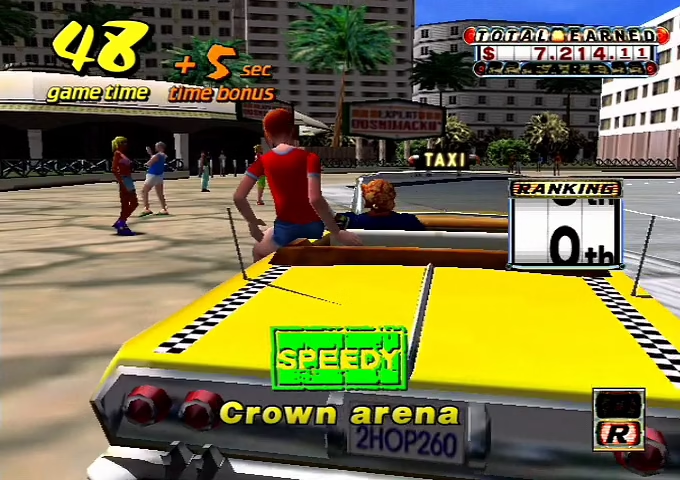
The taxis themselves are large, colorful, and easy to recognize. Each driver has their own vehicle and personality. Axel has that classic cool-guy attitude. B.D. Joe brings even more energy. Gena and Gus have their own distinctive look and style. Even the passengers have personality. They’re waving their arms. They’re yelling directions. They’re cheering when you narrowly miss traffic. They’re panicking when you drive off something that probably wasn’t designed to be used as a ramp.
And somehow they’re still willing to pay you afterward. The game obviously shows its age today. Buildings can look simple. Textures can become blurry. Pedestrians aren’t exactly detailed character models. But none of that really damages the experience because Crazy Taxi was never trying to achieve realism. It was trying to create speed, excitement, and personality. And visually, it still succeeds.
Sound — 9.5/10
Now we get to one of the defining elements of Crazy Taxi. The soundtrack. If you played this game around the time it came out, there’s a very good chance some of this music is permanently burned into your memory. The Dreamcast version features music from The Offspring and Bad Religion, and the soundtrack fits this game almost perfectly. Fast punk rock blasting while you’re weaving through traffic and launching a taxi over a hill just feels right.
The music immediately establishes the attitude of the game. Crazy Taxi wants you moving. It wants you driving aggressively. It wants you taking chances. And the soundtrack makes even an ordinary trip across town feel like complete chaos. The sound effects are equally important. Tires screech. Cars smash into each other. Passengers yell. The announcer screams encouragement at you. And the taxi drivers themselves never seem capable of staying quiet for more than about three seconds.
“Yeah, yeah, yeah, yeah, yeah!” It’s obnoxious. It’s repetitive. And it’s absolutely perfect. Crazy Taxi is supposed to be loud. It’s supposed to feel like an arcade cabinet sitting in the middle of a room demanding your attention. This is one of those games where muting the television genuinely changes the experience.
Gameplay — 9.5/10
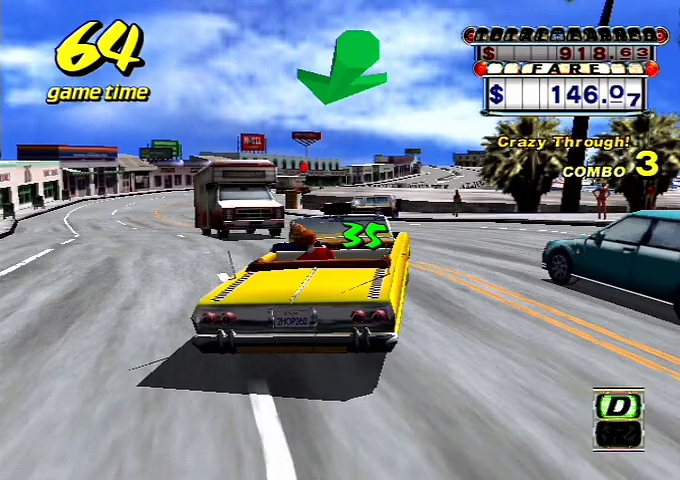
Crazy Taxi’s gameplay loop is almost absurdly straightforward. Drive around until you find a passenger. Stop near them. They jump into the taxi. A destination appears. And the clock starts ticking. Get them there quickly and you make money. Take too long and your passenger becomes increasingly angry. Run out of time and they’ll eventually jump out. Simple. But Crazy Taxi becomes much more interesting once you realize the game doesn’t merely reward speed.
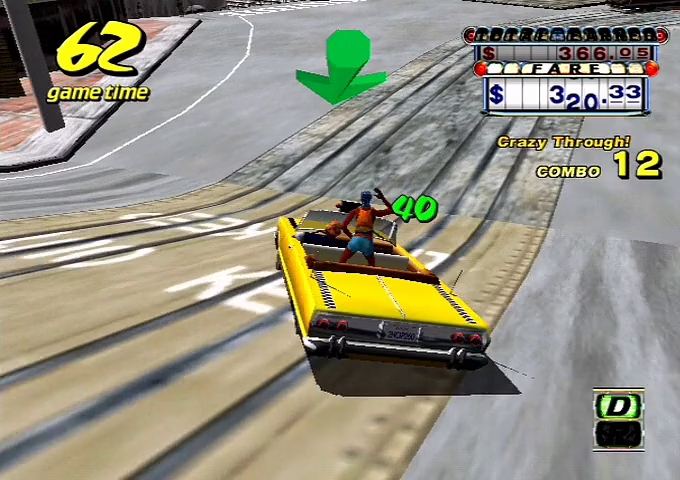
It rewards insanity. Drive dangerously close to other vehicles and you earn Crazy Through bonuses. Launch yourself off ramps and hills and you earn Crazy Jump bonuses. Drive aggressively and stylishly and your fare keeps climbing. In other words, the game actively rewards everything an actual taxi company would immediately fire you for doing. And that’s a huge part of the fun. At first, the controls can feel loose and chaotic.
You’re crashing into traffic. Missing turns. Driving past passengers. And wondering how anyone is supposed to control this thing properly. Then you start learning the advanced techniques. The Crazy Dash gives you a quick burst of acceleration. The Crazy Drift lets you swing the taxi through corners. And learning how to combine those techniques changes everything. Suddenly the game isn’t random chaos anymore. You start recognizing streets.
Then shortcuts. Then passenger locations. Then destination layouts. Eventually you’re intentionally cutting across parks, launching over traffic, entering shortcuts at exactly the right angle, and arriving at destinations with seconds remaining. That’s where Crazy Taxi becomes addictive. You’re constantly competing against your previous performance. Can I earn another thousand dollars? Can I squeeze in one more passenger? Can I keep the timer alive another thirty seconds?
Can I improve my ranking? The Dreamcast version also includes Crazy Box, a collection of challenge missions designed around specific skills. Some teach drifting. Some focus on jumps. Some require you to reach destinations under difficult time limits. And some are just completely absurd. Crazy Box is also where you really discover that Crazy Taxi has considerably more mechanical depth than it initially appears to have.
The biggest weakness is repetition. You are always picking up passengers and driving them somewhere. That’s the entire foundation of the game. There’s no massive campaign waiting underneath it. There’s no complicated progression system. If you don’t enjoy that loop, Crazy Taxi probably isn’t going to suddenly become a different game after two hours. But if you do enjoy it, the gameplay is phenomenal.
Story / Presentation — 8.5/10
Crazy Taxi barely has a story. And that’s completely fine. There’s no evil corporation. There’s no championship you’re desperately trying to win. Nobody kidnapped Axel’s girlfriend. The city isn’t going to explode unless B.D. Joe delivers somebody to Pizza Hut in thirty-five seconds. You’re simply a taxi driver trying to make money. But while there’s almost no traditional narrative, Crazy Taxi has an enormous amount of personality.
Each driver immediately feels different. Axel is cocky. B.D. Joe is loud and energetic. Gena has her own attitude. Gus feels like the experienced veteran. You don’t need lengthy cutscenes explaining who these people are because their animations, voices, vehicles, and reactions communicate everything the game needs you to know. The passengers add even more personality. They’re excited when you’re driving well. They panic when things go wrong.
They shout at you when you’re too slow. And every ride feels like a tiny little story. Pick somebody up. Find out where they want to go. Nearly kill them six times getting there. Drop them off. Get paid. Repeat. The real-world businesses also give the city a distinctive identity. Instead of generic restaurants and anonymous stores, you’re driving passengers toward recognizable destinations. That makes the city feel less like a collection of videogame scenery and more like an exaggerated version of an actual place.
The presentation throughout the game is pure late-’90s and early-2000s Sega. Bright menus. Huge lettering. Loud music. Over-the-top announcers. Aggressive sound effects. Everything about Crazy Taxi is constantly shouting at you. And somehow, it works. The story itself may barely exist. But the presentation is unforgettable.
Replay Value — 9/10
Crazy Taxi doesn’t have dozens of cities. It doesn’t have a gigantic career mode. It doesn’t have hundreds of vehicles to unlock. By modern standards, the amount of raw content may seem relatively small. But Crazy Taxi was never designed around raw content. It was designed around mastery. Every time you play, you learn something. You discover a shortcut. You remember where a destination is.
You recognize where certain passengers appear. You become better at drifting. You improve your Crazy Dash. And eventually, areas that once felt chaotic become completely predictable. That’s what keeps the game compelling. A terrible run makes you want to restart. A good run makes you think you could have done even better. And a great run makes you chase an even higher score. Crazy Box adds another layer because completing the challenges requires much more precision than simply surviving the main arcade mode.
Those missions encourage you to understand how the game actually works instead of just holding the accelerator and hoping for the best. Crazy Taxi is also remarkably easy to revisit years later. You don’t have to remember where you were in a story. You don’t have to relearn twenty systems. You don’t need to load a twenty-hour save file. Turn it on. Pick a driver.
Start driving. Thirty seconds later, you’re completely back into it. That kind of accessibility gives Crazy Taxi tremendous long-term replay value.
Final Verdict — 9/10
Crazy Taxi is one of the games that defines the Sega Dreamcast. Not because it has the best graphics on the system. Not because it has some incredible cinematic story. And definitely not because it’s realistic. It represents the Dreamcast because it captures what Sega was doing so well during that period. Taking pure arcade gameplay and bringing it home without losing the energy that made the arcade version exciting in the first place.
Crazy Taxi is immediate. You don’t need an hour to understand it. You don’t need fifteen tutorials. You don’t need to memorize a giant controller layout. You pick somebody up. You drive like an absolute lunatic. And you try to make as much money as possible before time runs out. The graphics are bright and energetic. The soundtrack is iconic. The gameplay is simple enough for anyone to understand but deep enough to reward practice.
The presentation is overflowing with personality. And the constant chase for a better score gives the game far more replay value than its relatively small amount of content might suggest. Its biggest weakness is unavoidable. Crazy Taxi is repetitive. If the core gameplay loop doesn’t appeal to you, there isn’t much else here that’s going to change your mind. But if that loop gets its hooks into you, this is one of those games that’s almost impossible to play only once.
You finish. You see your score. You know you could have done better. So you start another run. For Retro Replay, Crazy Taxi earns a 9 out of 10. It’s one of the Dreamcast’s essential games. It’s one of Sega’s greatest arcade experiences. And decades later, it’s still one of the most entertaining ways imaginable to completely ignore every traffic law ever written. For Retro Replay, this is Crazy Taxi.
Now move your ass. Your passenger is waiting.
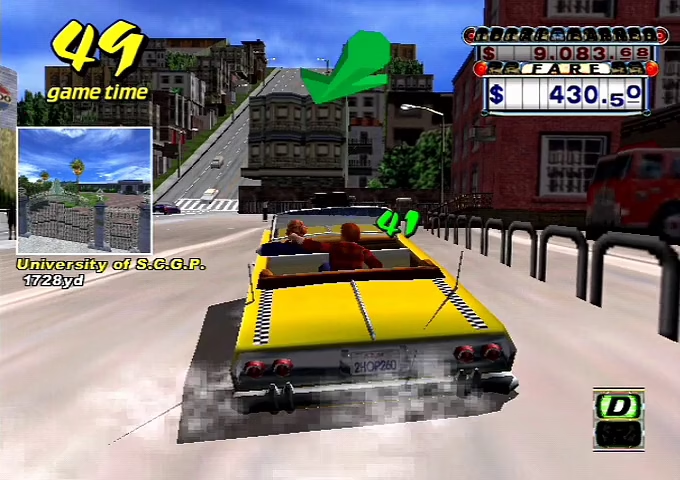
Gameplay footage credit: World of Longplays. Played by RickyC. Watch the original Crazy Taxi longplay.
Crazy Taxi — Retro Replay Review
Graphics - 85%
Sound - 95%
Gameplay - 95%
Story / Presentation - 85%
Replay Value - 90%
90%
Retro Replay Verdict
An iconic soundtrack, energetic presentation and rewarding arcade driving make Crazy Taxi a Dreamcast essential.