Retro Replay Retro Gaming History, Reviews & Emulation
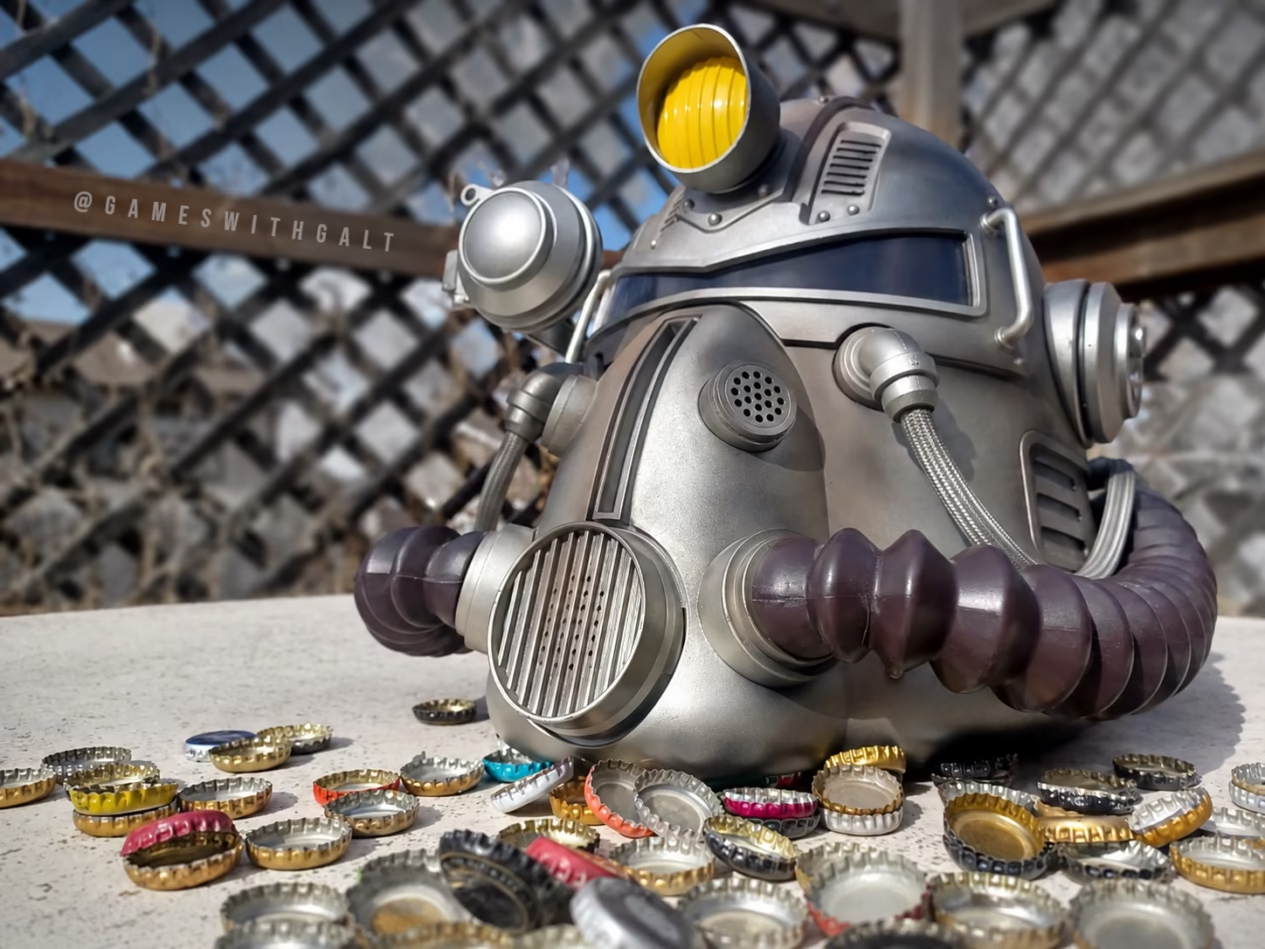
A broken water chip, a world full of mutants, and absolutely no guarantee you’d survive long enough to save anybody. Welcome to Fallout.
On 10 October 1997, Interplay released Fallout: A Post Nuclear Role Playing Game, introducing PC gamers to a radioactive wasteland unlike anything most of us had experienced before.
Set in the year 2161, nearly a century after a devastating nuclear war, Fallout put players in the boots of a resident of Vault 13, an underground shelter built to protect its inhabitants from the apocalypse. Unfortunately, the Vault’s water purification chip had failed, and with only 150 days of water remaining, somebody had to venture into the wasteland to find a replacement.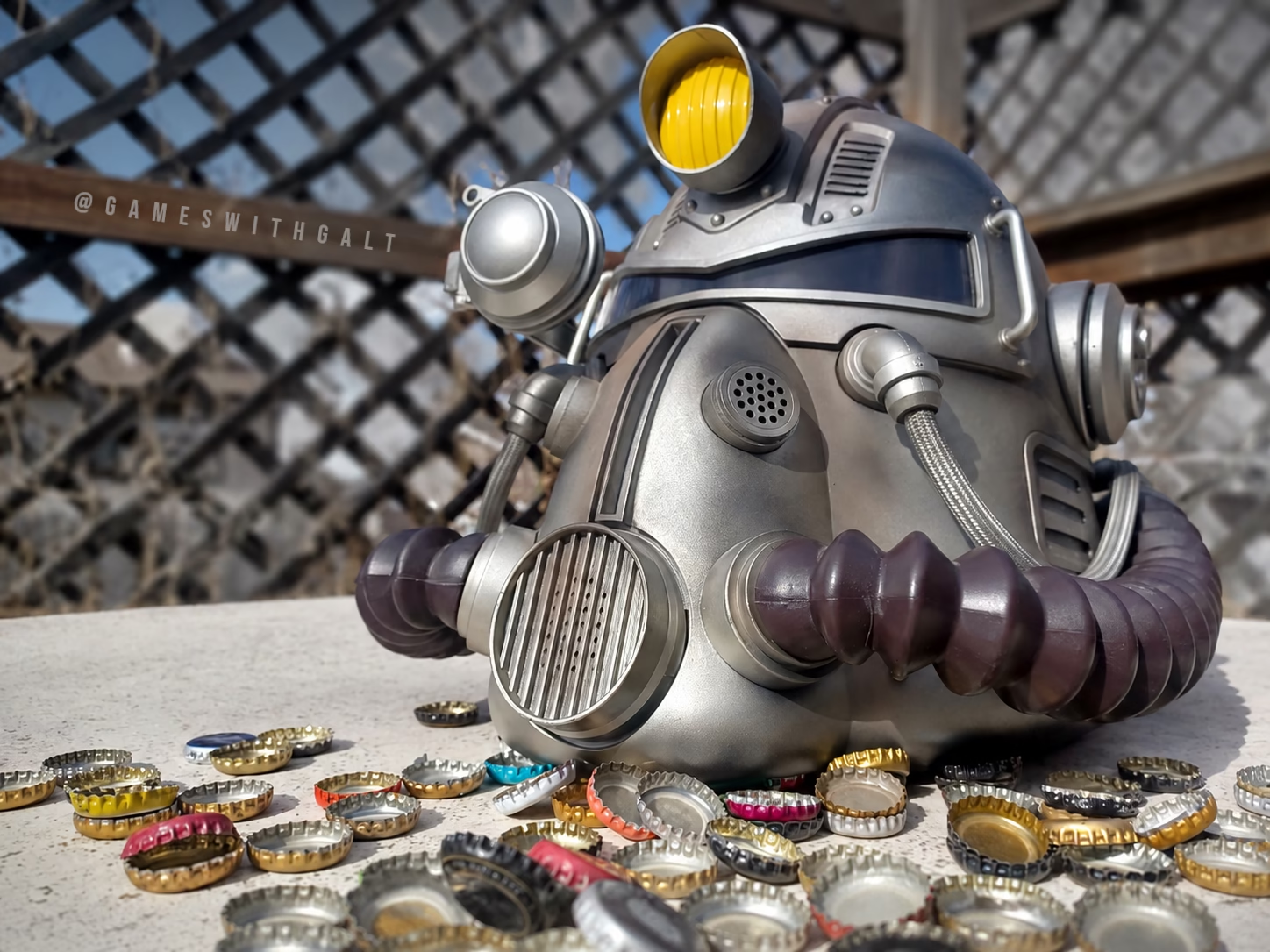
That somebody was you.
What followed was an isometric, turn-based computer RPG filled with raiders, mutants, desperate settlements, strange technology, and a society struggling to rebuild itself from the ashes. There was the Brotherhood of Steel, the mysterious super mutants, and an increasingly disturbing story lurking beneath what initially seemed like a straightforward scavenger hunt.
And, of course, there was that unforgettable mixture of grim violence, 1950s-inspired retrofuturism, and dark, occasionally ridiculous humor.
Fallout wasn’t simply another computer RPG. It had an identity entirely its own.
From GURPS to SPECIAL
One of the more interesting chapters in Fallout’s development happened before the game was ever released.
Originally, Fallout was being developed around GURPS (Generic Universal RolePlaying System), the tabletop RPG system created by Steve Jackson Games.
For those unfamiliar with it, GURPS was designed to handle practically any setting imaginable, from medieval fantasy to science fiction, horror, superheroes, and everything in between. Rather than relying on traditional character classes, it emphasized attributes, skills, advantages, disadvantages, and flexible character creation.
I played a lot of GURPS back in the day (and even today still run solo-scenarios with one of the older rulesets), so the idea of bringing that kind of tabletop freedom to a computer RPG was particularly interesting to me.
Unfortunately, the partnership between Interplay and Steve Jackson Games fell apart over creative and licensing disagreements, including objections involving the game’s violence and imagery. Rather than abandon the project, the developers created their own character system: SPECIAL, representing Strength, Perception, Endurance, Charisma, Intelligence, Agility, and Luck.
What might have been a disastrous setback instead became one of the franchise’s defining features.
My First Trip Into the Wasteland
Here’s the thing: I never actually owned the original Fallout.
My introduction to the wasteland came courtesy of a friend who did. I spent plenty of time sitting beside him, watching the action unfold, helping think through decisions, and seeing just how badly things could go when the dice didn’t roll in your favor.
And things could go very badly.
Fallout was gritty. It was unforgiving. It was sometimes downright cruel.
But it was also goofy, spoofy, and frequently hilarious in ways you really didn’t expect from a game about the aftermath of nuclear annihilation.
One moment you were dealing with desperate survivors, morally questionable decisions, and the very real possibility of dying in a radioactive pit. The next, you were encountering some bizarre character or bit of absurd humor that seemed completely at odds with the bleak surroundings.
Somehow, it worked.
And what impressed me most was that the game didn’t always tell you what to do, how to do it, or even whether you were making the right decision. Gamers today without glowing trails glowing paths and map markers, but back then things were different. You could talk your way through trouble, fight your way out, or occasionally make a bad situation considerably worse.
It felt like a tabletop RPG in ways that many computer games of the era simply didn’t.
Still, I’ve always been more of a fantasy guy than a science-fiction or post-apocalyptic gamer. Give me swords, sorcery, ancient ruins, and a dungeon full of monsters, and I’m perfectly happy.
So once we’d finished Fallout, I was ready to move on. Fortunately, the next few years delivered plenty of opportunities to return to fantasy, with games like Might and Magic VI: The Mandate of Heaven (1998), Baldur’s Gate (1998), and Planescape: Torment (1999).
But while my interests were drifting back toward magic and monsters, Fallout was just getting started.
The Game That Helped Rewrite RPG Rules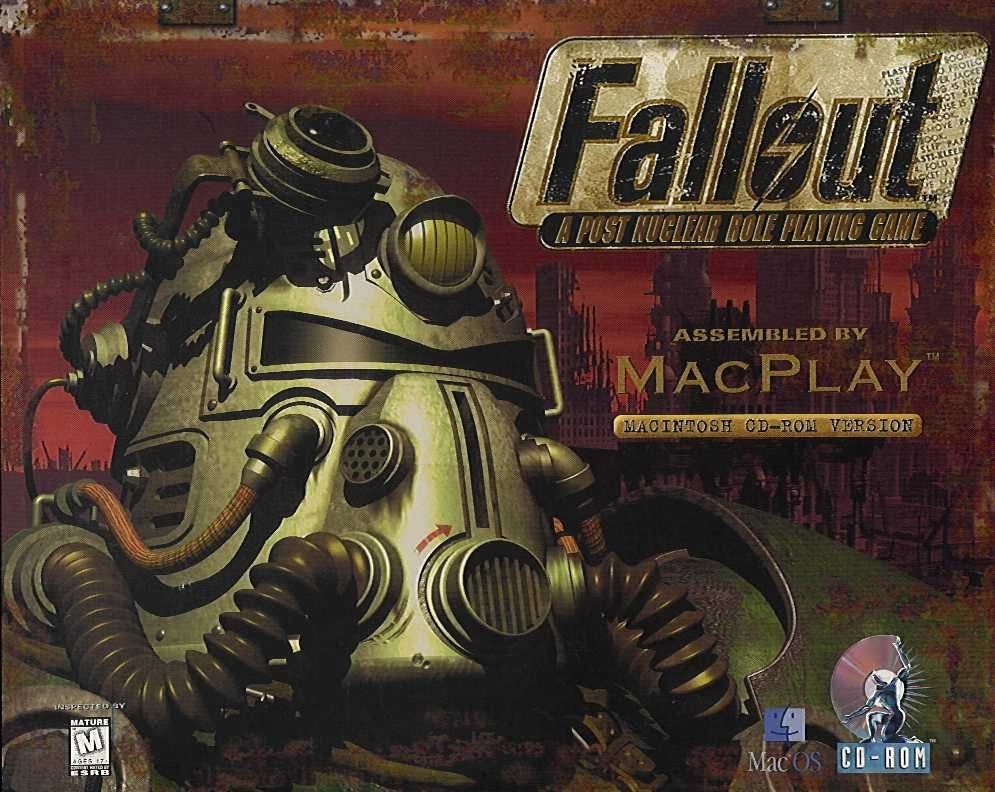
Fallout wasn’t merely a hit with gamers. Its influence on developers, particularly those working on Western RPGs, can still be felt nearly three decades later.
It certainly didn’t invent every concept it employed. Games like Ultima and Wasteland had already helped establish many of the genre’s foundations. But Fallout combined those ideas into something distinctive, and its approach became a model for countless RPGs that followed.
Some of its most important contributions included:
- Choices with genuine consequences. Decisions could affect characters, settlements, relationships, and even the ending. The game didn’t always reward you for trying to be the hero.
- Multiple ways to solve problems. Combat wasn’t necessarily the best solution. Intelligence, persuasion, stealth, and specialized skills could open entirely different paths.
- Characters who actually played differently. Your attributes and skills influenced much more than combat damage. Even dialogue could change dramatically depending on the character you’d created.
- Morally complicated storytelling. Not every problem had a clearly good or evil solution. Sometimes you simply had to choose which consequences you were willing to live with.
- A world with a recognizable identity. Fallout’s mixture of Cold War paranoia, retrofuturism, political satire, dark comedy, and post-apocalyptic horror helped demonstrate how important a distinctive setting could be.
- Freedom to approach the story on your own terms. Exploration, nonlinear quest design, optional encounters, and unexpected outcomes made the wasteland feel less like a scripted adventure and more like a world you were genuinely navigating.
You can see echoes of these design philosophies in later RPGs, from The Outer Worlds and Wasteland 2 and 3 to ATOM RPG, and in the broader emphasis on meaningful choices that continues to shape modern role-playing games.
Fallout also launched a franchise that would eventually expand well beyond its original isometric, turn-based roots. From Fallout 2 and Tactics. Fallout: New Vegas to Fallout 4, Fallout 76, and a successful television adaptation, that strange little wasteland grew into one of gaming’s most recognizable universes. OG Fallout fans will argue that the franchise is a soulless shell of what it used to be, devoid of the grit and consequences that made the first game so special. And honestly, there are a lot of valid arguments that the series has gone soft, catering to a more casual audience of normies.
And it’s true. But I still have fun with the new games.
The Verdict
Looking back, I think that’s what makes the original Fallout worth celebrating.
I wasn’t particularly interested in spending hundreds of hours wandering through a nuclear wasteland when there were perfectly good dragons to slay and dungeons to explore.
But I could appreciate what Interplay had accomplished.
Fallout had personality. It had ambition. It had a willingness to let players make mistakes and then live with the consequences. And most importantly, it wasn’t trying to be another fantasy RPG with the swords swapped out for laser pistols.
It was its own thing.
All these years later, I still think that’s one of the best compliments you can give a game.
In fact, today Fallout is one of my favorite franchises of all time. These days, it doesn’t look or play anything like the original, but it stills familiar enough to feel like going home again.
Happy 29th anniversary, Fallout.
Were you there for the original Fallout in 1997, or did you discover the wasteland through one of the later games? And if you’ve played the original recently, does it still hold up?
War. War never changes.