Retro Replay Retro Gaming History, Reviews & Emulation
Interview by David, Retro Replay
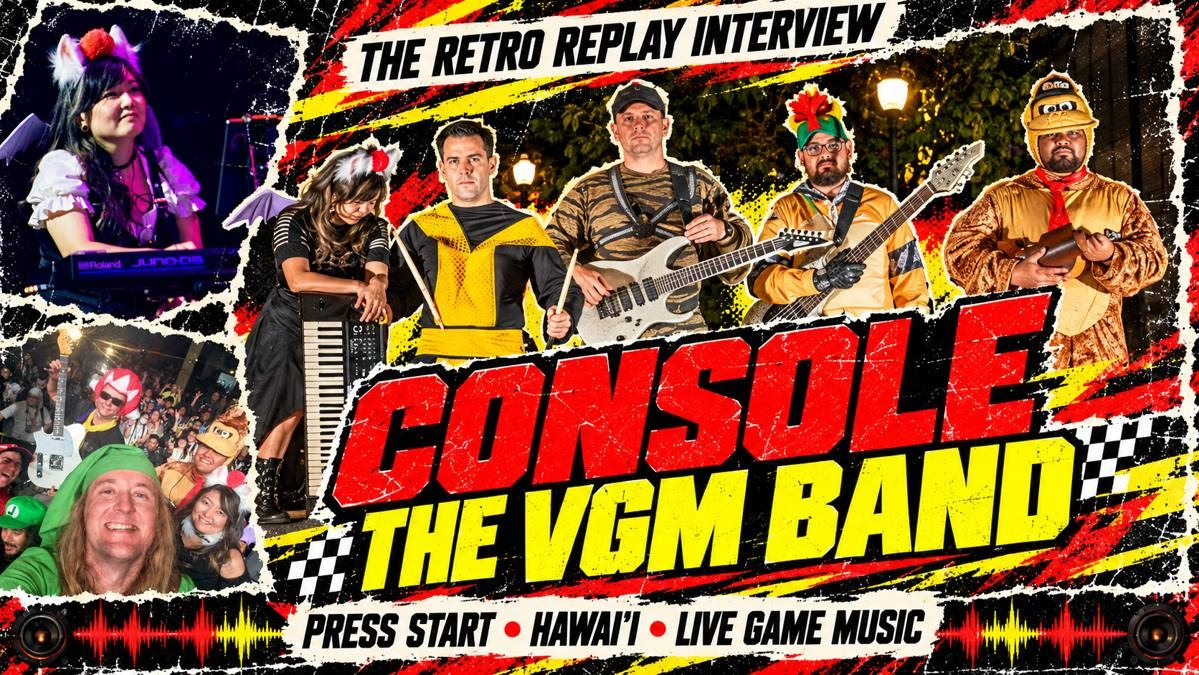
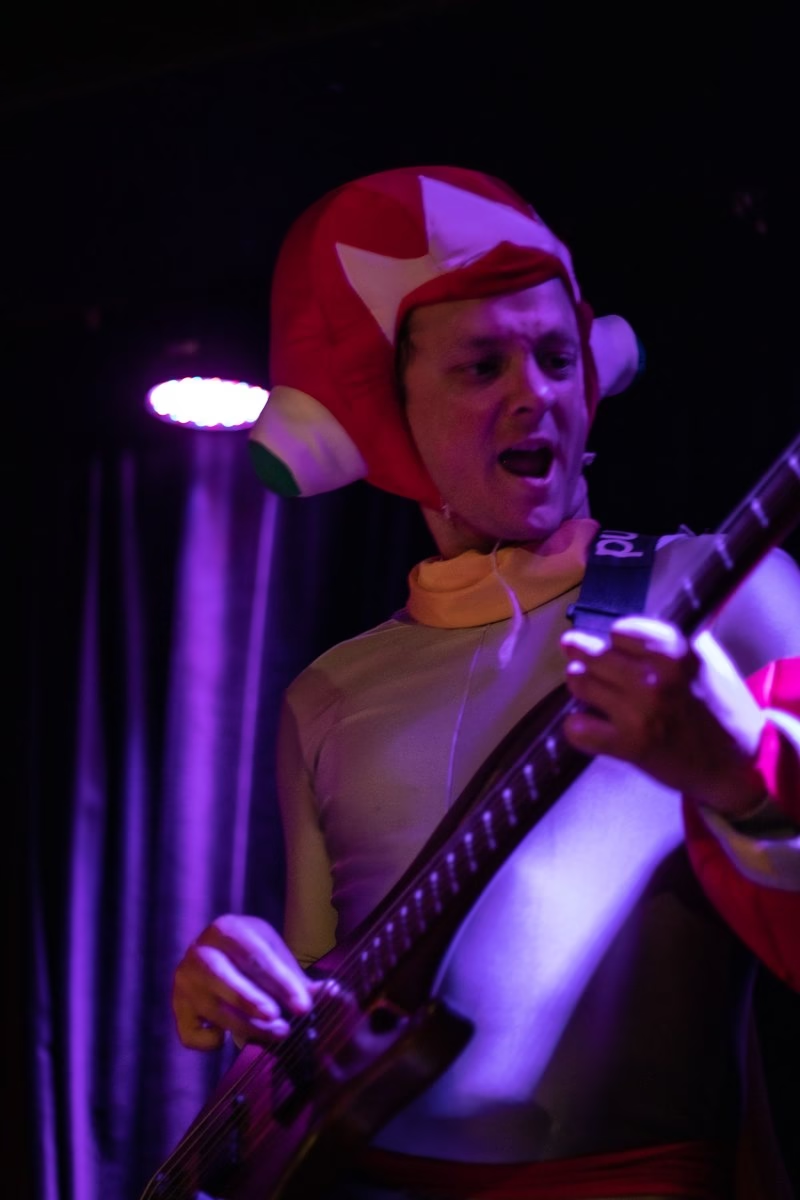
A boss theme can follow you long after the battle is over. For Console: The VGM Band, those melodies became a reason to pick up instruments, find other musicians, and discover what happens when music written for a game has an audience standing in front of it. A familiar tune is the starting point; the groove, the arrangement, and the energy of a live band are where Console makes it their own.
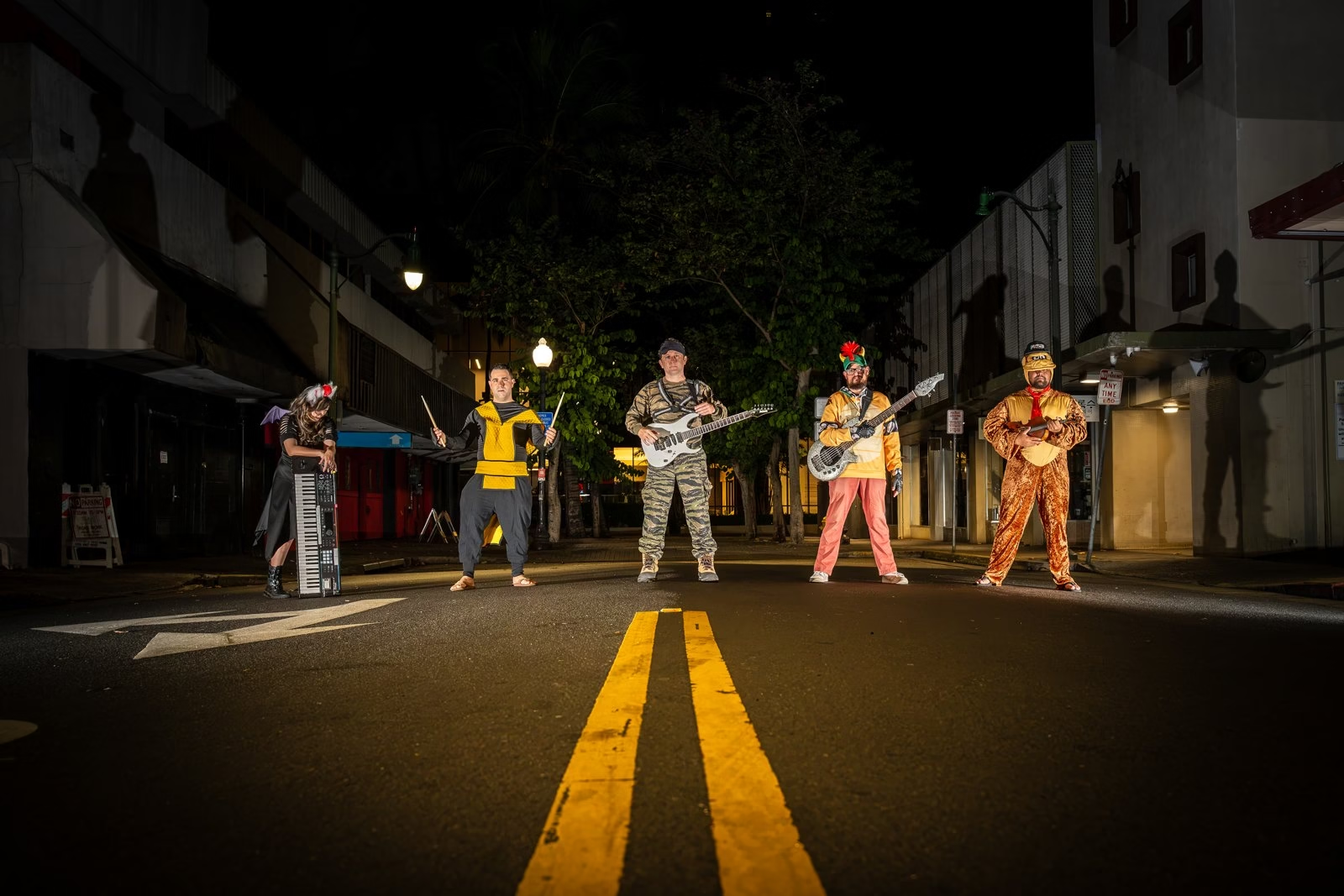
Based in Honolulu, Console formed in 2017 after guitarists Brian and Cullen connected through YouTube. With keyboardist Eric joining them, the early repertoire began with Chrono Trigger, Final Fantasy VII, and Mega Man 2. The band grew through rehearsals, open mics, convention stages, recording, and livestreams, eventually releasing its debut album, Press Start, in 2024.
The band’s official history traces that journey through changing lineups, an acoustic Unplugged set, and wider recognition for their recordings and videos. Their Metal Gear Solid video offers a good introduction to Console’s combination of serious musicianship, game references, and a willingness to have fun with the whole idea.
For this written interview, guitarist Brian and drummer Reece talk with Retro Replay’s David about choosing music, preserving a melody while reshaping everything around it, keeping a band alive across the Pacific, and what they want to make next.
Brian’s and Reece’s answers are reproduced as supplied. Their initials have been expanded into speaker labels, with paragraph spacing normalized.
A Band Built Around Game Music
Retro Replay: Let’s start at the beginning. How did Console originally come together, and what made you decide that video game music should be the focus of the band?
Brian: The idea for a band like Console was something I had in my head since as early as 8th grade. At the time, I was learning to play guitar, was getting into starter-pack heavy metal bands like Metallica, Iron Maiden, etc. and was playing FF7. I remember thinking after hearing the boss theme for the 100th time like “wow, imagine if a band like Metallica played this.” Years later, when my music career became more serious after high school, I had only imagined Console as being an album series I’d produce as a solo release on the side of my more main pursuits, mostly because I didn’t think I’d find any musicians interested in doing VGM, or a large enough audience to support it as its own stand alone thing. Eventually I met Cullen and after pitching a few different musical directions that I felt we could do well, he definitively chose to do VGM.
Retro Replay: Brian and Cullen originally connected through YouTube over a shared love of game music. Do you remember what the first conversations were like and what music you immediately bonded over?
Brian: Yeah, it was kind of funny. I had been irregularly uploading simple playthrough videos of myself jamming along to some of my favorite VGM tracks at the time and along came Cullen in the comments saying “I just moved to the island, we should jam!” I agreed to meet him, and I quickly realized we had a LOT of musical commonalities. I specifically remember talking about how it had been challenging finding good metal musicians to play with that didn’t just want to do extreme vocals, breakdowns, blastbeats, and stuff. All things we liked but felt like it had been overdone, played out, and even cliche by that point.
Retro Replay: Before Console, you had already worked some video game music into your previous metal band. What made you want to take that idea much further?
Brian: Shout out to my old bands! Thanks for being the test kitchen. Yeah, I would sometimes convince/coerce my poor band mates to throw in a rocking VGM tune into our 30 minute showcase sets, mainly as a gag or novelty kind of thing. It went over well, but when some concert-goers started to know us as “the band that plays the Street Fighter song” I realized I may have stumbled across something with some unintended results/consequences. My original bands were now having an identity crisis; the notoriety of playing VGM was starting to retract from our main focus which was serious original music. This did prove that there was some potential audience interest in the Console-concept, I would just have to find musicians who were on board with doing it seriously (like Cullen and later Eric), and not as a gag.
Retro Replay: What were the first game themes Console ever rehearsed together?
Brian: With Cullen spurring things along, I asked my keyboard friend Eric to join us, and the three of us together decided to each bring one song at the beginning. The first three “starter” songs were: Chrono Trigger Theme, Those Who Fight Further from FF7, and Dr. Wily from Mega Man 2.
Retro Replay: Was there a moment early on when you realized, “This actually works as a band”?
Brian: I guess for me it was “oh these guys actually want to intrinsically do this.” They had GOOD ideas, and suggestions. They were motivated. When scheduling lined up, we were able to fill other more stand-in positions (drums and bass) pretty easily between our network of friends.
From Sound Chips to a Live Arrangement
Retro Replay: How do you choose which game themes are worth arranging? Is it mostly personal nostalgia, what works musically, audience requests, or some combination?
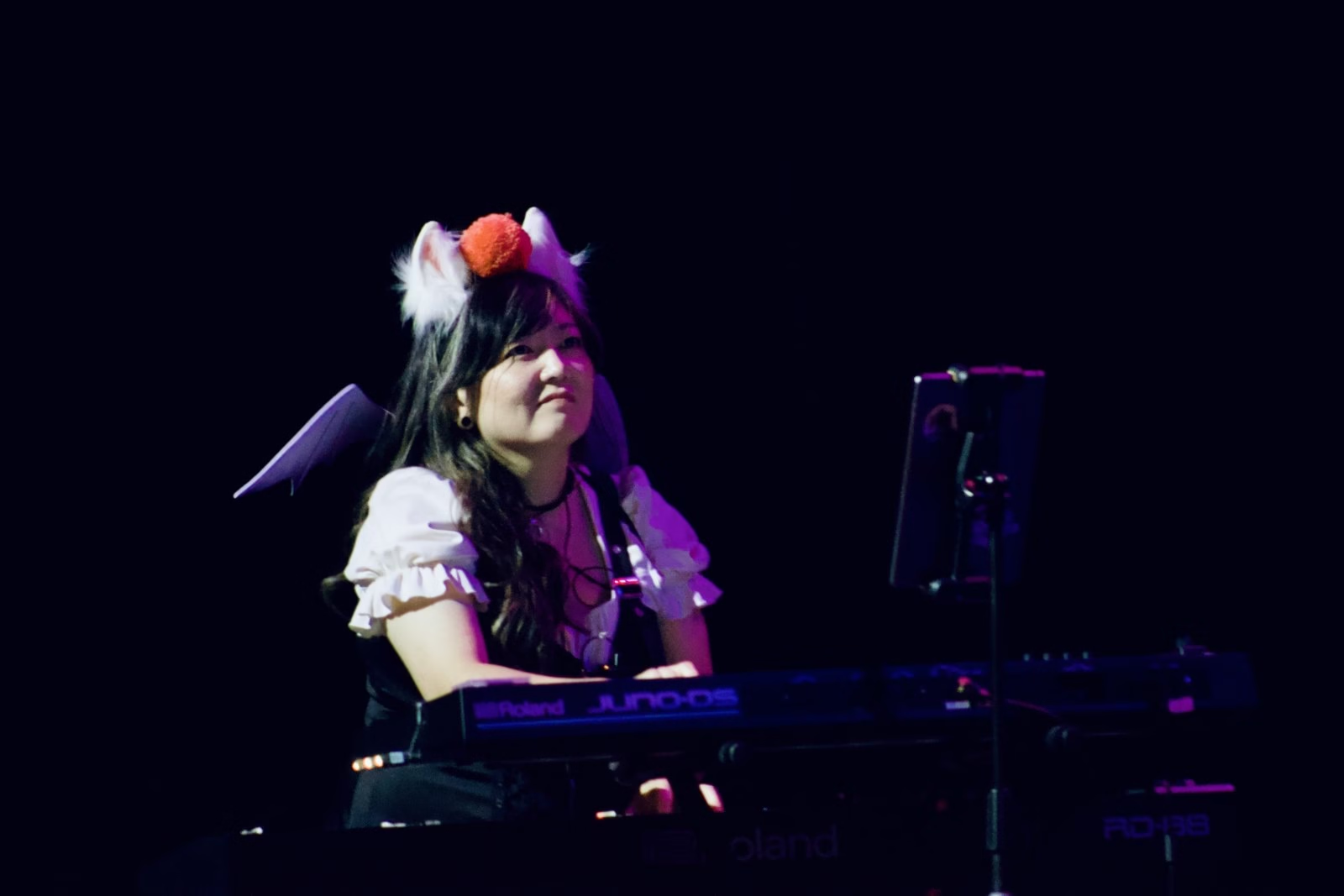
Reece: It is a combination of factors, and we try to rotate requests from band members. In short, one of us pitches a song, we listen as a group and try to work out a rough interpretation in the rehearsal space. If we’re feeling good after a few weeks, one of us (usually Brian) will write a mock-up in MuseScore while we keep playing through the piece in its original form and brainstorm ways to bring something new to the arrangement. We normally discover early on when a song doesn’t work, occasionally later in the process. We try to avoid a one-to-one copy/paste of an arrangement. Our tastes vary between us, and we have so many audience requests in our backlog. That’s why we like to take our time to find something that we feel really sticks.
Brian: I tend to focus on what could potentially work well musically first, and then favor songs I personally like. People suggest tons of tunes to us all the time… but we have a careful vetting process to ensure that whatever tune we decide to work on is probably going to be a good addition to Console and has some potential foreign value to those who aren’t necessarily VGM fans.
Retro Replay: Console pulls heavily from the 8-bit through 32-bit eras. What is it about that period of game music that lends itself so well to a live rock-band treatment?
Brian: I think that specific period had important hardware and cultural limitations. Most releases were coming out of Japan, and it seems like many of the men and women composing for these games had some clear 80’s synth and/or metal influence. Coupled with the crude bleep-bloop 4 / 8 / 24 track audio, any quality compositional idea from that era has been screaming to be fleshed out with real instruments and real musicians. Playing most of these games as they were released as a kid certainly doesn’t hurt either.
Retro Replay: When you arrange something that originally had only a handful of sound channels, how much freedom do you give yourselves to invent new parts?
Brian: It really depends. Sometimes I feel like a future architect trying to imagine what the original ancient builder was intending to reach for from the rubble of some forgotten ruins. Or like in Jurassic Park when they use frog DNA to fill in the missing parts of the dinosaur DNA. Does any of that make sense? Haha. I guess the answer is “that’s where most of the clever creative decisions are made.”
Retro Replay: How important is it to preserve the recognizable melody compared with making the arrangement feel like a Console song?
Brian: I mean, the melody is everything so we can’t mess around with that too much. We leave that largely intact, mostly deciding what instrument will voice the precious melody for a particular tune. It’s all the other elements (groove, chord progressions, instrumentation) where most of the real reinterpretation happens.
Retro Replay: Do you ever deliberately avoid playing a famous game theme in the obvious way because you want to surprise people?
Brian: If a particular tune has been done to death in the VGM world, we tend to avoid it out right, unless we feel particularly inspired that we can truly elevate it. Alternatively, for the “classics” that everyone and their grandma are doing that we also happen to do, yes! We strive to polish these gems in the rough and/or put an interesting spin on it because if not, why bother? Just listen to the original, or someone else’s track that’s already been done.
Retro Replay: Are there arrangements that changed dramatically once you started playing them live?
Brian: Some songs “level up” as we play them. It’s rarer for them to change after hammering on them during the tinkering and rehearsal stages before going live, but it does happen occasionally. Usually it’s just small changes here and there, nothing drastic. “Green Hill Zone” is probably the one that has had the biggest aftermarket upgrade. Then drummer Gabe suggested we do a reggae thing somewhere in that song, and with that modification that tune really began to pop.
Retro Replay: Which game soundtrack has been the hardest to translate into a full-band arrangement?
Brian: Ironically for what we’re doing, the more current an OST is the more challenging it has been to adapt it to Console. This is because instead of scaling a song up to our band, we have to reduce it down from a fully orchestrated composition to our simpler rock quintet. I remember Metal Gear Solid was particularly challenging in this regard. Famously, that particular game and soundtrack marked the arrival of cinematic composition which is now kind of the norm, especially with the bigger studios.
Retro Replay: Has there been a song that surprised you by becoming a much bigger crowd favorite than you expected?
Brian: Yes, and that’s been a lot of fun. When we do more concert-oriented performances, “Phendrana” and “Only a Plank” have been particular stand outs amongst fans. For the more event-entertainment gigs, “Toe Jam Jammin’” has gone over really well in spite of it being kind of an oddball tune in our repertoire. It’s a real unexpected surprise when this happens. It can also be the total opposite when a song we think is going to do well garners zero response. Womp waaa. That’s funny though to me. Never truly know till we cook it up and dish it out! COME AND GET IT.
Finding an Audience and Keeping the Band Alive
Retro Replay: What was it like gradually building the band through open mics and smaller performances before reaching larger convention stages?
Brian: I’m not gonna lie, it was pretty discouraging at the beginning mainly because we had to beg, barter and hustle to get booked. Instrumental music is a tough sell in any market, and it’s compounded when it’s VGM. Thankfully, the initial creative trio (Myself, Cullen and Eric) had the resolve and intrinsic motivation to continue pursuing the project in spite of the uphill friction we faced. Initially, we were content just putting together music at the rehearsal room towards a potential record. If we had a booking, then great! That kept the fire alive while we found some more stability later on.
Retro Replay: Kawaii Kon seems to have been an important part of Console’s history. What did playing those larger convention audiences do for the band?
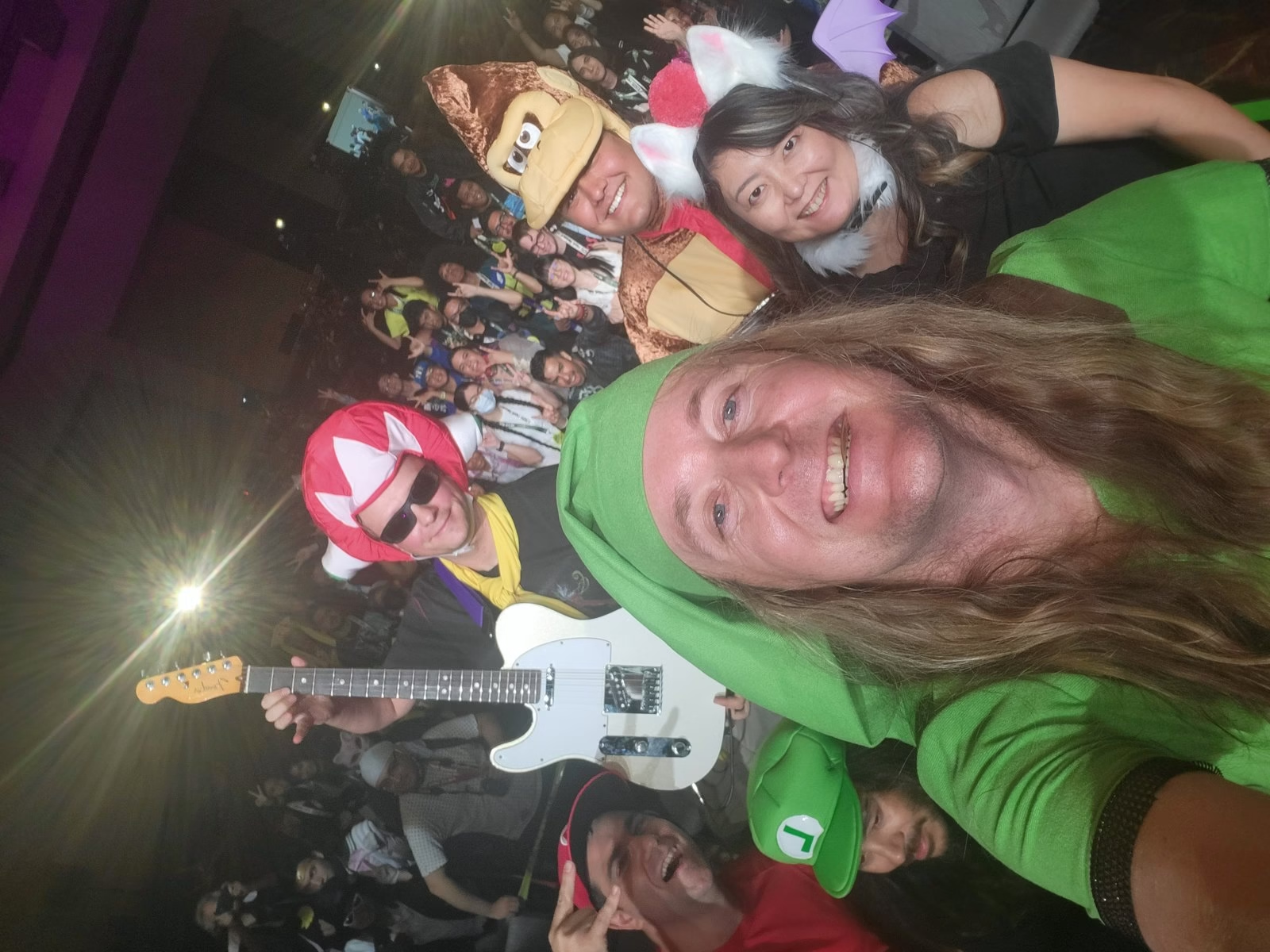
Brian: Well, for one, it made our existence known to people who might like what we’re about, and it also gave us some real credibility. Some attendees still assume we are flown in from elsewhere for these performances, only to be in disbelief when they learn that we are indeed home-grown. It also put us on these giant stages with huge sound systems and towering jumbo-trons which totally fit our big, larger-than-life arena rock sound.
Retro Replay: How different is a VGM convention crowd from a normal rock-club audience?
Brian: Sadly we don’t have a lot of experience at VGM-specific conventions due to our isolation here in the middle of the Pacific, maybe you or your readers can help us change that haha. The closest thing we have here domestically are the various “pop-culture” conventions (ie Comic Con, etc.). However, myself and drummer Reece have made various “pilgrimages” to some out-of-state VGM conventions as attendees and what I can say is that there are some similarities, and some differences. The biggest one being that the VGM crowd totally “gets it” by default, and it seems like the challenge with that crowd is delivering a good performance and/or clever arrangement to them, and partying with them in the common areas. The rock-club audience is more of a game of winning them over with instrumental music, regardless of if it’s VGM or not. We often get praise from happenstance audiences and they’re always like “wait, that was video game music?” I’m not sure if that’s a good thing or a bad thing, but people seem to like it I guess.
Retro Replay: The pandemic forced Console away from normal live performances for a while. How did moving toward online performances and projects change the band?
Brian: Thankfully we had already begun tracking for our album before isolationism. The stay-at-home orders gave us time to self-produce our record “Press Start,” and dare I say that without it, we’d either still be working on this record to this day, or be 5 figures deep in debt with recording studio fees in order to get a record like this past the finish line to release.
Retro Replay: Did that period ultimately make Console better at recording and producing its own material?
Brian: I actually think the introspective streaming era was a major catalyst for Console’s development, reach, vision and creativity. We struggled finding gigs IRL, but with Twitch we were able to just say screw it; let’s do an online show every Saturday or whatever. That regular stage time helped us finally get our stride, and kept us sharp for recording our record when we weren’t goofing off streaming.
Retro Replay: There were also several lineup changes over the years. How difficult is it to maintain a band with a fairly specialized musical identity when members move away or life intervenes?
Brian: It’s very hard, especially when we lose valued contributive members. It also forces any band into a de facto hiatus until the critical positions can be refilled. Momentum is lost, and it can be challenging to stay motivated waiting around and then rebuilding things all over time and time again. The few times Console has been on life support, I’m always like “oh no…” Thankfully, we’ve been lucky to quickly find good stand-in members to shorten any dangerous hiatus period, or finding solid long-term players (like who we have currently). It does get slightly easier for a band to find good-fitting members if there’s plenty of higher-quality tangibles like a record, or cool concert video, for any prospective musicians to check out. But yeah, it’s pretty niche, so it’s tough to find members who dig it.
Retro Replay: When a new musician joins Console, do they need to be a gamer themselves, or is understanding and respecting the music enough?
Reece: I would argue no, but the motivation for non-gamer musicians might drain pretty fast. And it’s not to say actively playing games now in life is important, but rather having one or two core memories of experiencing a game and appreciating the music in that moment. At rehearsal, we may be working on a song when one of us references another song or harmony from the same game. When we speak a similar language, we write and perform better. At the same time, if you like the music disconnected from its game context, that’s absolutely the point of what we’re trying to do anyway! What’s crazy to me is how gaming is so mainstream that any new musician is more likely to have experienced something from our arsenal, whether it’s memes, Youtubers, or maybe even playing a newer game from the series. At the end of the day, though, it’s all about what they bring to the band musically.
Press Start: Making the First Album
Retro Replay: Your debut album Press Start finally arrived in 2024. Why did it take that particular point in the band’s history for the first full album to come together?
Brian: First we needed an album’s worth of material, so that was like the first couple years of being together, slowed by revolving musician lineups. Then we had to track, which took about a year or so between all the parts. Then we argued about mixes and additional things which took about another year or so. We did it all ourselves, so that for sure slowed things, but it also allowed us to get things right! I’m sure if we hired a studio externally we’d probably have had it completed earlier, but I’m certain we would have made some unwanted compromises, probably for the worse. It took us until exactly around then to be collectively happy with our work.
Retro Replay: Did you approach Press Start primarily as a document of the live band, or did the studio allow you to create arrangements that would be difficult to reproduce onstage?
Brian: Great question! We leaned into capturing our live sound and avoided overproducing things beyond live replication. We are very much a live band, and I’d hate for any fans that would discover us through the airways to become disappointed at a live show if we were obviously unable to perform our record. There are a few instances where we broke this rule whenever it was appropriate, but for the most part it was pretty clear and cut “do not make this impossible to do live.” Any studio liberties taken should be able to be convincingly reproduced live.
Retro Replay: The album includes music associated with games like Chrono Trigger, Metroid, Zelda, Tetris, and Final Fantasy VII. How did you decide what represented Console well enough to make the record?
Brian: Initially we were just doing small batches of songs (three at a time) that we thought we’d personally like to jam out to. Thankfully the original creative trio (Myself, Eric and Cullen) had suggestions that were close enough on the sonic map to have some natural cohesion. Anytime there was a new deviant outlier song on the fringes of where we were at, it was like “oh, that might be a good contrast to what we currently have,” and it opened up more creative avenues. Most of these first selections were kept, but some did get chucked. Each round of additional songs continued to define our core center and expand our outer boundaries. It all felt very natural at the time.
Retro Replay: Press Start later received recognition in Hawaii’s music community. What did it mean to see a video game music project recognized alongside more traditional music releases?
Brian: The word that comes to mind is “legitimacy.” What we’ve been doing is pretty obscure, especially here in Hawaii. Many people still associate VGM with silly bleep-bloop Mario-esque jazzy elevator music, so it’s nice to receive some serious recognition, and get some cred.
Metal Gear Solid: The Arrangement and the Video
Retro Replay: Your Metal Gear Solid music video also received a Game Music Remix Award. What was the idea behind that particular arrangement and video?
Brian: I LOVED the Metal Gear Solid series, so naturally I wanted to do a guitar-feature version of the epic main theme to pump me up! Oh yeah, and the audience too. The video came as a simple way to make promo for the record, and to flesh out some of our band lore (yes, we have band lore). I figured we could use the decommissioned WW2 Koko Head hike with its 1,048 stair steps as a nod to the infamous long-lasting ladder bit in MGS3. We shot it on two separate days, Reece edited it down, we applied and somehow won, and even went to VGM Con in Minnesota to claim it. Hell yeah!
Retro Replay: Metal Gear Solid has such a distinctive cinematic identity. Did that make it easier or harder to reinterpret?
Brian: I remember creating a guitar demo of it way back in 2008 intended as a future solo-album release, but never got to realizing it until Console the band started to happen a decade later. Even though I had a clear vision for this arrangement for a long time, this tune was the only one on the record that we struggled to get the band to understand. I simply wanted to do a driving, guitar-forward arrangement, but this was the first time we were heavily reducing a tune down from its source material to fit our band, rather than expanding upon the usual cruder, simpler stuff. It took some time and patience, a lot of mock ups and corrections, but we eventually got it figured out for everyone and then some.
Console: Unplugged
Retro Replay: You have also experimented with Console: Unplugged. What made you want to take these arrangements in the opposite direction and strip them down?
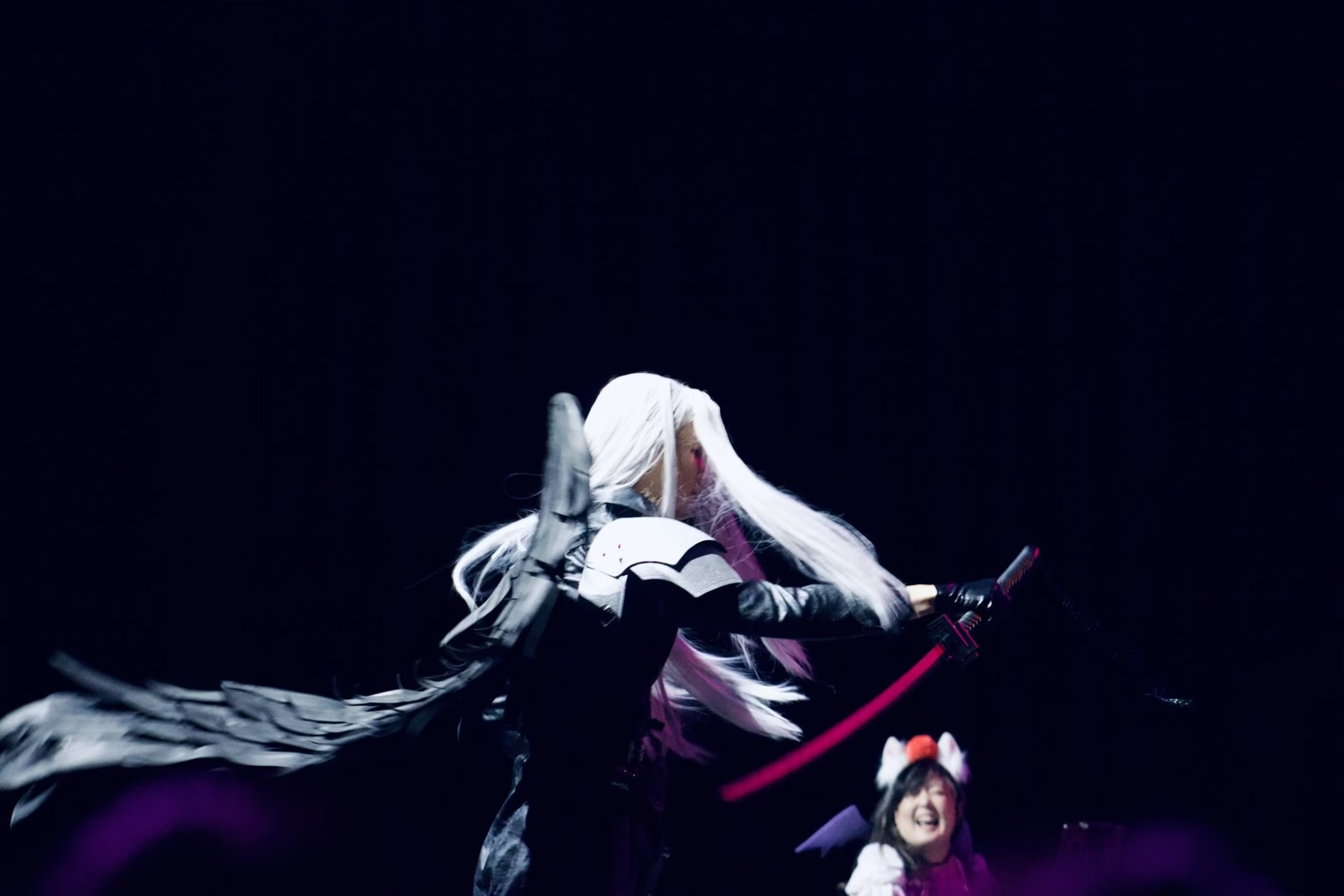
Brian: This ultimately came about because the band wanted to busk in Waikiki for Halloween one year as the stay-at-home orders were being lifted. After doing it as a silly one off (and liking it), we decided to put some serious thought into a contrasted acoustic variation to our fully powered show/set. I guess I also wanted to do some tunes that weren’t appropriate for the loud rock band, so we do have some material that’s exclusive to Unplugged, exclusive to Console Full-Power, and of course some tunes we do in both settings.
Retro Replay: Does playing a game theme acoustically sometimes expose melodies and harmonies that get buried in a heavier rock arrangement?
Brian: It definitely hits differently, and requires a different approach and mentality. This experience has really taught us how much of an impact drums have on a piece of music. Some songs sound good in this setting and yes, at times it can bring more attention to certain elements that may otherwise be drowned out by some of the bigger instruments and arrangements. It’s been interesting seeing what translates well and what doesn’t.
Making VGM in Hawaiʻi
Retro Replay: Has living and performing in Hawaii shaped Console’s identity in ways that might not have happened if the band had formed on the mainland?
Brian: I guess it’s a bit like the famous Galapagos animals, we’re kind of evolving here in relative isolation on our own remote island. The internet gives us access to the outside world, but we largely have been left to our own devices for better or for worse. I guess we can safely say that we very well may be the premier VGM band in a 2,000 mile radius.
Retro Replay: What is the VGM and gaming community in Hawaii actually like from the inside?
Brian: We have some gamers here of course, and recently some of the local colleges have created some eSports teams, but we’ve learned that gamers don’t necessarily care about VGM like VGM lovers do. VGM here is nearly non-existent. There’s a handful of groups and individuals who do it, but it feels more like a novelty act, gimmick, or fan club than a legit, world-class thing.
Retro Replay: Do you feel there are disadvantages to being geographically separated from many of the large mainland gaming conventions, or has that helped Console develop its own identity?
Brian: I think we’re really disadvantaged. The isolation has made breaking onto the world stage pretty difficult, but we try to not focus on that. Probably the biggest thing is not having relatively convenient access to the mainland conventions, festivals, events or community. I wish we could just hop in a van and drive across the country with either our gear, merch, or even just ourselves if only just to check things out and tell people “hey, we exist!” We do try to attend mainland events when we can and sometimes when we do happen to meet people on these long-haul journeys, I don’t think we’re taken seriously at first, and are largely met with confusion, like we’re some strange messengers wearing silly clothes from a distant land, riding exotic animals and speaking with strange words: “we come bearing spam musubis and poke bowls, now take us to your leader!”
Retro Replay: How has the broader video game music scene changed since Console formed in 2017?
Brian: From what we’ve witnessed, things are definitely growing and gradually becoming more known and accepted. Grammys have been won, and more and more dedicated VGM groups, jams, meetups and conventions are popping up all over as years go by. It’s all very exciting for the movement for sure.
Retro Replay: Do you think audiences now take VGM bands more seriously as musicians rather than treating them as a novelty act?
Brian: Yes, I think we’re seeing pockets of gradual acceptance and respect, but I do think it will still be a while before VGM itself shakes the stigma of being a silly novelty act in the eyes of the mainstream population. I do think it helps that Millennials raised on these formative games are now becoming either parents, aunts/uncs, or teachers to the up-and-coming generation of musicians, turning them onto this stuff. I foresee VGM becoming the new catch-all term and source of intensive study in music academia and training as it blurs the line between the two long established and largely opposing institutions of Classical and Jazz. We’ll see though.
Composers, Dream Shows, and the Games That Stay With You
Retro Replay: Is there a particular game composer whose music you especially enjoy arranging?
Brian: Uematsu-sama. There’s so much identity in Final Fantasy music, and I love his music.
Retro Replay: Is there a soundtrack you desperately want Console to tackle but have not found the right arrangement for yet?
Brian: Fans have been begging us to do music from Doom, and rightfully so. I think we could do it well, but deciding on what track and figuring out a tasteful arrangement has been elusive. I also like the music from Hades, and similarly it hasn’t been obvious as to how to approach it.
Retro Replay: If every licensing and logistical obstacle disappeared tomorrow, what would be your dream video game music concert?
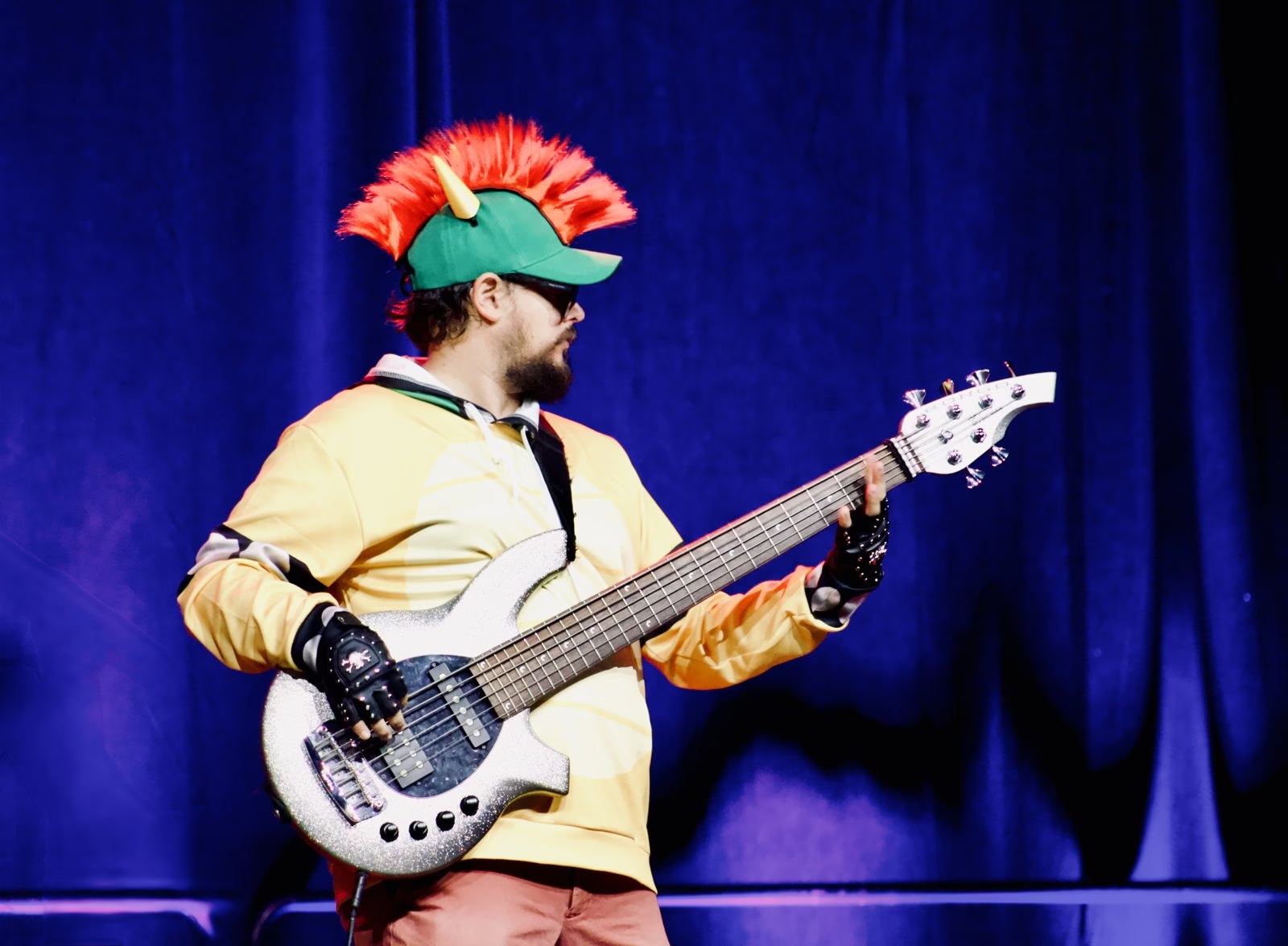
Brian: Oh wow, you went there. Yes I’ve already thought about this and we can call it Console: The Musical. A young child and/or their guardian stumble upon Kawa-II – our cute robot mascot – and bring to life the universe of Console and its 5 VGM warriors of destiny to stage or whatever. Complete with set changes, costumes, clever practical effects, fighting robots, backup dancers, killer visuals, explosions, stage dives, and most importantly, awesome music as played by Console: The VGM Band.
Retro Replay: What games are the members of Console actually playing these days?
Reece: Believe it or not, I’m replaying The Legend of Zelda: Ocarina of Time in preparation for the new remake. It was the first adventure game I played for my very first Nintendo console. (I had to sneak up to the attic to play my step-sister’s NES, or ask my babysitter if I could play her son’s SNES in his room when he was out.) I was ten years old and knew nothing about Zelda. The music and sounds in Zelda will always hold a special place in my heart. With GTA 6 releasing soon, I think I’ll experience that game vicariously through others online, because I need to preserve some semblance of a real life!
Retro Replay: Are there particular consoles or games that were personally important to the members growing up?
Reece: I grew up with Sega Genesis, Nintendo 64, and then quickly became a Playstation kid. The Squaresoft era hugely captured my attention and imagination, and I’m one of those cliched gamers today who will tell you unironically Final Fantasy VII changed my life. Along with Final Fantasy, I fell into the survival horror genre with the original Resident Evils, Parasite Eve and Dino Crisis. The other series that had a huge influence on me was the Xeno series starting with Xenogears. I’ve always liked dark and heavy themes that bring a realistic sense of existential dread to the story. Those kinds of games always seemed to have the best music, too.
Brian: SNES came into my life as far back as I can remember, and from there I eventually fell in love with JRPGs, making the move to PlayStation (and later PS2) as Squaresoft left Nintendo. Final Fantasy 6 (well, it’s still FF3 in my mind) and Chrono Trigger are stand out games for me in the early years. I’m thankful I played those games around the time of their release. The next generation gave me Metal Gear Solid, Suikoden 1 and 2, and Final Fantasy Tactics. I love games with depth and story, and oftentimes this comes with powerful and memorable music. Although I continued into owning a PS2, I eventually made the jump to PC gaming with all the Blizzard games and have pretty much been on that kick ever since.
What Comes Next
Retro Replay: What are you working on right now? Are there new recordings, arrangements, videos, shows, or other projects coming up?
Reece: Our main priority is album #2, and we’ve been hard at work choosing new songs and getting them ready for recording, which we hope to begin by summertime 2027. We’re already playing some of these new songs live, so the only opportunity to hear them now is to come to a show or catch a live clip on social media. We’re also looking at a new music video in the near future; stay tuned for more!
Retro Replay: Finally, are there any websites, music pages, social media accounts, upcoming performances, or projects you would like me to link to when the interview is published?
Brian: Oh the usuals:
Website – www.consolevgm.com
Instagram – @consolevgm
YouTube – www.youtube.com/c/consolethevgmband
TikTok – @consolevgm
Thank You, Console
Our thanks to Brian and Reece for taking the time to share Console’s story. Their answers capture both the pleasure of hearing a familiar melody become something new and the persistence it takes to build a band around it. From rehearsal-room experiments to a self-produced album and ambitious plans for the next one, Console gives those game memories a place to live beyond the screen.
Keep up with the band through Console’s official website, Instagram, YouTube, and TikTok. You can also listen to Press Start.
For more conversations about the music and people behind classic games, read our Barry Leitch interview or browse Retro Replay’s interview collection.