Retro Replay Retro Gaming History, Reviews & Emulation
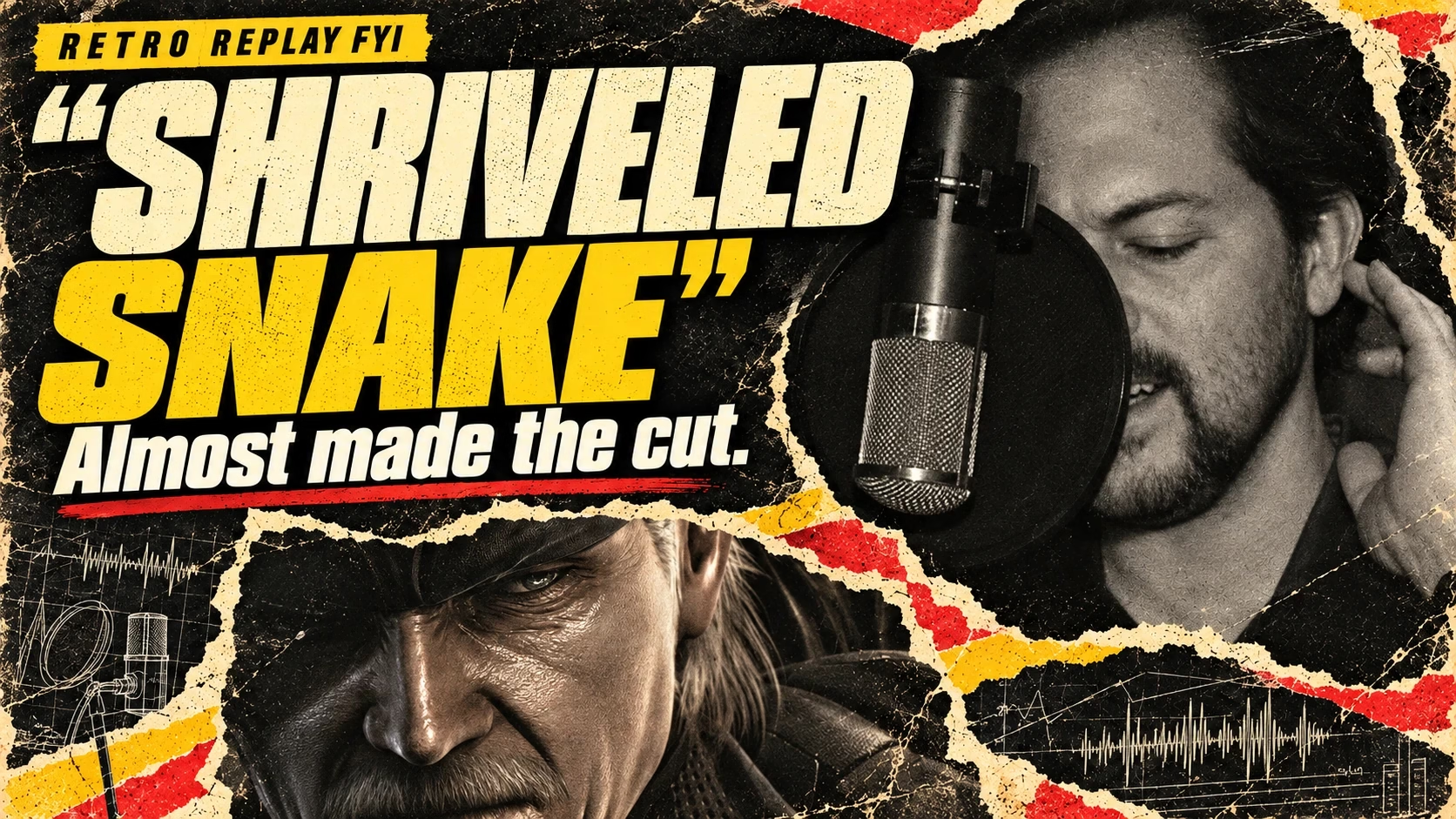
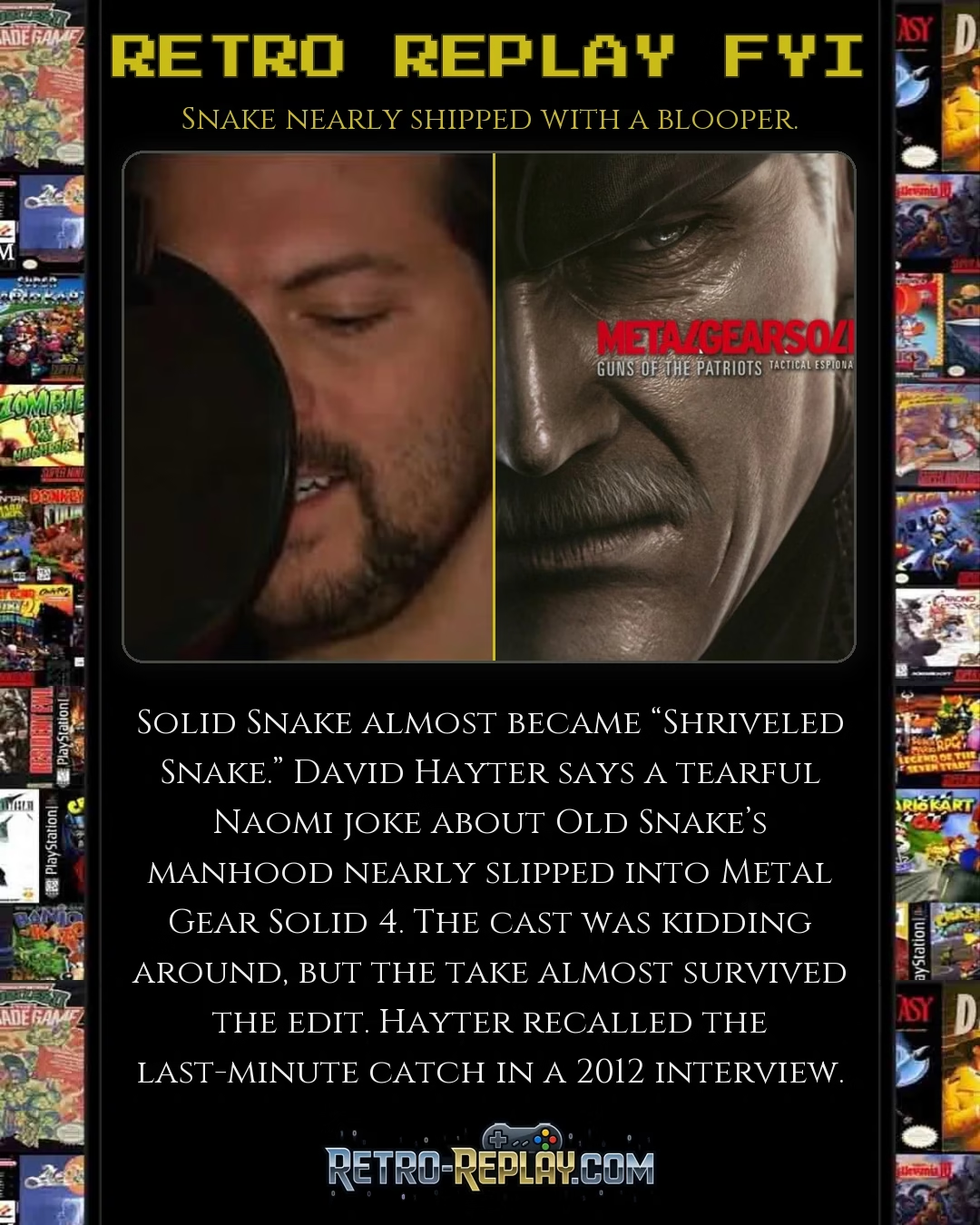
Solid Snake has survived ambushes, betrayals and walking nuclear weapons. During the recording of Metal Gear Solid 4: Guns of the Patriots, he apparently faced a rather smaller threat to his dignity: a joke about what accelerated aging might have done below the belt. David Hayter, Snake’s English voice actor, says a playful take involving Dr. Naomi Hunter nearly became part of the game’s final dialogue.
It is a wonderful piece of Metal Gear trivia because it belongs to two different worlds at once. On screen, Old Snake’s body is failing him. Behind the microphone, the performers are finding reasons to laugh. A little distance between those worlds usually keeps the finished scene intact. According to Hayter, that distance almost disappeared.
The soldier whose body could no longer keep up
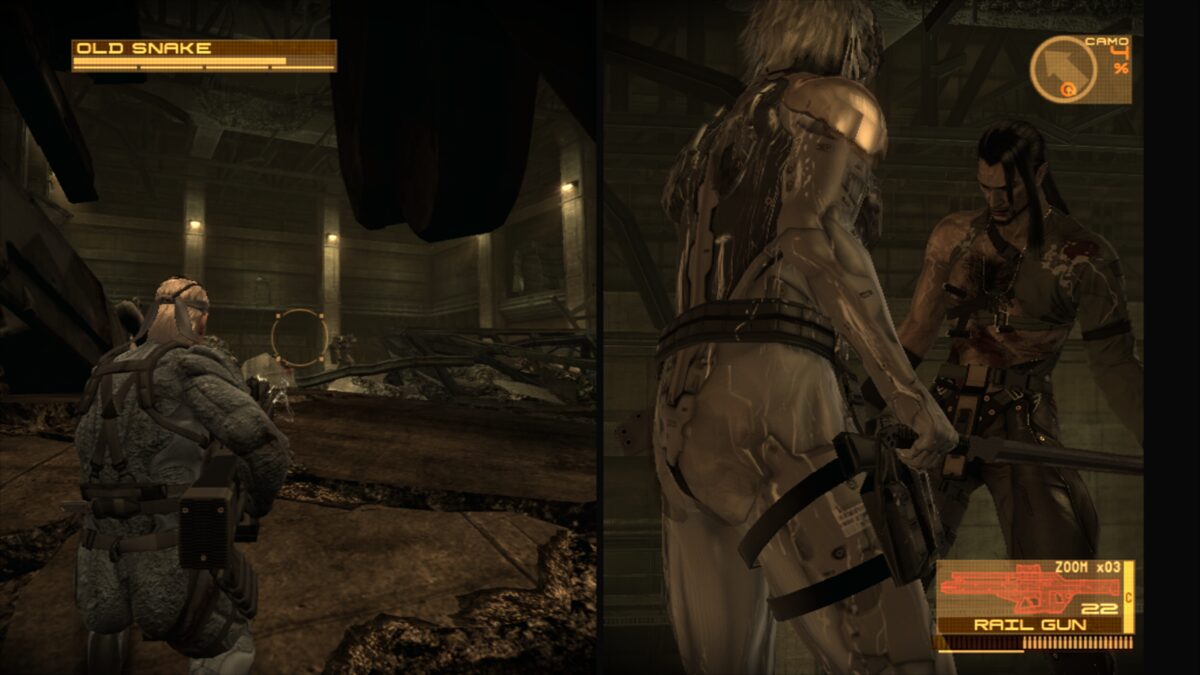
When MGS4 arrived on PlayStation 3 on June 12, 2008, Snake’s older appearance gave the adventure an immediate emotional hook. The familiar operative was still capable, but the face looking back at players carried a very different promise. Getting through another mission would take something out of him. His body was part of the story, rather than a reliable machine that simply carried the camera from one encounter to the next.
The practical systems reinforced that impression. The contemporary PlayStation Blog guide describes how heat, cold and carrying heavy equipment can raise Snake’s stress. Resting and managing his condition matter alongside concealment. The camouflage suit can help him disappear, but it cannot make every physical demand disappear with him. That combination gives the player a useful tension: the equipment is advanced, while the person wearing it feels vulnerable.
A medical conversation belongs naturally in that setting. A doctor can see the damage that a soldier would rather ignore. For a player used to Snake enduring almost anything, an examination changes the scale of the danger. The threat becomes intimate. No amount of tactical competence can turn a diagnosis into an enemy patrol that can be avoided.
A serious scene meets a very unserious take
In a March 2012 interview published by Eklecty-City and Aimgehess, Hayter was asked about favorite recording moments and bloopers. He described actors fooling around and said some of those moments almost remained in the final tracks. His example involved Naomi seeing his naked “Shriveled Snake,” then tearfully saying “So… shriveled…” It was, he said, “caught at the very last second.” Solid Snake had nearly acquired a nickname no tactical briefing could redeem.
Those are Hayter’s words about a recording-room incident. The interview does not identify a build number, a particular editor or the exact date of the correction. It supports a near-miss anecdote, rather than a claim that players can recover an officially released version of the joke. Calling it a secret line hidden in a retail copy would send the reader looking for evidence the interview does not supply.
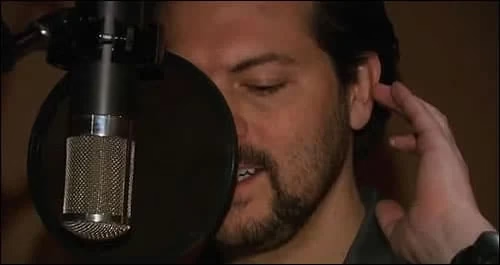
The funny detail is the delivery. A line played with genuine concern can suddenly become a double entendre without the actor abandoning the character’s voice. That is what makes a blooper like this dangerous to a solemn scene: the sound can still belong to the performance, even when the meaning has wandered somewhere completely different.
The cast revisited the moment years later
The story resurfaced at the 2025 New York Comic Con cast panel. The Outerhaven’s account identifies Jennifer Hale, Naomi’s English performer, and reports that she prompted Hayter to tell it. In that retelling, Naomi’s sympathetic response to Snake’s aging prompted an improvised exchange, followed by Hale’s anatomical punchline. The report says Hayter explained that the Japanese team had taken the recording as scripted dialogue.
The wording differs slightly between the older interview and the panel report. That is unsurprising for a joke remembered and performed years apart. The shared core is what matters: the actors were playing around during an aging-related scene, and Hayter says the result nearly entered the finished game. The later account adds context, while remaining another recollection of the same event, rather than an independent production document.
Why chemistry in the booth mattered
Hayter gives a broader picture of the cast’s working habits in his foreword to The Metal Gear Solid Series: Critical Essays and New Perspectives. He recalls the original game being recorded in a converted Hollywood house, with actors at microphones reacting to one another. He says he asked for that shared, radio-play approach on later Metal Gear games as well. The English voice director, Kris Zimmerman Salter, helped shape those performances.
He also contrasts the first game’s ten-day recording period with nine months for MGS4. That is his account of the recording period, not a claim that every performer spent nine months continuously in the booth. It nevertheless conveys how much larger the undertaking had become. The distinctive voice that began in that modest studio now had to carry a lengthy farewell for a character fans had known for years.
Performing with other people offers something a solitary reading cannot quite reproduce. A pause has someone waiting on the other side of it. A reply can arrive with warmth, irritation or surprise. The same responsiveness that makes a scene feel alive also creates opportunities for mischief between takes. A believable relationship and a ridiculous joke can grow from the same familiarity.
The joke works because Old Snake matters
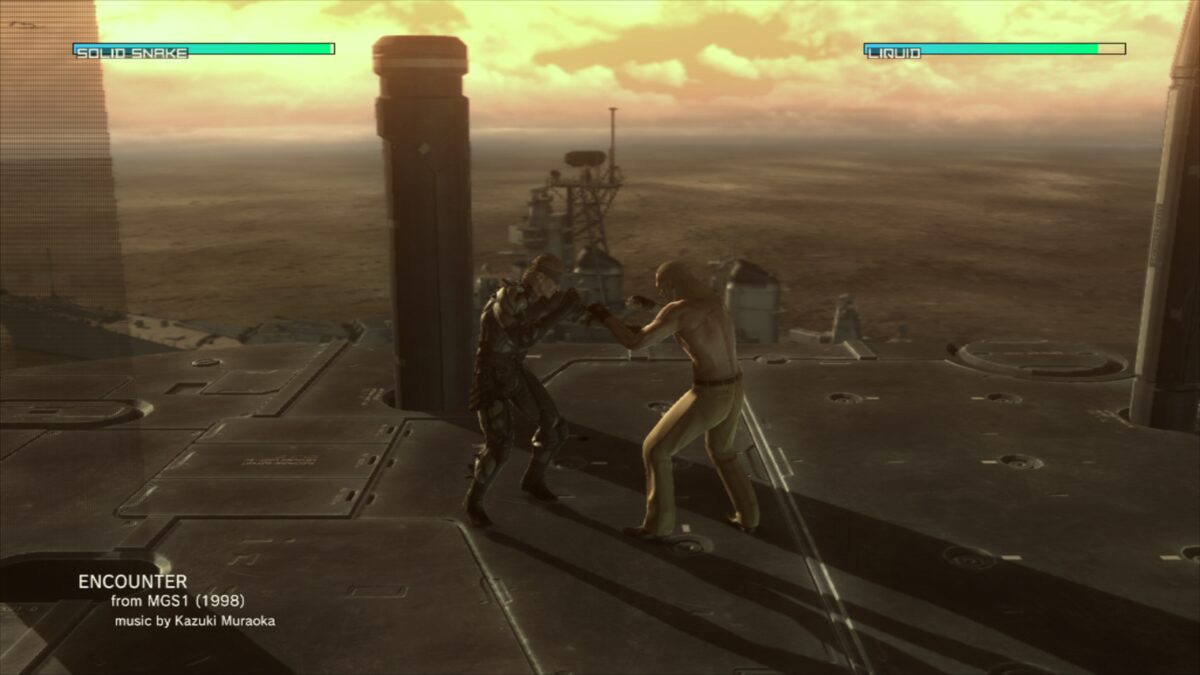
Metal Gear often asks the player to accept a startling shift in mood. Earnest military drama can share space with absurd spectacle. That makes the imagined mistake funny, but it does not make every accidental gag suitable for every scene. During a conversation about a deteriorating body, a sexual punchline would redirect attention instantly. The player would remember the joke before remembering the fear underneath it.
The actors could enjoy that detour because they knew the destination. For the finished adventure, the examination needed to keep Snake’s vulnerability in view. Hayter’s story offers a small glimpse of the boundary between enjoying a character in the booth and protecting a character in the edit. One mischievous take could have changed how a difficult moment landed.
There is no need to dress the anecdote up as a conspiracy, lost mission or censored subplot. Its appeal is more human than that. Experienced performers found a laugh inside a demanding job; somebody caught the wrong take before it became the scene. Old Snake kept his dignity, and the people who gave him a voice kept a story worth telling.
Sources and image credits
- David Hayter’s 2012 interview, linked above; the user’s supplied shortlink resolves to Aimgehess’s English publication of the same interview.
- The Outerhaven’s October 14, 2025 eyewitness panel report, linked above.
- Hayter’s foreword, pp. x–xiii, in the publisher’s preview of The Metal Gear Solid Series (2025).
- PlayStation Blog’s 2008 launch announcement and contemporary gameplay guide, linked above.
- Recording-booth photograph: reproduced with the 2012 Eklecty-City interview, captioned there as Hayter dubbing MGS4; photographer not identified. Original rights retained. Game screenshots and packaging: Retro Replay database; Konami and original rights holders. The FYI and featured image are locally assembled editorial composites, with no AI-generated imagery. They illustrate the production story and do not depict the alleged blooper.