 Retro Replay Retro Gaming History, Reviews & Emulation
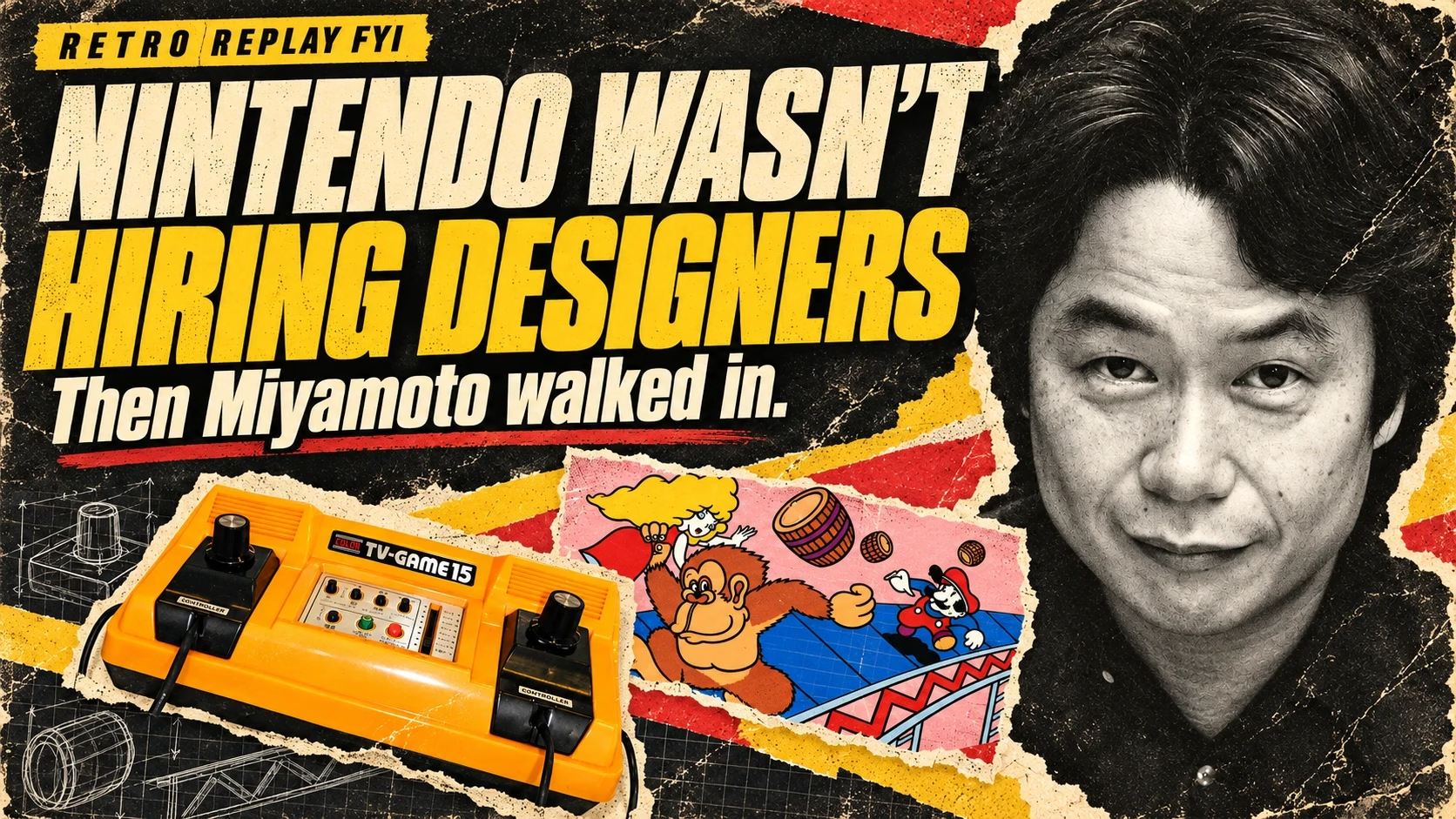
Before there was a plumber clearing pipes, there was a young designer trying to get someone to pay him to make interesting things. Shigeru Miyamoto wanted to create toys. Nintendo looked like a place where that ambition might fit, except for an inconvenient detail: it was not hiring designers.
The familiar internet version turns this into a neat rejection story. Nintendo supposedly passed on the man who would create Mario, then somehow recovered from its mistake. Miyamoto’s account is less tidy and more revealing. There was no advertised opening that suited him, but an introduction led to an interview, his portfolio impressed Nintendo president Hiroshi Yamauchi, and he joined the company in 1977. In NPR’s 2015 interview, he specifically corrected the suggestion that Nintendo had thought little of him.
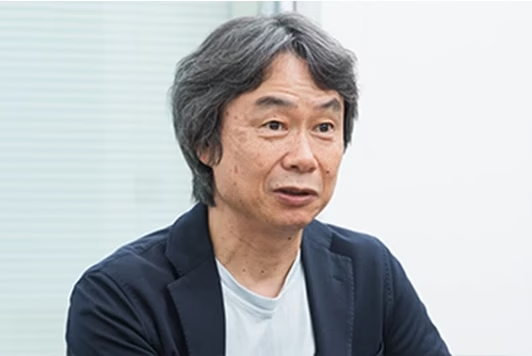
A portfolio before a plumber
Yamauchi met a designer with student projects, including a children’s hanger with animal faces and a handle for shorter users. Miyamoto described it in a 2000 interview translated by shmuplations. Another project combined a seesaw and a swing. The work considered what a child could do, not simply how an object looked.
He recalled Yamauchi explaining that Nintendo wanted his work, rather than merely rewarding the reference. He later discovered that the company had applied for a design patent on the hanger. The portfolio had offered a possible product.
His first assignments involved console cases, beginning with a small contribution to the nearly finished Color TV-Game 15. Work on game graphics followed. Getting hired did not instantly put him in charge of Nintendo’s next big game.
The company still worked with its hands
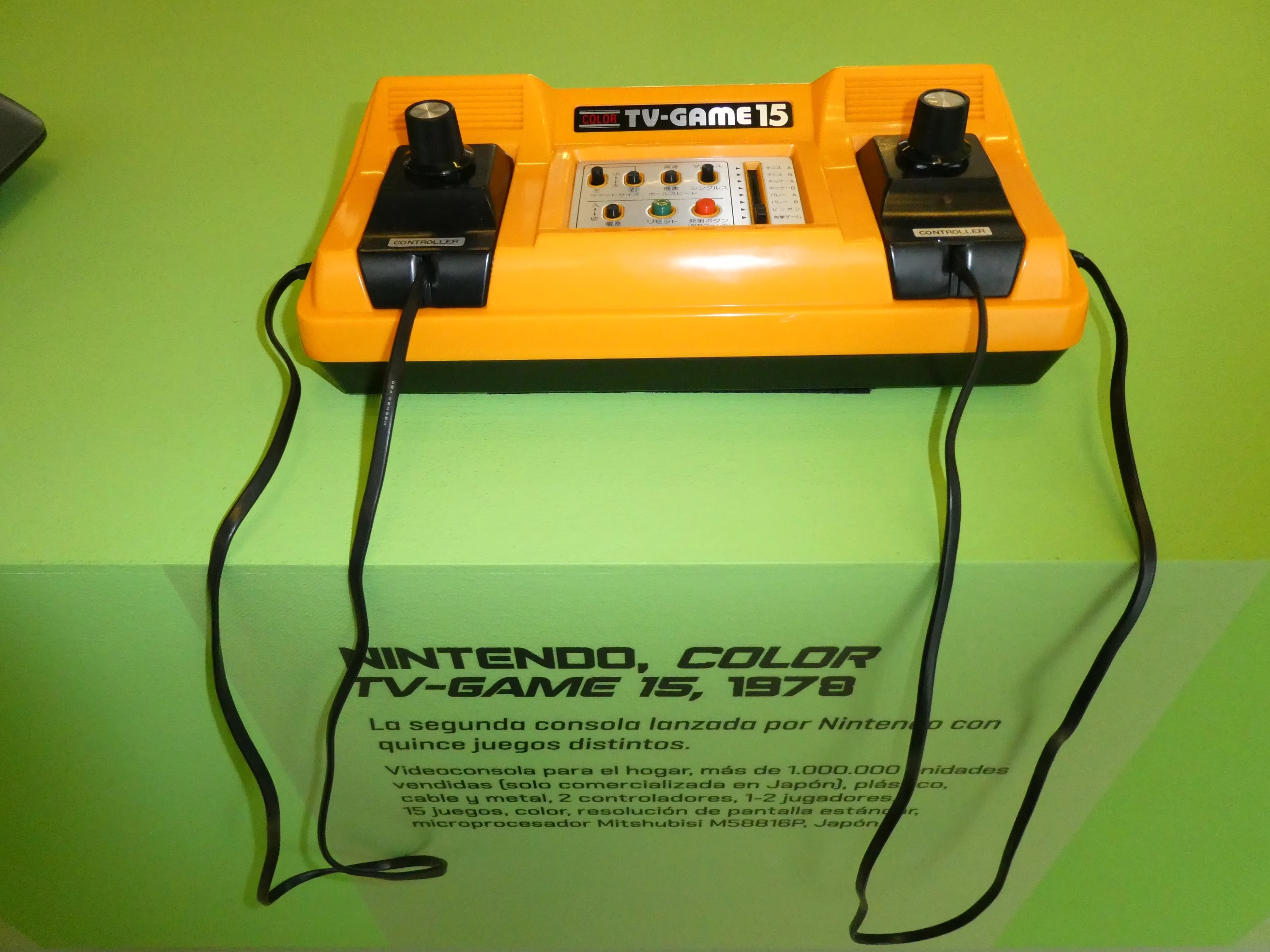
The orange plastic console is a useful reminder of what Nintendo looked like at that moment. Its early home systems contained their games within the hardware. There was no shelf of interchangeable cartridges waiting to transform the machine into something else. The box, its controls, and the activity on the television arrived as one product.
In Nintendo’s Game & Watch developer interview, veterans described a workplace with loose boundaries between jobs. People dealt with mechanics, packaging, software, and new ideas. Adjusting the pace of a dedicated game could mean changing wiring with a soldering iron, playing again, and deciding whether it felt better. Nintendo credits Miyamoto with the console design of 1979’s Color TV-Game Block Breaker.
That environment gave an industrial designer more to contribute than a handsome shell. A control had to be understandable, reachable, and pleasant to use. The product had to survive the moment when somebody stopped admiring it and started playing. It is easy to see the connection to his later games, although that is a reading of his career rather than proof that a children’s hanger secretly contained Mario.
Donkey Kong gave the designer a stage
When the opportunity to plan a game arrived, Miyamoto had an experienced partner in Gunpei Yokoi, the Nintendo developer behind Game & Watch. Miyamoto’s 2000 recollection describes Yokoi looking for someone who could draw, selecting his proposal, and continuing to advise him. The opening had finally become something he could shape.
There was also a practical problem to solve. Nintendo had unsold arcade machines in America, and a new game could reuse their boards and cabinets. Miyamoto discussed that pressure in Nintendo’s 2016 Donkey Kong interview. This was commercial rescue work, with entertainment expected to make the rescue possible.
Released in 1981, Donkey Kong made its conflict visible almost immediately. A gorilla stood above you. A woman needed rescuing. Your small hero had to work his way upward while barrels made the journey unpleasant. For players accustomed to aiming at things, climbing toward somebody gave the screen a different kind of urgency. The goal looked close enough to tempt you and remained far enough away to kill you.

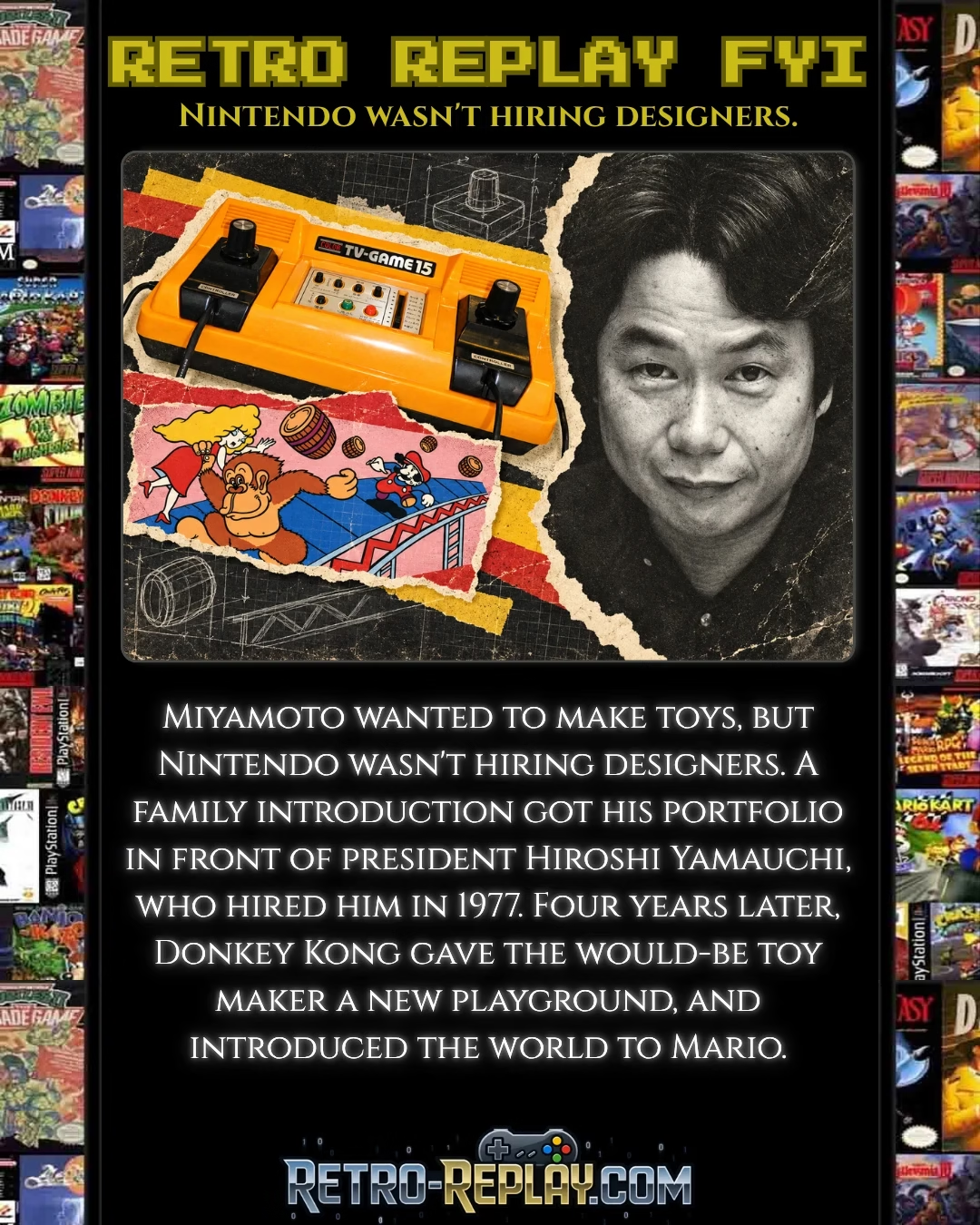
It is still a wonderfully mean arrangement. The ladders suggest safety until the next moving obstacle changes your calculation. Jump too early and you spend your escape before the danger reaches you. Hesitate and the barrel decides for you. The hammer offers a noisy interruption, but the heart of the game is judging a small body against moving threats. There is almost no distance between understanding the situation and wanting another attempt.
Miyamoto remembered testers staying after work to keep playing. Watching their movements helped him recognise that the game might succeed. Years later, he saw a comparable response during Super Mario Bros. testing. His promising product was now a thing that people were reluctant to put down.
A toy that taught you while you played
By the time Super Mario Bros. reached the Famicom in 1985, a much larger playground was possible. Mario could run beyond a single screen, chase an item, disappear down a pipe, and return with a reason to look more closely at the next strange block. The familiar jump had become a way of asking questions about the world.
The opening of World 1-1 shows how carefully the team arranged those questions. In Iwata Asks, Miyamoto explained the problem of introducing a helpful mushroom after a dangerous, mushroom-shaped Goomba. A newcomer might quite reasonably flee both. The level directs the power-up toward a pipe, where it turns back, while overhead blocks complicate the player’s attempt to escape. Contact brings an unexpected reward: Mario grows.
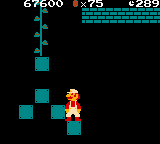
You learn by touching, missing, jumping, and trying again. A written warning could explain which mushroom to trust, but it would not deliver that little reversal of panic into delight. The player discovers a rule and immediately gains something to do with it.
This was collaborative work, revised as people played it. In a separate developer discussion, Takashi Tezuka and programmer Toshihiko Nakago recalled adding the Goomba late because confronting a Koopa Troopa first was too complicated. With very little memory left, a flipped version of one image supplied its walking movement. Mario’s earliest opponent became simple because the team needed the player’s first lesson to be simple too.
The designer never quite left
Miyamoto’s move into games did not erase his interest in physical objects. In the Wii Remote’s development interview, he recommended industrial-design training because it made people build things with their hands. He and Nintendo hardware designer Kenichiro Ashida had worked together for years, including on the Nintendo 64. For Wii, their challenge included getting players and developers to reconsider the controllers they already knew.
A controller shapes the invitation before a game has drawn its first enemy. Whether somebody feels comfortable picking it up affects whether any clever design inside the software gets a chance. That concern makes the journey from toy portfolio to game planning feel less like abandoning one profession than finding a wider place to practise it.
The hiring anecdote is strongest when it keeps its awkward detail intact. Nintendo had no designer vacancy, yet Yamauchi found a reason to bring this designer inside. Miyamoto then spent years working, learning, and collaborating before the famous characters arrived. The pleasant surprise was not that a rejected applicant returned to prove everybody wrong. It was that a company and a maker found useful room for each other before either could know what would come of it.
Try the early games and that ambition still feels tangible. Donkey Kong asks you to judge a jump. Super Mario Bros. lets a frightening object become a gift. Both put their best argument in the player’s hands.
Play and explore
Our Donkey Kong Classics database entry covers the later NES compilation pictured here, rather than the original arcade release. For the NES version, Mesen is a useful emulator to explore with your own legally obtained game dump. Our Super Mario Bros. Deluxe entry follows the later Game Boy Color adaptation. Browse more compact stories in #RetroReplayFYI.
Sources and image notes
- NPR’s 2015 Miyamoto interview, syndicated by CAI: hiring account and correction to the dismissive-applicant story.
- Game Maestro interview (2000), translated by shmuplations: portfolio, 1977 entry, early assignments, and Yokoi’s involvement.
- Nintendo’s Game & Watch developer interview: early hardware work and working practices.
- Nintendo’s Donkey Kong interview (2016): arcade reuse and player testing.
- Iwata Asks: teaching the first mushroom and adding the Goomba.
- Iwata Asks: Wii Remote design: hands-on design training and controller collaboration.
The FYI and featured cover are editorial collages, not photographs of the 1977 interview. Their archival portrait comes from the 2000 Game Maestro interview via shmuplations; the hardware photograph is by Jzh2074 (Wikimedia Commons, CC BY-SA 4.0); Donkey Kong packaging artwork is from Nintendo’s interview archive. Collage adaptations use CC BY-SA 4.0 for the adapted photographic contribution; Nintendo’s artwork and the portrait retain their underlying rights.



_1.jpg)