Retro Replay Retro Gaming History, Reviews & Emulation
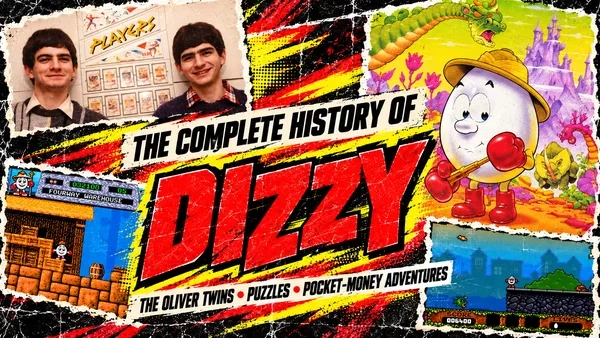
You have found a snorkel. You have found a coin. You have found a perfectly innocent reason to press the fire button. A moment later, you have found the title screen.
For an egg with such a cheerful face, Dizzy could be a menace. His adventures offered enchanted forests, pirate ships and neighbours who always needed a favour. They also offered the possibility of losing an evening’s work because you put down the wrong object underwater. Anyone who remembers Treasure Island Dizzy probably has a fairly specific opinion about that snorkel.
Still, people went back. They drew maps. They argued about what a mysterious object was for, then discovered that the answer had been sitting several screens away. A few pounds bought a cassette and a place to get lost in. The little fellow on the cover looked approachable enough to trust.
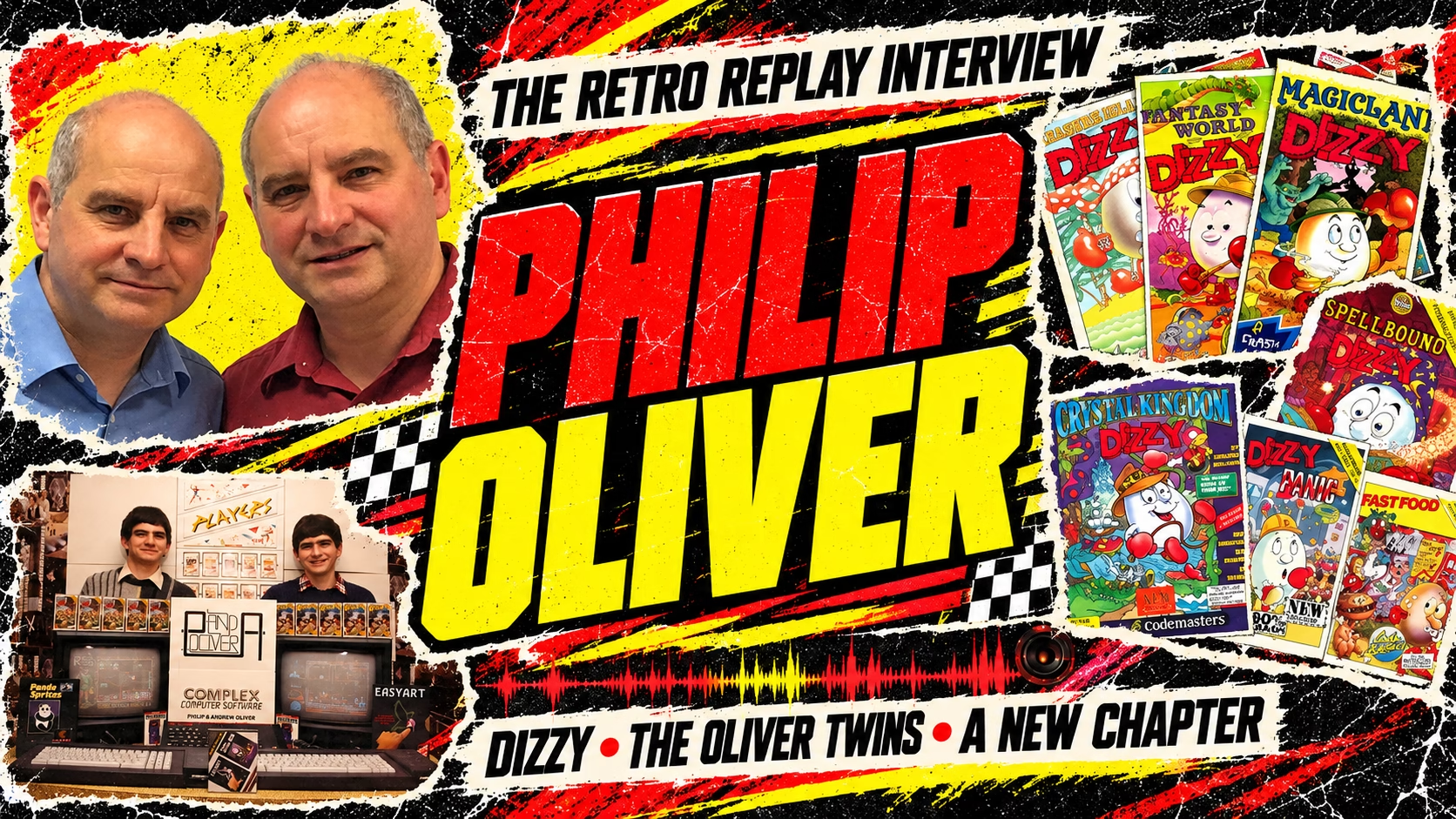
This is the story of how twin brothers made that fellow, how a British budget-game favourite tried to cross the Atlantic, and how his fans eventually became part of the work of bringing him back. Along the way there were wonderful puzzles, rotten deaths, delayed cartridges, lost games and a Kickstarter that fell painfully short. There is also a new chapter taking shape. In our interview with Philip Oliver, one of Dizzy’s creators talks about the decisions that still follow him around.
Before Dizzy: Two brothers, one computer, and a gap year
Philip and Andrew Oliver were already making games before they had a mascot. Known together as the Oliver Twins, they had grown up experimenting with home computers, learning how to make a machine respond and gradually turning those experiments into something publishers would buy. By 1986, they were asking their parents for a gap year to prove that this could be a living.
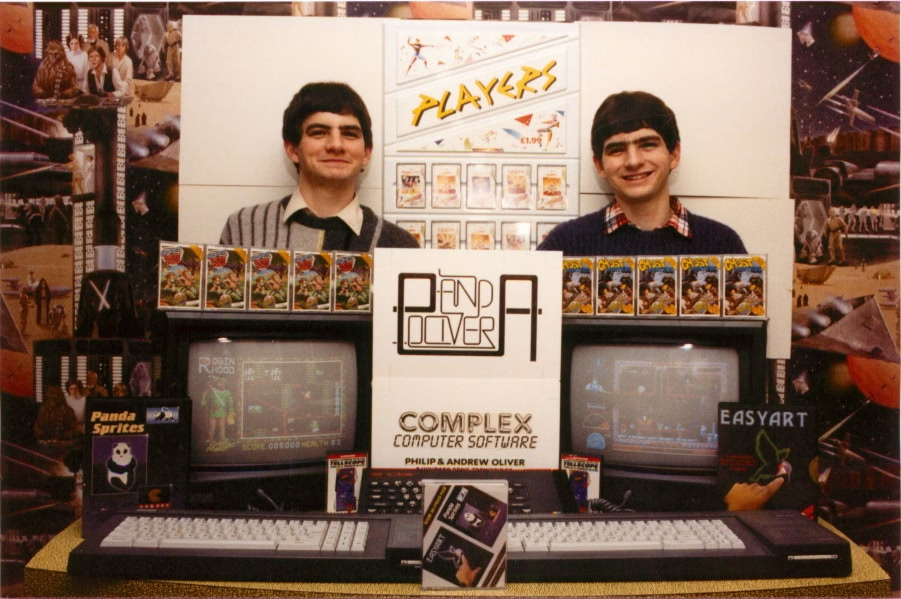
There was no elaborate organisation to consult. They were two brothers who could turn around and discuss the next problem. Philip generally did more design and artwork, Andrew more programming, although both wrote code and contributed ideas. As Philip explains in our interview, the division was never as tidy as one artist sitting beside one programmer.
The publishing relationship that changed things was with Codemasters. Its founders, Richard and David Darling, were building a business around inexpensive games. The twins’ own account of those early years describes an initial royalty deal for Super Robin Hood, followed by successful titles that made the arrangement look promising. A cheap cassette had to catch somebody’s eye quickly. It also had to give that buyer enough pleasure to come back for another.
That second requirement is easy to overlook when remembering the budget shelves. The games were affordable, but the afternoon you spent with one was still your afternoon. A dull game did not become entertaining because the price was low. The twins were learning how much they could put into a small production, and how efficiently they could build the next one.
Dizzy arrived while they were thinking about an entirely different problem: a face.
Dizzy: The Ultimate Cartoon Adventure (1987): An egg takes shape
In Ghost Hunters, the character’s head was too small to do much expressive work. Philip wanted a figure you could read immediately, even at the scale of a home-computer sprite. His solution was to give the face almost the whole character.
“While working on Ghost Hunters, I became frustrated by how little expression we could give a character with such a tiny head. I started drawing a character who was essentially a large face, with hands and feet attached.”
Philip Oliver, Retro Replay interview
It was not initially a solemn decision to create an egg hero. The creators’ account of the first game describes a cartoon figure taking shape, then being moved out of the Ghost Hunters setting into a world that suited him. Red boots and gloves made the pale body stand out. His somersaulting jump supplied the name.

Released in 1987, Dizzy: The Ultimate Cartoon Adventure sent him looking for ingredients to defeat the wizard Zaks. The player walked and jumped through separate screens, collecting things and working out where to use them. Movement looked like a platform game. Progress depended on the kind of object puzzle an adventure game would ask you to solve.
That combination gave the world two sorts of danger. You might misunderstand a puzzle, or you might understand it perfectly and still botch the jump on the way there. Dizzy’s rolling landing made him expressive, but it also made approaching a ledge feel less comfortable than his friendly artwork suggested. A route could be obvious and still require practice.
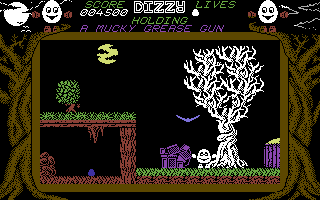
The underlying pleasure was recognition. An object you had dismissed suddenly fitted a problem. A screen stopped being scenery and became somewhere you could do something. The story advanced through your discoveries, rather than waiting for a long speech between levels.
Some of the obstacles were much less defensible. In our interview, Philip singles out an invisible trigger in a pit near the beginning as an unfair mistake. That admission is useful when revisiting these games. You can admire what the twins achieved without pretending every mysterious death was a brilliant test of the player’s intelligence. Occasionally, the player really had been given no reasonable way to know.
Dizzy had a face, a world, and a way of moving that people could recognise. The next game would make his adventures bigger, then make one particularly expensive shortcut to finish them.
Treasure Island Dizzy (1988): The snorkel nobody forgot
A shipwreck was a good excuse to take the little egg somewhere new. Treasure Island Dizzy traded the first game’s surroundings for beaches, tree houses, underground passages and water. You explored the island, found useful objects, and worked towards a way off it. Collecting the island’s coins gave the escape another job to finish.

You could now carry three objects. That sounded generous after the first game, until you needed to pick something up and keep something else in exactly the right place. With a small inventory and a simple control scheme, managing what you held became part of the puzzle. It also became part of the danger.
The snorkel let Dizzy survive underwater. Drop it while submerged and you died. The twins’ development recollection explains why that mistake became so notorious: late testing exposed a situation where dropping it could produce repeated deaths after respawning. With a release deadline approaching, they removed the spare lives. The player got one chance.
It is a wonderfully horrible bit of development history. A problem that needed repairing became a rule the audience had to endure. Now a small slip could end a run, whether it came early or after a long stretch of careful exploring.

Knowledge made subsequent attempts quicker. You remembered the route, the object order, the awkward jump. That gave the game a peculiar afterlife inside your head: even away from the computer, you could be planning the next attempt. But learning the route did not make the lost evening feel any shorter.
The island itself remains inviting. Its trees and caves make you want to investigate one more screen, even when your inventory is already full. The single-life rule puts that curiosity under a strain the scenery never quite deserves. Treasure Island is an easy game to love and a very easy game to complain about. Often, those are the same conversation.
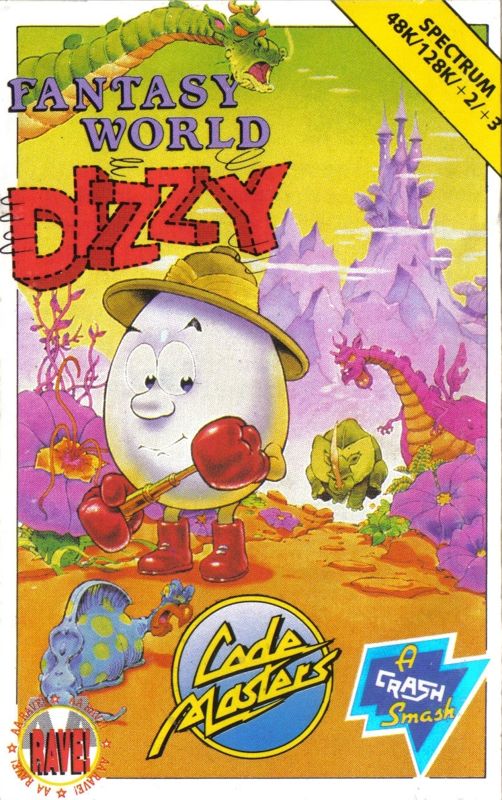
Fantasy World Dizzy (1989): Suddenly, everybody needs you
The best reason to continue exploring is sometimes somebody waiting at the other end. In Fantasy World Dizzy, the world began to feel like a place inhabited by people who knew Dizzy, rather than a succession of hazards built for him.
Daisy, his girlfriend, needed rescuing. Around her were the Yolkfolk, a family and circle of friends with recognisable personalities. Dozy was sleepy. Denzil was cool. Dylan brought a hippie flavour to the group. Grand Dizzy was the elderly relative. Their names and habits gave you a quick way to remember them, even if this was your first visit.
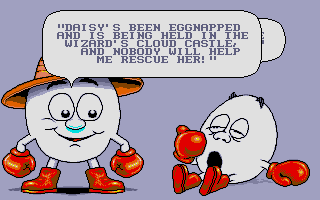
There were conversations, a more useful way to select inventory objects, and spare lives again. The creators’ archive describes a game designed to add character without giving up the compactness that made their adventures work on small machines. The improvements softened the friction around the puzzles. You could spend more attention on what an object meant.
“Introducing the Yolkfolk as characters you could meet and talk to made a huge difference. They gave the world personality and gave Dizzy reasons to help people. They were admittedly quite a needy bunch, but that provided a very useful supply of missions!”
Philip Oliver, Retro Replay interview
The bean is a lovely example of the series finding its language. In a fairy-tale world, a bean carries a possibility before the game explains it. Water it and the beanstalk becomes a route upwards. You have recognised a story, applied it to a problem, and changed the map.
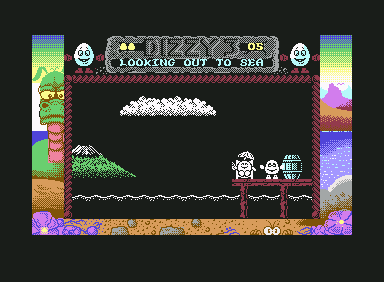
Philip calls this the game that best represents Dizzy in our interview. It is an understandable choice. The character is no longer depending on his face alone. The people around him, the jokes and the familiar storybook ideas all help carry the adventure. Saving Daisy is a simple goal. Getting there gives you a succession of smaller reasons to care.
The first two games can feel lonely, even when they are colourful. Fantasy World feels as though something has happened to your neighbourhood. That change would matter far beyond 1989. Decades later, when the twins talked about a return, they were still talking about characters, discovery and helping people.
Fast Food (1989) and Kwik Snax (1990): Dizzy leaves the adventure trail
A familiar face on another cassette could sell a very different evening. Fast Food sent Dizzy chasing food around mazes. Kwik Snax turned to maze puzzles and enemies, with different versions taking different approaches. These were games built around quicker action, rather than an object carried across a fairy-tale landscape.
The Yolkfolk game archive records the branching releases, and it is worth remembering that the same title on two home computers did not always mean the same game. Hardware, conversion work and separate designs could change what a player actually received. A memory of one version can be perfectly sincere and still sound wrong to somebody who owned another.
For Codemasters, a character that could travel across genres was useful. For players, it meant the cover was only the beginning of the decision. Did you want another long rescue, or something you could play in a shorter burst? Dizzy was becoming a small family of games, with a shared face and several different rhythms.
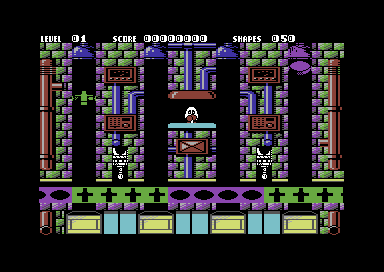
Later, Dizzy Panic asked for quick organisation under pressure. Bubble Dizzy had you use rising bubbles to climb out of the water. Dizzy Down the Rapids sent him downstream. You could enjoy these without committing to the usual sequence of collecting, carrying, retracing and finally understanding.

They also make the series’ numbering misleading. Count every spin-off, every remake and every console variation and you get a different total from someone counting the main computer adventures. A reader looking for the original story is better served by the names than by trying to force everything into one tidy numbered line.
Magicland Dizzy (1990): Saving the family, one spell at a time
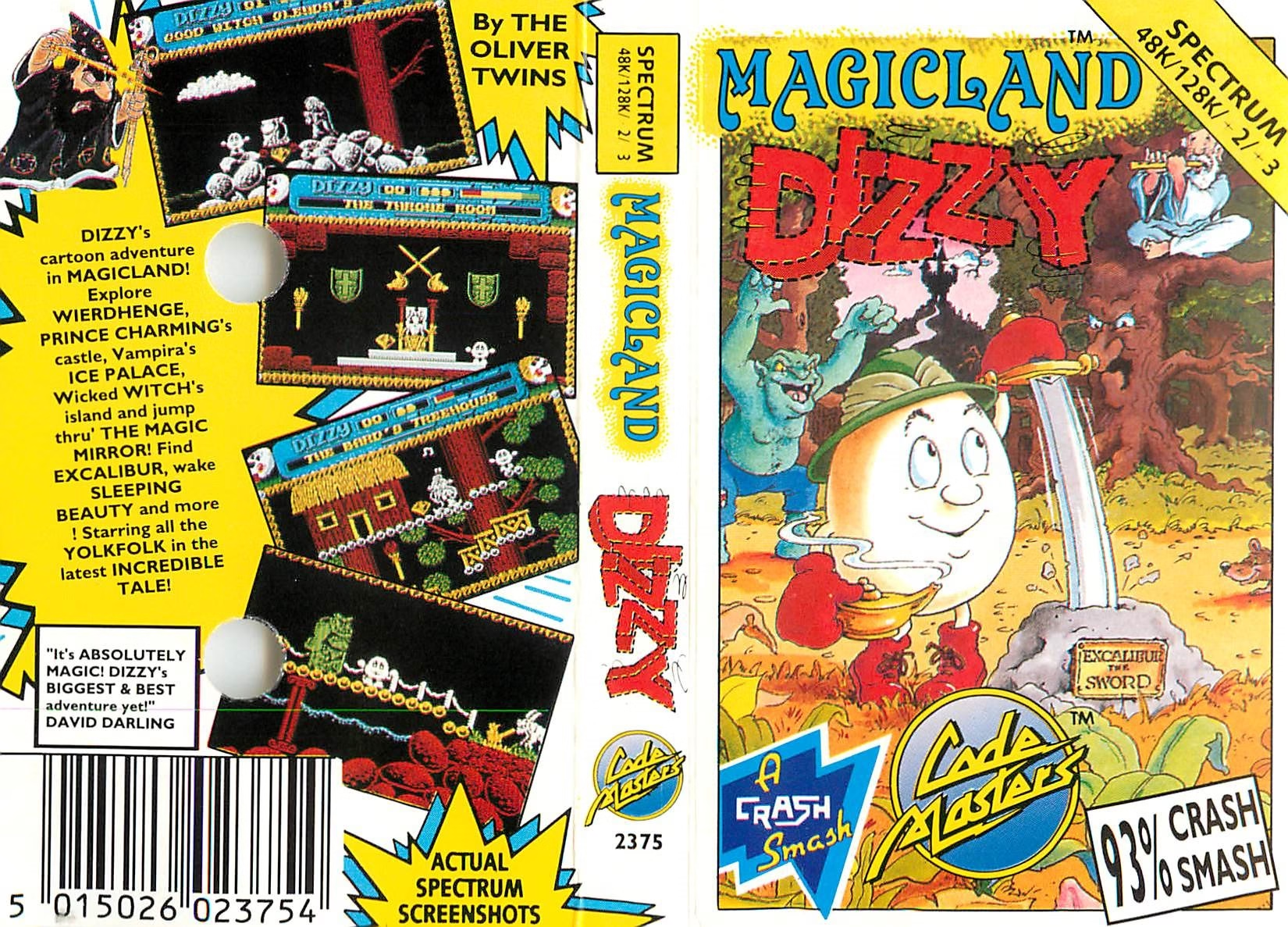
Zaks was back, and this time the trouble had spread through the cast. Dylan had become a bush. Dora was a frog. Denzil was trapped in ice. Familiar faces had become the puzzles you needed to solve.
Magicland turned fairy-tale borrowing into a wonderfully busy rescue mission. A spell could be understood through the person suffering from it, while a familiar tale suggested a possible cure. The landscape could make a joke and set a task at the same time. The twins’ account explains how the work was shared with Big Red Software as their attention shifted towards consoles. Dizzy’s home-computer audience still wanted another adventure. Somebody had to make it.
This was a consequential handover. The series could grow beyond two people finishing another game at home, but somebody else now had to understand what made the little egg feel right. Big Red helped keep the computer adventures moving while the twins pursued a much larger market.
Magicland reached players around the turn of 1990 into 1991, first through the Dizzy Collection and then through individual editions. The January 1991 issue of CRASH refers to its release the previous month. Its role in the series is clearer than its competing calendar entries: the Yolkfolk had become essential to the adventure.
A transformed relative gave you a goal you could remember. The journey could still be awkward, but it had a reason. You were going back across the map because somebody you had met needed the thing you had just found.
The Fantastic Adventures of Dizzy (1991): A much bigger bet
The twins visited the Consumer Electronics Show in Las Vegas in January 1990 and saw the scale of Nintendo’s American business. Compared with inexpensive British computer cassettes, NES cartridges represented a startling opportunity. They wanted to put Dizzy into that market with an adventure big enough to deserve the attention.
The development account describes the move to Leamington Spa, work in Portacabins near Codemasters, and a production that took seven months. The increased space let them combine earlier ideas into a much larger journey. The investment also changed what a delay meant. A bigger team and a longer project had bills attached.

In the magical kingdom of Zakeria, you explored settlements, caves and castles, helped the Yolkfolk and worked towards Daisy’s rescue. Mini-games interrupted the object puzzles with action. The adventure gathered much of the series’ appeal into one place, then asked the player to keep track of it all.
It could be absorbing in exactly the way the earlier games were absorbing. A useful discovery sent you back towards somebody you remembered. A new route made the world seem to open. It could also be exhausting. A large interconnected adventure without a normal save system makes a late failure hurt, however charming the opening minutes were. The scale that sold the promise became part of the demand.

Different editions changed parts of the experience. The game appeared on NES and later on Sega systems, home computers and PC; collecting requirements and presentation were not identical everywhere. Somebody describing a particular cartridge may remember a challenge differently from someone who played a computer conversion. The name travelled farther than one fixed version.
The twins say the NES release was delayed by the legal dispute involving Nintendo, Galoob and Game Genie. When the cartridge reached the market in 1991, the opportunity already looked different from the one they had seen in Las Vegas. Sixteen-bit consoles were pulling attention towards another generation. Their retrospective follows that unhappy timing.
A game could be good and still arrive at the wrong moment. More painfully, an arriving game could still fail to put money in the developer’s hands quickly enough. In their wider career account, the twins describe royalty delays and growing overheads among the pressures behind their eventual break with Codemasters.
That is the human change underneath this part of the story. Earlier, the brothers could work harder and finish another cassette. Now they were responsible for a studio. Philip discusses that responsibility in our interview: making games had grown into keeping people employed and a business going. A successful mascot did not make those worries disappear.
Spellbound Dizzy (1991): The long way home
Meanwhile, the computer games kept coming. Spellbound Dizzy gave players an enormous magical mishap to put right. A spell had scattered the Yolkfolk, and finding them meant venturing through a world much larger than the early adventures.
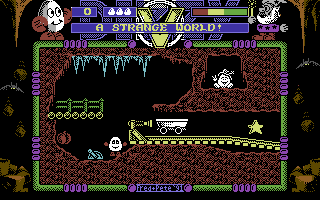
The creators’ archive credits Big Red with the concept and design as well as the development work. The full adventure stretched beyond a hundred screens. A reduced edition also appeared, which helps explain why memories of its size differ.
For a buyer comparing what a cassette could offer, a large map was an attractive promise. In play, it meant a lot of travelling. Objects needed moving, routes needed remembering and food helped keep Dizzy going. A successful solution might still leave you with a long walk to deliver what somebody needed.
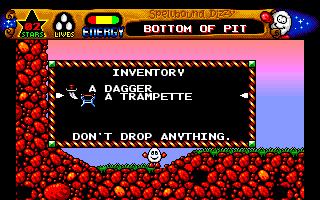
This was the series pushing against one of its own pleasures. Returning through a familiar landscape can feel satisfying when a new object gives the trip purpose. Repeat it too often and the familiarity becomes work. Spellbound could give a determined player plenty to inhabit, but it was less welcoming to somebody hoping to understand the appeal in one sitting.
The difference becomes especially clear beside the next adventure. Dizzy did not always improve by getting bigger.
Dizzy: Prince of the Yolkfolk (1991): A smaller adventure with a better welcome
You begin locked in a cell. Nearby objects give you something to try before the whole world demands your attention. It is a much gentler invitation than being released into a vast map with a dozen loose ends.

Prince first appeared in the Excellent Adventures compilation in 1991, with later individual releases and conversions accounting for some 1992 dates. The period CRASH review of the compilation introduced it as the bonus cartoon adventure. Big Red had built a compact rescue around Daisy and a fairy-tale kingdom, with a map far easier to keep in your head than Spellbound’s.
You still had to think about objects, talk to characters and handle the jumps. The advantage was proportion. A smaller world let a new discovery produce its reward sooner. You were less likely to spend the whole session hauling something across territory you already understood.
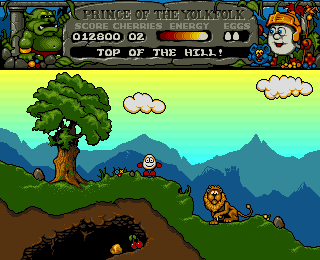
A preserved Amiga Power review praises the manageable size and the logic of its puzzles. Other period reviewers were weary of seeing the same format again. Both responses make sense. If you had played every preceding adventure, another egg rescue might look overfamiliar. If the earlier games had defeated you, a well-shaped short one could finally let you reach the ending.
That accessibility would give Prince a second life. It was reworked for Nintendo as Dizzy the Adventurer, and much later returned on mobile devices. A comparatively modest entry had proved a useful place to introduce the character again.
Crystal Kingdom Dizzy (1992): The price of growing up
Grand Dizzy wanted to sort out the latest crisis himself. The treasures of the Yolkfolk had been stolen, the weather had turned nasty, and the old fellow was practising his somersaults in the kitchen. It was not going well. Dizzy would have to take the trip after all.
Crystal Kingdom Dizzy had an especially noticeable change before you even loaded it. Codemasters sold it at full price: £9.99 for the eight-bit computer versions and £19.99 on Amiga and Atari ST. The creators’ archive records the prices and a production led by a new development team. A bigger box and a familiar hero now asked for a larger slice of the buyer’s money.

The adventure was divided into four worlds, with passwords helping you continue. Stolen magical treasures gave the journey its purpose. There was still the satisfaction of finding an object and identifying its use, but the shape of the trip had changed. You were working through stages rather than learning one uninterrupted landscape.

That division had practical advantages. It could keep an adventure from sprawling indefinitely. It also lost some of the feeling that every discovery might connect to a place you had already visited. The old adventures encouraged you to carry their whole world around in your memory. A succession of separate worlds asked you to start part of that relationship again.
By now, familiarity was becoming a problem for reviewers. A new Dizzy release could be judged against the ones a player already owned, and a higher price made that comparison sharper. The preserved period reviews are a useful reminder that there was no single verdict for every machine. Conversions changed the experience, and reviewers differed about how much of the old formula they still wanted.
Crystal Kingdom brought the original run of new computer adventures to an end. The consoles still had Dizzy releases and variations to come, including The Excellent Dizzy Collection and The Big 6 on Amiga CD32. They gathered and repackaged a family that had grown across machines. What stopped was the dependable arrival of another new fairy-tale cassette.
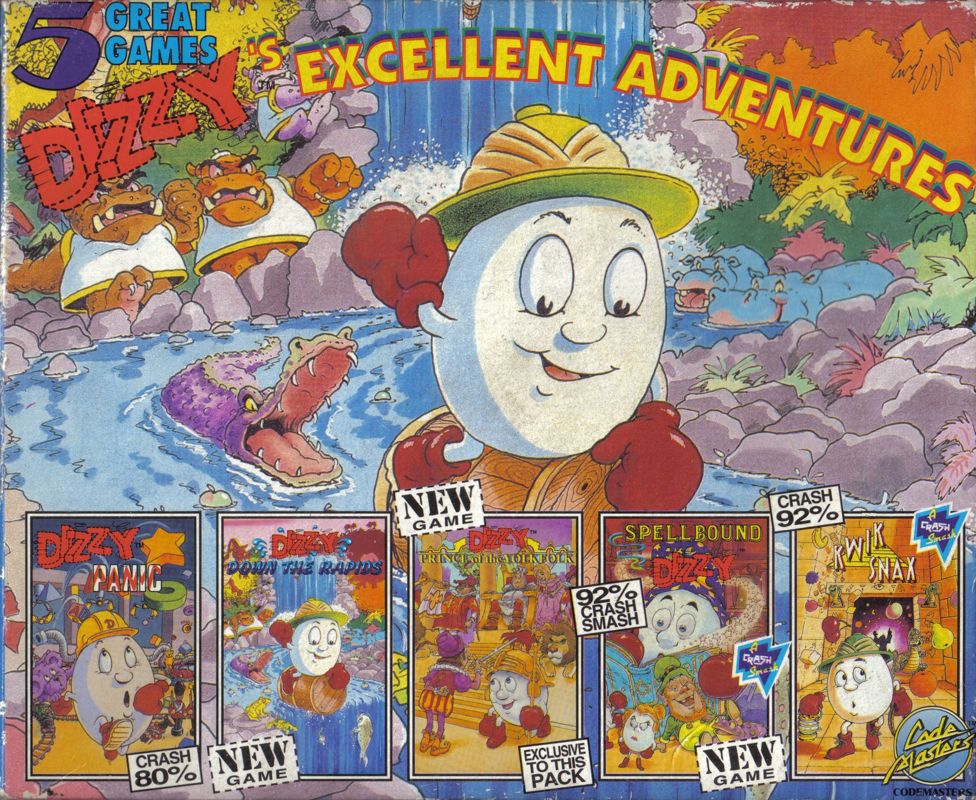
The twins went on to build a much larger development career. Dizzy’s future became harder to arrange. Their account of the earlier contract discussions recalls disagreement over ownership and a later joint agreement. It is their recollection of a messy business relationship, and it helps explain why affection for the character was not enough to make another game happen.
The missing years: A mascot waiting for permission
A dormant game character can still be very busy in the heads of the people who played him. Fans remembered the landscapes and the puzzles. A publisher had to decide whether enough new buyers would do the same.
Writing in 2007, a former Codemasters marketing executive recalled trying to arrange a Dizzy return. He described a negotiated agreement and a 3D demonstration, followed by a planning decision against proceeding. In his account, the character’s limited American recognition and the length of the absence counted against it. This was a participant arguing for a brand he loved, so his explanation deserves that attribution.
The comments beneath the article show how difficult a return would be to agree on even among willing customers. Some wanted restored originals. Some wanted a new adventure. Some worried that 3D would lose the character’s charm. A commenter called Jamie put the attachment neatly:
“Dizzy games had personality, continuity, familiar characters.”
Jamie, in the comments beneath Death of a brand
Those are good things to keep. They are less helpful as a production budget. The fans could recognise the feeling they wanted, while a company still needed a game, a market and a workable deal.
Dizzy: Prince of the Yolkfolk (2011) and Dizzy Returns (2012): Coming back was complicated
The mobile remake of Prince of the Yolkfolk finally put a refreshed adventure in players’ hands in 2011. Its relatively compact world made it an understandable choice. A returning fan could recognise the route. A newcomer had a smaller journey to begin with. The game archive distinguishes the remake from the original computer and console editions.
A full new adventure was a larger proposition. In November 2012, the twins launched Dizzy Returns on Kickstarter, seeking £350,000. The campaign ended with £25,620 pledged by 839 backers. The preserved campaign record leaves little room to dress up the outcome: it fell far short.
That was a dispiriting result for a character whose absence had prompted so many requests. It also exposed the gap between wanting Dizzy back and backing a particular proposal. A fond memory is something you already have. A crowdfunding page has to make you want the game it promises to build.
The twins later put together a campaign retrospective, preserving material from the attempt and reflecting on what they had learned. The failure did not settle the character’s future. It did end this route to it.
The next breakthrough would come from somewhere far less glamorous than a publisher’s planning meeting. Old development materials were still waiting to be found.
Wonderland Dizzy (2015) and Mystery World Dizzy (2017): The games came out of storage
In 2015, the twins rediscovered materials for Wonderland Dizzy, a NES adventure developed in the early 1990s and never released at the time. An old map helped bring the project back to their attention. What had once been an abandoned commercial game became something worth finishing and sharing.
The creators’ account follows its recovery from stored development material. Turning that material into a playable release required preservation work. It was not a matter of blowing dust off a finished retail cartridge and putting it in a shop.
Wonderland reworked the Magicland idea for Nintendo, with Alice-inspired surroundings and a particularly welcome change: Daisy could be played alongside Dizzy. A character usually waiting to be rescued could take part in the rescue. The game also made allowances to keep a lost inventory from leaving the adventure impossible to finish.
That makes it more than an interesting missing page in a release list. It preserves a direction the series might have taken, then lets people actually judge it. You can see the compromises, improvements and familiar habits on screen instead of having to imagine a cancelled game from one magazine photograph.
Mystery World Dizzy followed in 2017, revisiting Fantasy World’s ideas for the NES. Dreamworld Pogie, a separate platform game starring the Yolkfolk’s pet, also emerged from the abandoned console work. Digital recoveries and later physical editions had their own release histories. The Yolkfolk archive keeps these revived games alongside the contemporary releases rather than pretending they reached shops in the 1990s.
By 2020, the Oliver Twins Evercade collection had given a group of those console games another home. Its eleven-game selection included Dizzy adventures alongside other twins projects. The collection made an unlikely route back to a handheld cartridge: work begun for the original Nintendo generation could find buyers decades later.
There is a nice reversal here. The console push had helped make the original business relationship more difficult. Preserving that same work became one way to celebrate the partnership’s best creations without recreating its worst deadlines.
Wonderful Dizzy (2020): The fans helped build the next adventure
For years, Yolkfolk.com had given people somewhere to keep the character alive. The fansite dates its beginnings to 1997. Its community made games, shared maps, maintained archives and argued about what a new Dizzy ought to feel like. The tools and resources helped turn an interest in the old games into things people could make themselves.
A fan community can preserve a series by documenting it. It can also preserve it by learning how to build it. In Dizzy’s case, the creators eventually worked with people who had already shown that ability through a Spectrum remake of Crystal Kingdom. Wonderful Dizzy grew out of that collaboration and a promise connected to the Spectrum Next crowdfunding campaign.
Released on December 18, 2020, Wonderful Dizzy was a new adventure for the 128K ZX Spectrum. Despite its connection to the Next campaign, it did not require that new machine. The old hardware got the new journey.
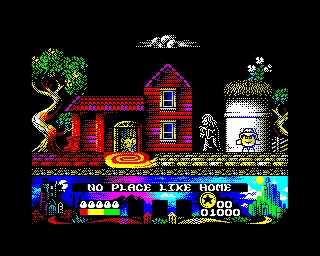
Dizzy and Pogie, his small furry pet, were carried by a cyclone into Oz. Pogie was snatched away, and Dizzy set out to rescue him and find a route home. Along the way were the Scarecrow, Tin Woodman and Cowardly Lion. A storybook populated by people who needed help was about as comfortable a fit for Dizzy as anybody could have found.
The twins designed the game, with an international development team handling code, artwork and sound. The official credits and release announcement describe a labour of love made available free. It is a striking ending to the old debate over whether enough people remembered the character. Here were people putting the work into a new adventure on a machine older than some of its potential players.
The appeal still starts with a small act. Find something. Notice somebody needs it. Work out how to get it there. Modern presentation can make a world more elaborate, but the satisfaction of being the person who finally understood the problem does not need much explaining.
Treasure Island Dizzy Ultra and the next chapter (2026 onward)
Our October 2026 interview reaches Dizzy at another point of possibility. Philip discusses Treasure Island Dizzy Ultra, preserving the older presentation alongside a refreshed one, and ambitions for further adventures in 2027 and beyond. These are plans for the future, rather than games we can already review.
He also describes a change in how new work can be arranged:
“We have reached an agreement that allows us to create new Dizzy games without seeking approval for each one, while paying royalties.”
Philip Oliver, Retro Replay interview
That is a hopeful statement after a history in which a familiar face so often had to wait for a deal. Philip can talk about making new adventures with more room to proceed. Platforms and release dates will need their own announcements.
The ambition begins in 2D, with room to grow more complex and eventually explore 3D. The audience he describes is children of roughly eight and up, without an upper age limit. That leaves plenty of room for the adults who first met Dizzy on a cassette and would rather like to see what their children make of him.
There is a challenge in that return. A new player has never had an argument about the snorkel. They have no affection for a game simply because somebody else remembers buying it. The adventure has to make its own introduction: a face worth following, a world worth entering and a puzzle whose answer gives you a little burst of pride.
Dizzy did that once with red gloves, a few objects and some very small computers. The most encouraging part of Philip’s interview is how readily he still talks about the things a player discovers. After everything that happened around the egg, he still wants to make the next adventure.
Keep exploring
- Philip Oliver interview: Dizzy, the twins and their next adventures
- Nintendo’s licensing rules and the struggle over the cartridge business
- The complete history of emulation
Sources and further reading
This feature draws on our interview with Philip Oliver, the Oliver Twins’ game and development archive, Yolkfolk’s game records, and the contemporary reviews linked beside the relevant games. The CRASH compilation review and preserved Amiga reviews of Prince show how the games were received at the time. The 2007 marketing recollection and its reader comments give individual perspectives on the long absence. The campaign record and the twins’ Kickstarter retrospective document the unsuccessful 2012 attempt. Release years refer to first releases unless a heading identifies a remake or recovered game.