Retro Replay Retro Replay gaming reviews, news, emulation, geek stuff and more!
You beat the boss. The credits roll. You start thinking about the next game.
For a kid with a Genesis, a Super Nintendo, or an Amiga, that was a perfectly reasonable habit. Another cartridge would turn up in a magazine. Another impossibly large enemy would fill a screenshot. Your favorite character would get new moves, a new sidekick, perhaps a skateboard. Everybody seemed to be getting a skateboard.
Then, somewhere between the last cartridge and the first wave of PlayStation games, the next adventure stopped coming.
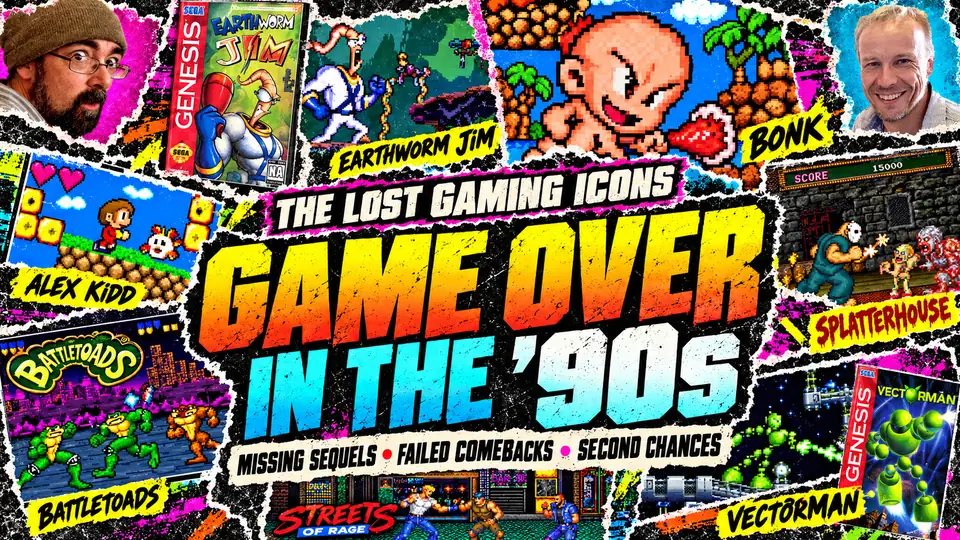
Alex Kidd went quiet. Bonk disappeared from the new-release shelf. The streets stayed angry, but there was no Streets of Rage 4. Vectorman arrived looking like a glimpse of the future and barely had time to settle in. Earthworm Jim made the jump into 3D, only to land in a game that often seemed to be looking for the joke.
These were characters people had argued over in school, borrowed from friends, and spent whole weekends trying to keep alive. Some had been the face of a machine. Others had made a crowded platform-game aisle feel a little stranger. Their original runs ended during the 1990s, and the long wait afterward became part of their histories. A few eventually returned. One of the happiest endings took twenty-six years.
Before the missing sequels, before the armored redesigns, there was a little boy with enormous fists who could still be Sega’s answer to Nintendo.
1986–1990: Alex Kidd punches his way in—and slips out
The first stretch of Alex Kidd in Miracle World sends you down a mountain. Blocks hang over the path. Money bags invite a detour. Your tiny hero punches through obstacles with a fist that looks borrowed from someone several times his size. The music is cheerful. The punishment for getting careless is immediate.
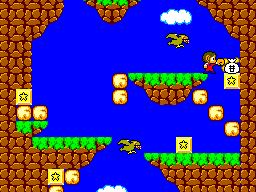
Released in Japan in 1986, Miracle World had the job of making Sega’s home console feel as inviting as Nintendo’s. Its designer, Kotaro Hayashida, later recalled being asked to create a hit that could compete with Super Mario Bros. He initially explored an action adventure with more role-playing elements before the design settled around jumping, punching, shopping, and those peculiar rock-paper-scissors contests. His 2002 interview, translated at Shmuplations, makes the project sound wonderfully human: ideas tried, ideas dropped, and at least one attempt to be different that he eventually regretted.
The buttons were reversed from the arrangement Mario players expected. Hayashida admitted, “At the time we thought we were doing something ‘different’… but we were mistaken.” Years later, even he found himself stumbling over them.
That mixture of charm and aggravation runs through Miracle World. A motorcycle lets Alex tear along with a freedom his ordinary hop cannot match. A helicopter turns a section into a little airborne shooting excursion. Shops make the coins feel useful. Then a boss sits down for rock-paper-scissors, and the game asks your adventurous, block-smashing hero to win a playground contest.
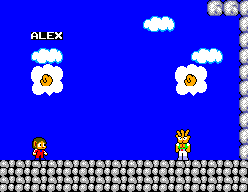
You can learn how those encounters work, but the first impression is brutal: all that platforming, followed by a decision that seems to put your remaining life in the hands of a closed fist. The oddness helped Alex stick in the memory. It also made him a difficult character to explain with one neat promise. Mario ran and jumped. Alex did a bit of everything, and occasionally stopped the adventure to demand scissors.
For owners of Master System models with Miracle World built in, he was simply there whenever the console came on without a cartridge. That gave him an intimacy an advertisement could not buy. He could be your first game, your only game for a while, and the reason you knew precisely which jump you were going to miss next.
Sega kept giving him work, though the jobs scarcely resembled one another. The Lost Stars brought a louder arcade sensibility. BMX Trial put him on a bicycle. High-Tech World sent him through an adventure about reaching an arcade; its Sega instruction booklet describes a journey that includes gathering pieces of a map and passing a test. It is a very different afternoon from punching your way down a mountain.
The 1989 Genesis game, Alex Kidd in the Enchanted Castle, returned to more familiar ideas, including the hand games. But bigger hardware had not magically given Alex a stronger identity. He had become a recognizable face attached to a remarkably uneven family of adventures.
His original run ended with one of its liveliest games. In 1990, Alex Kidd in Shinobi World dressed him for a playful take on Sega’s ninja action. Sword attacks, climbing, and the fireball trick gave the little fellow a pleasing new rhythm. The contemporary Tec Toy manual preserves that unlikely meeting of a cheerful cartoon hero and a ninja adventure.

This is a particularly unfair place for a series to stop. Shinobi World gives Alex a clear activity and lets him enjoy it. It feels like a small discovery waiting at the back of the Master System library. Players who found it could reasonably expect another one.
Instead, Sonic arrived in 1991 with an instantly readable proposition: speed. His body, his levels, the advertisements, and Sega’s new attitude all pointed in the same direction. Alex’s final new adventure had already shipped the year before.
Hayashida recalled that Sega had lacked a formal structure for promoting Alex into a major character. The games had been asked to do much of the work themselves. Sonic gave the company a face, a way of playing, and an attitude it could sell together.
Alex would still turn up in cameos and rereleases. For the player waiting for a fresh cartridge with his name on it, those appearances were small consolation. He was about to spend much longer being remembered than he had spent getting new adventures.
1988–1993: The mask, the caveman, and the candy aisle
While Alex was looking for his next identity, another unlikely hero had found his immediately. Rick wore a mask and hit monsters with a plank. The game was called Splatterhouse. Nobody needed a second explanation.
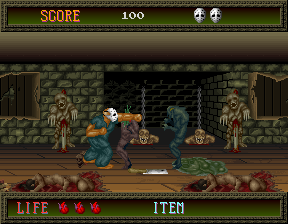
Namco’s 1988 arcade game made its horror readable at a glance. Rotting creatures lurched through a mansion. Rick’s heavy walk made every step feel committed. When you caught an enemy with a weapon, the violence had a nasty, satisfying weight. You were playing a muscular rescue adventure in a place that looked as though its walls should be condemned.
It borrowed the visual language of horror films without becoming a passive tour of them. The monsters still had to be understood as obstacles: something to jump, duck, strike, or avoid. The tension came from having a strong character with surprisingly little room for error. Rick could look like the worst thing in the building and still die because you mistimed a slide.
The home versions gave that arcade spectacle a second life. The TurboGrafx-16 release was especially memorable for making such an unpleasant game available beside the machine’s brighter adventures. Japan also received the 1989 Famicom offshoot, Splatterhouse: Wanpaku Graffiti, which shrank the horror into a cartoon parody. A series capable of a gruesome mansion and a tiny, comic version of its masked hero already had more range than its reputation suggested.
Then the main story moved to the Genesis. Splatterhouse 2 arrived in 1992 with Rick back inside the old nightmare. Its familiar side-on action offered exactly the sort of sequel a returning fan could recognize. More monsters. More weapons. More reasons to wonder whether rescuing Jennifer was going to work out this time.

The 1993 Splatterhouse 3 made a bolder change. Rick could move around rooms in the manner of a scrolling brawler, and the mansion became a route to navigate under pressure. His family’s fate depended on what you managed to do before time ran out. A map, a clock, and branching consequences gave the violence a purpose beyond reaching the right edge of the screen.
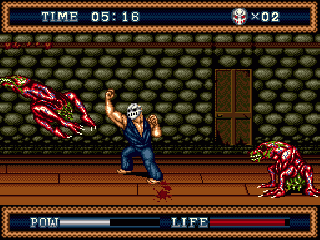
This was a series learning new tricks. The third game could leave you with a very different ending because you had been too slow, not simply because you had lost a fight. Horror became the fear that somebody elsewhere in the house was running out of time.
And that was where the original run stopped.
Namco gave Rick no grand farewell. His last Genesis adventure was followed by an empty space where the next game ought to have been. When the company finally revived him, its producers would describe the difficulty of finding the right moment and pitch. The monster had survived in people’s memories while his next game waited for somebody to get it moving.
A monster could remain unmistakable even after an extended disappearance. A console mascot faced a different problem: the machine that made him famous might be disappearing too.
Bonk: the hero who used his head
On the PC Engine in Japan, he was PC Genjin. In North America, he became Bonk, a bald caveman with a head built for occupational injury. His 1989 Japanese debut and subsequent TurboGrafx-16 release gave NEC’s system a face to put beside Mario and, soon enough, Sonic.
The attraction was physical. Bonk jumped above an enemy and drove his forehead down into it. He could hang on with his teeth. Meat transformed his expression and his power. Where other platform heroes looked graceful, Bonk looked committed to surviving through a spectacular lack of good judgment.
Bonk’s Revenge in 1991 sharpened that comedy. His little body and outsized face gave the screen a strong focal point; the landscapes had enough room for you to discover how much movement could be wrung out of a jump and a headbutt. The charm was in performing the joke yourself. You supplied the timing. The game supplied the face.

The 1993 Bonk 3: Bonk’s Big Adventure added simultaneous two-player play and candy that changed his size. An enormous Bonk looked wonderfully ridiculous beside the scenery; a tiny one made familiar spaces feel different. The mascot’s design was flexible enough to support the gag without losing its shape.
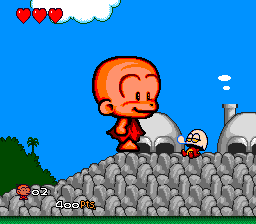
He was also flexible enough to travel. Bonk games and conversions appeared on competing hardware, while the futuristic Air Zonk spinoffs took a related cartoon attitude into shooting games. The family was never completely trapped inside one NEC console.
That makes the Super Nintendo chapter especially important. Super Bonk, released in 1994, gave the former rival mascot a home on Nintendo’s machine. The strange transformations and exaggerated expressions still worked. You did not need to have defended the TurboGrafx in a playground argument to enjoy a caveman headbutting his way through an absurd world.
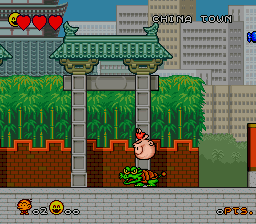
Japan got another one: Super Genjin 2, commonly called Super Bonk 2, released for Super Famicom on July 28, 1995. The preserved cartridge record and release listing mark the final new platform adventure of that original run. For Western players, the disappearance could feel even earlier because this sequel never received the corresponding overseas release.
Bonk had escaped his old hardware. He had survived translation, conversions, and a move onto a competitor’s console. What he did not get was a continuing line of new adventures as the industry entered its next generation. The image endured: round head, small body, enormous appetite for collision. The release schedule did not.
Zool arrives at full speed
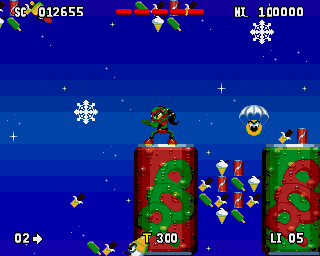
Across the Atlantic, Amiga owners had their own answer to the mascot race. Zool arrived in 1992 as a masked ninja from the Nth Dimension, running through a world so aggressively colorful that even its sweets seemed competitive.
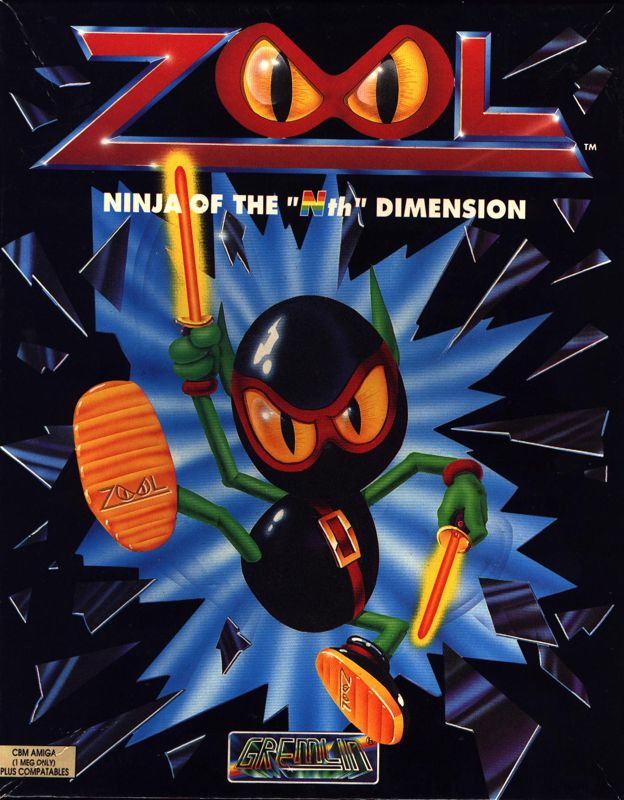
Before the character existed, there was a red square moving around a large level. George Allan, the Gremlin programmer behind that experiment, had been developing fast scrolling code. His demonstration became the starting point for Zool. In an Antstream interview reproduced by Old School Gamer, he described how Gremlin paired him with an artist and the movement grew into a game. Strider helped inspire the climbing. The mascot followed a working idea for how the screen should move.

Allan’s recollections also give a less glamorous view of mascot manufacturing. After the original, he began working on another game, only to be redirected onto further Zool versions. By the time another opportunity arrived, he was ready to leave. “A bit burned out from all the Zool,” he recalled.
To a buyer, conversions looked like momentum. To a programmer, they could mean another round of work on the same character while a fresh idea sat unfinished.
Zool had pace, wall climbing, shooting, and enough collectible objects to keep you hunting after the initial rush. It also had the conspicuous Chupa Chups association: a candy company’s branding in a game whose opening world already looked edible. The sponsorship was memorable, but the larger challenge was to make all that speed enjoyable when you could not see far enough ahead to trust the next landing.
Zool 2 followed in 1993 with another playable ninja, Zooz, and further bright, busy environments. Later conversions carried the games to more hardware. They did not turn into a third original adventure.
Alex had struggled to settle on a personality. Bonk had a wonderfully clear one. Zool had arrived with the speed and promotional confidence the moment seemed to demand. None of those qualities, by itself, could keep a series going. Meanwhile, two very different kinds of brawlers were teaching players to share a screen—and sometimes a grudge.
1991–1994: Two controllers, one shared disaster
The first Streets of Rage opened in 1991 with a city that looked better after dark. Neon signs glowed. Criminals waited just far enough apart to encourage confidence. You could pick up food from the pavement and eat it without asking any questions. With a friend beside you, the whole corrupt place seemed manageable.
Sega’s brawler took an arcade pleasure and made it belong in the living room. You could grab an enemy, throw him into somebody else, and turn a crowded screen into a moment of order. Then your partner could accidentally punch you and restore the chaos.
Its music gave that routine a personality. Composer Yuzo Koshiro brought dance music into the Genesis sound chip, making the streets feel alive before the first thug approached. In his Red Bull Music Academy interview, he described composing with overseas listeners in mind and drawing on the club sounds he loved. The machine’s limits became part of the texture: bright melodies, hard rhythm, and bass with an edge you could recognize immediately.
The 1992 Streets of Rage 2 made the bodies bigger and the combat richer. A punch no longer had to be the entire relationship between you and an enemy. You could set up a grab, choose a throw, judge an approach, and use a special attack when the crowd grew ugly. Axel, Blaze, Max, and Skate each offered a different way to handle the same room.

Ayano Koshiro, the Ancient designer who helped shape the sequel’s characters and fighting, recalled that she and her brother had been playing Street Fighter II on a cabinet in their office. She wanted some of that satisfying attack rhythm in their scrolling brawler: a succession of blows followed by the hit that sent somebody flying. Her 2015 developer interview brings the sequel back to people studying movements, suggesting changes, and trying them in the game.

That is why the sequel still feels good in your hands. The attraction survives beyond the size of the sprites. The pause before a heavy attack, the reach of a throw, the decision to approach from above rather than walk directly into a fist—all of it gives the street room for thought. It is easy to understand and harder to master than it looks.
Streets of Rage 3 followed in 1994. Running and rolling changed the pace. A rechargeable special-attack meter offered another reason to watch more than the enemy in front of you. A cyborg joined the cast, and the story became more elaborate. The official Sega manual shows a sequel expanding its controls and action rather than merely replacing the backgrounds.
The third soundtrack also pushed toward harsher, less comfortable territory. Koshiro later called it “an acquired taste” in his OPCFG interview. That makes a useful antidote to the idea that the trilogy had simply run out of ambition. Its last game was still experimenting, even when some listeners wished it would stop.
Afterward, no Saturn sequel appeared. No Dreamcast sequel reached stores. Fans accumulated stories about possible fourth games while the trilogy accumulated ports.
Core Design’s Fighting Force was one route that went nowhere for Sega’s old team. Core pitched its 3D brawler as a possible Streets of Rage follow-up, then released it under its own name in 1997. Fans got another city to fight through while Axel and Blaze stayed home. EGM’s reporting on the eventual revival traces that long history of attempts and missed connections.
A copy of Fighting Force could offer four characters and a city full of things to smash. It could not answer the particular expectation created by the first three cartridges. Players wanted the weight, the music, the familiar faces, and the next chapter together. Until 2020, they would have to imagine that combination for themselves.
Battletoads: the frogs that made friendship a difficulty setting
Rare’s Battletoads, first released for NES in 1991, started with a more immediate joke. A successful attack could turn a toad’s foot into an enormous boot. These were cartoon bodies doing cartoon violence, and the exaggeration made landing a finishing blow feel terrific.
Then the game changed activities. It dropped you down a shaft. It put you on a speeder. It asked you to read obstacles at a speed that made your previous confidence look foolish. Knowing how to punch a pig did very little for you in the Turbo Tunnel.

The surprise was part of the brilliance and part of the cruelty. Battletoads kept refusing to be only the game you had learned to play a few minutes earlier. Its reputation grew around the stages that stopped people, so the frustration became almost as recognizable as the characters.
Years later, players were still finding new ways to describe the defeat. In a 2024 r/retrogaming discussion, one player remembered using Rare Replay’s rewind with their sister and “realizing we still can’t pass turbo tunnel together.” Even the ability to undo mistakes had not repaired the household’s relationship with the bikes.
Rare programmer Paul Machacek had to make the toads fit in a Game Boy. He proposed a separate handheld adventure instead of compressing the NES game. The 1991 title shared the name Battletoads; a later handheld conversion of the NES game had to arrive as Battletoads in Ragnarok’s World.

His RVG interview also contains a remarkable explanation of the series’ stopping point. Rare finished a fourth Game Boy project, Super Battletoads, based on the arcade game. Machacek said it was “100% completed and signed off by our test team,” but weakening arcade performance led the publisher to pull the plug. A finished game stayed off the shelf.
When Rare later recovered the build while working on Rare Replay, somebody still had to finish it to check that everything worked. Machacek used his surviving source code to create an infinite-lives version. Even inside Rare, getting through an old Battletoads game could call for intervention.
Before that silence, the series had hardly been short of activity. Battletoads in Battlemaniacs brought larger, more elaborate action to the SNES in 1993. Battletoads & Double Dragon paired the toads with another famous brawling team that year. The 1994 arcade game made its violence louder and bloodier, with three players able to join the mess.
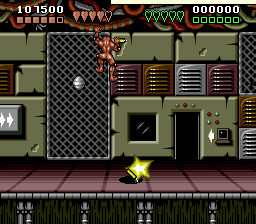
That arcade release became the last new adventure of the original run. The toads had crossed consoles, handhelds, and arcades in only a few years, and then the machinery behind another release stopped. Rare went on to other creations. The finished handheld game remained an especially sharp reminder of how little distance could separate “ready” from “released.”
There would be cameos, collections, and a generation of jokes about their difficulty. For twenty-six years, none of those gave Rash, Zitz, and Pimple a new game of their own.
1994–1999: The old machines still had surprises
A worm falls into a super suit. Suddenly he has shoulders, a gun, and a career.
That was enough to get Earthworm Jim moving in 1994. The first game did not wait for you to accept its world. It handed you the worm and expected you to keep up. A cow became ammunition for a joke whose payoff could arrive much later. An enemy could have a name as ridiculous as Professor Monkey-For-A-Head and still require your full attention.
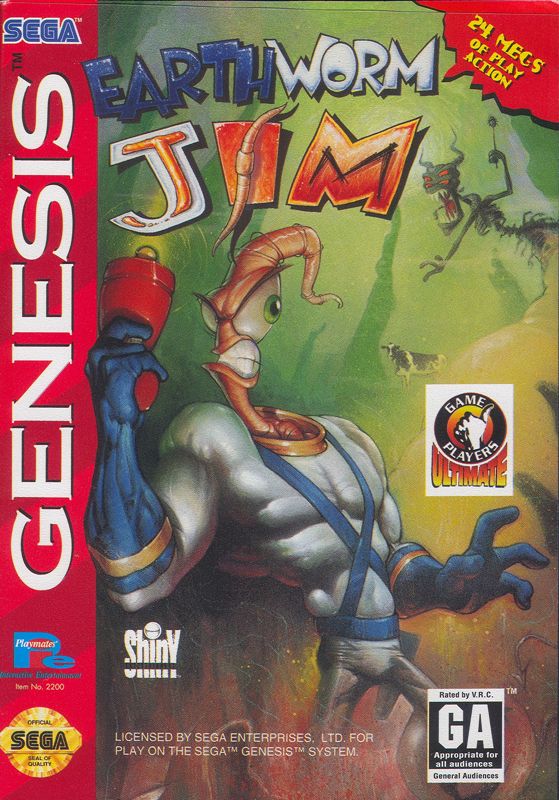
Shiny Entertainment founder David Perry had come from games including the Genesis Aladdin, where fluid cartoon movement helped sell the adventure. His new studio needed its own first project. Animator Doug TenNapel supplied a demonstration of the character who would become Jim. Perry recalled being impressed enough to hire him and build the studio’s debut around that worm in his 2005 Sega-16 interview.

TenNapel’s creation had an expressive advantage: Jim was only partly inside his own heroic shape. The suit gave him strength. The worm could stretch out as a whip or spin like a little helicopter. His body was a prop, a weapon, and the punchline to his superhero act.

The animation did more than decorate the action. A well-timed movement could make an ordinary success funny. A hostile object could become a character through the way it moved. The game gave you enough recognizable platforming to understand your job, then surrounded that job with things that seemed to have escaped a particularly unruly sketchbook.
Earthworm Jim 2 followed in 1995 and pushed the changes of pace further. Shooting and platforming were interrupted by strange new duties. In Puppy Love, keeping falling puppies safe became the immediate priority. Elsewhere, the game could turn Jim into something that barely resembled the hero on the box. It trusted the audience to enjoy surprise, even when surprise meant learning another set of rules.
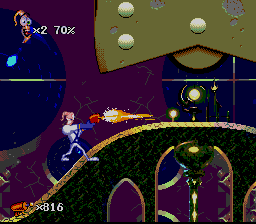
This was a different bargain from the relentless efficiency of a great Mario level. Sometimes Jim’s adventures were awkward. Their eccentricity could make one section delightful and the next exhausting. But the eccentricity belonged to them. You could spot a screenshot and know which strange little universe you had entered.
Jim grew beyond the cartridge into a television cartoon and merchandise. For a moment, a character born in a game had the sort of larger life companies had hoped to manufacture for every mascot. The important question for players remained wonderfully simple: when was the next good game coming?
On the Genesis, another new face arrived while the industry was already advertising its successor machines.
Vectorman makes an old Genesis look expensive
Vectorman, developed by BlueSky Software and released in 1995, moved like a collection of green balls that had decided to become a person. His body flexed and separated. Light seemed to travel across his rounded pieces. The screen could look almost impossibly glossy for a console whose earliest games were already years behind it.

The trick was to create the shaded imagery beforehand and use it as sprites during play. The Genesis was not suddenly drawing a fully polygonal 3D world. BlueSky had found a striking way to make a side-scrolling action game look sculpted. That distinction is easy to understand once you play: you are still judging jumps and shots across the screen, but the hero appears to have volume.
The original Sega manual gives this flashy machine an appropriately scruffy job. Vectorman belongs to the Orbots left to clean a polluted Earth while humanity is away. Their leader becomes WarHead, and your cleanup robot has to deal with something worse than garbage.
The shooting had snap. Vectorman could transform, and the levels made a spectacle of machinery, water, ice, and movement. His odd construction was useful because it suggested that he could become another shape at any moment. He was a hero whose design made room for the next trick.
The 1996 Vectorman 2 put him in darker, more organic surroundings. The sequel’s Sega manual sets up a new threat after his return journey goes wrong. In play, the greens, swamps, insects, and murky backgrounds make the familiar spherical hero look as though he has wandered into a nastier ecosystem.

Two games in two years looked like the start of a healthy series. They also landed at an awkward moment for a character whose appeal was bound up with demonstrating what the Genesis could still do. Saturn and PlayStation were already on the market. The Nintendo 64 joined them in 1996. A remarkable new cartridge could make owners of an old machine happy without giving its hero an automatic home on the next one.
Vectorman’s original run ended there. His appearance had suggested technical confidence; his disappearance revealed how little that guaranteed. Being impressive on yesterday’s hardware was a very particular kind of advantage.
Earthworm Jim finds the third dimension—and loses the frame
Jim did get a new-generation game. That is where his story becomes painful.
Earthworm Jim 3D reached Nintendo 64 in 1999, developed by VIS rather than the original Shiny team. The premise put the adventure inside Jim’s mind, with lost marbles to collect. There was still plenty of nonsense to work with. The problem was turning it into satisfying action.
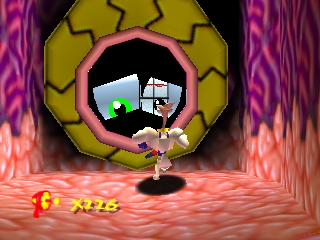
A cartoon animator can put a joke exactly where the viewer will see it. A 3D platform game has to let the player see the next landing, the enemy about to attack, and the route through a room. Jim’s camera could make that basic work unexpectedly difficult. Turning toward trouble and waiting for the view to catch up drains the confidence out of a character who is supposed to be absurdly capable.
The contemporary GameSpot review of the N64 version singled out the camera despite praising the controls. The 2000 PC review was harsher, describing the view lagging behind Jim and frustrating attempts to see attacks from the side.
The earlier games had also benefited from choosing every angle. Their strange faces, silhouettes, and sudden changes of activity were presented with the confidence of a cartoon. Here, familiar enemies and expressions had to share the screen with collection tasks and navigation problems. The name and the ingredients had survived. The comic timing was harder to find.
“the level design is awesome and the music is great too”
A player celebrating a completed run in a 2022 r/n64 discussion. Jim 3D has its defenders; this player acknowledged the camera problems but still enjoyed the adventure.
Perry was blunt about it afterward. In the same Sega-16 interview, he said, “I hated it, Doug hated it, I tried to stop it.” He attributed the decision to Interplay’s control of the rights and said VIS had worked without the support it needed. That is the original studio founder’s account of the split: the people who helped make Jim famous no longer controlled his next game.
The series also received a new handheld adventure in 1999, Earthworm Jim: Menace 2 the Galaxy, made by David A. Palmer Productions and published by Crave. It returned to side-on action, with smaller environments and a heavy emphasis on searching and collecting. You can see those priorities in the preserved Game Boy Color playthrough.
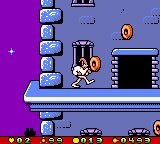
That final handheld game complicates the usual verdict that “3D killed Earthworm Jim.” The series also had another go in 2D. Reusing the viewpoint did not restore the first games’ exuberant sense of invention. A character could lose his spark through a change of team and design just as easily as through a change of dimension.
The new adventures stopped in 1999. A PC conversion of Jim 3D followed in 2000, and later ports and remakes would keep the old material circulating. For anyone waiting for the next full adventure, the distinction was easy to feel. Jim kept reappearing, but he kept arriving with places you had already been.
By the end of the decade, the shelf had changed. Some of its missing heroes had never received a next-generation game. One of its biggest had received two disappointing final adventures in the same year. The years ahead would bring a new danger: the comeback that looked close enough to touch, right up until it vanished.
2003–2011: The comeback could be worse than the wait
In 2003, Vectorman was finally heading somewhere new. Pseudo Interactive was developing a PlayStation 2 revival. After years of seeing the green robot in collections, fans could look at an actual project intended for newer hardware.
The trouble was recognizing him.
The project’s concept artist later told Sega-16 that Sega wanted a more serious direction. Designs had explored both the old linked spheres and a much more armored soldier. Internally, one approach had earned the nickname “Vector-Chief,” a reference to the resemblance to Halo’s Master Chief. The artist preferred a design that carried the old character’s humor and transformations naturally into 3D.
That disagreement gets to the heart of a difficult comeback. Vectorman had stood out because he looked like a toy made of loose balls and could suddenly become something else. A heavier, more conventional figure might communicate action to a new audience, but it could also spend the old character’s most valuable asset: the ability to recognize him before reading his name.
Sega stopped the project. The artist would not claim to know why, saying, “I would be speculating as to why it was canceled.” The green robot had made it into development and onto newer hardware. He still never made it onto the shelf.
Today, SEGA Dreamcast Info’s preservation project lets readers examine surviving PS2 builds and design documents. The material turns a missing sequel into something more tangible than a magazine memory. You can see a team trying to decide what this robot should become. You can also see how far an announced game can get without becoming the cartridge or disc somebody finally takes home.
Bonk had already found a few smaller ways back. Japan received a Bonk’s Adventure remake for GameCube and PlayStation 2 in 2003, shown in GameSpot’s Tokyo Game Show impressions. In 2006, Bonk’s Return brought the caveman to mobile phones. The Bonk Compendium’s contemporary updates followed the announcement, played the game, and reported Hudson’s interest in putting him back to work as a mascot. He had even acquired a MySpace page. Nobody could accuse the caveman of refusing to modernize.
The later Bonk: Brink of Extinction promised a larger new adventure. It was shown as a downloadable game with 3D characters moving through side-scrolling environments. He still used his head. A new power could make that head into a bar of soap, allowing him to blow bubbles and trap enemies. The joke had survived the change in presentation.
In a 2010 producer interview, the project’s history ran through plans for Wii, DS, and a downloadable release. Its developers described cooperative play and areas that rewarded using different powers. Red Entertainment reviewed the character models. This was a real game being demonstrated and discussed, with its future apparently close enough for the producer to talk about additional content.
Then the future closed. In March 2011, Siliconera reported Famitsu’s cancellation listings, including Brink of Extinction, amid Hudson’s upheaval and the closure of its American division. Players never got to buy the comeback they had watched taking shape.
The old caveman had once moved from NEC’s hardware to Nintendo’s. His new adventure could not get through the changing company behind it. This time, waiting for a sequel ended with an explicit cancellation.
Splatterhouse gets its blood back
Rick did reach stores again. The 2010 Splatterhouse revival was a full 3D action game, with a bigger body, spectacular dismemberment, and a mask that had rather more to say. Modern hardware let the game turn damage to its own hero into a grotesque performance.
Getting there had been ugly in a different way. Development began at BottleRocket Entertainment; Namco Bandai removed the project from that studio in 2009 and completed it internally. The publisher cited performance problems. In a 2010 producer interview with Gamasutra, now Game Developer, the internal team described a game that had changed substantially and a company that continued backing it through the difficulties.
The same interview explains the pressure behind the new shape. The developers wanted to reward the fans who had kept Splatterhouse alive online while also attracting players who knew modern action games such as God of War. Rick had to carry both expectations on those enormous shoulders.
A separate West Mansion interview with the revival’s art and production leads makes clear that the affection was real. The team knew the old monsters and the original rescue story’s nasty turn. The producer also said the revival had been approved before the 2007 Virtual Console release of the original; that rerelease was not what first got the project moving.
There is a sad temptation to imagine every troubled revival as a cynical company attaching a familiar name to the wrong game. Here were people who loved the original, trying to build a larger version under changing production conditions. Passion could get the project into the room. It could not make the development easy.
Earthworm Jim HD also arrived in 2010. Gameloft rebuilt the original and added material, including cooperative play, as its contemporary trailer reporting documented. It gave Jim another way to reintroduce himself. The foundation was still his first adventure, with additions, rather than the long-awaited next chapter.
Years later, the name Earthworm Jim 4 would be attached to the planned Intellivision Amico. The announcement promised a reunion with original talent. When Time Extension contacted former Shiny staff in 2023, the answers described preliminary discussions and uncertainty, not a team steadily finishing the game. Perry assumed the Amico version was on hold. A reunion was easier to arrange than a new adventure.
As of this article’s October 2026 research, that Amico announcement has not produced a released Earthworm Jim 4. The long history of Jim promises gives the silence its sting. Fans already know the character can support something wonderful. They keep waiting for the arrangements behind him to make that possible again.
2020 onward: Somebody finally opens the door
For Streets of Rage, the next successful step began with people who had grown up wanting to take it.
Dotemu and Lizardcube had worked together on Wonder Boy: The Dragon’s Trap. In 2017, a conversation in Paris turned toward another Sega property. Dotemu’s chief wanted to attempt a Streets of Rage sequel. Lizardcube’s art director already had drawings of the characters on his phone. A pitch followed, then a trip to Sega in Tokyo, then approval. The team recounted that sequence in Nintendo Life’s making-of interview.
Streets of Rage 4 launched on April 30, 2020, twenty-six years after the third game. Dotemu, Lizardcube, and Guard Crush Games brought back the familiar street fighting with new artwork and room for the combat to grow.
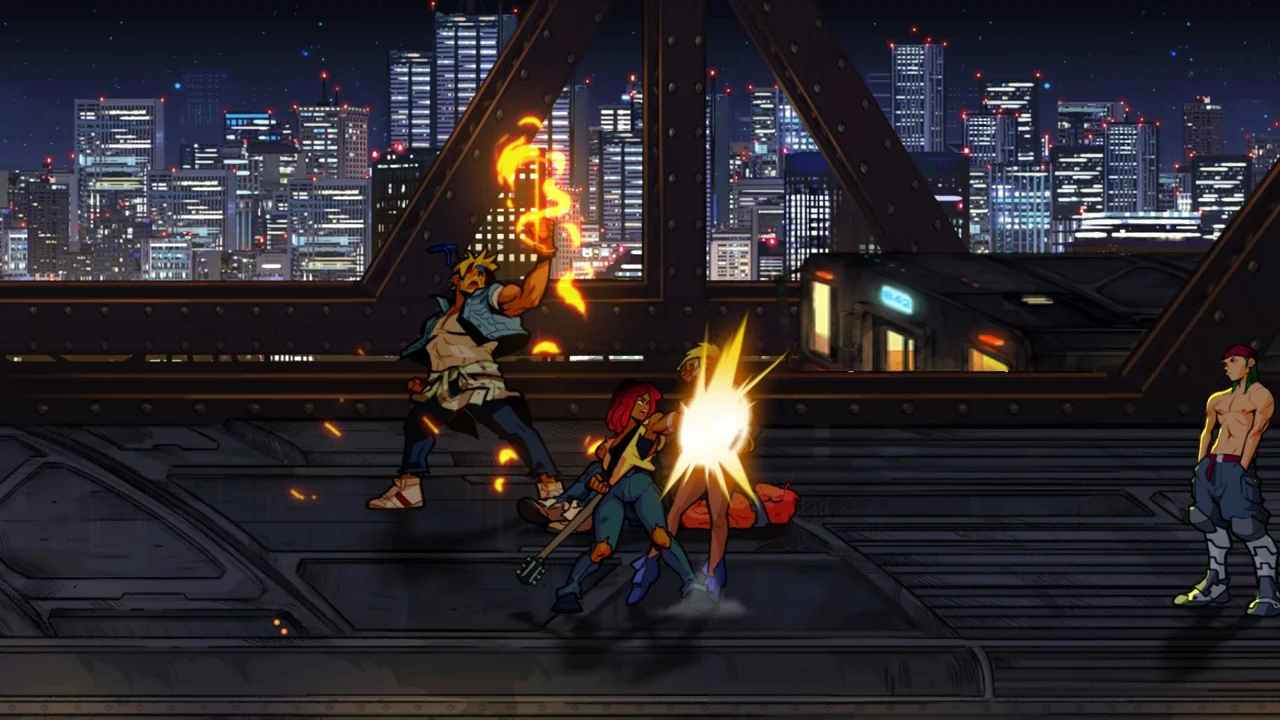
You could still understand it immediately: move into position, deal with the enemy, watch your back. Its new systems gave that old pleasure more places to go. Enemies could be juggled, attacks chained, and decisions rewarded with a longer stretch of controlled mayhem. The artwork changed, but the fight remained recognizable in your hands.
That recognition was earned through choices. The developers discussed pacing, enemy placement, and making different characters move differently. They were studying the small decisions that make a brawler interesting after the initial thrill of landing a punch. Returning to a side-scrolling format gave them a clear view of the action and enough room to build on it.
The Battletoads came back the same year. Dlala Studios, supported by Rare, released its new game on August 20, 2020. The new cartoon presentation was a substantial change, but the range of activities—brawling, platforming, vehicles, and other interruptions—recalled the original series’ refusal to stick to one comfortable routine.

It also let three players join the adventure. People who had first struggled with the toads as children could now bring a different set of friends, or their own children, to another attempt. The series had spent twenty-six years turning failure into a shared memory. Now it could create some new ones.
Alex and Zool returned in 2021 by revisiting where they had started. Jankenteam’s Alex Kidd in Miracle World DX remade the mountain, the vehicles, and the hand games, with new presentation and additional material. The team discussed the project’s beginnings as a fan remake before it became an official release.
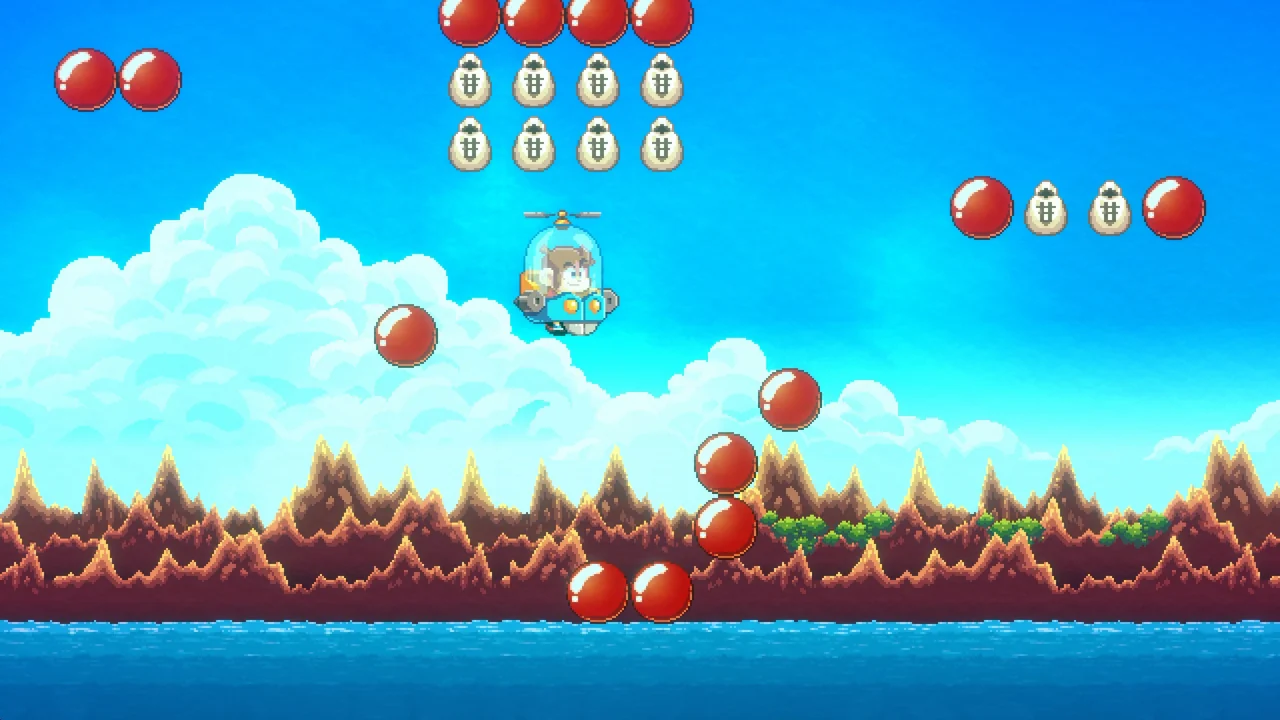
That origin suits Alex. He had stayed with people who remembered turning on a Master System and finding him there. Decades later, people who cared about that experience supplied the energy to rebuild it. The old traps and irritations came with the territory; affection does not make a difficult childhood game suddenly gentle.
Zool Redimensioned had another lovely connection to time passing. It was built by students in the Sumo Digital Academy with help from the original developers. The publisher’s August 2021 announcement described adjusted movement, level flow, checkpoints, and accessibility options. A character created to show what an Amiga could do became a way for a new group to learn how to make games.
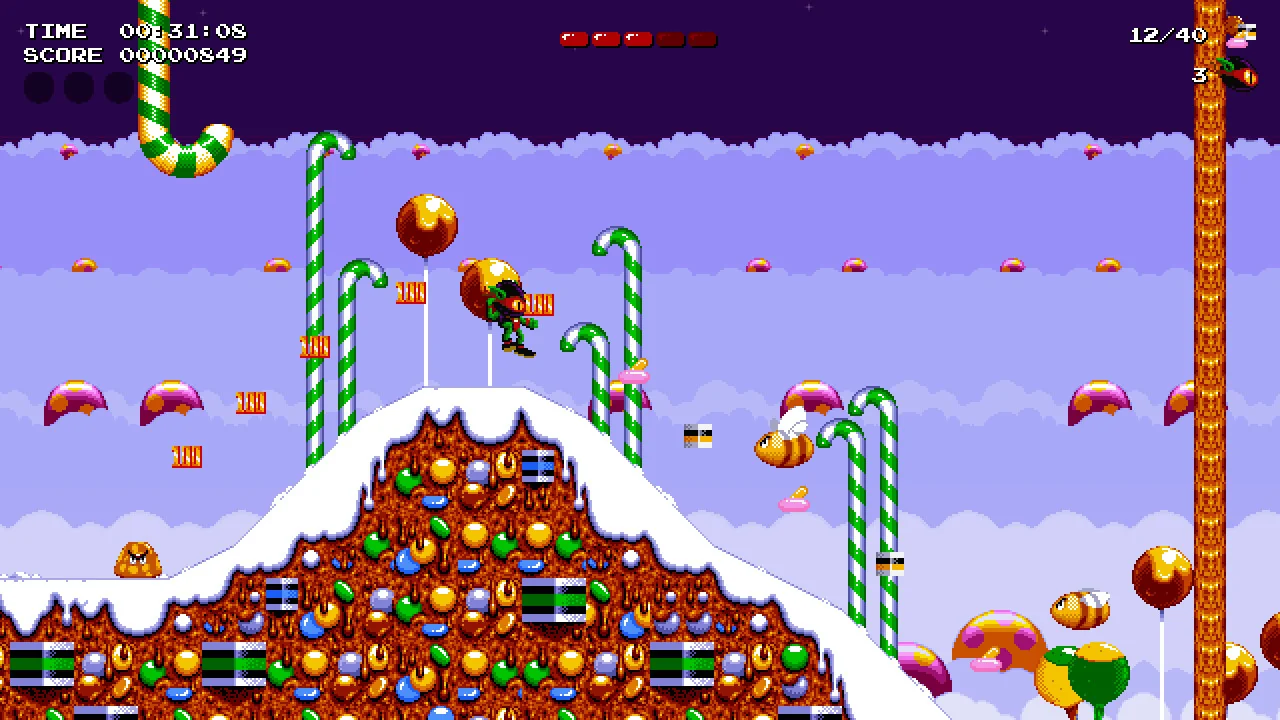
The comeback kept the speed while giving players more opportunities to enjoy it. There was also an original Mega Drive version included for anyone who wanted the older experience. In 2026, a further physical revival project was announced; GamesRadar reported the announcement and a participating ROM hacker’s confirmation. That is a new chapter in preserving and revisiting Zool, rather than a released Zool 3.
These returns did not erase the missing years. They gave them an ending worth reaching. The best part of Streets of Rage 4 is that, after all the pitches and negotiations, you can put another controller in somebody’s hands and start walking down a street.
Where the original runs ended
| Series | Last new game of the original run | What came afterward |
|---|---|---|
| Alex Kidd | Shinobi World (1990) | Cameos and rereleases; Miracle World DX remake in 2021. |
| Splatterhouse | Splatterhouse 3 (1993) | A full 3D revival in 2010. |
| Zool | Zool 2 (1993; later ports followed) | Redimensioned in 2021; further physical-release project announced in 2026. |
| Streets of Rage | Streets of Rage 3 (1994) | Streets of Rage 4 in 2020. |
| Battletoads | Battletoads arcade (1994) | A completed Game Boy project went unreleased; a new game arrived in 2020. |
| Bonk | Super Genjin 2 (1995, Japan) | A 2003 remake and 2006 mobile return; Brink of Extinction cancelled in 2011. |
| Vectorman | Vectorman 2 (1996) | PS2 revival cancelled; surviving builds preserved. |
| Earthworm Jim | Jim 3D and Menace 2 the Galaxy (1999) | Ports, the 2010 HD remake, and an Amico sequel announcement that has not become a released game. |
The games are still waiting
Start with Streets of Rage 2 if you want to feel how much work can sit inside a good punch. Try Vectorman to see an old Genesis showing off. Give Bonk’s Revenge enough time for the movement to click. Find Alex Kidd in Shinobi World if you only know the little hero through his most famous adventure. The last game is sometimes the one that makes the missing next game hurt most.
The long wait felt remarkably similar from the sofa. You had a game you liked. You knew the hero. You wanted another chance to see what the designers could do.
Sometimes the next game finally came. Sometimes the only sequel was another Saturday with the old cartridge, another controller plugged in, and somebody insisting that this time you were definitely getting past the bikes.
More Retro Replay histories
- The complete history of Gex — another ’90s mascot, his leap into 3D, and the long road back.
- The complete history of Aero the Acro-Bat — Sunsoft’s circus hero and the crowded fight for a place beside Sonic.
- The rise and fall of Acclaim Entertainment — the publisher behind several familiar boxes, and what happened when its business unravelled.
- The history of Nintendo’s licensing rules — the restrictions shaping who could put a game on the shelf.
Sources and further reading
The developer interviews, period manuals, player discussions, and revival announcements are linked beside the relevant passages. These longer accounts are particularly good companions to the games:
- Kotaro Hayashida’s 2002 Alex Kidd interview, translated from Sega’s original feature by Shmuplations.
- George Allan’s Gremlin and Zool recollections, Antstream interview reproduced by Old School Gamer.
- Ayano Koshiro on the making of Streets of Rage 2, translated by Shmuplations.
- Paul Machacek’s RVG interview, including the unreleased Game Boy Super Battletoads.
- David Perry’s Sega-16 interview, including the creation of Jim and his objections to Jim 3D.
- The preserved Vectorman PS2 project, with builds and design documents.
- West Mansion’s Splatterhouse revival interviews, a fan archive speaking directly to the people making the return.