 Retro Replay Retro Gaming History, Reviews & Emulation

Retro Replay Review
Gameplay
The first few minutes make a strong case for slowing down. You begin with a boy lying awake in his house, worrying over small things that feel enormous in the dark. Rather than pushing you toward a big inventory puzzle or a conventional adventure-game scavenger hunt, A House in California asks you to click through its spaces and consider what its words might mean in context.
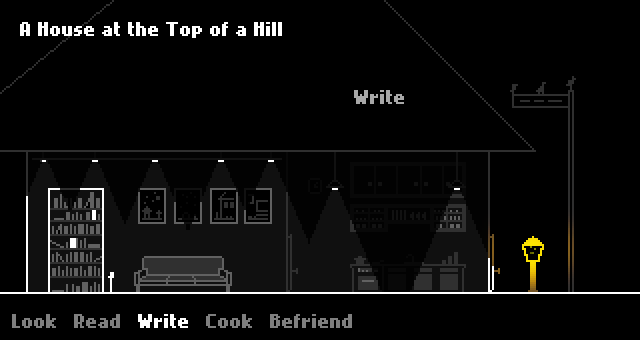
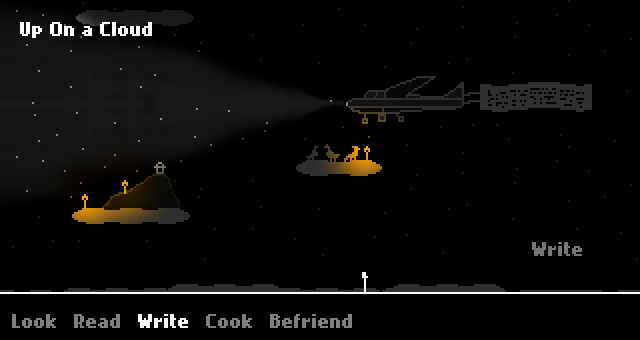
The core interaction is classic point-and-click at heart: select a verb at the bottom of the screen, then use it on objects in the environment. But the verbs are not the expected “pick up” and “examine.” You might be asked to remember, sing, befriend, or cook. That twist is more than a cute rewrite. It changes the mental posture you bring to each puzzle, because you are interpreting emotional or imaginative actions rather than simply testing physical ones.
Its puzzles chiefly serve the narrative, and that is either the charm or the limitation. You are not here for dense mechanical challenge; you are here to unlock another thought, another association, another piece of the house’s strange emotional history. New verbs sometimes arrive after you complete part of a chapter, which keeps the interaction from becoming entirely static. If you need every adventure game to offer elaborate deduction, this will feel slight. If you enjoy puzzles that invite contemplation instead of demanding mastery, it has a distinct pull.

Graphics
The graphics are straightforward and almost entirely monochromatic, matching the game’s quiet, dreamlike mood. The side-view rooms and objects give you clear places to try each verb without burying the game’s wordplay under visual clutter.

Story
The house is the center of everything, but not in the usual haunted-house sense. The boy cannot sleep because of the dark and the lack of noise, and a different family member comforts him in response to each concern. Their answers open separate chapters, each telling its own story about the home.
That structure gives the game its emotional momentum. You are not chasing a single plot revelation so much as listening to several people describe the same place from different angles. The surrealism has room to breathe because the framing is so intimate: one sleepless child, one house, and relatives trying to make the night less frightening.
The writing-led approach will land best if you are willing to meet it halfway. Treat the odd verbs and small puzzles as part of the storytelling language, not obstacles to bulldoze through. The reward is a short adventure that uses its interactive vocabulary to make family memories feel a little less fixed than they first appear.
Overall Experience
A House in California is a compact, unusual adventure for an evening when you want something reflective rather than demanding. Its strongest idea is wonderfully simple: replace the routine language of adventure games with words that carry feeling, then let those words reshape how you look at a room and the people who remember it.
There is a risk of frustration if you come in wanting concrete logic puzzles or brisk forward momentum. The game’s interactions are deliberately tied to contemplation, and its short length means it has little interest in building a large mechanical toolkit. Yet that restraint suits the material. It never needs to become a sprawling epic to make its house feel full of stories.
Give it a chance if surreal, narrative-first adventures appeal to you and you can enjoy a game that treats clicking as a form of reading. It is less interested in testing your adventure-game reflexes than in asking you to sit with an uneasy bedtime thought until it turns into something tender and strange.



Reviews
There are no reviews yet.