 Retro Replay Retro Gaming History, Reviews & Emulation
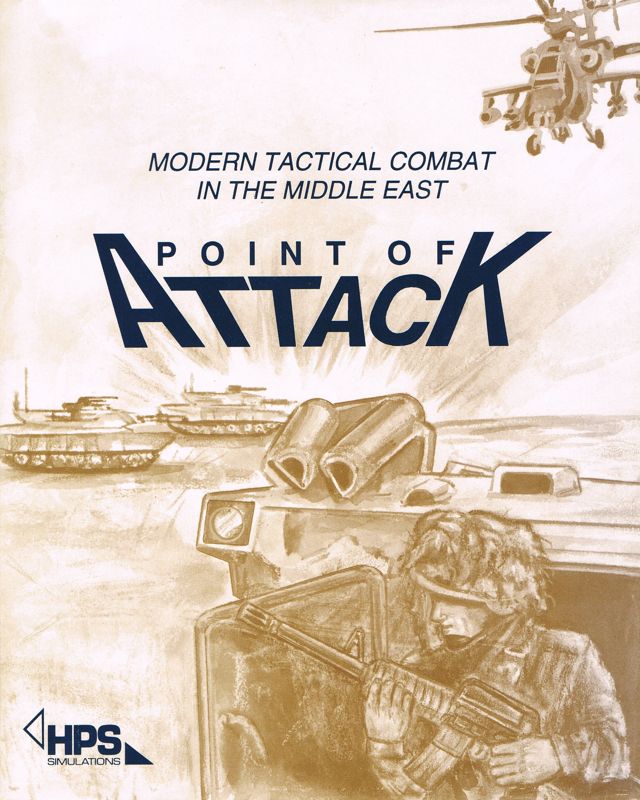
Retro Replay Review
Gameplay
The first hour of Point of Attack is likely to be a test of patience. Its top-down maps use abstract unit symbols, and the basic routine is uncompromising: assign movement and attack orders unit by unit, end the round, and let the results play out. Since each turn represents one minute, battles move at a pace that asks you to think rather than react. That can feel glacial when you want a quick answer, but it gives each commitment weight.
What starts to click is how many pressures sit behind a simple attack order. Morale, supply lines, air superiority, and electronic warfare all matter alongside the placement of your units. The game is interested in whether your tactical plan can survive the conditions around it, not merely whether you picked the right target. A force that looks strong on paper can become a poor choice to push forward if the wider situation is working against it.
That simulation-first attitude is both Point of Attack’s strength and its frustration. You will need to enjoy the process of setting a plan, waiting through resolution, and revising it in small increments. The payoff is a more considered sort of tension than most turn-based strategy games offer: an advance is not just an advance when supply, morale, and control of the air can change its value. The included editor also gives committed tacticians a reason to stay, letting them build new maps rather than being limited to the supplied scenarios.
Graphics
Point of Attack keeps its battlefield view functional and abstract. You command from a top-down map marked with unit symbols, so the important visual task is following where forces are positioned and where your orders will send them. This is a map-table wargame, not a character- or vehicle-focused spectacle.
Story
There is no single dramatic campaign carrying you from mission to mission. Instead, Point of Attack draws its interest from Middle East scenarios based on actual and hypothetical conflicts, including Desert Storm and a possible war between Israel and Syria. The context gives each battle a recognizable military frame without asking you to follow a cast or a plotted narrative.
That scenario-based structure suits the game’s priorities. You are here to weigh battlefield conditions and execute a plan, not to chase a twist between missions. Historical situations offer a grounded hook, while the hypothetical conflicts make room for the kind of “what if” matchup wargames handle especially well.
The trade-off is emotional distance. If you need story scenes, personalities, or a strong narrative arc to pull you through a strategy game, these scenarios will feel clinical. If the story you want is the one that emerges from a risky move, a delayed assault, and the consequences of a plan under pressure, Point of Attack has the right kind of drama.
Overall Experience
Point of Attack is for the gamer who sees a battlefield map and immediately starts asking practical questions. Where can this force move safely? What happens after the first exchange? Can the plan hold if morale drops or supply becomes a problem? It turns those questions into the whole experience, and it does so with unusual commitment.
Its slow one-minute turns and abstract interface create a real barrier. You will not get instant gratification, and a player expecting a conventional strategy-game flow may find the order-resolution cycle dry. The game demands that you meet it on its own terms: methodical, patient, and willing to learn from a plan that did not work.
For dedicated military-simulation fans, that severity is worthwhile. Point of Attack turns the small factors surrounding combat into meaningful decisions and offers scenarios with both historical and speculative interest. It is a narrow recommendation, but a confident one: give it a chance if you want to command carefully and live with the consequences; skip it if you want fast turns, flashy battles, or narrative momentum.


Reviews
There are no reviews yet.