Retro Replay Retro Gaming History, Reviews & Emulation
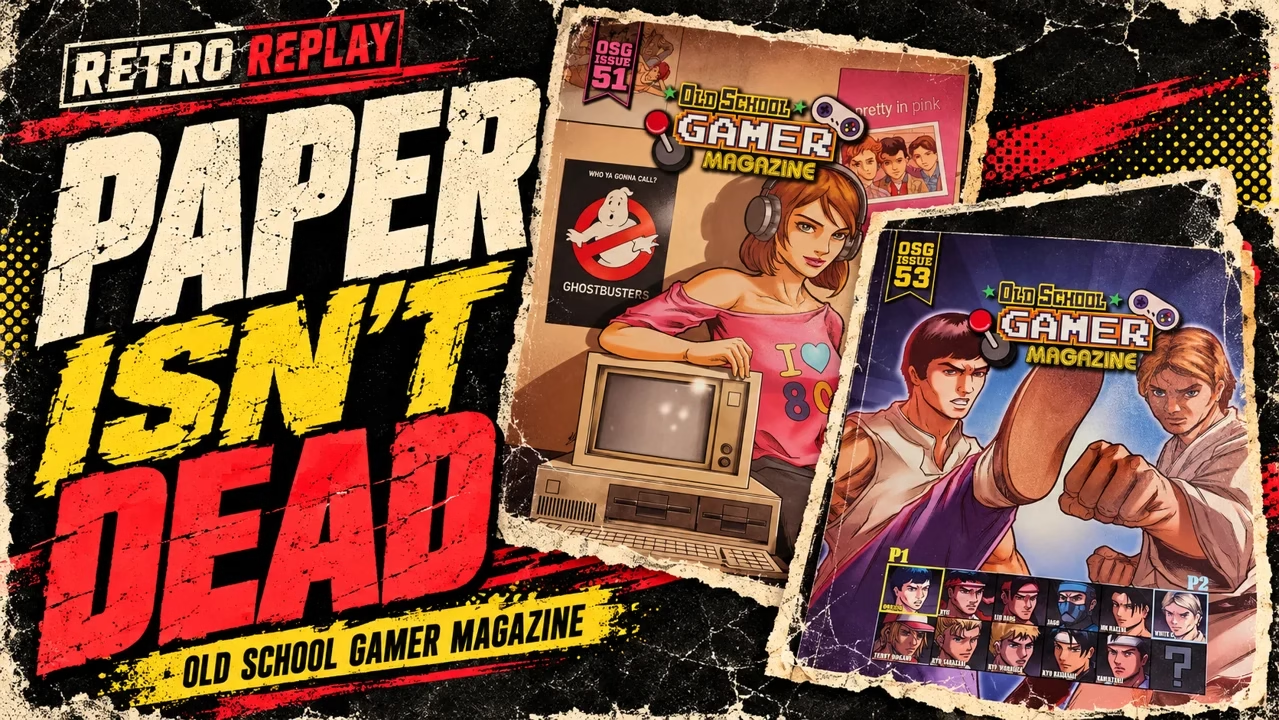
I recently received a gift that left me with one very serious question: how have I been missing this in my life?
The gift was a handful of issues of Old School Gamer Magazine. Actual magazines. Covers you can hold, pages you can turn, and articles that stay put while you read them. I opened one expecting a pleasant little dose of nostalgia. What I found felt like somebody had reopened a door I thought had been shut for good.
When Game Informer closed in 2024, I took it personally in the way readers sometimes do when a familiar publication disappears. Getting those magazines was the reason I kept my GameStop Pro membership. That arrival every month meant something. It was a small, dependable piece of my gaming life, and losing it made paper gaming magazines feel finished for me.
Paper magazines died with me then. Or did they?
There is a happy update to that story: Game Informer returned in 2025, and print subscriptions came back too. But finding Old School Gamer gave me another reason to be excited. Here was a magazine devoted to the games, machines, and memories that keep pulling me back. And it had been doing this for years.
The first surprise is the paper
Before getting into the articles, I have to talk about how these things feel. The pages have a satisfying thickness, and the covers feel strong and durable. To my hands, the stock feels sturdier than any gaming magazine I remember holding. That was my immediate reaction. Pick one up and you notice.
I love that. These feel like magazines I want to keep on a shelf, pull down again, and pass to somebody who needs to see a particular article. The cover has enough presence to make you stop and look. Turning a page feels deliberate. Even before the writing has a chance to win you over, the physical object is making a very persuasive argument for itself.
We spend so much time discussing cartridges, boxes, manuals, and the pleasure of owning something tangible. A good gaming magazine belongs in that conversation. These copies have given me that same little urge to look after them. They feel worth keeping.
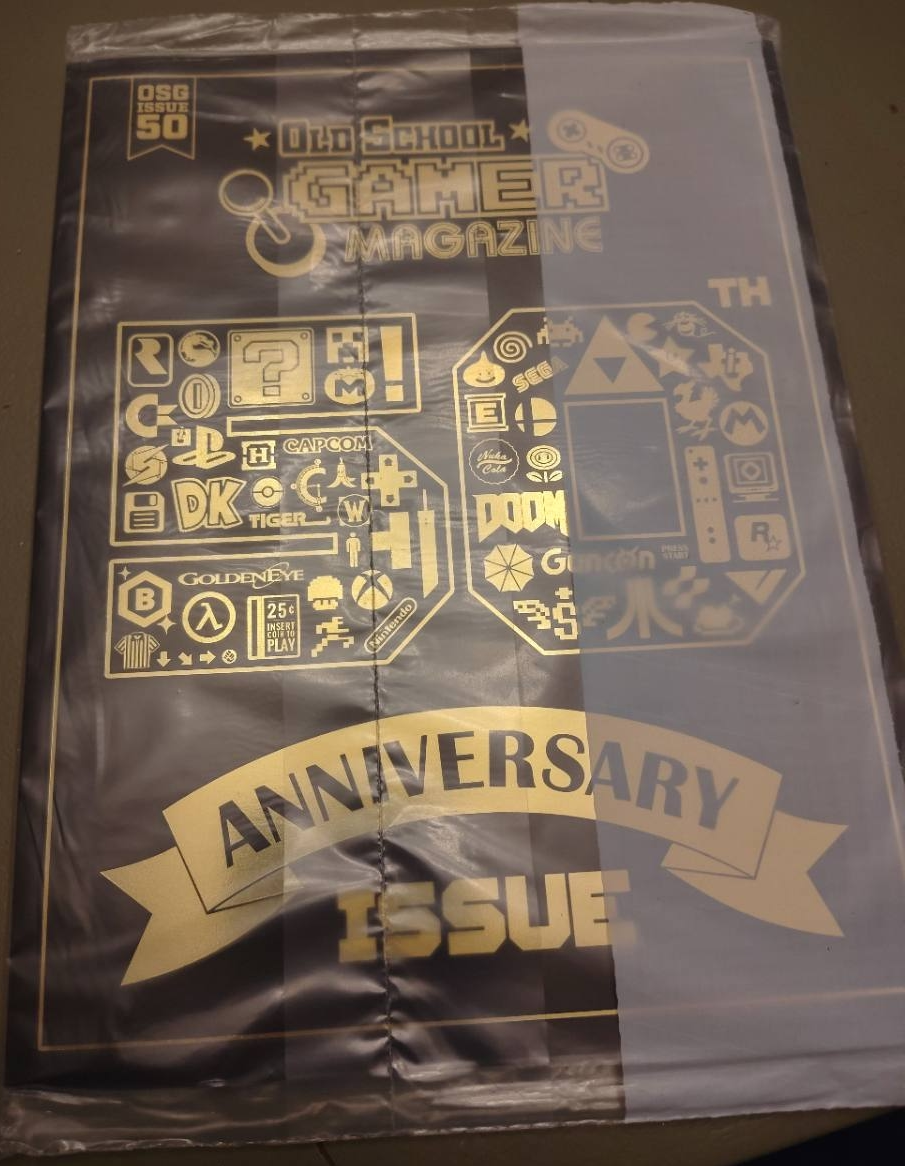
Then there is the 50th anniversary issue I was given, still sealed in its wrapping. Honestly, I am almost afraid to open it. Look at that black-and-gold cover: a huge 50 filled with gaming references, sitting above an anniversary banner. Part of me wants to get straight into the articles. The collector in me wants to keep it exactly as it arrived. Apparently even a magazine can give me the same dilemma as a boxed game.
An EGM and GamePro kind of flashback
Then you open one, and the second surprise hits. This feels like reading EGM or GamePro in the 1990s. Big artwork, busy pages, screenshots, bylines, and subjects that make you lean closer. There is personality all over the place. You can see why I started taking photographs.
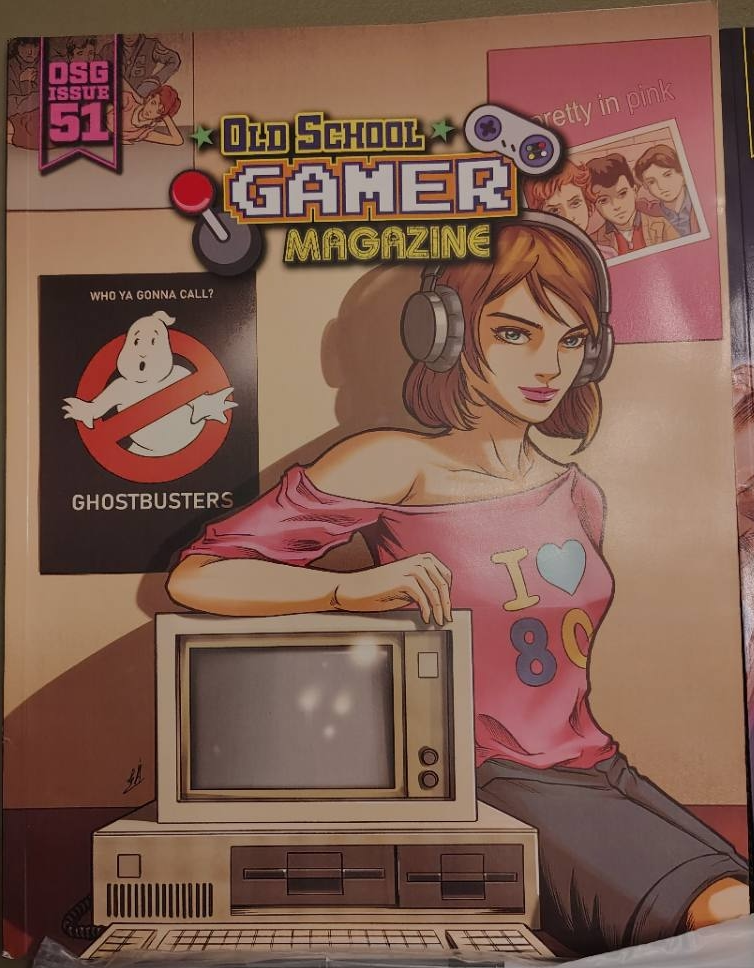
The DOS-themed issue 51 catches that feeling beautifully, with its beige computer, headphones, and bedroom-wall references. You recognize the mood before reading a word. It promises the kind of afternoon where you sit down at an old computer, put everything else aside, and lose track of the time.
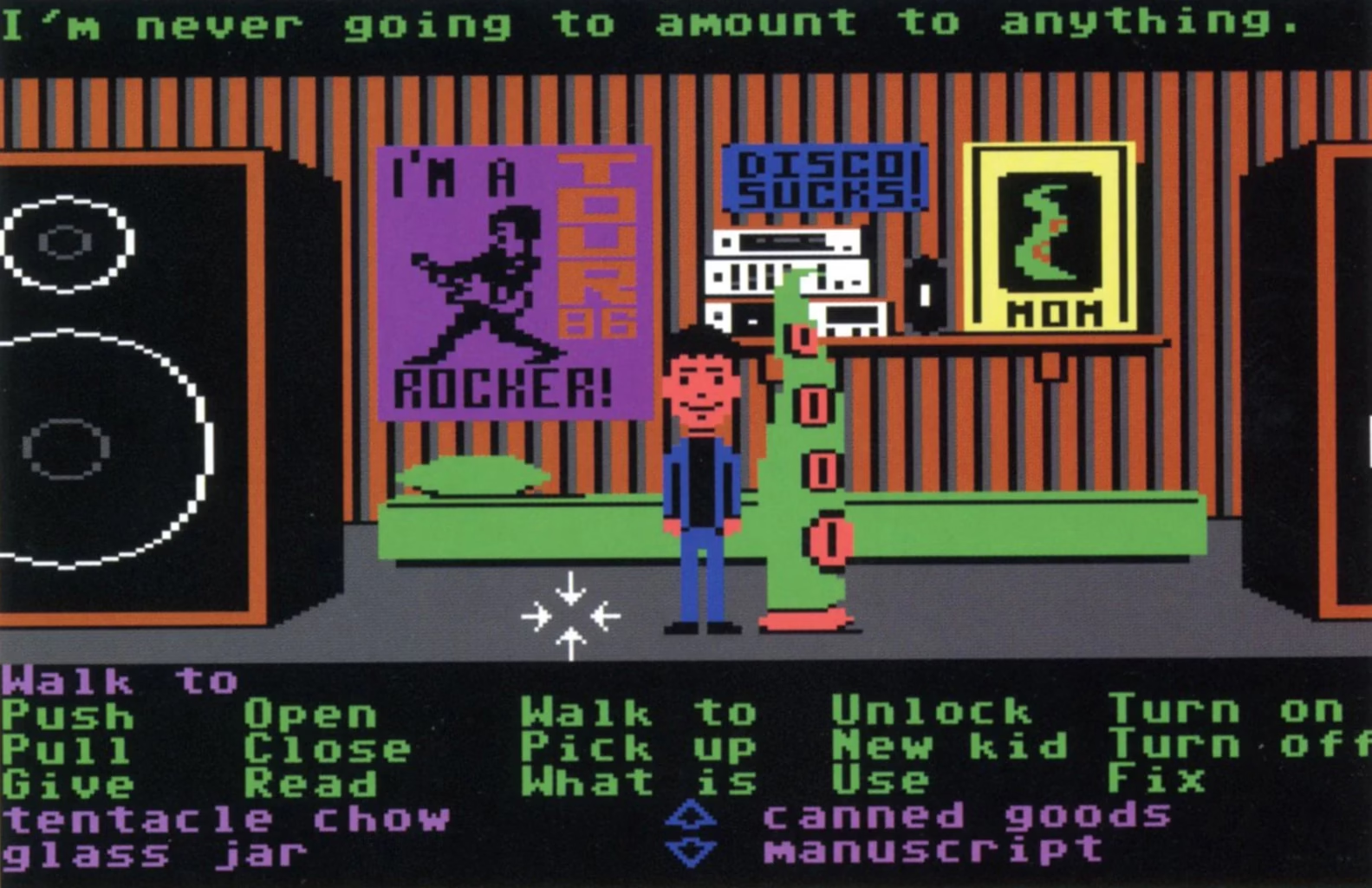
Inside, Matt Owen’s Maniac Mansion feature is the sort of thing that makes me stop turning pages. Its opening puts the game’s history beside a title screen and a photograph of Ron Gilbert. Here is a game whose strange household, oddball teenagers, and dangerous experiments still invite conversation, getting room for the people and decisions behind it.
That variety is part of the fun. I can arrive wanting to read about one game and end up absorbed in something else. A magazine gives those neighboring stories a chance. You turn a page, a heading catches your eye, and suddenly the next twenty minutes belong to a subject you had not planned to think about.
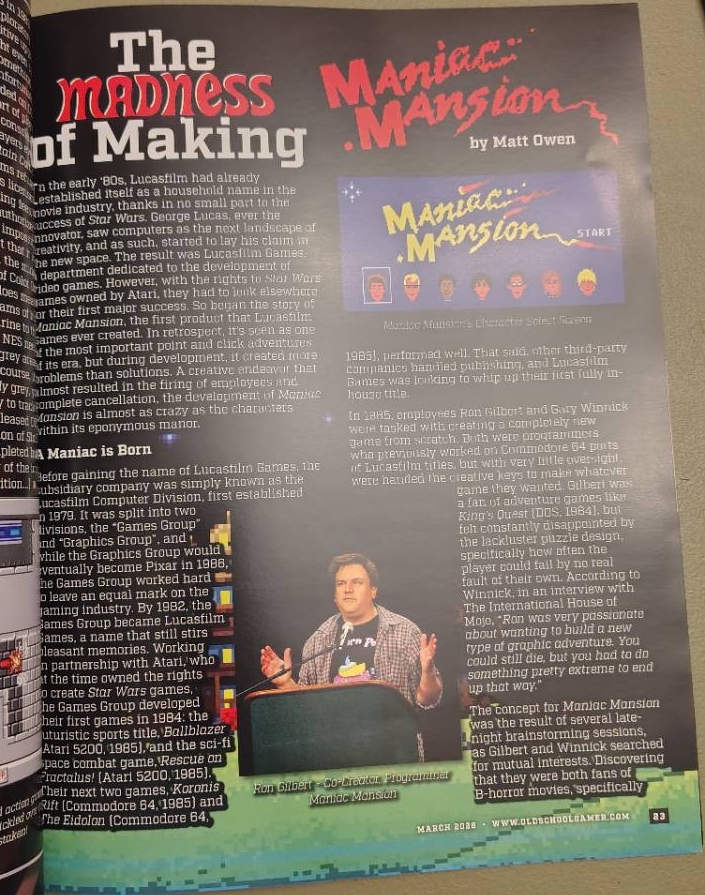
There is a good story to tell there. Gilbert and artist Gary Winnick developed the concept, and the game’s needs helped give rise to SCUMM, the scripting system behind a succession of Lucasfilm adventures. Lucasfilm’s own history traces that connection. Reading about the work behind a familiar screen gives you another reason to revisit it. That is exactly the sort of detour I want a retro magazine to send me on.
Somebody had to decide to make this
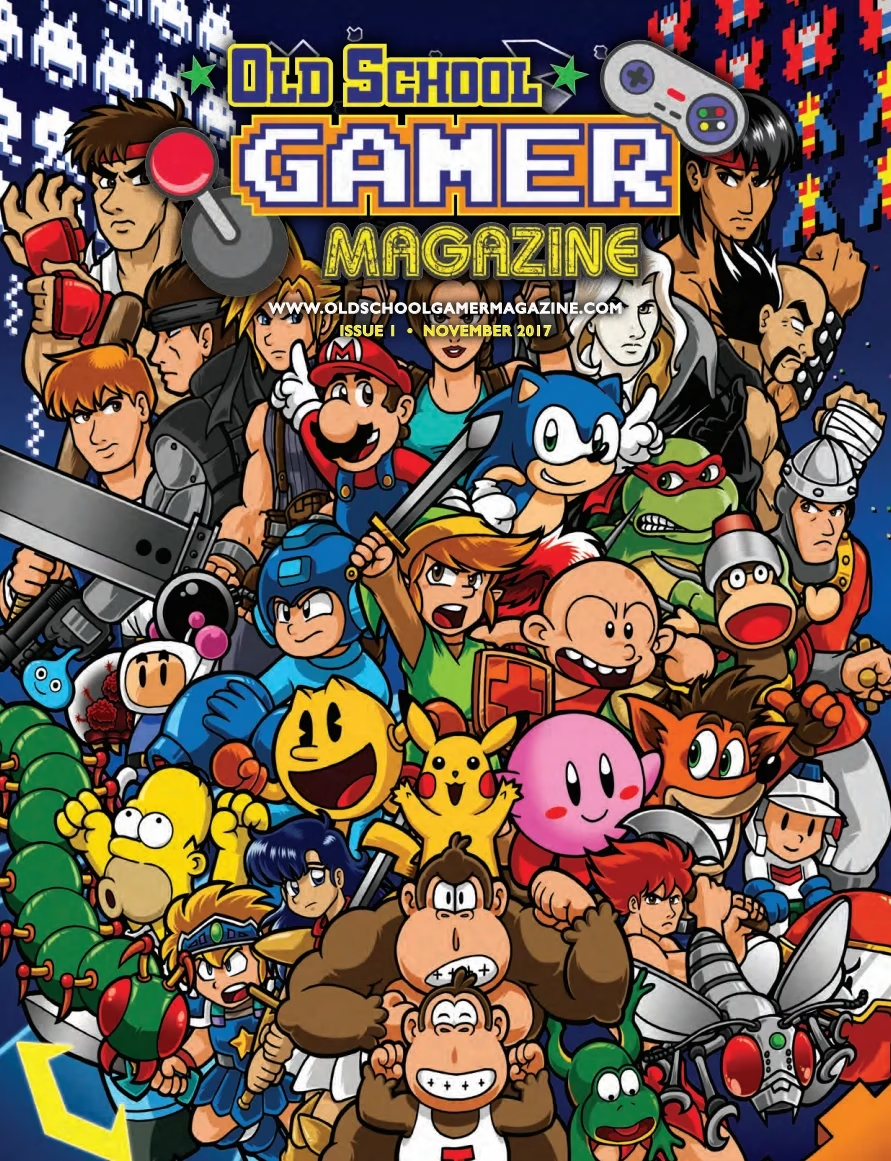
Old School Gamer’s roots go back to 2017. Its first issue carried a November 2017 cover date. Publisher Ryan Burger used that opening issue to explain the community he wanted to serve: people meeting through gaming events, podcasts, videos, and a shared affection for older games. He wanted a lasting magazine to be part of that world.
Burger brought practical publishing experience to the idea. The magazine’s own account of its background describes experience in publications for the mobile disc-jockey industry. It also describes a publisher who grew up playing Intellivision and Genesis and went on to collect arcade machines and consoles. The business knowledge and the hobby were already in the same room.
The early masthead shows how the project gathered people around it. By September 2018’s issue 6, Brian Szarek was listed as editor, Thor Thorvaldson as art director, and Dan Walsh as editorial consultant. The editorial board included Dan Loosen, Doc Mack, Billy Mitchell, and Walter Day. Published by BC Productions in Grimes, Iowa, this was a magazine building connections within the arcade and retro community.
I find that history encouraging. Looking at the copies in front of me, I am seeing years of somebody doing the work: arranging stories, filling pages, getting artwork ready, and sending another issue out into the world. My discovery may be new. The commitment behind it certainly is not.
The people behind the pages
There is real gaming-magazine experience here, too. Bill Donohue, listed as editor in earlier Old School Gamer issues, has a background that goes straight back to the era these pages remind me of. The magazine’s 2022 contributor biography credits him with thirteen years as managing editor across Game Players, UGP, and PSM. That is a lovely connection for anyone who remembers magazines having voices as recognizable as their logos.
The issue 50 announcement names Ryan Burger as publisher, Jarrod Kailef as editor-in-chief, and Tristan Ibarra as lead graphic designer responsible for magazine layout. It also credits contributions from more than twenty-five authors. A magazine with this range depends on a lot of people bringing their particular interests to the table.
Kailef’s connection to old games extends beyond writing about them. In a 2022 interview published by Old School Gamer, he discussed his work with 6502 Workshop on Nox Archaist, an Apple II role-playing game, along with his affection for Ultima and arcade games. That is the sort of background I enjoy finding behind a byline: somebody still making things for the machines we keep talking about.

A hobby with room for more than cartridges
One of my favorite things about these copies is how comfortably different parts of the hobby sit together. The games share space with the people who collect, repair, make, and celebrate them. You can follow an interest beyond the screen and into the wider community, without feeling that you have wandered away from what brought you to the magazine.
That suits the way I enjoy retro gaming now. Sometimes I want to play. Sometimes I want to learn how something was made, or hear from somebody who has spent years caring about it. A good magazine can give those interests room in the same issue. It also lets a writer finish a thought before the next thing arrives.
That is close to what made the old magazines so enjoyable. You had your favorite sections, then a few pages you might skip, then something unexpected that sent you looking for a game. You could read an issue from cover to cover or keep returning to it in little visits. These magazines have brought that rhythm back for me.
And the older I get, the more I appreciate having an article waiting exactly where I left it. No disappearing tab. No reminder that I should be watching six other things. Just a page, a photograph, and a writer who has something to say about a game.
Put this one on your radar
If any of this sounds familiar, visit the Old School Gamer Magazine website. There is ongoing coverage to browse, and the free digital editions offer a way to get a feel for the publication before choosing a subscription.
For the full experience, head to their subscription page and check the available print and digital options for your location. Old School Gamer advertises six print issues a year, arriving every other month, with digital access offered alongside print. Check the current checkout details for pricing and delivery.
For me, the paper is a huge part of the appeal. These were a gift, and opening them turned into one of the nicest gaming discoveries I have had in a while. I love the covers, the substantial feel, the range of stories, and that familiar excitement of finding out what is on the next page.
I thought this part of my gaming life had slipped away. Now I have a stack of magazines in front of me and a very good reason to make room on the shelf.