Retro Replay Retro Gaming History, Reviews & Emulation
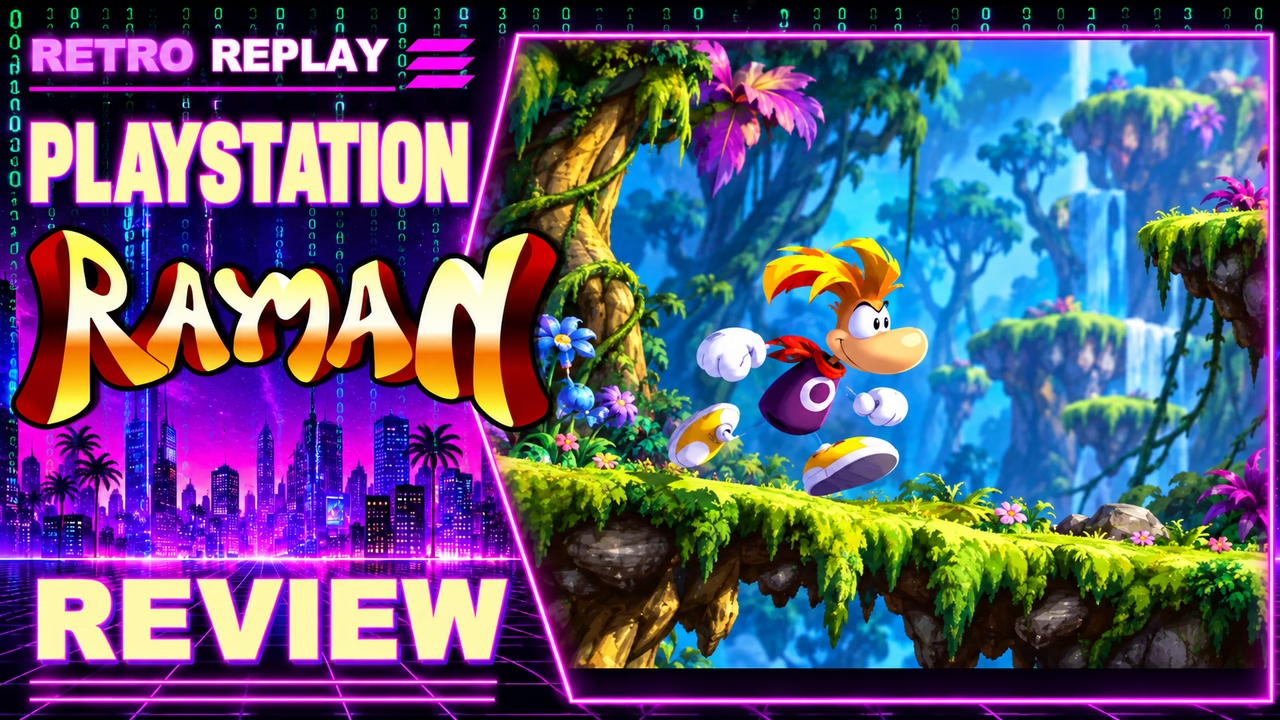
When people remember the original PlayStation, they usually remember polygons. Tekken. Ridge Racer. Resident Evil. Tomb Raider. The entire industry was racing toward 3D, and suddenly traditional 2D games were starting to look like something from the past. And then there was Rayman. Released in 1995, the original Rayman completely ignored the rush toward polygons and instead delivered one of the most beautiful hand-drawn platformers of the entire generation.
Bright colors. Huge characters. Beautiful animation. Strange creatures. Fantastic music. And underneath all that cheerful artwork? One of the most merciless platformers ever disguised as a children's game. Seriously. Rayman looks like something you'd give to a six-year-old. And then about halfway through the game it decides that six-year-old has suffered enough happiness. Developed by Ubisoft and created by Michel Ancel, Rayman introduced players to a bizarre fantasy world where almost everything seems alive.
Rayman himself doesn't even have arms, legs, or a neck. His hands and feet simply float around his body. Nobody explains it. Nobody needs to. That's just Rayman. And against all odds, this strange little character became the face of one of Ubisoft's longest-running franchises. But before Rabbids, 3D adventures, and decades of sequels, there was this. The original Rayman. So let's break it down.
Graphics — 9.5/10
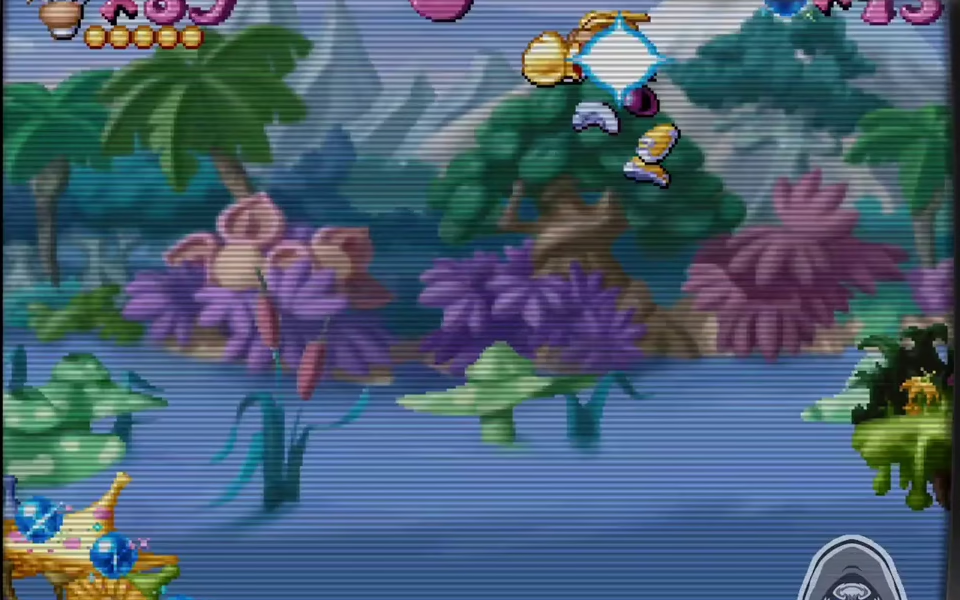
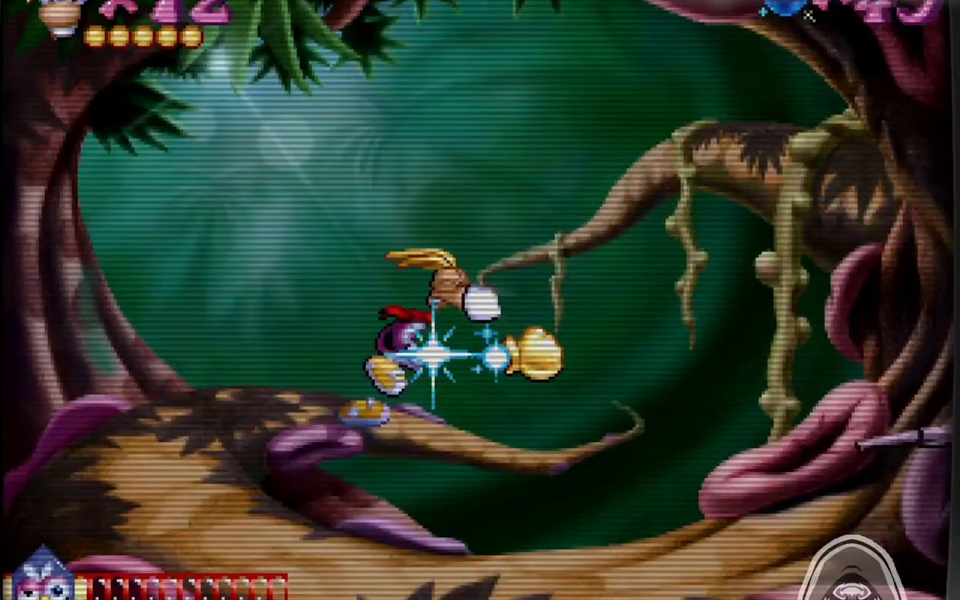
Rayman is gorgeous. There's really no other way to say it. More than thirty years later, this is still one of the best-looking 2D games of its generation. At a time when developers were obsessed with demonstrating what polygons could do, Rayman showed just how far traditional sprite artwork could still be pushed. Everything looks hand-crafted. Rayman's animation is incredibly smooth. He runs. Slides. Hangs from ledges.
Throws his fist. Spins his hair like a helicopter. And reacts to the world around him with more personality than many early 3D characters managed with ten times the hardware. The enemies are equally expressive. Even basic creatures bounce, stretch, grimace, and react to being attacked. But the environments are where the artists really went wild. The game begins in Dream Forest, which is exactly as colorful and inviting as you'd expect.
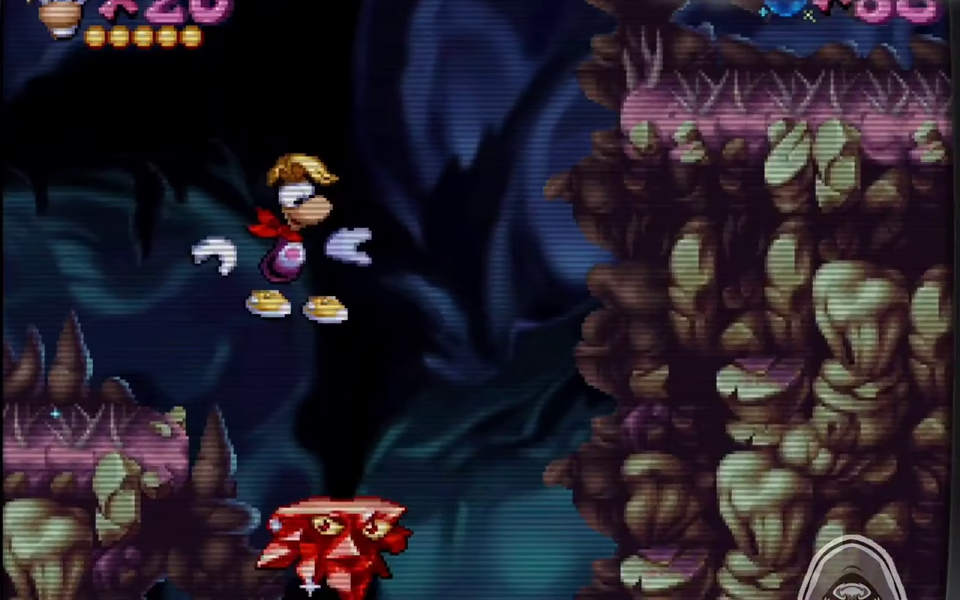
Then you reach Band Land. And suddenly you're platforming across drums, musical notes, trumpets, and giant instruments. Picture City looks like someone spilled an entire artist's supply cabinet across the screen. Pencils become platforms. Erasers become obstacles. Art supplies become pieces of the environment. Then you have Blue Mountains, Cave of Skops, and eventually Candy Chateau. Every world has its own visual identity. And some of these backgrounds are genuinely beautiful.
The artwork isn't just technically impressive. It's imaginative. That's the difference. Rayman doesn't look great because the PlayStation is throwing thousands of polygons around. It looks great because the artists had an incredible visual style and committed completely to it. There are layers of scenery moving behind you. Huge foreground objects. Animated environmental elements. Rich colors. And some fantastic little details that give each location personality.
There are moments where Rayman almost looks like an animated television show. And because it didn't chase early 3D graphics, it has aged incredibly well. Early polygonal games can look rough today. Rayman still looks like Rayman.
Sound — 9/10
Rayman's soundtrack deserves almost as much praise as its graphics. The music is whimsical, strange, atmospheric, and occasionally surprisingly beautiful. And the PlayStation's CD audio gives the soundtrack plenty of room to breathe. This isn't just nonstop upbeat cartoon music. Different areas have completely different moods. Some tracks are playful. Some are peaceful. Some become strange and slightly unsettling. And once the difficulty starts increasing, the music sometimes creates this bizarre contrast where you're listening to something beautiful while Rayman is being murdered for the twentieth consecutive time.
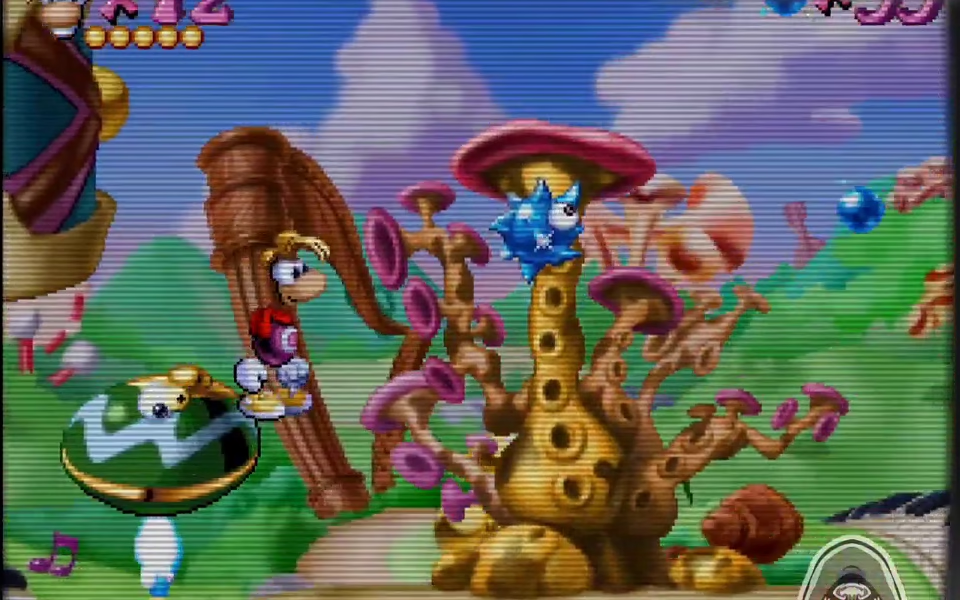
Band Land obviously leans heavily into the game's musical theme, and the sound design throughout that entire world is fantastic. Musical instruments aren't simply decorations. They're built directly into the level. Drums bounce you through the air. Notes become platforms. Music becomes part of the environment itself. The sound effects also have a ton of personality. Rayman's attacks have a satisfying impact. Collecting Tings gives you that recognizable little audio cue.
Enemies make strange noises. Environmental objects squeak, bounce, crash, and pop. And the entire soundscape matches the surreal visual design. There's also something unusually relaxing about portions of the soundtrack. You can almost forget you're playing a game specifically designed to destroy your emotional stability. Almost.
Gameplay — 8.5/10
At first, Rayman feels like a fairly traditional platformer. You run. You jump. You collect items. You avoid hazards. But instead of beginning with every ability available, Rayman's moveset gradually expands throughout the adventure. Betilla the Fairy grants Rayman new abilities as you progress. Eventually, Rayman can throw his fist as an attack. He can grab onto certain surfaces. He gains his famous helicopter ability, allowing his hair to spin and slow his descent.
And additional abilities gradually open parts of the game that were previously inaccessible. This creates a nice sense of progression. Early stages are relatively straightforward. Then the designers slowly begin expecting you to combine abilities. Jump. Hang. Swing. Punch something. Use your helicopter hair. Land on an extremely small platform. Then do it again while something is trying to kill you. When Rayman's controls are working with you, the game feels excellent.
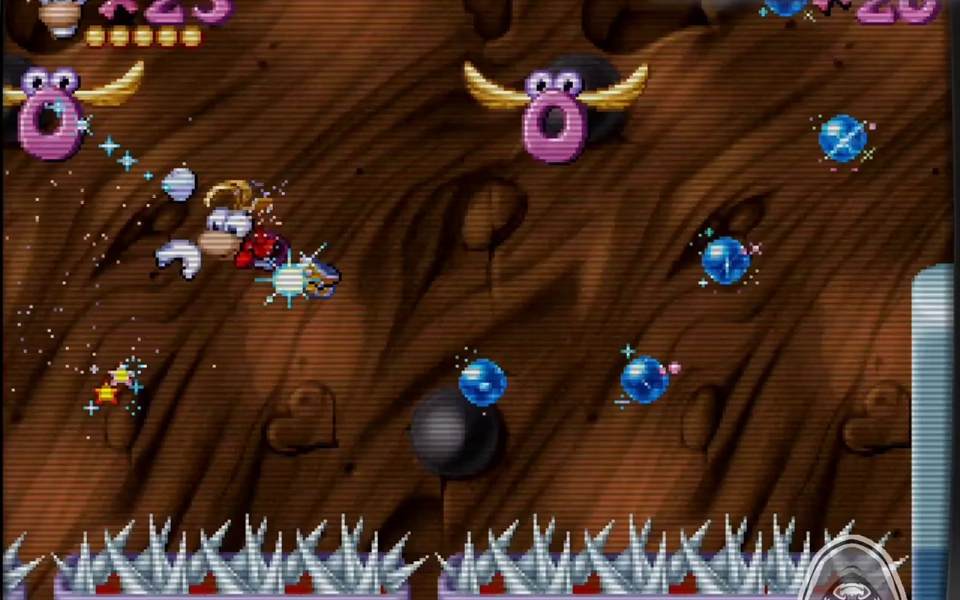
Movement is smooth. Jumping is responsive. Rayman's abilities are fun to use. And the level designers come up with some genuinely clever ideas. But now we have to talk about the difficulty. Because Rayman is hard. Really hard. And not always in a good way. The opening stages almost trick you. Everything is colorful. The music is happy. The enemies aren't particularly threatening. You start thinking this is going to be a relaxed little platforming adventure.
It isn't. Later stages demand extremely precise jumps. Platforms become smaller. Hazards become more aggressive. Enemies are positioned specifically to knock you into pits. And the game starts introducing sequences where failing once means replaying a significant portion of the level. There are also moments where obstacles appear so quickly that learning through trial and error becomes almost unavoidable. You die. Now you know it's there.
Try again. Die slightly farther ahead. Now you know that's there too. Try again. By the later portions of Rayman, the game stops asking whether you're good at platformers and starts asking whether you're stubborn. And then there's the Electoon requirement. Throughout the game, Rayman must break cages containing captured Electoons. At first, these feel like optional collectibles. They're not. If you want to reach the final confrontation with Mr. Dark, you eventually have to rescue every single group of Electoons hidden throughout the game.
That means going back into earlier stages and finding cages you missed. Some are easy to locate. Others require abilities you didn't have when you originally visited that stage. And others are hidden well enough that you're going to spend a lot of time searching. I actually like the idea of giving collectibles a meaningful purpose. But requiring complete collection before allowing the player to finish the game is harsh.
Especially in a game that's already extremely difficult. There are also limited lives and continues to worry about, which makes the original experience even less forgiving. So gameplay is complicated. Mechanically? Rayman is excellent. The controls are good. The powers are creative. The level design is imaginative. But the difficulty balance becomes unnecessarily punishing. This is a great platformer that occasionally feels like it doesn't want you to finish it.
Story / Presentation — 8.5/10
The story is simple. The Great Protoon maintains peace and harmony throughout Rayman's world. Then the evil Mr. Dark steals it. Without the Great Protoon, the Electoons that once orbited around it scatter throughout the world and are captured. Naturally, it's up to Rayman to save them and stop Mr. Dark. That's about as complicated as the story gets. But like Crazy Taxi, Rayman doesn't need some enormous narrative.
Its personality comes from its world. And Rayman's world has personality everywhere. There's Betilla the Fairy, who appears throughout the adventure to grant Rayman new abilities. There's the Magician. There's Tarayzan. There's Joe the Extra-Terrestrial. Then there are bizarre bosses like Moskito, Mr. Sax, Mr. Stone, Space Mama, and Skops. Even the names sound like something from a strange Saturday morning cartoon. The bosses in particular are memorable because every one feels connected to the world surrounding it.
Mr. Sax belongs in Band Land. Space Mama fits into Picture City. Mr. Stone belongs in the mountains. They aren't generic bosses dropped into random locations. Everything feels like part of the same bizarre universe. Mr. Dark is also effective despite not receiving some enormous complicated backstory. He's mysterious. He's threatening. You see his influence throughout the game long before finally confronting him. The presentation benefits enormously from how expressive Rayman himself is.
He doesn't need pages of dialogue. A lot of his personality comes entirely through animation. He celebrates. He looks confused. He reacts to danger. He makes ridiculous faces. The developers managed to give a character with no arms or legs more personality than many protagonists with fully animated cutscenes. The story itself is nothing extraordinary. But the world-building and presentation absolutely are.
Replay Value — 8/10
Rayman is an interesting game when it comes to replay value because your first playthrough already encourages revisiting earlier levels. Those Electoon cages aren't all accessible immediately. As Rayman learns new abilities, earlier stages suddenly contain places you can now reach. That creates a little bit of a Metroid-style feeling where you remember seeing something before but couldn't figure out how to get there. Later, you realize you simply didn't have the required ability yet.
The problem is that this exploration eventually stops feeling optional. Because rescuing all of the Electoons is required to finish the game, you're going to replay stages whether you planned to or not. For completionists, that's probably going to be satisfying. For everybody else, it can become frustrating. Once you've actually beaten Rayman, there's still some reason to return. The stages are visually fantastic. There are secrets worth rediscovering.
And mastering difficult sections can become extremely satisfying once you've learned how everything works. But this isn't a game I would casually replay from beginning to end every month. Rayman demands commitment. Some later stages are exhausting. And knowing what's waiting for you can make starting another full playthrough a slightly intimidating proposition. Still, the sheer quality and variety of the levels give the game decent long-term value.
Final Verdict — 8.5/10
The original Rayman is one of the strangest success stories of the 32-bit generation. It launched during an era when 3D graphics were supposed to represent the future. And instead of chasing that future, Ubisoft created an incredibly polished 2D platformer. That decision is exactly why the game still looks so good today. The artwork is beautiful. The animation is fantastic. The music is memorable.
The worlds are creative. Rayman himself became an iconic character. And when the game is firing on all cylinders, this is one of the best traditional platformers on the original PlayStation. But there's no getting around its biggest problem. Rayman is brutally difficult. And sometimes that difficulty crosses the line from challenging into frustrating. The game frequently demands precision while giving you very little room for error.
Later stages rely heavily on memorization. And requiring every Electoon cage before you're allowed to reach the final battle makes an already demanding game even more punishing. But here's the strange part. I still love it. Because Rayman has something a lot of games don't. Identity. You can show me a screenshot from this game for half a second and I know exactly what I'm looking at.
You can play a few seconds of the soundtrack and immediately bring back memories. Even the bizarre floating hands and feet somehow became instantly recognizable. Rayman isn't perfect. But it is special. And more than thirty years later, the things it did well still hold up remarkably well. For Retro Replay: The original Rayman is beautiful, charming, creative, memorable… and occasionally completely infuriating. But if you can survive what it throws at you, this remains one of the PlayStation's greatest 2D platformers.
For Retro Replay, this is Rayman. Just don't let the colorful graphics fool you. This game wants you dead.
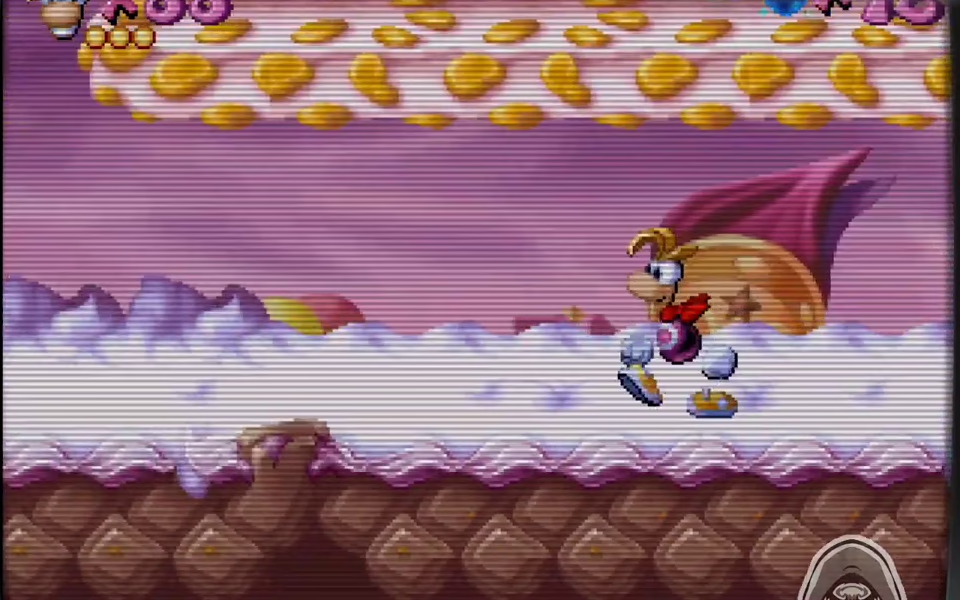
Gameplay footage credit: Retro Replay. Played by dmb062082. Watch our original Rayman gameplay video.
Rayman — Retro Replay Review
Graphics - 95%
Sound - 90%
Gameplay - 85%
Story / Presentation - 85%
Replay Value - 80%
85%
Retro Replay Verdict
Beautiful, charming, creative and brutally difficult: Rayman remains one of the PlayStation’s standout 2D platformers.