Retro Replay Retro Gaming History, Reviews & Emulation
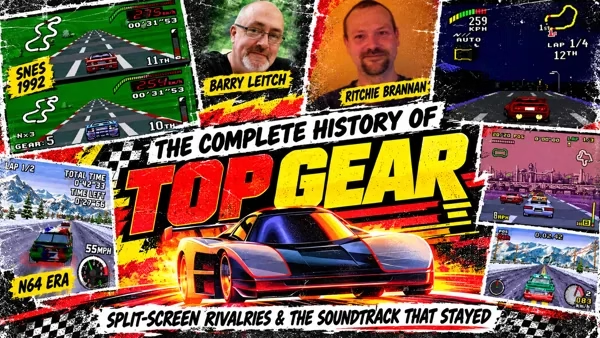
The worst sound in Top Gear was not a crash. A crash could be recovered from. The real disaster was watching your car slow down while the other half of the screen kept moving. You had squeezed one more lap out of the fuel tank, missed the pit lane, and handed your friend a story they were going to tell for the rest of the afternoon.
The music, rather unfairly, still sounded magnificent.
That was Top Gear in miniature: a glamorous world tour that could fall apart over an ordinary driving decision. It arrived on the Super Nintendo in 1992 with four cars, a divided screen, and enough open road to make a small television feel like an escape. There were no famous drivers to impersonate. Your rival was often somebody sitting close enough to notice when you leaned into a corner.
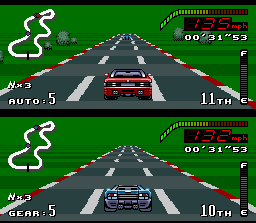
For some players, that original cartridge is the whole story. For others, Top Gear means muddy Nintendo 64 courses, a surprisingly ambitious Game Boy Advance racer, or the soundtrack they rediscovered long after their console disappeared. The name traveled through sequels, different studios, motorcycles, city streets and space. Eventually, the racing spirit came home through Horizon Chase, with the original composer back at the controls.
Before any of that, a British developer and a Japanese publisher needed a racing game. Nobody involved could have known that one of its longest journeys would take place inside players’ heads.
Before the cartridge: Lotus and the road to Sheffield
On home computers, Lotus Esprit Turbo Challenge had already offered a persuasive argument for staying indoors. Released in 1990, it put a desirable sports car at the bottom of the screen and sent the road rushing toward it. Two people could race together. That second view was a tremendous selling point when multiplayer usually meant sharing a room, sharing a machine, and occasionally sharing an argument.
The Lotus games were developed by Magnetic Fields and published by Gremlin Graphics. Top Gear would be a Gremlin development for Kemco. They were close relatives, with overlapping influences and music, but calling the SNES game a simple Lotus conversion loses the work that went into it.

Kemco wanted a racer that could travel beyond the computer market. In Retro Gamer’s making-of feature, Gremlin’s co-founder recalled the publisher’s interest in Lotus without the Lotus branding. The two-player attraction could survive without a licensed badge on the bonnet. Gremlin would make a new game for Nintendo’s machine.
Ritchie Brannan, a programmer at Gremlin, had wanted to build a racing game. He helped turn that opportunity into a road that rose, dipped and bent convincingly enough to keep two players watching their own lanes. The console was unfamiliar territory, but it gave him tools he recognized from earlier machines. Getting those tools to cooperate at speed was the difficult part.

Brannan’s 2016 interview with Memória BIT supplies a less glamorous view of production. He remembered roughly three to five months of development, people sleeping at their desks, and an office stained by his cigarette smoke. His memories came with the distance of more than twenty years, but the picture is unmistakable: this little holiday on wheels was made under pressure.
Asked about the game’s influences, Brannan named Pitstop, Pole Position, Out Run and Lotus. Rad Racer, despite a persistent fan comparison, was not on his list.
Top Gear’s job was to make that journey fast, understandable and worth repeating. The player did not need to know which hardware trick was moving the scenery. They needed to see the next bend before it was too late.
Four cars and one terrible fuel decision
Choosing a car was the first disagreement. The red one looked like the obvious answer: surely the fastest car was the best car. Then a longer race introduced the fuel bill.
The four choices balanced speed, handling, acceleration and fuel consumption. You could favor raw pace or pick something more forgiving, then discover whether that preference survived a race full of traffic. The car selection was small enough to understand without a spreadsheet. It was also large enough to give friends a reason to insist that their favorite was the correct choice.

The championship took in 32 courses across eight groups of destinations. A brief circuit introduction gave the next stretch of road a place and a shape. Rio, Tokyo, Paris and the other stops were postcards seen at a decidedly unreasonable speed. The scenery was broad theatrical shorthand, but that was part of the appeal. You could go around the world without leaving the carpet.

Then came the decisions that could ruin it. Nitro gave you a short burst of extra speed. Spend it with open road ahead and the car surged beautifully. Spend it into trouble and you had paid for a faster arrival at the accident. Automatic gears let newcomers concentrate on steering; manual shifting gave a more involved driver something else to manage.
Refueling was especially good at making confidence look foolish. Longer races required a stop. You had to slow down, enter the pit area, and watch the tank refill while your position became increasingly uncomfortable. The original instruction booklet explains the warning and the stop plainly. Actually obeying it while a rival was pulling away required considerably more discipline.

That pause gave the game its own kind of drama. A player who had been behind could suddenly become the player worth watching. Somebody with a faster car could lose the advantage through a worse stop. You did not need realistic tire temperatures to understand the consequences. The cars were moving; yours was not.
The split screen also stayed in solo play, with the other view following a computer-controlled rival. It gave a lone driver a visible opponent and made the game look ready for company even when nobody else was there. Once a second player joined, the screen became a running account of two different disasters.
Top Gear could be demanding. Traffic crowded your line, lost speed was expensive, and a qualifying position could slip away quickly. But the controls and the presentation made the invitation clear. Choose a car. Get moving. Try to stay ahead. That directness would outlast several attempts to make the series more sophisticated.
Barry Leitch had another driving game to finish
Barry Leitch, the Scottish composer who had already worked on the Lotus games, did not approach Top Gear as a future monument to his career. He had a soundtrack to deliver. The schedule was tight, and some of the music he needed already existed.
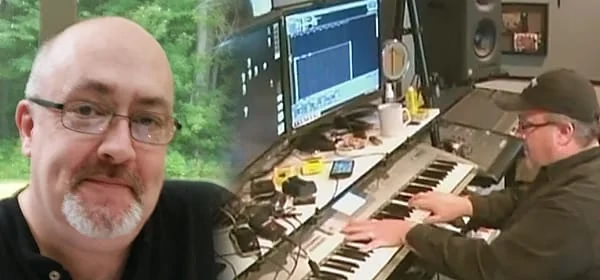
In an interview published by Game Developer, Leitch described adapting Lotus material rather than starting everything again. The SNES gave him extra musical channels and an echo effect to explore, although the echo consumed precious memory. He remembered being able to afford a delay of exactly one sixteenth note.
“There simply wasnt enough time to write new music”
— Barry Leitch, recalling Top Gear’s production in the 2015 Aquiris interview.
It is a wonderfully unromantic origin for music that became so personal to its listeners. A deadline encouraged reuse; the new machine let him reshape it. Nobody had to choose between a familiar melody and a fresh sound.
The soundtrack gave the little cars a grandeur their drivers had not necessarily earned. Its melodies ran ahead with the road. The percussion kept everything moving. Even a scruffy race could sound like an important occasion, right up until you drove into the scenery.
There was another contributor behind that sound. Kemco’s Hiroyuki Masuno created the music and effects engine, according to the development interviews. Leitch wrote the music; the playback software helped it reach the television. A memorable game soundtrack depends on both halves working together.
Top Gear 2: the world tour gets a repair bill
Top Gear 2 arrived on the SNES in 1993 and expanded to Genesis, Amiga and CD32 releases in 1994. Gremlin had a familiar idea worth developing. The sequel gave players a longer championship and a car they could improve between races.

The change was easy to feel. A victory now helped pay for what came next. Better parts promised better chances; poor performances made the next purchase harder to reach. Instead of selecting one of four personalities and living with it, you developed a car over the course of the trip.
Damage made careless driving more expensive. The SNES manual gives the damage meter its own place on the dashboard, alongside the familiar race information. Hitting things became a problem you carried with you. Weather added another reason to pay attention, and the 64-track championship had ample room to test whether your improvements were keeping up.
There is satisfaction in that kind of progression. A machine that felt ordinary at the beginning can gradually become yours. There is also a cost: the original’s instant invitation now has a little more administration attached. Some players love the extra journey. Others would rather choose the red car and get back to arguing.

The music changed hands too. Patrick Phelan, a composer at Gremlin, supplied the SNES sequel’s music and sound effects. His score belongs to the same energetic racing world without simply being another Barry Leitch soundtrack. The version-specific credits make that clear.

Different versions complicate the memory further. A Genesis player and a CD32 player could remember the same championship through different sound and presentation. The title on the box stayed familiar while the experience changed with the machine. For players, the machine they owned helped decide which version of Top Gear 2 stayed in their memory.

The sequel’s computer releases also made a neat return trip. A series with roots in the home-computer racing scene had established itself on the SNES, then brought its new shape back to computers. Lotus had helped point the way to Top Gear; now Top Gear was occupying some of the same desks.
1995: Gremlin takes the exit for outer space
By Top Gear 3000, recognizable cities were apparently not far enough away. The 1995 SNES sequel sent the championship onto alien planets. The driver still had a road, traffic and a car to worry about. The destination had become considerably less useful for buying a souvenir.

The future setting allowed upgrades and equipment to get stranger. Jumping over opponents and using a magnetic weapon belonged here in a way they would not have belonged on the original world tour. The instruction booklet presents a racing championship with a whole extra layer of futuristic machinery.
Four-player support was an equally meaningful addition. With the appropriate multitap, the rivalry could spread across a quartet of views. Space travel was the premise, but putting more people in front of the television may have been the more practical advance.
The cartridge carried a DSP-4 coprocessor, used to assist the game’s road calculations. That little piece of extra hardware is one reason Top Gear 3000 occupies a special corner of SNES technical history. Its roads still looked like a development of the familiar racing style, but the cartridge was helping the console carry them. Modern emulator projects continue to document DSP-4 support alongside other cartridge hardware.
Neil Biggin, another Gremlin composer, provided the music and sound effects. His Pixelated Audio interview is a useful doorway into that wider period of Gremlin’s audio work. The series’ musical identity had now passed through multiple people, each writing for a different chapter.

Top Gear 3000 was the last of the original Gremlin trilogy. It could be wonderfully odd: a familiar rear view of a car, a wildly unfamiliar skyline, and a championship that treated interplanetary racing as the next sensible career move. Yet the old games’ clearest attraction remained intact. Another player could still ruin your evening from the other side of the sofa.
Outside that sofa, racing games were changing. Roads were becoming solid environments. Players could expect scenery they drove through rather than scenery that streamed past. The next Top Gear would have to find its footing in that world.
Top Gear Rally: the car finally has some weight
A slippery corner is a different proposition when the car feels capable of sliding out from under you. Top Gear Rally, released for Nintendo 64 in 1997, made that change central to the experience. Boss Game Studios took over development, and the old world tour became a series of roads that asked the driver to respect the surface.
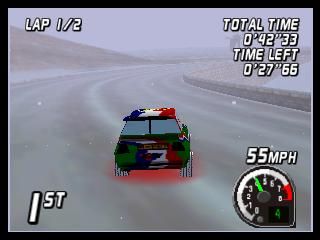
This was a substantial turn for the name. The car had suspension, the road existed in three dimensions, and rain or snow could change how confidently you approached it. There was pleasure in getting the vehicle settled through a bend. There was frustration when the same vehicle refused to obey the casual steering that had served you in a simpler racer.
The paint editor supplied a less dangerous form of self-expression. A racing game could now give you a car to decorate as well as a car to drive badly. It was a small but memorable piece of ownership in a genre increasingly interested in making vehicles feel personal.
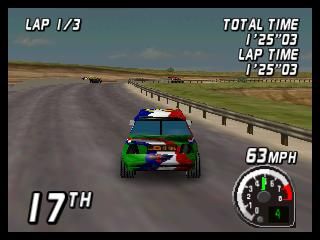
The change did not please everyone equally. GameSpot’s archived review admired the scenery and the driving technology while finding the realism frustrating. That tension follows the game today. For one player, the movement gives the machine substance; for another, it gets between them and the race they wanted.
Barry Leitch returned for this chapter, now working with Boss. His music had room to be calmer and more atmospheric than the original SNES rush. The soundtrack suited a different kind of drive: more space around the road, more time spent holding the car through it.
In his Infendo interview, Leitch explained that Rally used an XM playback routine, software for playing melodies built from sampled instruments. Leitch had brought that approach to Nintendo’s new console.
The return of the composer did not make Rally a reunion of the whole original team. Kemco’s name linked the games; the studios and the approach had changed. As the series grew, buying a new Top Gear became less like ordering the next chapter of one developer’s story and more like finding out who had taken the wheel this time.
Overdrive finds the loud pedal
Top Gear Overdrive did not spend 1998 worrying about subtlety. Snowblind Studios made a racer built around speed, shortcuts and the satisfaction of finding a route somebody else had missed. The soundtrack brought in the band Grindstone. If Rally wanted the car to feel planted, Overdrive wanted the next race to feel like a dare.
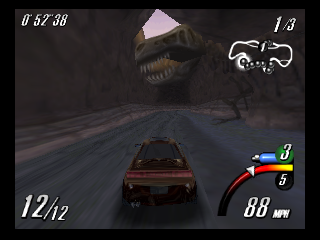
A shortcut could lead into scenery that no sensible race organizer would have approved. Secret vehicles reinforced the joke. Discovering what the game was hiding became part of the reason to repeat a course, rather than simply shaving a fraction off a clean lap.
Multiplayer remained an important attraction. But enthusiasm could outrun the handling. GameSpot’s review praised the speed and the multiplayer appeal while criticizing the controls. A spectacular sense of momentum is thrilling until you are trying to persuade that momentum to go around a corner.
Rally and Overdrive make an interesting pair. One made the ground more consequential. The other made getting across it more outrageous. They shared a publisher’s racing badge, but they were trying to produce different reactions from the player. The SNES games’ simple identity was becoming a much broader collection of possibilities.
More parts, more mud—and two fewer wheels
Top Gear Rally 2 followed in 1999, developed by Saffire. License tests and an upgrade system gave the championship more structure. The car’s condition mattered, and the roads could move between different surfaces during a run. The series was again finding ways to make a driving mistake follow you beyond the moment of impact.
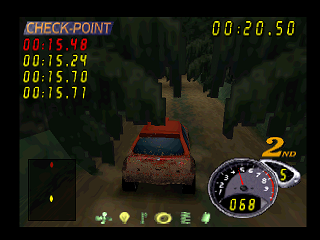
The contemporary GameSpot review saw a clear Gran Turismo influence in the progression and purchasing systems. That observation captures the changing expectations around racers. A new car, a new part and a new qualification could be attractions in their own right. Reaching the next race increasingly involved more than reaching the previous finish line.
Then Top Gear Hyper-Bike arrived in 2000. Snowblind returned, this time with motorcycles. Road racing, off-road courses and a track editor stretched the family resemblance further. The manual even retains nitro boosts: Kemco’s badge could change vehicles without entirely giving up its appetite for excess.
The motorcycle detour was not automatically a betrayal of the original. Top Gear had already been into space. But it shows how far the name had traveled. By the end of its Nintendo 64 run, it covered rally handling, noisy arcade shortcuts, a more involved progression system and two-wheel racing. A fan looking for the exact feeling of the 1992 game could no longer assume the next cartridge would provide it.
A world tour small enough for a pocket
While the television games chased polygons, Top Gear Pocket put the racing view on Game Boy Color in 1999. Its cartridge included a rumble feature. A little shaking was a bold way to ask a handheld player to believe in the machine on the screen.
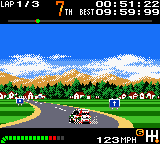
Portable racing had a particular challenge: make the road readable before the player ran out of time to react. Pocket used a behind-the-car view with colorful scenery, but a small screen could expose the compromises quickly. GameSpot’s review found it disappointing beside V-Rally. A familiar name and a vibrating cartridge could not settle the competition on their own.
Top Gear Pocket 2 followed around the turn of the millennium, refining the portable approach. Its European name, Top Gear Rally 2, creates a particularly unhelpful coincidence with the N64 sequel. These are separate games. The family has several Rally titles; a shared title does not mean a shared game squeezed onto smaller hardware.
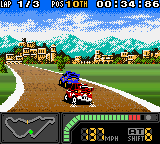
That distinction becomes more important with the Game Boy Advance. Top Gear GT Championship arrived in 2001 with circuit racing, car setup and its own approach to the new handheld. Its Japanese Mobile Adapter GB features are an interesting period experiment, rather than a service a modern player should expect to connect to.

The portable games deserve more than a footnote because they had to solve the series’ oldest problem again: how much road, rivalry and speed can you fit inside a modest machine? In 2003, another developer found an answer impressive enough to help change its own fortunes.
The little racing demo that helped save a studio
Tom Crago took charge of the Australian developer Tantalus in 2001 and found a company in serious trouble. Years later, in a retrospective for Game Developer, he described unpaid tax obligations, little incoming work, and a business that was insolvent. Then he saw a Game Boy Advance racing demo.

His account makes the contrast startling. The books looked grim. The programmers had made something that excited him enough to go looking for a deal in Japan. That demo became the 2003 Game Boy Advance Top Gear Rally. Crago credited its success with establishing Tantalus as a handheld developer and helping secure more work.
A racing game’s commercial story rarely fits into the view behind the car. Here, the next stretch of road represented more than another championship. A team needed an opportunity to keep making games.
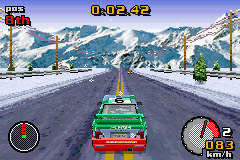
Tantalus’s CRIS technology gave Rally a surprisingly substantial three-dimensional presentation on the GBA. The car and the road had a presence that stood out on the little screen. The 2003 GameSpot review examined that technical achievement; Nintendo World Report found a worthwhile racer behind it.
It was an original handheld production, not a compact copy of Boss’s N64 game. Nintendo published it in North America, an endorsement that gave this branch a different kind of visibility. The Top Gear name had become diffuse, but it could still turn up on a game with an identity worth recognizing.
City streets and a badge looking for a home
The PlayStation 2 had offered another possible future. In 2000, Top Gear: Dare Devil sent drivers through cities on timed collecting runs. Developed by Papaya Studio, it moved away from the championship-road formula and toward urban arcade driving.
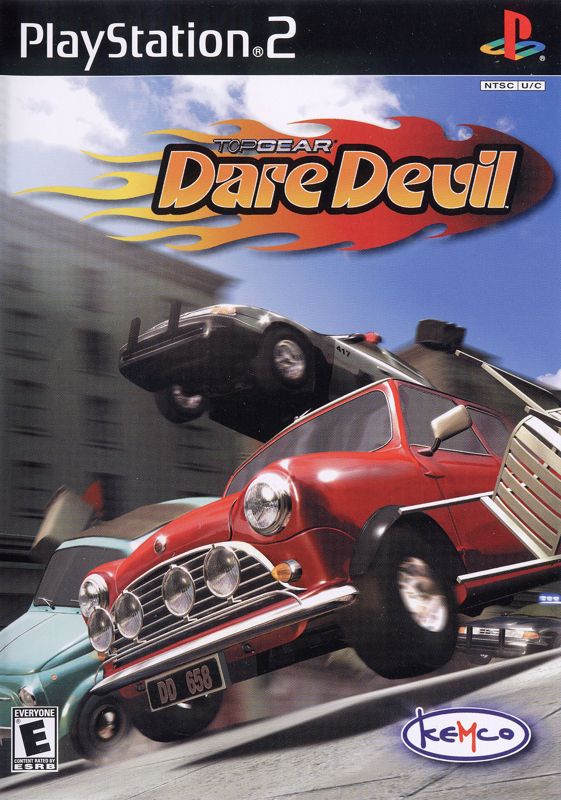
The timing invited a difficult comparison with Crazy Taxi. That game had already shown how a city could become a frantic playground. Dare Devil’s cars, challenges and presentation had to make their own case. GameSpot’s December 2000 review was blunt about its disappointment. Having more streets to explore did not automatically make driving through them more enjoyable.
By the middle of the decade, RPM Tuning put the brand into a different street-racing world. Babylon Software’s game appeared under different regional names, including Top Gear RPM Tuning and the PC title Midnight Outlaw: Six Hours to Sun Up. A 2004 hands-on report placed the coming North American release among a crowded field of tuning games.
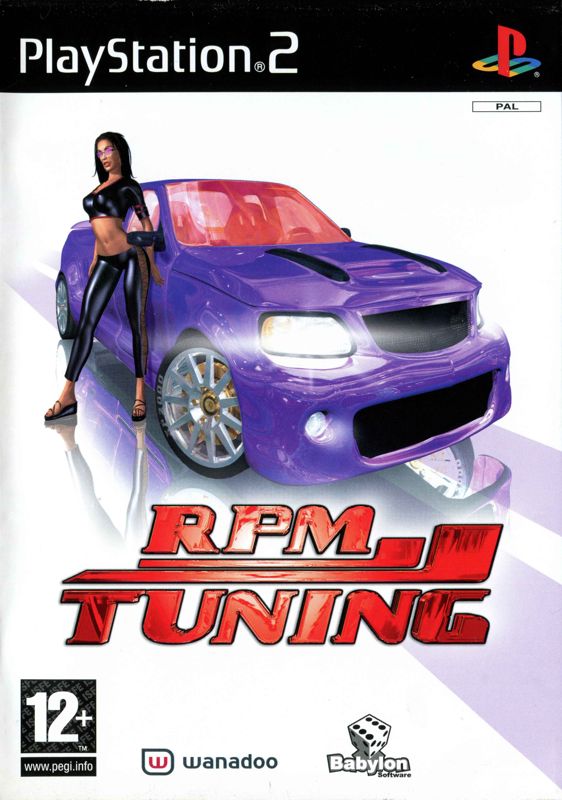
The change in fashion was visible immediately. Cars had become projects: customize them, improve them, and race them through the night. The original game’s four straightforward choices belonged to a different moment. RPM Tuning could carry the familiar badge, but that badge was now a much weaker guide to what a buyer would find.
There was even a later DS project announced as Top Gear: Downforce. The released game was Super Speed Machines, a top-down racer. It is an odd final turn in the extended family tree: another game connected to the name that reached players without it.
The name gradually faded from new releases. Different developers kept finding different uses for the brand, while the original cartridge kept its own audience. The new releases moved with the market. Many of the old fans stayed on that earlier road.
Meanwhile, Brazil kept the engine running
Back in Brannan’s Memória BIT interview, the programmer observed that Brazilian players were the people who most often remembered Top Gear when they contacted him. Leitch described the Brazilian affection for his music in his own interview too. Neither recollection gives us a precise sales total. Both tell us that a game’s cultural life can surprise the people who made it.
Rental shops and shared play helped make a two-player racer a social memory. The game asked very little before starting the next rivalry, and its music accompanied all of it: the good laps, the bad stops, and the race someone demanded immediately afterward.
A commenter named Helinux, writing below the Memória BIT interview in 2020, remembered playing at rental shops and alternating Mortal Kombat fights with Top Gear races among friends. That is one player’s recollection, but it places the cartridge somewhere more specific than a list of best SNES games. It was part of an afternoon.
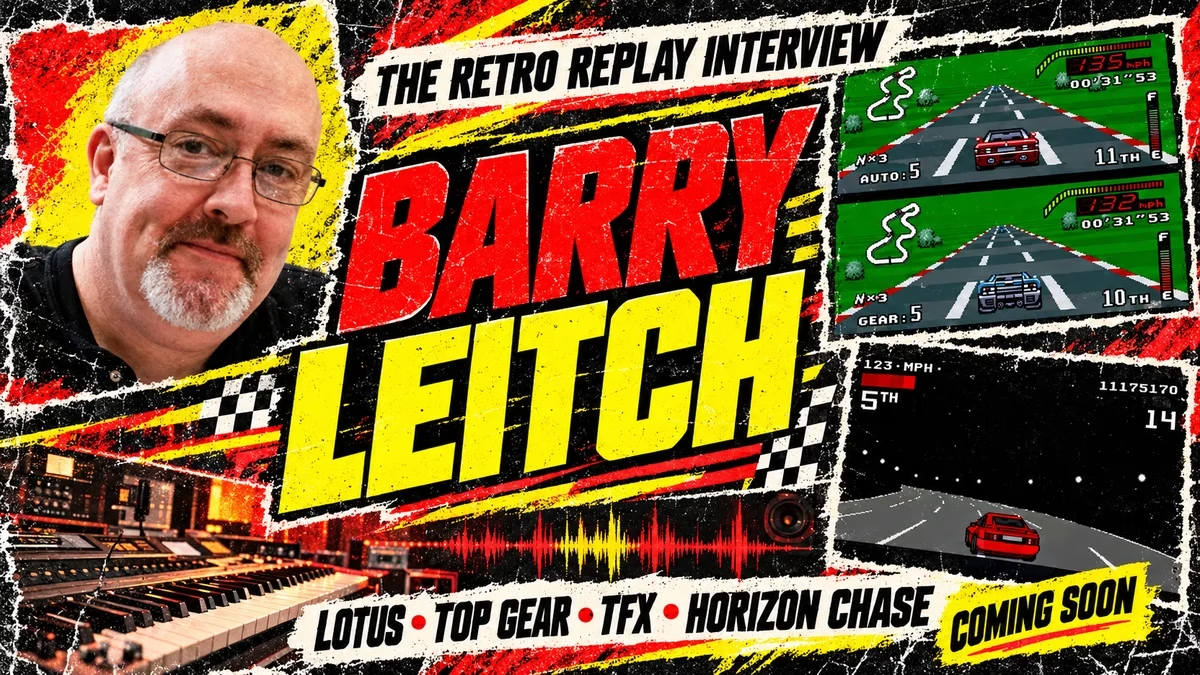
Those afternoons eventually reached Barry in a way he could never have expected while finishing the soundtrack at Gremlin. The tunes escaped the television through covers, remixes and concerts. Years later, he would sit at the edge of a stage in Brazil and hear an audience ask an orchestra for Top Gear.
Horizon Chase brings Barry back
The Brazilian studio Aquiris wanted to recover that sort of racing pleasure. Its Horizon Chase arrived in 2015 with bright landscapes, a view behind the car, and a clear affection for the arcade racers that had come before. Rather than merely imitate a familiar soundtrack, the studio asked Barry Leitch to write the music.
That invitation connected the new game directly to the older one. In a 2015 interview, Leitch described a team that loved Top Gear’s soundtrack and wanted its feeling carried into something contemporary. The old music was an influence, but the assignment still called for a new score.
Horizon Chase understood the pleasure of making the horizon look inviting. Its scenery was stylized and colorful, its cars immediately readable, and its races arranged to keep the player moving. Picking up fuel on the course gave the older anxiety a different shape. You still had to think beyond the accelerator, but the game kept drawing your attention down the road.
Horizon Chase Turbo followed in 2018, bringing that approach to a fuller console and PC package with local multiplayer. Leitch later said it was the project he was probably most proud of in an RVG interview. Horizon Chase 2 followed in 2022 on Apple Arcade before expanding to other platforms.
These games are spiritual successors, not Kemco sequels. Their connection is creative and personal: a studio’s affection for older racers, a composer returning to a familiar kind of drive, and players recognizing an invitation they had accepted years earlier.
The modern chapter also carries a less cheerful reminder about access. In March 2026, the series announced that the original mobile Horizon Chase and Horizon Chase Turbo would be removed from digital sale on June 1, with existing owners retaining downloads. PC Gamer reported the announcement. A game built around affection for the past can still need preservation in the present.
The original road opens again
The SNES trilogy received a more direct return in March 2024 through Top Racer Collection. QUByte’s collection brought back Top Racer, Top Racer 2 and Top Racer 3000, along with Top Racer Crossroads, a variation built around the original with additional cars inspired by other racers and Brazilian car culture.
The collection added features such as online play, rankings and saving. It is a return to the original 16-bit branch rather than a package of every later Top Gear release. The changed name also restores branding the original already used in Japan. It does not make these games a television tie-in.
That is a fitting pair of later lives. Horizon Chase carried the appeal forward in new games. Top Racer Collection made the older ones available together. A player could follow the influence or return to the source.
The race people actually remember
Top Gear’s history contains plenty of movement: across countries, across planets, across hardware and across developers. Some of those trips produced excellent racing. Others attached a familiar name to a much less convincing game. The moment a player remembers rarely needs all of that history attached.
Two cars climbing a hill. A friend using the last nitro boost. A fuel warning you really should have respected.
And then there is the music. Leitch had a deadline, Brannan had a road to make work, and players had no reason to think about either of them while trying to reach fifth place. Decades later, those players are still asking about the people behind the cartridge.
That is a pretty good finish for a game that began as another driving job.
Keep reading on Retro Replay
- The complete history of Road Rash — another racing series whose rivalries and music outlived the original hardware.
- The rise and fall of Acclaim Entertainment — the business behind some of the era’s most recognizable boxes.
- The complete history of Sega Channel — a different route into the games people remember sharing.
Interviews, manuals and further reading
The developer and composer interviews linked throughout this story supply its production memories. Dates, version credits and gameplay details were checked against manuals, period reviews and game records; player recollections are identified as personal memories.
- Retro Gamer 229: the making of Gremlin’s Top Gear games.
- Memória BIT’s Ritchie Brannan interview.
- Aquiris / Game Developer’s Barry Leitch interview, part one and part two.
- Pixelated Audio’s Neil Biggin interview.
- Tom Crago on twenty years of Tantalus.
- Original SNES manuals: Top Gear, Top Gear 2 and Top Gear 3000.
- Top Racer Collection’s official release page.