 Retro Replay Retro Gaming History, Reviews & Emulation
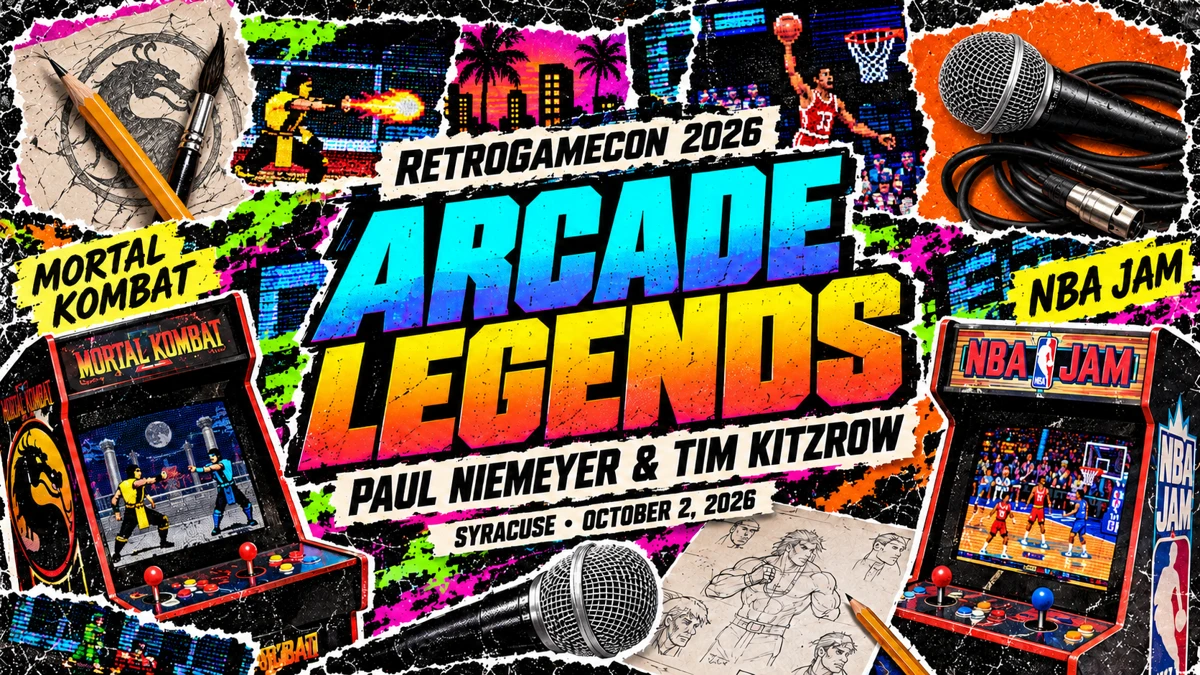
I was visiting RetroGameCon in Syracuse on October 2 when I stopped by the Arcade Legends panel with Paul Niemeyer and Tim Kitzrow. An artist associated with Mortal Kombat’s original arcade artwork and the voice of NBA Jam, sitting down to talk about the old days? That sounded like a good place to spend part of the afternoon. I wanted to share this cool story with you guys, so the full panel recording is included below.
The 4 p.m. conversation at The Oncenter was moderated by John Riggs. In just under 45 minutes, it moved from Chicago recording booths to arcade art departments, from the origins of “Boomshakalaka” to Niemeyer’s allegations about payment and credit on Mortal Kombat. There were plenty of jokes, but also moments when the distance between creating something and sharing in its success became painfully clear.
For players, these games arrived as finished machines: a cabinet you could spot across the room, a voice that cut through the noise, another quarter disappearing into the slot. The panel took us back to the people making those pieces before anybody knew how long they would last.
The drummer who became the voice of NBA Jam
Kitzrow’s route into games began with a weekend band. He told Riggs that he had pursued acting, trained at Purchase College, and worked toward opportunities in Chicago, including Second City. Drumming stayed part of his life, even when becoming a rock musician stopped being the plan.
Some of his bandmates worked in the Bally, Williams, and Midway orbit. A connection led to a question: could he do Mr. Howell for a Gilligan’s Island pinball game? Kitzrow recalled trying the voice and joking about throwing in the Skipper as well. That small assignment got him through the studio door.
Other pinball jobs followed. He described a workplace where composers and sound staff handled scripts and finding performers as well as music. Sometimes the voice they needed belonged to somebody already in the building. When it did not, Kitzrow became one of the people they called.
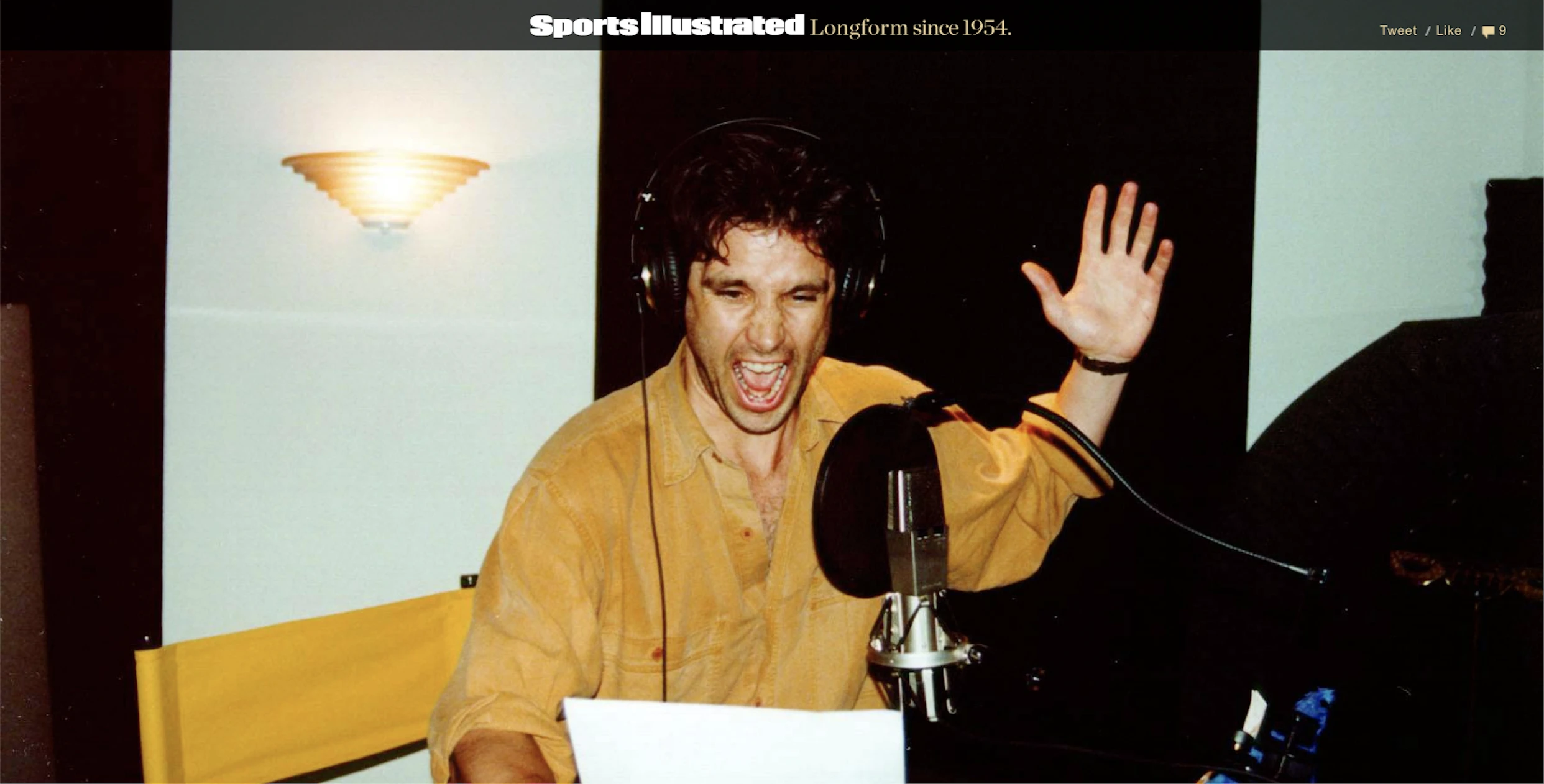
NBA Jam came through that same network. In Kitzrow’s recollection, composer and scriptwriter Jon Hey recommended him for the basketball project. The early assignment was closer to familiar television commentary than the extravagant arcade performance we remember. Hey drew on Marv Albert’s calls, and Kitzrow supplied the delivery.
Then the game began stretching the sport. Kitzrow described ideas emerging over lunch and programmers experimenting with increasingly ridiculous jumps. Players could soar higher; the announcer could rise with them. Hearing him explain it, you could picture a studio discovering how much fun it could squeeze out of a dunk.
During the audience questions, he traced “Boomshakalaka” to somebody nearby listening to Sly and the Family Stone. A suggestion traveled down the hall to the booth. Kitzrow remembered wondering what he was being asked to say, then saying it anyway. In his account, a call that became inseparable from NBA Jam began with somebody hearing music and thinking it might work in a game. Hear the story at approximately 37:18.
The joke that made Niemeyer feel at home
Niemeyer brought us to the other side of the cabinet. His Malice Media artist profile lists work on TRON, Tapper, Spy Hunter, and Super Pac-Man, alongside his contributions to Mortal Kombat’s final logo artwork, cabinet, control panel, and promotional materials. At the panel, some of his warmest memories concerned earning a place in the art department.
He recalled arriving at Bally Midway in the early 1980s, surrounded by artists with successful games behind them. When Paul Faris brought plans to his desk and asked whether he wanted to do a game, Niemeyer assumed he would assist somebody else. Instead, he learned the artwork would be his responsibility.
That assignment was Satan’s Hollow. Later, a colleague teased him about the creatures on its control panel, comparing them to shiny leather chickens. Niemeyer’s first reaction was embarrassment. Then another thought arrived: they were joking with him because he was part of the crew.
Someone had trusted him with a game. Someone else had made fun of his gargoyles. Between the two, he finally felt he belonged.
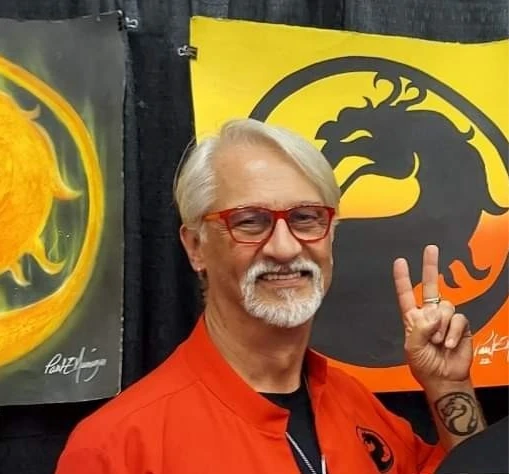
He also described the practical work behind Pac-Man lettering. A project needed words beyond the letters already present in the title, so he had to draw what was missing. Deadlines did not wait for a complete alphabet. Much of the job sounded like that: find the missing piece, make it, and get the cabinet ready.
Mortal Kombat’s success, and Niemeyer’s allegations
Niemeyer’s recollections of Mortal Kombat were much less comfortable. Early in the panel, he said he had never been paid for his work on the original game. Advertising, he explained, paid his bills; game assignments were work he took alongside it.
He described receiving a thin brief and three weeks to produce the artwork. In his recollection, the company had little confidence in the project and printed what he delivered without the usual revisions. Then Mortal Kombat became a hit, and he watched his work become part of a growing franchise.
According to Niemeyer, he submitted his invoice in August and was still pursuing payment in December. He alleged that, during a subsequent telephone conversation, Ed Boon threatened legal action if he displayed the artwork or publicly associated himself with it. Niemeyer said the experience kept him out of public recognition for that work for 27 years.
He also said that, after being rediscovered, he received a cease-and-desist letter from Warner Bros. Niemeyer described a two-year legal battle that ended in his favor after a judge questioned why he was being pursued while others making derivative items were not. He presented that outcome as the reason he could now display his work and discuss it at conventions. These are his allegations and his account of the outcome; the panel supplies neither court documents nor a case number establishing the legal findings. The payment and legal remarks begin at approximately 3:37.
His account of the game’s creation was equally pointed. Niemeyer claimed that Boon had been brought onto the project as a programmer after an idea involving Jean-Claude Van Damme was folded into it. He rejected Boon’s co-creator credit and credited John Tobias with creating the game. He also repeated a story he attributed to Carlos Pesina, placing early character ideas around a childhood kitchen table where Tobias and friends imagined a martial-arts movie. Those remarks begin at approximately 7:28.
That account conflicts with the established credit identifying Boon and Tobias as co-creators. An official PlayStation Blog feature made with NetherRealm Studios explicitly identifies Boon as a co-creator. The kitchen-table story is secondhand, and the panel includes no response from Boon or Warner Bros. to Niemeyer’s allegations.
When Riggs returned to Mortal Kombat later, Niemeyer talked about the anger he carried while the franchise expanded. Eventually, he said, he decided he had to move on and largely ignored the game for years. That helps explain the odd situation he found himself in once fans started asking him to play it with them.
Two arcade legends who didn’t know the buttons
Niemeyer recalled a convention recreating a 1990s living room, complete with old televisions and a couch, then asking the guests to play the games they were famous for. He had never played Mortal Kombat. He chose Raiden and started pressing buttons, hoping that keeping things moving would be enough.
In his telling, somebody watching treated the chaos as an innovative strategy. Then Raiden won. Niemeyer had the perfect opportunity to stop while he was ahead, and said he had never played again.
Kitzrow had a matching story from NHL Hitz. Developers gathered to show him his voice in the game and handed him a controller. He recalled having no idea what to do. His player ended up against the boards while the people who built the game watched.
His escape was wonderfully suited to a voice actor: he suggested that he had heard something worth noting and needed somebody else to take the controls while he made notes. Suddenly he had an urgent professional task.
It is easy to assume that somebody who helped make a favorite game must be good at playing it. Here were two men laughing about how wrong that could be. Their expertise lived at the drawing desk and the microphone; ours might have lived at the joystick.
Beyond the familiar cabinets
Kitzrow described NFL Blitz as a chance to write and experiment more with Dan Forden. He singled out MLB Slugfest as a favorite because baseball left space between pitches and innings for comedy. Those pauses gave him room for the improvisation he loved before games entered his life.
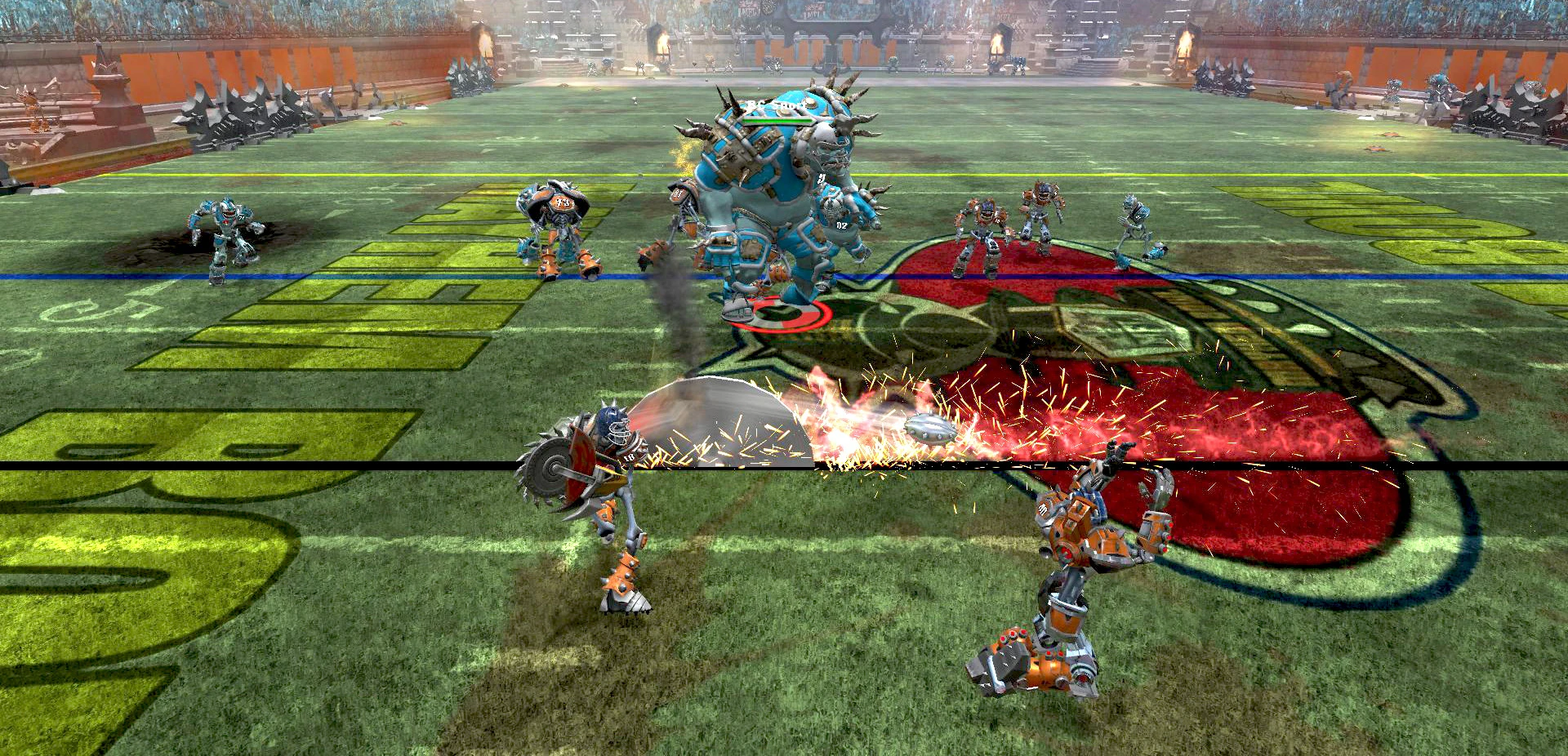
His personal website collects interviews, videos, and basketball highlights, while his biography traces the acting background behind the voice. The official Mutant Football League site credits him with its adult-oriented play-by-play, bringing that exaggerated sports delivery into another unruly version of football.
Niemeyer’s career also reaches beyond games. At the panel, he talked about cereal packaging and candy advertising: work somebody could have seen at breakfast without knowing who drew it. His Malice Media page also describes sculpture, themed entertainment, and haunted attractions. Arcade art was one part of a much longer life making images and experiences for other people.
The panel ended with an invitation to visit their tables upstairs. After hearing how each of them found a place in the industry, that felt like a good ending. The games brought people into the room, and now there was a chance to meet the people behind them.
Watch the panel, and find RetroGameCon
I’m glad I stopped by, and I hope you guys enjoy hearing these stories too. The complete recording is embedded below, including the audience questions and the guests’ own delivery. Some of the jokes work a lot better when you hear Kitzrow say them.
RetroGameCon’s 2026 event ran October 2–4 at The Oncenter, 800 South State Street in Syracuse. Visit the convention’s official site for future dates, guests, and schedules, and Onondaga County’s venue page for its location and contact information.