 Retro Replay Retro Replay gaming reviews, news, emulation, geek stuff and more!



Retro Replay Review
Gameplay
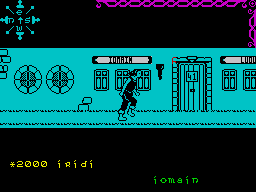
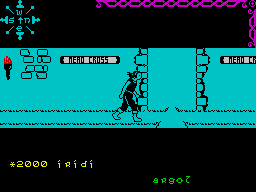
Dun Darach follows the core engine of its predecessor, Tir Na Nog, presenting a first-person street-level view where you navigate along a single road segment at a time. Movement is straightforward – you can walk left or right along the road, and at any intersection you rotate the camera in 90-degree increments to explore new pathways. This structure creates a sense of discovery as you piece together the layout of Dun Darach’s winding streets and hidden passages.
(HEY YOU!! We hope you enjoy! We try not to run ads. So basically, this is a very expensive hobby running this site. Please consider joining us for updates, forums, and more. Network w/ us to make some cash or friends while retro gaming, and you can win some free retro games for posting. Okay, carry on 👍)
Combat in Dun Darach retains the simple but engaging sword-fighting mechanics of Tir Na Nog, relying on timing and quick decision-making to best your opponents. Word-based puzzles are equally prominent, requiring you to decode runic inscriptions or correctly address NPCs to unlock doors and obtain vital clues. A welcome twist is the removal of a “game over” state—you can’t die, which encourages experimentation without fear of restarting from scratch.
Trading and money management take on a more substantial role this time around. You can buy, sell or even steal objects from merchants and townsfolk, and you’ll need to accept jobs to raise funds for essential items. Be careful around Ryde the policeman—if he catches you with ill-gotten gains, he confiscates everything you carry. Alongside these tasks, talking to characters and entering enchanted chambers reveals magical insights that are indispensable for advancing the plot.
Graphics
For an early 1980s release, Dun Darach’s graphics are surprisingly evocative. The game employs monochrome line-drawn scenes that capture the medieval Celtic setting with striking clarity. Each road segment is rendered with crisp lines and bold contrasts, giving a minimalist yet atmospheric feel to the world.
Animation is limited but effective: sword slashes and character movements are represented by simple frame changes that convey action without overwhelming the system. The 90-degree camera rotations at junctions add a pseudo-3D sensation, reinforcing the illusion of a sprawling fortress city. While there’s little in the way of decorative flourishes, the stark visuals keep the focus on exploration and puzzle-solving.
The user interface blends text and imagery seamlessly. Inventory screens and dialogue boxes appear as clean overlays on the scene, making it easy to track objects, money, and clues. Although the absence of color and sound may feel austere by modern standards, the deliberate simplicity guarantees that every sprite and line serves the gameplay directly.
Story
As a prequel to the cult classic Tir Na Nog, Dun Darach plunges you into the role of the legendary warrior Cuchulainn of Muirthemne. A war with the fearsome Conachta stirs political intrigue, setting the stage for betrayal and daring rescue attempts. This rich Celtic backdrop provides a mythic canvas for the adventure ahead.
The inciting incident occurs when Cuchulainn and his companion Loeg are beguiled by the enchanting Skar at a roadside inn—only to discover she is a spy for the sinister rulers of Dun Darach. Loeg’s kidnapping propels Cuchulainn on a perilous journey into the fortress known as the Oak Fort, where hidden dangers and unexpected allies await at every turn.
Secondary quests fill out the narrative, from recovering sacred relics to negotiating with eccentric scholars and sorcerers. Each detour reveals more of Dun Darach’s secrets and Celtic lore, making the world feel layered and alive. Even without the threat of permanent death, the story maintains a steady tension as you race against time to save your friend.
Overall Experience
Dun Darach offers a compelling blend of exploration, puzzle-solving, and light combat that holds up well today. The interplay between trading mechanics and classic adventure tropes provides a refreshing depth, keeping you engaged as you balance your purse against the dangers lurking in oak-timbered houses and arcane chambers. The absence of a fail state encourages players to experiment boldly with every quest.
Some may find the lack of color and limited animations a drawback, and the text-heavy puzzles can occasionally become opaque without a hint system. Inventory management and the risk of losing stolen goods to Ryde the policeman add realism but can also be time-consuming. Patience is rewarded, however, when secrets finally click into place and new paths open up.
Overall, Dun Darach stands as a remarkable early example of narrative-driven adventure gaming. Its immersive setting, clever blend of combat, dialogue puzzles, and trade elements make it a must-play for enthusiasts of retro gaming and Celtic mythology. If you’re seeking a richly detailed quest with room for strategic exploration, Dun Darach remains an enduring classic worth investigating.


Reviews
There are no reviews yet.