 Retro Replay Retro Gaming History, Reviews & Emulation


Retro Replay Review
Gameplay
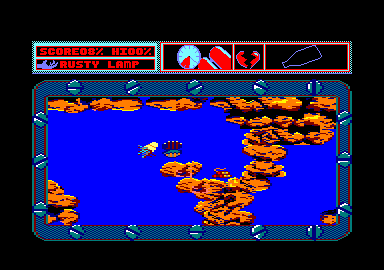
The first few screens make Mermaid Madness seem simple enough: swim Myrtle through an underwater labyrinth, avoid whatever is in your path, and hunt for Gordon. Then the game starts asking you to think in routes rather than individual rooms. Items collected in one area must be carried to another to open the way forward, turning the maze into a compact scavenger hunt with consequences.
The catch is Gordon’s air supply. It is not just background pressure; it makes wandering around to test every possible route a risky habit. You need to take mental notes, make purposeful return trips, and resist wasting time retracing ground without a plan. That creates satisfying little breakthroughs when you finally connect an item to the obstacle it solves, but it can also make a wrong turn feel more costly than it needs to.
Enemies add another layer of friction. Touching one drains Myrtle’s life energy, while beer bottles restore it, so health pickups are valuable breathing room rather than incidental collectibles. The combination of damage, maze navigation, and a rescue clock gives the game a tense rhythm: you are not merely working out a puzzle, but trying to execute the answer cleanly.
Its fixed, flip-screen structure suits this sort of play. Each screen becomes a place to remember, and the lack of scrolling means the geography arrives in distinct, manageable chunks. That said, Mermaid Madness asks for patience with old-fashioned trial, error, and repetition. If you enjoy mapping a game in your head and extracting order from an initially confusing maze, the pressure makes the puzzle-solving more involving. If a ticking time limit turns exploration into irritation, this one may wear you down.
Graphics
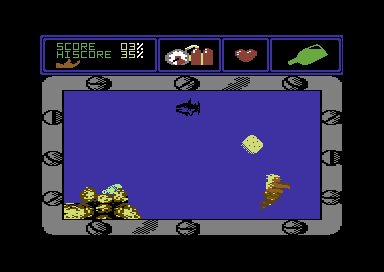
The action is shown from the side across separate underwater screens, with a few above-ground areas breaking up the aquatic maze. Myrtle herself is the visual gag at the center of it all: a weighty mermaid undertaking a rescue that sounds like it ought to be the other way around.
The flip-screen layout makes room boundaries easy to understand, which matters when you are trying to remember where an item or threat was located. More than anything, the images serve the maze: you move from one discrete location to the next, building a workable picture of the route in your head.
Story
There is one joke, and Mermaid Madness commits to it. Myrtle has waited 112 years to find the man of her dreams; Gordon responds by fleeing into the water and wedging himself under a ship. It is a silly reversal of the usual damsel-rescue setup, and it gives the game a more memorable hook than a generic “find the captive” objective would have.
Gordon’s limited air supply keeps that comedy from becoming completely weightless. Myrtle is motivated by romance, but your practical concern is the countdown. The story therefore does useful work: it explains why you cannot simply spend an afternoon rummaging through every underwater room at leisure.
Do not come expecting a sprawling adventure narrative. The premise is a frame for the labyrinth and its item puzzles, not a tale that unfolds in elaborate scenes. Still, it has enough personality to make the rescue feel less anonymous, especially once the timer turns Gordon’s predicament from punchline into a genuine source of urgency.
Overall Experience
Mermaid Madness is a solid, slightly prickly blend of maze action and inventory-style puzzle solving. Its strongest moments come when a previously confusing route suddenly makes sense and you turn that knowledge into a fast, safer run through rooms that had seemed hostile a few minutes earlier. The rescue clock makes those moments land harder because understanding the solution is only half the job.
The downside is equally clear: every mistake costs time, health, or both. Players who prefer to explore at their own pace may find the air limit and enemy contact punitive, particularly before the layout has settled in their memory. Beer bottles soften the health pressure, but they do not remove the need to play carefully.
Give it a chance if you enjoy 1980s games that demand note-taking, route planning, and a tolerance for getting lost before things click. The offbeat Myrtle-and-Gordon setup is worth a smile, while the real reason to stay is the compact tension of solving an underwater maze under deadline. For background on its release, see Mermaid Madness’ game history.


Reviews
There are no reviews yet.